“I Can See Clearly Now: Removing the Cultural Blinders.”

Have you ever wondered how much of what you believe is shaped by the culture around you? How much it is shaped by your childhood, your Sunday School class, that old church lady or man who frowned every time you laughed during a church service? How often do we confuse what we’ve absorbed from our past and surroundings with what God is truly saying? It’s like wearing sunglasses indoors. Everything looks a little darker, and you don’t even realize it until someone asks, “Why are you still wearing those?”

We all wear cultural blinders. They shape how we see God, how we see others, and even how we see ourselves. These blinders aren’t always bad; they’re just there. They’re the stories we’ve been told, the assumptions we’ve never questioned, and the unspoken rules we’ve learned to follow. But what if some of those stories, assumptions, and rules are keeping us from seeing clearly? Why aren’t we asking the right questions? Or even asking questions at all? Why do we just assume that we already know?

The Problem with Cultural Blindness

One of the biggest dangers of cultural blinders is that they limit our vision. Jesus talked about this all the time. Remember when he said, “You have heard it said… but I tell you…” (Matthew 5)? He was challenging the cultural scripts people had internalized—the ones that said, “Love your neighbor and hate your enemy” or “An eye for an eye.”

Jesus wasn’t just tweaking the rules; he was flipping the entire script. He was saying, “The way you’ve been taught to see the world isn’t the way God sees it.” And if we’re honest, we need that same challenge today. Could it be that there’s a script that we’ve blindly accepted that might need to be flipped?

The Filters We Don’t See

Think about the stories our culture tells about success. Bigger, better, faster, more. It’s a narrative that’s so pervasive we barely notice it. And yet, Jesus comes along and says, “Blessed are the poor in spirit… blessed are the meek… blessed are those who hunger and thirst for righteousness” (Matthew 5:3-6). He’s inviting us to see success in a completely different way.

Or consider how we’re taught to categorize people. Who’s in, who’s out. Who’s worthy of our time and attention. And then Jesus tells a story about a Samaritan—someone the cultural script labeled as an enemy—and makes him the hero (Luke 10:25-37). Jesus is constantly disrupting our categories, asking us to see people as God sees them. It’s dangerous. It’s counter-cultural. It’s amazing.

Removing the Blinders

So, how do we begin to remove these blinders? It starts with humility. We have to admit that we don’t see the whole picture. As Paul writes, “For now we see only a reflection as in a mirror; then we shall see face to face” (1 Corinthians 13:12). Part of growing in our faith is acknowledging that our vision is incomplete and asking God to help us see more clearly. It can be scary to admit this. It’s daunting to accept change in our preconceived notion of “having it all worked out.” So what needs to change? What is still blinding you from fully seeing?

Here are three practices to help:

  1. Question Your Assumptions Start by asking, “Why do I think this way?” Whether it’s about God, relationships, or the world around you, take the time to examine your beliefs. Are they rooted in Scripture, or are they shaped by cultural norms? Philippians 2:12 reminds that we should “work out our salvation with fear and trembling.” When we begin to question our assumptions we begin to remove the sunglasses that has prevented us from properly seeing.
  2. Listen to Other Voices Sometimes we need to step outside our echo chambers. Read books, listen to sermons, or have conversations with people who see the world differently. It’s amazing how much we can learn when we’re willing to listen. But be brave when you listen. Don’t just embrace the comfortable. Or the things that already speak to your accepted understanding of Church, Others and the Divine. Be prepared to dig deeper and as you listen begin to ask the hard questions.
  3. Ask God for Fresh Eyes Make it a habit to pray, “God, help me see what you see.” This simple prayer can open your heart to new perspectives and reveal the blind spots you didn’t even know you had.

The Freedom of Clear Vision

When we remove the cultural blinders, we start to see the world the way God intended. We see people as made in his image, without bias and rooted understanding. We see success as faithfulness, not achievement. We see love as the highest calling. And most importantly, we see God not as a reflection of our culture, but as the Creator who’s constantly inviting us into something deeper, truer, and more beautiful.

So maybe it’s time to take off the sunglasses. To step into the light. To let God show us what we’ve been missing all along. Because when we see clearly, everything changes.

Grace and Peace.
-Pastorsponderings.

“Risk, Trust, Multiply: The Kingdom Math of the Talents”

I used the word Math…please don’t leave. Check this out:

The Parable of the Talents is one of those stories Jesus tells that cuts right to the heart of how we live, doesn’t it? You can find it in Matthew 25:14-30. It’s a tale about a man, his servants, and an outrageous amount of money—talents, as they called them back then. But this story isn’t just about economics; it’s about something far more profound.

Let’s dive in.

A wealthy man is going on a journey. Before he leaves, he entrusts his property to his servants. To one, he gives five talents. To another, two talents. And to the last, one talent. Now, a talent was no small thing. It was a unit of currency worth about 20 years of wages for a laborer. Imagine being handed 20, 40, or 100 years’ worth of earnings all at once. Can you feel the weight of that responsibility?

The man’s instructions? Not explicitly stated, but implied: Do something with it.

The first two servants get to work. They invest, trade, create, risk. And they double what they were given. But the third servant? He digs a hole. He buries the talent. He hides it.

When the master returns, there’s a reckoning. The first two servants present their doubled investments, and the master’s response is ecstatic: “Well done, good and faithful servant! You have been faithful with a few things; I will put you in charge of many things. Come and share your master’s happiness!”

But the third servant? He’s afraid. He tells the master, “I knew you were a hard man, harvesting where you have not sown and gathering where you have not scattered seed. So I was afraid and went out and hid your talent in the ground. See, here is what belongs to you.”

And the master’s response? Not what we might expect from a story that starts with such generosity. The master calls the servant wicked and lazy. He takes the one talent and gives it to the one who has ten. And the servant is cast out, into the darkness.

Whew. Heavy, right? So, what’s going on here?

First, let’s talk about the fear. That third servant? He was so paralyzed by fear—fear of failure, fear of judgment, fear of the master—that he did nothing. And isn’t that what fear does? It locks us up. It convinces us to play small, to play safe, to not risk, to not create, to not step out, not to speak up. Fear whispers, “What if you fail? What if you’re not good enough? What if it all goes wrong?” And so we bury our talents. We hide what we’ve been given. We stop ourselves from speaking up with the grains of wisdom God has given us.

But the other two servants? They get it. They understand that the talents aren’t just resources; they’re opportunities. Opportunities to participate in the work of the master. Opportunities to create something, to build something, to grow something. And sure, there’s risk involved. But there’s also trust. Trust that what they’ve been given is enough. Trust that the master’s joy is found in their faithfulness, not their perfection. It’s never been about being perfect.

This parable invites us to ask some big, uncomfortable questions: What have I been given? What opportunities, resources, gifts, passions, abilities, relationships are in my hands right now? And what am I doing with them? Am I investing them, risking them, using them for something bigger than myself? Or am I burying them, hiding them, letting fear call the shots? This isn’t about inflating our egos, or making us look important, it’s about using what God has entrusted to us. All of it is Gods.

And here’s the twist that we can’t miss: The master’s joy isn’t about the amount returned. It’s about the fact that the servants were faithful with what they had. The first servant had five talents, and the second had two. Different amounts, but the exact same affirmation: “Well done, good and faithful servant.”

You see, the parable isn’t about how much you have. It’s about what you do with what you’ve been given. It’s about the courage to show up, to risk, to trust, to invest, to create. It’s about participating in the work of the Kingdom, right here and right now.

So, what if we lived like the first two servants? What if we stepped out of our fear and into faith? What if we trusted that the gifts we’ve been given—no matter how big or small—are enough? What if we stopped burying our talents and started using them to bring light, love, and hope into the world?

Maybe that’s what Jesus is inviting us to in this parable. Not just to see what we’ve been given, but to step into the joy of using it. To risk. To create. To trust. To live fully into the Kingdom work we’ve been called to. And that Kingdom is right here and right now. With us.

Because when we do, we’re not just holding onto what we’ve been given. We’re multiplying it. And that’s where the joy is.

Grace and Peace.
-PastorsPonderings.

Discovering Grace in Everyday.

Life has this way of pulling us in a thousand directions at once, doesn’t it? There’s the constant hum of obligations, deadlines, and distractions—a never-ending playlist of demands. And in the midst of it all, we can start to feel like we’re losing the plot, like we’re just moving through the motions. I call it “getting lost in the sauce”…

But here’s the thing: even in the chaos, there’s grace.

Grace is not about striving harder or being perfect. It’s about discovering that God is present in every moment—the messy, the mundane, the miraculous. The sacred is right here, in the very fabric of your ordinary day. It’s both ordinary and mysterious all at the same time.

Think about how Jesus lived. He walked dusty roads. He shared meals with fishermen and tax collectors. He paused to notice people—a woman at a well, a man in a tree, children running toward Him. He didn’t rush through life; He moved with intention, always present, always open to the beauty and possibility in the moment.

And maybe that’s the invitation for us. To slow down. To breathe deeply. To notice.

One of my favorite fiction authors, Brandon Sanderson once said, “Enjoy memories, yes, but don’t be a slave to who you wish you once had been. Those memories aren’t alive. You are.”

So my fellow ponderers, notice the laughter of a friend. The warmth of sunlight breaking through your window. The kindness of a stranger. The joy of a child’s giggle. These aren’t just random moments; they’re whispers of grace, reminders that you’re not alone in this. And that you are alive. What a gift this is!

Scripture reminds us, “The Lord is close to the brokenhearted and saves those who are crushed in spirit” (Psalm 34:18).

Close. Not far off, not out of reach. Close.

What if we lived as though that were true? What if we embraced the idea that God is not only with us in the big, life-altering moments but also in the small, overlooked ones? I call those small things microblessings. They are often overlooked and taken for granted. But God is present within all of it, and with you.

So today, let’s practice looking for the sacred in the ordinary. Let’s believe that grace is woven into the very fabric of our lives, waiting to be noticed, waiting to be embraced. Take notice. Look around you. Breathe deep the blessings and grace of God. It’s there for you to receive.

You are loved. You are held. And you are walking in grace—even now.

Peace to you.

-Pastorsponderings

Taste and See: The Beauty of Trusting in God.

There’s something magnetic about the way the psalms draw us in, isn’t there? They’re raw, human, unpolished. They take us to the very core of the human experience—joy, pain, fear, gratitude. Today, let’s pause with Psalm 34:

“I sought the Lord, and he answered me; he delivered me from all my fears. Those who look to him are radiant; their faces are never covered with shame. … Taste and see that the Lord is good; blessed is the one who takes refuge in him.”

Did you catch that? Fear and radiance, shame and goodness—all intertwined. The psalmist isn’t merely saying, “Believe this.” He’s inviting us to experience it, to live it, to feel it deep in our bones.

“I sought the Lord, and he answered me.”

Seeking is active. It’s not passive waiting; it’s stepping into the mystery, bringing our messy, tangled fears before God. When you seek, you’re opening your heart to the possibility that maybe—just maybe—there’s a love big enough to hold you, even in your darkest moments.

And then? Freedom. Deliverance. The kind of peace that makes fear lose its grip.

“Those who look to him are radiant.”

Radiance—it’s not about physical beauty or perfection. It’s about what happens when you live with the weight of shame lifted off your shoulders. It’s the glow of someone who knows they’re deeply loved, fully seen, and completely accepted.

Have you ever noticed how light seems to pour out of people who’ve encountered that kind of love? Their joy isn’t tethered to circumstances; it flows from something deeper, more unshakable.

“Taste and see that the Lord is good.”

This isn’t a theoretical proposition. It’s an invitation to dive in. To taste. To see. To engage all your senses. The psalmist is saying, “Try it. Take the leap. Experience God’s goodness for yourself.”

Think about tasting—really tasting—a piece of ripe fruit. You don’t analyze it from a distance. You bite into it. The sweetness floods your mouth. It’s immediate. Real. That’s the kind of encounter with God the psalmist is talking about.

So, what’s the invitation here?

It’s not to have all the answers. (we certainly don’t) It’s not to tidy up your life or figure out your theology. (it’s still a work in progress) It’s simply to come. To seek. To look. To taste. To take refuge in a God who is good—always good—even when life feels anything but.

What would it look like for you to bring your fears to God today? To trust that he meets you right there, not with condemnation, but with deliverance?

What if you leaned into his goodness—not as a concept, but as a reality you can taste and see and know?

Let’s live this day tasting, seeing, trusting. Because when we do, radiance isn’t just a possibility; it becomes the very rhythm of our lives.

Grace and peace.

The Prodigal Within: Confronting the Parts of Myself I’d Rather Not See

We all know the story of the prodigal son – that wayward child who demanded his inheritance, squandered it in wild living, and finally came crawling back home to his father’s embrace. The scripture literally says, “when he came to his senses” (Luke 15:17, NIV) It’s a beautiful tale of redemption, one we’ve heard countless times from pulpits and Sunday school classes…and maybe an old flannel-graph or two. But lately, I’ve been wrestling with an uncomfortable truth: the prodigal son isn’t just a character in a parable. He lives within me. There. I’ve said it. (Phew, what a relief).

You see, I’ve spent years pointing fingers at others’ shortcomings while expertly avoiding the mirror. I’ve sat in church pews, Bible balanced perfectly on my lap, nodding along to sermons about transformation while carefully tucking away the parts of myself that needed transforming most. I’ve become a master at seeing the speck in my brother’s eye while ignoring the plank in my own. Can you relate? I sure hope you can. Because I think this shadow-self, this prodigal lives within us all.

But God, in His persistent grace, hasn’t let me stay comfortable in my spiritual blindness. He’s been gently, yet firmly, turning my gaze inward, inviting me to examine those shadowy corners of my heart I’ve worked so hard to ignore. This isn’t just another devotional about self-improvement or a three-step guide to better Christian living. This is my raw, honest journey of confronting the prodigal within – the parts of myself I’d rather pretend don’t exist.

Let me start by confessing something that makes me deeply uncomfortable: I am a master of selective Christianity. I’ve perfected the art of highlighting the verses that make me feel good while skillfully dodging the ones that challenge my comfortable patterns. For years, I’ve chosen to focus on God’s promises of prosperity while conveniently overlooking His calls to die to self. I’ve championed grace for others in public while harboring private judgments that would make the Pharisees proud.

This journey began years ago, on an ordinary Wednesday evening, during what should have been a routine small group meeting. We were discussing the Beatitudes – familiar territory, I thought. But when someone asked, “What does it really mean to be poor in spirit?” I opened my mouth to give my usual polished answer and suddenly stopped short. In that moment, the Holy Spirit held up a mirror, and for the first time, I truly saw myself. Have you had that mirror experience too?

In that moment, I saw the pride masquerading as spiritual wisdom. I saw the selfishness dressed up in religious duty. I saw the fear hiding behind my confident exterior. Like the prodigal son, I hadn’t physically left my Father’s house, but my heart had wandered far from home. I was living in a far country of my own making, feeding on the husks of religious performance while starving for genuine transformation.

This isn’t a story about wallowing in guilt or shame. Rather, it’s about the extraordinary discovery that the same Father who runs to meet the physically prodigal son also races toward those of us who’ve wandered within the walls of the church. It’s about finding that true repentance begins not with outward actions, but with the courage to face ourselves honestly before God.

How honest are we about this prodigal within? When the Holy Spirit lifts that mirror before us what do we see and what do we intentionally ignore?

Confronting our Prodigal Self
When we confront instead of flee, true growth begins to take root within us. Only when we begin to accept that which we have long ignored will we truly experience freedom from the slavery of self. It’s liberating. You should try it sometime…there I go again judging you when I still have work to do.

Something more to ponder today.
Questions to consider:
1) What is preventing you right now from confronting your prodigal self (your shadow-self)?
2) What is the Holy Spirit saying to you?
3) How can you intentionally accept God’s honest, yet loving assessment of you?
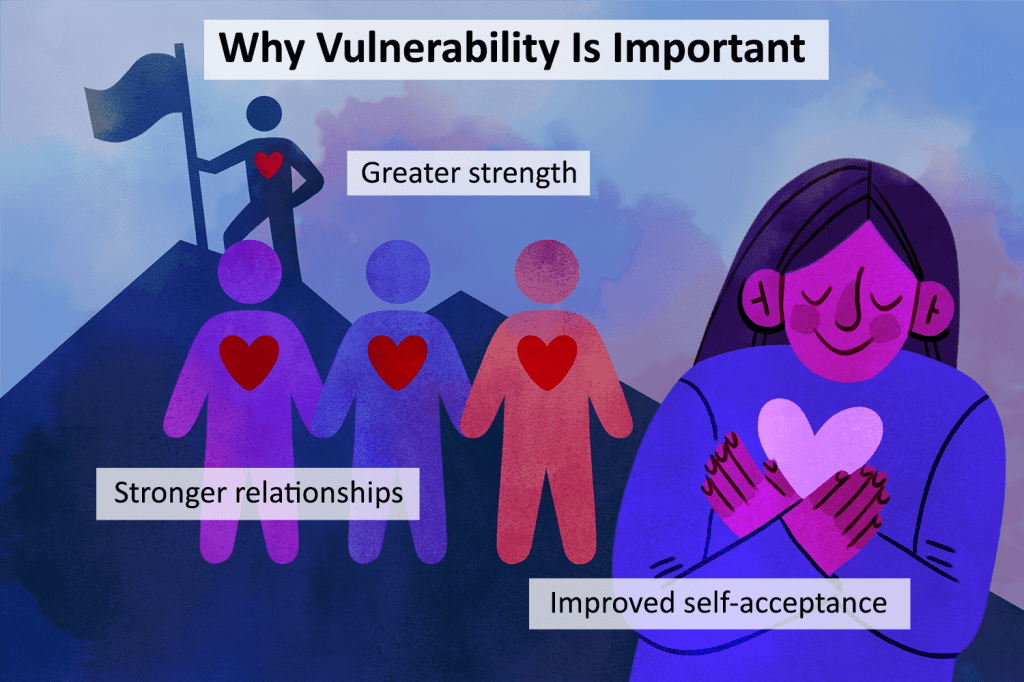
Being vulnerable before God is hard. What can you do to set aside five minutes today to just sit before that mirror? Don’t flinch, just sit and listen. He desires to clothe you and throw a party for his child who was once lost but is now found.
(Repeat again tomorrow).

When Faith Flickers – Finding God in the Shadows of Doubt.

After the death of a loved one, I felt lost. The prayers we had all prayed seemed to have been for nothing. I felt as if God were distant from me, and if I’m being honest, I was angry at Him for not answering my prayers when I needed Him most. I resented Him, and I felt my faith fading away. It wasn’t gone entirely, but I found myself questioning the rhythms and routines of my faith journey. Had I grown too comfortable? Is there more to faith than this? Am I doing it all wrong?

I have discovered that faith, like most things, can wane from time to time. I do not think it’s wrong to express moments of doubt. Because doubt, like shadows, can often cast its long amorphous tendrils over the spaces once illuminated by trust and assurance…but the light is still there.

Time, you see, though a human construct, can separate us from that path, and we begin to forget. What do we forget, you may ask? We forget the fulfillment of God’s promises. We lose sight of the many times we felt His presence with us, and instead we only recall the times when our prayers seemed to go unanswered. Time has a way of allowing those shadows to grow in us. And then our grip is loosened, and our resolve erodes. Often times when this happens, we berate ourselves because we lack faith. Inwardly we cower at the thought that others might discover our shortcomings. Why are we afraid to be vulnerable around other Christ-followers? Do we not realize that they struggle with their faith and doubt too? We often fail to acknowledge that they are also imperfect and just as vulnerable. And yet, oftentimes, our first inclination is to worry about what others might think of our struggles instead of sharing them. Could it be that when we share, we commiserate and encourage others? Instead of sharing, our first instinct is to hide and pretend to be something we are not – perfect. Here’s a confession for you: I am so tired of pretending to be perfect. I despise the masks that we force ourselves to wear. I hate the Christianese jargon that we spout when all of it is shallow and signifies nothing but words that fail to penetrate our hearts.

Can I be real for just a second? I fear that 90% of our offerings to God (worship services, the words we say, catch phrases and platitudes) are performed for the benefit of others and not God…and the flickering flame of our faith continues to dim, and we wonder why.

When Faith Flickers – Ask the Hard Questions.

I think it’s safe to say that God is not threatened by our questions; instead, He invites them as pathways to deeper faith and understanding. When we ask the tough questions it creates authenticity and, believe it or not, it deepens our relationship with Him. We no longer have to placate or utter words that have become routine and ritualistic. Instead, we begin to actually battle with the tangible problems of life. Many times, we tend to avoid the hard questions because they could cause doubt; but in reality, asking the tough questions brings perspective, and in so doing, our faith becomes resilient having been forged in deeper roots.

Don’t Be Afraid of Authenticity.

So throw off the mask, the false pretenses, the Christianese jargon, the constant worry about what others might think because you aren’t acting or dressing the part of what Church is “supposed” to look like. Here’s a newsflash – You are the church. It’s you. It’s been you all this time. God wants YOU to be real and honest with Him about your faith. He doesn’t need any more empty talk that placates but is void of action and credibility. It’s okay to doubt. It’s okay to ask the hard questions, especially when faith begins to flicker. It may seem that the shadows are growing darker around you, but embrace the path that you’re currently on. There’s something to be learned from it all. And when you begin to tackle the daunting, the seemingly insurmountable, and you face the thing you fear the most – you will discover God has never left you. He’s right there with you.

When your faith flickers, and the shadows of doubt may seem overwhelming, but remember that God is not distant or disinterested. He is present in your questions, your fears, and your struggles. Doubt doesn’t disqualify you from His love; it invites you into deeper dependence on Him.

God’s light shines brightest in the darkest moments, guiding you through uncertainty with His truth and grace. Like a steady flame, His faithfulness remains unwavering, even when your faith feels weak. Lean into Him, trusting that He will meet you in the shadows, rekindle your hope, and lead you into a deeper, more resilient faith.

When you walk with God, even flickering faith becomes the foundation for a stronger, enduring trust in His unchanging character and promises.

-Something more to ponder today.

“No Pain, No Gain” Releasing Spiritual Atrophy

I have been debating if I should write about this topic. I have started a number of times only to delete what I’ve written. But here goes…

My Personal Embarrassment

Nearly three months ago I tore my Achilles heel playing pickleball. One minute I was returning a serve and a volley, the next I thought someone had crashed into me from behind and hit me in the back of the leg. The pain felt like a sharp rubber band had snapped my leg. It was sudden and then I knew I could not walk on it. I finally realized there wasn’t a pickleball bandit behind me who had just assaulted me, but rather I had sustained an injury that would end my professional aspirations for pickleball glory.

The next few months were difficult. I openly admit to my defiant stubbornness. I was not fun to be around and I frequently got frustrated with my inability to walk and function. I was blessed to receive a knee scooter instead of using crutches to go anywhere. To put it bluntly I was temporarily handicapped and I hated. EVERY. MINUTE. OF. IT!

Physical Therapy

The first time I attended physical therapy I realized how much scar tissue I had on my heel and the pain, though good, reminded me of how much work I still needed to do to help me progress and walk normally again. I was taught exercises and stretches that would push me past my pain levels, and I fear I would potentially reinjure myself. Still I worked at it and my physical therapist reminded me that the pain I was enduring was normal and that it would help me get better faster if I just embraced it.

In a matter of two months my calf muscles had atrophied from lack of use and I needed to begin the process of restoring strength that would only be discovered through the pain of recovery. As I practiced my exercises and pushed my perceived limits of flexibility, I discovered that my limits were self-inflicted and not reality. The more I pushed my muscles the more the resistance of my mental blocks crumbled away. Through gritted teeth and a little bit of sweat, I began to make tremendous strides (pun intended).

Spiritual atrophy

As I continued my physical therapy I was reminded that my spiritual journey is a lot like these appointments. I have often faced spiritual deserts where I have willingly refrained from flexing my spiritual muscles. There have been times when I have become lethargic in my spiritual journey and have spent far less time in prayer and more effort spent in time-wasting activities that contained nothing beneficial to my soul.

Sometimes it is easy to fall into habits that edify nothing but our own inertness. I am not discouraging rest, simply pointing out that there is a stark difference between being overly inactive and resting. Rest provides much needed recharge to those who are actively working for a purpose. Inertness leaves muscles untested and leads to diminished abilities both physically and spiritually.

There are times where atrophy of the heart and soul freezes us in place and creates walls around our perceptions of growth and spiritual purpose. Be mindful of the traps. The father of lies would love to keep us in these spaces of inactivity and atrophy. When we are frozen in place we are no longer a threat to darkness and all the trappings of this world.

Embrace the Pain!

Be willing to have your plans disrupted. Be willing to allow the Holy Spirit to disturb your heart through conviction and revelation. In the spiritual stretching process, may we be able to work out the pain of growth as our wounds are exposed. The Lord seeks to heal, restore and stretch us – the only thing preventing us from expanding our faith is…us. Embrace the pain, the growing pains, the exposed hurts, the vulnerable spaces we have yet to surrender. When we embrace them they can no longer keep us bound by human reasoning and earthly limits. Instead we are exposed to an eternal perspective that will drive us into a deeper faith.

Something more to ponder today.

Embracing The Presidential Election With “Sober Minds”

I admit that I inwardly cringe when politics is mentioned or brought up in social circles. I also admit that I have never watched an entire debate (Presidential or otherwise) because I cannot stand the vitriol, the barbs and the untruths being shared. I find most political campaigns distasteful and many times it turns into an outright smear campaign hell-bent on casting each other in the poor light of public opinion. Most campaigns raise millions of dollars and then spend those funds on nasty political commercials that push the boundaries of defamation of character and blurs the lines of reality as the political spin-doctors create a plethora of false narratives for the public to digest like a fast food meal eaten in haste and without much thought given to the consequences of long-term exposure. (phew, that was a run-on sentence)

Another reason that I cannot stand an election year boils down to how it effects the Body of Christ. I have witnessed numerous political posts on social media that devolved into name calling and petty childish behavior perpetrated by both individuals (sometimes more than two parties participated) who professed to be followers of Christ. To say that it was ugly is an understatement.

This doesn’t mean that I don’t have my own opinions on political matters, but I tend to keep my opinions private. Most of the time I do this because, as already mentioned, even Christ-followers get sucked into divisive political debates that serve no purpose other than to start arguments and dissent among Christians and non-Christians alike. Others start these toxic conversations just to sound superior, or because they like the sound of their own voice in the need to win the argument for the sake of pride and being right. I find such behavior distasteful and, at times, sense that it is doing more harm to the Kingdom and in our ability to share the Good News of Jesus Christ than good.

Living Above Reproach

1 Timothy 3:2-5 New International Version (NIV)

Now the overseer is to be above reproach, faithful to his wife, temperate, self-controlled, respectable, hospitable, able to teach, not given to drunkenness, not violent but gentle, not quarrelsome, not a lover of money. He must manage his own family well and see that his children obey him, and he must do so in a manner worthy of full respect. (If anyone does not know how to manage his own family, how can he take care of God’s church?)

This passage in 1 Timothy speaks primarily to those wanting to be in church leadership, but it’s not too much of a stretch to expect Christ-followers to also possess “self-control, respectability…” In the ASV version they use the term ‘of Sober-mind’ and I think that fitting when applying wisdom of thought and one who possess emotional intelligence enough to avoid the trappings of social arguments.

When we get drawn into such frivolous and pointless arguments, our emotional intelligence and our Christian integrity diminishes. Thus, there is the need for all of us, who profess to be a Christ-follower, to become masters of our own emotions and possess a wisdom far beyond the wisdom offered in our society today. That is why it is so important for Christians to maintain and expand our walk with the Lord on a daily basis. If we profess Christ with our lips but our actions in public (or on a social media platform) declares the opposite, we will have become useless to the Kingdom. As a matter of fact, we will have become worse than useless – we will have unwittingly become ambassadors of Satan and will help to usher people to hell through our divisive talk and hateful attitudes.

Does that sound too harsh? Good. It should be sobering to all of us.

Kingdom Living = Kingdom Perspectives

Colossians 3:12-14 (NLT)

Remember, the Lord forgave you, so you must forgive others. Above all, clothe yourselves with love, which binds us all together in perfect harmony.

Romans 12:16-21

16 Live in harmony with one another. Do not be proud, but be willing to associate with people of low position. Do not be conceited. 17 Do not repay anyone evil for evil. Be careful to do what is right in the eyes of everyone. 18 If it is possible, as far as it depends on you, live at peace with everyone. 19 Do not take revenge, my dear friends, but leave room for God’s wrath, for it is written: “It is mine to avenge; I will repay,” says the Lord. 20 On the contrary: “If your enemy is hungry, feed him; if he is thirsty, give him something to drink. In doing this, you will heap burning coals on his head.” 21 Do not be overcome by evil, but overcome evil with good.

Hebrews 13:14

For this world is not our home; we are looking forward to our everlasting home in heaven.

I firmly believe that if we claim to be Kingdom people who have been gloriously saved, then we need to starting living that proclamation while refraining from dipping our toes into the waters dissention and brokenness. Kingdom living ought to bring consistency of Christian living, character, hope, love and redemption into a world so devoid of these things. Kingdom wisdom elevates our emotional intelligence to refrain from devolving into pettiness and choices of words that divide and cause pain instead of healing.

I don’t write these words to sound superior or to judge others. I write these words first and foremost for me. It is as a reminder of the calling that I have claimed in my life. If, by chance you feel some kind of conviction or that these words resonate with you, then Praise the Lord! I also acknowledge that these words will fall on deaf ears. And dare I say, there are some who claim Jesus with their lips, but denounce Him in their living. Be aware of the pitfalls, dear friends. Often times, we may think that this could never happen to us, and then we discover such pitfalls are much closer than we originally realized.

So, dear Christ-followers, be of sober mind this Presidential election. Remember first and foremost God’s Kingdom supersedes any human establishments of authority and He will provide, He will tear down, and He alone will be our source of truth and redemption.

-Something more to ponder today.

The Unfading Faith of Arnold, A Witness of Victory in Life and Death.

As a younger pastor I have vivid memories of one of my first ministries. My wife and I were appointed to a little church in Northern Michigan. For Shanais, my wife, having lived in the Upper Peninsula for a majority of her life, it was like going home. For me it was this new adventure, with new places to discover. One of the very first church members that we met was Arnold. He was an elder in the church but in recent years he was suffering from an advanced form of cancer that was slowly causing him to waste away.

I recall visiting Arnold in his home, a humble structure with walls painted the color of amaranthine, which coincidentally I looked up later and discovered the name is an ancient Greek word named after a fictional flower which means ‘unfading’. I sat there in a brown fabric armchair as Arnold, with sunken, hollowed eyes, though still alight and sparkling azure shared with me his confident faith in Jesus. Despite the pain of mouth sores, a side effect of his chemotherapy, he spoke of his conversion as a teenage boy, of how he loved his children and how he would soon see Jesus in Heaven.

Arnold wasn’t a theologian, and he wasn’t well education but the roots of his faith ran much deeper than a four year degree. Often he would surprise me with his overpowering desire for others to know this seemingly unplumbed relationship that he had with his Savior. He would share with me the words he felt the Holy Spirit was saying to him about the church and those who had strayed from their faith. Despite his own terminal situation, often times he seemed more concerned about his children’s faith journey than he did with his constant pain.

Towards the end, and one of my last visits with Arnold, when he was still conscious and verbal, he could only whisper between gasps of breath. I once heard him say, “It is well with my soul.” He was quoting the song by the same name written by Horatio Spafford, one of his favorite songs. There were long moments of uncomfortable silence as I just sat there with him. A seminary school degree and ordination never truly prepares you for these closing moments in one’s life. These are sacred spaces where the veil between this world and the next are very thin, and Heaven anticipated Arnold’s admittance. There is something to be said of the ministry of silence and in the ‘being present’ as if to bear witness to the ending of that mortal coil.

At another moment Arnold whispered, “Lord, I’m ready!” And, in those brief few months of knowing him, I can say that I shed a few tears knowing his time was close. Those tears mixed both with sorrow in the spaces he would soon leave behind and in joy that his suffering, which was bone deep and horrible, would be finally over with. Cancer, like all of life’s afflictions, is a ghastly blight to behold let alone endure. Some find victory over it and survive their ordeal, while others find victory through the ultimate healing and survive in the eternal celebration.

My phone rang early one morning and I receive the news that Arnold’s suffering had ended. In moments like these, some use phrases about losing the battles, or someone quietly slipped away, and I’ve even heard the expression ‘they gave up the ghost’. None of those expressions rang true in the passing of Arnold. He had not lost his battle. Cancer was just the conduit by which he had entered his eternal reward. He walked with Jesus before and during the cancer and now his victory over death was fully realized.

Thinking back to the color of amaranthine which coated the walls of Arnold’s home, the joy and love he had for his Savior truly was unfading and those visits with him in his final days left a mark on my soul which I will carry for the rest of my life.

Life has meaning, beloved. There is victory in it, given to us by our Creator who made a way for us to experience His Kingdom. Life transcends the seen and the mystery of the unseen known beyond that veil that separates this life and the next.
Jesus desires for relationship with us.
How is your faith journey?

Worship or Performance?

“Sing and Make Music in Your Heart To The Lord!”

(Ephesians 5:19)

There is something about music that has a way of capturing our emotions that words could never do.
I can still remember as a young child hearing my favorite song being played on the radio. It stirred my heart and I felt joy hearing those powerful refrains in the chorus. Music can evoke a wide range of emotions and, at times, usher us into the very throne room of heaven. Hans Christian Andersen once said, “Where words fail, music speaks.” As a life-long musician I know those words to be especially true.

Before King David became king of Israel, he was a shepherd boy. The role of a shepherd was not a desired role. It was often assigned to the youngest child or hired out to a lowly servant. No one wanted that job and often the one serving in that position would miss important religious feasts and celebrations because they would have been considered ceremonially unclean. Still, David was a shepherd and while he watched the family flocks he composed songs to the Lord. Even in his lowly state, David was content in his role and sought to sing heart-felt melodies to God. David is said to have composed 75 of the 150 Psalms that we now have in our bibles. In Psalm 27 David declares “The Lord is my light and my salvation – whom shall I fear?“ Later on in the same Psalm he says that despite the difficulties of life and enemies surrounding him, he would continue to “sing and make music in his heart to the Lord.”

Life can often be very difficult. Sometimes we lack resources and at other times it seems as if the whole world is against us. But we, like the Apostle Paul, can declare “If God is for us, who can be against us?” (Romans 8:31). Perhaps like David, we can lift our voices and our instruments to the Almighty despite the obstacles and challenges we face in life. We are called as Christians to declare the Good News of Jesus in every corner of the world. But how do we begin such a monumental task? First we pray and seek God with all of our hearts, minds, bodies and souls. Then, as we allow His presence to fill and transform us – we can lift our voices and joyfully praise Him by singing and making music to the Lord Almighty.

Dear musician, as you sing or play every note – allow the love of God to flow through you. If you don’t approach music as a conduit of worship to God, it can become a performance that draws the spectacle on you instead of drawing others to the worship of our Father in Heaven.

Performance Or Worship?
I have played in some worship bands that were very talented. They exuded confidence and could hit every note with precision and masterful grace. Some of these worship ministry teams carefully planned worshipful and meaningful sets that invited others into sacred spaces of praise to God, while other teams selected pieces that they were comfortable with and often times displayed their enormous talent but the songs were performance-driven and were not singable by the congregation.

Be mindful of the trap of performance over worship. Performance can lead to pride and arrogance while worship keeps us centered on the Author of our talent and the notes we sing. Approach worship ministry from a place of humility and honor and keep the discipline of prayer as you select pieces that will lead others into the presence of God.

Something more to ponder today.

Blog at WordPress.com.

Up ↑