Blog

Dear Christians, If Church is your foundation then you NEED to rebuild!

“Going to church doesn’t make you a Christian any more than going to a garage makes you an automobile.” -Billy Sunday

Being a member of a church is not enough.
Carrying a bible and wearing “church clothes” isn’t enough either.
Saying all of the right prayers and calling out a timely “amen” isn’t enough either.

We can look the part.
We can act the part.
But if there is no difference in your heart.
Then it all that you have been doing is acting – not being.

We can often times get the “doing” before the “being“.
Do you know what I mean?

What I mean by that is this:
We can do church.
We can even do Christianese.
We can do all of the right things for all of the wrong reasons, and still not BE holy as God has called us to be holy. (1 Peter 1:15).

Doing requires works and action (Which in the right context are good, but AS the context can be bad).
Being requires deep, lasting change.
Being requires identity, the true source of context and provides us with the true foundation – God Himself.
We are made in the image of God.
We are His.
Being His requires surrender, sacrifice, dying of our old self and taking on this new image.

You learned Christ! My assumption is that you have paid careful attention to him, been well instructed in the truth precisely as we have it in Jesus. Since, then, we do not have the excuse of ignorance, everything—and I do mean everything—connected with that old way of life has to go. It’s rotten through and through. Get rid of it! And then take on an entirely new way of life—a God-fashioned life, a life renewed from the inside and working itself into your conduct as God accurately reproduces his character in you.” -Ephesians 4:22-24 (The Message Version)

If we simply “do Church” we are attempting to “faith-hack” our relationship with Christ and with those He called us to minister to.

If our entire faith journey is all about how Church is blessing ME then we have corrupted our faith and have deleted the great commission from our ideology. We might rationalize it like this: “Sure, reaching people is good as long as they come to our church and as long as they fit the mold of what I think Christians should look and sound like.

I fear that our Western ideology has polluted our perspective of what being a Christ-follower looks like.
The Christ-following ecclesia (as found in the Acts 2 early Church) was about the Body (the group of believers) being unified, sharing everything while adding to their numbers by reaching out into the world and preaching, teaching and making disciples. The love (Agape love) was evident and was like a sweet aroma to the world around them.

Have we lost that lovin’ feeling?
In our attempts to grow our churches, have we lost sight of reaching out and loving others?

Jesus didn’t call us into the safety of a church building to being silos, develop our own church culture and making it hard for the “outsider” to relate let alone earn their membership cards to our exclusive club. We as humans can sometimes make Jesus almost inaccessible to the sinner when we ourselves are sinners save by grace.

Jesus didn’t call us to become comfortable and complacent in our faith.
He did not want us to leave people out or write them off either.
If we are hiding behind Church, or dare I say, if Church has replaced God as our faith in religious practices, rituals and observances, then we MUST rebuild our faith.

How About You?
Church is not four walls of a building where we practice piety.
Church is not about rituals and the styles of our expressions in worship.
Church is not about having an exclusive club membership.

Church is you and me, human beings, living out our faith expression first of all for the glory of God (and not because we prefer this style of worship music or style of service). Secondly, we express this living and active faith so that others might see the image of Christ through us. When we do this, we are helping others discover that faith journey too for the purpose of a Jesus relationship.

Burn the walls of division.
Burn the halls of exclusivity
Tear down the rituals that have hidden Christ instead of revealed Him to others.
Break the traditions that do not glorify but only serve to prevent new membership and fellowship.

YOU are the Church.
YOU are the prophet that God has called to minister to others (that only you can minister to).
YOU are called and equipped.
YOU must check your foundation and if it is in need of repair – begin the restoration process today!

-Something more to ponder today.
Featured post

Why We Are Leaving…and Where We Are Going.

Where do I begin…
For months now I have been battling this thing inside of me.
If I’m honest this urge, this calling, this prompting, this restlessness has been there for much, much longer…for both Shanais and me.

Do you recall what happens when you run from God?
If not, just ask Jonah…

There is a deep aching sadness in the leaving…
There is a sadness in the walking away from what is known and moving into what is presently unknown.

I believe the Lord has brought the story of Abram to me over and over again while we have been in this process. The story is about a rich man named Abram. He had lots of family and friends. He had it all. He was not in want for anything. He was comfortable. And then one day God tells Abram to travel out of his known lands and to live in the unknown places. The uncomfortable, unfamiliar lands…the place where he had no friends. The place where there would be no safety.

It was a giant leap of faith.
He had to trust his Creator.
He had to have faith that God would provide the friends, the comfort, the safety. And so he and his wife Sarai went. They traveled into the unknown land with alien terrain and different customs and people. God reminded Him of His faithfulness. Abram and Sarai were both transformed in the leaving. Sure, there were roadblocks and bouts of their own personal faithlessness, and yet God remained faithful to them. Abraham became the father of many nations. Sarah the mother.

When we do not rely on our own resources and lead from our own comforts we are inclined (sometimes forced) to rely completely on the Lord’s provisions instead of our own. It can be dangerous and yet also liberating, because our resources are limited and our experiences to what is known. What we know personally. We can be comfortable in our frames of reference…and yet God’s frame of reference is so much more infinite.

Back to this restlessness…
I could rely on my own resources…and limit my faith journey.
I could remain in what I know to be comfortable…and run the risk of becoming stagnant and run the same familiar patterns but not really delving any deeper. I could remain here (and here is an amazing, place called home)…but I feel it in the core of my being that God is calling me out of this. It is a leap of faith. It is extremely scary. It is heart-aching. Yet, I will follow Him. I will trust that He knows what He is doing. I will lay all of me on the altar and allow God to use me.

Where are we going?
I didn’t set out to find this.
I wasn’t searching for this kind of work.
It’s not something I am completely familiar with.
We are moving to Southern Alabama.
I will be working in one of the poorest counties in all of Alabama.
Have I ever lived there? No.
Do I have any family there? No.
Do I have friends there? No, not yet.

The ministry? – I will be running a Christian Foster Care organization. It’s a huge leap for me. (I keep saying I and me, and what I really mean is that it is a HUGE leap for both of us – Shanais and me.) We are both stepping out of our comfort zones. We are not abandoning God’s mission in this world, but rather embracing it more deeply. I am a fourth generation Salvationist, and you don’t realize how difficult this is for me to do. And yet, I am doing this, and I have a deep sense of peace about it even though it is scary.

Of course there are questions:
Will I do this for the rest of my life? Answer: I don’t know.
Will I come back to the Army as an Officer? Answer: Maybe.
Am I walking away from my faith? Answer: absolutely not!!
My church? Answer: No.

God’s kingdom is so much larger.
God’s love encompasses so many people, both lost and found.

What can you do?
Please Pray!
Would you pray for us?
Some will not understand why we are doing this.
Some will consider it abandoning our calling…I don’t see it that way at all. Rather we are embracing it more deeply. Some might even disagree with us and the decision we have arrived at. That’s fine, we understand.

I hope that I can count on you to still be a friend and a prayer warrior.
I believe God’s love is greater than any one organization or church. He can call us from one place to another and we can still remain in His will for our lives. Some remain called to one place, others to multiple places.

This might change how you view us, but I hope not.
We are still ministers of God’s love and grace. We still call Him Lord of our lives and we still desire to serve Him.

Thank you for loving us and praying for us while in this scary transition. Thank you to the leaders who have guided us along the way…we love you and are forever in your debt!
We are simply trusting that God knows what He is doing…and there’s nothing simple about it.

God Bless You.
-Scott & Shanais Strissel.


Featured post

Fear the Walking Faith…It’s a journey!

He replied, “Because you have so little faith. Truly I tell you, if you have faith as small as a mustard seed, you can say to this mountain, ‘Move from here to there,’ and it will move. Nothing will be impossible for you.” Matthew 17:20

Oh how our faith can waver sometimes.
It seems that the gusting of a slight breeze of discord or worry can shake our quivering feet of faith.

Have you ever come to a moment of realization that your faith is not as deep as you once thought it was? We all encounter times, while on this journey, where the feel as though we have entered into the desert and we are found lacking in our resolve and fortitude. This journey will take us into places that require us to dig a little deeper and to endure the dry and thirsty places – where we find ourselves questioning everything and reaching further for God…who seems to have gone silent.

Have you been to this place?

I remember when I first learned to swim.
My parents would take me into the deeper part of the waters where my feet couldn’t touch and then let go of me, and as they let go of me they step back out of my reach. I remember there was a momentary panic. The saving hands were no longer on me and I found myself struggling to keep my head above the waters. I remember having to reach out my arms while kicking my feet so that I could reach the safety again. As I did this, without realizing, I began to swim by myself for the first time.

My intentions were not to swim. My intention was to reach the safe arms of my parents who were just out of reach.

There is growth within the tension and fear.
Growth that can only take place when we are left to our own devices.
Growth that can only transpire within the turmoil and desert places of our faith journey.

It is as if God steps back from us, and we are faced with the seemingly terrifying notion that we must step into the deep alone. The truth is that we are most certainly not alone, but rather there is growth that is only found in desert. And so we step out, unsure of ourselves…unsure if we can reach those safe arms of Christ again.

Remember Peter on the waters before Jesus?


He is asked to step out into a turbulent, uncertain space.
Peter takes a couple of steps, loses sight of the arms of Christ and begins to sink.
He takes his eyes off of Jesus.
He considers the impossibilities of such a journey.
He must have recalled his inability to do this feat, and as the doubt sinks in so does Peter.

We often chastise Peter for his lack of faith.
We often sermonize this passage to implicate the lack of resolve that ‘the Rock’ had…
But where were the other disciples?
Do we read about their steps of faith on the waters? No.
They were still in the boat watching it all go down.

We have to get out of our boats.
We will encounter dry and thirsty times in our faith journey.
It will feel as if we are all alone out in the wilderness, but we are not alone.
God steps back and watches us within the tension of deeper waters.
And it is within those deeper spaces that we grow.
It is through perseverance that our character and the very image of Christ becomes clearer in us.

Some have turned back and returned to the safe places.
Some have given up because they have felt abandoned.
Others have persevered and they have grown.
The Lord desires all of us to deepen our faith, and so these times of dryness should be seen as opportunities to grow up into this amazing faith.

Being like Jesus isn’t easy.
It takes determination and desire on our part.
Are you prepared to allow God to deepen your faith?
Is it your desire to get off of spiritual baby formula and begin to feast on more sustainable spiritual nourishment?

Take that next step…don’t be afraid, He’s got you, and He isn’t far from you right now!

Something more to ponder today.

Featured post

Christmas For The Burned Out & Lonely

Hey there,
You know, Christmas rolls around every year like clockwork, with all the lights and carols and that relentless push to feel jolly. But what if you’re just… not?

What if the whole thing feels like one more obligation in a world that’s already worn you thin? Maybe religion has left you bruised—too many rules, too much hypocrisy, or just a sense of “been there, done that, and it didn’t fix anything.”

Or perhaps life’s handed you a raw deal this season: loss, loneliness, that ache that won’t quit. If that’s you, pull up a chair.

Let’s talk about this birth story in a way that doesn’t demand you fake a smile or force some festive vibe. Think about it: the original Christmas wasn’t some Hallmark movie with perfect snow and warm fuzzies. It was messy. A young girl, Mary, pregnant out of wedlock in a culture that could’ve stoned her for it. Her fiancé Joseph, wrestling with doubt and whispers from the neighbors. They’re trekking to Bethlehem because some distant emperor decided it was census time—no choice, no comfort. And when they get there? No room. Just a stable, probably smelling like hay and animals, with a feed trough for a crib.

Friends, God shows up not in a palace, not with fanfare and fireworks, but in the dirt and the dark, right in the middle of our human exhaustion. Isn’t that something? I think we have to pause right here and now and truly appreciate that God comes to our level, when we least expect it and when we are far from prepared.

The divine slipping into our world NOT when everything’s polished and pretty, but when it’s all falling apart. Jesus’ first breath wasn’t in a cathedral, or a stately Martha Stewart like Maine Mansion decked out for a Hallmark movie filming; no, it was in the chaos. Shepherds—outcasts, night-shift workers—were the first to hear the news, not the religious elite.

And those wise men? They came later, from far away, following a star that didn’t make a lick of sense. This story whispers that the sacred doesn’t wait for you to get your act together. It meets you where you are: burnt out, skeptical, hurting. So if you’re not feeling the “spirit” this year, maybe that’s okay. Maybe the real spirit of Christmas is the one that says, “I see you in your weariness, and I’m here anyway.” I mean, come one, how encouraging and relieving is there?! God sees us, and he desires to be present with us – not to fix it all with a bow on top, but to sit with you in it. To remind you that love—the kind that’s bigger than religion’s boxes—enters quietly, like a baby in a manger. It’s not about mustering up faith or forcing joy; it’s about noticing that glimmer, however faint it might be, in the ordinary mess that is your life right now.

What if, just for a moment, you let that in? No pressure, no guilt. Just breathe. Look around at the people who show up for you, the small acts of kindness that sneak through. Or, perhaps, stare at the stars and wonder if there’s something more, something that doesn’t demand perfection from you.

Jesus’ birth was an invitation to the weary: come as you are. You’re not too broken, too doubtful, or too done with it all. In fact, that’s exactly where the light breaks through.

So – hang in there. The story’s not over. And neither is yours.
Perhaps just rest in the knowledge that Jesus came to this earth because of you. Let that wash over you, and ponder on it.
Grace and peace,
-Pastor Scott

When Christmas Hurts – Hope for the Lonely Heart.

(A Christmas Reflection)

Every year, the lights go up, the music turns on, and the world seems to lean hard into cheer. “Merry Christmas!” echoes from store speakers, greeting cards, and overcaffeinated morning show hosts. But for many, this season feels anything but merry.

If that’s you this year—if you’re sad, lonely, or walking through grief—this post is for you.

You’re Not Broken Because You’re Hurting

Let’s just say it plainly: being overwhelmed this time of year doesn’t make you weak—it makes you human. The world around us says you should feel magical and joyful, but your heart might feel tired, cracked, or heavy. And that’s okay.

Some of you are facing Christmas with an empty chair at the table.
Some are trying to navigate celebrations while carrying the weight of loss.
Some are quietly battling depression behind everyone else’s holiday excitement.
Some just feel alone—maybe more this season than any other.

Pain has a way of echoing louder during a season built on celebration. But you need to hear this: you’re not strange, and you’re not alone.

Even the First Christmas Had Tears

We often picture the first Christmas as serene: a silent night, peaceful animals, starlit skies. But the truth is, on the edges of that holy night, there were tears, fears, and exhaustion.

Mary and Joseph were far from home.
The city was overcrowded.
They delivered a baby in a place no one would choose.
It was messy. It was loud. It was lonely.

In other words—Christmas didn’t begin in perfection. It began in need, in uncertainty, in the dark.
And into that darkness came Jesus.

Your darkness doesn’t disqualify you from Christmas; it may actually help you understand it more deeply than most.

God Sees You in This Season

One of the most comforting truths in Scripture is this:

“The Lord is close to the brokenhearted.” (Psalm 34:18)

Christmas is not about us climbing up to God; it’s about God coming down to us.
Not to the strong, but to the struggling.
Not to the whole, but to the broken.
Not to the merry, but to the messy.

If your heart feels cracked this Christmas, God is not avoiding you—He is drawing near.

Permission to Feel What You Feel

You don’t have to fake joy.
You don’t have to “snap out of it.”
You don’t have to match the mood around you.

Your grief is real.
Your loneliness is real.
Your weariness is real.

And Jesus meets you as you are—not as the season suggests you should be.

But Here’s the Good News: Hurt Is Not the End of Your Story

There is hope. There is healing. There is comfort. And even if you can’t feel it today, it doesn’t mean God has stopped working.

Sometimes the most courageous prayer is simply:
“Lord, hold me together today.”

Sometimes the most faithful act is showing up to a new morning.
Sometimes hope grows quietly, like the slow, gentle rise of dawn.

Christmas reminds us that light comes—not all at once, but steadily, faithfully—into the darkest places.

A Few Gentle Encouragements for This Christmas

1. Let someone in.
You don’t have to share everything, but you also don’t have to carry everything alone.

2. Give yourself grace.
If all you manage is a small step today, that step matters.

3. Look for the tiny glimmers.
A song. A memory. A cup of coffee (my favorite). A kind word.
They don’t fix everything, but they remind us that God is still at work.

4. Remember: joy is not the same as happiness.
Joy is the quiet assurance that God is with you—even when your heart aches.

You Are Not Forgotten This Christmas

If this season is hard for you, please know this:
I see you. God sees you. You matter.

You are loved—extravagantly, endlessly, right now in the middle of your pain.

Christmas is not just for the cheerful; it’s for the weary, the grieving, the lonely, the ones trying their best to hold it all together.

It’s for you.

May the God who came near in Bethlehem come near to your heart today.
May He fill your darkness with His gentle light.
And may you sense—even in the smallest ways—that you are not alone.

Merry Christmas, dear friend.
Even if it’s a quiet one.
Even if it’s a hard one.
Even if it looks different this year.

The light is still coming. And so is hope.
-Grace & Peace
Pastor Scott.

Advent Reflections Week 2 – When ‘Peace” Isn’t Really Peace.

“And He will be called… Prince of Peace.”
We read those words from Isaiah 9 every Advent, and they land soft and comforting—like warm light on a winter night. But Isaiah didn’t write them in a peaceful moment. He wrote them into chaos, fear, war, and political collapse. And into that storm he declares: A child is coming… and His rule will bring real pea

But here’s the thing about peace: not everyone in Scripture understood what it truly meant.

So for a moment, let’s imagine a conversation—a contrast—between the Prince of Peace Isaiah saw coming… and someone who thought he already understood peace, but didn’t.

Herod: “Peace Is What I Control.”

Herod the Great had a definition of peace that looked impressive on paper: massive building projects, economic growth, order enforced by power. A kind of forced calm.
He believed peace was the absence of threats.

So when whispers came of a child born King of the Jews, his version of “peace” suddenly cracked. A baby? A star in the sky? A question from wandering scholars?
Herod’s peace was so fragile it couldn’t survive a rumor.

He clutched control.
He tightened his grip.
He did the unthinkable—because fear always twists false peace into violence.

Herod teaches us this:
Any peace built on control will eventually crumble under the weight of fear.

Jesus, the Prince of Peace: “Peace Is What I Give.”

Now picture the contrast.

No palace.
No armies.
No fear-driven decisions.
Just a manger, a mother, and angels announcing “peace on earth.”

Jesus does not maintain peace by eliminating threats—He transforms peace by entering the world’s brokenness and absorbing its chaos.

His peace is not fragile; it’s fierce.
Not passive; but restorative.
Not enforced; but embodied.

He doesn’t clutch power—He lays it down.
He doesn’t silence threats—He redeems enemies.
He doesn’t demand calm—He brings healing.

If Herod preserved peace by tightening his fist, Jesus brought peace by opening His hands.

Isaiah said, “Of the greatness of His government and of His peace there will be no end.”
Real peace is not something you hold together; it’s something God holds together.

And Here We Are, Second Week of Advent

Between Herod’s panic and Christ’s presence is a question we must face during this season:

Which version of peace do we trust?
The one built on control…
or the one born in a manger?
Which do we honestly identify with more?

You see, Advent invites us to choose again. It invites us to dig a bit deeper, and reflect on our own personality archetype and patterns we fall into when the tides begin to rise and the pressures on.


Questions for Your Heart This Week

  1. Where am I clinging to control and calling it “peace,” rather than trusting the Prince of Peace to hold what I cannot?
  2. Am I holding on with a ‘Herod’ like grip? How can I loosen this false understanding of peace?
  3. What would it look like for Christ’s peace—not my preferences, not my need for certainty—to guide my reactions, relationships, and leadership this week?

May His peace—full, fierce, and everlasting—meet you on the road to Christmas.
-Pastor Scott.

Christmas Reflections – Week 1

In the hush of the Advent season, we prepare our hearts for the coming of the King. Yet long before the angels filled Bethlehem’s skies with glory, heaven had already broken into human lives with terrifying, life-altering announcements. Two of those encounters—one with Jacob, one with Mary—stand centuries apart, yet they reveal the same two postures we still bring to God today. Jacob met God on the banks of the Jabbok River (Genesis 32:22-32). A man (the Scriptures say “a man,” but Hosea later calls Him angel and God Himself) appeared in the night and wrestled Jacob until dawn. Jacob fought with every ounce of his cunning, strength, and self-reliance—the same traits that had stolen birthright and blessing, the same instincts that had kept him running for twenty years. Only when his hip was touched and he was left limping did Jacob finally cling instead of wrestle. “I will not let You go unless You bless me,” he gasped. Even in surrender he was bargaining, yet God honored the cry and renamed him Israel—“he struggles with God.” The limp would stay with him forever, a permanent reminder that the blessing comes only after we exhaust our own power.

Centuries later, another angel stepped out of eternity into a humble Galilean home. This time the greeting was not a challenge but a shattering promise: “Greetings, favored one! The Lord is with you.” Mary’s first reaction was trouble and fear—just like Jacob’s—but the similarity ends there. Where Jacob clenched his fists, Mary opened her hands. “How can this be?” she asked, not in defiance but in honest wonder. She did not demand signs, wrestle for control, or calculate how to make the impossible happen in her own strength. She simply placed the entire weight of the future on the word of God: “Behold, I am the servant of the Lord; let it be to me according to your word” (Luke 1:38). One encounter left a man limping into the rest of his life, forever marked by the struggle. The other left a young woman magnifying the Lord, carrying within her the Hope of the nations.

We still meet the living God in these same two ways. Some of us wrestle. We hear the call of God—to repentance, to forgiveness, to mission, to surrender—and our instinct is to grapple. We want explanations, guarantees, and control.
We bargain: “Lord, I’ll follow if You first fix this situation, heal this wound, secure this future.” We exhaust ourselves trying to bless ourselves, only to discover that every blessing from heaven comes with a limp we didn’t choose. Others hear the same voice and respond like Mary. They do not silence their questions—Mary asked “How?”—but they lay every question at the feet of the One who is faithful. They say, in essence, “I do not understand, I cannot make this happen, and I am afraid—but I belong to You. Let it be.” Faith, for them, is not the absence of fear or doubt; it is the presence of surrender. This Christmas, the Child who displaced Jacob’s strength with a touch and filled Mary’s emptiness with divine life still comes to us. The angels’ song still sounds: “Glory to God in the highest, and on earth peace…” Peace—not to those who wrestle the Angel to the ground in their own power, but to those with whom He is pleased, those who receive rather than resist, who open rather than clench.

So the question is not whether God will break in—He already has, in a manger, on a cross, by His Spirit. The question is how we will meet Him. Will we spend another year wrestling in our own strength, walking away blessed but broken and limping? Or will we, like Mary, dare to say today, “Let it be to me according to Your word”?

Which posture will mark your Christmas—and the year to come?
Grace & Peace,
-Pastor Scott.

A Thanksgiving Devotional: Forgiveness, Reconciliation, and the Courage to Try Again

Every Thanksgiving, we talk about gratitude—giving thanks for blessings, family, food, and the goodness of God. But sometimes the things we’re most thankful for are the things God heals inside us: old wounds, buried regrets, lingering anger, unresolved relationships.

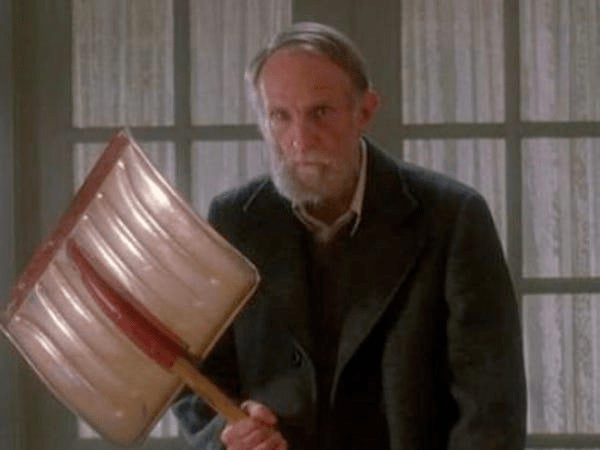
And strangely enough, a lesson in forgiveness shows up in Home Alone through the quiet, misunderstood character known as Old Man Marley. (Do you remember him?)

We first see him through Kevin’s fearful eyes—pale, silent, distant, dragging a shovel across the snowy sidewalk. But later, sitting together on a church pew, Marley finally opens up. He confesses that he hasn’t spoken to his son in years because of a painful argument. Pride sat heavy between them. Fear kept him from trying again. Regret made him feel paralyzed. And the saddest part? He watches his granddaughter sing in the choir but doesn’t go near her… because reconciliation feels impossible. It’s a like lesson for all of us and the baggage of anger, resentment and unforgiveness that many of use lug around with us. Some call it just a ‘chip on the shoulder’ but it’s more of an abscess on the heart which prevents any forward momentum because we’re anchored to this burden that could potentially be lifted if we were to just expose it and release it.

Maybe you’ve been there.
Maybe Thanksgiving brings you around people you love but don’t know how to talk to anymore, and so you’ve quit trying.
Maybe the table is set, but something unsaid still sits between you and someone else, and the weight of that baggage keeps nagging at your heart.
Maybe gratitude is hard this year because bitterness is louder than the quiet thanks, or maybe it’s overlooked altogether because of this mountain of hurt piled up at the door of your heart.

Scripture doesn’t ignore this ache. It speaks into it with both truth and tenderness. I want to explore this for just a moment. And I hope you’re still reading this:

1. Forgiveness Is God’s Invitation to Freedom

Bear with each other and forgive one another… Forgive as the Lord forgave you.
Colossians 3:13

Forgiveness isn’t excusing what happened. It’s not pretending the pain didn’t matter.
Forgiveness is choosing not to let the wound have the last word. If we do, it will just continue to fester in our souls and make us even more bitter in life.

When Marley admitted, “I’m afraid to call my son,” it wasn’t the conflict that trapped him—it was the fear of taking the first step. Forgiveness begins when we decide, “I won’t let fear freeze me anymore.” It takes real guts to be the one to initiate the forgiving. Most are reluctant to even entertain the notion because all-to-often pride gets the better of us.

2. Reconciliation Requires Courage, Not Certainty

If it is possible, as far as it depends on you, live at peace with everyone.
Romans 12:18

God doesn’t say reconciliation will always be easy. Or fast. Or neat. Or even possible – there’s a big “if” hanging out in this verse. Sometimes the other person isn’t ready. Sometimes the relationship may never look the same.

But as far as it depends on youyou can initiate peace.
You can send a text. Make a call. Offer a prayer. Turn toward the possibility instead of away from it.

Back to Home Alone and this scene for just another moment:
Kevin tells Marley, “You should call him.” It’s a simple, childlike nudge toward hope. Isn’t it interesting that children have the tendency to hitting the heart of the matter? If we grown-ups would just become wise like kids again. (Somewhere I hear Jesus scolding His disciples for trying to shoo off a bunch of kids from talking to Him.) Simplistic faith usually has the direct approach to life, while we ‘adults’ tend to overcomplicate every avoidance and insult. Why can’t we become child-like in our faith again? What’s stopping us?

3. Thanksgiving Isn’t Complete Without Grace

Blessed are the peacemakers, for they will be called children of God.
Matthew 5:9

At the end of Home Alone, there’s a brief moment easily missed unless you’re watching for it:

Marley stands outside with his son—talking, laughing, embracing. His granddaughter runs into his arms.
The family he thought he lost… restored. The snow falls. The world is quiet.
Forgiveness has opened a door he thought was locked forever.

That’s what grace does.
It rebuilds.
It reopens.
It releases both the wounded and the one who caused the wound.


A Thanksgiving Reflection

Here’s a quick reflection for each of us to consider.
This Thanksgiving, before the turkey hits the table, maybe take a moment to ask:

  • Is there someone I need to forgive, even if only in my heart for now?
  • Is there someone I need to reach out to, as far as it depends on me?
  • Is fear keeping me from trying, when grace is inviting me forward?

God specializes in resurrection—not just of souls, but of relationships.
Even the frozen, silent ones. Even the ones we think are beyond repair.

And who knows?
Like Old Man Marley, this might be the year something long-broken finally comes home.
Give this some serious though friends. Don’t live a life of bitterness when grace and even peace are possible for you right here and now. Find the courage and reach out.

Prayer:
Lord, as we give thanks this season, soften our hearts where they’ve grown hardened. Give us courage where fear has settled in. Help us forgive as You have forgiven us, and guide us toward peace where reconciliation is possible. Amen.

The Unnoticed Goodness

Thanksgiving has a way of slowing us down just enough to notice what’s been happening all along—the overlooked kindnesses, the small mercies, the quiet faithfulness that rarely makes headlines. It’s the season when we finally pause long enough to see the fingerprints of God on the ordinary. I mean, His presence is everywhere!

But here’s what’s been hitting me lately: some of the most powerful moments of goodness are the ones no one else ever sees.
No platform.
No applause.
No credit.
Just a quiet decision to do the right thing because it’s right.

Maybe it was the way you let someone go ahead of you in line, even though you were late.
Maybe it was the word of encouragement you sent that you thought was “no big deal.”
Maybe it was the prayer you prayed for someone who will never know your name.

Thanksgiving reminds us that gratitude isn’t just something we feel—it’s something we live. And when we live it quietly, faithfully, consistently… those moments echo. They ripple out further than we realize.

Scripture puts it simply:
“And let us not grow weary of doing good, for in due season we will reap, if we do not give up” (Galatians 6:9).

Doing good when someone is watching is easy.
Doing good when no one sees—that’s where character is formed.
And often, those hidden acts are the ones God uses to shape someone’s story in ways we’ll never fully know this side of heaven.

You may think you’re just holding a door, paying for someone’s coffee, giving a quiet offering, sending a text, praying a prayer.
But perhaps the person on the receiving end was standing right on the edge—and your small act of unseen kindness pulled them back.

This Thanksgiving, maybe the most meaningful gratitude isn’t found around the table but in the unnoticed corners of everyday life… where God is shaping the world through ordinary people doing ordinary good.

Not for applause.
Not for credit.
But for the quiet joy of reflecting Christ.

Three Questions for the Soul

  1. If God is the only one who notices the good I do this week, is that enough for me?
  2. Whose story could be changed by one small, unseen act of kindness from me today?
  3. Do I want to be known as grateful—or do I want to be grateful in a way that genuinely changes the way I live?

May your Thanksgiving be filled not just with gratitude spoken, but gratitude practiced—quietly, faithfully, joyfully.

Grace & Peace,
-Pastor Scott.

The Offering Plate is Half Empty – Now What?

Hey.
It’s Sunday morning.
The worship band just landed on that last sustained chord, the one that makes everyone feel like the roof lifted off for a second and maybe goosebumps have appeared on your arms.
But now, here comes the part nobody asked for on the original tour bus of Christianity: the offering.
The ushers start their slow walk down the aisle.
Baskets. Plates. Little velvet bags on sticks (Our church has the boxes in the back and we give afterwards).
Whatever your tradition calls it, it shows up like clockwork.
And lately, maybe you’ve noticed—like I have—that the plates (or in our case the Offering Box) looks…lighter.
Not dramatically empty, not yet, but definitely not overflowing.
Half empty, maybe even a little less than half.
And here’s the thing: nobody says it out loud, but everybody feels it. The pastor (me, in this case) feels it when the finance report lands in my email inbox before our next board meeting.

The treasurer feels it when the mortgage and other bills are due.
The single mom feels it when she drops in a twenty and wonders if it’s enough.
The guy in the back row feels it when he pretends to check his phone so he can let the plate pass by without anyone noticing.

So let’s just talk about it.

No announcements.
No guilt slides.
No Malachi proof-texts dropped like grenades.
Just us.

The offering plate is half empty—now what?

First, can we admit that tithing can feel like the last surviving relic of rule-based religion?
Ten percent.
The word itself sounds like it was invented by an accountant who moonlights as a Puritan right?!
And somewhere along the way we turned a wild, ancient practice of trust into a spiritual report card.

You didn’t hit 10%?
F minus in faith, see me after class.
No wonder there’s resistance.
No wonder there’s guilt.
No wonder some of us just… pass the plate. I’ve been on both sides of this.
I’ve been the broke twenty-something who genuinely had $11 in the bank and felt like a failure when the plate came.
I’ve been the pastor who stood up front and said “God loves a cheerful giver” while secretly scanning the room to see who looked cheerful and who just looked constipated.

Here’s what I’m learning—slowly, painfully, wonderfully: The goal was never to fill the plate.
The goal was to free the heart.

In the Old Testament, people brought crops, animals, oil, flour—stuff they actually lived on.
Handing it over was a way of saying out loud, “I can’t make the sun come up tomorrow, but You can.
Here’s my trust, in grain form.


Jesus sits down opposite the treasury one day and watches the river of coins clinking in.
Rich people tossing in heavy bags—impressive, loud, tax-deductible.
Then a widow drops in two tiny coins worth almost nothing.
And Jesus loses His mind (in a good way).
He calls His disciples over like He just saw the Grand Canyon of faith.
“She put in more than all the rest.” Not because the budget was suddenly balanced.
But because her heart was suddenly free.

If I’m honest – that story wrecks me, because I want my giving to be about freedom, not fear.
I don’t want to give because I’m afraid God will take something if I don’t.
I don’t want to give because I’m afraid the church lights will go out.
I don’t want to give because I’m afraid of what people think when the plate passes by my row (or I pass by the box in the back).

I want to give because I’m stunned again that everything I have is borrowed anyway.
I want to give because I walked into this building carrying wounds and walked out carrying hope, and somebody paid for that hope.
I want to give the way I want my kids to see their dad give—eyes wide open, grinning, no arm-twisting required.

So if the plate is half empty right now, maybe it’s not a crisis.
Maybe it’s just an invitation.
An invitation to ask better questions than “Am I hitting 10%?”

Questions like:
What would it look like to move from guilt to gratitude?
From obligation to overflow?
From resistance to release?

Start anywhere.
Five bucks. Fifty. Five hundred. Zero.
Just make it honest.
Make it a moment where you look up—literally or figuratively—and say,
This is me trusting You with what feels impossible to let go of.

Because here’s the secret nobody tells you in stewardship season: the plate is not a tax.
It’s a testimony. Every coin, every crumpled bill, every direct deposit, or online payment is a little postcard that says,
“I was afraid, but I did it anyway.”
“I was broke, but I’m not broken.”
“I thought I needed this more than God did… turns out I was wrong.”

So yeah.

The offering plate is half empty.
Maybe that just means there’s room for something new to be poured in.

Your move.

-Grace and peace,
Pastor Scott

View Post(opens in a new tab)

The Upper Room Door Buster

Hey friends,
it’s Scott, sitting here in an old office chair, it’s an old faux-leather thing that smells faintly of wood polish and long days or burning the candle at both ends. Outside of my window, there’s an old maple that’s bleeding out its last furious red, each leaf a small, slow-motion fire spiraling down to the ground like it’s trying to write something on the earth before it dies.


I can’t stop thinking about that upper room (John 20). The air was thick with terror and unshed tears. They too had probably been burning their candles at both ends. The disciples are all bolted in that musty room, breathing shallow, convinced the story just ended in a splatter of blood and a borrowed tomb.

Then the impossible.
He’s there.

Not a ghost.
Not a metaphor.
Flesh.
Breath.
Heartbeat.

And the first word out of the mouth that once called Lazarus out of the dark is the same word He offers them now: Peace.
But watch (watch close), because He doesn’t hide the damage. He lifts the robe, turns those once-ruined hands palm-up, lets the ragged light fall straight through the holes. The resurrection body still carries the crucifixion. The wounds didn’t get airbrushed out in some cosmic Photoshop.

They glow.

And I’m wrecked by this:
Maybe glory isn’t the absence of the scar but the scar set on fire by love.
I have scars that still throb when the weather turns. (Anyone else have old soccer knees and battle scars like me?)

You do too.
Places we were torn open and never quite sewn back the same.
Rooms we keep locked.
Stories we rehearse in the dark like a verdict.

But the Risen One walks straight through those locked doors, breath warm and steady, and says,
“Look. Touch. These are the places the nails went in… and these are the places the world will know it was love that held me there.”

The wounded hands are the ones flipping fish over coals at dawn, feeding men who swore they never knew Him.
The pierced side is the doorway He keeps inviting Thomas to reach into (doubt and all).
So maybe resurrection isn’t erasure.

Maybe it’s the wound transfigured, still telling the truth about Friday while singing the louder song of Sunday.
Maybe the cracks are where the light is planning its jailbreak.

So today, friend, open the fists you’ve been clenching around the shards.

Let Him breathe into the fractures.

Let Him turn the scar into a window.
Because the leaves are falling like grace, and the tree looks dead, but I’ve seen what happens in spring to wood that remembers it was once a cross.
The wounds remain.
The love remains more.
Grace & Peace be with you.
Really.

-Scott

Pouring Out, Lifting Up

(1 Samuel 1–2)

There’s a quiet power in Hannah’s story—one that speaks directly to anyone who has ever carried a burden silently, prayed a prayer desperately, or waited on God faithfully.

Hannah enters the narrative not with triumph but with tears. Year after year she bore the weight of unanswered longing. Yet what sets her apart isn’t simply her suffering, but her response. Scripture tells us that Hannah “stood up” (1 Sam. 1:9). That small, simple phrase marks a turning point. She rose from her place of discouragement and poured out her soul before the Lord with unguarded honesty.

No scripted prayer.
No polished language.
Just a heart laid bare before the God who listens.

And He did listen.

Hannah’s story reminds us that God is not moved by our performance—He is moved by our surrender. What she offered Him in tears, He returned in joy. What she released in prayer, He redeemed in His timing.

Then comes her song in 1 Samuel 2—bold, prophetic, overflowing with praise. Her voice, once choked with grief, becomes a testimony of God’s power to reverse circumstances:
“The Lord raises the poor from the dust… He lifts the needy from the ash heap.”

This is the rhythm of Hannah’s life, and often the rhythm of ours:
What we pour out before God, He is able to lift up in His grace.

For pastors, ministry leaders, and everyday believers, Hannah invites us into three timeless truths:

1. Honest prayer is holy prayer.
God meets us not in the prayers we think He wants, but in the ones that come from the unfiltered places of our hearts.

2. Waiting is not wasted.
Hannah didn’t see God’s silence as God’s absence. She stayed faithful, and God was quietly at work.

3. Worship is our witness.
Hannah’s song isn’t just gratitude—it’s testimony. It points beyond her blessing to the character of God Himself.

Perhaps today you’re carrying something heavy…
a decision, a fear, a disappointment, a prayer that feels unanswered.

Hannah’s story whispers to us:

“Stand up. Come before Him. Pour it out. God still lifts up what is surrendered to Him.”

May we learn from her courage to pray honestly, her faith to trust patiently, and her joy to praise boldly—believing that the God who lifted Hannah’s head is the same God who lifts ours.

Grace & Peace,
-Scott.

When Days Unravel (a poem)

When the day unravels
not in threads but in flames,
and everything I carefully stacked
topples without warning—
I forget how to hold myself together.
I forget how to breathe.

When trouble rises
like dark water creeping at my ankles,
when the walls feel too close
and every light in the room flickers out—
I whisper the smallest prayer,
and trust that You hear even that.

Prayer has never been my lifeboat of last resort.
It has always been the place
where I find myself again.
Where Your presence sits quietly beside me,
filling the gaps of my strength,
turning my trembling into victory,
again and again.

So here I am—
hands open,
releasing everything I was never meant to hold.
Letting the hurt escape on the exhale,
knowing You already understand
every sharp edge of my heart.

And tomorrow—
that wild, mysterious tomorrow—
belongs to You.
I’ll step into it
with trust as my footing,
and You leading me home.

-SStrissel 10/29/25

Blog at WordPress.com.

Up ↑