Let’s face it, the role of a Salvation Army Officer is difficult. I know…understatement of the century!
There are certainly joys…along with heartache and sorrows – it’s a mixed bag sometimes. We all wish that things would go according to plan, but most of the time we look like this: And, we hope nothing gets dropped along the way…
The question doesn’t become what can we do less of, but rather how can we do the good things better? How can we begin to focus on the strengths of our corps and our corps people?
If I have learned anything from Officership it is that we are very, very good at doing many things, but we do not do many things well. Perhaps it is time to stop meeting the average expectations, stop doing mediocre work because we’re spread far too thin to do anything well; and instead, focus on the things that make our corps or ministry unique and successful! To do this, sacrifices might have to be made, we might have to eliminate or reduce the amount of ‘spinning plates’, but we do no one any good if we implode from over-extending ourselves.
It would be so easy to simply offer you some amazing new Apps that will help you in your ministry. It would be simple to offer this new thing I found of the internet that other pastors are using…instead let me offer you 3 Resources that you already have and will not cost you a dime (except for your time and effort).
Pastoral Partnerships: The unfortunate side of ministry, it would seem, is that many churches and pastors are in competition for parishioners. It isn’t always intentional, but many churches have created their own silos, including The Salvation Army. Sometimes it’s pride, and self-reliance, but these silos prevent us from truly experiencing the fellowship of other ministries and resources because we cannot work with others. Visit other pastors in your community. Go to their churches (but not on Mondays = Universal Pastoral day off) and meet fellow workers in the fields of souls.I recently visited the pastor of our local Wesleyan Church. He called me up to donate some food to our soup kitchen, and I had not had the chance to meet him yet…so I personally went to see him. What I experienced in talking to him for only 45 minutes was not only refreshing to my soul, but it encouraged me greatly. We also struck up some commonalities, and resources were exchanged for the development of future partnerships together.
Fellow Officers, we are so much stronger together than we are by remaining in our individual denominational silos.
2. Community Connections
This resource is closely related to #1 as well as the continued need to get out of the silo…(perhaps you are picking up on the theme of this particular article). There are many people in your community right now that love The Salvation Army and they just need an invitation to help out. Be mindful that business professionals are very busy, so make sure the buy-in request is tangible, well thought out, and clear. You are looking for pieces to the puzzle to help with the over all mission, that Bank president can help in great ways provided that you put that ‘piece’ into the right place.
3. Leadership Development, Empowerment & Delegation!
The last resource (at least on this list, because there is SO much more that we could cover) is, in my opinion, the most important resource that your corps or ministry has – people who are already invested in the mission!! We are only as strong as the team around us. We as Officers are good at trying to do everything on our own, so much so that we often face burnout. In Exodus 18, we find a workaholic named Moses who is wisely counseled by his father-in-law Jethro. Jethro tells Moses; “what you are doing is not good. You and these people who come to you will only wear yourselves out. The work is too heavy for you; you cannot handle it alone.” (Exodus 18:17-18)
This is extremely wise advise to Moses and to us. We cannot do it all ourselves, so why do we try to be SuperOfficer? Why do we think it all has to get completed by us? This is where leadership development, empowerment and delegation comes into play. We owe it to ourselves and the future development and growth of our corps to raise up leaders who can help us. Perhaps those leaders are already there, they just don’t know it yet. This type of development and action will take time and patience, but your ministry will be stronger because of it.
Just think, every time we ‘go it alone’ we are potentially robbing someone of the opportunity to learn, lead and grow! Do you need help developing your team? Having struggles figuring out how this ought to be done? Consult your divisional staff, ask for help from other pastors, and perhaps do some research on how other corps are appointing leaders and developing them. Here is one resource that the Central Territory is using, and I know that there are other resources just like this in other territories.
Do not leave your corps members behind while planning for the future! Raise up others to help you accomplish the mission of the Army! It might be easier to do everything yourself, but entrust, empower and lead others to become better invested in the mission of this Salvation Army!
These are just three resources to help you become a better Officer, naturally, never discount or take for granted the power of the Holy Spirit in all of these ventures! He will empower you to do what must be done, so above all else, humble submit yourself to Him daily!
Something more for the Army world to ponder today!
God bless you!
“Therefore, as you received Christ Jesus the Lord, so walk in him, rooted and built up in him established in the faith, just as you were taught, abounding in thanksgiving…” Colossians 2:6-7
Last month a giant tree, strong-stout and regal, fell behind our backyard. We were very fortunate that it fell away from our property, the garage and family investment known as our ugly rolling turd (the RV). It appears that the cause of death of this might oak was soil erosion. Weeks leading up to its demise, we had a seven day span of unending rain. As it continued to rain, flooding occurred which led to the weakening of this mighty tree’s root system…there was simply nothing to hold onto anymore. With a sudden thud, the tree fell and that wonderful shady spot where Moms and Dads came to watch their children play soccer, became the grave of something that had once been so mighty and tall.
I am sure we will miss that tree this summer, when the sweltering heat cascades in waves around that High School Soccer field. We will miss the chirping birds who nested there and have now been displaced. The tree removal service has since come and gone, chopping that once majestic oak into fire wood and mulch, all because its roots couldn’t find anything to hold onto any longer.
My boys hanging out on that fallen tree before it was removed.
This real-life tale reminded me of how easy it is for mighty oak trees to fall…and for the holiest of believers as well. We are all susceptible to the trappings of sin, and many a tear has been shed for a saint who has fallen from grace. The names, at times seem to be many…and it causes a wave of exhaled breath when each one falls. Like a punch to the gut, we feel our hearts sink as the shock of it all can be felt like the sudden thud of a felled two ton oak.
It can be very tempting to think of this “root” problem as someone else’s burden to carry, but the very real threat is all around us. We cannot pity the fallen saint while we look from afar thinking that this could never happen to me. Beware of this trap dear friends!
Pay attention to the soil in which you sink your roots. Make sure they go down deep into the dark, rich soil of Christ himself. Because there will be rainy days again…there could also be floods that come and attempt to uproot you. Be mindful that what is done in secret is known to God, and that He longs for your integrity and honesty just as much as the world around you is clambering for truth.
I will miss that great oak, but I also am more sober; I am more consciously aware of the soil that my roots are currently in…and I long for them to become more profoundly rooted in the Holiness of Christ. How are your roots today?
Last year (2016), General Cox set forth an initiative called Journey of Renewal.
This initiative has been created to encourage, grow, and tackle many of the struggles our Army faces today. In some countries in recent years there have been horrific criminal events that have taken place, and in some regards this is the Army’s response as a preventative measure for the present and future.
I am greatly encouraged by this initiative, and see the possibilities of being truly transparent…but please afford me a small measure of cynicism too. I am hopeful, yet I am unsure if this can, or will actually work. (I really, really hope it does!)
I want transparency and accountability for all leadership.
I believe that this is not only biblical, it is also ethical.
Yet, I am unsure how this will be done from every level, when the accountability of all leadership is not currently in place yet. Sure, there are the yearly reviews and the audits and so on, but how does one thoroughly weigh the performance of Army personnel from afar?
We must tread carefully as we throw the word accountability around, because, as this initiative states, we must have proof with facts and not just rumors. Accusations and rumors can destroy leaders from every level if wrongfully accused, this we must be mindful of. On the same token, our accountability of leadership MUST encompass every level of authority from the top down. We cannot have true accountability until every rank, position and appointment are held to the same level. We cannot sweep things under the rug for one and enforce disciplinary measures for another.
We also should recognize that every level of leadership is fallible and is sometimes subject to making mistakes. A level of grace must be given while these measures of accountability are kept. Without grace, all of us fall short of the glory of God!
Please allow me to quote a portion of this initiative from General Cox:
“Being open and transparent. The Accountability Movement encourages people to be more open and transparent. Leaders should not ask ‘why do they need to know?’ but rather enable an open, transparent culture of ‘why shouldn’t people be told?’
Salvation Army leaders at all levels should encourage people to think, discuss and debate how the Army can be more effective, efficient and faithful in doing God’s will in our communities.
Mutual respect and truth. There must be a culture of mutual respect and truth-telling between Army leaders and those under their command. Developing this culture means that if leaders or followers behave badly there must be consequences. The General has made it clear that everyone needs to be held to account – but fairly.
The practice of complaining secretly or writing anonymous letters has to end. A new accountability culture will require effective processes to address the concerns of whistle-blowers – but allegations must be backed up with facts, not rumours.” http://accountability.salvationarmy.org/
I must tell you the portion that I am most wary of: “complaining of secretly or writing anonymous letters has to end…” I understand that there have been many forms of accusation in various places around the Army world, some legitimate while others slanderous and maliciously false. One of the causes of such a practice in our army (letter writing and secretly complaining) is that there is a very real fear of reprisals or punishment for those who would cry foul, and the fear is this punishment will be handed out by leaders in authority. Perhaps an officer has complained about leadership, and so without any investigation, that officer is either directly dealt with or sent to a punishment appointment in the hopes that they will then resign and then the “problem” officer is gone. Our Army is very good at holding our cards tightly to our chest. We are not very good at transparency, although at times we talk a good game…much improvement needs to take place in order to actually be transparent, and I think General Cox is right in talking about this and starting this initiative.
With that being said though, if transparency is to be fully realized there must be a level playing field for all Officers and soldiers (which I really hope this initiative produces). Some people in our Army do not have any way in which they can safely respond to improper use of authority and maltreatment. Where does a soldier go to report the misuse of authority by their Corps Officer? Where does a Corps Officer go to report the misuse of authority by their Divisional Officer? The list goes on. Who will really listen to them and actually take them seriously and look into it? And if something is found, will anything really be done unless it becomes a legal issue?
Please do not misunderstand me, I am not advocating any kind of witch-hunt in our Army by any means, all I am inferring is that everyone who holds a shred of authority from the General on down to the local officer in a corps should be held accountable in the same way. Yes, the level of responsibility is different, but everyone should be striving for the same goal: Christ-likeness and Kingdom building. If another ambition or goal has been improperly submitted, then hold that person accountable and measure the fruit that each produces.
“ new accountability culture will require effective processes to address the concerns of whistle-blowers”
I am very curious to know what “effective processes” actually means?
Dear Salvation Army, if you want to be truly transparent, then these effective processes will be explained in greater detail in the near future. I am encouraged by this initiative “Journey of Renewal”! I see great things taking place if this is followed through with. If we want to see real change and renewal in our Army, we must make the hard decisions; we must confront sin issues and deal with them, but we must also do it with grace and love. We have to take responsibility for our actions from the top down and the bottom up! No one is more important than the next, and if we are leaders, we must be servants first.
Please pray for your leaders, the greater the responsibility of leadership one assumes the more temptation there is, and they face a lot more pressure as well.
May we hold each other accountable for no other purpose than to see lives transformed by the renewing power of the Holy Spirit and to witness the lost being found by a mighty, mighty God!
Something more for the Army world to ponder today!
Tell us what you think! Do you think this new initiative will work? How can we make it work in our community/ministry? How are you already doing “accountability” in your appointment, corps, ministry?
Leave your comments, questions and thoughts below.
Thanks!
Disclaimer: “The thoughts and opinions written here are the writer’s and not necessarily that of The Salvation Army’s, reader discretion is advised.”
As with many of these articles, hear me out before you tell me how outraged you are that I would say such a thing. Let me start by asking you four questions: 1. What is your Sunday service called? Is it called a Holiness Meeting or “Worship Service” (or perhaps even Church Service)? 2. Is Holiness lived and taught in your corps? 3. Is Holiness a focal point of your corps and it’s ministries?
4. What is the thrust of your local mission in your corps/appointment? Is Holiness a portion of this?
If you can’t honestly say “Yes” to these questions, then perhaps we ought to see where the grave of holiness is located in your building. The Salvation Army was a large part of the Holiness Movement. I do not believe that our numeric and spiritual growth stemmed from obedient officers or because we had a “tighter” core group of leaders in our Army world, instead I believe we as an Army, recognized and believed in the transforming power of the Holy Spirit in people’s lives. I think the crux of our present age is that fewer and fewer soldiers have this realization any longer. Dare I say this is true for Officer and Soldiers in the corps. I am not questioning our salvation, for I think this remains intact, but I am questioning whether or not we believe in an Almighty God who still performs miracles in the worst of sinners?
Brother and Sisters in Christ, we cannot live and die by our seeker’s registry. This is a tremendous indication of changed lives, but it MUST not stop there. We ought not to simply celebrate the statistical measure of our seekers at the mercy seat. We ought to be discipling those newly saved souls. This is where I believe the Army has fallen short and is in dire need of changing. There has to be more than just converting people to Christ…once they get up from the mercy seat what do we do with them? Do we have measures of accountability? Do we have saints who can mentor and disciple them? Salvation at the altar is only the beginning!!
(Let me also interject for a moment that statistics can become a poor surrogate for a disengaged style of leadership. What I mean by this is, statistics by themselves can be a helpful tool when used correctly, but a harmful tool when context is not considered).
I digress…
The Holiness Movement is dead because we have worshiped at the church of numbers and figures instead of at the altar of transformation and grace. We have lost our movement and exchanged it for a growing organization dependent upon successful programming and business operations. Some of this cannot be helped. A growing Army requires more guidelines and policies to govern its structure, but at the same time I fear we have sacrificed our very soul in an effort to remain our country’s top charity or top nonprofit…but perhaps we have lost something much more vital within our DNA as an Army of Salvation.
The Holiness Movement is dead because we have exchanged The Holy Spirit’s leading at times for ambition, power and dollar signs. Many of our sacred spaces have been relegated to tiny chapels with no vision for growing souls and more vision for feeding stomachs. Please don’t misunderstand me, we do indeed reach lives for Christ by first feeding and clothing people, but what if we have become so focused on the feeding and clothing people that we have neglected the salvation? What if we have, in essence, told Jesus to wait in the vacant chapel while we filled the box of food for families? What if we have forgotten our hearts to God while we have been reaching out to man?
A Resurrection?
I pray that we can bring the dead back to life!
I pray that we would wake up and recognize the deep need of a Holiness Army once more. I pray that we would wake up and recognize that in all of our strength and power and might we are nothing apart from the Holy Spirit’s leading. In my American slang, perhaps we have “grown too big for our britches” and in our pride and even arrogance we have begun to lead ourselves instead of allow the Holy Spirit to lead us.
Make no mistake, the enemy, The Father of lies is perfectly content in watching us self-destruct in our polarizing visions and missions and efforts. Satan would celebrate in our death as a movement in exchange for another social service organization or social club. But with God all things are possible! With His power we can come to life again in the places of dormant holiness and floundering mission. We do not need more meetings to do this. We do not need more programs to institute this. What we need are soldiers willing to commit to prayer and discipleship. We need soldiers committed to living lives of holiness, which is very contrary to the society around us today! We need an Army mobilizing on Holiness and not just a march in uniforms. There has to be an inward change before we can externally represent His presence in the streets!!
Lord resurrect our Army!
Resurrect this passion in me!
I want to be Your reflection
Resurrect your presence in me!
Something more for our Army world to ponder today!
Now, tell us what YOU think, leave your comments, questions and snide remarks below.
**Disclaimer: The thoughts and opinions expressed here are that of the writer’s and do not necessarily reflect the thoughts and opinions of The Salvation Army. Reader discretion is advised.**
The primary purpose for our founders in creating The Salvation Army was to be a Lighthouse, a beacon to the lost. We were founded to help the lost, the drowning the marginalized in society…those who were not welcome in Church. We are a holiness movement, and our origin story is all about gap ministry. We go to places that the Church has forgotten or, in some cases, refused to go.
Why then do we make it such a focus to emulate or replicate the Church?
I do not wish to disparage any church but as a practice, many times Church (big C) gets it wrong. The Salvation Army was created to be a “door-opener” – a ministry in which people felt comfortable with, where lives were being touched because the physical needs were met first. But over time, I feel that we started looking around at the explosive growth of churches and mega churches and longed to be like them…when our mission and vision is nothing like them. It’s like this: We are all a member of the Body of Christ, some are the hands, some are the feet…but what happens when the hands look over and see the feet and they begin to try and act like feet? What happens is we have a polarizing body that is not functioning as it was intended to function. This is what I believe has become our downfall as an Army. We were called to be the hands of Christ to the unchurched, to the depraved, to the marginalized of society…but we are trying to act and look like another ministry.
Getting Rid of “Church”… 1. Stop labeling “Worship” only what we do with music… We need to rid ourselves of the Church of the worship of music!
Worship is so much more than music on Sunday mornings. Worship is not just your praise band or your brass band and special music. Worship IS holistic and it encompasses every aspect of who we are as Soldiers of this Army, just as Holiness is our aim in every facet of life! Worship is the response to God’s wondrous love for us. We worship in the van as we pick up people for Holiness meeting. We worship as we go to midweek bible study or other such programs. We worship as we clean the corps bathrooms (this might sound funny, but we once had a blind janitor who could be heard singing hymns of praise while he clean the toilets and washed walls – he taught me a lot about worship).
2. Stop thinking Church as only what we do on Sunday… This notion of “Church” really should be eliminated so that we can get on with going for souls and going for the worst! Church is NOT what we do on Sundays! We worship the Lord on our Sunday Sabbath day. We collectively get together on this day and sing, pray, encourage one another and hear a message…but Church is not only a Sunday thing. We we have this mindset that Sunday is separate from the rest of the week, and that “Church” should only occur on Sunday then we have lost our mission as an Army. Getting rid of this notion of “Church” will open up the possibilities that our Soup Kitchen days, and our Food Pantry days, and our youth program days…IS ALL MINISTRY!! Every facet of these vital “soup, soap, salvation” elements is another opportunity to share Christ, disciple lives and encourage the downtrodden. This is what Church should’ve been…and what we ought to strive to BE. Your congregation is NOT Sunday, but everyday – everyone who comes to your corps, who receives services, who asks for help, They are your congregation!
3. Create Community Not Programs! We as an Army are so good at creating programs.
We have programs for everything – we even have programs for programs.
It is not the Army’s mission to create more programs, it is our mission to create community and save souls in Jesus’ name! When we aren’t engaging our community with the elements we are using, perhaps it’s time to rid ourselves of the Church of Programs!!
Programs can become our Church and we are so caught up in our program bubbles that we cannot see what families and individuals are truly in need of. We think, we’ll just start a new program to reach them, when in reality what every person craves is a place to belong and to find encouragement and feel that they are a member of the community.
4. Create an Environment of Ownership!
Lieutenants, Captains, Majors & perhaps a few Colonels & Commissioners – We must stop trying to run everything ourselves. Stop micromanaging. The Army, at times, worships at the Church of the Micromanagers and we must rid ourselves of this Church!! What we do by micromanaging is create a corps of dependency. By this I mean is the attitude or belief becomes “since the Officer runs everything, we can sit back and watch since they don’t need me anyway.” If you have doers in your corps, they will quickly become frustrated and perhaps seek somewhere else that they will be used. Stop micromanaging and start delegating leadership and other duties to others in your corps! Begin to create the environment of ownership.
Do you remember what Jesus did when they were facing a mass feeding problem of about 5,000+ people? He didn’t immediately take charge, instead he went to his disciples and said, “feed these people”. Of course the disciples were in shock and did not know how to proceed, the cost was too high and they only had five loaves and two fish. But do you remember what Jesus did with their effort? He multiplied it.
In a very real sense, the Holy Spirit will do that in our corps too when there is an investment and ownership by others. We as officers and leaders have to relinquish our drive for perfection and our grip on authority and allow others to be discipled and in turn they will own their shared portions of responsibility.
I know there is much more to cover on this topic.
What other Churches do we worship at that we should rid ourselves of?
We are a gap ministry, a safe harbor for hurting people to come and find a home.
The Salvation Army needs to rid itself of Church so that it can fully embrace its Holiness as a Movement of Christ.
Something more for our Army world to ponder today.
What do you think? Tell us by commenting, offering your thoughts and opinions.
*Disclaimer: The thoughts and opinions expressed here are the thoughts and opinions of the writer and do not necessarily reflect that of The Salvation Army. Reader discretion is advised.*
I’ve been doing some research on Millennials…I happen to have two living in my home.
More and more I see young people reaching a certain age in our corps, perhaps around 16 – 18 and then they simply vanish from our doors. They might reappear from time to time, but they never stay. It saddens me to see The Salvation Army (and most North American denominations) experience this. I felt led to explore this topic, not with any agenda other than trying to understand why we are losing such an important generation…a generation that will one day run our Army. What I found was alarming, and I simply want to transplant some of these findings on The Salvation Army in the hopes that we can recognize and perhaps help stave the exodus of an entire generation. I also want to firmly acknowledge that not every Millennial falls into these category, but a majority of those who leave our corps and its ministries perhaps might have the following reasons for doing so, (whether true or assumed truth by the one doing the leaving).
4 Reasons The Salvation Army Is Losing Millennials:
“God Can Be Found Elsewhere” In a 2015 Barna study, nearly 39% of Millennials believed that God could be found elsewhere and one did not have to attend church in order to find Him. This is troubling in that our Corps ought to be a place where God is very real and present. Is He in your corps? How can we impress upon our young people that God might not be tied specifically to our corps halls but to sacrificial living? Perhaps it has to begin by living that belief out. I wish to applaud those in my life who became that example for me. Many wonderful officers and soldiers displayed their holy living through their kindness, grace and love. Perhaps we need less rhetoric and cliche mottos and more evidence of belief in those mottos being poured out into our lives and spilling itself out into our communities. No, God can certainly be found elsewhere, but is He evident in us?
Millennials Can Spot Fakes
We’ve all seen the televangelist on TV with the gleaming porcelin teeth and the empty messages of prosperity and joy without ever mentioning godly principles, character and sin. There is a deep longing amongst millennials for the return of the sacred to our churches and corps. The message of wearing a uniform as our only testimony to an inward change is not enough, we must enact that change and live it out. This is of course true for every generation, and the necessity for Holiness in our movement is vital for all. Thus, when we talk a big game but nothing ever materializes or happens millennials will spot the phoniness and run for the exits. We can dress the part, we can say all the “hallelujahs” and “fire a volleys” until we are blue in the face, but if none of it translates into Holy living, you can bet that sort of fakery will be seen and once seen very hard to recover from.
What Millennials want in its officers and soldiers are people who are real, people who are genuine. They want to see real people struggling with real stuff and not hiding or pretending everything is fine. This is extremely vulnerable for both sides: to admit that though we live out holiness we still encounter hardships, doubt and fear. Soldiers, be real…don’t put on masks, don’t lie when things are not going well. Live Holiness out even when the ugliness of life can be seen.
Hypocrites In Uniforms Coupled with spotting fakes, Millennials are repulsed by hypocrites who preach one thing but live another way. The “do as I say, not as I do” motto needs to die not only in the Church but in our Army as well. If it exists, stamp it out, address it, don’t let it fester and lead to the spiritual death of your corps body. I have heard of corps (years ago) who had bandsmen who would dress up in their uniforms just to perform in the band and as soon as their part in the service was complete they would rush out the back door and leave – what kind of witness is that to our young people? Millennials have also seen moral failures in society, and perhaps even in the Salvation Army. Divorce rates have been on the rise and half of millennials will be coming from either one parent households or having split their time in two homes. Some have witnessed the effects of moral failure first hand in family members and most deeply desire to change that narrative in their own lives.
Other instances could involve Officers and soldiers forming intentional or unintentional private/exclusive groups in the corps, and fail to include others seeking fellowship. Perhaps some have experienced mean people in the pews of our corps and wondered to themselves “is this what The Salvation Army is all about?”
I will guarantee that #3 rubs many of us the wrong way – good, because it ought to. We should never be perceived as hypocrites in uniform. If we aren’t inclusive of people from all walks of life, then we really have no place being an army of Salvation. All are welcome into our services in order to experience the love of God.
“Beware of practicing your righteousness before other people in order to be seen by them, for then you will have no reward from your Father who is in heaven. “Thus, when you give to the needy, sound no trumpet before you, as the hypocrites do in the synagogues and in the streets, that they may be praised by others. Truly, I say to you, they have received their reward. But when you give to the needy, do not let your left hand know what your right hand is doing, so that your giving may be in secret. And your Father who sees in secret will reward you. “And when you pray, you must not be like the hypocrites. For they love to stand and pray in the synagogues and at the street corners, that they may be seen by others. Truly, I say to you, they have received their reward.” Matthew 6:1-5
Lack of Ownership
Millennials want to belong to something great.
They believe in charity, giving and helping people in need. There is a real passion to serve within causes that matter and make a difference. When we emphasize world services – they want to contribute and help out in tangible ways. When we do not allow them to participate because they are young, do “don’t know anything” we are essentially closing the doors to their future in the Army. Millennials want to have an invested interest in the Army – but how can we empower them and raise they up to lead? There needs to come a point, and perhaps in some places this is already happening , that we not only invest in the younger generations as an Army, but we allow them to take leadership positions in our corps and relinquish our grips on some roles of authority and allow them to help. When we grant a genuine investment piece for our youth, they will have a sense of belonging and a deeper desire to serve and to be use – because they will be making difference.
These are just four reasons the Salvation Army is losing millennials. I fully acknowledge that churches in other denominations are facing the same crisis. But for just a moment, let me ask you – What is the Army doing to ensure the next generation doesn’t flee its ranks? What can be done? More importantly, what are YOU doing? Because our Army is only as strong as its members are proactively engaged in its mission.
We don’t need to spruce up our worship bands, or make sure we have attractive looking corps or programs, what Millennials (and non-millennials) are looking for is a warm, inviting place to belong – is YOUR Corps that place?
*Disclaimer: The Views and Opinions of the writer of this blog are not necessarily the views and opinions of The Salvation Army. Reader discretion is advised.”
Dear Officer,
what does your normal day look like?
Are there reports to submit, bills to sign, checks to deposit, phone calls to be made, budgets to be crafted (or re-crafted for the 10th time), personnel fires to put out….? Does that sound about right? I probably forgot to add, routine maintenance to schedule, board meeting details, corps council action steps to follow through on, people in visit in the hospital, statistics to enter, important community meetings to attend and perhaps a club meeting to participate in…and THAT sometimes is just the tip of the iceberg.
Commissioner George Scott Railton once said, “God requires the duty. If its performance brings no return, that is God’s affair not yours. The soldier who has obeyed every order comes back from defeat, as from victory, with honour.”
I often mistake business for duty, don’t you?
It seems we as Officers and even Soldiers are so good at busy-work that perhaps at times we miss the ministry altogether. We are very good at being soldiers and obeying orders yet miss the mark on pastoral ministries…and each one of us are pastors and ministry ought to be at the forefront of what we do in and out of uniform. If we work hard and climb whatever ladder we aspire to, yet lose the “Salvation” in our Army, then we will have lost everything and all of our hard work (duty) will be for naught.
Here are 4 steps to help each of us find the time for ministry again.
I hope and pray this will be beneficial to you as you read these. Most will seem quite obvious, yet actually following through on them intentionally will certainly be harder.
I also acknowledge that these suggested steps could include many more, yet for the sake of time a succinct list has been compiled here for us to consider. Also note that it is quite difficult to quantify these and wrap them up in a nice red bow, so as you read, perhaps you will discover other steps that I would ask you to share with us if you would be so kind.
HOW TO FIND THE TIME FOR MINISTRY IN 4 Steps:
Recognize Everything As Ministry As someone once pointed out everything is spiritual, there should be no compartmentalizing of our various tasks and that of holistic ministry. I know a financial planner in our community who makes a point of praying for every client that comes to visit him. He has even prayed with me there in his office. These prayers that he offers are not pithy cliche prayers either, but one can feel the presence of God while he prays for you and the present circumstances that you are facing. He considers his office not only the place he draws his paycheck from, but a chapel in which he ministers. Perhaps we have not made our officers our chapels of ministry. Perhaps we get so bogged down by what is required of us that we forget to include God in those spaces in order to make them sacred. Everything we do from the most mundane of things to the most important things ought to be considered ministry – not some laborious task to get accomplished.
Martin Luther King Jr is quoted as saying, ““If a man is called to be a street sweeper, he should sweep streets even as a Michelangelo painted, or Beethoven composed music or Shakespeare wrote poetry. He should sweep streets so well that all the hosts of heaven and earth will pause to say, ‘Here lived a great street sweeper who did his job well.”
Consider each task ministry – from the least to the most important!
Intentionally Pray And Plan
We undoubtedly do our ministry a great disservice when we do not first intently pray for it and for those we will meet along its path. Prayer should never be the last resort, but the first weapon in our spiritual arsenal. If we aren’t burdened for the needs of others through prayer on our knees then we ought reach deeper into ourselves and explore our hearts and motivation. When we pray for each segment of our officership and appointment, we will find that our hearts are attuned to the moving of the Holy Spirit. If everything we do is spiritual, then why do not pray in such a way? When we intentionally pray and make this a spiritual discipline we will be better equipped to make the necessary plans that our ministries so desperately need. Don’t stumble into your day or week having now idea what you wish to accomplish. Don’t wait until the last minute to pray for our congregation and those you minister to. Keep them in the forefront of what you are doing, after all, the paperwork and reports are all because they are vitally important to you and to God. Do not make haphazard plans at the last minute, throwing things together and hoping they all pan out…do yourself a favor and your soldiers a favor and make intentional, prayerful plans that will form and shape lives for Christ.
Intentionally Show Up – Practice Presence I catch myself doing this, and I recognize my own conviction here:
Put down the cell phones, put away the distractions…close the laptop and look your people in the eye. Show up to your appointment ready to serve the Lord and those He has placed on your path. Practice the presence of availability. It almost seems contradictory, but forget those reports and the paperwork and spend time talking to your staff, your volunteers, your corps members…they are all members of your flock. They will know if you are not actually available to them just by your emphasis on the “important stuff” that consumes all of your time. I would imagine nearly 99% of us officers are guilty of this at one time or another. Show up and be present. Ask God to give you His eyes to see the needs around you. Spend time drinking coffee (or tea or water) with those who frequent your soup kitchen. Invest yourselves in the lives of people and do not stop with those who wear our uniform and within whom we already know. Step out of your comfort zone and be available to listen, serve and love.
Focus On Lives Not Numbers! This step goes hand in hand with #3.
Be mindful that our “end game” is not filling the statistics with numerical growth.
If our sole focus is on building our Sunday stats with attendees then all that we will be focused on in church invitations and getting people through the doors of “Sunday Church”….have you stopped to consider that EVERYTHING we do is Church? Have you considered that perhaps your biggest ministry isn’t on Sunday morning but during the week when you encounter broken people earnestly seeking help? These are members of your flock that often get taken for granted. They may never ever darken the doors of a traditional church, but 9 times out of 10 they call The Salvation Army their church home because we feed them on a regular basis and there are people who care for them. Focus on individual lives of people, how to reach them, pray for them and with them. Care about them…forget numbers, numbers will take care of itself if we are loving people and earnestly placing their needs at the foot of Christ.
Evangeline Booth once said, “It is not how many years we live, but what we do with them.” Allow me to adjust this quote to fit you the Officer today, and I do not think this loses any emphasis in doing so: “It is not how many years of service you have, but what you do with them.”
Something more for our Army and our Officers to consider today.
Blessings!
Please tell us what you think and offer additional steps you might offer in addition to these. Thank you!
*Disclaimer: The thoughts and opinions expressed in this blog are the writer’s thoughts and opinions and do not necessarily reflect the opinions and thoughts of The Salvation Army. Reader discretion is advised.*
Recently my family adopted a small kitten.
We thought it would be good for our eight year old twins.
By that I mean we made the mistake of driving past a pet store, and then walking by the little kitty jails they have at those establishments…and the rest as they say, is history.
So we now have this newly adopted kitten in our home.
He is a wild and crazy kitten, I suspect like most kittens his age.
Recently he has taken to attacking our legs as we walk by, and in the morning it is now routine for him to perch in an opened, yet screened in, window and maliciously listen to the birds chirping in the nearby trees. This kitten is domesticated, yet there is still a wildness about him. He would most likely attack, kill and consume a bird if opportunity were to strike in his favor. It is in his nature to be this way – with claws flared and crouched in a stance ready to pounce.
I recently read a news story (it literally happened today) about a mountain lion that had gotten into a family home through an open patio door. When the mother and daughter awoke in their bed at 3am to the loud barking of their small dog, they saw the shadow of an unknown animal lurking in their home. In a matter of moments, the mountain lion had left the foot of the bed with the family dog in its jaws. Isn’t nature truly wild? It is in the nature of wild things like that. Call it instinct or something in their DNA, but it is how these creatures innately are – predators by nature.
It made me wonder about our humanity as people.
More importantly, how we are made up. It is in our DNA.
We have a nature too.
In Genesis it says that we were created in God’s image…though it is marred because of sin, that image is still there, within us. More importantly, our spirits are naturally drawn to our Creator…many don’t know it, but this is why we question, why we seek, why we search our world for answers to all of life’s questions. We were made this way. Just as that kitten is instinctually drawn to pouncing on its prey, we are instinctively drawn to truth…and the Chief truth is found in the author of truth – God himself.
I am drawn to the children’s story of The Lion, the Witch and the Wardrobe by C.S. Lewis, and when one of the children asks if Aslan is safe they get this reply – “Safe?” said Mr. Beaver; “don’t you hear what Mrs. Beaver tells you? Who said anything about safe? ‘Course he isn’t safe. But he’s good. He’s the King, I tell you.” God isn’t safe and sin cannot stand in the presence of God without being vanquished. Without getting too theological, His goodness quickly overpowers and kills sin and darkness. Hence this search for truth in our lives – we long to be reunited with the Author of Truth and Goodness. It is in our DNA to seek Him out. Some will blatantly reject Him for various reasons in life, but in general, we all long to rid ourselves of guilt, shame, sin, sickness and death – Christ is the answer, and He is the One we have been searching for in this life. Is following Him safe in this life? No, many perils and dangers will come because of this choice to follow Him. The path may, in fact, become harder for us, but the journey will provide hope, joy and peace despite the circumstances or bumps along the way.
Sure, that kitten maybe a handful, he may even wreck havoc on the bird population in our neighborhood, but this is in his DNA, this is what he was born to do…and purring as goes…what is in your DNA? Let me reassure you that how you were made is no accident. We the created intrinsically long for our Creator…and we have been created for so much more than this.
-Just a thought.
The title of our devotional today bears a similar title of the 2004 Mel Gibson Biblical drama of the final 12 hours of Christ’s life, through the crucifixion with a brief glimpse of the resurrection. You’ll recall it was very controversial for its brutal description of the crucifixion scenes and brave for filming the entire film in Aramaic at the same time. The film grossed over $612 Million during its release and received three academy award nominations. And we’re still talking about it today as probably one of the best depictions of this day in history.
It never ceases to amaze me, and I have said this before and will probably say it many more times before the Lord calls me home, we, as the church, continue to recreate these significant days in our church history. In fact millions of Christians already have retraced the steps of the Via Delarosa this day, both in Jerusalem and in various other parts of the world. It is sad to say but there probably some Christians who have followed the cross today and have lost their lives for doing so.
So that I do not assume too much, when using the term passion – I am talking about the extreme suffering, originally referred to as the last agonies of Christ. This is the supreme act of Agape’ love from God to mankind.
Isa 53:4-6
4 Yet it was our weaknesses he carried; it was our sorrows that weighed him down. And we thought his troubles were a punishment from God, a punishment for his own sins! 5 But he was pierced for our rebellion, crushed for our sins. He was beaten so we could be whole. He was whipped so we could be healed. 6 All of us, like sheep, have strayed away. We have left God’s paths to follow our own. Yet the Lord laid on him the sins of us all.
Holy Bible, New Living Translation
The key thought in Isaiah’s prophetic word, (Isaiah 53:4-6), deals with the sweet exchange – Our weakness/He carried – our sorrows/that weighed him down –He is pierced/for our rebellion –He is crushed/for our sins – He is beaten/so we could be whole – He is whipped/so we can be healed.
So for the few minutes that I have your attention, I challenge you to consider two things during this dark moment in our church history…
LET’S TRY TO UNDERSTAND CHRIST’S SUFFERING
William Barclay writes about the common criminal customs amongst the Roman government: “It was custom that he, the criminal, should carry the cross beam of his own cross; the other part was already waiting for him at the place designated for crucifixion. The charge for which he was being executed was written on a board; it was either hung around his own neck or carried by an officer in front of the procession, and was later affixed to the cross itself. The criminal was led to the scene of the crucifixion as long a route as possible, so that as many as possible might see him, and take warning from the grim sight.”
We know, from reading the passion story, that the procession to the cross only happened after three illegal trials, with Christ being subjected to insults and allegations, all while refusing to defend himself. He was passed from soldier to soldier, humiliated, stripped, beaten, spat upon and new being dragged down the main street of Jerusalem.
This treatment of Christ did not fit into the neat concept, dream and hope of the majority of Jews when it came to the coming of the great Divine, The Messiah.
I loved the picture that Matthew and Luke paint for us in their narrative of the Triumphal Entry. Can you imagine the likes of Judas or Simon the Zealot mumbling under their breath…? “The colt of a donkey? Never! Messiah should be galloping into the city of God and Kings on the back of a Stallion, signifying his coming as the triumphant victor.” But that is not the way he came, which warns us of our own preconceived ideas of who Christ is and what his desired outcome should be.
See him struggle under the weight of the cross/beam, falling to his knees, looking up into the face of crowds of people, some of whom are compassionate, while others are shouting condemnation. Hear, if you can, one Simon of Cyrene being conscripted into service by the harsh voice of the Roman soldier in Luke 23:26.
There is a series of very beautiful pictures in the cathedral at Antwerp, which represent Christ hearing His cross from the Praetorian to Calvary. These pictures embody the popular idea of Christ’s weakness and exhaustion. In one He stands calm and erect, in another He is bending under the weight of the cross, and in another He has fallen beneath the load that was laid upon Him. It is at this stage of the proceedings that Simon, who is passing by, is arrested, and compelled to bear the cross after Christ.
I suspect Simon had no idea what he was about to be called on to do…likewise, bearing the cross of Christ today could come out of surprise. Please be aware that all you may endure in this life should not necessarily be considered as bearing the cross of Christ. Many of the issues we face may be as a result of our own poor, selfish decision making and does not deserve the high honor of bearing Christ’s cross. Bearing His cross brings him glory and honor to the church. Living with the consequence of our own sin does not. So be careful of misusing the noble term of “Cross-Bearer.”
We need no commentary to explain the suffering of Christ, Lamb of God, We simply paint the background and that is descriptive enough.
Vernon McGee would say, “The pain will attract the people.”
Church history records the following regarding Clovis King of the Gaul’s from 481 – 511, “When Clovis Leader of the Franks, was told about the crucifixion of Christ. He leaped to his feet, drew his sword and exclaimed, ‘If I had only been there with my Franks.” But Jesus didn’t need the Gaul Army or any army for that matter. As the old song says, “He could have called ten thousand Angels to destroy the world and set him free, He could have called ten thousand Angels, but he died alone for you and me.”
As he hung on the cross, the voyeurs standing watch challenged Jesus to show them his power. Another way we might put it is, “we would just believe if you would just show us you can Houdini your way off that cross.” Listen to them using the glory of Christ to mock him…
Matt 27:39-44
39 The people passing by shouted abuse, shaking their heads in mockery. 40 “Look at you now!” they yelled at him. “You said you were going to destroy the Temple and rebuild it in three days. Well then, if you are the Son of God, save yourself and come down from the cross!”41 The leading priests, the teachers of religious law, and the elders also mocked Jesus. 42 “He saved others,” they scoffed, “but he can’t save himself! So he is the King of Israel, is he? Let him come down from the cross right now, and we will believe in him! 43 He trusted God, so let God rescue him now if he wants him! For he said, ‘I am the Son of God.'”
Holy Bible, New Living Translation
William Booth is recorded as saying, “It is precisely because he would not come down that we believe in him.”
No amount of descriptive words will ever do justice in describing the horrible humiliation and suffering our Savior endured for you and me.
O sacred head once wounded,
With grief and pain weighed down,
How scornfully surrounded
With thorns, thine only crown!
How pale art thou with anguish,
With sore abuse and scorn!
How does that visage languish
which once was bright as morn! Paulus Gerhardt
LET’S TRY TO COMPREHEND GOD’S SUBSTITUTION PLAN
I don’t know about you, but I get chills up and down my spine when I see or read about those times when the team, as they were, could not win the prize or accomplish the goal. The coach then calls on the one person, the person that no one expects to accomplish the seemingly impossible. When the substitute enters the arena and accomplishes what seemed all but lost, we rise to our feet and stretch out our arms and cheer for all we, and they, are worth. The substitute is worthy of the team’s acknowledgement and praise.
John Stott, author and theologian writes: “The concept of substitution lies at the heart of both sin and salvation. For the essence of sin is man substituting himself for God, while the essence of salvation is God substituting himself for man.”
We see the picture of Christ, the substitute, implied and explicit, all the way through Scriptures.
We see an act of redemptive bloodshed in Genesis 3:21, as an animal sacrifices its life and coat to cover the nakedness of mankind.
We are witnesses to the attempted sacrifice of Isaac by his father Abraham, along with the surprise substitution that arrives through a ram caught in the thickets (Gen. 22:13).
In Exodus 12:21 we note the instruction of the preparation of a Passover lamb whose shed blood will serve as an act of Salvation for God’s chosen. Interesting that the substitute is always a willing participant in the Divine transaction.
As one moves to the New Testament we hear John the Baptizer declare upon seeing Jesus, his cousin, coming to be baptized, “Look! The Lamb of God who takes away the sin of the world!” John 1:29
The transformation of Peter should amaze us, it does me. You hardly recognize the impulsive, blustering Peter at the end of his life compared to his first baby-steps with Jesus. That’s the way it should be in all our lives I suspect. Listen to the Holy Spirit-filled wisdom of the more mature Peter helping us understand that God’s plan of substitution was no accident and that it all began way before the creation of the world.
1 Peter 1:18-21
18 For you know that God paid a ransom to save you from the empty life you inherited from your ancestors. And the ransom he paid was not mere gold or silver. 19 It was the precious blood of Christ, the sinless, spotless Lamb of God. 20 God chose him as your ransom long before the world began, but he has now revealed him to you in these last days. 21 Through Christ you have come to trust in God. And you have placed your faith and hope in God because he raised Christ from the dead and gave him great glory.
Holy Bible, New Living Translation
And this brings us back to our text from Isaiah 53, verse 7 & 8; perhaps one of the most descriptive portions that help us note God’s plan for this substitute for your sin and mine.
What we deserve is death but we need not experience it all because of God’s amazing grace.
Hear Isaiah’s voice clearly state…
7 He was oppressed and treated harshly, yet he never said a word. He was led like a lamb to the slaughter. And as a sheep is silent before the shearers, he did not open his mouth. 8 Unjustly condemned, he was led away.
Holy Bible, New Living Translation
…led away to die in our place. God went out of his way to redeem mankind by the substitution of his only begotten.
Rom 4:25
25 He was handed over to die because of our sins, and he was raised to life to make us right with God.
Holy Bible, New Living Translation
A story is told about a farmer named Blake who was drafted as a soldier during the War Between the States. He was deeply troubled about leaving his family because his wife had died and there would be no one to support and take care of his children in his absence. The day before he was to leave for the army, his neighbor Charlie Durham came to visit him. “Blake,” he said, “I’ve been thinking. You’re needed here at home, so I’ve decided to go in your place.” The farmer was so overwhelmed that for a few moments he was speechless. The offer seemed too good to be true. He grasped the hand of the young man and praised God for this one who was willing to go as his substitute. Sadly, Charlie was shot and killed in the first battle. When the farmer heard the bad news, he immediately saddled his horse and rode out to the battlefield. He found the body of his friend and arranged to have it buried in the churchyard near the spot where they had often stopped to talk after the services. On a piece of marble he carved the inscription with his own hands. It was roughly done, but with every blow of the hammer on the chisel, tears fell from his eyes. He placed the marker on the grave of his devoted substitute. Many villagers wept as they read the brief but touching inscription: He died for me.
Isaiah finishes his prophetic word this way…
Isa 53:10-11
10 But it was the Lord’s good plan to crush him and cause him grief. Yet when his life is made an offering for sin, he will have many descendants. He will enjoy a long life, and the Lord’s good plan will prosper in his hands. 11 When he sees all that is accomplished by his anguish, he will be satisfied. And because of his experience, my righteous servant will make it possible for many to be counted righteous, for he will bear all their sins.
Holy Bible, New Living Translation
The outcome of his Suffering and Substitution allows you and me the privilege of being His descendant and being counted as righteous. Please, do not let His death be in vain…
25 For God presented Jesus as the sacrifice for sin. People are made right with God when they believe that Jesus sacrificed his life, shedding his blood. This sacrifice shows that God was being fair when he held back and did not punish those who sinned in times past, 26 for he was looking ahead and including them in what he would do in this present time. God did this to demonstrate his righteousness, for he himself is fair and just, and he declares sinners to be right in his sight when they believe in Jesus.
“Be strong and take heart, all you who hope in the LORD.” Psalm 31:24
What do you do when all of your strength seems to fail you?
What do you do when it seems to be sucked from your body through trying or exhausting tasks? Have you been discouraged recently or perhaps even right now?
Perhaps it is time to take a step back from your troubles and those things that sap your energies.
The other day I was looking for my keys and I couldn’t find them.
I had searched high and low, even looking underneath the cushions on the couch.
I was getting frustrated and anxious, because I had to be somewhere and my vehicle key is rather important. So finally I sit down, trying not to allow the momentary panic of potentially missing a meeting bother me. I took a couple of deep breaths and then thought about where I had last seen or placed my keys. Finally, after stepping back from the problem at hand, I was able to see the solution, and I recalled where they were…sure enough I found my keys.
In the midst of the frustration and worry, I had to take a step back. I had gotten so close to the problem that I couldn’t see the broader perspective or possible solutions. I think we’re all like that – we stand too closely to the problem, when problems arise. We try to micromanage situations and problem-solve and trouble-shoot and sometimes we are successful, but other times we become overwhelmed by the insurmountable tasks ahead of us. So we put our heads down, we plod on through trying to take on the world and address all of our problems and stressors, all the while we are so close to the problem(s) that we have lost the forest for the bark of one tree.
God has come to me many times when I get like this to remind me to “Be still and know that I am God…” (Ps. 46:10) It is only when I pause and take a step back do I finally understand this. God longs to lead us out of the forest of our worries. He desires for us to seek the long-term perspective: that we are Kingdom people called by Him, and we are called Sons and Daughters! Although these current problems and sufferings might still continue, isn’t it helpful to know that these are all temporary? Yes, we will probably continue to feel suffering, pain, sadness (all of the above), but this will not last, it never does. Stepping back from the tree, we will have a broader perspective and a longer range vision on our future as Kingdom people.
Be encouraged today, joy comes in the morning! Put your whole trust in the Lord, he will give you strength and endurance for the problems at hand, also know that this is all temporary!


 And, we hope nothing gets dropped along the way…
 The unfortunate side of ministry, it would seem, is that many churches and pastors are in competition for parishioners. It isn’t always intentional, but many churches have created their own silos, including The Salvation Army. Sometimes it’s pride, and self-reliance, but these silos prevent us from truly experiencing the fellowship of other ministries and resources because we cannot work with others. Visit other pastors in your community. Go to their churches (but not on Mondays = Universal Pastoral day off) and meet fellow workers in the fields of souls.I recently visited the pastor of our local Wesleyan Church. He called me up to donate some food to our soup kitchen, and I had not had the chance to meet him yet…so I personally went to see him. What I experienced in talking to him for only 45 minutes was not only refreshing to my soul, but it encouraged me greatly. We also struck up some commonalities, and resources were exchanged for the development of future partnerships together.

 Here is one resource that the Central Territory is using, and I know that there are other resources just like this in other territories.

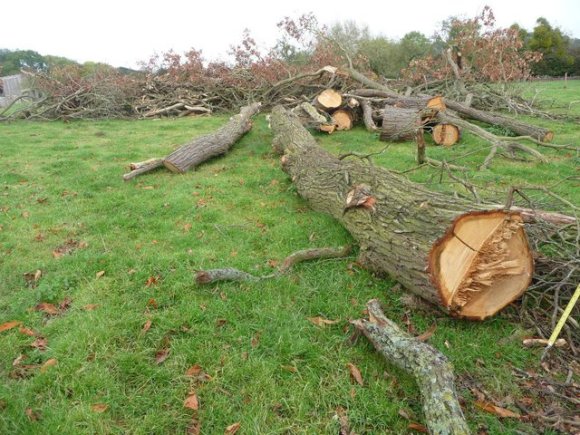 Last month a giant tree, strong-stout and regal, fell behind our backyard. We were very fortunate that it fell away from our property, the garage and family investment known as our ugly rolling turd (the RV). It appears that the cause of death of this might oak was soil erosion. Weeks leading up to its demise, we had a seven day span of unending rain. As it continued to rain, flooding occurred which led to the weakening of this mighty tree’s root system…there was simply nothing to hold onto anymore. With a sudden thud, the tree fell and that wonderful shady spot where Moms and Dads came to watch their children play soccer, became the grave of something that had once been so mighty and tall.




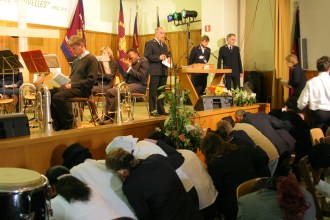


 We need to rid ourselves of the Church of the worship of music!
 We as an Army are so good at creating programs.
 everything, we can sit back and watch since they don’t need me anyway.” If you have doers in your corps, they will quickly become frustrated and perhaps seek somewhere else that they will be used. Stop micromanaging and start delegating leadership and other duties to others in your corps! Begin to create the environment of ownership.


 In a
In a 
 Coupled with spotting fakes, Millennials are repulsed by hypocrites who preach one thing but live another way. The “do as I say, not as I do” motto needs to die not only in the Church but in our Army as well. If it exists, stamp it out, address it, don’t let it fester and lead to the spiritual death of your corps body. I have heard of corps (years ago) who had bandsmen who would dress up in their uniforms just to perform in the band and as soon as their part in the service was complete they would rush out the back door and leave – what kind of witness is that to our young people? Millennials have also seen moral failures in society, and perhaps even in the Salvation Army. Divorce rates have been on the rise and half of millennials will be coming from either one parent households or having split their time in two homes. Some have witnessed the effects of moral failure first hand in family members and most deeply desire to change that narrative in their own lives.


 As someone once pointed out everything is spiritual, there should be no compartmentalizing of our various tasks and that of holistic ministry. I know a financial planner in our community who makes a point of praying for every client that comes to visit him. He has even prayed with me there in his office. These prayers that he offers are not pithy cliche prayers either, but one can feel the presence of God while he prays for you and the present circumstances that you are facing. He considers his office not only the place he draws his paycheck from, but a chapel in which he ministers. Perhaps we have not made our officers our chapels of ministry. Perhaps we get so bogged down by what is required of us that we forget to include God in those spaces in order to make them sacred. Everything we do from the most mundane of things to the most important things ought to be considered ministry – not some laborious task to get accomplished.
 When we pray for each segment of our officership and appointment, we will find that our hearts are attuned to the moving of the Holy Spirit. If everything we do is spiritual, then why do not pray in such a way? When we intentionally pray and make this a spiritual discipline we will be better equipped to make the necessary plans that our ministries so desperately need.
  Don’t stumble into your day or week having now idea what you wish to accomplish. Don’t wait until the last minute to pray for our congregation and those you minister to. Keep them in the forefront of what you are doing, after all, the paperwork and reports are all because they are vitally important to you and to God. Do not make haphazard plans at the last minute, throwing things together and hoping they all pan out…do yourself a favor and your soldiers a favor and make intentional, prayerful plans that will form and shape lives for Christ.
 I catch myself doing this, and I recognize my own conviction here:
 emphasis on the “important stuff” that consumes all of your time. I would imagine nearly 99% of us officers are guilty of this at one time or another. Show up and be present. Ask God to give you His eyes to see the needs around you. Spend time drinking coffee (or tea or water) with those who frequent your soup kitchen. Invest yourselves in the lives of people and do not stop with those who wear our uniform and within whom we already know. Step out of your comfort zone and be available to listen, serve and love.
 This step goes hand in hand with #3.

 It is in our DNA.


 There is a series of very beautiful pictures in the cathedral at Antwerp, which represent Christ hearing His cross from the Praetorian to Calvary. These pictures embody the popular idea of Christ’s weakness and exhaustion. In one He stands calm and erect, in another He is bending under the weight of the cross, and in another He has fallen beneath the load that was laid upon Him. It is at this stage of the proceedings that Simon, who is passing by, is arrested, and compelled to bear the cross after Christ.
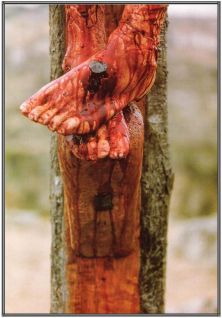 As he hung on the cross, the voyeurs standing watch challenged Jesus to show them his power. Another way we might put it is, “we would just believe if you would just show us you can Houdini your way off that cross.” Listen to them using the glory of Christ to mock him…



 In the midst of the frustration and worry, I had to take a step back. I had gotten so close to the problem that I couldn’t see the broader perspective or possible solutions. I think we’re all like that – we stand too closely to the problem, when problems arise. We try to micromanage situations and problem-solve and trouble-shoot and sometimes we are successful, but other times we become overwhelmed by the insurmountable tasks ahead of us. So we put our heads down, we plod on through trying to take on the world and address all of our problems and stressors, all the while we are so close to the problem(s) that we have lost the forest for the bark of one tree.
 Pastor's Ponderings