Blog

The Seeds You Can’t Outrun

Galatians 6:7 at Pastors Ponderings

Hey there, friends. Welcome back to Pastors Ponderings. It’s Pastor Scott here, and today we’re digging into a single verse that’s been rattling around in my head like a loose stone: Galatians 6:7. Paul’s words hit hard and stick deep: “Do not be deceived: God cannot be mocked. A man reaps what he sows.” That’s it. Short, sharp, and straight to the gut. Ready to wrestle with it? Let’s go.

Picture Paul writing this to the Galatians—folks he cared about, folks he sometimes wanted to shake a little. He’s not mincing words here. Reaps what he sows. It’s got that earthy, farmer’s wisdom to it—like something your grandpa might’ve muttered while tossing seed into the ground. But don’t let the simplicity fool you. This isn’t about crops. It’s about us. Our lives. The seeds we’re scattering every single day, whether we’re paying attention or not.

Take a moment. What are you sowing? Not in the big, shiny moments you’d post online, but in the quiet ones nobody sees. The way you snap at the cashier when you’re rushed. The bitter thoughts you let fester like weeds. The grudges you nurture as if they’re prize roses. That’s seed, friends. And Paul’s warning us: don’t kid yourself. God’s not buying the act. What you plant comes back to you.

It’s a little unnerving, right? Your life’s this garden, and you’re holding the shovel. No pointing fingers at the soil or the weather or the neighbor’s dog digging up your rows. You reap what you sow. It’s on you.

But here’s where it shifts. Paul’s not just playing the heavy here—he’s not out to shame us. This isn’t about guilt trips. It’s about power. Real power. If you reap what you sow, then you’ve got a hand in what grows. You’re not just drifting through life, waiting for the next thing to happen. You’re the gardener. You get to choose.

So, what’s growing in your patch? Seriously—stop reading for a sec if you need to, grab a coffee, and sit with that question. Are you sowing bitterness? Fear? That sneaky cynicism that feels like armor but leaves you empty? Or are you planting something different—kindness, courage, hope—even when it feels risky or foolish? Because here’s the truth: the harvest doesn’t lie. It’s coming. And it’s got your name on it.

Paul’s writing to a church here—a messy, real group of people stumbling through faith together. He’s saying, don’t buy the lie that you can plant thorns and pick roses. You can’t mock God like that—not because He’s keeping score, but because that’s how the world works. It’s stitched into the universe. Gravity pulls. Seeds sprout. Actions ripple.

But flip that coin: every good thing you sow—every time you choose love over spite, grace over payback—it’s not lost. It’s seed. And it’s going to push through the dirt and turn into something wild and beautiful, something you can’t even picture yet.

Here’s the challenge: What are you sowing today? Not tomorrow, not when life’s all neat and tidy—right now. Galatians 6:7 isn’t a threat—it’s a wake-up call. It’s Paul grabbing us by the shoulders, saying, “You’ve got this crazy, sacred shot to shape what’s coming. Don’t miss it.”

And here’s the hope: You’re not out there alone. The God who set this whole reaping-and-sowing thing in motion? He’s right there with you. He’s the sun warming the ground, the rain soaking it through, the force that cracks the seeds open and pulls them toward the light. You sow, and He grows. That’s the quiet promise humming beneath this verse.

Galatians 6:7 is a mirror. A dare. A whisper that says your life matters—every seed you plant matters. So maybe today, you and I, we pick up the shovel. We sow something brave. Something true. And we trust the harvest is on its way. What do you say? Let’s see what breaks through the soil.

Keep digging, keep planting, keep chasing the mystery. I’ll see you back here next time.
Grace, Peace & Dirt under the nails

— Pastor Scott

In the Garden: Wrestling, Trusting, and Breaking Open


Text: Matthew 26:36-46

Hey friends,
Welcome back to Pastor’s Ponderings. It’s Pastor Scott here, and today I want to sit with you in a story that feels like it holds the weight of the world. Matthew 26:36-46—the Garden of Gethsemane. This is Jesus at his most human, wrestling with fear and sorrow, yet leaning into trust. If you’ve ever faced a moment where life felt too heavy, where you wondered if you could keep going, this one’s for you. Let’s step into the garden together.

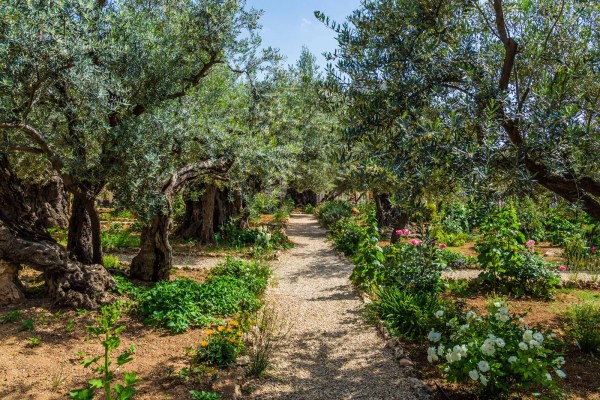
It’s nighttime. The air smells of olive trees, their leaves whispering in the quiet. Jesus and his disciples enter Gethsemane—a name that means “oil press,” a place where olives are crushed to release their oil. Before a single word is spoken, the setting tells us something: this is a place of pressure, of breaking open.

Jesus tells most of his followers to stay put, but he brings Peter, James, and John closer. Then, something shifts. The text says he “began to be sorrowful and troubled.” The Greek words here don’t mess around—they mean deep grief, overwhelming distress. Jesus, the one who’s walked on water and fed thousands, is coming undone. He tells his friends, “My soul is overwhelmed with sorrow to the point of death.”

Let that sink in. Jesus is saying, “I’m so sad, I could die.” This isn’t a distant, untouchable Savior. This is Jesus feeling the full weight of what’s coming—the betrayal, the cross, the pain. If you’ve ever been in a place where fear or grief felt like it might swallow you, you’re not alone. Jesus has been there too.

And what does he do? He doesn’t hide it. He asks his friends to stay close, to “keep watch” with him. It’s such a vulnerable request. He’s not asking them to fix it or fight for him—just to be there. Isn’t that what we all crave in our hardest moments? Someone to sit with us, to hold space for our pain?

Jesus moves a little further and falls to the ground, praying, “Father, if it’s possible, let this cup pass from me.” The “cup” in scripture often means suffering, the hard stuff you have to drink down. Jesus knows what’s ahead, and he’s honest: he doesn’t want it. He’s asking for another way.

But then, in the same breath, he says, “Yet not my will, but yours be done.” That’s the heart of it—raw honesty paired with trust. He’s not pretending he’s okay with the cross. He’s wrestling, pleading, but choosing to trust God’s bigger story. Have you ever prayed a prayer like that? “God, I don’t want this, but I trust you.” It’s not neat or easy. It’s a struggle, a surrender.

Meanwhile, the disciples are… asleep. Jesus comes back and finds them dozing. “Couldn’t you keep watch for one hour?” he asks Peter. There’s a hint of frustration, but I hear sadness too. Jesus is carrying the weight of the world, and his closest friends can’t even stay awake. It’s so human, isn’t it? We let each other down, even with the best intentions. Yet Jesus doesn’t give up on them. He keeps them close.

He prays two more times, each prayer echoing the first: “If this cup can’t pass, your will be done.” Each time, he leans deeper into trust. By the third prayer, something has shifted. He rises, steady—not because the fear is gone, but because he’s given it over. He wakes his disciples and says, “Rise, let’s go. My betrayer is here.” The story barrels forward—Judas, the soldiers, the arrest—but Jesus is ready. The garden has done its work. He’s been pressed, and what flows out is trust.

So what does this mean for us? I see three invitations here.

First, it’s okay to feel the weight. Jesus did. Your fear, your sorrow, your “I can’t do this” moments—they’re not a sign of weak faith. They’re part of being human. Jesus shows us we can bring those raw emotions to God, no filter needed.

Second, community matters, even when it’s messy. The disciples fall asleep, but Jesus still wants them near. Who’s in your garden? Who are you showing up for? Even imperfect presence can be a gift.

Finally, there’s this mystery of surrender. “Not my will, but yours.” It’s not about denying what you feel or giving up what you want. It’s about trusting that God’s story is bigger, even when you can’t see it. In the crushing, something new is released—like oil from an olive, like life from a cross.

So, my friends, where’s your Gethsemane right now? What’s pressing you? What might happen if you brought it to God, honest and open? The garden isn’t the end of the story. It’s where everything breaks open, where trust takes root, where resurrection begins to stir.

Keep pondering, keep trusting, keep walking. I’m right here with you.

Grace and peace,
Pastor Scott

Rolling Stones and Rising Hope: An Easter Invitation

Hey friends, welcome back to Pastor’s Ponderings. I’m Pastor Scott, and today I’m sitting down with my coffee, my Bible, and a heart full of wonder about Easter. It’s the season of resurrection, of new life, of something breaking through—and I want to invite you into that mystery with me. Easter’s not just a day on the calendar or a story we dust off once a year. It’s an invitation. A dare. A question: What if the things we thought were dead aren’t finished at all? Let’s ponder this together.

I was walking through my neighborhood last night just before a thunderstorm, and spring is waking up all around me. Trees budding (lots of pollen), flowers poking through the dirt. And there, in a neighbor’s yard (the one that always has a perfect lawn and a perfect garden – I’m so envious), was this one tulip—bright red, standing tall like it was shouting, “I’m alive!” It stopped me in my tracks. Because isn’t that Easter? Something refusing to stay buried. Something insisting that life gets the last word.

Let’s go to the story. Picture it: early morning, the air cool and heavy with dew. The women—Mary Magdalene, maybe another Mary—are walking to the tomb. Their steps are slow, their hearts weighed down with grief. They’re carrying spices to anoint a body. Jesus’ body. The one they loved, the one they followed, the one they thought would change everything. Now it’s over. Done. Finished.

Or so they think.

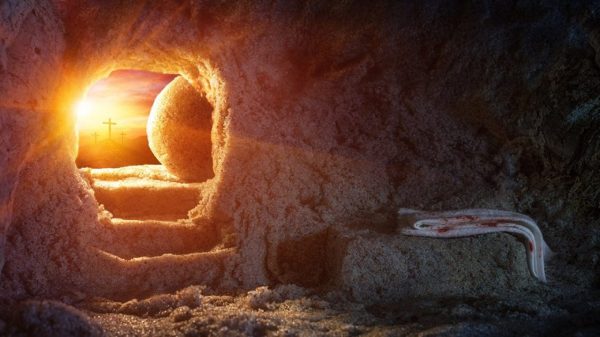
Then they get there, and—boom—the stone’s rolled away. The tomb’s empty. An angel’s sitting there, casual as you please, saying, “He’s not here. He’s risen.” Can you imagine Mary’s face? Confusion, shock, maybe a flicker of hope she’s afraid to let herself feel. Because that’s not how death works. That’s not how the story was supposed to end.

Or was it?

Here’s what grabs me about Easter: It’s not just about what happened that morning. It’s about what it means for us today. Easter says the worst thing is never the last thing. Betrayal? Not the final word. Pain? Not the end of the chapter. Even death? Nope. There’s something more. There’s a rising.

I wonder where you feel that in your life right now. Where are you standing at a tomb, holding onto something you think is gone? A dream that fizzled out? A relationship that’s fractured? A hope you’ve buried? Easter’s whispering to you, “It’s not over. Look for the life.”

Let’s slow down for a second, because resurrection is a big word. We toss it around at church, but what does it really mean? Sure, it’s about Jesus rising from the dead—absolutely, that’s the heartbeat of our faith. But it’s also about what that does to *us*. To you and me. To the world we’re stumbling through.

Resurrection says that God’s not done. Not with you, not with your story, not with the mess. It says there’s always a next. A new chapter. A second chance. And here’s the thing: it doesn’t always look like you expect. Sometimes resurrection is loud—an empty tomb, angels singing, the whole shebang. But sometimes it’s quiet. It’s the friend who texts you just when you need it. It’s the courage to try again after you’ve failed. It’s the moment you forgive when you thought you’d hold that grudge forever.

Resurrection’s sneaky like that. It shows up in the dirt of life. In the ordinary. In the places we least expect. Because that’s where God loves to work, isn’t it? In the cracks. In the mess. In the moments we’d written off.

So let’s get real. I know life doesn’t always feel like a resurrection party. Sometimes it feels like you’re stuck at the tomb, clutching those spices, staring at what’s lost. I’ve been there. We all have. But here’s what I’m learning: Easter invites us to move. Those women at the tomb didn’t just stand there, gaping at the empty space. They ran. They told people. They became part of the story.

And that’s the question Easter asks us: Are you going to stay at the tomb, holding onto what *was*? Or are you going to step into what *could be*? Are you going to look for the places where life’s breaking through—and then join in?

Maybe it’s a conversation you need to have, even if it scares you. Maybe it’s a dream you’ve shelved that’s tugging at your heart again. Maybe it’s just getting up tomorrow and choosing to love a little more, forgive a little deeper, hope a little braver. That’s resurrection. That’s Easter alive in you.

Here’s my challenge as we sit with this Easter season: Look for it. Look for the resurrection all around you. Not just in the big, flashy moments, but in the small ones. Where’s love refusing to quit? Where’s hope pushing up like that tulip through the dirt? Where’s life saying, “I’m not done yet”?

And then—here’s the part that changes everything—*be* the resurrection. Easter’s not just something that happened 2,000 years ago. It’s happening now. In your choices. In your courage. In the way you show up. You get to roll stones away for someone else. You get to carry the news that life wins. You get to live like the tomb is empty—because it is.

One last thought before I let you go. In John’s Gospel, Jesus says, “I am the resurrection and the life.” Not “I’ll give you resurrection later.” Not “I’ll show you life someday.” But *I am*. Right now. Right here. In the middle of your doubts, your fears, your questions—resurrection is already humming. It’s already alive. And you’re invited to step into it.

So this Easter, don’t just read the story. Live it. Run from the tomb. Tell the world with your life. Be the rising. Because the story’s not over—and neither are you.

Thanks for pondering with me, friends. If this stirs something in you, share it with someone. Let’s keep asking the big questions together. Until next time, keep seeking, keep hoping, and keep rising.
Grace, Peace & Tulips,
-Pastor Scott.

Forgiveness is a Fistfight

Hey, friends. Welcome back to Pastor’s Ponderings. This is where we crack open the ancient words, let them breathe, and see what they kick up inside us. Today, I want us to sit with Ephesians 4:32—a single verse that’s quiet on the surface, but man does it hit like a freight train. Are you ready to step into it? Here goes:

Paul’s writing to the Ephesians—a scrappy bunch of Jesus-followers who are fumbling their way through faith—and he lays this down: “Be kind and compassionate to one another, forgiving each other, just as in Christ God forgave you.” That’s it. Be kind. Be compassionate. Forgive. Sounds simple, doesn’t it? Like something you’d stitch on a throw pillow or a t-shirt and call it a day. It sounds so simple and inspirational –

Except… it’s not. Not even a little.

Let’s start with the opening jab: “Be kind and compassionate to one another.” Sure, it’s got that warm, fuzzy vibe—like smiling at strangers or holding the door. But dig deeper. Kindness isn’t just polite; it’s gritty. It’s choosing softness when everything around you is yelling for you to toughen up. And compassion? That’s not standing on the edge with a pep talk—it’s climbing down into the muck with someone, feeling the weight they carry. Paul’s saying, do that. With each other. Not just the easy ones, the ones who get you—but the prickly ones, the loud ones, the ones who cut you off in traffic or mid-sentence – THOSE ONES.

Then comes the knockout punch: “Forgiving each other, just as in Christ God forgave you.” Oh, man. Forgiveness. That word’s a live wire, isn’t it? We all nod along in church, but when it’s time to actually live it—when it’s that person, that wound—it feels like trying to bench-press a truck off your soul.

Here’s the hard part, the challenge: What if Paul’s not just handing us a checklist here? What if he’s holding up a mirror for us to look at how we are currently conducting “forgiveness”? Because kindness—it’s brutal when you’re exhausted. Compassion slips away when you’re burned out or burned by someone. And forgiveness? That’s a monster. You’ve got every right to clutch that grudge—it’s yours, you built it, it shields you. But Paul’s saying, drop it. Not because they’ve earned it, but because God forgave you.

Pause there for a second.
God forgave you—not with a half-hearted “eh, fine,” but in Christ. In this messy, bloody, breathtaking act of love that says, “I see it all—the screw-ups, the shame, the stuff you bury—and I’m still here, I’m not going anywhere!”
That’s the standard. That’s the “just as.”

So let’s get real: Who are you NOT forgiving? Who’s that face flashing in your mind right now? We’ve all got one—or a few. The coworker who twisted the knife. The friend who vanished. The family member who keeps swinging the same tired hatchet. Maybe you’re thinking, “Scott, you don’t understand—they don’t deserve it.” You’re right. They don’t. But neither did you. Neither did I. That’s the gut-punch truth of it.

Now flip it—here’s the spark, the inspiration: What if forgiveness isn’t weakness? What if it’s the toughest, fiercest thing you’ll ever do? It’s not caving in; it’s rising up and saying, “This pain doesn’t get to own me anymore.” Kindness, compassion, forgiveness—they’re not soft. They’re radical. They’re how you snap the chain—the one where hurt just keeps birthing more hurt. You plant something else. You scatter grace. Yeah, it’s hard—it’s so hard—but it’s how the ground shifts.

Paul’s not asking us to play pretend. He’s calling us to live it—because we’ve been lived into it. God’s forgiveness isn’t some abstract idea; it’s a force, tugging us toward something bigger. So maybe today, we start small. Just like those baby steps in that old movie: What about Bob? One kind word to someone who doesn’t see it coming. One flicker of compassion when we’d rather look away. One chip in the fortress of that grudge we’ve fortified. Not the whole wall—just a crack. And we see where it leads.

Ephesians 4:32 is a whisper AND a roar. It’s a dare to be human in a way that rewrites everything. So, are you in? Let’s try it. Baby step it. Let’s see what takes root when we live like we’re forgiven.

Thanks for sitting with me here at Pastor’s Ponderings today. Keep wrestling, keep wondering, keep reaching for the light, and if you have a certain topic you would like us to tackle together, please leave it in the comments below.
I’ll catch you in the next one.
Grace & Peace,
-Pastor Scott.

The Peace That Doesn’t Make Sense

Hey, friends. Welcome back to Pastor’s Ponderings. This is where we sit together with the big questions, the quiet moments, and those ancient words that still rattle and hum with something alive. Today, I want to pull us into a little corner of Philippians—chapter 4, verses 6 and 7. Ready? Let’s step in.

Imagine this: Paul’s in a jail cell. Not some cozy retreat with Wi-Fi and a view—Roman jail. Chains on his wrists, damp stone walls, the kind of place where hope feels like it’s flickering out. And yet, there he is, scratching out these words: “Do not be anxious about anything, but in every situation, by prayer and petition, with thanksgiving, present your requests to God. And the peace of God, which transcends all understanding, will guard your hearts and your minds in Christ Jesus.”

Wild, right? How does a guy in chains write something that feels so… free?

Let’s linger on that first line: “Do not be anxious about anything.” Okay, Paul. Sure. You’re not doom-scrolling X at 2 a.m., watching the world tear itself apart. You’re not staring down a pile of bills or replaying that awkward thing you said three weeks ago that still stings. Anxiety’s this low hum we all carry, isn’t it? It’s the static of being human. And here’s Paul, tossing out this line like it’s no big deal. Don’t be anxious. About anything.

But what if he’s not pointing a finger here? What if this isn’t some guilt trip—“Oh, you’re anxious? Bad Christian!”—but an invitation? What if he’s whispering, “Hey, there’s another way to live”? Because anxiety—it’s heavy. It’s this invisible backpack stuffed with rocks, and we don’t even realize how much it’s crushing us until someone says, “You don’t have to carry that.”

And then he shifts: “But in every situation, by prayer and petition, with thanksgiving, present your requests to God.” Every situation. Not just the shiny wins or the polished Sunday moments—the messy ones too. The 3 a.m. panic spirals. The “I don’t know if I can keep going” whispers. Every single one. Bring it to God, he says—with thanksgiving.

Thanksgiving? In that? That’s the twist, isn’t it? “Thanks, God, for the chaos? For the uncertainty?” But maybe it’s not about faking it. Maybe it’s about hunting for something—anything—that reminds you you’re not alone. The breath still moving in your chest. That friend who texted right when you needed it. The way sunlight spills through the trees outside your window. Tiny threads of gratitude that tether you when the waves hit.

And here’s where it lands: “And the peace of God, which transcends all understanding, will guard your hearts and your minds in Christ Jesus.” Peace. Not the “everything’s fine” kind—Paul’s still in jail, after all—but something deeper. Something that doesn’t add up. It’s not logical; it transcends understanding, which is just a poetic way of saying it’s too big for our heads to hold.

I love that word, “guard.” Picture it—a sentinel standing watch. Your heart, your mind—they’re these tender, untamed places, and life comes at them with fists. But this peace? It’s there, pacing the walls, keeping vigil, so you can breathe.

So here’s what I’m chewing on: What if this isn’t just a verse to frame on the wall? What if it’s a rhythm we could step into? You’re anxious—fair enough, that’s real. But instead of letting it steer, you pause. You breathe. You pray—no filter, just whatever’s on your heart. You find one thing to say “thank you” for, even if it’s small. And then… you wait. You see if this peace slips in. Not because you’ve earned it, but because it’s a gift. A gift from a God who doesn’t flinch at your mess.

Philippians 4:6-7 isn’t a magic wand. It’s not a formula. It’s an experiment. Paul’s scribbling it from his cell, saying, “Try it. See what happens.” So maybe today, we do. We name the anxiety, we bring it to God, we whisper thanks for something—anything. And we watch. We see if that peace shows up, quiet and steady, standing guard.

What do you think? Worth a try?

Thanks for sitting with me here at Pastor’s Ponderings. Keep asking the questions, keep chasing the mystery, and if you have questions you would like us to ponder together, please leave a comment and let me know!

I’ll see you in the next one.
Grace & Peace,
-Pastor Scott.

Grave-Shaking Glory: Jesus, Lazarus, and Your Easter Wake-Up Call

Here’s the Spotify Episode (Click Here)

Alright, friends, let’s get into it—Easter’s not just a holiday, it’s a holy disruption. And if you wanna see what it’s really about, crack open John 11, where Jesus does the unthinkable: He calls Lazarus out of the grave. This isn’t just a story to make you feel good—it’s a straight-up invitation to see what Easter’s got to do with you. So, let’s go there, because this one’s gonna hit deep.

Picture it: Lazarus is dead. Four days in the ground. His sisters, Mary and Martha, are shattered. They’d sent a 911 to Jesus when Lazarus was still hanging on, like, “Jesus, get here—now!” But Jesus? He doesn’t move. He waits two whole days. Why? Because He’s not just about fixing things—He’s about flipping the script for God’s glory. He tells His people, “This isn’t gonna end in death. It’s gonna show who God is.” And that’s the first thing that grabs me: God’s glory doesn’t always show up on our schedule, but it shows up right on time.

So, Jesus finally arrives, and it’s raw. The tomb’s sealed, the air’s heavy with grief, and Martha’s like, “Jesus, if You’d been here, my brother wouldn’t be dead.” Ever been there? “God, where were You when everything fell apart?” I have. We all have. We’ve stood at the edge of something broken—our hearts, our plans, our hope—and wondered why He didn’t come through. But Jesus doesn’t dodge her pain. He looks her in the eyes and drops this: “I am the resurrection and the life. Whoever believes in me? They’ll live, even if they die.” That’s not just a nice line—it’s a lifeline.

Then it gets real. Jesus cries. He doesn’t roll in like some untouchable superhero. He weeps with them. He feels the weight of their loss. And that’s Easter, friends—it’s not just about the win; it’s about a God who steps into our hurt, who stands with us in the mess. But He doesn’t stop at tears. He walks up to that tomb and shouts, “Lazarus, come out!” And this guy—dead, done, four days gone—walks out. Alive. Still wrapped in those grave clothes, but alive.

Here’s where it gets personal: That’s you and me. We’re Lazarus. Dead in our stuff—our sin, our shame, our fears. We’ve got tombs we don’t talk about, places we’ve buried hope. But Jesus? He’s not scared of our darkness. He’s standing there, calling us by name, saying, “Get out here! You weren’t made for this grave!” Easter isn’t just Jesus rising—it’s Him raising us. It’s Him pulling off those grave clothes—our guilt, our pain, our chains—and saying, “You’re free. Live.”

So, this Easter, let’s not play small. What’s your tomb? What’s keeping you stuck? Because Jesus didn’t raise Lazarus just to show off—He did it to prove He’s still bringing dead things to life. He’s still crashing into our chaos, calling us into something new. And when we step out, we’re not just survivors—we’re walking proof that God gets the last word, not death.

Let’s do this, friends. Let’s answer His call, shake off those grave clothes, and step into the life He’s got for us. Easter’s here, and it’s got your name on it. You in?
Grace & Peace,
-Pastor Scott.

Palm Sunday- Donkeys or Warhorses?

Happy Monday, my friends! I hope each of you had a good weekend. Today, we edge ever closer to Easter, and I wanted to dig into what will happen on Palm Sunday. So, let’s dive into this wild, beautiful, interesting story from Luke 19:28-44 that always evokes questions.

Picture it with me: Jesus is heading into Jerusalem, and the air crackled and hummed, thick with a restless energy that felt like a living thing—wild, untamed, sparking with possibility.

He’s not rolling in with a warhorse or a chariot—no, he’s on a donkey, a borrowed one at that. This isn’t the entrance of a conqueror, at least not in the way we’d expect. It’s quieter, humbler, but don’t let that fool you—it’s loaded with meaning, dripping with intention.

So, he tells his disciples, “Go get me that colt.” They’re confused, probably—Jesus isn’t exactly known for spelling things out in neon lights. But they go, they find it, and here he comes, riding down the Mount of Olives. The crowd’s losing it—coats on the ground, palm branches waving, shouts of “Hosanna!” bouncing off the stones. It’s a party, a parade, a moment where hope feels so close you could touch it. They’re quoting the Psalms, calling him the King who comes in the name of the Lord. Peace in heaven, glory in the highest—it’s cosmic, it’s earthy, it’s everything all at once.

But then, zoom in. Jesus isn’t grinning ear to ear. He’s not waving like a politician soaking up the applause. He’s weeping. Weeping! The guy they’re cheering for, the one they’re pinning their dreams on, is crying as he looks at Jerusalem. Why? Because he sees what’s coming. He sees the city that’s about to miss the point, miss the moment, miss him. “If you’d only known what would bring you peace,” he says, “but now it’s hidden from your eyes.” Hidden. That word hangs there, heavy, haunting. Days of siege are coming, he says—enemies, barricades, destruction—because they didn’t recognize the time of God’s visitation. The time when God showed up, right there, on a donkey.

Now, let’s pause. What’s this about? Is this just a sad history lesson, a first-century postcard of a city that didn’t get it? Or is it something more, something that’s still humming under the surface of our lives? Because here’s the thing: Jesus isn’t just crying over Jerusalem back then—he’s crying over every Jerusalem since. Every place, every heart, every moment where we miss what’s right in front of us. Where we trade peace for power, love for control, presence for distraction.

Think about it. The crowd wanted a king to fix their problems—kick out the Romans, restore the glory days. They wanted fireworks and fanfare. But Jesus rides in on a donkey, not a stallion. He’s offering a different kind of kingdom, one that doesn’t shout but whispers, one that doesn’t crush but lifts. And they miss it. They miss the visitation because it didn’t look like what they expected.

So, here’s the question pulsing through this story: What are we missing? What’s God riding into our lives on, right now, that we’re too busy waving our own branches to see? Maybe it’s not the loud, obvious thing we’re waiting for—maybe it’s quieter, smaller, more borrowed-donkey than royal-steed. Maybe peace isn’t in the next big win or the perfect fix, but in the tears, the humility, the willingness to ride into the mess instead of around it.

And those tears of Jesus—they’re not just pity. They’re love. Love that sees what could be, what should be, and mourns what isn’t yet. But they’re also hope. Because even as he weeps, he keeps going. He doesn’t turn the donkey around. He rides into Jerusalem anyway—into the cheers, into the chaos, into the cross. He doesn’t give up on them. He doesn’t give up on us.

So, today, let’s ponder this. Let it get under your skin a little bit. Let it settle down deep.
Let’s ask: (and I always seem to be asking where something is lol, it’s just in my nature)
Where’s the donkey in my story? Where’s the peace I’m missing because I’m looking for a warhorse? And what if—just what if—God’s visitation is already here, waiting for me to stop shouting long enough to see it? Because the one who wept over Jerusalem is still weeping, still riding, still whispering: “Peace. Peace. I’m here.”

Grace & Peace,
-Pastor Scott.

What If Everything You Thought About Church Was Wrong?

Listen to this episode on Spotify

Dispelling the misconceptions of “Church” (revisited)

So, let’s revisit this topic of “Church” once more. Perhaps as we explore, we might begin to recognize what it is and what it isn’t, and perhaps what it was never meant to be. Yeah, church—the one with the pews or the folding chairs, the stained glass or the projector screen, the one we’ve all got some picture of in our heads. The one we love, hate, avoid, become bored to tears when the topic is mentioned, or cling to. What if we’ve been missing the point? Not just a little off, but WAY out in left field, swinging at something that’s not even the game we’re meant to be playing?

I mean, think about it. We walk into these spaces—or we don’t—and we carry all this baggage with us. Expectations. Rules. Stories we’ve been told about what church should be. And maybe that’s the first thing we need to rethink: the should. Because when you strip it all down, church isn’t a building, a sermon, or a set of bylaws. It’s not even a Sunday thing. What if it’s something messier, wilder, more alive than that?

Let’s start here: people have some ideas about church that stick like gum to the bottom of a shoe or pew bench. They’re hard to shake, and they shape everything—how we show up, why we stay away, what we hope for or dread. I’ve even heard of people staying or leaving a church because either the music wasn’t to their liking or the sermons weren’t challenging enough and they said, “Well, I’m just not being spiritually fed.” Sometimes, dare I say, that’s just a cop out to a greater commitment, and they aren’t being truthful to others and themselves. (I digress)

So, let’s name a few of these misconceptions, these sacred cows we’ve been herding around, and see if we can’t nudge them out of the way.

Misconception #1: Church Is About Showing Up and Shutting Up

You’ve seen it, right? The idea that church is this place where you file in, sit down, nod along, and keep your questions to yourself. It’s a performance—you’re the audience, someone else is the star, and the goal is to get through the hour without rocking the boat. But what if church isn’t a spectator sport? What if it’s more like a dinner table where everyone’s got a voice, where the questions matter as much as the answers? Jesus didn’t sit around handing out scripts—he broke bread, he listened, he flipped tables when the moment called for it. What if church is less about consuming and more about colliding—ideas, stories, lives? Honestly, wasn’t that the whole reason for church in the ancient world? Families getting together, sharing all they had, encouraging one another, meeting at houses, sharing a meal together? Perhaps we’re showing up at the wrong building when we should consider meeting in each other’s homes from time to time.

Misconception #2: It’s a Morality Club

Then there’s this one: church as the VIP list for good people. You join to prove you’ve got your act together, or at least to fake it ‘til you do. It’s a place to polish your halo, to signal you’re better than the mess outside. But flip through the Gospels—Jesus didn’t hang out with the shiny people. He was with the tax collectors, the outcasts, the ones who’d screwed up big time. What if church isn’t a club for the righteous but a hospital for the broken? A place where the masks come off, not go on?

Misconception #3: Church Is the Point

Here’s a sneaky one: we start thinking church is the endgame. Like, if we can just get the service right, the attendance up, the budget balanced, we’ve won. But what if church isn’t the destination? What if it’s a launchpad? A space where we’re fueled up, celebrate—through bread, wine, song, silence, whatever it takes—to go out and live it? The early followers didn’t build cathedrals; they met in homes, on hillsides, in secret. Church was a verb, not a noun. What if we’ve been obsessing over the container and missing the fire inside it?

Misconception #4: It’s Gotta Look a Certain Way

Picture this: organ music, or maybe a fog machine and skinny jeans. Hymns or Hillsong. We’ve got these templates, these blueprints, and we fight over them like they’re sacred. But what if church doesn’t have to wear a tie or a t-shirt? What if it’s happening in a coffee shop, a park, a group text at 2 a.m.? What if it’s less about the packaging and more about the pulse—the connection, the wrestling, the showing-up-for-each-other-ness? The first Christians didn’t have a handbook; they had a story and a Spirit. Maybe we’ve been overcomplicating it.

So, What’s It Really About?

Here’s where it gets good. What if church is about life—not the tame, boxed-up version, but the raw, untamed, holy chaos of it? What if it’s about people finding each other in the dark, holding space for the questions, the doubts, the dreams? What if it’s less about saving souls for later and more about waking them up right now—to love, to justice, to the wild beauty of being human together?

Think about the stories Jesus told. The lost sheep, the prodigal son, the banquet where everyone’s invited. It’s not about walls or membership cards—it’s about movement, about gathering, about a table that keeps getting bigger. Church could be that. Not a fortress, but a fire. Not a checklist, but a collision of hearts.

So, what if we let go of the shoulds? What if we stopped trying to fix church or flee it, and started asking what it could become? Because here’s the thing: it’s not dead. It’s not irrelevant. It’s just waiting for us to rethink it—to crack it open and see what spills out. What if we’re the ones who get to write the next chapter? What if it’s already started, and we just haven’t noticed?

Something more to ponder today – and this weekend.
Grace, Peace, and More Pews.
-Pastor Scott.

Check out these similar articles on the topic church previously explored.

Let’s Talk About Death and Empty Tombs

Listen to this episode on Spotify (click the link)

Hey friends! I’ve been mulling this topic over today. I don’t want to write a devotional thought that scares you, nor do I want to depress you. Recently, while scrolling on TikTok, I came across this profile that uses AI to generate what certain celebrities who died before their time would look like today. As I watched these clips, I was both sad and happy at the same time. Thanks to the use of artificial intelligence, this content creator brought some of my childhood celebrities back to life.

So, let’s talk this thing called death—this inevitability, the thing we don’t bring up at dinner parties, the one we tiptoe around like it’s the awkward uncle who overstays his welcome. It’s the shadow in the corner, the thing we’re told to fear, to fight, to outrun. But what if we’ve been looking at it all wrong? What if death isn’t the end of the story, but a doorway? What if it’s not a period in a sentence, but a comma?

I mean, think about it. We live in a world obsessed with keeping death at arm’s length—anti-aging creams, kale smoothies, that extra mile on the treadmill—like we can negotiate with it, bribe it to look the other way. And yet, it’s coming for all of us. You, me, the barista who just spelled your name wrong on the cup. Death doesn’t discriminate. It’s sometimes been called the great equalizer. But here’s the wild, beautiful twist: what if it’s not something to dread? What if it’s something to lean into? Not in some morbid way, but rather an embrace of the comma, the next chapter, the acknowledgement that even though we don’t fully know yet, our lives are actually created to be eternal.

See, there’s this ancient story—maybe you’ve heard it—about a guy named Jesus. He’s walking around, healing people, feeding crowds, flipping tables, and then he says something outrageous: “I am the resurrection and the life.” Not I’ll give you resurrection, not someday you’ll get life—he says I am it. Right here, right now. And then, just to prove it, he walks straight into death—nails, cross, tomb, the whole brutal mess—and comes out the other side. Alive. Breathing. New.

What’s that about? It’s about a promise. A promise that death doesn’t get the last word. A promise that whatever’s on the other side isn’t darkness or nothingness, but something so alive, so vibrant, it makes everything we’ve ever known look like a shadow. Heaven, sure—call it that if you want—but it’s not just harps and clouds. It’s a reality where everything broken gets mended, where every tear gets wiped away, where you and I step into the fullness of who we were always meant to be.

And here’s the thing: that promise isn’t just for later. It’s for now. Because if resurrection is real—if Jesus meant what he said—then death isn’t a monster under the bed. It’s a transition. A shedding. Like a seed cracking open in the dirt, letting go of what it was so it can become something more. You don’t have to be afraid of that. You don’t have to clench your fists and grit your teeth. You can open your hands. You can breathe.

I think about my own life sometimes—those moments when I’ve felt death brush close. A loved one gone too soon, a diagnosis that stopped me cold, or just the quiet ache of knowing this body won’t last forever. And yeah, it stings. It’s heavy. But then I hear that voice again: “I am the resurrection and the life.” And I wonder—what if this isn’t the end? What if it’s the beginning of something so big, so good, I can’t even wrap my head around it?

So, what if we stopped running from death and started trusting the One who beat it? What if we lived like people who know the tomb is empty? Because it is. It’s empty. And that changes everything. Death isn’t the thief we thought it was—it’s the usher, leading us into a room we’ve been homesick for our whole lives.

You don’t have to fear it. You don’t have to outsmart it. You just have to trust that the story’s not over. That there’s a resurrection waiting. That heaven isn’t a far-off dream—it’s the heartbeat of everything true, pulling us closer every day. And when the time comes, when we step through that doorway, we’ll see it: the light, the love, the life that never ends.

So, here’s my question for you today: What would it look like to live unafraid? To wake up tomorrow and say, “Death, you don’t own me—I’m already on the other side”? Because you are. We all are. The promise is real. The tomb is empty. And the best is yet to come.

The Sanctuary of Skin and Bone (Poem)

Perhaps faith isn’t the echo in stained glass,
nor the hymnal’s worn, familiar pass.
But the quiet space between two hands,
reaching out in broken, shared demands.

We chase a deity in gilded halls,
while the heart’s true temple gently falls.
Like a forgotten melody’s refrain,
have we mistaken sanctuary for pain?

In seeking scripture’s perfect,
binding thread, have we lost the path our souls once tread?
The sacred whispers, not in hollow stone,
but in the fragile seeds of kindness sown.

Not in the verses we so blindly claim,
nor in the hollow praise that fans our name.
But in the cadence of a love unbound,
where seeing others, truth is truly found.

To love the flawed, the lost, the intertwined,
to see the god in every human mind.
Perhaps the change we crave, the shift we yearn,
is learning to see, before we’re seen, and learn.

SES 4/2/25

Blog at WordPress.com.

Up ↑