Blog

The Weight of Finality

Image

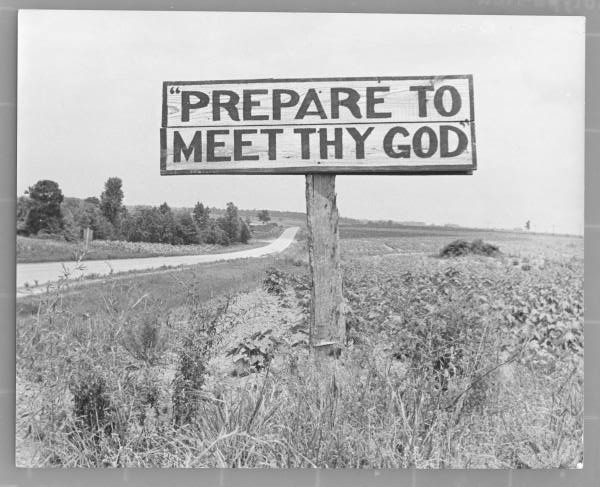
“The day of the Lord is near for all nations.  As you have done, it will be done to you; your deeds will return upon your own head.”            -Obadiah 1:15

The book of Obadiah is only a chapter long and is often overlooked, but let’s discuss if for a second through the lens of our own context.

This announcement given by Obadiah whose name literally means “servant of God” is not just for the people of Edom, it is for us as well.  The Edomites were proud over their own security as a nation and that of their might, but they also lorded their power and gloated over the Israelites.  Obadiah’s warning to the Edomites also included a warning for all nations as well.  

Image

Fast-forward:

Jesus is preaching the greatest sermon this earth has ever heard or will ever hear (The Sermon on the mount) and he makes this statement: 

Matthew Chapter 5 –

38 “You have heard that it was said, ‘Eye for eye, and tooth for tooth.’[h] 39 But I tell you, do not resist an evil person. If anyone slaps you on the right cheek, turn to them the other cheek also. 40 And if anyone wants to sue you and take your shirt, hand over your coat as well. 41 If anyone forces you to go one mile, go with them two miles. 42 Give to the one who asks you, and do not turn away from the one who wants to borrow from you.

Image

Love for Enemies

43 “You have heard that it was said, ‘Love your neighbor[i] and hate your enemy.’ 44 But I tell you, love your enemies and pray for those who persecute you, 45 that you may be children of your Father in heaven. He causes his sun to rise on the evil and the good, and sends rain on the righteous and the unrighteous. 46 If you love those who love you, what reward will you get? Are not even the tax collectors doing that? 47 And if you greet only your own people, what are you doing more than others? Do not even pagans do that? 48 Be perfect, therefore, as your heavenly Father is perfect.

There is a weight of Finality:

God’s love for humanity, even people we cannot stand, far outweighs our capacity to love them…but that is no excuse.  We are to love and the consequences of that love is that the world is impacted for the better.  Secondly God can shine through us.  

The day of the Lord will come to us.  The real question is what will the weight of that certainty be for us when it does?  

-Just a thought for today.


“Perspectives” Day 6 Featuring Deb Thompson “Don’t We Have Something Better To Give?”

Image


Don’t We Have Something Better To Give?

By: Deb Thompson

December 1, 1955, Montgomery, Alabama. 

Rosa Parks refuses to give up her seat on a segregated bus. 

Reverend Martin Luther King, Jr. is called in to lead a bus boycott. 

See that word, “reverend” before his name?  That means he was an ordained minister.  And he worked alongside other ordained pastors as well, such as Reverend Ralph Abernathy and Reverend Fred Shuttlesworth.  These pastors founded a well-known organization entitled, Southern Christian Leadership Conference (emphasis is mine). 

Why do I point this out?

Because when we think of the Modern Civil Rights Movement, we think of politics.  We think of people changing laws and going to jail.  We think of former President John F. Kennedy and his brother, Robert F. Kennedy, both politicians being involved.  We think of community leaders using fire hoses and guard dogs.  We think of “I Have A Dream” speech being held at Lincoln Memorial to commemorate the signing of the Emancipation Proclamation.  We think of Thomas Jefferson’s quote in the Declaration of Independence, “We hold these truths to be self-evident, that all men are created equal.”

                We rarely stop to realize that first and foremost, the Modern Civil Rights Movement started in The Church, with a group of pastors of different denominations with different views on things such as salvation and resurrection, coming together to free people of injustice.

The Modern Civil Rights Movement was The Church changing American History.

Remember that.

                Recently, I read, “Birmingham Revolution: Martin Luther King, Jr.’s Epic Challenge to the Church” by Edward Gilbreath, and it has brought me to a place of deep challenge.  This book was excellent because Gilbreath interviewed people who knew the leaders personally and were involved in marches.  He gives this sense of experiencing the feelings that is more realistic to the movement than the glorified and worshipped scenes we see on television today, during February, Black History Month.  People despised the Civil Rights leaders, they were not popular among conservatives or liberals, nor were they popular among the black churches or white churches.  Nor were they perfect leaders.

                In August of 1963, MLK Jr. was arrested on his way to the Birmingham March and spent time in solitary confinement.  There, in a jail cell, void of human contact, he spent time thinking and praying.  Then someone snuck in a newspaper for him.  In that particular paper, 8 white religious leaders criticized MLK Jr’s strategies, timing and activity in the movement.  MLK Jr. writes a lengthy letter in the margins of the newspaper, on scraps of paper and on toilet paper.  His letter wasn’t full of politics, his letter was chocked full of theology and Scripture that challenged The Church.

                When the article asked why he was intruding on Birmingham instead of focusing on Atlanta, his response was, I cannot sit idly by in Atlanta and not be concerned about what happens in Birmingham.  Injustice anywhere is a threat to justice everywhere.  We are caught in an inescapable network of mutuality, tied in a single garment of destiny.  Whatever affects one directly affects all indirectly.

                When they criticized MLK Jr. for disrupting the peace by doing the march, his response is, You deplore the demonstrations that are presently taking place in Birmingham.  But I am sorry that your statement did not express a similar concern for the conditions that brought the demonstrations into being.

                When these religious leaders ask why the Negroes can’t just wait for justice to come in its own time through the political system, King points out a hard truth, I guess it is easy for those who have never felt the stinging darts of segregation to say “wait”.  But when you have seen vicious mobs lynch your mothers and fathers at will and drown your sisters and brothers at whim; when you have seen hate-filled policemen curse, kick and brutalize, and even kill your black brothers and sisters with impunity; when you see the vast majority of twenty million Negro brothers smothering in an airtight cage of poverty in the midst of an affluent society; when you suddenly find your tongue twisted and your speech stammering as you seek to explain to your six-year-old daughter why she cannot go to a public amusement park that has just been advertised on television, and see tears welling up in her little eyes when she is told that Funtown is closed to colored children, and see the depressing clouds of inferiority begin to form in her little mental sky, and see her begin to distort her little personality by unconsciously developing a bitterness toward white people; when you have to concoct an answer for a five-year-old son asking in agonizing pathos, “Daddy, why do white people treat colored people so mean?”; when you take a cross-country drive and find it necessary to sleep night after night in the uncomfortable corners of your automobile because no motel will accept you; when you are humiliated day in and day out by nagging signs reading “white” and “colored”; when your first name becomes “nigger” and your middle name becomes “boy”(however old you are) and your last name becomes “John,” and when your wife and mother are never given the respected title “Mrs.” ; when you are harried by day and haunted by night by the fact that you are a Negro, living constantly at tiptoe stance, never knowing what to expect next and plagued with inner fears and outer resentments; when you are forever fighting and degenerating sense of “nobodyness”—then you will understand why we find it difficult to wait.

                When these men in the article ask how MLK Jr. could have the audacity to break the law of Birmingham, stating that it was unlawful to march, he responds, …there is nothing new about this kind of civil disobedience.  It was seen sublimely in the refusal of Shadrach, Meshach, and Abednego to obey the laws of Nebuchadnezzar because of a higher moral law was involved.

                When called an extremist, MLK Jr. replied, …I gradually gained a bit of satisfaction from being considered an extremist.  Was not Jesus an extremist in love?—“Love your enemies, bless them that curse you, pray for them that despitefully use you.”  Was not Amos an extremist for justice?—“Let justice roll down like waters and righteousness like a mighty stream.”  Was not Paul an extremist for the Gospel of Jesus Christ?—“I bear in my body the marks of the Lord Jesus.”  Was not Martin Luther an extremist?—“Here I stand; I can do no other so help me God.”  Was not John Bunyan an extremist?—“I will stay in jail to the end of my days before I make a mockery of my conscience.”  Was not Abraham Lincoln an extremist?—“This nation cannot survive half slave and half free.”  Was not Thomas Jefferson an extremist?—“We hold these truths to be self-evident, that all men are created equal.”  So the question is not whether we will be extremists, but what kind of extremists we will be.  Will we be extremists for hate, or will we be extremists for love?  Will we be extremists for the preservation of injustice, or will we be extremists for the cause of injustice?

                As you can see, MLK Jr. had a lot of great things to say in his “Letter From A Birmingham Jail” but nothing is as strong as this quote, But the judgment of God is upon the church as never before.  If the church of today does not recapture the sacrificial spirit of the early church, it will lose its authentic ring, forfeit the loyalty of millions, and be dismissed as an irrelevant social club with no meaning for the twentieth century.  I meet young people every day whose disappointment with the church has risen to outright disgust.

                The Church of King’s time isn’t too far of a distant cry from the struggles of our Church today.  In fact King struggled with the Church with its emotionalism used in sermons and a lack of education on the preacher’s part.  King was hungry for social change and for bettering humanity and he felt the church was the most logical place for him to do so, which was what made him feel called to be a minister.  He had a deep sense of need to work for social change which led him to move back to the South after falling in love with the views of the North.   

We can almost hear the voice of those in The Church today wanting and seeing the same things as King did back in the 1950s.  They are tired of filling out stat reports and finding a new program, but rather they are hungry for social change.  They want more theology and less emotionalism and sensationalism.  As followers of Jesus, who was radical in his social justice, they long to make a difference in society, but are left to go to retreats and kiss pigs when the attendance is/isn’t where the projected goal was made.

                We often ask, “What makes The Church relevant to today’s generation?” and we try to answer this question by pretending to be people we’re not, by gimmicks or by media.  Yet, as I finished this book, I realized something:  in order to be relevant, we have got to get our hands dirty in the social injustices of our time.  By demanding oppressed people a sense of what King called, “somebodyness” by the oppressor, we aren’t talking about being set apart, it is what makes us set apart.  When sitting by the outcasts, who smell of sin, and raise them up to a place where they can say, “I matter because someone has fought for me to matter” then we become relevant.  By loving our neighbor and being humble people, we can do the unthinkable, which makes us relevant.

                After reading and contemplating on this book (as well as another one) I decided it was time for me to be active in something, so I joined our area organization that helps to educate and stop human trafficking in our community.  Christianity in pews isn’t enough.  Christianity in our social clubs that meet on week nights isn’t enough.  Feeding the hungry once a quarter isn’t enough.  We are called to see people as Jesus sees them and then do something about it because we have something far greater to give than what the world is capable of giving.

                So here’s a challenge for you, what change do you want to be in the world?  What social justice needs your time?  Your energy?  Your resources?  Your Spiritual gifts?  It could be something as simple as researching Fair Trade products and making sure to purchase only those items, and then help others to value its importance.  It could be something as great as leading a nation to a better understanding that all men are created equal with nonviolent protests.   How will you be relevant in ministry?

The Modern Civil Rights Movement was The Church changing American History.

Remember That.

“A Letter from a Birmingham Jail” Source: 

Click to access king.pdf


“Perspectives” Day 5 Featuring Clive Adams (Commissioner) “Lessons from the Sports Field”

Image


Lessons from the Sports field

It is no secret that I am a sports fan, and that I am an avid Manchester United supporter. So, it would not surprise many to hear that, on being given the opportunity to watch them play at Old Trafford on New Year’s Day, I grabbed hold of it with rather indecent alacrity.

Many of you will know that my beloved Reds were beaten that day by Tottenham Hotspur. I was seated at the Stretford End – traditionally, the source of the most vocal support. Some of the fans around me blamed the referee; some, rather unreasonably, in my opinion, vented their frustration at the Spurs players. (I cannot describe the aggressive passion with which this ranting was expressed.) However, I saw things rather differently to many of my fellow supporters.

I saw where the problem lay – it was not the referee, nor could it possibly be the uncooperative Spurs team who, despite the best (read: worst!) wishes of my fellow supporters, were not sticking to the script! No, my attention was on a team that seemed to have lost its hunger for victory, that was operating considerably below its potential, seemingly content, complacent, sated by its own success. The enthusiasm and energy, the drive and determination, the commitment and competitive edge that one would expect of champions was not there for the better part of the game. These only became evident when they conceded the second goal. I turned to my friend (a Spurs fan) and expressed my concern – calmly, I hasten to add – that they only started playing to something nearing their full potential when it was too late.

A fortnight ago at Old Trafford, Manchester United’s past triumphs appeared to have become a present barrier to working with total commitment for future success. (There is a strong parallel with the England cricket team and their approach to the recent Ashes series in Australia, but I believe I have made the point without having to inflict unnecessary pain!) The very heritage United celebrates appears to have become a hindrance to their drive for new accomplishments. They seemed to be in a “that will do nicely” mode rather than “that and better will do”!

On the way home from the match, my friend, the Spurs fan, told me an interesting story. It was about rowing, and I was relieved that we had moved off the topic of football given the outcome of the match. The story featured the British 8+ rowing team which participated in the 2000 Olympic Games in Sydney and was in stark contrast to the Manchester United experience.

Up until 1998, the form of the rowing team had been dismal. They were ranked seventh and risked not even making the final even if they qualified for the event. In 1998, the team sat down to discuss their situation. They agreed that they had three options:
1.    They could continue as usual, and expect the same mediocre results;
2.    They could admit their mediocrity and give up rowing;
3.    They could do something completely different to effect a different result.

They chose the third option.

The “something different”? They agreed that for the next two years leading up to the Olympics, they would examine everything they did – individually and as a crew – with a “litmus-test” question: “Will it make the boat go faster?” They were diligent in following this rule. “If I go to the pub, will it make the boat go faster?” or “If I spend 70 minutes on the rowing machine, will it make the boat go faster?” And, despite overwhelming odds against them – which were epitomised by the British commentators expressing doubts during the race that they could win even when they were ahead – they won gold!

Their past failures were used as a springboard in their everyday to work with total commitment for the future success they wanted.

These two stories from the sporting world have significant lessons for us. It is vital that we refuse to let our triumphs be a barrier to future success and that we use our failures as springboards to future victory.

Let us be wary of resting on our laurels, of being complacent about past success, about going through the motions, about losing our hunger for “even greater things”.

There are still people dying in the world out there who need Christ, let us make sure that we continue to be out there, in the middle of the muck which mires so many people, rather than standing on the parade ground looking smart. Let us drop the posing and get on with the practice of being whom we claim to be!

And, while we’re getting on with it, living on the edge, let us keep our focus sharp, by being diligent in applying our litmus test: “Will it make us fit for mission?”


Blog Source:

http://insight.salvationarmy.org.uk/lessons-sports-field?fb_action_ids=10153755536015232&fb_action_types=og.likes&fb_source=aggregation&fb_aggregation_id=288381481237582

“Perspectives” Day 4 Featuring Dennis Strissel – Opinion8ed

Image


Image

(A series of eight installments)

Number two – Lessons in Leadership

The shelves of my library are bowing under the weight of books about leadership. I know it’s an exaggeration, but I feel as though I have bought and read every possible piece of printed material that speaks to the study and discipline of leadership. In short … I am a student of leadership, still learning more every day, attempting to do my best as a leader. With that as a backdrop, I would like to humbly offer a few personal opinions relative to the leadership lessons learned over the years of service to our organization.

 Good leaders live as servants, exercising humility


Mark 10:41-45

41 When the ten heard about this, they became indignant with James and John. 42 Jesus called them together and said, “You know that those who are regarded as rulers of the Gentiles lord it over them, and their high officials exercise authority over them. 43 Not so with you. Instead, whoever wants to become great among you must be your servant, 44 and whoever wants to be first must be slave of all. 45 For even the Son of Man did not come to be served, but to serve, and to give his life as a ransom for many.”

NIV

1)  Good leaders are focused first on others and not on themselves

Seems fundamental, doesn’t it. Unfortunately, too many want-to-be-leaders get this totally backward. I am reading the autobiography of John Dramani Mahama, current President of the West African country of Ghana. He tells about his primary school experience with a bully. The bully, who was ironically named Ezra, which means “helper”, was nothing of the sort, demanding the snacks of all the smaller boys at school. This tenuous relationship with this bully actually began as a selfless friendship and evolved in a selfish one. Leadership is not self-serving but self-giving.

2)  Good leaders don’t think less of themselves but think of themselves less

There’s an important distinction between the two. The leader must exhibit enough confidence to convince and attract followers to a goal that they believe is achievable together. The healthier part of that statement summed up in the old Sunday school chorus JOY – Jesus first, yourself last, and others in between.

3)  Good leaders live sacrificially

Boarding the SS Dorchester on a dreary winter day in 1943 were 903 troops and four chaplains, including Moody alumnus Lt. George Fox. World War II was in full swing, and the ship was headed across the icy North Atlantic where German U-boats lurked. At 12:00 on the morning of February 3, a German torpedo ripped into the ship. “She’s going down!” the men cried, scrambling for lifeboats.

A young GI crept up to one of the chaplains. “I’ve lost my life jacket,” he said. “Take this,” the chaplain said, handing the soldier his jacket. Before the ship sank, each chaplain gave his life jacket to another man. The heroic chaplains then linked arms and lifted their voices in prayer as the Dorchester went down. Lt. Fox and his fellow pastors were awarded posthumously the Distinguished Service Cross. (Today in the Word, April 1, 1992).

Good leaders are strategic thinkers and planners    

Acts 6:1-7

6 During this time, as the disciples were increasing in numbers by leaps and bounds, hard feelings developed among the Greek-speaking believers — “Hellenists” — toward the Hebrew-speaking believers because their widows were being discriminated against in the daily food lines. So the Twelve called a meeting of the disciples. They said, “It wouldn’t be right for us to abandon our responsibilities for preaching and teaching the Word of God to help with the care of the poor. So, friends, choose seven men from among you whom everyone trusts, men full of the Holy Spirit and good sense, and we’ll assign them this task. Meanwhile, we’ll stick to our assigned tasks of prayer and speaking God’s Word.”

5 The congregation thought this was a great idea. They went ahead and chose —

Stephen, a man full of faith and the Holy Spirit,

Philip,

Procorus,

Nicanor,

Timon,

Parmenas,

Nicolas, a convert from Antioch.

6 Then they presented them to the apostles. Praying, the apostles laid on hands and commissioned them for their task.

7 The Word of God prospered. The number of disciples in Jerusalem increased dramatically. Not least, a great many priests submitted themselves to the faith.

THE MESSAGE

4)  Good leaders know how to set priorities

You’ve heard the expression, putting first things first? That is all about setting your priorities. There are many things that will compete for your attention but if you allow them to get out of control you will end up accomplishing very little. Start your day by listing, in order of their importance, the responsibilities for the day and you will accomplish much more.

5)  Good leaders cast a vision of a preferable future

“Not even the most perceptive leader can think of and plan for every potential turn of events. Unpleasant surprises, unexpected emergencies, and possibly terminal threats to leadership lurk in the undergrowth along almost every path. But one thing that separates good from great leaders in the extent to which the great leaders are able to foresee the unforeseeable, and therefore are empowered to deal with the unexpected” (Jinkins, Jinkins, 1998, p.49).

6)  Good leaders build a bridge to that preferable future

I often use the terms that have impressed on me the visioning process and its importance. One of my favorite authors is Dr. Robert E. Quinn from the Ross School of Business at the University of Michigan. He uses the term “Build the Bridge as you walk on it.”  He writes in his book Deep Change; “Organizational and personal growth seldom follow a linear plan. This is an important principle to remember. When people recount the history of growth, they often tell it in a linear sequence, suggesting a rationality and control that never really existed. When we have a vision, it does not necessarily mean that we have a plan. We may know where we want to be, but we will seldom know the actual steps we must take to get there. We must trust in ourselves to learn the way, to build the bridge as we walk on it”, (Quinn, 1996, pp83-84).

7)  Good leaders are not preoccupied with the problem but press forward towards a solution

This can be counterintuitive for some people. They become so preoccupied with the problem that moving toward a solution becomes too difficult. The term I use to create a picture of possibility discovery is “opening the door.” When you think of it as opening a door, the exit from one world, (the problem), and the entrance into the next, (the solution), it may be the trigger to forward momentum and attaining a solution.


Good leaders are stewards of their human capital and other resources


Titus 1:5-9

5 I left you in charge in Crete so you could complete what I left half-done. Appoint leaders in every town according to my instructions. As you select them, ask, “Is this man well-thought-of? Are his children believers? Do they respect him and stay out of trouble?” It’s important that a church leader, responsible for the affairs in God’s house, be looked up to — not pushy, not short-tempered, not a drunk, not a bully, not money-hungry. He must welcome people, be helpful, wise, fair, reverent, have a good grip on himself, and have a good grip on the Message, knowing how to use the truth to either spur people on in knowledge or stop them in their tracks if they oppose it.

THE MESSAGE

8)  Good leaders are balanced, fair, not given to exaggeration or exploitation, and exercise the discipline of good judgment

When I think of living a life of balance, fairness, and discipline, I think of the Paul listing the fruit of the Spirit from the King James Version; “Meekness, temperance: against such there is no law”, (Gal 5:23). The New International Version would read like this; “gentleness and self-control”. Self-control is a great way to describe this important characteristic.


It’s way too easy to get life and all it brings out of balance. Once out of balance, it becomes more difficult to achieve balance and, in fact, often we encounter a spiral effect that leads to crisis.


9)  Good leaders invest, equip and encourage those they mentor

 In the study of leadership you’ll find a variety of styles and models depending on who you study or what source you find. The following is a summary: Autocratic (sometimes called authoritative), Participative (or sometimes called democratic), delegative (or sometimes laissez-fair). While, to a certain extent we utilize all of these styles, I would council a different method called transformative.

Transformational leadership is a type of leadership style that can inspire positive changes in those who follow. Transformational leaders are generally energetic, enthusiastic, and passionate. Not only are these leaders concerned and involved in the process; they are also focused on helping every member of the group succeed as well. (http://psychology.about.com/od/leadership/a/transformational.htm).

10) Good leaders surround themselves with smarter people than themselves

The good leader understands his/her weakness, is not threatened by people who excel and have specialized knowledge needed to move an event or an organization forward. What we are attempting to do through the STEPS process is create multi-disciplined teams to bring their expertise to the table to help every corps. This only happens when the leader accepts their weaknesses and compensates with people who have those strengths.

It’s difficult to choose only a few characteristics but, per my opinion, that’s my top ten leadership lessons. I suspect you could come up with your own top-ten, and I encourage you to do so, connecting the lessons to scripture. Who knows, you could become a student of leadership too.

Dennis L. R. Strissel


Reference

Jinkins, M., Jinkins, D.B., (1998). The Character of leadership. San Francisco, CA: Jossey-Bass Publishers.

Mahama, J.D. (2012) My First Coup Détat; and other true stories from the lost decades of Africa. New York: Bloomsbury Publishing.

Quinn, R.E. (1996). Deep Change; Discovering the Leader Within. San Francisco, CA: Jossey-Bass Publishers

 

“Perspectives” Day 3 Featuring Philip Davisson (Major) “WWJD”

Image


“WWJD” 

WWJD—and the missing piece


Although the concept of imitating God in our daily lives has been around for centuries in the form of the imitatio dei, “What Would Jesus Do” began as an idea in a book from 1897 by Charles Sheldon called In His Steps.  As a four-letter concept, it experienced a renaissance of sorts at various times throughout the twentieth century, and even now there are untold numbers of ways to sport WWJD with jewelry, buttons, books covers and even movies.


I like the idea of thinking through critical actions by posing that question. But I think there is a piece missing in the equation. Imagine for just a moment if Jesus, in the flesh once again and very much present in our twenty-first century world, were here to talk over some of the pressing questions of our time. Of course, this is what we’re supposed to be doing in prayer and meditation when we ask the WWJD question. But this time, Jesus is physically present and can answer out loud, as it were.


The missing piece is exposed when we’re forced to realize that much of the silent conversations we’ve been having around the WWJD questions—assuming we ask the question before we commit ourselves to action—have been rather one-sided. That’s because I think we unfortunately project our own way of thinking onto our conversation ‘partner’ and the result is hardly any different than if we came to the question with an answer already in our pockets.


To fill in that missing piece, we have to return to imagining Jesus here with us right now, grappling with the same issues we do. In a context and with issues simply not found in Scripture, or in Bible times, so to speak. The principles behind the issues are the same, though, so that’s where he’d start. He wouldn’t respond with a ready answer, perhaps, but Jesus would know where to begin working his way through the issues at hand, sorting through his priority list of principles, and then begin applying them in a way that is both right and just.


I think that’s how Jesus would do it. He’d have a process of thinking through it, one focused on identifying what’s at stake, what biblical principles might be involved, and then which of the principles should be given priority if any two or more them are odds. Just about any course of action has some measure of good in it, some reason to argue in favor of doing it, but some actions are better than others, and we ought to realize to make a moral and ethical choice is sometimes choosing between two otherwise good things.


The real key here is to read the Bible looking for the principles that Jesus favored, searching for his list of priorities. When faced with two actions that both plausibly have ‘biblical support’ it’s best to look at how Jesus went about deciding what to do. Jesus can become our model in making decisions when we seek to follow his method.


So here’s a proposal: instead of asking what Jesus would do, begin by thinking how Jesus would discover what to do. That’s the best education anyway, not just knowing the what, but knowing the how, the process necessary to get the whats and the whys and so on, of any given situation, especially those we haven’t faced before.


How would Jesus think…? I like that better than What would Jesus do. But don’t rush out and make any buttons with HWJT on them, okay?

“Perspectives” Day 2: Featuring Daniel Waite

Image


What was I thinking? We’ve all had those moments. Mine happened a few Saturday’s ago. I woke up with the theme song of “Mission Impossible” running through my mind. The voice-over said, “your mission should you choose to accept is to take your little blue shovel and conquer the reality of last night’s storm.”


We’d receive 10 inches of snow with blowing. The drift on the deck was at least waist deep. So I pulled on my overhauls, my heavy winter work coat, my 120 grain gloves, and my newly acquired ultra-warm boots. I grabbed my faithful little blue shovel and went to work against 10 inches of snow, the massively pack snowdrift, and the 10 below wind-chill factor.


The plan was simple I headed out the door, started digging with my trusty little blue shovel, and realized the heavy packed waist high snowdrift was not going to move.


Time to switch to plan B: wade through the waist high snowdrift, reach the snow thrower, start it up, and show the snow who was boss. I was determined that one way or another me and my sturdy little blue snow shovel would win the day. I reached the garage, pulled the cord to start the snow thrower until my shoulder was too sore to pull one more time. I turned around and decided to give it another hack with my previously undefeated little blue snow shovel.


At this point another voice-over started running through my mind. You know the one, yeah that one, the voice of the preacher quoting is most sanctimonious voice, “I can do all things through Christ which strengtheneth me.” [Philippians 4:13]


How many of us have been told over and over again that “all” means “all.” This idea has even shown up in a new diet book that suggests faith is the key to weight loss. The book starts with a hearty cheerleading session urging the reader to believe that all really does mean all. Especially when it comes to losing weight.


There’s a problem with this. That is not what Paul is saying. In fact if you look at the context Paul is talking about being content in whatever circumstances he finds himself in. If we were to read this from the Common English Bible we would read this, “I can endure all these things through the power of the one who gives me strength.” What? Nothing about me winning the Super Bowl, bummer.


The reality was without the muscle of the mechanical beast known as the snow thrower me and my very sturdy little blue snow shovel stood no chance to complete the mission. No Bible verse could change the reality that my knee, which had just endured a procedure a few days before, could possibly accomplish the mission.


Was the Word of God wrong? No. Just the wishful thinking of the modern church that just might be at the end of its life cycle. Think about it. Who has to take things out of context to fit the meaning of what they want to say? Lawyers, politicians, and liars. Or maybe just an old worn out man, with an old worn out shovel, and a badly worn out knee hoping beyond hope that God would part the snow like He parted the Red Sea.


Prayer: Dear God, never let me preach the foolishness of man as the wisdom of God.

“Perspectives” Day 1 featuring Mark Czanderna (Captain) “The Wells of Salvation”

Image


“The Wells of Salvation”


(Isaiah 12:3)

Abraham sent servant Eliezer

To find a wife

For his son

Whose name was Isaac

Eliezer left home

Came to a well

Met a future wife

Her name was Rebecah

She was sister to Laban

She was God’s chosen

For Isaac

By a well

Isaac’s wife was found

Jacob left home

Came to a well

Met a future wife

Her name was Rachel

She was daughter to Laban

She was God’s chosen

For Jacob

By a well

Jacob’s wife was found

Jesus left Judea

Came to a well

Met a woman

Her name was Samaritan

She was repulsive to Jews

She was God’s chosen

To believe in Jesus

By a well

Jesus’ follower was found

Rebecca was the mother

Of Jacob and Esau

Rachel was the mother

Of Joseph and Benjamin

The Samaritan woman

Won many sons to Christ

With joy you will draw water

From the wells of salvation

Longing for God

“How lovely is your dwelling place, O Lord of hosts! My soul longs, yes, faints for the courts of The Lord; my heart and flesh sing for joy to the living God.” -Psalm 84:1-2

Do we take the time to truly consider what the courts of The Lord looks like? Do we long for His holy presence every day?

I think if we’re honest with ourselves there are days when thoughts of the courts or the presence of God is far from us. There are times when we journey this path of life without Him…and it’s dry and lonely. There are times when all that we long for is our own selfish desires and prideful yearnings. We find ourselves far from what Christ implores us to be; “If anyone would come after me, let him deny HIMSELF and take up his cross and follow me.” Matthew 16:24

I have found myself refusing to deny myself. I have found myself refusing to pick up that humble and rugged cross of Christ…but if I don’t, I don’t refuse myself and accept the cause of Christ I will never find that longing for Him again.

What are you longing for today? Are the things that you are longing for Holy, humble and Christ-like? Or are you longing for a self-indulged life full of pride and human arrogance? This second path is dry, cold and lonely.

I pray we long for His dwelling place and for Him to dwell with us today, everyday, moment by moment. He longs for YOU to come to Him. Will you in turn long for Him? Cry out to Him today, for He cares, He hears and He loves unabashedly…He loves YOU!

-Just a thought today.

20140220-093756.jpg

Storming The Forts of Darkness

I am sitting in meetings with Commissioner Christine MacMillan and she is a great mover within the realms of Social Justice.

We have been moved by her speaking, but most importantly the Holy Spirit has fallen on us.

Here is what The Lord has impressed upon me (I know it is different from person to person sometimes) :

There is very real darkness out in our world, and sometimes that darkness is also within us (Christ-followers). I am reminded of the words of General John Gowans a number of years ago. He said, “there is an automated voice on the trains of London that says ‘mind the gap’.” The dear General went on to say that as Soldiers of our Army we are to help others mind the gap.

Within the darkness there are those dying in our world and who will stand in the gap for these people? Who will stand in the gap for those who are about to be lost forever?

There is light…and darkness is just the absence of that light of God.
Can those of us who are Christ-followers help to bring that light into hose dark places? Can we stand in the gap for those who are falling and dying?

Ezekiel 22:30 “I looked for someone among them who would build up the wall and stand before me in the gap on behalf of the land so I would not have to destroy it, but I found no one.”

I pray that God looks down upon us and finds someone, anyone to stand in the gap and bring the light into the darkness!!!

20140219-094257.jpg

“Love Stinks!”

Image

If you were a fan of  80’s music then the image of Adam Sandler in “The Wedding Singer” singing “Love Stinks” might put a smile on your face today.   

Image

Today is Valentine’s day.  

There are skeptics as well as true dreamers out there.  Some who view this day as only a made-up holiday by companies to generate more income.  While others of you out there really get into the Valentine’s day “thing”…you love the heart-shaped boxes of chocolates, the flowers, the balloons and maybe a nice dinner out on the town.  

No matter how you view Valentine’s day, the fact of the matter is that love stinks. 

Some of you who are vehemently opposed to valentine’s day are probably cheering right now saying “That’s right, this day stinks!”…but let me clarify what I mean by “Love Stinks!” 


The Stink of Love

Have you ever hugged someone who was wearing a lot of perfume?  Have you ever come away from them smelling like that perfume? I’m guessing that you have.  You carry on in your day (post hug) and once in a while you catch a whiff of that perfume that is still on your shirt.  You’re carrying around you the smell of someone else…i’m not trying to be gross here but in essence you have taken a piece of them with you.  After all that is a fragrance that they have chosen to wear, it reminds you of them and it is stuck on your clothes.  -Sorry Gramma but it’s true.  


Love also stinks in another way.   

Image
Jacob and Rachel, an ancient love story


Jacob fell head over heals in love with Rachael.  He strikes up a deal with Rachael’s Dad Laban.  He will work seven years in order to get the love of his life and marry her.  He sweats and toils on that farm.  He works his butt off and finally when it’s time for the wedding, Laban tricks Jacob and he marries Rachael’s sister Leah instead.  I’m sure Jacob was angry and a little betrayed.  He had labored for seven long years for Rachael’s hand in marriage only to be duped by his new father-in-law.  

So what did Jacob do?  He didn’t cut his losses and settle for some other woman, he agreed to work for seven more years under is new father-in-law (the slime bag guy who just had tricked him into marrying his older daughter).  Now there is a deep cultural context that perhaps we’re missing here.  In Jacob’s day one could marry more than one wife…I know it’s not something we think of as normal, nor acceptable.  But Jacob loved Rachael and he was determined to marry her.  

He worked his butt off for another seven years…but this time he surely didn’t have a butt left.  But he had the stink of love on him for 14 years.  Can you image?  He didn’t give up.  He didn’t run away with the wife he had been tricked into marrying.  He stuck it out, worked like a dog, and won the hand of the woman he was so madly in love with.

Do you stink of love?

What would you do for the one you love?  What lengths would you go to make sure the love of your life was happy and with you?  Do you stink of love today?  Have you given up on love?  


God stinks of Love for YOU!

Image

 God still asks us “Will you be mine?” He doesn’t want to play second fiddle in your life. He doesn’t want the left-overs of your love. He wants to be yours completely. With God it’s all or nothing.
He loves us so much that He went to the lengths of sending His one and only Son into this world – Jesus for us.  Romans 8:5 tells us just how much stink of love God has on Him for us – “For God shows His love for us in that while we were still sinners, Christ died for us.”  He went to extreme lengths for us, and He would do it all over again if He had to.  


Do you stink of love today?  

Would you go to any lengths to ensure your love is intact? 

A Godly Kind of love on Valentine’s Day:

What does God want from us in return for His love? 

He wants our hearts.  He wants us to love Him back.  He wants us to allow Him to save us.  

This kind of love is so far above any kind of Earthly love.  This Agape (Godly) love comes without strings attached or conditions.  His love is freely given to us.  Will you receive it?  Will you give Him your love as well?


-Just a thought for today.


Blog at WordPress.com.

Up ↑