
The Journey (a song)


Where the light calls, I will follow,
Through the shadows, I’ll remain.
With hope and passion as my compass,
My heart and soul will guide my aim.

Verse 2
Where Jesus leads, though rough the journey,
Through trials fierce, I’ll still endure.
No fear shall bind this heart within me,
For faith will keep my story sure.

Verse 3
When my journey draws to closing,
And I stand before my Lord,
I’ll lift my voice in endless worship,
Proclaiming peace with one accord.

SS 5/29/25

Don’t Cast Pearls Before Swine (whaaa??)

By Pastor Scott

Hey friends,
I want to ponder something that Jesus dropped in Matthew 7:6, something that’s got a raw and gritty edge to it: “Do not give dogs what is sacred; do not throw your pearls to pigs. If you do, they may trample them under their feet, and turn and tear you to pieces.” Whoa. Jesus, pulling no punches. But what’s he getting at here? What does this mean? What’s going on with this pearl? And, who’s the swine? And what does this mean for us, right now, in our sometimes messy lives?

Let’s go back first.
Picture it: Jesus, on a hillside, teaching a crowd that’s hanging on his every word. He’s in the middle of the Sermon on the Mount, laying out this insanely radical vision for what it means to live in God’s kingdom. He tells them to love their enemies. Turn the other cheek. Don’t worry about tomorrow. And then, mic drop, he hits them with this: don’t cast your pearls before swine. It’s vivid, it’s jarring, and it’s meant to make you stop and think. I can almost imagine some of the crowd scratching their heads and saying, “huh?!”

In that first-century world, pearls were treasures—rare, precious, the kind of thing you’d guard with your life. Pigs, on the other hand? They were unclean animals in Jewish culture, not exactly known for their discernment. A pig doesn’t know a pearl from a pebble. It’ll trample anything in its path, looking for slop. And dogs? In that context, they weren’t your cuddly golden retriever. They were scavengers, wild, ready to snap at whatever you tossed their way.

Jesus is painting a picture here, and it’s not subtle.

So, what’s the pearl?
Maybe it’s the sacred, the holy—the deep truths of God’s kingdom, the gospel itself, your heart’s deepest convictions. And the swine or dogs? They could be people or situations that can’t receive what you’re offering, that might even turn it against you. Back then, Jesus might’ve been warning his followers not to waste their energy trying to force the good news on those who were openly hostile to it—like certain religious leaders or Roman oppressors who’d mock or destroy what was sacred. It’s not about giving up on people; it’s about wisdom, about knowing when to share and when to hold back.

But let’s make this relevant for us today:
What does this mean for us, today, in 2025, as we navigate a world of social media shouting matches, polarized families, politics, and a culture that sometimes feels like it’s allergic to nuance? What are the pearls in your life? Your faith? Your hope? Your vulnerability? That dream God’s planted in your heart? And where are you casting them? Are you pouring your soul into spaces that honor it, or are you scattering it in places that trample it—scrolling through endless comment threads, arguing with that one uncle who’s never going to hear you, or chasing approval from people who don’t get your worth?

  • Here’s a question to chew on: What if the swine aren’t always people, but systems, habits, or mindsets?
    Think about it. Maybe it’s that toxic workplace that chews up your creativity. Or the endless hustle that leaves no room for Sabbath. Or the inner voice that tells you you’re not enough, trampling the truth of who God says you are. Are you casting your pearls there, hoping for something different, only to end up torn apart?
  • And here’s another one: What if we’re sometimes the swine? Ouch!! That stings. Have you ever been in a place where someone offered you something beautiful—a kind word, a hard truth, a moment of grace—and you weren’t ready to receive it? Maybe you brushed it off, or worse, lashed out. Jesus’ words invite us to look at both sides: how we share, and how we receive.

>>This teaching isn’t about building walls or writing people off. Jesus isn’t saying, “Give up on the world.” He’s the guy who ate with tax collectors and sinners, after all. This is about discernment, about stewarding what’s sacred with care. It’s about knowing when to speak, when to listen, and when to walk away. It’s about trusting that God’s truth doesn’t need to be forced—it’s powerful enough to find its way in the right time, in the right hearts.

So, today, what’s one pearl you’re holding? Maybe it’s a story you’re afraid to tell, a conviction you’re scared to share, or a piece of yourself you’ve been giving to places that don’t see its value. And what would it look like to guard that pearl, to share it wisely, to offer it where it might take root and grow?

  • And here’s a final question: What if the act of not casting your pearls before swine is an act of love—for yourself, for others, for the God who gave you those pearls in the first place?

    Because love doesn’t waste what’s precious. Love knows when to hold, when to release, and when to trust that God’s got it.

So, dear friends, get out there today. Hold your pearls with care. Share them with courage. And trust that the One who made the pearl, and you, knows exactly where they’re meant to shine.

Grace &Peace,
Pastor Scott

Dear Pastors, The Miracle IS the Mess.

Hey Pastor,

You’re sitting there, sipping that coffee that’s gone cold, staring at the sermon notes that refuse to come together, aren’t you? The weight of the world—or at least the weight of your congregation’s expectations—sits heavy on your shoulders. You’re supposed to have answers. You’re supposed to be the steady one, the one who points to the divine when everyone else is lost in the chaos. But what if the chaos is the point? What if the mess is where the miracle lives?

Let’s pause for a second and breathe. Because I know you’re tired. I know you’re carrying the stories of the single mom who can’t make rent, the teenager who’s cutting again, the elder who’s questioning everything they’ve ever believed. And you’re carrying your own stuff too—the doubts that creep in at 2 a.m., the fear that you’re not enough, the nagging sense that maybe you’re just faking it.

But what if that’s exactly where God shows up? Not in the polished sermon, not in the perfectly executed service, but in the raw, unfiltered mess of it all?

Think about it. The Bible isn’t a tidy book. It’s a wild, untamed collection of stories about people who screw up, fall apart, and somehow, in the middle of their mess, find themselves stumbling into grace. Abraham lies about his wife. Moses kills a guy. David—oh, David—makes a royal mess of things. And yet, these are the people God uses. These are the ones who carry the story forward.

What if your church’s budget crisis, your personal doubts, or that one parishioner who keeps emailing you at midnight are not distractions from the holy but invitations into it? What if the divine is woven into the frayed edges of your life, not waiting for you to clean it up first?

I’m not saying it’s easy. It’s not. It’s brutal sometimes. You’re out there, week after week, trying to speak hope into a world that feels like it’s unraveling. You’re preaching resurrection while you’re still grieving your own losses. But here’s the thing: the resurrection didn’t happen in a sterile, airbrushed tomb. It happened in the dark, in the dirt, in the place where nobody thought life could break through.

So, Pastor, what if you stopped trying to fix the mess? What if, instead of chasing the perfect sermon or the flawless leadership moment, you leaned into the cracks? What if you let yourself feel the weight of the doubts, the fears, the failures—not to wallow, but to find the sacred there?

Because I believe this: God is in the mess. God is in the tears you cry when nobody’s watching. God is in the awkward silence when you don’t have the answer. God is in the church board meeting that goes off the rails, in the youth group kid who keeps asking why, in the moment you look in the mirror and wonder if you’re cut out for this.

The miracle isn’t that you get it all together. The miracle is that God meets you in the middle of it.

So here’s my invitation to you today: take a risk. Preach that sermon that’s a little too raw. Have that conversation with the person you’ve been avoiding. Admit to your congregation that you don’t have all the answers. Let the mess be holy. Because when you do, you might just find that the Spirit is moving in ways you never expected—through the cracks, through the chaos, through you.

What if the mess is the canvas where God paints the most beautiful stories? What if your imperfections are the very place where grace breaks through?

Keep going, Pastor. You’re not alone. The miracle is already happening—right there in the mess.

With you in the wild, untamed journey,
Grace & Peace,
Pastor Scott

Cancel Culture: How Do We Live Faithfully In an Age of Outrage?

Welcome to Pastors Ponderings with Pastor Scott, where we dive into the big, messy, beautiful questions of faith and what it means to follow Jesus in a complicated world. Grab a coffee, settle in, and let’s wrestle with something together.

Hey there, friends. Today, I want to talk about something that surrounds us like the air we breathe: outrage. Cancel culture. The way we tear each other down in a single post, reel, or 280-character jab. It’s everywhere—on X, Facebook, Instagram, TikTok, and even spilling into our churches and coffee shop conversations. As people of faith, this raises some tough questions: How do we live in this polarized, trigger-happy world without losing our witness? How do we speak truth, show grace, and avoid getting swept into the digital shouting match? What does it look like to be salt and light when everyone’s ready to throw stones? Let’s ponder this together.

Let’s get real. Have you ever scrolled through Instagram, swiped through TikTok, or checked your Facebook feed and felt your blood pressure spike? One post, one viral video, one hot take, and suddenly it’s a war zone. Someone’s offended, someone’s canceled, and everybody’s got an opinion. It’s like we’re all competing for the loudest megaphone. And if you’re a Christian, it’s even trickier. You want to stand for truth, but then you hear Jesus’ words echoing: “Love your enemies” (Matthew 5:44). So, what do you do? Do you fire off a comment? Stay silent? Or is there another way—a better way?

A Real-Life Example

Let me paint a picture. A while back, a Christian author—let’s call her Jane—posted on Facebook about a hot-button issue. She tried to be thoughtful, to speak truth as she saw it while showing compassion. But the internet doesn’t do nuance. Within hours, her words were screenshot, shared across X and Instagram, twisted, and weaponized. One side called her a sellout; the other called her a bigot. TikTok stitched her post with mocking commentary, hashtags flew, and Jane was “canceled” by people who’d never even read her books. She stepped back from public life, wounded, wondering if she’d ever speak again.

Sound familiar? It’s not just Jane. It’s pastors, influencers, everyday folks who say the “wrong” thing on social media and get buried under a pile of outrage. And here’s what gets me: Sometimes the loudest voices claiming to defend truth—whether in TikTok duets or Facebook rants—are the ones doing the most damage. So, I’ve got to ask: Is this what we’re called to? Is this the witness Jesus had in mind?

What Would Jesus Post?

Let’s take it a step further. Imagine Jesus with a social media account in 2025. Seriously, picture it—Jesus on X, Instagram, or TikTok. Would He be clapping back at His critics in the comments? Stitching a video to dunk on the latest scandal? Or would He be doing something else entirely—something that makes us all stop, rethink, and maybe even repent? I can’t help but wonder: What would Jesus post? Would His words cut through the noise or add to it?

A Story from Scripture

This brings me to a story in the Bible that I keep coming back to: John 8, the woman caught in adultery. Picture the scene. A mob’s gathered, stones in hand, ready to cancel this woman for her sin. They’re righteous, they’re angry, and they’ve got the law on their side. And Jesus? He doesn’t join the mob. He doesn’t argue. He kneels down, scribbles in the dirt, and says, “Let any one of you who is without sin be the first to throw a stone” (John 8:7). One by one, the crowd melts away. Then He looks at the woman—not with shame, but with grace—and says, “Go now and leave your life of sin” (John 8:11).

What’s so powerful about this story is how Jesus holds both truth and grace in perfect balance. He doesn’t deny her sin, but He doesn’t destroy her either. He disarms the outrage without dismissing the need for accountability. And I wonder: What would it look like for us to do that? To step into the chaos of cancel culture—on X, Instagram, TikTok, or Facebook—with that kind of posture? Can we speak truth without throwing stones? Can we show grace without compromising what’s right?

Cancel Culture Hits Close to Home

Here’s where it gets real. Cancel culture isn’t just “out there” in viral TikTok videos or heated Facebook threads. It’s in our churches. It’s in our small groups. We cancel people when we shut down their questions, when we slap labels like “liberal” or “legalist” on them because they see things differently. We’re so quick to draw lines, to pick fights, to win arguments. But what if winning the argument means losing the person? What if our need to be “right” drowns out our call to love?

Just this week, I saw a post on Instagram blow up. A pastor shared a thought about politics, and it was like a match in a gas tank. The comments section was a mess—half calling him a heretic, half calling him a prophet. Over on TikTok, people were stitching his video with their own takes, and X was buzzing with quote-tweets. Nobody was listening. Everybody was shouting. And I thought, Is this what we’re called to? Jesus said, “By this everyone will know that you are my disciples, if you love one another” (John 13:35). So, why does it feel like we’re better at canceling than loving?

A Tough Question

Here’s a question to chew on: Can grace and accountability coexist? Is it possible to call out what’s wrong—whether it’s sin, injustice, or just bad theology—without crushing the human being behind it? Because I believe that’s the Jesus way. I believe that’s what it looks like to be salt and light in an age of outrage (Matthew 5:13-16). But it’s not easy. It takes courage, humility, and a whole lot of prayer.

Practical Steps for Faithful Living

So, how do we do this? How do we navigate cancel culture across X, Facebook, Instagram, and TikTok without losing our way? Here are a few thoughts:

  1. Pause Before You Post. When you see that TikTok video or Facebook post that makes your blood boil, take a breath. Ask yourself, “Will my comment or share build something up or just burn it down?” Proverbs 15:1 says, “A gentle answer turns away wrath, but a harsh word stirs up anger.” Jesus didn’t react; He responded. Let’s do the same.
  2. Listen to Understand, Not to Argue. Next time someone posts something you disagree with, try asking a question instead of dropping a truth bomb. “Can you share more about why you feel that way?” James 1:19 reminds us to be “quick to listen, slow to speak and slow to become angry.” Curiosity can open doors that arguments slam shut.
  3. Lean into Humility. None of us have the full picture—not me, not you, not that TikTok influencer with a million followers. Admitting you might be wrong doesn’t weaken your faith; it strengthens it. Philippians 2:3 says, “Do nothing out of selfish ambition or vain conceit. Rather, in humility value others above yourselves.”
  4. Choose Grace Over Stones. This doesn’t mean ignoring sin or staying silent about injustice. It means remembering that every person—every single one—is made in God’s image (Genesis 1:27). Even the ones who drive you nuts. Even the ones you want to cancel in the comments. Grace doesn’t mean excusing wrong; it means valuing the person enough to call them to something better.

A Hopeful Call

Friends, we’re living in an age of outrage, but we don’t have to play by its rules. We can be different. We can be people who speak truth with love (Ephesians 4:15), who hold accountability with grace, who show the world what Jesus looks like—not with viral posts or hot takes, but with lives that say, “You are seen, you are loved, you are worth it.”

So, let’s keep pondering these questions: How can we be faithful in a world that’s quick to cancel? How can we reflect Jesus in the way we post, comment, and love—whether on X, Facebook, Instagram, or TikTok? And what would it look like for our churches, our communities, and our social media feeds to be places where grace wins the day?

Thanks for joining me on Pastors Ponderings. If this stirred something in you, share it with someone who needs to hear it. Drop me a message—let’s keep wrestling with these questions together. Until next time, keep asking the hard questions, keep choosing grace, and keep shining light in the mess.

Grace & Peace,
Pastor Scott

Holy Crap, This is Hard: A Pastor’s Take on the Mess

Okay, friends, let’s be real. Ministry. It’s beautiful. It’s inspiring. It’s… sometimes brutally, gut-wrenchingly hard. Like, harder than trying to explain the Book of Revelation to your five-year-old nephew while he’s hopped up on Mountain Dew and birthday cake. We’re talking sleepless nights, tough conversations, the weight of the world on your shoulders kind of hard. And if you’re a pastor, you know what I’m talking about.

So, what do we do with all that? How do we navigate the messy, complicated, sometimes heartbreaking realities of leading a community? Because let’s be honest, pretending everything’s sunshine and rainbows isn’t going to cut it. We’ve all seen that. It doesn’t work. It actually makes things worse.

Here’s the thing I’ve learned (and I’m still learning, by the way, this is a lifelong gig): It’s okay to not be okay. Seriously. You’re not a robot. You’re a human. You have doubts. You have fears. You have moments where you just want to throw in the towel and move to a secluded cabin in Montana and raise goats and maybe a miniature donkey. (Anyone else have that fantasy?)

And that’s perfectly normal. In fact, I’d argue it’s essential. Because when we’re honest about our struggles, when we acknowledge the pain, that’s when we open ourselves up to something bigger than ourselves. That’s when we create space for grace.

Think about it. The stories that resonate with us, the stories that stick with us, they’re not the ones where everything is perfect. They’re the stories where people wrestle with the hard stuff. They’re the stories where people face their fears, their doubts, their brokenness, and somehow, through it all, find a way to keep going.

That’s the kind of community I want to be a part of. A community where it’s okay to say, “I’m struggling.” A community where we can be real with each other, where we can share our burdens, where we can support each other through the tough times.

Now, I’m not saying it’s easy. Dealing with hard things is, well, hard. But here are a few things I’ve found helpful:

  • Find your tribe: Connect with other pastors, mentors, friends, people who get it. You need people you can be honest with, people who will listen without judgment, people who will remind you that you’re not alone.
  • Take care of yourself: This sounds basic, but it’s crucial. Get enough sleep. Eat healthy food. Move your body. Do things that bring you joy. Seriously, schedule it in. It’s not selfish; it’s essential.
  • Embrace the questions: Doubt is not the enemy of faith. In fact, I think it can be a catalyst for growth. Don’t be afraid to ask the hard questions. Don’t be afraid to wrestle with the mysteries. That’s where the real transformation happens.
  • Remember the bigger story: Sometimes, when we’re in the thick of it, it’s hard to see the bigger picture. But remember, there’s a story unfolding, a story of hope, a story of redemption, a story that’s bigger than our individual struggles. And we’re all a part of it.

So, yeah, ministry is hard. Life is hard.
But we’re not in this alone.
We’re in this together.
And maybe, just maybe, in the midst of the mess, we’ll discover something beautiful, something profound, something truly holy. And that, my friends, I believe is so worth it!

Grace & Peace,
-Pastor Scott.

Jaded Faith, A Church That Pushes Away, and the Hunger for Something Real.

by Pastor Scott

Hey there, friends. can we talk for just a minute, you and me, and explore something heavy on my heart? It’s this thing I’m calling jaded faith—that worn-out, beat-up, “I’m not sure I can do this anymore” feeling that creeps in when the church, the place that’s supposed to be home, starts feeling like a stranger. You know what I’m talking about, don’t you? That moment when you look around and think, This isn’t what I signed up for.

I’ve seen it in your eyes at coffee shops, heard it in your voices over late-night texts. People who love Jesus, or at least want to, but feel like the church has let them down. And not just let them down—sometimes it’s pushed them out the door. So let’s unpack this, because it’s real, it’s raw, and it’s not how it’s supposed to be.

The Church That Drives People Away

The church is supposed to be this beautiful, messy, vibrant community where we wrestle with life together, where we find God in the middle of our doubts and dreams. But sometimes, it’s not that at all. Sometimes it’s a place where questions get shushed, where pain gets a pat on the head and a “just pray harder,” where the hard edges of life are sanded down to fit a tidy Sunday sermon. And that, friends, is when people start walking away.

I’ve talked to folks who’ve been burned by churches that cared more about their image than their hearts. Churches that preached “love your neighbor” but turned a blind eye to injustice. Churches that promised answers but dodged the questions. And let’s be honest—sometimes it’s not even the big stuff. It’s the slow drip of feeling unseen, unheard, or like you have to fake it to fit in. That’s when faith starts to jade, starts to fray at the edges, when the spark that once lit you up starts to flicker.

The Bible doesn’t shy away from this. In Matthew 23:27, Jesus calls out the religious leaders of his day, saying they’re like “whitewashed tombs, which look beautiful on the outside but on the inside are full of the bones of the dead.” Ouch. That’s Jesus saying, Stop pretending. Stop polishing the surface when the inside is rotting. The church isn’t supposed to be a performance—it’s supposed to be a place where we meet God in the real. Where we drop all of our false pretenses and showy expressions and just – be. Why do we wear masks sometimes in church and pretend everything is alright when inside we are far from okay?!

The Hunger for Authentic Faith

So what do we do with this? If the church has let us down, if our faith feels jaded, where do we go? I think it starts with admitting we’re hungry. Hungry for a faith that doesn’t flinch at the hard questions. Hungry for a God who’s big enough to handle our doubts, our fears, our why is the world like this? cries in the dark.

Think about Job. (I don’t know why I always seem to come back to this guy) But this guy lost everything—his family, his wealth, his health—and he didn’t just sit there quoting platitudes. He yelled at God. He demanded answers. In Job 38, when God finally speaks, He doesn’t give Job a neat little PowerPoint on why suffering happens. He shows up in a whirlwind, reminding Job that He’s God, that He’s vast, that He’s holding the universe together. And somehow, that’s enough for Job. Not because he got answers, but because he got God. Sometimes faith – real faith has to leap and find contentment in knowing that we won’t always have the answers figured out.

That’s what we’re craving, isn’t it? A faith that’s real enough to ask, Why does this hurt so much? Where are you, God? A faith that doesn’t need to tie everything up with a bow but trusts that God is there, even in the mess. Psalm 42:11 captures it so well: “Why, my soul, are you downcast? Why so disturbed within me? Put your hope in God, for I will yet praise him, my Savior and my God.” It’s not denying the pain—it’s choosing to hope anyway.

The Danger of False Teachings

But here’s where it gets tricky. When people are hungry, they’ll eat anything. And there are voices out there—preachers, influencers, feel-good gurus—who know exactly how to serve up a meal that tastes good but leaves you empty. It’s like eating desert when your body requires a whole meal – but we’re just consuming empty calories instead. They’re the ones promising health, wealth, and happiness if you just believe hard enough, pray loud enough, give enough. They’re selling a faith that’s all flowers and no roots. All sugar but no substance.

Paul saw this coming. In 2 Timothy 4:3, he writes, “For the time will come when people will not put up with sound doctrine. Instead, to suit their own desires, they will gather around them a great number of teachers to say what their itching ears want to hear.” That’s a warning, friends. When we’re jaded, when we’re hurting, it’s so easy to fall for the flowery stuff—the sermons that make us feel warm and fuzzy but never challenge us to grow, to wrestle, to change.

False teachings aren’t always obvious. Sometimes they’re wrapped in Christian lingo, delivered with a smile. But if it’s pointing you to anything other than Jesus—if it’s promising you a life free of struggle or a God who’s just a cosmic vending machine—it’s not the real deal. Jesus himself said in John 16:33, “In this world you will have trouble. But take heart! I have overcome the world.” He didn’t promise a trouble-free life; He promised His presence through it.

A Church That Welcomes the Real

So what’s the antidote? How do we rebuild a faith that’s not jaded, a church that doesn’t drive people away? I think it starts with being real. Real with each other, real with God. It means creating spaces where questions are welcome, where doubts aren’t a sin, where we can say, I’m struggling, and someone says, Me too. Let’s walk through it together.

It means preaching a Gospel that’s not just about getting to heaven but about living with Jesus here and now. It means tackling the hard stuff—poverty, injustice, mental health, the why behind the pain—and trusting that God’s big enough to meet us there. It means admitting when we’ve gotten it wrong, when we’ve been more about rules than relationships, more about programs than people.

Hebrews 10:24-25 gives us a blueprint: “And let us consider how we may spur one another on toward love and good deeds, not giving up meeting together, as some are in the habit of doing, but encouraging one another.” That’s the church I want to be part of. That’s the church I want to be. A church that spurs each other on, that doesn’t give up on community, that encourages each other to keep going, keep asking, keep seeking.

Let’s Keep It Real

So, friends, if your faith feels jaded, if the church has let you down, I’m sorry. That’s not how it’s supposed to be. But don’t give up. There’s a God who sees you, who loves you, who’s not afraid of your questions or your pain. And there are people out there—maybe not perfect, but real—who want to walk this road with you.

Let’s be a church that’s honest about the hard stuff, that points to Jesus instead of empty promises, that says, Come as you are, doubts and all. Let’s ask the big questions, wrestle with the answers, and trust that God’s holding us through it all. Because that’s the kind of faith that doesn’t just survive—it thrives.

What do you think? What’s jading your faith right now? And what would a real, authentic church look like for you? Let’s talk about it.

Pastor Scott

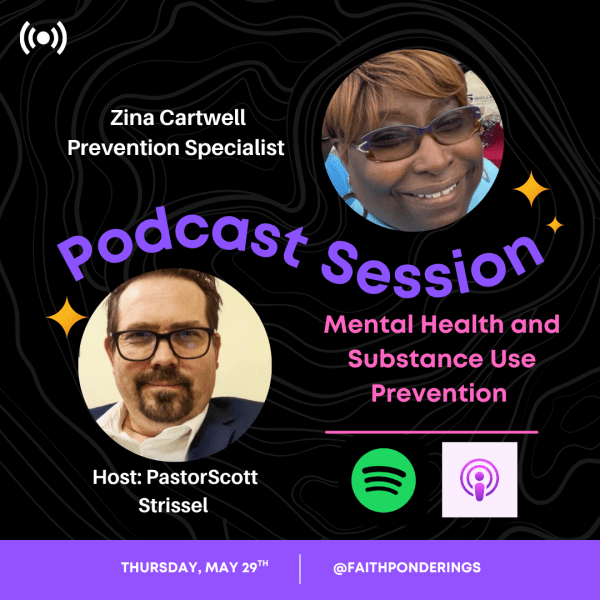
Mental Health Podcast Episode W/ Special Guest Mike Davis.

Mental health is very near and dear to my heart. I recently sat down with my good friend Mike Davis who is a mental health professional and we got the chance to talk about this important topic. So many people don’t realize the tools available to them, nor the signs when to seek help. The month of May is Mental Health Awareness Month, so it is important to continue to bring awareness to this crucial issue in our communities and to remove any stigma associated with seeking help and finding a good counselor or therapist.

Additionally, to those experiencing thoughts of suicide or self-harm, I want to share these important resources and let you know that you’re not alone! Please consider calling 988 Lifeline or accessing help here: https://988lifeline.org/
There are able and willing professionals ready to assist and talk with you. So please, don’t hesitate to reach out for help!

To find a therapist near you, use online directories like Psychology Today, GoodTherapy.org, or Open Path Collective. These platforms allow you to search for therapists by location, specialty, and insurance acceptance. You can also check with your insurance provider for a list of in-network therapists. 

check out our podcast episode on “Faith Ponderings” exclusively on Spotify and Apple Podcasts.

Are We Really Being the Church? A Call to Live Faith Outside the Walls.


Welcome to Pastor’s Ponderings, where we wrestle with the big, holy questions that challenge us to lean closer to Jesus. Today, we’re diving into something that might sting a little but is worth the discomfort: Are we, as church people, truly being the church in our communities? Or are we just playing church inside our safe, cozy buildings while the world outside hungers for something real?

Church: A Movement, Not a Destination

Picture this: You’re driving through town, and there’s the church on the corner—steeple piercing the sky, stained glass glowing, maybe a sign out front with a catchy phrase like, “Too blessed to be stressed!” It’s comforting, familiar. It’s where we gather to sing, pray, and hear a sermon. But what if we’ve gotten so comfortable inside those walls that we’ve forgotten what the church is supposed to do? What if we’ve turned church into a destination instead of a movement?

Jesus didn’t call us to build fortresses. He called us to go—to be salt of the earth – (Matthew 15:13-16). He tells us to be salt and light in the world: “You are the salt of the earth. But if the salt loses its saltiness, how can it be made salty again? It is no longer good for anything… You are the light of the world… Let your light shine before others, that they may see your good deeds and glorify your Father in heaven.” Salt doesn’t do any good sitting in the shaker, and light is useless hidden under a bowl. Jesus is saying, “Get out there. Flavor the world. Illuminate the darkness.” And that happens not just in the pews but in coffee shops, grocery stores, school board meetings, and homeless shelters—wherever people are hurting, doubting, or searching.

Scripture’s Call to Action

Scripture is clear about this. In Acts 1:8, Jesus commissions His disciples: “You will receive power when the Holy Spirit comes on you; and you will be my witnesses in Jerusalem, and in all Judea and Samaria, and to the ends of the earth.” He doesn’t say, “Build a nice building and invite people to hear about Me.” He says, “Be my witnesses”—in your city, your neighborhood, even the places you’d rather avoid.

Then there’s James 2:17, a gut-punch of truth: “Faith by itself, if it is not accompanied by action, is dead.” If our faith only shows up on Sunday mornings, confined to Bible studies and worship services, are we truly living it? Or are we just performing it?

Questions That Sting

Let’s sit with some hard questions—and I’m asking these of myself, too. When was the last time you had a real, no-agenda conversation with someone in your community who doesn’t go to church? Not to invite them to a service or “fix” them, but to listen, to love, to be present?

What’s stopping you from stepping out of the church building and into the mess of the world? Is it fear? Comfort? The assumption that “someone else” will do it? Or, if we’re honest, do you secretly think the people out there don’t deserve your time, your energy, your Jesus?

Here’s one more to twist the knife: If your church building disappeared tomorrow, would your community even notice? Would they feel the absence of your love, your service, your light? Or have we been so inward-focused that we’ve forgotten how to be the church where it counts?

These questions hurt because Jesus didn’t call us to a safe, comfortable faith. He called us to a faith that moves, risks, and loves even when it’s inconvenient. But here’s the beautiful part: When we live church in the community, it’s not just the world that changes—we change, too.

A Story of Bridge-Building

Let me share a story. I met a guy named Mike at a local diner. He’s not a church guy—tattoos, rough past, and enough skepticism about religion to fill a book. I started showing up at that diner regularly, not to preach, but to talk. Over coffee and pancakes, we got to know each other. One day, Mike asked, “Scott, why do you keep showing up? What’s your angle?” I replied, “No angle, man. I just like you. And I think God does, too.”

Months later, Mike came to our church’s community barbecue—not a service, just a party we threw in the park. He didn’t come to “get saved.” He came because he felt seen and loved. That’s what being the church in the community does. It builds bridges. It shows people Jesus in ways a sermon alone never could.

Living Church Practically

So, what does this look like? It’s not about adding more programs to the church calendar. It’s about living with eyes open. Volunteer at the local food bank, not because it’s a “church thing,” but because people are hungry. Show up at city council meetings to advocate for the marginalized. Invite your neighbor over for dinner, even if they think church is a scam. Be the church where you are, with the people God places in your path.

And here’s the promise: When we do this, we’re not just obeying Jesus—we’re joining Him. He’s already out there—in the streets, the schools, the places we’ve been too scared or busy to go. He’s waiting for us to show up.

Where Is God Nudging You?

So, where are you at with this? Where’s God nudging you to be the church outside the walls? Maybe it’s a person you’ve been avoiding, a place you’ve written off, or a step of courage you’ve been too comfortable to take. Sit with that. Pray about it.

Let’s pray together: God, You are the God who goes. You sent Jesus into the world, not to stay safe, but to love, serve, and save. Holy Spirit, shake us up. Show us where we’ve been hiding in our buildings, our routines, our comfort. Give us the courage to be Your church in our communities—to be salt, light, and love. We need You for this. Amen.

Let’s keep pondering how we can live church where it matters most. The world’s waiting.

What’s one step you can take this week to be the church in your community?
Share your thoughts, and let’s encourage each other to live faith out loud.
Grace & Peace,
-Pastor Scott.

The Fraying Threads of Friendship: Why It’s So Hard to Keep Friends as We Age

By Pastor Scott

You ever notice how friendships start to feel like old sweaters? They’re cozy, familiar, but over time, they get stretched out, a little threadbare, maybe even lost in the back of the closet. You don’t mean for it to happen. Life just… happens. And suddenly, you’re standing there, wondering where all your people went.

I’ve been chewing on this a lot lately, mostly because I got hit with a question that stopped me dead in my tracks. I was doing this pastoral survey—you know, one of those “reflect on your life and ministry” deals that’s supposed to make you feel wise and connected. It asked, “Do you have two friends you could call in the middle of the night if you were in a crisis?” Simple, right? Two names. Just two.

I sat there, cursor hovering over the page, and I couldn’t answer it. Not honestly. I mean, I’ve got people. I’ve got my wife, my kids, my congregation, folks I laugh with at church potlucks. But two friends I could call at 2 a.m., no hesitation, no doubt they’d pick up? I didn’t know if I had that. And that realization? It felt like a punch to the gut.

Here’s the thing: I don’t think I’m alone in this. The older we get, the harder it is to maintain friendships. When you’re young, it’s easy. You’re thrown together in school, sports, youth group. You bond over pizza runs and late-night talks about dreams that feel like they’re just around the corner. But then life creeps in—jobs, mortgages, kids, doctor’s appointments, and suddenly, you’re not just juggling time; you’re wrestling it to the ground.

And let’s be real: as a pastor, it’s even trickier. You’re everyone’s friend, but nobody’s friend, you know? You’re there for the crises, the weddings, the funerals, but when it’s your turn to need someone, you hesitate. You don’t want to burden anybody. You’re supposed to be the strong one, the one with the answers. Plus, there’s that weird dynamic where you’re not sure if people are your friend because they like you or because you’re Pastor Scott.

But it’s not just a pastor thing. I’ve talked to enough people—carpenters, teachers, stay-at-home moms—to know this is a human thing. As we age, our worlds get smaller. We move away. We get busy. We get hurt. Maybe a friend betrayed you, or maybe you just drifted apart, and now it feels awkward to reach out. Like, what do you even say? “Hey, remember me? We used to grab coffee ten years ago. Wanna pick up where we left off?”

And then there’s the vulnerability piece. Friendship—real, deep friendship—requires you to show up as you are. No mask, no filter. That’s scary when you’re 20, but when you’re pushing 40, 50, 60? It’s terrifying. You’ve got baggage now. You’ve got scars. You’re not sure if you can trust someone to hold all that without dropping it.

So, what do we do? Do we just shrug and say, “That’s life,” and keep trudging along, lonely but pretending we’re fine? Or do we fight for it? Because I think friendship is worth fighting for. It’s not just nice to have; it’s holy. Jesus didn’t do life alone—he had his twelve, his inner three. He ate with them, laughed with them, cried with them. If the Son of God needed friends, who are we to think we can go it solo?

I’m trying to figure this out myself, and I don’t have all the answers. But here’s what I’m learning:

  1. Start small. You don’t need a squad of ten. One friend, one real connection, can change everything. Text someone you’ve been meaning to reconnect with. Say, “Hey, I miss you. Can we grab a burger?” It might feel awkward, but awkward is better than empty.
  2. Be honest. If you’re struggling, say it. I’m preaching to myself here, because I’m terrible at this. But the few times I’ve let my guard down and admitted, “I’m lonely,” it’s opened doors I didn’t expect. People want to show up; they just need to know you need them.
  3. Make time. I know, I know—time is the one thing we never have enough of. But friendship doesn’t survive on leftovers. Schedule it. Put it on the calendar. Treat it like it matters, because it does.
  4. Lean into grace. Not every friendship is meant to last forever. Some people are in your life for a season, and that’s okay. Let them go with love, and keep your heart open for who’s next.

I’m still wrestling with that survey question. I’ve started reaching out to a couple of old friends, and it’s been messy and beautiful and humbling. I don’t know if they’d pick up at 2 a.m. yet, but I’m hoping we’re getting there. And I’m praying for the courage to keep showing up, to keep risking the vulnerability, to keep believing that God’s got people for me—and for you.

Because here’s the truth: we weren’t made to do this alone. We were made for late-night calls, for belly laughs, for someone to sit with us in the dark and say, “I’m here.” And if we’re willing to fight for it, I think we can find our way back to each other.

So, tell me—how’s it going for you? Got your two people? Or are you, like me, staring at the question, wondering where to start? Let’s figure it out together.
Grace & Peace,

Pastor Scott


Blog at WordPress.com.

Up ↑