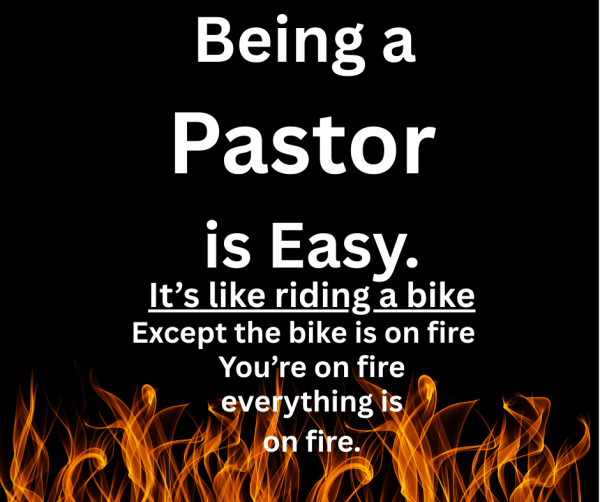
Okay, friends, let’s be real. Ministry. It’s beautiful. It’s inspiring. It’s… sometimes brutally, gut-wrenchingly hard. Like, harder than trying to explain the Book of Revelation to your five-year-old nephew while he’s hopped up on Mountain Dew and birthday cake. We’re talking sleepless nights, tough conversations, the weight of the world on your shoulders kind of hard. And if you’re a pastor, you know what I’m talking about.
So, what do we do with all that? How do we navigate the messy, complicated, sometimes heartbreaking realities of leading a community? Because let’s be honest, pretending everything’s sunshine and rainbows isn’t going to cut it. We’ve all seen that. It doesn’t work. It actually makes things worse.
Here’s the thing I’ve learned (and I’m still learning, by the way, this is a lifelong gig): It’s okay to not be okay. Seriously. You’re not a robot. You’re a human. You have doubts. You have fears. You have moments where you just want to throw in the towel and move to a secluded cabin in Montana and raise goats and maybe a miniature donkey. (Anyone else have that fantasy?)
And that’s perfectly normal. In fact, I’d argue it’s essential. Because when we’re honest about our struggles, when we acknowledge the pain, that’s when we open ourselves up to something bigger than ourselves. That’s when we create space for grace.
Think about it. The stories that resonate with us, the stories that stick with us, they’re not the ones where everything is perfect. They’re the stories where people wrestle with the hard stuff. They’re the stories where people face their fears, their doubts, their brokenness, and somehow, through it all, find a way to keep going.
That’s the kind of community I want to be a part of. A community where it’s okay to say, “I’m struggling.” A community where we can be real with each other, where we can share our burdens, where we can support each other through the tough times.
Now, I’m not saying it’s easy. Dealing with hard things is, well, hard. But here are a few things I’ve found helpful:
Find your tribe: Connect with other pastors, mentors, friends, people who get it. You need people you can be honest with, people who will listen without judgment, people who will remind you that you’re not alone.
Take care of yourself: This sounds basic, but it’s crucial. Get enough sleep. Eat healthy food. Move your body. Do things that bring you joy. Seriously, schedule it in. It’s not selfish; it’s essential.
Embrace the questions: Doubt is not the enemy of faith. In fact, I think it can be a catalyst for growth. Don’t be afraid to ask the hard questions. Don’t be afraid to wrestle with the mysteries. That’s where the real transformation happens.
Remember the bigger story: Sometimes, when we’re in the thick of it, it’s hard to see the bigger picture. But remember, there’s a story unfolding, a story of hope, a story of redemption, a story that’s bigger than our individual struggles. And we’re all a part of it.
So, yeah, ministry is hard. Life is hard. But we’re not in this alone. We’re in this together. And maybe, just maybe, in the midst of the mess, we’ll discover something beautiful, something profound, something truly holy. And that, my friends, I believe is so worth it!
Hey there, friends. can we talk for just a minute, you and me, and explore something heavy on my heart? It’s this thing I’m calling jaded faith—that worn-out, beat-up, “I’m not sure I can do this anymore” feeling that creeps in when the church, the place that’s supposed to be home, starts feeling like a stranger. You know what I’m talking about, don’t you? That moment when you look around and think, This isn’t what I signed up for.
I’ve seen it in your eyes at coffee shops, heard it in your voices over late-night texts. People who love Jesus, or at least want to, but feel like the church has let them down. And not just let them down—sometimes it’s pushed them out the door. So let’s unpack this, because it’s real, it’s raw, and it’s not how it’s supposed to be.
The Church That Drives People Away
The church is supposed to be this beautiful, messy, vibrant community where we wrestle with life together, where we find God in the middle of our doubts and dreams. But sometimes, it’s not that at all. Sometimes it’s a place where questions get shushed, where pain gets a pat on the head and a “just pray harder,” where the hard edges of life are sanded down to fit a tidy Sunday sermon. And that, friends, is when people start walking away.
I’ve talked to folks who’ve been burned by churches that cared more about their image than their hearts. Churches that preached “love your neighbor” but turned a blind eye to injustice. Churches that promised answers but dodged the questions. And let’s be honest—sometimes it’s not even the big stuff. It’s the slow drip of feeling unseen, unheard, or like you have to fake it to fit in. That’s when faith starts to jade, starts to fray at the edges, when the spark that once lit you up starts to flicker.
The Bible doesn’t shy away from this. In Matthew 23:27, Jesus calls out the religious leaders of his day, saying they’re like “whitewashed tombs, which look beautiful on the outside but on the inside are full of the bones of the dead.” Ouch. That’s Jesus saying, Stop pretending. Stop polishing the surface when the inside is rotting. The church isn’t supposed to be a performance—it’s supposed to be a place where we meet God in the real. Where we drop all of our false pretenses and showy expressions and just – be. Why do we wear masks sometimes in church and pretend everything is alright when inside we are far from okay?!
The Hunger for Authentic Faith
So what do we do with this? If the church has let us down, if our faith feels jaded, where do we go? I think it starts with admitting we’re hungry. Hungry for a faith that doesn’t flinch at the hard questions. Hungry for a God who’s big enough to handle our doubts, our fears, our why is the world like this? cries in the dark.
Think about Job. (I don’t know why I always seem to come back to this guy) But this guy lost everything—his family, his wealth, his health—and he didn’t just sit there quoting platitudes. He yelled at God. He demanded answers. In Job 38, when God finally speaks, He doesn’t give Job a neat little PowerPoint on why suffering happens. He shows up in a whirlwind, reminding Job that He’s God, that He’s vast, that He’s holding the universe together. And somehow, that’s enough for Job. Not because he got answers, but because he got God. Sometimes faith – real faith has to leap and find contentment in knowing that we won’t always have the answers figured out.
That’s what we’re craving, isn’t it? A faith that’s real enough to ask, Why does this hurt so much? Where are you, God? A faith that doesn’t need to tie everything up with a bow but trusts that God is there, even in the mess. Psalm 42:11 captures it so well: “Why, my soul, are you downcast? Why so disturbed within me? Put your hope in God, for I will yet praise him, my Savior and my God.” It’s not denying the pain—it’s choosing to hope anyway.
The Danger of False Teachings
But here’s where it gets tricky. When people are hungry, they’ll eat anything. And there are voices out there—preachers, influencers, feel-good gurus—who know exactly how to serve up a meal that tastes good but leaves you empty. It’s like eating desert when your body requires a whole meal – but we’re just consuming empty calories instead. They’re the ones promising health, wealth, and happiness if you just believe hard enough, pray loud enough, give enough. They’re selling a faith that’s all flowers and no roots. All sugar but no substance.
Paul saw this coming. In 2 Timothy 4:3, he writes, “For the time will come when people will not put up with sound doctrine. Instead, to suit their own desires, they will gather around them a great number of teachers to say what their itching ears want to hear.” That’s a warning, friends. When we’re jaded, when we’re hurting, it’s so easy to fall for the flowery stuff—the sermons that make us feel warm and fuzzy but never challenge us to grow, to wrestle, to change.
False teachings aren’t always obvious. Sometimes they’re wrapped in Christian lingo, delivered with a smile. But if it’s pointing you to anything other than Jesus—if it’s promising you a life free of struggle or a God who’s just a cosmic vending machine—it’s not the real deal. Jesus himself said in John 16:33, “In this world you will have trouble. But take heart! I have overcome the world.” He didn’t promise a trouble-free life; He promised His presence through it.
A Church That Welcomes the Real
So what’s the antidote? How do we rebuild a faith that’s not jaded, a church that doesn’t drive people away? I think it starts with being real. Real with each other, real with God. It means creating spaces where questions are welcome, where doubts aren’t a sin, where we can say, I’m struggling, and someone says, Me too. Let’s walk through it together.
It means preaching a Gospel that’s not just about getting to heaven but about living with Jesus here and now. It means tackling the hard stuff—poverty, injustice, mental health, the why behind the pain—and trusting that God’s big enough to meet us there. It means admitting when we’ve gotten it wrong, when we’ve been more about rules than relationships, more about programs than people.
Hebrews 10:24-25 gives us a blueprint: “And let us consider how we may spur one another on toward love and good deeds, not giving up meeting together, as some are in the habit of doing, but encouraging one another.” That’s the church I want to be part of. That’s the church I want to be. A church that spurs each other on, that doesn’t give up on community, that encourages each other to keep going, keep asking, keep seeking.
Let’s Keep It Real
So, friends, if your faith feels jaded, if the church has let you down, I’m sorry. That’s not how it’s supposed to be. But don’t give up. There’s a God who sees you, who loves you, who’s not afraid of your questions or your pain. And there are people out there—maybe not perfect, but real—who want to walk this road with you.
Let’s be a church that’s honest about the hard stuff, that points to Jesus instead of empty promises, that says, Come as you are, doubts and all. Let’s ask the big questions, wrestle with the answers, and trust that God’s holding us through it all. Because that’s the kind of faith that doesn’t just survive—it thrives.
What do you think? What’s jading your faith right now? And what would a real, authentic church look like for you? Let’s talk about it.
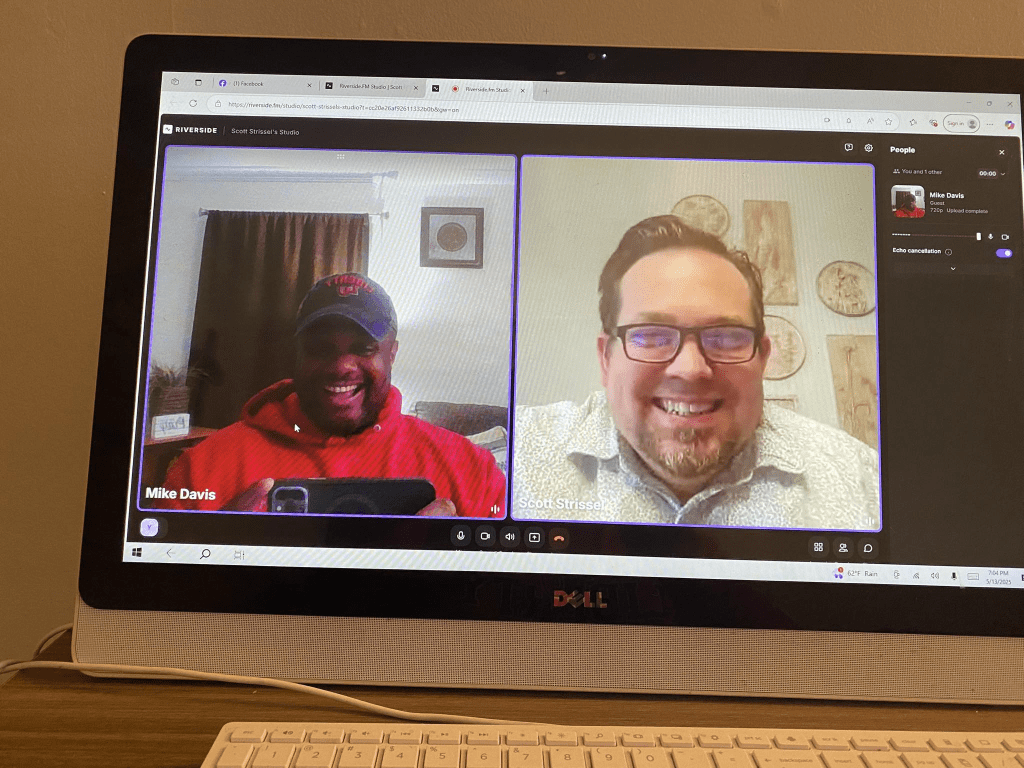
Mental health is very near and dear to my heart. I recently sat down with my good friend Mike Davis who is a mental health professional and we got the chance to talk about this important topic. So many people don’t realize the tools available to them, nor the signs when to seek help. The month of May is Mental Health Awareness Month, so it is important to continue to bring awareness to this crucial issue in our communities and to remove any stigma associated with seeking help and finding a good counselor or therapist.
Additionally, to those experiencing thoughts of suicide or self-harm, I want to share these important resources and let you know that you’re not alone! Please consider calling 988 Lifeline or accessing help here: https://988lifeline.org/ There are able and willing professionals ready to assist and talk with you. So please, don’t hesitate to reach out for help!
To find a therapist near you, use online directories like Psychology Today, GoodTherapy.org, or Open Path Collective. These platforms allow you to search for therapists by location, specialty, and insurance acceptance. You can also check with your insurance provider for a list of in-network therapists.
check out our podcast episode on “Faith Ponderings” exclusively on Spotify and Apple Podcasts.
Welcome to Pastor’s Ponderings, where we wrestle with the big, holy questions that challenge us to lean closer to Jesus. Today, we’re diving into something that might sting a little but is worth the discomfort: Are we, as church people, truly being the church in our communities? Or are we just playing church inside our safe, cozy buildings while the world outside hungers for something real?
Church: A Movement, Not a Destination
Picture this: You’re driving through town, and there’s the church on the corner—steeple piercing the sky, stained glass glowing, maybe a sign out front with a catchy phrase like, “Too blessed to be stressed!” It’s comforting, familiar. It’s where we gather to sing, pray, and hear a sermon. But what if we’ve gotten so comfortable inside those walls that we’ve forgotten what the church is supposed to do? What if we’ve turned church into a destination instead of a movement?
Jesus didn’t call us to build fortresses. He called us to go—to be salt of the earth – (Matthew 15:13-16). He tells us to be salt and light in the world: “You are the salt of the earth. But if the salt loses its saltiness, how can it be made salty again? It is no longer good for anything… You are the light of the world… Let your light shine before others, that they may see your good deeds and glorify your Father in heaven.” Salt doesn’t do any good sitting in the shaker, and light is useless hidden under a bowl. Jesus is saying, “Get out there. Flavor the world. Illuminate the darkness.” And that happens not just in the pews but in coffee shops, grocery stores, school board meetings, and homeless shelters—wherever people are hurting, doubting, or searching.
Scripture’s Call to Action
Scripture is clear about this. In Acts 1:8, Jesus commissions His disciples: “You will receive power when the Holy Spirit comes on you; and you will be my witnesses in Jerusalem, and in all Judea and Samaria, and to the ends of the earth.” He doesn’t say, “Build a nice building and invite people to hear about Me.” He says, “Be my witnesses”—in your city, your neighborhood, even the places you’d rather avoid.
Then there’s James 2:17, a gut-punch of truth: “Faith by itself, if it is not accompanied by action, is dead.” If our faith only shows up on Sunday mornings, confined to Bible studies and worship services, are we truly living it? Or are we just performing it?
Questions That Sting
Let’s sit with some hard questions—and I’m asking these of myself, too. When was the last time you had a real, no-agenda conversation with someone in your community who doesn’t go to church? Not to invite them to a service or “fix” them, but to listen, to love, to be present?
What’s stopping you from stepping out of the church building and into the mess of the world? Is it fear? Comfort? The assumption that “someone else” will do it? Or, if we’re honest, do you secretly think the people out there don’t deserve your time, your energy, your Jesus?
Here’s one more to twist the knife: If your church building disappeared tomorrow, would your community even notice? Would they feel the absence of your love, your service, your light? Or have we been so inward-focused that we’ve forgotten how to be the church where it counts?
These questions hurt because Jesus didn’t call us to a safe, comfortable faith. He called us to a faith that moves, risks, and loves even when it’s inconvenient. But here’s the beautiful part: When we live church in the community, it’s not just the world that changes—we change, too.
A Story of Bridge-Building
Let me share a story. I met a guy named Mike at a local diner. He’s not a church guy—tattoos, rough past, and enough skepticism about religion to fill a book. I started showing up at that diner regularly, not to preach, but to talk. Over coffee and pancakes, we got to know each other. One day, Mike asked, “Scott, why do you keep showing up? What’s your angle?” I replied, “No angle, man. I just like you. And I think God does, too.”
Months later, Mike came to our church’s community barbecue—not a service, just a party we threw in the park. He didn’t come to “get saved.” He came because he felt seen and loved. That’s what being the church in the community does. It builds bridges. It shows people Jesus in ways a sermon alone never could.
Living Church Practically
So, what does this look like? It’s not about adding more programs to the church calendar. It’s about living with eyes open. Volunteer at the local food bank, not because it’s a “church thing,” but because people are hungry. Show up at city council meetings to advocate for the marginalized. Invite your neighbor over for dinner, even if they think church is a scam. Be the church where you are, with the people God places in your path.
And here’s the promise: When we do this, we’re not just obeying Jesus—we’re joining Him. He’s already out there—in the streets, the schools, the places we’ve been too scared or busy to go. He’s waiting for us to show up.
Where Is God Nudging You?
So, where are you at with this? Where’s God nudging you to be the church outside the walls? Maybe it’s a person you’ve been avoiding, a place you’ve written off, or a step of courage you’ve been too comfortable to take. Sit with that. Pray about it.
Let’s pray together: God, You are the God who goes. You sent Jesus into the world, not to stay safe, but to love, serve, and save. Holy Spirit, shake us up. Show us where we’ve been hiding in our buildings, our routines, our comfort. Give us the courage to be Your church in our communities—to be salt, light, and love. We need You for this. Amen.
Let’s keep pondering how we can live church where it matters most. The world’s waiting.
What’s one step you can take this week to be the church in your community? Share your thoughts, and let’s encourage each other to live faith out loud. Grace & Peace, -Pastor Scott.
You ever notice how friendships start to feel like old sweaters? They’re cozy, familiar, but over time, they get stretched out, a little threadbare, maybe even lost in the back of the closet. You don’t mean for it to happen. Life just… happens. And suddenly, you’re standing there, wondering where all your people went.
I’ve been chewing on this a lot lately, mostly because I got hit with a question that stopped me dead in my tracks. I was doing this pastoral survey—you know, one of those “reflect on your life and ministry” deals that’s supposed to make you feel wise and connected. It asked, “Do you have two friends you could call in the middle of the night if you were in a crisis?” Simple, right? Two names. Just two.
I sat there, cursor hovering over the page, and I couldn’t answer it. Not honestly. I mean, I’ve got people. I’ve got my wife, my kids, my congregation, folks I laugh with at church potlucks. But two friends I could call at 2 a.m., no hesitation, no doubt they’d pick up? I didn’t know if I had that. And that realization? It felt like a punch to the gut.
Here’s the thing: I don’t think I’m alone in this. The older we get, the harder it is to maintain friendships. When you’re young, it’s easy. You’re thrown together in school, sports, youth group. You bond over pizza runs and late-night talks about dreams that feel like they’re just around the corner. But then life creeps in—jobs, mortgages, kids, doctor’s appointments, and suddenly, you’re not just juggling time; you’re wrestling it to the ground.
And let’s be real: as a pastor, it’s even trickier. You’re everyone’s friend, but nobody’s friend, you know? You’re there for the crises, the weddings, the funerals, but when it’s your turn to need someone, you hesitate. You don’t want to burden anybody. You’re supposed to be the strong one, the one with the answers. Plus, there’s that weird dynamic where you’re not sure if people are your friend because they like you or because you’re Pastor Scott.
But it’s not just a pastor thing. I’ve talked to enough people—carpenters, teachers, stay-at-home moms—to know this is a human thing. As we age, our worlds get smaller. We move away. We get busy. We get hurt. Maybe a friend betrayed you, or maybe you just drifted apart, and now it feels awkward to reach out. Like, what do you even say? “Hey, remember me? We used to grab coffee ten years ago. Wanna pick up where we left off?”
And then there’s the vulnerability piece. Friendship—real, deep friendship—requires you to show up as you are. No mask, no filter. That’s scary when you’re 20, but when you’re pushing 40, 50, 60? It’s terrifying. You’ve got baggage now. You’ve got scars. You’re not sure if you can trust someone to hold all that without dropping it.
So, what do we do? Do we just shrug and say, “That’s life,” and keep trudging along, lonely but pretending we’re fine? Or do we fight for it? Because I think friendship is worth fighting for. It’s not just nice to have; it’s holy. Jesus didn’t do life alone—he had his twelve, his inner three. He ate with them, laughed with them, cried with them. If the Son of God needed friends, who are we to think we can go it solo?
I’m trying to figure this out myself, and I don’t have all the answers. But here’s what I’m learning:
Start small. You don’t need a squad of ten. One friend, one real connection, can change everything. Text someone you’ve been meaning to reconnect with. Say, “Hey, I miss you. Can we grab a burger?” It might feel awkward, but awkward is better than empty.
Be honest. If you’re struggling, say it. I’m preaching to myself here, because I’m terrible at this. But the few times I’ve let my guard down and admitted, “I’m lonely,” it’s opened doors I didn’t expect. People want to show up; they just need to know you need them.
Make time. I know, I know—time is the one thing we never have enough of. But friendship doesn’t survive on leftovers. Schedule it. Put it on the calendar. Treat it like it matters, because it does.
Lean into grace. Not every friendship is meant to last forever. Some people are in your life for a season, and that’s okay. Let them go with love, and keep your heart open for who’s next.
I’m still wrestling with that survey question. I’ve started reaching out to a couple of old friends, and it’s been messy and beautiful and humbling. I don’t know if they’d pick up at 2 a.m. yet, but I’m hoping we’re getting there. And I’m praying for the courage to keep showing up, to keep risking the vulnerability, to keep believing that God’s got people for me—and for you.
Because here’s the truth: we weren’t made to do this alone. We were made for late-night calls, for belly laughs, for someone to sit with us in the dark and say, “I’m here.” And if we’re willing to fight for it, I think we can find our way back to each other.
So, tell me—how’s it going for you? Got your two people? Or are you, like me, staring at the question, wondering where to start? Let’s figure it out together. Grace & Peace,
Hey there, friends. Imagine this: you’re sitting in church, the lights are low, the band’s playing that one song that always gives you chills, and you’re feeling… something. You call it worship. Or maybe you’re out in the woods, the sun’s filtering through the trees, and your heart swells with awe. That’s worship too, right? But what if worship is bigger than those moments? What if it’s not just a song, a feeling, or a Sunday service? What if we’ve been putting worship in a box when it’s supposed to be our entire life?
I’m diving into this question today because, honestly, it’s been messing with me. I keep coming back to Romans 12:1, where Paul says, “Therefore, I urge you, brothers and sisters, in view of God’s mercy, to offer your bodies as a living sacrifice, holy and pleasing to God—this is your true and proper worship.” Let that sink in. A living sacrifice. Not a song. Not a moment. Your whole life—every breath, every choice, every messy, ordinary moment—offered to God. That’s worship.
So, let’s unpack this together. What is worship, really? What isn’t it? And why does it matter so much?
Worship: More Than a Moment
When you hear “worship,” what’s the first thing that pops into your head? For a lot of us, it’s tied to music or church. We picture hands raised, eyes closed, maybe a few tears. And don’t get me wrong—those moments can be powerful. But if we stop there, we’re selling worship short. Romans 12:1 isn’t about an hour on Sunday; it’s about Monday morning in the carpool line, Wednesday night at the kitchen sink, Friday afternoon when you’re exhausted and still have to show up for someone.
Think about the word “sacrifice.” In the Old Testament, sacrifices were intense—animals were brought to the altar, blood was shed, it was a total surrender. But Paul says, “Forget the dead offering. Be a living one.” Your life—your commute, your arguments, your dreams, your failures—is the offering God wants. It’s like God’s saying, “I don’t just want your songs. I want you. All of you.”
That’s wild, right? It means worship isn’t confined to “spiritual” moments. It’s the way you listen to a friend who’s hurting. It’s choosing forgiveness when you’d rather hold a grudge. It’s taking care of your body, stewarding your time, even resting—because all of it belongs to God. Psalm 24:1 says, “The earth is the Lord’s, and everything in it, the world, and all who live in it.” If everything is His, then every moment is a chance to worship.
What Worship Isn’t
But here’s where we can get tripped up. Sometimes we make worship something it’s not. It’s not a performance. You don’t have to hit the right notes or say the perfect prayer to impress God. It’s not a transaction either—like, “If I sing loud enough, God will bless me.” And it’s not just a feeling. You don’t need goosebumps or a spiritual high for it to count.
Look at Romans 12:1 again. Paul ties worship to God’s mercy. It’s not about earning God’s favor; it’s a response to the grace He’s already poured out. John 4:23-24 backs this up when Jesus says true worshipers worship “in spirit and in truth.” It’s not about the externals—it’s about a heart surrendered to God, whether you’re in a cathedral or a cubicle.
And here’s another thing: worship isn’t about comparing yourself to others. We’ve all been there, right? You see someone at church, hands raised, totally lost in the moment, and you think, “Man, I’m not spiritual enough.” Or you scroll Instagram and see someone praying at sunrise, and you feel like your quiet time is lame. But worship isn’t a competition. God’s not grading your vibe. He’s after your heart.
The Sacredness of the Ordinary
So, if worship is this all-of-life thing, what does that look like? I think it starts with seeing the sacred in the ordinary. Colossians 3:17 says, “And whatever you do, whether in word or deed, do it all in the name of the Lord Jesus, giving thanks to God the Father through him.” Whatever you do. That means your work, your parenting, your grocery shopping—it’s all potential worship.
What if you started noticing where God’s already showing up in your day? Maybe it’s in the laughter of your kids, or the way a coworker encourages you, or even the frustration of a hard conversation. What if you paused in those moments and said, “God, this is for You. This is my worship”?
But let’s be real—this can feel overwhelming. If every moment is worship, then every moment matters. There’s no part of your life that’s off-limits. Your anger, your doubts, your Netflix binges—they’re all on the table. That’s a lot to hold. But here’s the flip side: it’s also incredibly freeing. Because it means there’s no moment where God isn’t with you. No part of your life is too mundane or too broken to be holy. Your kitchen, your office, your hospital bed—it’s all sacred ground.
The Hard Question
Here’s where I want to get a little uncomfortable. Are there parts of your life you’re holding back from God? Maybe it’s your work—you think it’s too “secular” to be spiritual. Or your relationships—you’re not sure how they fit into this worship thing. Or maybe it’s your struggles—the shame, the fear, the stuff you don’t even want to name. What would it look like to bring those to the altar too? Not to fix them, but to say, “God, this is me. This is my sacrifice. Take it.”
Isaiah 1:11-17 is a gut-punch here. God tells His people He’s tired of their sacrifices and religious routines because their hearts aren’t in it. He says, “Learn to do right; seek justice. Defend the oppressed.” Worship isn’t just singing—it’s living justly, loving mercy, walking humbly (Micah 6:8). It’s letting God into every corner of your life, even the messy ones.
Living as Worship
So, how do we do this? I don’t have a perfect formula, but I think it starts with paying attention. Slow down and notice God in your day. Offer Him the small stuff—the way you speak to your spouse, the way you handle stress. And let go of the pressure to make worship look a certain way. Your life, as it is, is enough.
Here’s a challenge: pick one ordinary or messy part of your life today—maybe your work, your parenting, or even your doubts—and offer it to God as worship. Say, “This is my living sacrifice.” Trust that He sees it, and He’s pleased.
Friends, Romans 12:1 is an invitation to see your life differently. To see every moment as a chance to worship, not because you’re perfect, but because God’s mercy is that big. Because He’s that near. So, let’s live with our eyes open to the sacredness of it all. Let’s offer our whole selves—our joys, our struggles, our everything—as our true and proper worship.
What’s one part of your life you could offer to God today? And what would it look like to trust that it’s enough? Let’s wrestle with that. Let’s live it. And let’s keep showing up to this wild, beautiful, sacred life, giving it all to the One who’s already holding it.
Hey there, you beautiful soul. Let’s just pause for a second, wherever you are—sipping coffee, folding laundry, or maybe stealing a quiet moment in the car. I want us to lean into something together, something ancient yet still alive, something that feels like the still, small voice of the Divine. We’re going to dig into a few verses from 2 Corinthians 4:16-18, and I promise, they’re like a tiny spark that can light up the whole room of your heart. Here they are:
“Therefore, we do not lose heart. Though outwardly we are wasting away, yet inwardly we are being renewed day by day. For our light and momentary troubles are achieving for us an eternal glory that far outweighs them all. So we fix our eyes not on what is seen, but on what is unseen, since what is seen is temporary, but what is unseen is eternal.”
Wow. Just… wow. Can you feel or sense the substance of those two verses? The tenderness? Paul, this guy who’s been through shipwrecks and prisons and all sorts of chaos, starts with this bold, gentle nudge: Don’t lose heart. It’s like he’s sitting across from you at a coffee shop, looking you in the eyes, saying, “I know it’s hard. I know you’re tired. But don’t give up.”
What does that stir in you? Because, let’s be real—sometimes life feels like it’s fraying at the edges. Maybe your body’s aching, or your heart’s carrying a grief that’s too heavy to name. Maybe it’s just the slow grind of the everyday, where you’re juggling bills and schedules and a million little worries. Paul sees that. He’s not pretending it’s all fine. He says, Outwardly, we’re wasting away. That’s honest, isn’t it? Things break down. Bodies age. Plans unravel.
But then—oh, then—he flips the script. Inwardly, we’re being renewed day by day. Isn’t that wild? It’s like there’s this quiet, steady work happening inside you, even when you can’t see it. Like a seed splitting open under the soil, or the first hint of dawn before the sun even crests the horizon. Renewal. Not a one-time fireworks show, but a daily, almost invisible unfolding. What if that’s true? What if, right now, in the middle of whatever you’re carrying, something new is being born in you?
And then Paul goes deeper. He calls our troubles light and momentary. Now, I don’t know about you, but sometimes my troubles feel like boulders, not feathers. Momentary? Some of you are thinking, “Paul, this pain has been my companion for years.” So what’s he doing here? I don’t think he’s dismissing our struggles. I think he’s inviting us to zoom out, to see the bigger canvas. These troubles, as real as they are, aren’t the whole story. They’re weaving something—something Paul calls an eternal glory.
Glory. That word’s got some heft, doesn’t it? In the Bible, it’s this sense of radiance, of divine weight, of something so real it makes everything else feel like a shadow. Your pain, your questions, your long nights—they’re not wasted. They’re part of this mysterious process, shaping something eternal, something that far outweighs the heaviness you’re carrying. Can you imagine that? That the stuff you’re walking through is somehow contributing to a beauty that’s bigger than you can grasp?
And here’s where Paul gets really mischievous: So we fix our eyes not on what is seen, but on what is unseen. Okay, Paul, how do you see the unseen? It’s like he Ascendant, right? It’s this cosmic paradox, this invitation to shift your gaze. The seen—the doctor’s report, the bank account, the broken relationship—that’s real, but it’s temporary. The unseen—the love that holds you, the hope that flickers, the divine presence that’s closer than your breath—that’s eternal. It’s like one of those optical illusions where you see a vase, but then you blink, and it’s two faces. Paul’s saying, “Blink. Look again. See the eternal.”
So, how do we do this? How do we train our hearts to notice the unseen? Maybe it’s as simple as starting your day with a breath and a question: What’s renewing in me today? Maybe it’s naming one thing you’re grateful for, even if it’s just the warmth of your coffee mug. Maybe it’s sitting in silence for a minute, letting yourself feel connected to something bigger. These aren’t grand gestures. They’re small, daily practices that tune your soul to the frequency of the eternal.
Here’s the thing: this isn’t about ignoring the pain or slapping a smiley face sticker on your struggles. Feel it all—the ache, the fear, the questions. But don’t let that be the only story. There’s another story, an unseen one, where renewal is happening, where glory is being forged, where the eternal is breaking through.
So, my friend, wherever you are today—whether you’re standing tall or barely holding on—don’t lose heart. Fix your eyes on the unseen. Trust that something beautiful, something eternal, is unfolding. And here’s an open-ended invitation: What’s one tiny way you can practice seeing the unseen today? Maybe it’s a moment of gratitude, a kind word to someone, or just a deep breath where you whisper, “I’m not alone.” What’s stirring in you? Let it simmer. Let it lead you somewhere new.
You ever get tired of the neat, tidy answers? You know the ones I’m talking about—those churchy, Sunday School responses that get tossed out like a life preserver when life’s questions feel more like a tsunami. “God’s got a plan.” “Just trust and obey.” “It’ll all work out in the end.” They’re not wrong, necessarily. But sometimes, they feel like Band-Aids on a broken bone. Life’s complicated, messy, and raw. And sometimes, the harder we try to wrap it up in a neat little bow, the more it unravels.
I’m sitting here, sipping my coffee, staring out the window at a world that doesn’t always make sense. Maybe you’re there too. Maybe you’ve asked, Why did this happen? Why him/her? Why now? Maybe you’ve prayed until your knees ached, and the heavens stayed silent. Or maybe you’ve watched someone you love wrestle with pain so deep it makes your chest hurt just to think about it. And when you bring those questions to church, you get… a platitude. A verse quoted like it’s a magic wand. A smile that says, “Don’t dig too deep.”
But what if the digging is the point? What if the wrestling is where we meet God? What if, within that tension, real faith, even in the unknown, gets galvanized?
Let’s talk about Jacob for a second. You know the story—Genesis 32. He’s alone by the Jabbok River, and he ends up in this all-night wrestling match with a mysterious figure. Some say it’s God, some say an angel, but whoever it is, Jacob’s not letting go. He’s got questions. He’s got baggage. He’s got a past he’s running from and a future he’s terrified of. And in the struggle, he gets a limp—and a new name. Israel. “One who strives with God.”
Isn’t that something? God doesn’t smite Jacob for wrestling. He doesn’t hand him a scroll with all the answers. He meets him in the fight. And Jacob walks away changed, but not fixed. He’s still got the limp.
What if that’s us? What if the limp is part of the deal? What if the questions—the ones that keep you up at night, the ones that make you wonder if you’re even doing this faith thing right—are the very place where God shows up?
I’m so tired of pretending we’ve got it all figured out. I’m tired of hearing, “Just read Romans 8:28, and you’ll be fine.” Don’t get me wrong—that verse is gold. “And we know that in all things God works for the good of those who love him, who have been called according to his purpose.” It’s true. But it’s not a vending machine promise. It doesn’t mean every tragedy comes with a PowerPoint explaining why. Sometimes, we’re left with the tension. The mystery. The ache.
And that’s okay.
Think about Job. The guy loses everything—his kids, his wealth, his health. His friends show up with their Sunday School answers, basically saying, “You must’ve sinned, brah. Repent, and it’ll all be fine.” Job’s like, No, I didn’t do anything to deserve this. And he demands an audience with God. He’s bold. He’s raw. He’s not afraid to say, This doesn’t make sense, and I’m not okay with it.
When God finally speaks, does He give Job a flow chart of why bad things happen? Nope. He shows up in a whirlwind and says, Were you there when I laid the earth’s foundation? It’s not an answer—it’s a perspective shift. God’s like, I’m bigger than your questions, but I’m still here with you. And somehow, that’s enough for Job. Not because he gets it, but because he trusts.
So, here’s the challenging, hard question for us today: Can we trust God when the answers don’t come? Can we sit in the tension of I don’t know and still believe He’s good? Can we let go of the need to have it all figured out and just… wrestle?
I also think about Jesus in Gethsemane. He’s sweating blood, begging for another way. “Father, if you are willing, take this cup from me.” (Luke 22:42). Even Jesus, the Son of God, had a moment where the plan didn’t feel okay. But then He says, “Yet not my will, but yours be done.” That’s not a Sunday School answer. That’s surrender in the face of the unknown. That’s trust when the road ahead looks like a cross.
So, what about you? What’s the question you’re wrestling with? The one you’re afraid to say out loud because it feels too big, too messy, too unspiritual? What if you brought it to God—not for an answer, but for a fight? What if you said, I’m not letting go until you bless me—not with clarity, but with presence?
Here’s what I’m learning: Faith isn’t about having all the answers. (I used to think it was, but it certainly isn’t) It’s about trusting God in the questions. It’s about showing up to the mat, night after night, even when you’re tired, even when you’re limping. Because God’s not afraid of your struggle. He’s not offended by your doubt. He’s there, in the dark, ready to wrestle.
So, let’s stop pretending we’ve got it all together – because we don’t. Let’s stop handing out churchy clichés like they’re the cure for everything. Let’s be honest about the hard stuff—the grief, the fear, the why that echoes in our souls. And let’s trust that God is big enough to handle it. That He’s good enough to hold us, even when we don’t understand.
As it says in Psalm 23:4, “Even though I walk through the darkest valley, I will fear no evil, for you are with me.” Not because I get it. Not because it all makes sense. But because He’s with me.
So, keep wrestling, my friend. Keep asking. Keep limping. And trust that the God who meets you in the struggle is the same God who carries you through.
What’s the question you’re afraid to ask? And what would it look like to bring it to God—not for an answer, but for Him? -Grace & Peace, Pastor Scott
Hello, friends. Welcome to Pastor’s Ponderings, a space where we sit together, hearts open, and wonder about the big questions. No need for tidy answers or neat conclusions—just a willingness to lean into the mystery of God. Today, I’m pondering something that keeps so many of us awake at night: calling. What does it mean to discover your calling? Is there one singular path God has laid out for you, like a cosmic GPS blinking “You Are Here”? Or is life something wider, messier, more… alive? Let’s explore this together, through the lens of Scripture and the quiet whispers of the Spirit.
The other day, I was walking through the park, watching leaves spiral down from the trees, each one dancing in its own chaotic, beautiful way. I wondered, Does every leaf have a calling? To land in just the right spot? Or is the falling itself the point? We humans, we crave the one thing—the one job, the one mission, the one purpose that makes sense of our existence. We want to know we’re on the right path.
But when I open Scripture, it’s like God gently chuckles at our need for a straight line. Take Jeremiah 1:5, where God says, “Before I formed you in the womb, I knew you; before you were born, I set you apart; I appointed you as a prophet to the nations.” That’s specific, isn’t it? Jeremiah’s got a clear calling: prophet, nations, go. But then I think about Moses. He starts as a prince in Egypt, becomes a fugitive, then spends decades as a shepherd before God shows up in a burning bush and says, “Now you’re going to lead my people out of slavery.” Was Moses’ calling always to be a liberator? What about those 40 years tending sheep? Were they a detour, or were they part of the calling?
This is where it gets interesting. We love the idea of a singular calling because it feels safe. “Tell me the one thing I’m supposed to do, God, and I’ll do it.” But Scripture doesn’t always play along. Consider Paul. He’s a tentmaker, a Pharisee, a persecutor of Christians, and then—bam—blinded on the road to Damascus, he becomes an apostle to the Gentiles. But even then, his life isn’t just one thing. He’s preaching, writing letters, making tents to pay the bills, surviving shipwrecks, sitting in prisons. Was his calling just “apostle”? Or was it the whole messy, beautiful tapestry of his life?
Ecclesiastes 3:1 offers a clue: “There is a time for everything, and a season for every activity under the heavens.” A season. Not a single moment, not a single job, but seasons. Planting, uprooting, weeping, laughing, building, tearing down. What if your calling isn’t one thing, but a rhythm? A dance through seasons, where God is weaving something bigger than you can see?
Maybe the question isn’t “What’s my calling?” but “Who am I becoming?” When Jesus calls the disciples in Matthew 4:19, he doesn’t hand them a five-year plan. He simply says, “Follow me, and I will make you fishers of men.” Follow me. Not “Here’s the map.” Not “Here’s the job description.” Just… follow. Trust. Walk.
That’s scary, isn’t it? We want certainty. We want to know we’re not wasting our lives. But what if the wasting is the point? What if the detours, the failures, the seasons of not-knowing are where God is shaping us? Psalm 139:16 says, “Your eyes saw my unformed body; all the days ordained for me were written in your book before one of them came to be.” All the days. Not just the shiny ones where you feel like you’re “living your purpose.” Every day. The days you’re changing diapers, the days you’re stuck in a cubicle, the days you’re crying because you don’t know what’s next. God’s writing something in all of them.
Here’s where I’m landing, friends: I don’t think Scripture points us to one singular calling. It points us to a Caller. To a God who says, “Walk with me. Trust me. Let me shape you through every season, every stumble, every joy.” Your calling isn’t a destination; it’s a relationship. It’s showing up, day after day, saying, “Here I am, God. What’s next?”
And maybe that’s freeing. Maybe it means you don’t have to have it all figured out. Maybe the barista pouring coffee with love, the accountant crunching numbers with integrity, the artist creating beauty in obscurity—they’re all living their calling, right now, because they’re doing it with God.
So, what’s stirring in you? Are you chasing the one big thing? Or are you starting to see the beauty in the seasons, in the mess, in the not-knowing? I’d love to hear your thoughts—drop a comment or send me a message. This is a journey we’re on together.
Let’s close with a prayer: God, you are here. In every season, in every question, you are writing our story. Help us trust you. Help us follow. Amen.
Thanks for pondering with me, friends. Until next time, keep wondering, keep walking, keep trusting. Grace & Peace, -Pastor Scott.
If this topic has been meaningful to you, would you let me know by dropping a comment below? I would love to hear from you!
Hey there, you beautiful, messy, wandering souls. Welcome to Faith Ponderings, where we don’t just ask the big questions—we lean into them, poke at them, let them breathe. I’m Pastor Scott, your fellow traveler, your co-wonderer, your let’s-get-curious-about-the-hard-stuff companion. No quick fixes here, no bumper-sticker theology. Just us, the Spirit, and a whole lot of holy mystery.
Today, we’re diving into something that’s both a knife to the heart and a balm to the soul: forgiveness. And not just forgiveness, but reconciliation—that next step, that harder step, where you try to rebuild something after it’s been shattered. Why is it so hard? Like, so damn hard? Why does it feel like you’re climbing a mountain with no summit, lugging a backpack stuffed with rocks labeled “hurt,” “betrayal,” and “they don’t even get it”?
Grab a coffee, a journal, or just a quiet corner of your soul. Let’s sit with this. Let’s wrestle. Let’s see where the Spirit takes us.
The Gritty Beauty of Forgiveness
You ever notice how we love the idea of forgiveness? It sounds so good on paper. “Forgive and forget.” “Let it go.” Cue the Disney soundtrack, right? But then you try it, and it’s like… whoa. This isn’t a Hallmark card. This is gritty. This is raw. This is you staring at the person who hurt you—or maybe just their ghost in your memory—and your heart screams, “I can’t. I won’t. They don’t deserve it.”
And here’s the thing: that feeling? It’s real. It’s human. It’s not wrong to feel it. Forgiveness isn’t a transaction, like paying a bill or checking a box. It’s a journey. A process. A tearing-open of your soul to say, “I’m not gonna let this wound define me anymore.” It’s a gift you give yourself, with God’s help, to set your heart free.
But reconciliation? Oh, that’s another beast. That’s saying, “Not only am I letting go of this pain, but I’m gonna try to rebuild something with you. Something new. Something fragile.” And that’s where it gets messy. Because while forgiveness is yours to give, reconciliation takes two.
What Does Scripture Say?
Let’s go to the Bible, because it doesn’t shy away from this mess. In Matthew 18:21-22, Peter—good ol’ Peter, always asking what we’re thinking—comes to Jesus and says, “Lord, how many times should I forgive my brother or sister who sins against me? Up to seven times?” Seven! Peter’s feeling generous. That’s a lot of forgiveness. But Jesus? He blows it up. “Not seven times, but seventy-seven times.” Or in some translations, seventy times seven. Jesus is saying, “Peter, stop counting. Forgiveness isn’t a math problem. It’s a way of being.”
But here’s what gets me: Jesus doesn’t say, “And then reconcile every time.” Forgiveness is one thing—you release the debt, you let go of the grudge. Reconciliation, though? That’s a bridge you build together. It takes trust, rebuilt brick by brick. It takes the other person showing up, owning their stuff, saying, “I see the hurt I caused.” And sometimes… they don’t. Sometimes they can’t. Sometimes they won’t.
So what do you do then? Do you keep forgiving, seventy-seven times, while they keep swinging? Or is there a point where you say, “I forgive you, but I can’t walk with you anymore”? That’s the tension. That’s where we sit, in the ache, asking, “God, what now?”
Joseph’s Story: A Slow, Cautious Dance
Let’s look at Joseph in Genesis 45. This guy’s brothers sold him into slavery. Slavery. Years of betrayal, pain, abandonment. And yet, when he’s standing there, powerful in Egypt, and his brothers show up, he doesn’t just forgive them—he weeps, he embraces them, he reconciles. But it wasn’t instant. It took years. It took his brothers showing some remorse, some change. And even then, Joseph tested them. He didn’t fling open the door and say, “All good!” He watched. He waited. He protected his heart.
I wonder… is that what reconciliation looks like? A slow, cautious dance? A willingness to hope, but not a blindness to reality? Because we love the story of the prodigal son in Luke 15:11-32—the father running out, arms wide, party planned. It’s beautiful. But what if the son came back and said, “I’m not sorry, I just need more cash”? Would the father still throw the party? Or would he say, “I love you, I forgive you, but we’re not there yet”?
The Tension of Reconciliation
This is why it’s so hard. Forgiveness is yours to give—it’s a gift you offer, even if the other person never receives it. But reconciliation? That’s a bridge you build together. And sometimes, the other side isn’t ready to meet you halfway. Sometimes, they’re not safe to build with. Maybe they’re still wielding the same weapons that hurt you. Maybe they’ll never say sorry. And that’s where we need wisdom. That’s where we need prayer, community, maybe even a good therapist to help us sort through the wreckage.
Some of us are carrying wounds from people who will never apologize. A parent who failed you. A friend who betrayed you. A spouse who broke your trust. And the church—oh, the church—sometimes tells us, “Just forgive! Move on! Be the bigger person!” But what if being the bigger person means saying, “I forgive you, but I need boundaries”? What if it means loving from a distance? Is that less holy? Or is that just… human?
Psalm 147:3 says, “He heals the brokenhearted and binds up their wounds.” I love that. God’s not standing there saying, “Hurry up and forgive so I can love you.” He’s binding up your wounds. He’s healing your broken heart. And maybe forgiveness is part of that healing—not for them, but for you. To set you free. To say, “This hurt doesn’t get to own me anymore.”
Forgiveness vs. Reconciliation: A Holy Distinction
Here’s where I’m landing, friends. Forgiveness is a gift you give yourself, with God’s help, to let go of the poison. It’s saying, “I’m not gonna let this grudge eat me alive.” It’s a solo act, a sacred release. Reconciliation, though? That’s a mutual project. It’s a bridge you build, but only when it’s safe, only when there’s shared work. Sometimes, reconciliation means restoring a relationship to what it was. Other times, it means building something new—something different, something that honors the truth of what happened.
And God? He’s in both. He’s in the letting go and the rebuilding. He’s in the tears and the boundaries. He’s in the “I forgive you” and the “I can’t trust you right now.” He’s writing a story of healing, even when it’s messy.
Where Are You in This?
So, where are you in this? What’s stirring in your heart? Are you stuck on forgiving someone, wrestling with that seventy-seven times thing? Or are you wondering if reconciliation is even possible—or safe? Maybe you’re carrying guilt because you can’t reconcile, and you’re wondering if that makes you a bad Christian. Can I just say… you’re not alone. This is hard. It’s supposed to be hard. It’s holy work, but it’s not instant. It’s a journey.
Here’s a challenge: Take a moment to reflect. Journal it out, pray it through, or just sit in the quiet. Ask yourself:
What hurt am I carrying that I need to release?
Is there a relationship where reconciliation is possible, or do I need boundaries instead?
How is God inviting me to heal, right here, right now?
And if you’re feeling stuck, share your ponderings. Drop a comment, send me a message, or talk it out with someone you trust. We’re in this together.
A Closing Prayer
Let’s close with a breath. Inhale… exhale… God, you see the hurts we carry. You see the walls we’ve built, the bridges we’re scared to cross. Heal us. Guide us. Show us how to forgive, how to love, how to be whole. Amen.
Thanks for being here, you beautiful souls. This is Faith Ponderings, and I’m Pastor Scott. Keep asking, keep wrestling, keep trusting. Peace to you.
What’s stirring in you? Share your thoughts in the comments below. Let’s keep pondering together.











 Pastor's Ponderings