Stepping Away From Fear and Into Bravery & Faith.

So, there’s this verse, right? Isaiah 41:10. You’ve probably heard it before—maybe on a coffee mug, or a bookmark, or whispered by someone when the world felt like it was caving in. It goes like this: “So do not fear, for I am with you; do not be dismayed, for I am your God. I will strengthen you and help you; I will uphold you with my righteous right hand.”

It’s beautiful, isn’t it? Like a melody you didn’t know you needed until it started playing. But let’s sit with it for a minute. Let’s not just slap it on a t-shirt and call it a day. What’s going on here? What’s God actually saying—and what does it mean for us, right now, in the mess and the beauty of being human?

First off, “Do not fear.” That’s how it starts. NOT “Try not to fear” or “Fear less if you can.” No, it’s a straight-up, no-nonsense “Do not fear.” Which is crazy to me, because fear is like the air we breathe sometimes, isn’t it? Fear of failing, fear of not being enough, fear of the news cycle, fear of what’s around the corner. Just turn on the tv these days or scroll through some social media platform, and you will inevitably find fear right there on your mobile device, in some horrific news story from around the world. Fear. Fear. Fear.
epic, monumental invitation: Don’t fear.

Why? Because “I am with you.” That’s the hinge it all swings on. Not “Because I’ll show up later” or “Because I’m watching from a distance.” No, it’s present tense, right here, right now. God’s not some cosmic spectator up in the cheap seats. This is Emmanuel—God with us—whispering, shouting, singing: You’re not alone in this.

But then it gets even better. “Do not be dismayed, for I am your God.” That word “dismayed”—it’s like when you’re so overwhelmed you can’t even see straight. When the questions outnumber the answers, and you’re just… stuck. And God says, “I’ve got you. I’m yours, and you’re mine.” There’s this relational thing happening here, this covenant vibe, like God’s saying, “We’re in this together, you and me.

And if that wasn’t enough, it keeps going, like, can this get any better than that? And God’s like um, Yes! Here it is: “I will strengthen you and help you; I will uphold you with my righteous right hand.” Strength. Help. Upholding. Picture it for a second—God’s hand, steady and strong, holding you up when your knees are shaking. Not because you’ve earned it, not because you’ve got it all figured out, but because that’s who God is. Grace isn’t a transaction; it’s a gift.

So here’s where it gets challenging, though. If this is true—if God’s really with us, strengthening us, holding us—what are we doing with it? Because this isn’t just a warm fuzzy to tuck away for a rainy day. This is a call to live differently. If fear doesn’t get the final word, then what does? If God’s got our back, what risks are we willing to take? What love are we willing to give? What justice are we willing to fight for?

Think about it. If you really believed this—deep in your bones, not just in your head—how would tomorrow look different? Would you speak up when you’re usually quiet? Would you reach out where you’ve held back? Would you let go of that thing you’ve been clutching so tight your knuckles are white?

Isaiah 41:10 isn’t just a promise; it’s a dare. It’s God saying, “I’m here, so what are you going to do about it?” Not out of guilt or pressure, but out of this wild, reckless trust that the One who made the stars is walking with you through the dark.

So, yeah, don’t be afraid. Not because life’s easy—it’s not—but because you’re not doing it alone. You’ve got strength you didn’t earn, help you didn’t ask for, and a God who’s holding you up with a hand that never lets go. That’s the gospel right there, isn’t it? Not a rulebook, but a relationship. Not a distant deity, but a presence.

What if you lived like that was true? What if we all did? What would life look like and how freeing would that be for all of us? And that my friends, is something to ponder on today.

Grace & Peace,
-Pastor Scott.

The Word That Holds Us Together

Hey friends, have you ever stopped and thought about how everything started?

I mean, everything—the stars, the dirt under your feet, that coffee you’re sipping right now? John, this wild, poetic guy who hung out with Jesus, he’s got something to say about it. He kicks off his story with this mind-bending line: “In the beginning was the Word, and the Word was with God, and the Word was God.” Boom. Right out of the gate, he’s dropping something heavy, something that makes you lean in and go, “Wait, what?” “What’s this all about?!”

You see, John’s not just talking about a word like “hello” or “taco”, (mmm, now I’m hungry).
He’s talking about THE Word. In Greek, it’s Logos—this cosmic, creative force, the divine reason, the heartbeat behind it all. And he’s saying this Word wasn’t just floating around somewhere; it was with God, and it was God. From the very beginning, before the first sunrise, before the first wave crashed on the shore, there was this Word, humming with life, holding everything together.

And then John keeps going. He says, “Through him all things were made; without him nothing was made that has been made.” Did you catch that? Everything—every tree, every laugh, every tear—came through this Word. It’s like the universe is a song, and this Word is the melody that ties all the notes together. You’re part of that song. I’m part of that song. The person you passed on the street today? Part of it too. Nothing’s outside this creative pulse.

But here’s where it gets really good. John doesn’t stop at the cosmic stuff. He zooms in close and says, “The Word became flesh and made his dwelling among us.” Hold on. The Word—the one that spun galaxies into motion—didn’t just stay out there, distant and untouchable. It became flesh. Skin and bones. Sweat and smiles. Jesus. The God who was there at the beginning stepped into the mess of our world, pitched a tent right here with us, and said, “I’m not leaving you alone in this.”

Isn’t that wild? The infinite became finite. The untouchable became touchable. The light that darkness can’t overcome—and trust me, there’s plenty of darkness out there—showed up in a way we could see, hear, feel. John says, “We have seen his glory, the glory of the one and only Son, who came from the Father, full of grace and truth.” Grace and truth. Not judgment and shame. Not rules and checklists. Grace—like a warm hug when you’re falling apart. Truth—like a compass when you’re lost.

So what does this mean for you, right now, today? Maybe you’re feeling like the darkness is winning. Maybe life’s throwing punches, and you’re not sure you can get back up. John’s whispering to you: the light shines in the darkness, and the darkness doesn’t get the last word. The Word does. Jesus does. And he’s not some far-off idea—he’s here, in the thick of it with you.

Or maybe you’re wondering if you’re enough. If you belong. If there’s a place for you in this big, sprawling story. John’s got you covered there too. “To all who did receive him, to those who believed in his name, he gave the right to become children of God.” Not employees. Not fans. Children. You’re family. The Word that spoke the world into being says you’re in. You’re loved. You’re wanted.

So take a deep breath. Look around. That light’s still shining. That Word’s still speaking. It’s in the way the sun rises, the way a friend listens, the way hope sneaks back in when you least expect it. The Word became flesh and moved into the neighborhood—and he’s not moving out. You’re not alone in this. You never were. And that, my friend, is the kind of news that can carry you through anything.

What if you lived like that’s true today? What might change?

Grace & Peace,
-Pastor Scott.

Check out our new Spotify Podcast site we just launched today. I hope and pray there will be more content on it very soon, so please subscribe and follow!

The Art of Showing Up Approved

Hey Friends!
So, there’s this amazing line tucked away in a letter Paul wrote to his young friend Timothy—2 Timothy 2:15—and it’s one of those verses that sneaks up on you. It’s quiet, unassuming, but it’s so powerful, check this out: “Do your best to present yourself to God as one approved, a worker who does not need to be ashamed and who correctly handles the word of truth.” That’s it. Straight to the point, right? But lean in for a second. There’s something pulsing here, something alive, something that’s asking us to wake up. To shake the cobwebs out of our hearts and minds. It’s especially apropos on a Monday morning.

What does it even mean to “present yourself to God as one approved”? Approved by who? For what? And this bit about being a worker who isn’t ashamed—ashamed of what? It’s almost like Paul’s handing us a mirror and saying, “Take a look. What do you see? Are you showing up? Really showing up?”

So, let’s unpack this for a minute because I think it’s less about getting a gold star from God, a pat on the back, and an “atta boy or girl”…it’s less that and more about stepping into the fullness of who you were made to be. The Greek word for “do your best” here is spoudazō. It’s this beautiful, urgent word—it means to be diligent, to hustle, to give it everything you’ve got. Paul’s not saying, “Hey, try a little harder so God doesn’t ground you.” No, he’s inviting Timothy—and us—into a life of intention. A life where we don’t just coast, but we dig in. We lean into the mess and the mystery of it all.

And then there’s this phrase: “a worker who does not need to be ashamed.” I wonder if you’ve ever felt that itch of shame—like you’re not enough, like you’re faking it, like if people really knew you, they’d walk away. For just a moment sit with that, and reflect on those times when you felt like you weren’t enough. Okay, now stop it. Because shame is sneaky like that. It whispers that you’ve got to hide, that you’re not cut out for this. But Paul’s saying, “No, you’re a worker. You’re in the game. You don’t have to shrink back.” What if the approval isn’t about perfection? What if it’s about presence—showing up, open-handed, saying, “Here I am, God. I’m Yours”? Because it’s never been about perfection at all. It’s never been about being good enough. Here’s the kicker – God does the equipping, you just need to show up.

Now, let’s talk about “correctly handling the word of truth.” That sounds lofty, doesn’t it? Like you need a theology degree or a big leather Bible with your name embossed on it. But what if it’s simpler than that? What if it’s about holding truth—God’s truth, the world’s truth, your truth—with care? Not swinging it like a hammer to prove a point, but carrying it like a lantern to light the way. The word for “correctly handling” here literally means “cutting a straight path.” Picture a farmer plowing a field, steady and sure, making room for something to grow. That’s you. That’s me. We’re invited to carve out space for truth to breathe, to take root, to flourish.

Here’s where it gets challenging, though. This isn’t passive. You don’t stumble into a life like this. It takes guts. It takes saying no to the noise—the endless scroll, the comparison, the quick fixes—and saying yes to the slow, sacred work of knowing God and knowing yourself. It’s not sexy. It’s not loud. But it’s real. And it’s worth it.

So, what if today you asked yourself: What am I hustling for? Not in a guilt-trip way, but in a curious, wide-eyed way. Are you chasing approval from the crowd, or are you standing before God, unashamed, letting Him whisper, “You’re already mine”? What if you picked up the word of truth—not to weaponize it, but to let it shape you, to let it cut through the clutter?

You’re a worker. You’re approved—not because you’ve got it all figured out, not because you’re perfect, but because you’re loved beyond measure. So show up. Dig in. Handle the truth with trembling hands and a brave heart. The world’s waiting for what you’ll grow.
Grace & Peace,
-Pastor Scott.

The Table’s Too Small (And It’s Not God’s Fault)

So, let’s start here: you walk into a church, and it’s beautiful, right? The music’s swelling, the coffee’s decent—maybe even great—and the people? They’re your people. They get you. They look like you, talk like you, vote like you, maybe even grew up on the same street or at least the same kind of street. It feels like home. And that’s not wrong—home is a gift, a grace, a little taste of heaven, isn’t it? Jesus himself said he’s preparing a place for us, a home where we’re known and loved.

But here’s the thing I can’t shake—and maybe you’ve felt it too: when I read the story of God, from Genesis to Revelation, I don’t see a home that’s just for one kind of people. I see a table, a feast, a party, and the guest list? It’s wild. It’s Abraham looking up at the stars and hearing a promise about nations—plural. It’s Isaiah dreaming of a mountain where every tribe streams in. It’s Jesus eating with tax collectors and sinners, and then it’s Pentecost, where the Spirit falls and suddenly everyone’s hearing the good news in their own language. And Revelation? It’s this insane, kaleidoscope vision of every nation, tribe, people, and tongue gathered around the Lamb.

So why—why—do so many of our churches look like a family reunion instead of that cosmic party?

I get it, though. Homogenous congregations—places where everyone’s the same shade, the same culture, the same vibe—they’re comfortable. They’re easy. You don’t have to explain yourself. You don’t have to stumble over someone else’s traditions or wonder if they’re judging your potluck dish. There’s a rhythm, a shorthand, a safety in sameness. And let’s be honest: we’re human. We gravitate toward what feels familiar. Psychologists have fancy words for it—ingroup bias, tribalism—but you don’t need a PhD to know it’s true. You feel it in your bones.

And yet, I wonder if that comfort’s a little too comfortable. Like, maybe it’s a sedative when God’s trying to wake us up.

Because here’s the deal: the story of God isn’t about staying safe in our little enclaves. It’s about a love so big it keeps pushing the edges out. It’s Abraham leaving Ur. It’s Ruth—the Moabite!—becoming part of Israel’s story. It’s Jesus telling a Samaritan woman she’s seen, known, invited. It’s Paul saying there’s no Jew or Greek, slave or free, male or female—not because those differences don’t matter, but because they’re not walls anymore. They’re colors in the palette.

So when our churches stay homogenous, I don’t think it’s just a preference thing. I think it’s a gospel thing. It’s us settling for a smaller story than the one God’s telling.

Now, I’m not saying you should feel guilty about your church. Guilt’s a lousy motivator—it just makes you defensive or paralyzed, and neither of those gets us anywhere. What I’m saying is: what if there’s more? What if the Spirit’s whispering, “Hey, I’ve got people—beautiful, messy, different people—who’d love to sit at this table with you, if you’d just scoot over a little”?

And yeah, that’s scary. Inviting other races, other cultures—it’s not easy. It means listening when you’d rather talk. It means learning names you might mispronounce at first (hey, Shanais look at that lol). It means maybe singing songs that don’t hit your nostalgia button or eating food that’s spicier than you’re used to (mmm, I love spicy food!). It means asking questions—real ones, not just polite ones—and hearing stories that might stretch you, convict you, change you.

But isn’t that the point? The kingdom of God isn’t about preservation—it’s about transformation. It’s not about locking the doors to keep the world out; it’s about flinging them open and saying, “Come in, tell me who you are, because I think God’s already here in you.”

So maybe start small. Look around your church this Sunday and ask: Who’s not here? Who could be? Maybe it’s the family down the street who speaks a different language. Maybe it’s the guy at work whose skin’s a different hue and who’s never been invited—not really. Maybe it’s the refugee community you keep hearing about but haven’t met. And then—here’s the wild part—don’t just think about it. Do something. Invite them. Not to fix them, not to make them like you, but to sit with them. To eat with them. To hear them.

Because the table’s too small right now, and it’s not God’s fault. He’s already set a bigger one. The question is: will we pull up more chairs?

You don’t have to have it all figured out. You don’t have to be perfect at this. You just have to be willing. And I think—I really think—that’s enough. Because the God who made every color, every culture, every voice—he’s already in this. He’s just waiting for us to catch up. Something more to ponder today!
Grace & Peace,
-Pastor Scott.

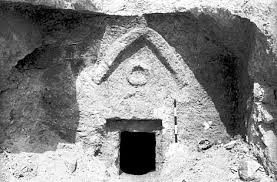
“Cracks in the Whitewash: Jesus, Tombs, and the Beauty of Being Real”

Hey Friends! Happy Tuesday, March 18th. Today, we’re diving into Matthew 23:27-28. Jesus is in the middle of this fiery, full-on rant—he’s not holding back, and it’s aimed right at the religious leaders of his day. The Pharisees, the scribes, the ones who think they’ve got it all figured out. When we find Jesus being harsh, it’s almost always with the religious folks of His day. The people who should have known better. The phony, two-faced hypocrites – who had one standard for everyone else, but a whole different set of rules for themselves. Here’s what Jesus had to say, check this out:

Woe to you, teachers of the law and Pharisees, you hypocrites! You are like whitewashed tombs, which look beautiful on the outside but on the inside are full of the bones of the dead and everything unclean. In the same way, on the outside you appear to people as righteous but on the inside you are full of hypocrisy and wickedness.” (Matt 23:27-28, NIV).

Whoa. Whitewashed tombs. Can you picture it? These pristine, gleaming graves—perfectly painted, shining in the sun, the kind of thing you’d walk by and think, Wow, that’s lovely. But then Jesus pulls the curtain back, and what’s inside? Death. Decay. Rot. It’s a gut punch, isn’t it?

Now, Jesus isn’t just throwing shade here to flex his rhetorical muscles. He’s doing what he always does—cutting through the noise to get to the heart of things. He’s talking about the gap. You know the gap I mean—the space between who we pretend to be and who we really are. The Pharisees had mastered the art of looking good. They had the robes, the rules, the rituals down to a science. They were the spiritual influencers of their day—#blessed, #righteous, #holyliving. But Jesus says, “Hold on. Let’s talk about what’s under the filter. Let’s address what’s actually in your hearts.”

Because here’s the thing: you can polish the outside all you want, but if the inside’s a mess, it’s still a mess. And Jesus isn’t interested in facades. He’s not here for the performance. He’s not here for all of the “fake nice” to your face, but the backstabbing and side looks that tell a different story. He’s here for the real. The raw. The true.

How’s Your Heart? – “What does this have to do with me?”

So what’s this mean for us? Because let’s be honest—we’re not that different, are we? We’ve got our own versions of whitewashing. Maybe it’s the way we curate our lives online—posting the highlight reel while the outtakes pile up in the shadows. Maybe it’s the way we slap a “Fine, how are you?” on top of a heart that’s breaking. Or maybe it’s the way we cling to our Sunday-best selves, hoping no one notices the doubts, the fears, the failures we’re hauling around inside.

But what if Jesus is inviting us to stop? To stop painting over the cracks and just… let them be seen? What if the point isn’t to look perfect, but to be real? Because tombs don’t come alive by staying pretty—they come alive when someone rolls the stone away and lets the light in.

See, this isn’t about shame. Jesus isn’t wagging his finger here to make us feel small. He’s calling out the hypocrisy because he loves us too much to let us stay stuck in it. He’s saying, “You don’t have to pretend. You don’t have to hide. I see the bones, the mess, the unclean stuff—and I’m not running away. I’m here for it. For you.”

So maybe today’s the day we quit whitewashing. Maybe it’s the day we let the outside match the inside a little more—not because we’ve got it all together, but because we’re brave enough to admit we don’t. And maybe, just maybe, that’s where the real beauty starts. Not in the shine, but in the cracks where the light gets in.

What do you think? Where’s the whitewash in your life? And what might happen if you let it chip away?
I think that’s definitely something worth pondering today.

Grace & Peace,
-Pastor Scott.

“Keep Building Yourself Up!”

Life has a way of throwing challenges at us that can leave us feeling drained, discouraged, or even a little lost. In those moments, we need something solid to hold onto—a reminder of where our strength comes from and how to keep going. That’s exactly what we find in Jude 1:20-21, a short but powerful passage that offers a blueprint for staying encouraged and rooted in faith.

The verses say: “But you, dear friends, by building yourselves up in your most holy faith and praying in the Holy Spirit, keep yourselves in God’s love as you wait for the mercy of our Lord Jesus Christ to bring you to eternal life.” (NIV) Let’s unpack this a little and see how it can lift us up today.

Build Yourself Up

Jude starts with an action: “building yourselves up in your most holy faith.” Think about that for a second. Faith isn’t a one-and-done thing—it’s a living, growing structure that we get to keep working on. It’s like adding bricks to a house, layer by layer. Every time we choose to trust God, every time we lean into His promises, we’re strengthening that foundation.

So how do we do that practically? It could be as simple as reading Scripture and letting it sink in, or reflecting on the ways God’s been faithful in the past. It’s not about having all the answers or feeling unshakable every day—it’s about showing up, even in small ways, and trusting that God’s at work in the process. You’re not alone in this construction project; you’re building with the best materials Heaven has to offer.

Pray in the Spirit

Next, Jude tells us to “pray in the Holy Spirit.” Prayer isn’t just a wishlist we hand over to God—it’s a conversation, a connection, a lifeline. When we pray in the Spirit, we’re inviting God’s presence to guide us, to speak to us, to fill us with peace that doesn’t make sense in the middle of chaos. It’s like tuning into a frequency where we can hear His voice more clearly.

If you’re feeling overwhelmed, try this: take a deep breath, ask the Holy Spirit to help you pray, and just start talking—or even sit quietly. You don’t need fancy words. God hears the groans of your heart just as loudly as your spoken requests. That kind of prayer keeps us anchored, no matter what’s swirling around us.

Stay in God’s Love

Then comes the heart of it: “keep yourselves in God’s love.” This isn’t about earning God’s love—He’s already given it freely. It’s about staying in that sweet spot where you’re aware of it, resting in it, letting it shape how you see yourself and the world. It’s easy to drift away when life gets tough, to let doubt or fear take the wheel. But Jude’s saying, “No, stay here. This is where you belong.”

Picture it like sitting by a warm fire on a cold night. You don’t have to make the fire burn; you just have to stay close enough to feel its warmth. God’s love is that fire—constant, steady, and always there for you to draw near to.

Wait with Hope

Finally, Jude points us forward: “as you wait for the mercy of our Lord Jesus Christ to bring you to eternal life.” Waiting can feel like the hardest part, especially when we’re longing for answers or relief. But this isn’t a passive, hopeless waiting—it’s active, expectant, full of anticipation. We’re waiting for mercy, for Jesus, for the promise of eternal life that puts every temporary struggle in perspective.

That’s the ultimate encouragement: what’s ahead is so much bigger than what’s behind or even what’s right now. You’re not just surviving; you’re headed somewhere glorious, and Jesus is the one leading you there.

You’ve Got This

So, dear friend, wherever you are today, take heart. Build yourself up in faith, one small step at a time. Pray—messy, honest prayers—and let the Holy Spirit carry you. Stay wrapped in God’s love, because it’s yours to keep. And wait with hope, knowing that mercy is coming, and it’s bringing eternal life with it.

You’re not alone in this. God’s right there, cheering you on, ready to help you add another brick to that beautiful faith you’re building. Keep going—you’ve got this, because He’s got you.

Grace & Peace,
-Pastor Scott.

“There’s Wisdom in the Asking…”

Hey Friends! Happy Pie Day/Friday!

You ever have one of those moments where life just feels like a tangle? Like you’re standing at a crossroads, and every direction looks equally foggy, and you’re just whispering to yourself, “What do I do here?” Maybe it’s a decision about a job, or a relationship that’s fraying at the edges, or maybe it’s just the quiet ache of not knowing how to keep going when everything feels heavy. We’ve all been there, haven’t we? That place where the questions outnumber the answers, and you’d give anything for a little clarity.

And then there’s this line, tucked into the opening of James, this little letter in the New Testament that feels like a friend sitting across from you at a coffee shop, leaning in close. James 1:5. It says, “If any of you lacks wisdom, you should ask God, who gives generously to all without finding fault, and it will be given to you.”

Just sit with that for a second. Let it wash over you. If any of you lacks wisdom. That’s all of us, right? I mean, who hasn’t felt that—at some point, on some day, in some messy moment? James doesn’t start with a lecture or a list of rules. He doesn’t say, “Get your act together first.” He just says, If you’re coming up short, if you’re stuck, if you don’t know which way to turn—ask.

And who do you ask? God. But not some distant, arms-crossed, judgmental God who’s keeping score. No, this is a God who gives generously to all without finding fault. That phrase—it’s like a warm breeze on a cold day. Generously. To all. Without finding fault. It’s not a transaction. It’s not a test. It’s an invitation.

What if that’s true? What if wisdom—this beautiful, elusive thing we’re all chasing—isn’t something you have to earn or prove yourself worthy of? What if it’s already there, waiting for you, like a gift with your name on it, and all you have to do is say, “Hey, I need some help here”?

Because that’s what James is getting at. He’s not talking about wisdom like it’s a trivia contest or a PhD. This isn’t about being the smartest person in the room. This is about the kind of wisdom that helps you navigate the mess—the kind that whispers, “You’re not alone in this,” or “Here’s the next step, even if it’s small.” It’s the wisdom that meets you in the tangle and says, “We’ll figure this out together.”

And the best part? James says it will be given to you. Not “maybe” or “if you’re good enough.” It’s a promise. Like the God who’s holding all of this—the stars, the oceans, the chaos of your Tuesday afternoon—looks at you and says, “I’ve got you. Ask me. I’m not stingy with this stuff.”

So maybe today, wherever you are, whatever you’re carrying, you just pause. Take a breath. And ask. It doesn’t have to be fancy. It can be as simple as, “God, I don’t know what to do here—can you show me?” And then watch. Listen. Trust that something’s coming—maybe not a billboard with neon lights, but a nudge, a peace, a little flicker of light in the fog.

Because you’re not alone in the tangle. And wisdom?
It’s not as far away as you think.
It’s right there, waiting for you to reach out.
Generously. Freely. No fault required.

What if you asked today? What might open up?
Grace & Peace.
-Pastor Scott.

“The Word That Cuts And Heals”

So, let’s talk about this wild, untamed thing we call the Word of God. Hebrews 4:12-13 drops us right into the thick of it, doesn’t it? It says, “For the word of God is alive and active. Sharper than any double-edged sword, it penetrates even to dividing soul and spirit, joints and marrow; it judges the thoughts and attitudes of the heart. Nothing in all creation is hidden from God’s sight. Everything is uncovered and laid bare before the eyes of him to whom we must give account.”

Whoa. That’s intense, right? I mean, just sit with that for a second. Like, really mull over those words, and let them sink in for just a second…


The Word of God isn’t some dusty old book sitting on a shelf, collecting cobwebs. It’s alive. It’s active. It’s moving, breathing, slicing through the noise of our lives like a blade so sharp you don’t even feel it until you’re already opened up. Soul and spirit, joints and marrow—what does that even mean? Is there a part of you it doesn’t touch?

Let’s be honest: that can feel terrifying. A sword? Cutting into me? Judging my thoughts and attitudes? (No, Thanks!)
I don’t know about you, but there are days when I’d rather keep my thoughts tucked away in the shadows, thank you very much. Days when I’d rather not be laid bare. Because being seen—really seen—can feel like standing in the middle of a storm with nowhere to hide. Naked. Vulnerable. Exposed. It reminds me of that survival show on TV “Naked and Afraid.” There’s no way you could get me out in the wilderness WITHOUT clothes on…Okay, I digress.

But here’s the thing: what if that’s not the whole story? What if this sharpness, this cutting, isn’t just about judgment? What if it’s about something deeper, something more alive than we’ve dared to imagine? I always love to ask the ‘what if’ questions…

Think about a surgeon for a minute. A scalpel in their hand isn’t there to destroy—it’s there to heal. It cuts, yes, but it cuts to get to the stuff that’s killing you, the stuff you can’t see until it’s exposed. What if the Word of God is like that? What if it’s piercing through all the layers we pile on—our masks, our defenses, our endless scrolling distractions—not to shame us, but to free us? To get to the marrow of who we really are?

Because that’s what this text is whispering to us: You can’t hide, but maybe you don’t have to. Everything’s uncovered, it says. Laid bare. Before God’s sight. And yeah, that’s a lot. It’s a lot to take in. That’s God seeing the late-night worries you don’t tell anyone about, the anger you bury, the dreams you’re too scared to chase. But what if the One seeing you isn’t holding a gavel? What if the One seeing you is the same One who breathed you into being, who knows the you beneath the ‘you‘ you’ve been pretending to be?

Here’s where it gets challenging: Are you willing to let the Word do its work? (and by ‘Word‘ I also mean the moving and convicting presence of the Holy Spirit). Are you brave enough to stop running, to stand still, and let it cut through the noise? Because it will, He will. It’ll slice through the excuses, the half-truths, the “I’m fine” you keep saying when you’re not. It’ll find the places you’ve locked up tight and say, “Hey, let’s look at this together.” And that’s hard. That’s messy. (sorry, more dumpster fire talk here). That takes guts.

But here’s the encouragement: You’re not alone in it. This isn’t about you getting dissected and left on the table. This is about a God who sees it all—every jagged edge, every hidden wound—and stays. The same God who wields this living, active Word is the One who says, “I’m with you in the mess.” The One who doesn’t just judge the thoughts and attitudes of your heart, but knows them, loves them, redeems them.

So, what’s it going to be? Will you let the sword fall? Will you trust that the cut is where the healing starts? Because this Word—it’s not here to end you. It’s here to begin you, again and again. It’s here to strip away what’s dead so you can step into what’s alive. And that’s not easy. But it’s beautiful. It’s something truly beautiful. It’s worth it.

So, friends, take a deep breath. You’ve got this. The Word’s already moving. The Holy Spirit is still moving, too.
Can you feel it?
Grace & Peace,
-Pastor Scott.

The Fish That Swallowed a Man (And Maybe Us Too)…

Hey Friends! Happy Wednesday, March 12th, 2025! Here’s what we’re pondering today. Check this out:

So, there’s this moment in the story—Jonah 1:17—where it says, “Now the Lord provided a huge fish to swallow Jonah, and Jonah was in the belly of the fish three days and three nights.” That’s it. One sentence. And yet, it’s one of those lines that just sits there, staring at you, daring you to ask: What’s really going on here?

Let’s back up for a second. Jonah’s running. God says, “Go to Nineveh,” and Jonah’s like, “Nope, I’m out.” He books a ticket on a ship going the opposite direction—like, literally the opposite direction, Tarshish, which is basically the edge of the known world back then. He’s not just avoiding a task; he’s avoiding the whole story God’s trying to write with his life. And then the storm hits, the sailors freak out, Jonah gets tossed overboard, and just when you think it’s over—bam—a fish. A huge fish. Swallows him whole. (Do you think it a fairy tale? It’s totally possible, check this video out)

Now, I want you to pause and picture this. A man, dripping wet, seaweed probably tangled in his hair, sinking into the dark, and then this massive creature opens its jaws and pulls him in. Three days. Three nights. In the belly of a fish. What do you do with that? Because it’s weird, right? It’s absurd. It’s the kind of thing that makes you wonder if this is just a wild ancient tale—or if there’s something deeper, something that hooks into your life, right here, right now.

Here’s what I think: That fish isn’t just a fish. I mean, it is—it’s scales and fins and probably smells terrible—but it’s also more. It’s a picture of what happens when you run from the thing you’re made for. Jonah’s trying to escape God’s call, his purpose, this wild invitation to go love people he doesn’t even like, and what happens? He ends up in the dark. Alone. In a place that feels like the end. But here’s the twist: it’s not the end. The fish isn’t a punishment; it’s a provision. The text says, “The Lord provided a huge fish.” Provided. That word stops me every time. God doesn’t abandon Jonah; God sends a rescue disguised as a monster.

Have you ever been there? In the belly of something? Maybe not a literal fish, but a situation, a season, a mess you made or one that just swallowed you up anyway? You ran—from a relationship, a dream, a truth about yourself—and now you’re sitting in the dark, wondering how it got this bad. Three days and three nights can feel like forever when you’re stuck, can’t they? But what if that dark place isn’t the end of your story? What if it’s the place where something new begins?

Because here’s the thing about Jonah: He doesn’t stay in the fish. Three days, three nights, and then—spoiler alert—he’s spit out onto dry land. Alive. Changed. Ready (well, sort of) to step back into the story. That time in the belly wasn’t wasted; it was preparation. It was God saying, “I’m not done with you yet.” And I wonder if that’s what God’s saying to you, too.

So, wherever you are today—running, sinking, or maybe already in the belly of something big and overwhelming—can you imagine that it might not be a tomb? That it might be a womb? A place where something new is being formed in you? The dark doesn’t get the last word. The fish doesn’t get to keep you. You’re not abandoned; you’re provided for. And those three days, those three nights—they’re not forever. They’re just long enough for you to hear the whisper: You’re still mine. We’re still going somewhere together.

What would it look like for you to stop running? To lean into the dark instead of fighting it? To trust that even the strangest, scariest provisions might be carrying you toward dry land? Because that’s the God we’re dealing with here—one who sends fish to save us, who turns runaways into prophets, who meets us in the belly of the thing we fear most and says, “This isn’t the end. This is where we start again.”

Take a breath. You’re not alone in there. And you’re not staying there. Something beautiful is coming. Can you feel it?
Grace & Peace,
-Pastor Scott.

The God of Hope in the Mess of Now

Hey friends, so let’s talk about this thing called hope. Because if you’re anything like me, you’ve looked around lately—March 11, 2025, to be exact—and thought, What is even happening? The news is a dumpster fire of chaos, your inbox is a landfill of urgent emails, and maybe your own life feels like it’s teetering on the edge of something you can’t quite name. Uncertainty—it’s the air we’re breathing these days, isn’t it? Like the weather can’t decide if it’s winter or spring, and neither can we.

And yet, there’s this line. This ancient, electric line from a guy named Paul, who wrote it in a letter to some friends in Rome. He says, “May the God of hope fill you with all joy and peace as you trust in him, so that you may overflow with hope by the power of the Holy Spirit” (Romans 15:13). I mean, come on. Read that again. The God of hope. Not the God of certainty, not the God of perfect five-year plans, not the God of “everything’s fine if you just try harder.” The God of hope. That’s who we’re dealing with here.

What if that’s the point? What if hope isn’t about knowing how it all turns out, but about trusting that there’s something—Someone—holding it all together, even when it feels like it’s falling apart? Because let’s be honest: we’re not great at uncertainty. We like maps. We like GPS. We like “arrival time: 6:42 p.m.” But life doesn’t work that way, does it? Life is more like those old sailing ships, where you’re out on the water, the wind’s howling, and you’re just hoping the stars show up at night to tell you where you’re going.

I was thinking about this the other day while drinking coffee—black, no sugar, or cream – because, like every day for me, you just need the bitter to wake you up. I was sitting there, watching some people from next door rush by outside the window, and it hit me: we’re all carrying something. A worry. A question. A what if. Maybe it’s the job that’s hanging by a thread, or the kid who’s not talking to you anymore, or the planet that feels like it’s groaning louder every day. And in the middle of that, Paul’s got the nerve to say, “May the God of hope fill you with all joy and peace.” Joy? Peace? Now? Really, Paul?

But here’s the thing: he’s not talking about a feeling. He’s talking about a filling. A pouring-in. Like the way rain soaks the ground after a drought. It’s not instant. It’s not a switch you flip. It’s a process, a trusting, a leaning into this God who doesn’t run from the mess but steps right into it. The same God who, a couple thousand years ago, showed up in a body—Jesus—and said, “I’m here. With you. In this.” That’s what hope looks like. It’s not the absence of uncertainty; it’s the presence of something bigger.

So what does that mean for us, today, in the thick of 2025? Maybe it means we stop waiting for the uncertainty to clear up before we start living. Maybe it means we take a deep breath—right now, try it—and let that joy and peace sneak in, even if it’s just a crack of light through the blinds (my bedroom blinds are currently broken at the bottom and a lot of light seems to peak in). Maybe it means we trust that the Holy Spirit that Paul is talking about and is already at work, stirring something up in us, something that overflows. Not just trickles. Overflows. Like a cup that can’t hold it all, spilling out onto the people around us.

I don’t know what your uncertain thing is today. Maybe it’s huge, global-sized, or maybe it’s small, quiet, the kind you don’t tell anyone about, but the anxiety is still building inside you. But what if you didn’t have to carry it alone? What if the God of hope is already there, in the middle of it, whispering, “I’ve got this. And I’ve got you. And I’m not going anywhere, I’m here with you!”? What if hope isn’t about escaping the storm, but about dancing in the rain —not because you’re naive but because you know the One who made the clouds? And you know the One who can calm that storm with just His words – He’s in the boat with you, right now.

So here’s your invitation: trust. Just for a moment. Lean into that God of hope. Let the joy and peace fill you, even if it feels ridiculous at first. And see if that hope doesn’t start to spill over. Because the world? It’s thirsty for it. And you might just be the one carrying the cup.

Grace and Peace,
-Pastor Scott.

Blog at WordPress.com.

Up ↑