“Decoding Toxic Church Culture: What You Need to Know”

Happy Monday, friends!
I want to kick off this week like a lion rather than a lamb.
This is a hard topic to discuss, especially in the church setting, but it’s necessary.

In recent years, there has been an uptick in news stories from large churches where the lead pastors (some who are nationally and internationally recognized) have been accused of spiritual abuse.

So, this pondering today is going to be a bit heavy.
It’s the kind of thing that makes you want to just, like, go for a long walk on the beach and stare at the waves. It makes me angry when I read stories like these, but more importantly, I have experienced leaders who used organized religion to expand their own kingdom, to establish monuments in their own names and called it “the will of God”.

I think it’s a crucial topic and we NEED to talk about it.
We can’t ignore this issue. It has happened in our past, and it is still happening in our present church culture.

Let’s call an Ace an Ace, shall we? Let’s not beat around the bush.
Here goes:
Spiritual abuse. And, yeah, sometimes, toxic leaders in the church.

Look, the church, in its best moments, is supposed to be this incredible space, right? A place of love, grace, community, transformation. A place where you can ask the big questions, wrestle with doubt, find some kind of… peace. But sometimes, it gets twisted. Sometimes, it gets… messed up.

You see, power, it’s a tricky thing. And when power gets mixed with, you know, a sense of divine authority?
That’s where things can go sideways. Fast.
Some power-hungry leaders have abused others through an erroneous understanding of biblical submission and wield their leadership like a scepter while expecting their subordinates to kiss their ring.

Think about it. We’re all looking for something.
We’re all searching for meaning, for connection.
And when someone steps up, claims they’ve got the inside track to God, that they know the secret sauce, well, it’s tempting, isn’t it? To just… hand over the keys. To let them drive.

And that’s where the trouble starts.

What does it look like?

  • Control: It’s not about guidance, it’s about domination. They dictate your thoughts, your actions, your relationships. They tell you what to wear, who to talk to, how to spend your time.
  • Manipulation: They use guilt, shame, and fear to keep you in line. They twist scripture, they play on your insecurities, and they make you feel like you’re never good enough. Much of it becomes performance-based measures that no one can always live up to.
  • Isolation: They cut you off from your support system. They tell you that anyone who disagrees with them is “of the world,” that they’re trying to lead you astray. (Insight Digital Magazine, 2024)  
  • Spiritual Blackmail: They imply that if you leave, you’ll lose God’s favor. Or worse. That you’ll be damned.
  • Narcissism: It’s all about them. Their needs, their ego, their vision. They demand constant praise and adoration. They can’t admit they’re wrong.

It’s subtle, you know? It doesn’t always look like fire and brimstone.
Sometimes, it’s just a whisper, a sideways glance, a subtle put-down.
It’s the constant feeling that you’re walking on eggshells.
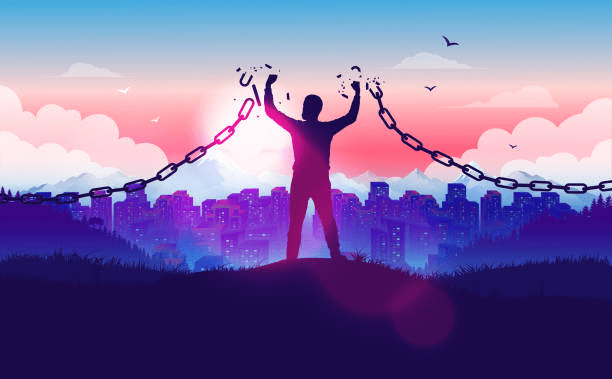
So, what do we do? How do we break free?
Here are 7 suggestions to help you find freedom if you find yourself stuck in Spiritual Abuse of one kind or another:

1) trust your gut. If something feels off, it probably is. If you’re constantly feeling anxious, manipulated, or controlled, that’s a red flag.

2) find your voice. Start asking questions. Challenge the status quo. Don’t be afraid to disagree. Remember, doubt isn’t the opposite of faith; it’s often a part of it.

3) build a support network. Find people you can trust, people who will listen without judgment. Talk to a therapist, a counselor, or a trusted friend. You are not alone.

4) reclaim your autonomy. Remember, you are a person with your own thoughts, feelings, and beliefs. You are not defined by someone else’s interpretation of God.

5) redefine your understanding of God. Let go of the toxic image of a wrathful, judgmental God. Embrace a God of love, grace, and compassion. A God who wants you to thrive, not to be controlled.

6) forgive, but don’t forget. Forgiveness is for you, not for them. It’s about releasing the pain and moving forward. But that doesn’t mean you have to forget what happened. Learn from it, and use that knowledge to protect yourself and others.

7) find a healthy community. There are churches and communities out there where you can be yourself, where you can ask questions, where you can find genuine connection. It might take some searching, but they’re out there.

Look, this stuff, it’s not easy. It takes courage, it takes vulnerability. But you are strong. You are resilient. And you are worthy of love, acceptance, and freedom.

Perhaps this whole experience can be a catalyst for something new.
A deeper understanding of yourself, of your faith, of the world around you.
Perhaps you can find a more authentic, more beautiful way to connect with the divine.

We can decode this toxic church culture together and live a life worthy of this calling as Christ-followers!
Something more to ponder.
Grace & Peace.
-Pastor Scott.

The Ache and the Anchor: How Does Faith Shape Our Response to Suffering?

Hey friends, happy Thursday (or whenever you read this particular article).
Today, I want to ponder the concept of faith in the midst of suffering in our world.
So, let’s dig in.

Have you ever noticed how suffering feels like it’s baked into the fabric of everything?
Like, you can’t scroll through your feed, walk down the street, or sit with a friend over coffee without bumping into it.
A headline about a war. A text from someone you love saying they’re not okay. That dull ache in your own chest you can’t quite name. It’s there, isn’t it? This brokenness. This thing we didn’t sign up for but can’t seem to escape.

And then there’s faith. This wild, messy, beautiful thing we carry—or maybe it carries us (sometimes both).
How does it fit with all this? How does faith shape the way we stumble through a world that’s cracked wide open?
How do we put one foot in front of the other and even consider the word “persevere?”

Let’s sit with that for a second.

Imagine you’re walking through a forest (I did this just last weekend), and the trees are bare, the ground’s all muddy, and there’s this wind that cuts right through you. It’s not pretty. It’s not Instagram-worthy. It’s raw. And you’re wondering—where’s the life here? Where’s the green? But then you look closer, and there’s this tiny shoot pushing up through the dirt. Barely there, but there. That’s what suffering can feel like—like you’re stuck in the mud, but something’s still growing. Something’s still alive.

Faith, I think, is what lets us see that shoot. It’s not a magic wand that makes the mud disappear. It’s not a loud voice shouting, “Don’t worry, I’ll fix it!” No, it’s quieter than that. It’s more like a whisper saying, “Look. Keep looking.” Because maybe the point isn’t to get out of the suffering but to find what’s growing in it.

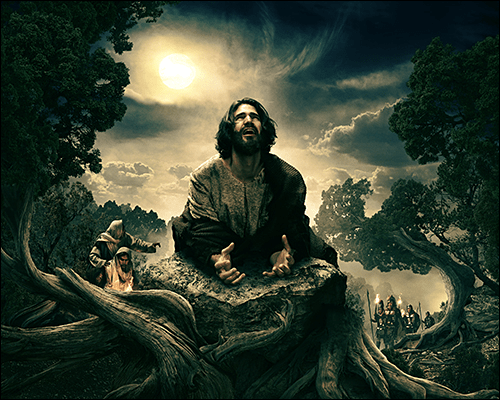
You know the story about Jesus in the garden, right? Gethsemane. He’s sweating blood, pleading with God to take the cup away, to rewrite the script. He’s fully human there, feeling the weight of what’s coming. And yet he says, “Not my will, but yours.” What’s that about? Is that faith? Trusting there’s something bigger even when the pain is screaming louder than anything else? I wonder if Jesus was showing us that suffering doesn’t get the last word—not because it goes away, but because it’s held in something deeper.

And what about us? When the diagnosis comes, or the relationship fractures, or the world feels like it’s unraveling—where does faith take us then? Does it make us stoic, like we’re supposed to just grit our teeth and pretend it’s fine? Or does it crack us open, let the tears fall, let the questions fly?

I think it’s the second one.
Faith isn’t a shield to keep the pain out; it’s a lens to see through it.

There’s this guy I met once, years ago. His name was Tom (not really his name, but we’ll call him Tom). He lost his kid in a car accident. Brutal. The kind of thing that could bury you (I think it totally would bury me). And he told me, over this beat-up diner table with coffee stains on the menu, that he’d sit in his backyard every morning, yelling at God. Just letting it out—anger, grief, all of it. But then he’d stay there. He’d sit in the silence after the yelling. And he said that’s where he started to feel it—this thread of peace, thin as a spiderweb, but real. He didn’t have answers. He still doesn’t. But he had that thread. Was that faith? I think it might be.

So what if faith isn’t about fixing the brokenness but about finding the holy in it? What if it’s less about escaping the forest and more about noticing the shoot, the whisper, the thread? Because the world’s not going to stop breaking. You know that. I know that. But maybe faith is what keeps us from breaking with it—or at least keeps us open to being put back together.

Think about Paul, that wild apostle guy. He writes about “rejoicing in our sufferings.” Rejoicing? Like, really? But then he says it produces endurance, and endurance produces character, and character produces hope. Hope doesn’t erase the suffering—it grows out of it. Like that shoot in the mud. And Paul’s not saying it’s easy. He’s saying it’s possible.

So here’s the question: What’s your suffering right now?
What’s the thing that keeps you up at night, the thing you can’t shake? (We’ve talked about this before, but I think many of us are still struggling through something)

And where’s faith in that?
Is it in the yelling? The silence?
The tiny green thing you almost missed? Because I think it’s there.
Not loud. Not obvious. But there.

The world’s broken, yeah. But it’s not the whole story.
Faith says there’s more. It says the ache isn’t the end—it’s the place where something new begins.
And maybe that’s enough for today.
Maybe that’s enough to keep going.
Perhaps we can all find some comfort in that…and keep pressing onward.

What do you think? Where do you see it growing?
Please, I welcome the comments and responses because we’re all on this journey together.
Grace & Peace,
-Pastor Scott.

“What If ‘All Have Sinned’ Was Actually Good News?”

Alright, friends, let’s dive into today’s Pondering. We’re checking out Romans 3:23-24.
And, hopefully by now you know the drill, right?
We’ve all heard it, maybe even memorized it.
But have we felt it? Like, really felt it?
Like, does it resonate in your very bones?

For all have sinned and fall short of the glory of God, and all are justified freely by his grace through the redemption that came by Christ Jesus.”  

So, let’s break this down, shall we?
All have sinned.”
Okay, that’s not exactly a headline you’d put on a motivational poster, is it?
We’re all in the same boat. Nobody’s got it all figured out.
Nobody’s got their act together perfectly.
We’ve all missed the mark.
We’ve all stumbled.
We’ve all made messes that we can’t clean up.

And you know what? (and perhaps here’s the hard part to accept…)
That’s okay.
Because here’s the amazing headline, the part that flips the whole script:
and all are justified freely by his grace.

Freely.”
Let that word sink in.
It’s not about how many good deeds you’ve racked up.
It’s not about how clean your record is.
It’s not about climbing some cosmic ladder of worthiness.
It’s a gift. A straight-up, no-strings-attached, radical gift.

See, we live in a world obsessed with earning,
with proving ourselves, with measuring up.
We’re constantly bombarded with messages telling us we’re not enough.
Not smart enough, not successful enough, not spiritual enough.
But Paul, he’s right here saying something totally different.
He’s saying, “You? Yes, you. You’re already accepted. You’re already loved. You’re already forgiven.”

It’s like, imagine you’re a kid, and you’ve just made a colossal mess. (I think we all know what that feels like)
We’ve spilled the blue paint all down the carpeted stairs,
We’ve broken the family keepsake off the shelf…the whole nine yards.
You’re bracing for the storm, right?
But instead, your parent looks at you, smiles, and says, “It’s alright. We’ll clean it up together.”

That’s grace, folks. It’s messy, it’s unexpected, and it’s utterly transformative.

And through Jesus, “the redemption that came by Christ Jesus,” this grace is made real.
It’s not some abstract concept. It’s a person.
A person who stepped into our mess (picked up the broom and dustpan)
who took on our brokenness, who showed us what true love looks like.

So, here’s the invitation: stop trying so hard.
Stop trying to earn your worth.
Stop trying to fix yourself all the time.
Just breathe. Let go. Receive the gift.
Yes, the Holy Spirit will still work in us and convict us,
Yes, there’s still work that will take place later…but just for now:
Breathe.
Be Still.

Why?

Because you are loved.
You are accepted.
You are forgiven. And you?
You are enough. Just as you are.

So, live in that freedom. Live in that grace.
And let that grace spill out onto the world around you.
Because the world needs it. We all need it.

And remember, you’re not alone in this.
We’re all in this together. And together, we’re going to figure it out…with the help of the Holy Spirit.
Grace and Peace!
-Pastor Scott.

Sand Castles and Solid Ground…

Greetings, my friends, and happy Tuesday (or whenever you read this).
I want to talk about something that’s been bouncing around in my head, something that, honestly, just keeps coming back like a good melody, an earworm that won’t quit… the same tune on repeat somewhere in the recesses of this brain of mine.
You know that kind of tune, right? The one that gets under your skin and makes you think, “Yeah, that’s it.”

Here’s the scriptural earworm that’s been rattling lately:
Hebrews 13:8 says, “Jesus Christ is the same yesterday and today and forever.

Now, I know what some of you might be thinking. “Scott, come on. That’s Sunday school stuff. We’ve heard that a million times.” And yeah, you probably have. But have you really heard it? Have you let it sink in? Have you let it reshape how you see everything? Is it really connecting your knowledge with what you believe? Many of us still have a lot of Sunday School knowledge but even after all this time, it hasn’t quite settled into what we believe.

Because, here’s the thing, we live in a world that’s constantly shifting, right? It’s like trying to build a sandcastle during high tide. News cycles spin, opinions change, trends come and go, and you’re left wondering, “What’s solid? What can I actually hold onto?”

We’re all searching for something that doesn’t crumble, something that doesn’t disappoint. We’re looking for that steady heartbeat in the midst of the chaos. And that’s where this verse hits me.

Jesus Christ is the same.

Think about that. Yesterday, today, forever. In a world of constant change, there’s a constant. In a world of uncertainty, there’s certainty. In a world of fleeting moments, there’s something eternal. In a world of things built to last a year or two at the most, here’s something that’s existed since the beginning and will be here forever.

Now, I’m not talking about some abstract theological concept. I’m talking about the Jesus who walked among us. The Jesus who ate with sinners, who healed the sick, who challenged the powerful, who shook the traditional, who loved the unlovable.

That Jesus? He’s the same. Yesterday, when they were questioning his authority. Today, when we’re wrestling with our doubts. Forever, when we’re trying to figure out what it all means.

And here’s the beautiful, liberating part: This isn’t about us trying to keep up with some ever-changing version of God. It’s about God being consistently, relentlessly, beautifully himself.

You know, sometimes we get so caught up in trying to figure out all the answers, trying to nail down all the doctrines, that we miss the simple, profound truth: Jesus is here. He’s always been here. And he’s not going anywhere.

He’s the same when you’re celebrating your biggest victories, and he’s the same when you’re staring into the abyss of your deepest fears. He’s the same when you’re surrounded by friends, and he’s the same when you feel utterly alone.

So, take a deep breath. Let go of the need to control everything.
Let go of the fear that everything is falling apart.

Because in the midst of all the noise, there’s a still, small voice saying,
“I’m here. I’m the same. And I’m not going anywhere.”

And you know what? I think that’s good news. Like, really, really good news.

So, let it sink in.
Let it change you.
Let it set you free.

Because, friends, the same Jesus who turned water into wine, who calmed the storm, who raised the dead?
He’s still here. And he’s still doing amazing things.

Perhaps we just need to open our eyes and see it today.

Grace & Peace,
-Pastor Scott.

The Road Less Traveled (And Why It Matters)

Alright, friends. Let’s talk about roads. Yeah, that’s right, we’re talking about roads today. You know, the ones you drive on, walk on, the ones you choose. Jesus, he’s got this thing, right? He’s laying it out, stark and clear: “Enter through the narrow gate. For wide is the gate and broad is the road that leads to destruction, and many enter through it. But small is the gate and narrow the road that leads to life, and only a few find it.” (Matthew 7:13-14, NIV)  

Now, we could get all fire and brimstone about this, right? We could start pointing fingers, yelling about who’s on the wrong road. But, honestly, I don’t think that’s what Jesus was going for. He wasn’t about the cosmic “gotcha.” He was about invitation.

Think about it: two roads. One, wide, easy, feels like everyone’s on it. It’s the “sure, why not?” road. The “whatever floats your boat” road. It’s the road where, let’s be honest, you can get lost in the noise, in the endless distractions, in the constant pursuit of more. It feels good for a while, maybe. But, Jesus says, it leads to destruction. And destruction, in the original Greek, isn’t necessarily about hellfire and brimstone. It’s about being unraveled, coming undone, losing your shalom(peace). Losing, well you and your wholeness.

Then there’s the other road. The narrow one. The one where you gotta squeeze through a tight gate. It’s not flashy. It’s not the popular choice. It’s the road where you have to pay attention. You have to be intentional. You have to choose. It’s the road where YOU might have to let go of some things, some old habits, some comfortable illusions. This road requires a bit of sacrifice.

And here’s the thing: that narrow road? It leads to life. Not just some distant, future life, but right now life. The kind of life where you’re truly connected, truly present, truly alive to the beauty and the mystery of it all.

Now, here’s the question I keep wrestling with: what does that narrow road look like for me? For you? It’s not a checklist. (Man, I’m tired of checklists and ‘to-do’ lists, are you?!)
It’s not a set of rules. It’s not about being perfect. It’s about paying attention. It’s about asking:

  • Where am I finding my life?
  • What am I clinging to that’s keeping me from squeezing through that gate?
  • Am I willing to let go of the noise and listen to the still, small voice within?

See, Jesus wasn’t giving us a map with turn-by-turn directions. He was inviting us to a journey. A journey of discovery, of surrender, of becoming more fully ourselves.

And yeah, it’s gonna be narrow. It’s gonna be challenging. But it’s also gonna be beautiful. Because that’s where the life is. That’s where the love is. That’s where you’ll find yourself, truly and deeply.

So, take a deep breath today.
Look around.
Which road are you on right now?
And which road are you choosing?
And here’s my prayer for us:

Let’s keep walking, friends. Together.
Grace & Peace!
-Pastor Scott.

Dude, They’re Shouting: Revelation Gets Real

Alright, friends, happy Friday!
Today, I want to tackle an encouraging passage of scripture. But it’s also in the book of Revelation. And sometimes, thanks to deeply unscriptural books like Left Behind and others, Revelation has been wildly taken out of context.
But let’s take a stab at it, here goes:

So, let’s dive into something wild, something truly massive. Do you ever feel like the world’s just… small? Like your problems, your worries, they’re the whole show? Yeah, me too. But then you crack open Revelation, and BOOM!
It’s like someone ripped the roof off of reality and showed you the backstage of the universe, and it’s so much more than you could have imagined.

We’re landing in Revelation 7, verses 9 and 10. John’s having this vision, right? And it’s not some quiet, little prayer meeting. Forget that. It’s like a whole trip. He sees “a great multitude that no one could count, from every nation, tribe, people and language, standing before the throne and before the Lamb.”  

Think about that for a second. No one could count. That’s a lot of people. Like, a lot, a lot. And the beauty is – they’re not all the same. They’re from everywhere. Every culture, every skin color, every accent you can imagine. It’s like the ultimate potluck, but instead of bringing casseroles, they’re bringing their unique stories; they’re bringing this truly diverse selection of culture; and their unique ways of praising God.  

And what are they doing? They’re shouting, “Salvation belongs to our God, who sits on the throne, and to the Lamb!”  

Now, here’s the thing that gets me. They’re not whispering. They’re not politely raising their hands. They’re shouting. They’re declaring it with everything they’ve got. They aren’t holding back. It’s a full-throated, heart-pounding, soul-shaking declaration.

Why? Because they get it. They understand the sheer, overwhelming, mind-blowing grace of God. They’ve seen the Lamb, Jesus, and they know that salvation isn’t about how good you are, how many rules you follow, or how much you donate to the church. It’s about God’s love, God’s relentless pursuit of us, God’s willingness to make things right.

And that’s incredible news. It’s news that makes you want to shout. It’s news that makes you want to dance. It’s news that makes you leave it all at the altar and live, truly live this transformed life because of His grace.

See, sometimes we get so caught up in the small stuff, the day-to-day grind, our worry about our finances, the fear of losing a job, the anxiety that keeps you up at night…we get so caught up in that small stuff that we forget the big picture.
We forget that God’s plan is bigger than our problems, bigger than our fears, bigger than anything we can imagine.

This vision in Revelation? It’s a reminder that we’re part of something huge. We’re part of a movement that spans the globe, spans time itself, it’s a movement that’s been going on for centuries, a movement that will continue until every knee bows and every tongue confesses that Jesus Christ is Lord.

So, what does this mean for us today? Well, maybe it means taking a moment to step back and remember the bigness of God. Maybe it means finding our voice and joining the chorus, declaring our own “Salvation belongs to our God!” Maybe it means looking around and seeing the beauty of God’s diverse creation, the beauty of all those different faces, all those different stories. Maybe it means we stop taking it all for granted, and say thank you!

Maybe it means realizing that we’re not alone. We’re part of a massive, glorious, unstoppable movement of love and grace. And that, my friends, is something worth shouting about. So take a few minutes, hours, days, and just appreciate this big, beautiful movement of love and give your praise to God.

Don’t just read it. Feel it. Let the sheer scale of God’s love and the diversity of His people soak into your soul.
And then, maybe, just maybe, let out a shout of your own. You’re in good company.

Grace & Peace!
-Pastor Scott.

Finding Our Way with a Little Bit of Light…(a pondering on Psalm 119).

Hey friends, let’s ponder on Psalm 119 today.
I know, I know, it’s a beast of a Psalm. It’s like, the longest psalm. Ever.
It’s got more lines than a line your neighborhood Chick-Fil-A at lunch time…well, you get the picture.
But stick with me, because there’s something wild in there. Something that’s gonna make you go, “Whoa.”

So, let’s zero in on verses 105-112, shall we?

Here it is (buckle up):

Your word is a lamp for my feet, a light on my path. I have taken an oath and confirmed it, that I will follow your righteous laws. I have suffered much; preserve my life, Lord, according to your word. Accept, Lord, the willing praise of my mouth, and teach me your laws. Though I constantly risk my life, I will not forget your law. The wicked have set a snare for me, but I have not strayed from your precepts. Your statutes are my heritage forever; they are the joy of my heart. My heart is set on keeping your decrees to the very end.

Okay, first off, “Your word is a lamp for my feet, a light on my path.” Done. Simple, right? But think about it.
We’re not talking about a spotlight, blinding you with certainty. We’re talking about a lamp. A little light in the dark.
You know, when you’re stumbling around in the middle of the night, trying to find the bathroom? And there’s that little plug-in night light to light your way and prevent you from stubbing your toe on that nightstand that’s trying to trip you.


That’s what this is. It’s enough light for the next step.
Not the whole staircase, just the next step.

See, we get so caught up in needing to know everything. We want the grand plan, the detailed map, the GPS (with the ETA of how long it’s going to take us to get there) coordinates for our entire lives.

But that’s not how it works, is it?
We get the next step.
And then the next.
And then the next.

And then, verse 107: “I have suffered much.”
Yeah, me too. You too. We all have. Life throws curveballs. It punches you in the gut. It sucker punches you in the nose when you’re not looking. And life tends to leave you wondering, “What just happened?”
But even in the midst of that, the psalmist says, “preserve my life, Lord, according to your word.”

It’s not about escaping the pain. It’s about finding a way through it. It’s about trusting that even when things are messy and confusing, there’s a light guiding you. Not a guarantee of a pain-free life, but a promise of presence. I know in previous postings we’ve talked a lot about this. But isn’t it encouraging to know that 1) you’re not the only one who wonders about stuff like this? And 2) God gets us. He knows us. He desires to journey along right beside us as we find our way through that next dumpster fire of a day.

The next step is lit…not the whole course of the journey just yet.

And then, verse 111: “Your statutes are my heritage forever; they are the joy of my heart.” Joy!
Right there in the middle of suffering, in the face of danger, there’s what?! JOY?
Not the kind of joy that comes from having everything figured out, but the kind of joy that comes from knowing you’re not alone. You’ve never been alone.
It’s the kind of joy that comes from knowing you’re connected to something so much bigger than yourself.

Because here’s the thing: you’re not just some random speck of dust floating through the universe.
You’re part of something incredible. Something beautiful. Something that’s been unfolding for a long, long time.

So, take a deep breath. Let that little lamp light your way. Take the next step. And remember, even in the darkness, there’s joy. There’s light. There’s hope. And you? You’re gonna be okay. Things are going to be alright. God has not left your side.

Grace & Peace.
-Pastor Scott.

The Upside-Down Kingdom: Finding God in the Pressure Cooker

Friends, have you ever felt like you’re in a pressure cooker? Like life is just too much? The kind of pressure where you feel like you might crack under the weight of it all? The Thessalonians knew a thing or two about that. They were facing some serious heat, real challenges, and Paul, in his second letter to them, doesn’t shy away from it. But he doesn’t just offer a pat on the back and a “hang in there” either. He dives deep, offering a perspective shift that’s as relevant today as it was back then.

He starts, as he often does, with gratitude. “We ought always to thank God for you, brothers and sisters,” he says, “and rightly so, because your faith is growing more and more, and the love all of you have for one another is increasing.” (2 Thess 1:3, NIV). Think about that for a second. Even in the midst of their struggles, something was growing. Their faith. Their love for each other. It’s easy to focus on what’s wrong, what’s broken, what’s not working. But Paul, he flips the script. He highlights the good, the beautiful, the growing.

It’s a reminder for us too.
What’s growing in your life, even now? Even in the midst of the mess?
Maybe it’s a tiny seed of hope. Maybe it’s a flicker of compassion.
Nurture it.
Pay attention to it.
Because growth, even the smallest bit, is a sign of life.  

Then he says something really interesting. He talks about their “persecutions and trials.”
He doesn’t sugarcoat it. Life was hard.
But he connects those very trials to something bigger. He says these trials are “evidence of God’s righteous judgment, so that you may be considered worthy of his kingdom, for which you are suffering.” (2 Thess 1:5, NIV).


Now, this isn’t some cosmic math equation where suffering equals worthiness. That’s not how grace works. Instead, it’s about character. It’s about how we respond to the pressure.
Do we become bitter and resentful? Or do we, somehow, through the struggle, become more like the person Jesus was?
The pressure, the trials, they can actually refine us, shape us, mold us into people of greater resilience, greater compassion, greater love. It’s not that God causes the suffering, but God uses it.
He redeems it. He transforms it.
Like a potter working with clay, the challenges we face can become the very things that make us stronger, more beautiful, more…us.  

This idea of “God’s righteous judgment” isn’t about some distant, angry judge waiting to whack us with a gavel. It’s about the universe having a certain order to it. A rightness. A justice. And in this upside-down kingdom, it’s often through suffering that we learn what that justice truly looks like.
It’s through the cracks that the light gets in, as Leonard Cohen so beautifully put it.

So, where does that leave us? It leaves us with hope. It leaves us with a God who sees us, who knows our struggles, and who is working even in the messiest parts of our lives. It leaves us with the understanding that even the hard things, the painful things, can be a part of our journey towards becoming the people we were created to be. It leaves us with the courage to keep going, to keep loving, to keep believing, even when it feels like the world is falling apart. Because in this upside-down kingdom, the last shall be first, the weak shall be strong, and even suffering can be a pathway to glory.

And that, my friends, is good news.
Grace and Peace,
-Pastor Scott.

The Dangers of Deconstructing Faith

Hey Friends,
Let’s grab the proverbial cup of coffee – strong, mind you, like the kind that’ll keep you up all night wrestling with angels – and let’s talk about this thing called deconstruction. It’s the word that seems to be on everybody’s lips these days, doesn’t it? Like some catch-phrase or a brand new invention – which it’s most certainly not. It’s like getting fixated on a new pretzel shop but instead of enjoying the twist, we’re twistin’ scripture, turnin’ it inside out salt and all, lookin’ at it under a microscope, tryin’ to figure out if it’s really… real.

Now, I understand the impulse. I do. We’ve all got questions. We’ve all got those nights when the darkness seems thicker than molasses and we’re cryin’ out, “Where are you, God?” Life throws us curveballs, and sometimes, the Sunday school answers just don’t cut it anymore. They feel… flimsy. Like a screen door in a hurricane.

So, we start picking at things. This doctrine, that verse, this preacher’s sermon. We start pulling at the threads, trying to see if the whole tapestry of faith will unravel. And sometimes, dear friends, it does. Or at least, it feels like it does.

See, the danger of deconstruction, as I see it, isn’t the questions themselves. Questions are vital. They’re the engine that drives us closer to truth. Even doubt, in a way, can be a form of faith, a wrestling with the divine. Like Jacob at the Jabbok, we grapple with God, trying to pin Him down, to understand Him, to make Him fit into our neat little boxes. It’s funny that even that part of the Jordan river “Jabbok” means to wrestle with…but I digress.

But the big danger lies in what we replace the old with. If we tear down the house of our faith brick by brick, what do we build in its place? Do we leave an empty foundation, swept clean by the winds of cynicism? Or do we try to cobble together something new, something that suits our modern sensibilities, something that feels… comfortable?

Comfort, now, that’s a tricky thing. Jesus didn’t exactly preach comfort, did He? He talked about taking up our cross, about losing our lives to find them. He turned the tables, challenged the status quo, and consorted with the outcasts. Comfort can lull us to sleep, make us complacent. It can blind us to the very things that make our faith vibrant and alive.

Perhaps because there is comfort in our Western concept of Christianity we have created this space for complacency, while the fastest growing Church can be found in places of discomfort like African, South America and Asia…

Deconstruction, without a sincere desire to rebuild, can lead to a kind of spiritual homelessness. We wander in the wilderness, lost and confused, clinging to fragments of belief like driftwood in a storm. 40 more years, wishing we could just start over. We become so focused on what we don’t believe anymore that we forget what we do believe.  Does that make sense?

Now, I’m not saying we shouldn’t question. Far from it. But let’s be honest with ourselves. Are we genuinely seeking truth, or are we just looking for an excuse to walk away? Are we willing to actually wrestle with scripture, to engage with the great thinkers of the church, to do the hard work, to pray with all our might for understanding? Or are we simply cherry-picking the parts that suit us, discarding the rest like unwanted leftovers…or some kind of fast food ala cart menu?

The Christian faith, at its heart, is a story of redemption. It’s a story of grace, of love, of forgiveness. It’s a story that’s been told and retold for centuries, a story that’s sustained countless souls through trials and tribulations. And while it’s okay to question the way we’ve interpreted that story, or the ways it’s been twisted and misused, let’s be careful not to throw the baby out with the bathwater.  

What do you think about this topic? Please join the conversation and add your comments below, we encourage a healthy dialogue.

Grace and Peace
-Pastor Scott.

Naked & Afraid – What Are You Waiting For?

Okay Friends, Let’s tackle a pondering that I still struggle with, and perhaps you do too.
This is karate kick to the gut, a mind-blowing challenge…the crane kick from Karate Kid.
(Wax on, wax off..)

This all about exchanging our control for vulnerability. In a world that tells you to never be vulnerable – it’s a sign of weakness, so don’t do it – God comes to us and implores us to be an open book, to lay it all down and allow Him to actually see us – warts and all.

In the journey of faith, there exists this profound invitation—it’s a beckoning to embrace vulnerability before the Divine. This call is not merely a suggestion, rather, it’s a sacred pathway to encountering the depth of God’s grace and presence in our lives.

Vulnerability, in its essence, is the raw courage to lay bare our hearts before God, to strip away the façade of perfection (all the phoniness, all of the masks we put on, all of the personas we pretend to be) -all stripped down, taken off and we allow our true selves to finally be seen. It’s in this very act that we open ourselves to the transformative power of divine love, unfiltered and unconditional. When we finally do (and I’ve been there a time or two, but admittedly, I’ve tried to put the masks back on) – but in those moments, freedom happens, transformation begins, and true strength is realized.

When we approach God with vulnerability, we acknowledge our humanity—the highs and lows, the joys and sorrows, the triumphs and struggles. We cease pretending to have it all together (because we don’t) and instead we surrender to the mystery of God’s embrace, knowing that our weaknesses are met with divine strength.

Boom. Mic Drop.
It’s not simple.
It takes real courage to admit we don’t have it all worked out, or we are lacking.

In Scripture, we find numerous examples of this sacred vulnerability. The psalmists, in their poetic honesty, cry out in anguish, pour out their doubts, and express their deepest longings before God. Job, amidst his suffering, boldly questions and wrestles with God, refusing to hide his pain or confusion. And Jesus himself, in the garden of Gethsemane, bares his soul before the Father, pleading with vulnerability, “Father, if you are willing, take this cup from me; yet not my will, but yours be done.”

These are visceral.
These are real emotions.
These are authentic people, including a very human Jesus – crying out to God.

This vulnerability before God is not a sign of weakness but of profound trust—a recognition that God meets us in our authenticity and brokenness. It is through our vulnerability that we open channels for divine healing, restoration, and transformation to flow into our lives.

God doesn’t want our rote practices of religion.
He doesn’t desire our leftovers.
He can’t stand our fake pretenses and emotional pleas when our hearts aren’t truly in it.
God seeks to know us – and for you and me to get real about our relationship to Him.

Moreover, embracing vulnerability before God fosters deeper intimacy and communion with the Divine. As we actually begin to share our true fears, real doubts, and hopes openly, we invite God into the innermost chambers of our hearts, where true communion is born. It’s in these sacred moments of vulnerability that we discover God’s unconditional love, which knows no bounds and accepts us just as we are.

We don’t come before God as strangers, instead He invites us in as family, as loving children.

In a world that often values strength and self-sufficiency, the act of vulnerability before God stands as a counter-cultural testament—a radical declaration of trust and surrender. It invites us to release our grip on control and instead entrust our lives into the hands of the One who created us, knowing that in our vulnerability, God’s grace is more than sufficient.


I preached this past Sunday on Matthew 5:3, “Blessed are the poor in spirit, for theirs is the Kingdom of Heaven” When we come before God in our poverty… When we approach the Creator of the Universe in our limited temporal shells… When we stop playing church and start being the Church – we essentially are opening our hands and declaring, like the prophet Isaiah did, “Woe to me!” I cried. “I am ruined! For I am a man of unclean lips, and I live among a people of unclean lips, and my eyes have seen the King, the Lord Almighty.” (Isaiah 6:5).

Vulnerability is hard.
It takes courage.
It’s laying bare all of your ugly blemishes and embarrassing faults.
But consider what happens after.
God transforms.
God’s love and permeate.
He can truly shine in you.
Vulnerability elevates us while our continued self-sufficiency and false pretenses only serve to limit, hold back and diminish us.

So friends, what will it be?
What will it take for us to finally embrace the sacred power of vulnerability before God?
Not as a mere gesture but as a transformative practice that opens the door to divine encounters, deepens our faith, and nurtures our souls.

My prayer for each of us is that we find courage in our weaknesses, strength in our surrender, and the abiding presence of God in our every moment of this journey.

In this sacred dance of vulnerability and grace, may we discover anew the profound truth that in our weakness, God’s power is made perfect – and where true growth can be attained.

Grace and peace,
-Pastor Scott.

Blog at WordPress.com.

Up ↑