
The Art of Showing Up Approved

Hey Friends!
So, there’s this amazing line tucked away in a letter Paul wrote to his young friend Timothy—2 Timothy 2:15—and it’s one of those verses that sneaks up on you. It’s quiet, unassuming, but it’s so powerful, check this out: “Do your best to present yourself to God as one approved, a worker who does not need to be ashamed and who correctly handles the word of truth.” That’s it. Straight to the point, right? But lean in for a second. There’s something pulsing here, something alive, something that’s asking us to wake up. To shake the cobwebs out of our hearts and minds. It’s especially apropos on a Monday morning.

What does it even mean to “present yourself to God as one approved”? Approved by who? For what? And this bit about being a worker who isn’t ashamed—ashamed of what? It’s almost like Paul’s handing us a mirror and saying, “Take a look. What do you see? Are you showing up? Really showing up?”

So, let’s unpack this for a minute because I think it’s less about getting a gold star from God, a pat on the back, and an “atta boy or girl”…it’s less that and more about stepping into the fullness of who you were made to be. The Greek word for “do your best” here is spoudazō. It’s this beautiful, urgent word—it means to be diligent, to hustle, to give it everything you’ve got. Paul’s not saying, “Hey, try a little harder so God doesn’t ground you.” No, he’s inviting Timothy—and us—into a life of intention. A life where we don’t just coast, but we dig in. We lean into the mess and the mystery of it all.

And then there’s this phrase: “a worker who does not need to be ashamed.” I wonder if you’ve ever felt that itch of shame—like you’re not enough, like you’re faking it, like if people really knew you, they’d walk away. For just a moment sit with that, and reflect on those times when you felt like you weren’t enough. Okay, now stop it. Because shame is sneaky like that. It whispers that you’ve got to hide, that you’re not cut out for this. But Paul’s saying, “No, you’re a worker. You’re in the game. You don’t have to shrink back.” What if the approval isn’t about perfection? What if it’s about presence—showing up, open-handed, saying, “Here I am, God. I’m Yours”? Because it’s never been about perfection at all. It’s never been about being good enough. Here’s the kicker – God does the equipping, you just need to show up.

Now, let’s talk about “correctly handling the word of truth.” That sounds lofty, doesn’t it? Like you need a theology degree or a big leather Bible with your name embossed on it. But what if it’s simpler than that? What if it’s about holding truth—God’s truth, the world’s truth, your truth—with care? Not swinging it like a hammer to prove a point, but carrying it like a lantern to light the way. The word for “correctly handling” here literally means “cutting a straight path.” Picture a farmer plowing a field, steady and sure, making room for something to grow. That’s you. That’s me. We’re invited to carve out space for truth to breathe, to take root, to flourish.

Here’s where it gets challenging, though. This isn’t passive. You don’t stumble into a life like this. It takes guts. It takes saying no to the noise—the endless scroll, the comparison, the quick fixes—and saying yes to the slow, sacred work of knowing God and knowing yourself. It’s not sexy. It’s not loud. But it’s real. And it’s worth it.

So, what if today you asked yourself: What am I hustling for? Not in a guilt-trip way, but in a curious, wide-eyed way. Are you chasing approval from the crowd, or are you standing before God, unashamed, letting Him whisper, “You’re already mine”? What if you picked up the word of truth—not to weaponize it, but to let it shape you, to let it cut through the clutter?

You’re a worker. You’re approved—not because you’ve got it all figured out, not because you’re perfect, but because you’re loved beyond measure. So show up. Dig in. Handle the truth with trembling hands and a brave heart. The world’s waiting for what you’ll grow.
Grace & Peace,
-Pastor Scott.

The Dust Still Sings…

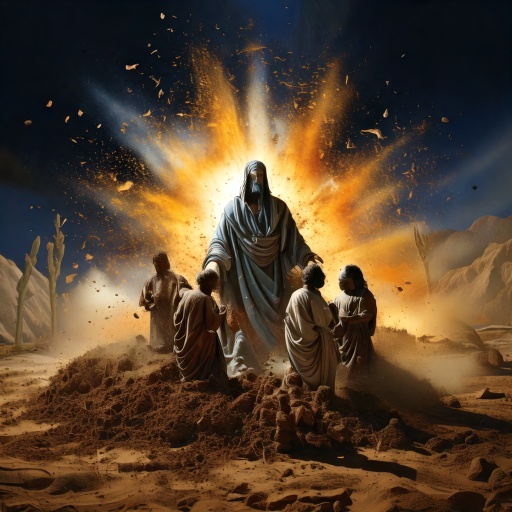
“Then the Lord God formed a man from the dust of the ground and breathed into his nostrils the breath of life, and the man became a living creature.” -Genesis 2:7 (NIV)

Hey, you. Yeah, you—reading this right now, on March 21, 2025, with the world spinning wild and beautiful outside your window. Can I tell you something? You’re made of dust. I know, I know, it doesn’t sound like a compliment at first. Dust is the stuff we sweep off the shelf, the gritty bits we try to shake out of our rugs. But stick with me here—because this dust thing? It’s actually the most stunning, mind-blowing thing about you.

Think about it. The Scriptures, those ancient, poetic pages, tell us in Genesis that God scooped up the earth—mud, dirt, dust—and breathed into it. Breathed. Like a divine exhale, a holy wind, filling the ordinary with the extraordinary. And that’s you. That’s me. That’s all of us walking around today, carrying coffee cups and chasing deadlines and wondering if we’re enough. We’re dust with breath in it, animated by something sacred, something alive.

So here’s the question I’ve been wrestling with lately: What if the dust still sings? What if that original breath hasn’t stopped echoing through us? I mean, look at your life for a second. The way you laughed with a friend yesterday, the way you paused to notice the sky turning pink this morning, the way you keep showing up even when it’s hard—that’s not just random. That’s the song of the dust, the melody of a Creator who doesn’t give up on what He’s made.

Sometimes I think we forget this. We get caught up in the noise—scrolling X, scrolling social media apps on our phones, chasing the next big thing, worrying about what’s broken in the world or in us. And trust me, there’s plenty broken. You don’t need me to list it out; you’ve seen it, felt it. But here’s the twist: What if the brokenness isn’t the end of the story? What if it’s just the place where the breath gets louder?

Jesus—this guy who walked around kicking up dust of his own—kept saying things like, “The kingdom of God is near.” Not far off, not locked away in some perfect future, but near. Like, right here, in the mess, in the dust. He ate with outcasts, touched the untouchable, and told stories that flipped everything upside down. And every time he did, it was like he was saying, “Listen, the song’s still playing. You’re still part of it.”

So today, I wonder—what’s your dust singing? Maybe it’s a quiet tune, a little shaky, because you’re tired or scared or just not sure what comes next. That’s okay. The breath doesn’t stop when we falter; it carries us. Or maybe your dust is belting out something bold today—hope, defiance, love. That’s the beauty of it: the song shifts, but it never quits.

Here’s what I’m learning, and maybe it’s for you too: You don’t have to have it all figured out for the dust to sing. You don’t have to be flawless or fearless or “fixed.” You just have to let the breath move through you. That’s faith, isn’t it? Not a perfect performance, but a willingness to lean into the melody, to trust that the One who started the song isn’t done with it yet.

So, wherever you are today—whether you’re soaring or stumbling—take a deep breath. Do you feel that? That’s the holy wind still at work, stirring the dust, calling you alive. You’re part of something vast and good and unbroken, even when it doesn’t feel like it. The world’s a mess, sure, but it’s a mess with a pulse. And so are you. So, perhaps like the song, He’s calling you to “Come Alive Dry Bones.”

What if you lived like that today? Like the dust in you is still singing?
What might happen? I don’t know exactly, but I bet it’d be beautiful. I bet it already is.
Breathe it in.

Grace and dust,
-Pastor Scott.

“The Sacrifice That Smells Like Coffee and Asphalt”

Hey there, beautiful souls,

Let’s lean into something wild and alive today—something that hums with the heartbeat of the Divine. Hebrews 13:16 in The Message version says, “Make sure you don’t take things for granted and go slack in working for the common good; share what you have with others. God takes particular pleasure in acts of worship—a different kind of ‘sacrifice’—that take place in kitchen and workplace and on the streets.” Isn’t that just electric? It’s like the Spirit’s whispering, “Hey, wake up—this is where it’s at.”

So, what’s the vibe here? This isn’t about sitting in pews, chanting the right words, or tossing a few bucks into a plate and calling it a day. No, this is messier, earthier, more human. It’s about showing up—really showing up—wherever you are. The kitchen table where you’re slicing carrots for dinner, the cubicle where you’re grinding through emails, the street corner where someone’s holding a cardboard sign. That’s the altar. That’s where the worship happens. And God? God’s into it. Like, grinning from ear-to-ear, delighted by this kind of sacrifice.

Let’s unpack that word for a sec—sacrifice. We’ve got baggage with it, don’t we? Lambs on altars, blood and smoke, guilt trips about giving up stuff we love. But this? This is a different kind of sacrifice. It’s not about losing; it’s about giving. It’s not about deprivation; it’s about connection. Sharing what you have—your time, your energy, your extra sandwich, your last five bucks—because that’s where the Kingdom cracks open and spills out. It’s not some far-off heavenly transaction; it’s right here, in the dirt and the hustle of being human.

And that bit about “working for the common good”? Oh, man, that’s a gut punch and a love letter all at once. We’re wired for this, you know? You weren’t made to just hoard your little pile of treasures and build walls around it. You were made to pour out, to weave your life into other lives, to say, “What’s mine is yours, because we’re in this together.” It’s not charity—it’s family. It’s the common good, not the me good. And when we live that way, something shifts. The air feels lighter. The world feels less alone and less dumpster fire – more hopeful.

But here’s the real kicker: God takes particular pleasure in this. Picture that for a moment. The Creator of supernovas and sunsets, black holes, the One who spun oceans into being, is sitting there, elbows on the table, watching you hand a cup of coffee to a stranger or stay late to help a coworker—and God’s like, “Yes. That’s my kid. That’s the stuff.” It’s not about earning points; or gold stars in a classroom, it’s about joining the party God’s already throwing.

So today, wherever you are—whether you’re stirring soup or stuck in traffic or scrolling through this on your phone—don’t go slack. Don’t let the grind numb you out. Look around. Share something. A smile, a story, a dollar, a moment. That’s your worship. That’s your sacrifice. And it’s lighting up the heavens.

You’ve got this. The Spirit’s in you, moving you, cheering you on. Let’s keep working for the common good, together, because that’s where the real magic happens.

Grace & Peace,
-Pastor Scott.

The Table’s Too Small (And It’s Not God’s Fault)

So, let’s start here: you walk into a church, and it’s beautiful, right? The music’s swelling, the coffee’s decent—maybe even great—and the people? They’re your people. They get you. They look like you, talk like you, vote like you, maybe even grew up on the same street or at least the same kind of street. It feels like home. And that’s not wrong—home is a gift, a grace, a little taste of heaven, isn’t it? Jesus himself said he’s preparing a place for us, a home where we’re known and loved.

But here’s the thing I can’t shake—and maybe you’ve felt it too: when I read the story of God, from Genesis to Revelation, I don’t see a home that’s just for one kind of people. I see a table, a feast, a party, and the guest list? It’s wild. It’s Abraham looking up at the stars and hearing a promise about nations—plural. It’s Isaiah dreaming of a mountain where every tribe streams in. It’s Jesus eating with tax collectors and sinners, and then it’s Pentecost, where the Spirit falls and suddenly everyone’s hearing the good news in their own language. And Revelation? It’s this insane, kaleidoscope vision of every nation, tribe, people, and tongue gathered around the Lamb.

So why—why—do so many of our churches look like a family reunion instead of that cosmic party?

I get it, though. Homogenous congregations—places where everyone’s the same shade, the same culture, the same vibe—they’re comfortable. They’re easy. You don’t have to explain yourself. You don’t have to stumble over someone else’s traditions or wonder if they’re judging your potluck dish. There’s a rhythm, a shorthand, a safety in sameness. And let’s be honest: we’re human. We gravitate toward what feels familiar. Psychologists have fancy words for it—ingroup bias, tribalism—but you don’t need a PhD to know it’s true. You feel it in your bones.

And yet, I wonder if that comfort’s a little too comfortable. Like, maybe it’s a sedative when God’s trying to wake us up.

Because here’s the deal: the story of God isn’t about staying safe in our little enclaves. It’s about a love so big it keeps pushing the edges out. It’s Abraham leaving Ur. It’s Ruth—the Moabite!—becoming part of Israel’s story. It’s Jesus telling a Samaritan woman she’s seen, known, invited. It’s Paul saying there’s no Jew or Greek, slave or free, male or female—not because those differences don’t matter, but because they’re not walls anymore. They’re colors in the palette.

So when our churches stay homogenous, I don’t think it’s just a preference thing. I think it’s a gospel thing. It’s us settling for a smaller story than the one God’s telling.

Now, I’m not saying you should feel guilty about your church. Guilt’s a lousy motivator—it just makes you defensive or paralyzed, and neither of those gets us anywhere. What I’m saying is: what if there’s more? What if the Spirit’s whispering, “Hey, I’ve got people—beautiful, messy, different people—who’d love to sit at this table with you, if you’d just scoot over a little”?

And yeah, that’s scary. Inviting other races, other cultures—it’s not easy. It means listening when you’d rather talk. It means learning names you might mispronounce at first (hey, Shanais look at that lol). It means maybe singing songs that don’t hit your nostalgia button or eating food that’s spicier than you’re used to (mmm, I love spicy food!). It means asking questions—real ones, not just polite ones—and hearing stories that might stretch you, convict you, change you.

But isn’t that the point? The kingdom of God isn’t about preservation—it’s about transformation. It’s not about locking the doors to keep the world out; it’s about flinging them open and saying, “Come in, tell me who you are, because I think God’s already here in you.”

So maybe start small. Look around your church this Sunday and ask: Who’s not here? Who could be? Maybe it’s the family down the street who speaks a different language. Maybe it’s the guy at work whose skin’s a different hue and who’s never been invited—not really. Maybe it’s the refugee community you keep hearing about but haven’t met. And then—here’s the wild part—don’t just think about it. Do something. Invite them. Not to fix them, not to make them like you, but to sit with them. To eat with them. To hear them.

Because the table’s too small right now, and it’s not God’s fault. He’s already set a bigger one. The question is: will we pull up more chairs?

You don’t have to have it all figured out. You don’t have to be perfect at this. You just have to be willing. And I think—I really think—that’s enough. Because the God who made every color, every culture, every voice—he’s already in this. He’s just waiting for us to catch up. Something more to ponder today!
Grace & Peace,
-Pastor Scott.
“Cracks in the Whitewash: Jesus, Tombs, and the Beauty of Being Real”

Hey Friends! Happy Tuesday, March 18th. Today, we’re diving into Matthew 23:27-28. Jesus is in the middle of this fiery, full-on rant—he’s not holding back, and it’s aimed right at the religious leaders of his day. The Pharisees, the scribes, the ones who think they’ve got it all figured out. When we find Jesus being harsh, it’s almost always with the religious folks of His day. The people who should have known better. The phony, two-faced hypocrites – who had one standard for everyone else, but a whole different set of rules for themselves. Here’s what Jesus had to say, check this out:

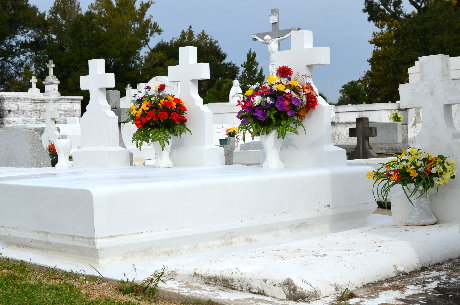
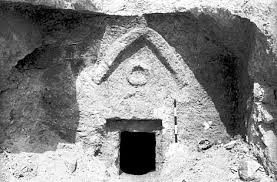
Woe to you, teachers of the law and Pharisees, you hypocrites! You are like whitewashed tombs, which look beautiful on the outside but on the inside are full of the bones of the dead and everything unclean. In the same way, on the outside you appear to people as righteous but on the inside you are full of hypocrisy and wickedness.” (Matt 23:27-28, NIV).

Whoa. Whitewashed tombs. Can you picture it? These pristine, gleaming graves—perfectly painted, shining in the sun, the kind of thing you’d walk by and think, Wow, that’s lovely. But then Jesus pulls the curtain back, and what’s inside? Death. Decay. Rot. It’s a gut punch, isn’t it?

Now, Jesus isn’t just throwing shade here to flex his rhetorical muscles. He’s doing what he always does—cutting through the noise to get to the heart of things. He’s talking about the gap. You know the gap I mean—the space between who we pretend to be and who we really are. The Pharisees had mastered the art of looking good. They had the robes, the rules, the rituals down to a science. They were the spiritual influencers of their day—#blessed, #righteous, #holyliving. But Jesus says, “Hold on. Let’s talk about what’s under the filter. Let’s address what’s actually in your hearts.”

Because here’s the thing: you can polish the outside all you want, but if the inside’s a mess, it’s still a mess. And Jesus isn’t interested in facades. He’s not here for the performance. He’s not here for all of the “fake nice” to your face, but the backstabbing and side looks that tell a different story. He’s here for the real. The raw. The true.

How’s Your Heart? – “What does this have to do with me?”

So what’s this mean for us? Because let’s be honest—we’re not that different, are we? We’ve got our own versions of whitewashing. Maybe it’s the way we curate our lives online—posting the highlight reel while the outtakes pile up in the shadows. Maybe it’s the way we slap a “Fine, how are you?” on top of a heart that’s breaking. Or maybe it’s the way we cling to our Sunday-best selves, hoping no one notices the doubts, the fears, the failures we’re hauling around inside.

But what if Jesus is inviting us to stop? To stop painting over the cracks and just… let them be seen? What if the point isn’t to look perfect, but to be real? Because tombs don’t come alive by staying pretty—they come alive when someone rolls the stone away and lets the light in.

See, this isn’t about shame. Jesus isn’t wagging his finger here to make us feel small. He’s calling out the hypocrisy because he loves us too much to let us stay stuck in it. He’s saying, “You don’t have to pretend. You don’t have to hide. I see the bones, the mess, the unclean stuff—and I’m not running away. I’m here for it. For you.”

So maybe today’s the day we quit whitewashing. Maybe it’s the day we let the outside match the inside a little more—not because we’ve got it all together, but because we’re brave enough to admit we don’t. And maybe, just maybe, that’s where the real beauty starts. Not in the shine, but in the cracks where the light gets in.

What do you think? Where’s the whitewash in your life? And what might happen if you let it chip away?
I think that’s definitely something worth pondering today.

Grace & Peace,
-Pastor Scott.
“The Word That Cuts And Heals”

So, let’s talk about this wild, untamed thing we call the Word of God. Hebrews 4:12-13 drops us right into the thick of it, doesn’t it? It says, “For the word of God is alive and active. Sharper than any double-edged sword, it penetrates even to dividing soul and spirit, joints and marrow; it judges the thoughts and attitudes of the heart. Nothing in all creation is hidden from God’s sight. Everything is uncovered and laid bare before the eyes of him to whom we must give account.”

Whoa. That’s intense, right? I mean, just sit with that for a second. Like, really mull over those words, and let them sink in for just a second…


The Word of God isn’t some dusty old book sitting on a shelf, collecting cobwebs. It’s alive. It’s active. It’s moving, breathing, slicing through the noise of our lives like a blade so sharp you don’t even feel it until you’re already opened up. Soul and spirit, joints and marrow—what does that even mean? Is there a part of you it doesn’t touch?

Let’s be honest: that can feel terrifying. A sword? Cutting into me? Judging my thoughts and attitudes? (No, Thanks!)
I don’t know about you, but there are days when I’d rather keep my thoughts tucked away in the shadows, thank you very much. Days when I’d rather not be laid bare. Because being seen—really seen—can feel like standing in the middle of a storm with nowhere to hide. Naked. Vulnerable. Exposed. It reminds me of that survival show on TV “Naked and Afraid.” There’s no way you could get me out in the wilderness WITHOUT clothes on…Okay, I digress.

But here’s the thing: what if that’s not the whole story? What if this sharpness, this cutting, isn’t just about judgment? What if it’s about something deeper, something more alive than we’ve dared to imagine? I always love to ask the ‘what if’ questions…

Think about a surgeon for a minute. A scalpel in their hand isn’t there to destroy—it’s there to heal. It cuts, yes, but it cuts to get to the stuff that’s killing you, the stuff you can’t see until it’s exposed. What if the Word of God is like that? What if it’s piercing through all the layers we pile on—our masks, our defenses, our endless scrolling distractions—not to shame us, but to free us? To get to the marrow of who we really are?

Because that’s what this text is whispering to us: You can’t hide, but maybe you don’t have to. Everything’s uncovered, it says. Laid bare. Before God’s sight. And yeah, that’s a lot. It’s a lot to take in. That’s God seeing the late-night worries you don’t tell anyone about, the anger you bury, the dreams you’re too scared to chase. But what if the One seeing you isn’t holding a gavel? What if the One seeing you is the same One who breathed you into being, who knows the you beneath the ‘you‘ you’ve been pretending to be?

Here’s where it gets challenging: Are you willing to let the Word do its work? (and by ‘Word‘ I also mean the moving and convicting presence of the Holy Spirit). Are you brave enough to stop running, to stand still, and let it cut through the noise? Because it will, He will. It’ll slice through the excuses, the half-truths, the “I’m fine” you keep saying when you’re not. It’ll find the places you’ve locked up tight and say, “Hey, let’s look at this together.” And that’s hard. That’s messy. (sorry, more dumpster fire talk here). That takes guts.

But here’s the encouragement: You’re not alone in it. This isn’t about you getting dissected and left on the table. This is about a God who sees it all—every jagged edge, every hidden wound—and stays. The same God who wields this living, active Word is the One who says, “I’m with you in the mess.” The One who doesn’t just judge the thoughts and attitudes of your heart, but knows them, loves them, redeems them.

So, what’s it going to be? Will you let the sword fall? Will you trust that the cut is where the healing starts? Because this Word—it’s not here to end you. It’s here to begin you, again and again. It’s here to strip away what’s dead so you can step into what’s alive. And that’s not easy. But it’s beautiful. It’s something truly beautiful. It’s worth it.

So, friends, take a deep breath. You’ve got this. The Word’s already moving. The Holy Spirit is still moving, too.
Can you feel it?
Grace & Peace,
-Pastor Scott.

“Decoding Toxic Church Culture: What You Need to Know”

Happy Monday, friends!
I want to kick off this week like a lion rather than a lamb.
This is a hard topic to discuss, especially in the church setting, but it’s necessary.

In recent years, there has been an uptick in news stories from large churches where the lead pastors (some who are nationally and internationally recognized) have been accused of spiritual abuse.

So, this pondering today is going to be a bit heavy.
It’s the kind of thing that makes you want to just, like, go for a long walk on the beach and stare at the waves. It makes me angry when I read stories like these, but more importantly, I have experienced leaders who used organized religion to expand their own kingdom, to establish monuments in their own names and called it “the will of God”.

I think it’s a crucial topic and we NEED to talk about it.
We can’t ignore this issue. It has happened in our past, and it is still happening in our present church culture.

Let’s call an Ace an Ace, shall we? Let’s not beat around the bush.
Here goes:
Spiritual abuse. And, yeah, sometimes, toxic leaders in the church.

Look, the church, in its best moments, is supposed to be this incredible space, right? A place of love, grace, community, transformation. A place where you can ask the big questions, wrestle with doubt, find some kind of… peace. But sometimes, it gets twisted. Sometimes, it gets… messed up.

You see, power, it’s a tricky thing. And when power gets mixed with, you know, a sense of divine authority?
That’s where things can go sideways. Fast.
Some power-hungry leaders have abused others through an erroneous understanding of biblical submission and wield their leadership like a scepter while expecting their subordinates to kiss their ring.

Think about it. We’re all looking for something.
We’re all searching for meaning, for connection.
And when someone steps up, claims they’ve got the inside track to God, that they know the secret sauce, well, it’s tempting, isn’t it? To just… hand over the keys. To let them drive.

And that’s where the trouble starts.

What does it look like?

  • Control: It’s not about guidance, it’s about domination. They dictate your thoughts, your actions, your relationships. They tell you what to wear, who to talk to, how to spend your time.
  • Manipulation: They use guilt, shame, and fear to keep you in line. They twist scripture, they play on your insecurities, and they make you feel like you’re never good enough. Much of it becomes performance-based measures that no one can always live up to.
  • Isolation: They cut you off from your support system. They tell you that anyone who disagrees with them is “of the world,” that they’re trying to lead you astray. (Insight Digital Magazine, 2024)  
  • Spiritual Blackmail: They imply that if you leave, you’ll lose God’s favor. Or worse. That you’ll be damned.
  • Narcissism: It’s all about them. Their needs, their ego, their vision. They demand constant praise and adoration. They can’t admit they’re wrong.

It’s subtle, you know? It doesn’t always look like fire and brimstone.
Sometimes, it’s just a whisper, a sideways glance, a subtle put-down.
It’s the constant feeling that you’re walking on eggshells.

So, what do we do? How do we break free?
Here are 7 suggestions to help you find freedom if you find yourself stuck in Spiritual Abuse of one kind or another:

1) trust your gut. If something feels off, it probably is. If you’re constantly feeling anxious, manipulated, or controlled, that’s a red flag.

2) find your voice. Start asking questions. Challenge the status quo. Don’t be afraid to disagree. Remember, doubt isn’t the opposite of faith; it’s often a part of it.

3) build a support network. Find people you can trust, people who will listen without judgment. Talk to a therapist, a counselor, or a trusted friend. You are not alone.

4) reclaim your autonomy. Remember, you are a person with your own thoughts, feelings, and beliefs. You are not defined by someone else’s interpretation of God.

5) redefine your understanding of God. Let go of the toxic image of a wrathful, judgmental God. Embrace a God of love, grace, and compassion. A God who wants you to thrive, not to be controlled.

6) forgive, but don’t forget. Forgiveness is for you, not for them. It’s about releasing the pain and moving forward. But that doesn’t mean you have to forget what happened. Learn from it, and use that knowledge to protect yourself and others.

7) find a healthy community. There are churches and communities out there where you can be yourself, where you can ask questions, where you can find genuine connection. It might take some searching, but they’re out there.

Look, this stuff, it’s not easy. It takes courage, it takes vulnerability. But you are strong. You are resilient. And you are worthy of love, acceptance, and freedom.

Perhaps this whole experience can be a catalyst for something new.
A deeper understanding of yourself, of your faith, of the world around you.
Perhaps you can find a more authentic, more beautiful way to connect with the divine.

We can decode this toxic church culture together and live a life worthy of this calling as Christ-followers!
Something more to ponder.
Grace & Peace.
-Pastor Scott.

The Ache and the Anchor: How Does Faith Shape Our Response to Suffering?

Hey friends, happy Thursday (or whenever you read this particular article).
Today, I want to ponder the concept of faith in the midst of suffering in our world.
So, let’s dig in.

Have you ever noticed how suffering feels like it’s baked into the fabric of everything?
Like, you can’t scroll through your feed, walk down the street, or sit with a friend over coffee without bumping into it.
A headline about a war. A text from someone you love saying they’re not okay. That dull ache in your own chest you can’t quite name. It’s there, isn’t it? This brokenness. This thing we didn’t sign up for but can’t seem to escape.

And then there’s faith. This wild, messy, beautiful thing we carry—or maybe it carries us (sometimes both).
How does it fit with all this? How does faith shape the way we stumble through a world that’s cracked wide open?
How do we put one foot in front of the other and even consider the word “persevere?”

Let’s sit with that for a second.

Imagine you’re walking through a forest (I did this just last weekend), and the trees are bare, the ground’s all muddy, and there’s this wind that cuts right through you. It’s not pretty. It’s not Instagram-worthy. It’s raw. And you’re wondering—where’s the life here? Where’s the green? But then you look closer, and there’s this tiny shoot pushing up through the dirt. Barely there, but there. That’s what suffering can feel like—like you’re stuck in the mud, but something’s still growing. Something’s still alive.

Faith, I think, is what lets us see that shoot. It’s not a magic wand that makes the mud disappear. It’s not a loud voice shouting, “Don’t worry, I’ll fix it!” No, it’s quieter than that. It’s more like a whisper saying, “Look. Keep looking.” Because maybe the point isn’t to get out of the suffering but to find what’s growing in it.

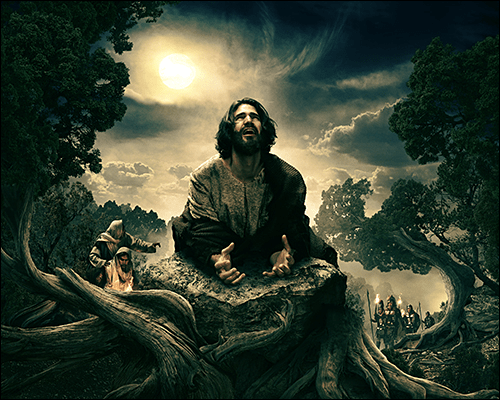
You know the story about Jesus in the garden, right? Gethsemane. He’s sweating blood, pleading with God to take the cup away, to rewrite the script. He’s fully human there, feeling the weight of what’s coming. And yet he says, “Not my will, but yours.” What’s that about? Is that faith? Trusting there’s something bigger even when the pain is screaming louder than anything else? I wonder if Jesus was showing us that suffering doesn’t get the last word—not because it goes away, but because it’s held in something deeper.

And what about us? When the diagnosis comes, or the relationship fractures, or the world feels like it’s unraveling—where does faith take us then? Does it make us stoic, like we’re supposed to just grit our teeth and pretend it’s fine? Or does it crack us open, let the tears fall, let the questions fly?

I think it’s the second one.
Faith isn’t a shield to keep the pain out; it’s a lens to see through it.

There’s this guy I met once, years ago. His name was Tom (not really his name, but we’ll call him Tom). He lost his kid in a car accident. Brutal. The kind of thing that could bury you (I think it totally would bury me). And he told me, over this beat-up diner table with coffee stains on the menu, that he’d sit in his backyard every morning, yelling at God. Just letting it out—anger, grief, all of it. But then he’d stay there. He’d sit in the silence after the yelling. And he said that’s where he started to feel it—this thread of peace, thin as a spiderweb, but real. He didn’t have answers. He still doesn’t. But he had that thread. Was that faith? I think it might be.

So what if faith isn’t about fixing the brokenness but about finding the holy in it? What if it’s less about escaping the forest and more about noticing the shoot, the whisper, the thread? Because the world’s not going to stop breaking. You know that. I know that. But maybe faith is what keeps us from breaking with it—or at least keeps us open to being put back together.

Think about Paul, that wild apostle guy. He writes about “rejoicing in our sufferings.” Rejoicing? Like, really? But then he says it produces endurance, and endurance produces character, and character produces hope. Hope doesn’t erase the suffering—it grows out of it. Like that shoot in the mud. And Paul’s not saying it’s easy. He’s saying it’s possible.

So here’s the question: What’s your suffering right now?
What’s the thing that keeps you up at night, the thing you can’t shake? (We’ve talked about this before, but I think many of us are still struggling through something)

And where’s faith in that?
Is it in the yelling? The silence?
The tiny green thing you almost missed? Because I think it’s there.
Not loud. Not obvious. But there.

The world’s broken, yeah. But it’s not the whole story.
Faith says there’s more. It says the ache isn’t the end—it’s the place where something new begins.
And maybe that’s enough for today.
Maybe that’s enough to keep going.
Perhaps we can all find some comfort in that…and keep pressing onward.

What do you think? Where do you see it growing?
Please, I welcome the comments and responses because we’re all on this journey together.
Grace & Peace,
-Pastor Scott.

“What If ‘All Have Sinned’ Was Actually Good News?”

Alright, friends, let’s dive into today’s Pondering. We’re checking out Romans 3:23-24.
And, hopefully by now you know the drill, right?
We’ve all heard it, maybe even memorized it.
But have we felt it? Like, really felt it?
Like, does it resonate in your very bones?

For all have sinned and fall short of the glory of God, and all are justified freely by his grace through the redemption that came by Christ Jesus.”  

So, let’s break this down, shall we?
All have sinned.”
Okay, that’s not exactly a headline you’d put on a motivational poster, is it?
We’re all in the same boat. Nobody’s got it all figured out.
Nobody’s got their act together perfectly.
We’ve all missed the mark.
We’ve all stumbled.
We’ve all made messes that we can’t clean up.

And you know what? (and perhaps here’s the hard part to accept…)
That’s okay.
Because here’s the amazing headline, the part that flips the whole script:
and all are justified freely by his grace.

Freely.”
Let that word sink in.
It’s not about how many good deeds you’ve racked up.
It’s not about how clean your record is.
It’s not about climbing some cosmic ladder of worthiness.
It’s a gift. A straight-up, no-strings-attached, radical gift.

See, we live in a world obsessed with earning,
with proving ourselves, with measuring up.
We’re constantly bombarded with messages telling us we’re not enough.
Not smart enough, not successful enough, not spiritual enough.
But Paul, he’s right here saying something totally different.
He’s saying, “You? Yes, you. You’re already accepted. You’re already loved. You’re already forgiven.”

It’s like, imagine you’re a kid, and you’ve just made a colossal mess. (I think we all know what that feels like)
We’ve spilled the blue paint all down the carpeted stairs,
We’ve broken the family keepsake off the shelf…the whole nine yards.
You’re bracing for the storm, right?
But instead, your parent looks at you, smiles, and says, “It’s alright. We’ll clean it up together.”

That’s grace, folks. It’s messy, it’s unexpected, and it’s utterly transformative.

And through Jesus, “the redemption that came by Christ Jesus,” this grace is made real.
It’s not some abstract concept. It’s a person.
A person who stepped into our mess (picked up the broom and dustpan)
who took on our brokenness, who showed us what true love looks like.

So, here’s the invitation: stop trying so hard.
Stop trying to earn your worth.
Stop trying to fix yourself all the time.
Just breathe. Let go. Receive the gift.
Yes, the Holy Spirit will still work in us and convict us,
Yes, there’s still work that will take place later…but just for now:
Breathe.
Be Still.

Why?

Because you are loved.
You are accepted.
You are forgiven. And you?
You are enough. Just as you are.

So, live in that freedom. Live in that grace.
And let that grace spill out onto the world around you.
Because the world needs it. We all need it.

And remember, you’re not alone in this.
We’re all in this together. And together, we’re going to figure it out…with the help of the Holy Spirit.
Grace and Peace!
-Pastor Scott.

Sand Castles and Solid Ground…

Greetings, my friends, and happy Tuesday (or whenever you read this).
I want to talk about something that’s been bouncing around in my head, something that, honestly, just keeps coming back like a good melody, an earworm that won’t quit… the same tune on repeat somewhere in the recesses of this brain of mine.
You know that kind of tune, right? The one that gets under your skin and makes you think, “Yeah, that’s it.”

Here’s the scriptural earworm that’s been rattling lately:
Hebrews 13:8 says, “Jesus Christ is the same yesterday and today and forever.

Now, I know what some of you might be thinking. “Scott, come on. That’s Sunday school stuff. We’ve heard that a million times.” And yeah, you probably have. But have you really heard it? Have you let it sink in? Have you let it reshape how you see everything? Is it really connecting your knowledge with what you believe? Many of us still have a lot of Sunday School knowledge but even after all this time, it hasn’t quite settled into what we believe.

Because, here’s the thing, we live in a world that’s constantly shifting, right? It’s like trying to build a sandcastle during high tide. News cycles spin, opinions change, trends come and go, and you’re left wondering, “What’s solid? What can I actually hold onto?”

We’re all searching for something that doesn’t crumble, something that doesn’t disappoint. We’re looking for that steady heartbeat in the midst of the chaos. And that’s where this verse hits me.

Jesus Christ is the same.

Think about that. Yesterday, today, forever. In a world of constant change, there’s a constant. In a world of uncertainty, there’s certainty. In a world of fleeting moments, there’s something eternal. In a world of things built to last a year or two at the most, here’s something that’s existed since the beginning and will be here forever.

Now, I’m not talking about some abstract theological concept. I’m talking about the Jesus who walked among us. The Jesus who ate with sinners, who healed the sick, who challenged the powerful, who shook the traditional, who loved the unlovable.

That Jesus? He’s the same. Yesterday, when they were questioning his authority. Today, when we’re wrestling with our doubts. Forever, when we’re trying to figure out what it all means.

And here’s the beautiful, liberating part: This isn’t about us trying to keep up with some ever-changing version of God. It’s about God being consistently, relentlessly, beautifully himself.

You know, sometimes we get so caught up in trying to figure out all the answers, trying to nail down all the doctrines, that we miss the simple, profound truth: Jesus is here. He’s always been here. And he’s not going anywhere.

He’s the same when you’re celebrating your biggest victories, and he’s the same when you’re staring into the abyss of your deepest fears. He’s the same when you’re surrounded by friends, and he’s the same when you feel utterly alone.

So, take a deep breath. Let go of the need to control everything.
Let go of the fear that everything is falling apart.

Because in the midst of all the noise, there’s a still, small voice saying,
“I’m here. I’m the same. And I’m not going anywhere.”

And you know what? I think that’s good news. Like, really, really good news.

So, let it sink in.
Let it change you.
Let it set you free.

Because, friends, the same Jesus who turned water into wine, who calmed the storm, who raised the dead?
He’s still here. And he’s still doing amazing things.

Perhaps we just need to open our eyes and see it today.

Grace & Peace,
-Pastor Scott.

Blog at WordPress.com.

Up ↑