Hey.
It’s Sunday morning.
The worship band just landed on that last sustained chord, the one that makes everyone feel like the roof lifted off for a second and maybe goosebumps have appeared on your arms.
But now, here comes the part nobody asked for on the original tour bus of Christianity: the offering.
The ushers start their slow walk down the aisle.
Baskets. Plates. Little velvet bags on sticks (Our church has the boxes in the back and we give afterwards).
Whatever your tradition calls it, it shows up like clockwork.
And lately, maybe you’ve noticed—like I have—that the plates (or in our case the Offering Box) looks…lighter.
Not dramatically empty, not yet, but definitely not overflowing.
Half empty, maybe even a little less than half.
And here’s the thing: nobody says it out loud, but everybody feels it. The pastor (me, in this case) feels it when the finance report lands in my email inbox before our next board meeting.
The treasurer feels it when the mortgage and other bills are due.
The single mom feels it when she drops in a twenty and wonders if it’s enough.
The guy in the back row feels it when he pretends to check his phone so he can let the plate pass by without anyone noticing.
So let’s just talk about it.
No announcements.
No guilt slides.
No Malachi proof-texts dropped like grenades.
Just us.
The offering plate is half empty—now what?
First, can we admit that tithing can feel like the last surviving relic of rule-based religion?
Ten percent.
The word itself sounds like it was invented by an accountant who moonlights as a Puritan right?!
And somewhere along the way we turned a wild, ancient practice of trust into a spiritual report card.
You didn’t hit 10%?
F minus in faith, see me after class.
No wonder there’s resistance.
No wonder there’s guilt.
No wonder some of us just… pass the plate. I’ve been on both sides of this.
I’ve been the broke twenty-something who genuinely had $11 in the bank and felt like a failure when the plate came.
I’ve been the pastor who stood up front and said “God loves a cheerful giver” while secretly scanning the room to see who looked cheerful and who just looked constipated.
Here’s what I’m learning—slowly, painfully, wonderfully: The goal was never to fill the plate.
The goal was to free the heart.
In the Old Testament, people brought crops, animals, oil, flour—stuff they actually lived on.
Handing it over was a way of saying out loud, “I can’t make the sun come up tomorrow, but You can.
Here’s my trust, in grain form.”
Jesus sits down opposite the treasury one day and watches the river of coins clinking in.
Rich people tossing in heavy bags—impressive, loud, tax-deductible.
Then a widow drops in two tiny coins worth almost nothing.
And Jesus loses His mind (in a good way).
He calls His disciples over like He just saw the Grand Canyon of faith.
“She put in more than all the rest.” Not because the budget was suddenly balanced.
But because her heart was suddenly free.
If I’m honest – that story wrecks me, because I want my giving to be about freedom, not fear.
I don’t want to give because I’m afraid God will take something if I don’t.
I don’t want to give because I’m afraid the church lights will go out.
I don’t want to give because I’m afraid of what people think when the plate passes by my row (or I pass by the box in the back).
I want to give because I’m stunned again that everything I have is borrowed anyway.
I want to give because I walked into this building carrying wounds and walked out carrying hope, and somebody paid for that hope.
I want to give the way I want my kids to see their dad give—eyes wide open, grinning, no arm-twisting required.
So if the plate is half empty right now, maybe it’s not a crisis.
Maybe it’s just an invitation.
An invitation to ask better questions than “Am I hitting 10%?”
Questions like:
What would it look like to move from guilt to gratitude?
From obligation to overflow?
From resistance to release?
Start anywhere.
Five bucks. Fifty. Five hundred. Zero.
Just make it honest.
Make it a moment where you look up—literally or figuratively—and say,
“This is me trusting You with what feels impossible to let go of.”
Because here’s the secret nobody tells you in stewardship season: the plate is not a tax.
It’s a testimony. Every coin, every crumpled bill, every direct deposit, or online payment is a little postcard that says,
“I was afraid, but I did it anyway.”
“I was broke, but I’m not broken.”
“I thought I needed this more than God did… turns out I was wrong.”
So yeah.
The offering plate is half empty.
Maybe that just means there’s room for something new to be poured in.
Your move.
-Grace and peace,
Pastor Scott
Embracing the Disruptive Leadership Model
by Scott Strissel
Hey there, friends! Pastor Scott here, sitting in my favorite coffee shop, sipping on a latte, and pondering something that’s been rattling around in my soul lately: disruptive leadership. Yeah, I know, it sounds like the kind of thing that makes people clutch their pearls and whisper, “Oh my, that sounds dangerous!” But stick with me here, because I think this is the kind of leadership that Jesus modeled, the kind that shakes things up for the sake of love, justice, and transformation. So, let’s dive into this idea of disruptive leadership, unpack what it means, and explore five key characteristics of a successful disruptor. Ready? Let’s go.
What’s This Disruptive Leadership Thing All About?
Picture this: you’re walking through a crowded marketplace, and there’s this guy—let’s call him Jesus—flipping tables in the temple, calling out the status quo, and inviting people to see the world in a whole new way. That’s disruptive leadership. It’s not about being loud or chaotic for the sake of chaos; it’s about challenging systems, ideas, and structures that aren’t serving people anymore. It’s about saying, “Hey, there’s a better way to do this, and I’m not afraid to shake things up to get us there.”
Disruptive leadership isn’t about destruction; it’s about creation. It’s about seeing what could be instead of what is and having the courage to step into that possibility. In the church, in our communities, in our world, we need leaders who aren’t just managing the machine but are willing to reimagine it. Leaders who ask, “What if?” and then actually do something about it. So, what does it take to be a successful disruptor? Let’s break it down with five key characteristics that I think make this kind of leadership sing.
1. Vision That Burns Bright
A disruptive leader sees something others don’t. It’s like they’ve got this fire in their bones, this picture of a world that’s more whole, more just, more alive. Think of Moses staring at a burning bush, hearing God’s call to lead a people out of slavery. That’s vision. It’s not just a vague idea; it’s a vivid, compelling picture of what could be.
Successful disruptors don’t just see the vision—they feel it. It keeps them up at night. It makes them restless. It’s why they can’t just sit still and let things stay the same. They’re not content with “good enough” because they’ve glimpsed something better. As a pastor, I’ve learned that this kind of vision isn’t just about dreaming big; it’s about listening to the Spirit, letting God paint that picture in your heart, and then daring to share it with others.
2. Courage to Break the Mold
Let’s be real: disruption makes people nervous. It’s like showing up to a potluck with a dish nobody’s ever tried before. Some folks will love it, but others will side-eye it like you just brought kale to a fried chicken party. Disruptive leaders have the courage to break the mold, to say, “This isn’t working anymore,” even when it’s uncomfortable.
Think about the Apostle Paul, stirring things up everywhere he went, preaching grace in places where people were clinging to rules. That took guts. Successful disruptors know they’ll face pushback—maybe even a lot of it—but they step into the tension anyway. They’re not reckless, but they’re resolute. They trust that the God who calls them will carry them through the storm.
3. Empathy That Connects
Here’s where it gets beautiful: disruptive leadership isn’t just about shaking things up; it’s about caring deeply for the people caught in the systems you’re trying to change. A successful disruptor doesn’t just see broken systems; they see broken hearts. They listen. They feel the pain of those who are marginalized, overlooked, or stuck.
Jesus was the ultimate at this. He didn’t just challenge the religious leaders; he sat with the outcasts, the sinners, the ones nobody else saw. Empathy is the heartbeat of disruptive leadership. It’s what keeps it from becoming self-righteous or destructive. You’re not just tearing down walls; you’re building bridges to something better, and that starts with loving people right where they are.
4. Creativity That Sparks New Possibilities
Disruptive leaders are artists. They don’t just point out what’s wrong; they imagine new ways of doing things. They’re like kids with a box of crayons, coloring outside the lines and creating something vibrant and unexpected. Think of someone like Esther, who didn’t just lament the fate of her people but came up with a bold, creative plan to save them.
A successful disruptor asks, “What if we tried this?” or “What if we looked at it this way?” They’re not afraid to experiment, to fail, to try again. In the church, this might mean rethinking how we gather, how we serve, or how we talk about faith. It’s about trusting that the Spirit is always doing something new and having the creativity to join in.
5. Resilience to Keep Going
Let’s not sugarcoat it: being a disruptor is exhausting. You’re swimming upstream, challenging norms, and sometimes even your closest friends don’t get it. But successful disruptors have this deep well of resilience. They keep going, not because they’re stubborn, but because they believe in the vision and trust that God is in it.
Look at someone like Martin Luther King Jr. He faced opposition at every turn, but he kept showing up, kept speaking, kept loving. Resilience isn’t about never getting tired; it’s about finding the strength to take one more step, to pray one more prayer, to have one more conversation. It’s about leaning into the One who never runs out of strength.
Why This Matters for Us
So, why am I so fired up about disruptive leadership? Because I believe this is what the church needs right now. We’re living in a world that’s shifting faster than we can keep up with, and the old ways of doing things aren’t always working. We need leaders—pastors, teachers, parents, friends—who are willing to dream big, take risks, love deeply, think creatively, and keep going even when it’s hard.
Disruptive leadership isn’t about being a rebel for the sake of rebellion. It’s about being faithful to the call to make all things new. It’s about joining God in the work of redemption, restoration, and hope. So, my friends, where is God calling you to be a disruptor? Where do you see a system, a habit, a mindset that needs to be shaken up for the sake of love? And what’s stopping you from stepping into that call?
Let’s be people who don’t just accept the way things are but dare to imagine the way things could be. Let’s be disruptors—not for our own glory, but for the glory of the One who’s always turning the world upside down with love.
Grace & Peace,
Pastor Scott
See my other articles on this topic: 3 Warning Signs
Jaded Faith, A Church That Pushes Away, and the Hunger for Something Real.
by Pastor Scott
Hey there, friends. can we talk for just a minute, you and me, and explore something heavy on my heart? It’s this thing I’m calling jaded faith—that worn-out, beat-up, “I’m not sure I can do this anymore” feeling that creeps in when the church, the place that’s supposed to be home, starts feeling like a stranger. You know what I’m talking about, don’t you? That moment when you look around and think, This isn’t what I signed up for.
I’ve seen it in your eyes at coffee shops, heard it in your voices over late-night texts. People who love Jesus, or at least want to, but feel like the church has let them down. And not just let them down—sometimes it’s pushed them out the door. So let’s unpack this, because it’s real, it’s raw, and it’s not how it’s supposed to be.
The Church That Drives People Away
The church is supposed to be this beautiful, messy, vibrant community where we wrestle with life together, where we find God in the middle of our doubts and dreams. But sometimes, it’s not that at all. Sometimes it’s a place where questions get shushed, where pain gets a pat on the head and a “just pray harder,” where the hard edges of life are sanded down to fit a tidy Sunday sermon. And that, friends, is when people start walking away.
I’ve talked to folks who’ve been burned by churches that cared more about their image than their hearts. Churches that preached “love your neighbor” but turned a blind eye to injustice. Churches that promised answers but dodged the questions. And let’s be honest—sometimes it’s not even the big stuff. It’s the slow drip of feeling unseen, unheard, or like you have to fake it to fit in. That’s when faith starts to jade, starts to fray at the edges, when the spark that once lit you up starts to flicker.
The Bible doesn’t shy away from this. In Matthew 23:27, Jesus calls out the religious leaders of his day, saying they’re like “whitewashed tombs, which look beautiful on the outside but on the inside are full of the bones of the dead.” Ouch. That’s Jesus saying, Stop pretending. Stop polishing the surface when the inside is rotting. The church isn’t supposed to be a performance—it’s supposed to be a place where we meet God in the real. Where we drop all of our false pretenses and showy expressions and just – be. Why do we wear masks sometimes in church and pretend everything is alright when inside we are far from okay?!
The Hunger for Authentic Faith
So what do we do with this? If the church has let us down, if our faith feels jaded, where do we go? I think it starts with admitting we’re hungry. Hungry for a faith that doesn’t flinch at the hard questions. Hungry for a God who’s big enough to handle our doubts, our fears, our why is the world like this? cries in the dark.
Think about Job. (I don’t know why I always seem to come back to this guy) But this guy lost everything—his family, his wealth, his health—and he didn’t just sit there quoting platitudes. He yelled at God. He demanded answers. In Job 38, when God finally speaks, He doesn’t give Job a neat little PowerPoint on why suffering happens. He shows up in a whirlwind, reminding Job that He’s God, that He’s vast, that He’s holding the universe together. And somehow, that’s enough for Job. Not because he got answers, but because he got God. Sometimes faith – real faith has to leap and find contentment in knowing that we won’t always have the answers figured out.
That’s what we’re craving, isn’t it? A faith that’s real enough to ask, Why does this hurt so much? Where are you, God? A faith that doesn’t need to tie everything up with a bow but trusts that God is there, even in the mess. Psalm 42:11 captures it so well: “Why, my soul, are you downcast? Why so disturbed within me? Put your hope in God, for I will yet praise him, my Savior and my God.” It’s not denying the pain—it’s choosing to hope anyway.
The Danger of False Teachings
But here’s where it gets tricky. When people are hungry, they’ll eat anything. And there are voices out there—preachers, influencers, feel-good gurus—who know exactly how to serve up a meal that tastes good but leaves you empty. It’s like eating desert when your body requires a whole meal – but we’re just consuming empty calories instead. They’re the ones promising health, wealth, and happiness if you just believe hard enough, pray loud enough, give enough. They’re selling a faith that’s all flowers and no roots. All sugar but no substance.
Paul saw this coming. In 2 Timothy 4:3, he writes, “For the time will come when people will not put up with sound doctrine. Instead, to suit their own desires, they will gather around them a great number of teachers to say what their itching ears want to hear.” That’s a warning, friends. When we’re jaded, when we’re hurting, it’s so easy to fall for the flowery stuff—the sermons that make us feel warm and fuzzy but never challenge us to grow, to wrestle, to change.
False teachings aren’t always obvious. Sometimes they’re wrapped in Christian lingo, delivered with a smile. But if it’s pointing you to anything other than Jesus—if it’s promising you a life free of struggle or a God who’s just a cosmic vending machine—it’s not the real deal. Jesus himself said in John 16:33, “In this world you will have trouble. But take heart! I have overcome the world.” He didn’t promise a trouble-free life; He promised His presence through it.
A Church That Welcomes the Real
So what’s the antidote? How do we rebuild a faith that’s not jaded, a church that doesn’t drive people away? I think it starts with being real. Real with each other, real with God. It means creating spaces where questions are welcome, where doubts aren’t a sin, where we can say, I’m struggling, and someone says, Me too. Let’s walk through it together.
It means preaching a Gospel that’s not just about getting to heaven but about living with Jesus here and now. It means tackling the hard stuff—poverty, injustice, mental health, the why behind the pain—and trusting that God’s big enough to meet us there. It means admitting when we’ve gotten it wrong, when we’ve been more about rules than relationships, more about programs than people.
Hebrews 10:24-25 gives us a blueprint: “And let us consider how we may spur one another on toward love and good deeds, not giving up meeting together, as some are in the habit of doing, but encouraging one another.” That’s the church I want to be part of. That’s the church I want to be. A church that spurs each other on, that doesn’t give up on community, that encourages each other to keep going, keep asking, keep seeking.
Let’s Keep It Real
So, friends, if your faith feels jaded, if the church has let you down, I’m sorry. That’s not how it’s supposed to be. But don’t give up. There’s a God who sees you, who loves you, who’s not afraid of your questions or your pain. And there are people out there—maybe not perfect, but real—who want to walk this road with you.
Let’s be a church that’s honest about the hard stuff, that points to Jesus instead of empty promises, that says, Come as you are, doubts and all. Let’s ask the big questions, wrestle with the answers, and trust that God’s holding us through it all. Because that’s the kind of faith that doesn’t just survive—it thrives.
What do you think? What’s jading your faith right now? And what would a real, authentic church look like for you? Let’s talk about it.
Pastor Scott
Are We Really Being the Church? A Call to Live Faith Outside the Walls.
Welcome to Pastor’s Ponderings, where we wrestle with the big, holy questions that challenge us to lean closer to Jesus. Today, we’re diving into something that might sting a little but is worth the discomfort: Are we, as church people, truly being the church in our communities? Or are we just playing church inside our safe, cozy buildings while the world outside hungers for something real?
Church: A Movement, Not a Destination
Picture this: You’re driving through town, and there’s the church on the corner—steeple piercing the sky, stained glass glowing, maybe a sign out front with a catchy phrase like, “Too blessed to be stressed!” It’s comforting, familiar. It’s where we gather to sing, pray, and hear a sermon. But what if we’ve gotten so comfortable inside those walls that we’ve forgotten what the church is supposed to do? What if we’ve turned church into a destination instead of a movement?
Jesus didn’t call us to build fortresses. He called us to go—to be salt of the earth – (Matthew 15:13-16). He tells us to be salt and light in the world: “You are the salt of the earth. But if the salt loses its saltiness, how can it be made salty again? It is no longer good for anything… You are the light of the world… Let your light shine before others, that they may see your good deeds and glorify your Father in heaven.” Salt doesn’t do any good sitting in the shaker, and light is useless hidden under a bowl. Jesus is saying, “Get out there. Flavor the world. Illuminate the darkness.” And that happens not just in the pews but in coffee shops, grocery stores, school board meetings, and homeless shelters—wherever people are hurting, doubting, or searching.
Scripture’s Call to Action
Scripture is clear about this. In Acts 1:8, Jesus commissions His disciples: “You will receive power when the Holy Spirit comes on you; and you will be my witnesses in Jerusalem, and in all Judea and Samaria, and to the ends of the earth.” He doesn’t say, “Build a nice building and invite people to hear about Me.” He says, “Be my witnesses”—in your city, your neighborhood, even the places you’d rather avoid.
Then there’s James 2:17, a gut-punch of truth: “Faith by itself, if it is not accompanied by action, is dead.” If our faith only shows up on Sunday mornings, confined to Bible studies and worship services, are we truly living it? Or are we just performing it?
Questions That Sting
Let’s sit with some hard questions—and I’m asking these of myself, too. When was the last time you had a real, no-agenda conversation with someone in your community who doesn’t go to church? Not to invite them to a service or “fix” them, but to listen, to love, to be present?
What’s stopping you from stepping out of the church building and into the mess of the world? Is it fear? Comfort? The assumption that “someone else” will do it? Or, if we’re honest, do you secretly think the people out there don’t deserve your time, your energy, your Jesus?
Here’s one more to twist the knife: If your church building disappeared tomorrow, would your community even notice? Would they feel the absence of your love, your service, your light? Or have we been so inward-focused that we’ve forgotten how to be the church where it counts?
These questions hurt because Jesus didn’t call us to a safe, comfortable faith. He called us to a faith that moves, risks, and loves even when it’s inconvenient. But here’s the beautiful part: When we live church in the community, it’s not just the world that changes—we change, too.
A Story of Bridge-Building
Let me share a story. I met a guy named Mike at a local diner. He’s not a church guy—tattoos, rough past, and enough skepticism about religion to fill a book. I started showing up at that diner regularly, not to preach, but to talk. Over coffee and pancakes, we got to know each other. One day, Mike asked, “Scott, why do you keep showing up? What’s your angle?” I replied, “No angle, man. I just like you. And I think God does, too.”
Months later, Mike came to our church’s community barbecue—not a service, just a party we threw in the park. He didn’t come to “get saved.” He came because he felt seen and loved. That’s what being the church in the community does. It builds bridges. It shows people Jesus in ways a sermon alone never could.
Living Church Practically
So, what does this look like? It’s not about adding more programs to the church calendar. It’s about living with eyes open. Volunteer at the local food bank, not because it’s a “church thing,” but because people are hungry. Show up at city council meetings to advocate for the marginalized. Invite your neighbor over for dinner, even if they think church is a scam. Be the church where you are, with the people God places in your path.
And here’s the promise: When we do this, we’re not just obeying Jesus—we’re joining Him. He’s already out there—in the streets, the schools, the places we’ve been too scared or busy to go. He’s waiting for us to show up.
Where Is God Nudging You?
So, where are you at with this? Where’s God nudging you to be the church outside the walls? Maybe it’s a person you’ve been avoiding, a place you’ve written off, or a step of courage you’ve been too comfortable to take. Sit with that. Pray about it.
Let’s pray together: God, You are the God who goes. You sent Jesus into the world, not to stay safe, but to love, serve, and save. Holy Spirit, shake us up. Show us where we’ve been hiding in our buildings, our routines, our comfort. Give us the courage to be Your church in our communities—to be salt, light, and love. We need You for this. Amen.
Let’s keep pondering how we can live church where it matters most. The world’s waiting.
What’s one step you can take this week to be the church in your community?
Share your thoughts, and let’s encourage each other to live faith out loud.
Grace & Peace,
-Pastor Scott.
Why Pastors Need Friends Too, Ministry & Connection
Check out my latest “Faith Ponderings” Podcast Episode as I host a special guest and friend, Pastor Alex Norton on this topic:
Hey there, friend. Yeah, you—reading this, maybe sipping coffee, maybe scrolling while the kids are napping or the dog’s chewing on something he shouldn’t. Can we just pause for a second and breathe? Inhale. Exhale. Good. Let’s talk about something real, something that sits heavy in the heart of every pastor, every leader, every human trying to hold it together while pointing others toward hope: connection. Or, more specifically, why pastors—yep, those folks up front with the sermons and the smiles—need friends too.
You ever think about that? I mean, really think about it? Pastors are supposed to have it all figured out, right? We’re the ones with the answers, the ones who pray the prayers, visit the hospitals, counsel the broken, and somehow keep the church potlucks from descending into chaos. (Spoiler: It’s harder than it looks.) But here’s the thing—and lean in close, because this is where it gets honest—pastors are just people. Flesh and blood, doubts and dreams, Netflix binges and existential crises, just like you. And people? People need friends. Not admirers. Not followers. Not even congregants. Friends.
The Loneliness of the Calling
Let’s start here, because it’s real. Ministry can be lonely. Like, soul-achingly, stare-at-the-ceiling-at-2-a.m. lonely. You’re surrounded by people—Sunday mornings, Bible studies, committee meetings—but there’s this invisible wall. You’re the pastor. You’re supposed to be strong, wise, unflappable. You’re the one who’s got God on speed dial, right? So, you smile, you nod, you preach, you pray. But inside? Sometimes you’re screaming, Does anyone actually know me?
I remember this one time, early in my ministry, when I was at a church dinner. Everyone’s laughing, passing the mashed potatoes, telling stories about their kids or their jobs. And I’m there, at the head of the table, smiling, making sure everyone’s included. But nobody asked me how I was doing. Not really. They asked about the sermon series or the budget meeting, but not about Scott—the guy who’s still figuring out how to be a husband, a dad, a human. And I went home that night and just sat in my car for a while, wondering, Who’s my friend? Who’s my person?
It’s not that people don’t care. They do. Congregations are full of good, kind folks. But there’s this dynamic, this unspoken rule: pastors are givers, not receivers. We’re the shepherds, not the sheep. And that’s where the lie creeps in—the lie that says we don’t need what everyone else needs: connection, vulnerability, someone to laugh with over a bad movie or cry with when life feels like it’s cracking at the seams.
The God of Relationship
Let’s flip this for a second and talk about God. Because if we’re gonna get contemplative (and you know I love to get contemplative), we’ve gotta start with the One who wired us for connection in the first place. Think about it: God is relationship. Father, Son, Spirit—dancing together in this eternal, beautiful, mysterious community. And we’re made in that image. You, me, the guy cutting you off in traffic, the barista who spelled your name wrong—we’re all built for with-ness. For being known. For being loved.
So, why would pastors be any different? If anything, we need it more. Ministry is a crucible. It’s beautiful, don’t get me wrong—there’s nothing like watching someone’s eyes light up when they finally get grace, or holding a hand as someone takes their last breath, or baptizing a kid who’s been asking questions about Jesus since they could talk. But it’s also heavy. You carry stories that aren’t yours to tell, burdens you can’t share, criticisms that cut deeper than they should. And you can’t do that alone. Nobody can.
Jesus didn’t. Think about that. The Son of God, the one who literally was the Word, had friends. He had the twelve, sure, but he also had Mary, Martha, Lazarus—people he’d crash with, eat with, laugh with. He wept with them. He let them see him tired, frustrated, human. If Jesus needed that, why do we think we can go it alone?
The Gift of Friendship
So, here’s the invitation, the nudge, the holy whisper: pastors, you need friends. Not just colleagues you swap sermon ideas with (though those are great). Not just mentors or accountability partners (also important). Friends. People who don’t care that you’re Pastor Scott or Pastor Sarah or Pastor Whoever. People who know your quirks, your bad habits, your secret love for cheesy rom-coms. People who’ll call you out when you’re being a jerk and hug you when you’re falling apart.
And yeah, I know it’s hard. I hear you. Finding friends as a pastor is like trying to date while wearing a clerical collar—it’s awkward. People put you on a pedestal, or they’re intimidated, or they just assume you’re too busy. Plus, there’s the trust thing. You’ve been burned before—maybe by a congregant who shared something you thought was private, or a friend who couldn’t handle the weight of your calling. I get it. I’ve been there.
But here’s the truth: friendship is worth the risk. It’s worth the awkward coffee dates, the vulnerability, the fear of being seen. Because when you find those people—the ones who show up with pizza when your sermon flops, or text you a meme that makes you snort-laugh in the middle of a budget meeting—they’re like oxygen. They remind you that you’re not just a role. You’re a soul. And souls need connection.
A Few Thoughts for the Road
So, how do we do this? How do pastors find friends in the wild, messy, beautiful chaos of ministry? A few thoughts, not because I’ve got it all figured out, but because I’m walking this road too:
- Be intentional. Friendship doesn’t just happen. You’ve gotta make space for it. Invite someone over for dinner. Join a book club. Show up at the gym class where everyone’s sweating and swearing and nobody cares who you are. Put it on your calendar like it’s a meeting with Jesus himself.
- Be vulnerable. I know, I know—it’s scary. But friendship thrives on honesty. Share your doubts, your fears, your bad days. Let someone see the real you, not just the polished pastor version.
- Look outside the church. This one’s huge. Your congregation loves you, but they’re not your friends—not in the way you need. Find people who aren’t tied to your ministry, who don’t care about your sermon or your budget report. They’re out there, I promise.
- Receive, don’t just give. Pastors are great at giving—time, energy, wisdom. But friendship is a two-way street. Let someone care for you. Let them listen, pray, show up. It’s not selfish; it’s human.
- Trust God with it. If you’re lonely, if you’re craving connection, bring that to God. He’s not surprised. He’s not disappointed. He’s the one who said, “It’s not good for man to be alone.” Ask him to bring the right people into your life, and then keep your eyes open.
A Final Pondering
I’m sitting here, typing this, thinking about my own friends—the ones who’ve carried me through the highs and lows of ministry. There’s Alex, who always knows when I need a laugh. There’s Mike, who asks the hard questions and doesn’t let me dodge them. There’s Josh, who just gets me, no explanation needed. They’re not perfect, and neither am I, but they’re my people. And they make this calling—not just bearable, but beautiful. (Sorry if I didn’t name all of my friends, I do have a longer list and you’re all important to me!)
So, pastor, leader, human reading this: you’re not meant to do this alone. You’re not meant to carry the weight of the world without someone to share the load. You need friends. Not because you’re weak, but because you’re wired for it—by a God who’s all about relationship, all about love, all about showing up.
Who’s your person? Who’s your tribe? If you don’t have one yet, that’s okay. Start small. Reach out. Take a risk. And know that you’re not alone in this. We’re all just people, trying to love and be loved, one awkward, holy connection at a time.
Grace and peace,
Pastor Scott
What about you? Who’s someone in your life who reminds you you’re human? Drop a comment or shoot me a message—I’d love to hear your story.
What If Everything You Thought About Church Was Wrong?
Listen to this episode on Spotify
Dispelling the misconceptions of “Church” (revisited)
So, let’s revisit this topic of “Church” once more. Perhaps as we explore, we might begin to recognize what it is and what it isn’t, and perhaps what it was never meant to be. Yeah, church—the one with the pews or the folding chairs, the stained glass or the projector screen, the one we’ve all got some picture of in our heads. The one we love, hate, avoid, become bored to tears when the topic is mentioned, or cling to. What if we’ve been missing the point? Not just a little off, but WAY out in left field, swinging at something that’s not even the game we’re meant to be playing?
I mean, think about it. We walk into these spaces—or we don’t—and we carry all this baggage with us. Expectations. Rules. Stories we’ve been told about what church should be. And maybe that’s the first thing we need to rethink: the should. Because when you strip it all down, church isn’t a building, a sermon, or a set of bylaws. It’s not even a Sunday thing. What if it’s something messier, wilder, more alive than that?
Let’s start here: people have some ideas about church that stick like gum to the bottom of a shoe or pew bench. They’re hard to shake, and they shape everything—how we show up, why we stay away, what we hope for or dread. I’ve even heard of people staying or leaving a church because either the music wasn’t to their liking or the sermons weren’t challenging enough and they said, “Well, I’m just not being spiritually fed.” Sometimes, dare I say, that’s just a cop out to a greater commitment, and they aren’t being truthful to others and themselves. (I digress)
So, let’s name a few of these misconceptions, these sacred cows we’ve been herding around, and see if we can’t nudge them out of the way.
Misconception #1: Church Is About Showing Up and Shutting Up
You’ve seen it, right? The idea that church is this place where you file in, sit down, nod along, and keep your questions to yourself. It’s a performance—you’re the audience, someone else is the star, and the goal is to get through the hour without rocking the boat. But what if church isn’t a spectator sport? What if it’s more like a dinner table where everyone’s got a voice, where the questions matter as much as the answers? Jesus didn’t sit around handing out scripts—he broke bread, he listened, he flipped tables when the moment called for it. What if church is less about consuming and more about colliding—ideas, stories, lives? Honestly, wasn’t that the whole reason for church in the ancient world? Families getting together, sharing all they had, encouraging one another, meeting at houses, sharing a meal together? Perhaps we’re showing up at the wrong building when we should consider meeting in each other’s homes from time to time.
Misconception #2: It’s a Morality Club
Then there’s this one: church as the VIP list for good people. You join to prove you’ve got your act together, or at least to fake it ‘til you do. It’s a place to polish your halo, to signal you’re better than the mess outside. But flip through the Gospels—Jesus didn’t hang out with the shiny people. He was with the tax collectors, the outcasts, the ones who’d screwed up big time. What if church isn’t a club for the righteous but a hospital for the broken? A place where the masks come off, not go on?
Misconception #3: Church Is the Point
Here’s a sneaky one: we start thinking church is the endgame. Like, if we can just get the service right, the attendance up, the budget balanced, we’ve won. But what if church isn’t the destination? What if it’s a launchpad? A space where we’re fueled up, celebrate—through bread, wine, song, silence, whatever it takes—to go out and live it? The early followers didn’t build cathedrals; they met in homes, on hillsides, in secret. Church was a verb, not a noun. What if we’ve been obsessing over the container and missing the fire inside it?
Misconception #4: It’s Gotta Look a Certain Way
Picture this: organ music, or maybe a fog machine and skinny jeans. Hymns or Hillsong. We’ve got these templates, these blueprints, and we fight over them like they’re sacred. But what if church doesn’t have to wear a tie or a t-shirt? What if it’s happening in a coffee shop, a park, a group text at 2 a.m.? What if it’s less about the packaging and more about the pulse—the connection, the wrestling, the showing-up-for-each-other-ness? The first Christians didn’t have a handbook; they had a story and a Spirit. Maybe we’ve been overcomplicating it.
So, What’s It Really About?
Here’s where it gets good. What if church is about life—not the tame, boxed-up version, but the raw, untamed, holy chaos of it? What if it’s about people finding each other in the dark, holding space for the questions, the doubts, the dreams? What if it’s less about saving souls for later and more about waking them up right now—to love, to justice, to the wild beauty of being human together?
Think about the stories Jesus told. The lost sheep, the prodigal son, the banquet where everyone’s invited. It’s not about walls or membership cards—it’s about movement, about gathering, about a table that keeps getting bigger. Church could be that. Not a fortress, but a fire. Not a checklist, but a collision of hearts.
So, what if we let go of the shoulds? What if we stopped trying to fix church or flee it, and started asking what it could become? Because here’s the thing: it’s not dead. It’s not irrelevant. It’s just waiting for us to rethink it—to crack it open and see what spills out. What if we’re the ones who get to write the next chapter? What if it’s already started, and we just haven’t noticed?
Something more to ponder today – and this weekend.
Grace, Peace, and More Pews.
-Pastor Scott.
Check out these similar articles on the topic church previously explored.
Why Church? 3 Reasons it’s Still a Big Deal.
Hey friends, and happy Thursday – or whenever you read this. Today, let’s talk about church for a few minutes. Not the building, not the steeple, not the stained glass or the slightly out-of-tune piano—but the messy, beautiful, awkward, sacred thing that happens when people show up together to lean into this wild story of God. I get it—sometimes the idea of “going to church” feels like a relic, like something your grandma insists on, or maybe it’s just another box to check in a week already stuffed with boxes. But what if there’s something deeper going on here? What if showing up and participating in church isn’t just a habit—it’s a holy rebellion against isolation, cynicism, and the lie that we’re in this alone? Here are three reasons I keep coming back to why church matters.
1. You’re Part of Something Bigger Than You

Have you ever noticed how easy it is to shrink your world down to just you? Your phone, your playlist, your coffee order—it’s all so tailored, so custom, so me. And that’s not bad—God made you unique, after all—but there’s this moment when you walk into a room full of people singing, praying, stumbling through the same ancient words, and you realize: Oh, I’m not the whole story. Church pulls you out of the tiny orbit of self and plugs you into something cosmic. It’s like the Spirit whispering, “You’re part of a body—a weird, sprawling, glorious body that’s been breathing for centuries.”
Think about it: the same God who spoke galaxies into being is somehow present when a bunch of us—flawed, distracted, hopeful—gather to say, “Hey, we’re here, and we’re listening.” That’s not just a Sunday routine; that’s a collision of the eternal and the everyday. You need that. I need that. We need to be reminded that our little thread of life is woven into a tapestry way bigger than we can see.
2. It’s Where You Learn to Love the Unlovable (Including Yourself)
Let’s be real—church isn’t always easy. You’ve got the guy who talks too loud during the prayer, the kid who spills juice on your new shoes, the sermon that goes 15 minutes too long. And don’t get me started on the politics in the parking lot or the unspoken tension over who gets to hold the mic. But here’s the thing: that’s the point. Church isn’t a country club—it’s a crucible. It’s where you bump up against people you’d never choose to hang out with and figure out how to love them anyway.

And then there’s you. You bring your own mess, your own doubts, your own “I’m not sure I belong here” vibes. Church is this strange, grace-soaked space where you’re forced to wrestle with that—and where others show up to remind you that God’s not done with you yet. It’s like Jesus saying, “You’re all a little unlovable sometimes, and I love you anyway—so try doing that for each other.” Participating in church teaches you how to forgive, how to listen, how to sit with the tension—and that’s not just good for your soul; it’s good for the world.
3. It’s a Rehearsal for the Kingdom
Ever wonder what God’s up to? Like, the big picture—what’s the endgame? The Bible keeps pointing to this vision of a renewed world, a kingdom where everything broken gets fixed, where tears dry up, where the table’s big enough for everyone. Church—when we show up, when we sing, when we pass the bread and the cup—it’s like a dress rehearsal for that. It’s not perfect, sure, but it’s a glimpse. A taste. A little echo of what’s coming.

When you participate, you’re not just killing an hour on Sunday—you’re practicing resurrection. You’re saying, “I believe this story isn’t over.” You’re joining hands (literally or figuratively) with people who are just as hungry for hope as you are, and together you’re leaning into the promise that God’s making all things new. That’s not passive—it’s active. It’s a declaration. It’s you and me and the lady in the pew behind us stepping into the rhythm of eternity, one off-key hymn at a time.
So, Why Bother?
Church isn’t about guilt or obligation—it’s about waking up. It’s about showing up to a mystery that’s been unfolding since the beginning, a mystery that says you’re invited, you’re needed, you’re part of it. Yeah, it’s messy. Yeah, it’s imperfect. But it’s also where the Spirit moves, where love gets legs, where the future breaks into the now. So maybe this week, give it a shot. Walk through the doors, sit in the back if you want, and see what happens. You might just find yourself caught up in something bigger than you ever imagined. Give it a shot. What have you got to lose?
-Grace & Pews,
Pastor Scott.
If you like audio/podcast content, please subscribe to my new offering – “Faith Ponderings” exclusively on Spotify (and it’s free!!)
8 Things I’d Tell Myself as a Young Pastor (Reflections of a “Seasoned Pastor” and I mean old)
If I could pull up a chair and have a heart-to-heart with my younger self, the fresh-faced pastor just starting out, I’d have a few things to share. The years in ministry have taught me a lot, some lessons learned the easy way, others etched in through experience. Here’s a glimpse of what I’d whisper across time:
1. It’s Not About You (But It Kind Of Is): Younger me, you’re passionate, driven, and eager to make a difference. That’s fantastic! But remember, this isn’t about building your kingdom, but God’s. Humility is your greatest asset. At the same time, don’t shy away from your gifts and talents. God called you for a reason. Embrace your unique perspective and use it to serve. It’s a delicate balance, but essential.

2. Listen More Than You Speak: Oh, man. This is still hard for me to do. Some times it’s because I have so much I want to say, and I used to almost always fail to stop and actually listen.
Dear younger me – You’ll be tempted to fill every silence with words, to have an answer for everything. Resist that urge. Truly listen to your congregation. Hear their joys, their fears, their unspoken needs. Pastoral care is less about dispensing wisdom and more about being present, offering a listening ear and a compassionate heart. You’ll be amazed at what you learn when you simply listen.

3. Don’t Be Afraid to Ask for Help: Ministry can feel isolating. You might think you have to carry every burden, solve every problem. You don’t. Lean on your fellow pastors, mentors, and spiritual advisors. Don’t be ashamed to admit you’re struggling. Vulnerability isn’t weakness; it’s strength. It allows others to support you, and it models authenticity for your congregation.
4. Grace, Grace, and More Grace: You’ll make mistakes. You’ll say the wrong thing, make the wrong decision, and disappoint people (and yourself). Extend grace to others, and most importantly, extend it to yourself. God’s grace is sufficient, and it covers a multitude of sins – including your own. Learn from your mistakes, apologize when necessary, and move forward, clothed in grace.

5. Invest in Your Own Soul Care: This one is crucial, and it’s easy to neglect. You can’t pour from an empty cup. Prioritize your relationship with God. Spend time in prayer, in scripture, and in activities that refresh your spirit. Nurture your own soul so you can effectively nurture others. Don’t let ministry become an idol that consumes you.
6. Embrace the Messiness: Life is messy, and so is ministry. You’ll encounter brokenness, pain, and doubt. Don’t try to sanitize it or pretend it doesn’t exist. Walk alongside people in their struggles. Be present in the messiness. It’s in those difficult moments that God’s love and grace can truly shine.

7. Celebrate the Small Victories: Ministry can be challenging, and it’s easy to get discouraged. Don’t overlook the small wins. A kind word, a changed heart, a strengthened faith – these are the moments that make ministry worthwhile. Celebrate them. They are glimpses of God’s kingdom at work.
8. Love the People: This might seem obvious, but it’s worth repeating. Love the people God has entrusted to your care. Love them unconditionally, even when they’re difficult, even when they disagree with you. Love them as Christ loves them. Everything else is secondary.

Looking back, I wouldn’t trade my journey for anything. The joys and the challenges have shaped me into the pastor I am today. And if I could whisper one final thing to my younger self, it would be this: Trust God, be faithful, and love the people. The rest will fall into place.
Grace and Peace.
-Pastor Scott.
In Order To Truly Love, We need this….
“In your relationships with one another, have the same mindset as Christ Jesus:” -Philippians 2:5
Do you remember the golden rule?
Perhaps your parents taught you this principle of treating others the way that you want to be treated.
So how’s it going with that?
Especially when someone pushes all your buttons?
When someone cuts you off in traffic.
When someone talks down to you in a condescending way…
Then this golden rule becomes so much harder doesn’t it?
It is much, much easier to treat people nicely when they treat you nicely, but when they don’t all bets are off.
Let’s add other believers to this…
Isn’t it interesting that sometimes the hardest people to love…(now get this) – are other Christians. Why is that? Aren’t we working for the same cause? Aren’t we all loving Jesus? So why is it so hard to love other Christ-followers sometimes? Could it be that we all have some sort of idea how to best serve Jesus and if some other believe has a different view then watch out. You see, we sometimes think that our way of worshipping or serving Jesus is the only way and so we protect that methodology to the point that it (not Christ) becomes sacred. And so we fight tooth and nail for our method of service and worship instead of coming together in unity and working in our diverse worship and adoration of Jesus.
How do we change our mindset?
Could it be that the walls that need to come down in our churches and in our Christian world view has to do more with the battle of our minds and preconceived notions of what honors God in our practices? Could it be any more simple that this: That we simply love…others…with no “ifs” “ands” or “buts” involved? What would the Church look like if Christians lived and loved out Philippians 2:5 in the real world?
What is the mindset of Christ?
“Greater love has no one than this: to lay down one’s life for one’s friends.” John 15:13
Jesus’ love and mindset was to disciple those around Him and He was willing, more than willing to lay down His life for those He called friend. And He calls all those who would seek Him – ‘Friend’.
Does our love for others resemble Christ’s love? Christ’s mindset?
Do we take this ‘golden rule’ to the next level in our relationships with those around us?
The Cold Hard Truth:
There will be those Christians we may not agree with.
We might find that our personalities, hobbies, likes and dislikes are vastly different…BUT…can we love them and have the same mindset as that of Christ. Can we love them regardless, or in spite of all of that? What we might find is that in the process of seeking the very mindset of Christ, in our every day life – we are given the very heart and love of Christ to love them more deeply and more genuinely.
May our relationships and the way we love others be the very mindset as that of Christ’s.
Something more to ponder today.
Blessings on you today!
10 Ministry Tools for the Non-Musically Inclined Pastor.
YouNot all of us pastors have the luxury of having a full worship band, pianist and an ear for music. Let’s face it, some of us reading this article right now can’t carry a tune in a bucket…and that’s okay. We don’t all have to have the gift of music. Scripture even points out the various gifts that we are all given and appointed with (Eph 4:11, 1 Peter 4:10-11), and just as the focus on speaking in tongues can become an issue, so too then use of music. Don’t get me wrong, music in worship can be most beneficial to the body of Christ, but it should be viewed as a conduit to deeper worship, not the desired end result.
Today, let us focus on this element of worship with the non-musical pastors in mind. If you fit this mold, then take note. My wife is very, very talented in other areas of ministry, but she will openly admit that music is not one of those talents.
There are many, many pastors in small churches or corps that do not have a musical bone in their bodies, and that’s okay. I want to help you find some tools to use within worship that will assist you and your congregation within and even around the conduit of music on Sunday.
1) YouTube Videos/YouTube Video Downloaders.

If you are not musical at all, you might utilize a plethora of Christian worship music on YouTube. There are even Youtube downloaders that you can use to have the videos accessible in places of worship where WiFi and the internet are sketchy or nonexistent. Using a video on YouTube could include modern top 40 Christian songs, a movie clip, or numerous other topics other than just music.
Don’t neglect the power of videos and or worship songs in your Sunday services. Feel free to be creative and intentional in the planning of your service theme too. Caution: This will take time, so don’t just throw everything together on Saturday night and expect amazing results…intentional planning takes time and hours. We are all busy people, but not taking the time to find the appropriate videos and/or music, is noticeable in our services (I’ve been guilty of this too).
2) iSing Worship (app)
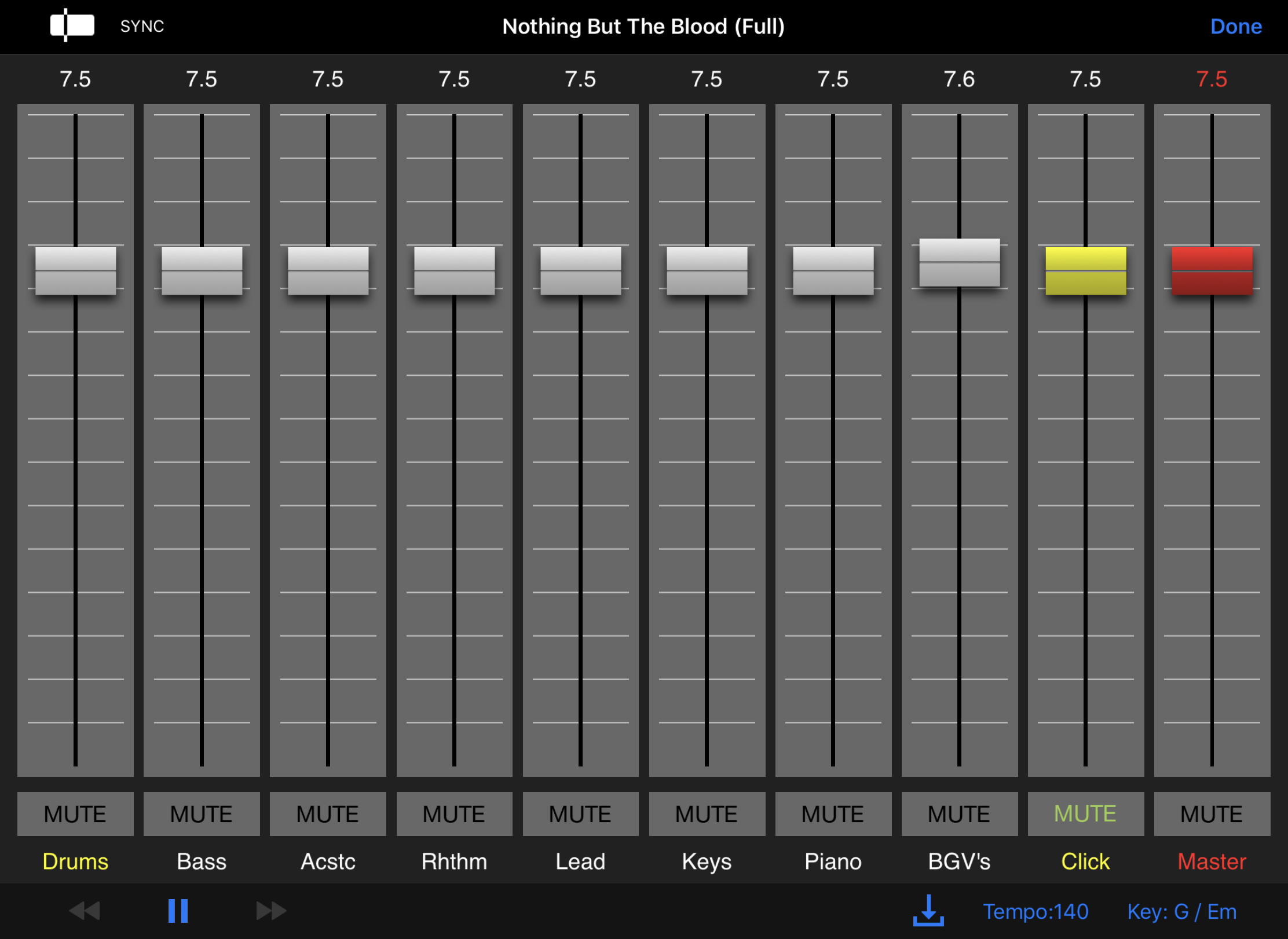
This is a great app that does cost a little bit, but is a tremendous tool if you have a portable device like an iPad or iPhone. The app is free, but the songs will you about $3 a piece, which is only a dollar more than what you would pay for songs you currently buy on Google Music store or the apple iTunes Store. When you buy these songs, you then have the ability to include all of the elements of the song (i.e lead vocals, guitar, drums etc.). So, for instance, if you wanted to lead the song you could turn the vocals down and sing with the music like it was Christian Karaoke hour. Or iSing worship could become your worship band in a box by simply hitting play. Be sure, however that you plan the songs you are going to sing ahead of time and have the words either printed or displayed on the screen for the congregation to sing along.


One of the challenges for many pastors, regardless if they are musically inclined or not is the use of other people in worship services. Do not be afraid to ask other people to help out, or lead elements of the service. In fact, a shared worship experience with other people leads to a better all around worship service. If you’re at all like me, perhaps you are a control freak and you want to ensure everything goes according to plan, perhaps we have to come to the conclusion that we must trust the Holy Spirit as well as other people.

The apostle Paul told Timothy not to allow others to look down on him because he was young (1 Timothy 4:12)…the same can be said about young people in our churches and in the worship setting. Use your young people, don’t discount their willingness and abilities to lead. Teach them, disciple them as the future leaders by investing in them now within your worship services. Have them help by reading a prayer, or scripture verse, a skit, or even by leading a song. Some of your young people might be more musically gifted than you are – so cultivate that gift and use it in your worship service!Also, don’t let older people in your congregation overly criticize your young people. We do not want to discourage their growth as future leaders, we want to encourage them. Unfortunately most churches have the old grouches who grumble at anything new – even young people. Don’t tolerate that behavior from any member of your congregation. We need to disciple our youth, and this is a great way to begin to do that!5) Set the Stage (don’t neglect this!)
Regardless if you are musically inclined or not, we can become more creative in our church decor. Don’t neglect the aesthetics of your worship space! Take into account the seasons, the topics you are preaching on and use your worship space to reach all of the senses of the worshipper. Use smells (plug ins, or spices, candles – but don’t let it become over-powering. Use sites – place artwork up, or banners, build sets out of styrofoam and paint it…there are many links of Pinterest and other websites to explore and tap into our creative sides.

Use worship songs at the beginning of the service through cd/mp3/computer…set the stage with song (even if you aren’t musical).
When we actually plan the scenes of worship within our worship spaces we introduce our congregations to a living and moving God. The stages and worship places are concerts or performances, but there is something to be said about being intentional with the sights and sounds (and smells) or our spaces for the purpose of ushering our congregants into the very throne room of God.6) Worship Band in Hand (app)

This app also costs some money in terms of purchasing the songs that you want yo use, but it comes with a lot of features and abilities. You get one free song included upon installation of the app, it gives you the opportunity to try in it out and see if you like it.7) Auto Pad(app)

This app will cost you $2.99, but there are many features that this ambient sound pad contains that could set your worship onto a new plain. Perhaps you use this during your sermon and the use of tone and ambient sounds can deepen the worship experience. Using such a tool might require you to include/recruit others to help you operate the app while you preach or read scripture. Give this app a try and experiment with its use in your worship service!8) Lead a Messy Church instead!

Do you want to break up the monitany of the worship experience? Do something different. Some have begun to do dinner church, while others have started to incorporate Messy church into the worship experience. Messy church can be a great way to reduce your music phobia by utilizing stations through this very practical, teachable methods.here is a link to a few that we have done over the years – https://pastorsponderings.org/category/messy-church/9) Conduct A Quaker Service

A Quaker service generally is not focused on music, but instead the recitation of poetry, prayers, and the element of silence. This type of service might be a stretch to many of your congregants, even more so than Messy Church because of the use of silence. Despite the drawbacks, using this type of worship setting, but be just the thing your church or corps needs in order to have everyone dig a little more deeply into their hearts and minds.
Here is a link for more information on the Quaker service
10) Prayer Stations/Artistic Approach
Conduct a prayer service with stations.
If you want to get creative, you can go onto Pinterest and explore the many ideas expressed there when it comes to Prayer Stations. This approach takes the focus off of the use of music and onto a hands-on prayer service. You could quietly play worship music in the background through your sound system and encourage everyone to spend the next 45 minutes at the many prayer stations that you have intentionally set up in your sanctuary. Here are some links to help guide you in this:
Prayer Loom
Thy Kingdom Come
Scrabble Pieces
More Pinterest Ideas
These are just 10 suggestions to help the non-musical and musical pastor a like, for the purpose of creating a deeper, more meaningful worship service. These are not exclusively ‘it’ for worship ideas, but just a primer for more exploration and worship developement in your corps & churches.
Please tell us what you use in your churches that help to make your worship experiences more meaningful and helpful to you and your congregation? Post your commends below, we want to hear from you.
Something more for all of us to Ponder today.
To God be the glory!