Salvation Army Identity Crisis?

Image

I’ve heard it from both sides of the argument.  The Salvation Army is a movement not an organization…wait what?  Is it an unorganized movement then?  Certainly what began as a movement as grown, hasn’t it?  We are an entity within the universal Christian church.  We, in every aspect of the theological argument have become another denomination, though some within our ranks might spurn that notion.  Don’t believe me?  Look it up on wikipedia: http://en.wikipedia.org/wiki/List_of_Christian_denominations scroll down towards the middle of the list of denominations and you will find The Salvation Army listed under ‘Pietists and Holiness Churches’.  

So let’s move on from that identity issue to the two main pivotal perspectives that I would like to look at rather closely. 

Image

Argument #1: The Salvation Army has become just another social service institution. 

I can certainly see why some within our ranks would argue this point.  Within the US, specifically, many programs to those in need are either completely or marginally dependent upon government funding sources.  Much of our professional staffing can also be used to lend support of this argument.  Also another source that might lend credence to this assumption stems from the adoption of its newest brand in 2005 of ‘Doing the most good‘.  If you merely look at the wording, one could make the leap that the identity of the Army is shifting in the face of public perceptions and opinions.  Put a new branding on the Army such as ‘Doing the most Good’ and now you can compete with other social service agencies which are in turn competing for the same public/government funding sources.  And as we compete, we now how place our services ahead of other agencies because, after all, we do the most good…better than the rest.  

Now before you write me some hate mail, let me just clarify; I am merely presenting one of the arguments within this identity crisis.  This is not specifically my opinion but it is an opinion or as our Army likes to say, it is a perception.  Right or wrong when a brand, even taken out of context, is utilized within a media savvy culture this common perception may or may not prevail.  To say that we do not care what the public thinks would certainly be erroneous and untrue.  Public support, both financially and physically, are necessary to our success as a ministry to those in need.  We need reinforcements as well as the means to make things happen.  

This specific argument that we are shifting our identity to become more of a social service agency and are too dependent on governmental funds does have some merit and weight behind it.  There is certainly a danger that we may lose our identity of origin if we are not mindful of mission that is…which brings me to the other side of the argument…

Image

Argument #2:  The Salvation Army is a Church.

This argument prevails within our corps’ mission at times.  Corps Councils at times get together and bemoan the fact that there is little to no ‘bridging’ going on between corps ministry and the weekly social service office which is always packed with people in need.  At the extreme end of this argument are those who are so pious and holy in appearance yet they do little besides complain about the state of things instead of actually doing something about it.   Not only is it the job of the corps officer to find and enact engaging and relevant ministry, but it is the primary job of the soldiery of that corps to suggest, lead, engage and do this important work as well!  All too often this identity argument that The Salvation Army is first a church is water thin because many corps are seeing a decrease in Sunday attendance.  It is not that Officers are not trying, however could it be that some of the programs that we offer need to be revamped or even given the boot?  If this identity of Church truly ‘sticks’ then why aren’t we seeing consistent substantial growth in our corps…and I’m not just talking about the bigger corps in large metropolitan areas either, every corps in every city.  In my opinion (here’s my take), one of the reasons we are seeing this identity of ‘church’ diminish in the pews is because of our history.  By that I mean, if we explore the reasons for our initial explosion as a ‘Movement’ we will find that our founders were willing to try and risk anything to get people saved.  Slogans like ‘Go for the worst‘ didn’t come because the early Army was playing it safe.  They tried anything and sought to connect with the culture in which they ministered to.  Today, we have much to lose if we risk as they once did.  Programs are great but I believe sometimes our programs become a crutch and limit what we actually do or risk.  Booth would close corps in a heartbeat if they were not growing, today we have too much invested in them to watch them fail or close their doors.  In essence we are protecting our investments and often times we are more willing to play it safe and rest on our laurels than do something different.  

This identity of ‘The Salvation Army is a church’ insulates us.  It protects our accomplishments and we pull back in the risk department.  

Image

SO WHAT ARE YOU THEN?  

Are we a social service agency or are we a church?  The answer is….YES.  😉 

What do I mean?  If we lose either of these important aspects of our movement as an Army for Christ then we are finished. We might as well pack up and find another mission or ministry to serve under. There is a fine line here.  It is a cautionary hazard reminding us not to veer too far in either direction.   Church, get out of the slow, protective lane of tradition and heritage.  Social Service, pull your hands back from the governmental piggy bank that places severe limits on what you can do in the name of Christ.  Don’t become so dependent on money and thereby replace Christ with the worship of funds.  We are a mission, an adaptive moving fluid mission for Christ.  This is what we ought to be.  We must not lose sight of why we are here in the first place.  We must not forget that souls need to be both clothed, fed and with the physical and the spiritual.  We cannot allow this notion that we are one or the other to divide us.  We are One army, to quote our recent international theme.  We must continue to serve Christ in such a way that He provides and He blesses instead of seeking for the approval man.  Instead of playing it safe and insulating yet another army rich tradition behind polyester uniforms and archaic irrelevant programs, We need to keep moving forward not backward.  The danger is when we shift from an organized movement to just an organization we stop moving…we stop striving forward in our relevancy in ministry.  

We cannot afford to separate this identity as an Army.  To do so, we face a slow, polarizing organizational death.  I pray for more risk takers to be added to our ranks.  I pray for more missionally minded Officers and Soldiers alike.  I pray that we get up out of our pews and start doing something that reach a poor soul and touches the lost for Christ in the process.  If we keep Christ as the face of our Army, we will not lose strength, we will ever be in tuned to His Holy Spirit’s prompting and moving for Him.  If we ever get to the point that we care more about our Army than we do about Christ and His mission for us then we will have lost this vital and most pivotal identity and risk losing so much more than just our uniform.  

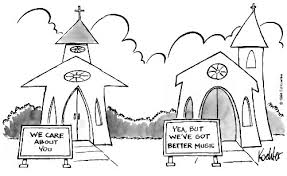
God called His Bride to be Sheep-stealers and growth competitive??

Image

We utter agreements to work together.  We vow to ‘come along side one another’.  But are all these promises false?  Are we faking it ? I’m speaking to fellow pastors and church members.  Do we really intend to support each other even if we don’t belong to the same denomination or brick and mortar church?

Image

It seems all too often that we are so preoccupied with what we are doing in our ministries that we do not have time to support the greater ecclesia.  We have our heads down and we are plodding onward completely oblivious that there are other Christians in our own community struggling and in need of Christian fellowship and support.

Is this what Christ had in mind when He prayed to the Father “My prayer is not for them alone. I pray also for those who will believe in me through their message,  that all of them may be one, Father, just as you are in me and I am in you. May they also be in us so that the world may believe that you have sent me.” John 17:20-21  I don’t think this is what Christ had in mind at all.  In fact I believe that He is greatly saddened by our separation from one another.

Image
“Don’t be a sheepstealer!”

Conversely then, if we are called His bride, we the church, how can we justify the sheep stealing that takes place among churches?  Are we in competition with one another?  Has it become strictly about who has the most congregants in the pews?  Will God, one day reward us in heaven for the amount of sheep we have stolen from another flock?  NO!  I’ve literally seen the smirks and pride on the faces of some pastors when they compare their churches.  This ought not be!!!  I have witnessed the arrogance of some who look down on smaller congregations simply because of their size of memberships.   This cannot exist in the body of Christ!  I am not saying this because I grew up in small congregations and also now pastor one.  I’m saying this because when we start comparing our church flocks and when we start looking down our noses at other Christians we allow sin and pride into our midst.  After all didn’t Jesus say; “You know that those who are regarded as rulers of the Gentiles lord it over them, and their high officials exercise authority over them. Not so with you. Instead, whoever wants to become great among you must be your servant, and whoever wants to be first must be slave of all. For even the Son of Man did not come to be served, but to serve, and to give his life as a ransom for many.” Mark 10:42-45 (NIV)

Image
“Sad but true!”

Pastors, stop acting prideful of your accomplishments.  Stop comparing yourselves with what other churches are doing and looking down your noses at smaller congregations.  Don’t let pride seep into who God has call His body to be.   Congregations stop trying to be better than the church down the street.  Stop wearing a fake front in order to impress and steal congregational members from other churches!  You are hurting the body of Christ!

Is this an indictment on the Western Church?  Perhaps.  But am I to judge?  It’s not my place to throw blame anywhere, I’m just as guilty as the next pastor is.  But what I am saying is beware, be careful pastors and church members!  Satan would love nothing more than to tear you down with your pride and arrogance so that you resemble more of the world and less like Christ.  Watch out, because he would love nothing more than to destroy our fellowship of believers!

God’s Bride needs to stop comparing.  She needs to stop the sheep stealing and competing with itself.  We cannot act like the world because we are made for so much more than this.  We are to reflect the very heart of Christ…and if we aren’t then we either need to readjust our course or be prepared to face His displeasure and judgement.

Not a part of the Holy Eucharist?

Image

I had an interesting conversation today. It took place in the parking lot on my way to see someone in the hospital. There in the hospital parking lot this gentleman spotted my uniform and inquired if I was a member of The Salvation Army. I indicated I was indeed and he proceeded to tell me that we did great work for people in need…I could almost hear the ‘BUT’ coming a mile away. Finally after a few additional compliments he came to his ‘but’, when he said, “But you guys are not completely a part of God’s family because you don’t have His holy Eucharist inside you.”

Image

Wow, what do you say to a complete stranger in a parking lot after only a few pleasantries have just been exchanged? There really wasn’t time to delve into it right then and there, I was on a mission of sorts to visit a parishioner. I found it interesting that in a parking lot I was engaged in a theological conversation…I didn’t have the time to engage.

So since I didn’t then, let me tell you what I would have said.

His argument: We (The Salvation Army & most Protestants) Are not completely a part of the body of Christ because we don’t have the holy Eucharist in us.

I couldn’t disagree more with his pompous take on theology! What he essentially struck me as proud and even elitism. Does God desire practice over faith? Often times religious conflict comes from theological misunderstandings or staunch stubborn persuasions. His assertion was that because we do not practice Communion or partake in Eucharist we are not a part of Christ. Hmm…was it the work of bread and wine that spurred the disciples into converting many at the day of Pentecost? Was it bread and wine that brought the Apostle Paul to the knowledge of Christ?

No! In fact I would contend that the Holy Spirit is an element that many high churches miss out on in their practice of Eucharist. Sure the practice can become ritualistic and lose its meaning, but His Holy Spirit is not mentioned enough within their church practices. How can one participate in Communion/Eucharist and completely miss the point of such a ceremony?

Is the practice of such a ceremony an act of Salvation? I would contend again that it is not! In fact, there are still many churches who say that if people do not partake in Eucharist they aren’t saved. How can this be? Did Jesus say ” Do this in remembrance of me to be saved?” No! He simply said, “Do this in remembrance of me”. What is ‘this’ that Jesus refers to? Was it solely the breaking of the bread and drinking of the wine? I do not believe it to be so. When Jesus later prayed to the Father that his disciples be One just has He and the Father were One, I believe there is significance there. Jesus wanted unity, peace amongst his followers. When they were to fellowship over a meal together, whether it was the Passover or even a simple shared meal the remembrance, I believed was conveyed in their meeting, not just the elements of Eucharist.

Secondly what makes the Eucharist holy? What is holy anyway? I’m sure there will be those who may disagree with me and that’s fine but where does Holiness come from? The only true source of Holiness is God himself. Who is able to bless something in order to make it holy then? Man? Are we ever worthy enough to make something holy in and of our own selves? I’m not denying that His Holy Spirit can’t indwell within us and work through us, but to claim that something is always holy just because of practice is foolish.

When we understand the source of Holiness, then how much weight should we then place of ritual? Is Communion in and of itself a source of Salvation? No. Who does provide Salvation and Redemption from our sins? Jesus himself, through His sacrifice…and “If you declare with your mouth, “Jesus is Lord,” and believe in your heart that God raised him from the dead, you will be saved.” (Romans 10:9) Did Paul indicated anything in there about breaking bread and drinking wine to save your soul? Is that how we gain access to ‘the body’? No. Confession, belief and faith are the ingredients, if you will, for our salvation!

So what is Eucharist then?

Don’t get me wrong, I am not condemning its practice here by any means. What I am condemning is the ingrained denominational notion that if one does not practice Eucharist regularly they aren’t a part of the body of Christ. That is simply foolishness and a slant to the scriptures that was never meant to be. Should we participate in Communion in church? I think that there is a time and place for it. I think that some very sacred moments can come from it, but do I think that it ought to be practiced every Sunday? No, and here’s why. It loses significance and symbolism, and instead of something sacred can become monotonous and mundane.

Lastly, to the churches who teach that Eucharist is mandated and lack of practice is detrimental to our salvation…think again. Stop dividing the body of Christ! We become elitist when practice replaces holiness, and judgement is measured out by the hands of man. Salvation belongs to Christ, and those who call upon His name will be saved.

There is no perfect church here on earth, just imperfect people striving to be like Christ. When we allow His indwelling to be evident in the outpouring of our faith then, perhaps we have the authority to speak on such things.

Church Practice…Mission & Vision Pt. 2

Image

Church Practice pt.2:

Assessment & Strategy

“Where there is no revelation, people cast off restraint; but blessed is the one who heeds wisdom’s instruction.” Proverbs 29:18

How do we begin to set our sights on new ventures and capture victories in our church?  Or perhaps how do we recapture the vigor and passion our church once had is a better question?  All too often organic ministry takes shape, spontaneous growth occurs and we just don’t know what to do next.  We say that we want more people coming to church but when they start coming many of us don’t know what to do with them.  Sure some might say, “well we love them.”  And that may be so, but without purpose behind ministry we run the risk of losing these new people because there is just nothing that keeps them coming back.  It’s the work of the Holy Spirit to convict and save, but it’s the church’s responsibility to love them and accept them into the family.  Without acceptance and then provided roles and duties a new member may begin to feel like the third wheel, unwanted and might be eyeing the exit sign.

Questions to consider:

What is your Church’s Mission & Vision?

Do you have these written down?

Have you shared them with your congregation?

Are they posted in a prominent place within your church so that all can see them?

If your answers to these questions is “I don’t know” and “No”, then dare I say that perhaps it’s time to get started on articulating what it is your church wishes to accomplish, what your vision needs to be and how your mission might be accomplished.

How Do We Get Started?

Scripture tells us that people without vision will perish.

1)    Pray:

So perhaps the very first thing you ought to do is pray.  This could be done individually at first then corporately with your core group of leaders.  But prayer is our direct connection with the one who makes all things possible and the only source of our true power and wisdom in this process.  Vision casting cannot effectively take place within the church without first inviting God’s Holy presence to partake in the planning process.  Prayer should not be taken for granted or taken lightly.  Without His wisdom and direction our Mission and vision for our church will not succeed.


2)      Look Back:

I don’t say this so that we will remain there in our past, but rather we might begin to identify exactly why something became successful in your church in the first place.  You might be surprised as to why a program or ministry flourished or grew.  Was it because of the leadership present at the time?  Was it because of the community dynamics?

The whole reason to look back at past victories is twofold.  The first reason is because we need to recognize that God was present in the past and He is here in our present planning.  He has granted us these moments of refinement and we ought to celebrate them!  So we recognize that God was involved in the victories.  The second reason we look back is to identify our victories which will motivate us and cause us to believe that these victories are still possible in this present day!  Be mindful though, that what worked in the past might not work in the present.  This is simply an exercise to identify the victories and the successes so that we can possibly recapture or claim new victories through the planning process.

3)      Know Your Community!

There are any number of statistical web sites out there that can give you vital information regarding the demographics of your community.  Not only will they provide you with the breakdown of ethnic groupings but also median age, education, house hold incomes, and even a statistic of single parents in your neighborhoods.  This information is crucial to recognizing who is living in your church’s radius.  When we can analyze this data we can begin to identify what our mission to our community should be.  For example if there is a high percentage of single parents living in your community you might begin to use this information to craft applicable ministries to meet the needs of single parents.  It is important that as you begin to craft your church’s mission and vision that you have a good understanding of your community and that of its needs.

4)        Know Your Church

This isn’t to mean that you are limited to just the people in your church, but rather to be wise and know who makes up your church and its current ministries.  When you know your church, its specific dynamic, good & bad, generational demographics, educational demographics, then you will begin to see what their needs are also.  From this study you will then also be able to draw from those resources to better help you devise your strategies as you move forward.  With your Core group of leaders you can identify church members who could be utilized in any number of ministries and that of their potential.  It is important to know what you already have and who will support your church’s mission and vision.

5)      S.W.O.T. Analysis

There are other means of analyzing and planning your mission & vision, but this is one tool that I have used and have seen success from.  In your Core group, set aside an hour or two to sit down and do a S.W.O.T. analysis of your church while having your community demographics information at hand.  What is S.W.O.T.?  It is a tool to identify you Strengths, Weaknesses, Opportunities & Threats.  Here is a web link to read up further on this vital tool:  http://ctb.ku.edu/en/tablecontents/sub_section_main_1049.aspx

As you get together have some big poster board paper handy, or a couple of dry erase boards available to that you can discuss and identify your church’s strengths and weaknesses, its opportunities and threats.  Write them down as you share, post them on the wall so you begin to see the big picture as you proceed forward.  When these are visible you will begin to grasp where your Mission is, what it looks like in your specific community and then you can cast your vision.

6)      Identifying your Mission

There are many ways to do this, but with the information you have now already done, you can begin to see what it is God is calling your church to be and do in the community He has placed you in.  But be mindful, you must not mistake your vision statement for your mission statement.  These two things are not the same…they are hand in glove but the Mission statement ought to come before the Vision statement.  Your mission is what you do every day, while your vision is what will take place in the future because you are living out this mission every day.  Does that make sense?  Mission is intrinsically who you are, while Vision is where you’d like to be because of who you are.  Mission =Identity, Vision=future.

Since there are a lot of mission statement helps out there, we don’t have to reinvent the wheel here…use some of these resources to help you.  Do some research!  Here is a great tool to help you with your mission statement:   http://www.firstthird.org/eym/EYM-Tool-2-Identifying-Your-Churchs-Culture.pdf

7)      Vision Statement:

Again make sure that you have your mission statement for your specific church nailed down before tackling the vision statement.  It’s like trying to build a house without the foundation.  You need your mission statement to be clear before you can identify where you want to go.  Vision casting might take some time; some continued prayer will be involved.  But remember this is your church, your future and good things don’t come from poor planning or no planning.  It will take some sweat and possibly tears to get there.

http://scottjeffrey.com/2010/01/how-to-craft-a-compelling-vision-statement/

Video Helps:

http://youtu.be/ioY-YSOKBtY

http://youtu.be/7orBFwkziyg

http://youtu.be/HOSpEFyGWLQ

When I went to college for organizational leadership, I learned this process and it struck me how simple it can be but many times we make it out to be so complex.  With your Core leaders there has to be no ego, no sugar coating, just humble servants wanting to invest in what God has given you and your church ministries.  When you put your church and community under the microscope it might be painful, yet endure the uncomfortable nature of this process because great things can and will take place if you allow God to use you and your church for His purposes alone!

Feel free to send me questions or feedback if you are interested in starting this process with your church.  I have a real passion for churches going through or needing to go through this planning process!

scottstrissel@yahoo.com

Church Practice…Mission & Vision

Image

Gonna step on some toes, some sacred cows and maybe a few egos.

Here goes…Why do we do what we do in Church?   Is there significance in the standard things we do in church on Sundays?  Do we continue various things in our services because that’s how we’ve always done them and that’s just how church is done?

Questions to consider:

the bulletin…is it necessary to print one every Sunday or do we just like to have a check off list to go by?  Is it because we like order?  Is there something sacred about that piece of paper that we glance at and then collect and toss in the trash after the service?

the sermon…is there an altar call at the end?  A call for repentance?  A challenge for the week to consider and chew on?  Does it necessarily have to be at the end of the service and right before lunch?

four praise songs and only four…with tongue firmly place in my cheek, is four the magic number when it comes to praise songs?  Or is it just the knowledge that this is the maximum songs any number of generations represented in the congregation can stand?  When it comes to the song selections do we intentionally theme the music to coincide with the message or are they just thrown together because we like the songs?

Teachings… do we intentionally share scripture and testimonies with the edification of God and the encouragement of the ecclesia in mind?  Teachings aren’t necessarily reserved for the sermon time.  These can be present in worship song sets, traditional congregational songs, and scripture readings, dramatic performances, prayer/testimony times.  Is there intentionality with these moments of teaching?

Collection of Money (Offerings)…scripturally the collection box was located in the back of the temple, why do we bring it into the forefront of our worship?  Don’t get me wrong, if done correctly it can be another teaching moment, but is there a perception (even wrongly so) that all the church is interested in is our money?  Do we teach that our tithes are a spiritual act of worship?  That what we are doing is declaring that we place everything even our finances in the hands of God?  Money can be a sensitive subject in church and to church members…yet do we instruct our members of not its value but its subjugation to the Creator and sustainer of all things?

Churchy Lingo…things like “washed in the blood”, “we’re bible believers”, “CSM”, “DC” “Corps”, even words like “worship”, “testimony” (I know I used it already), “Give God Glory”…and many more of these types of churchy lingo can be confusing to first time visitors.  That doesn’t mean that we ought to “dumb it down” (not to be offensive here) or even to talk down to visitors…but what does an outsider see when they come to your church for the first time and hear this foreign lingo?  Sometimes we might as well be talking a foreign language.

Traditions are important in that we know where we have come, but don’t mistake tradition for heritage.  By that I mean, one holds us back (Tradition), keeps us looking back to the “glory days” and doesn’t consider where we ought to be going (Mission/Vision/Goals).  Whereas heritage says, we have a richness of saints who have paved the way for us…we owe it to them to keep our mission and vision clear and set our sights on what is ahead rather than what we have already accomplished.

In your church why do you do the things that you do?  Is there significance or are you simply going through the motions?  When a church has lost its significance, its mission and vision and has instead is simply plodding along through the motions watch out!  A church without mission is a church on the brink of dying away.  My hope and prayer is that each and every church evaluates its mission and vision so that though denomination may guide them in the large spectrum and doctrine the local church knows where it’s going, how it’s going to get there and why they meet as a body to worship together.

Coming tomorrow: tools to help restart your church and reinvigorate its mission and vision.

tune in tomorrow as we continue this dialogue.

Image

Church, Parable of the Talent, and on faith (Poem)

Image

Sometimes this life is 

cracked and broken

battered on the sharp 

rocks of bitter tides. 

When feebled burdens

shatter beneath 

malnourished bones of faith

We will find our ways again. 

One day, the dying soul

fighting for breath 

pain riddled

rattled like a doll

from bygone days

shaken, torn and tattered

waged, we this ignorant

war within ourselves.

And now on death beds of

brick and mortar

we wonder why

they do not come,

when etched deep

beneath our fingernails

the splintered boards

of risk and faith, 

the only evidence of 

this remains. 

And here, the series

of the ‘If only’s’ 

occurs.

Regrets tied to

our poor choices

anchored beneath the ice

of human tradition’s grave…

if only we had allowed 

His Spirit, 

we gasp with whispered 

breath, 

but doubt crept in 

and stole our stilted courage

and so we hid our talents deep

when invested we should have done. 

So we exchanged our fortunes

for this solitary one.  

Blog at WordPress.com.

Up ↑