

Hey friends, today I am pondering how much vapor our lives contain.
The bible says our life is but vapor (James 4:14) – quick, fleeting, temporary – poof, and it’s gone.
So, I’m sitting here in the quiet, my heart a little heavier than usual today. I lost a friend recently—a mentor, a guide, someone who poured wisdom and laughter into my life like a river that never seemed to run dry. And yet, here we are, standing at the edge of that river, staring into the stillness where their presence used to ripple. Death has a way of doing that, doesn’t it? It stops us in our tracks, takes the breath out of our lungs momentarily, makes us look up from our calendars and coffee cups, and whispers, This life? It’s fragile. It’s fleeting. It’s a vapor.
James, that no-nonsense brother of Jesus, put it like this: “What is your life? You are a mist that appears for a little while and then vanishes” (James 4:14, NIV). A mist. A puff of breath on a cold morning. Here one moment, gone the next. It’s not morbid to linger on this—it’s honest. It’s the kind of truth that shakes us awake, that begs us to ask:
What are we doing with this one, wild, temporary life?
When I learned yesterday that one of my mentors and friends passed, it felt like the ground shifted beneath me. Maybe you’ve been there too—when someone you love or admire slips beyond the veil, and you’re left holding questions bigger than your heart can carry. Why so soon? What comes next? And what does it all mean for the days we’ve got left? I want to lean into those questions together for just a few moments, because I think, in some way, they’re holy.
They’re the kind of questions that pull us closer to the mystery of God, to the heartbeat of eternity.
The Fragility of Now
Let’s start here: life is breakable. It’s delicate, like a clay jar holding something sacred. Paul, that wild-eyed apostle, called us “jars of clay” to show that the treasure inside us—God’s light, God’s love—is carried in something that can crack, chip, shatter (2 Corinthians 4:7). My friend’s death reminds me of that today. One moment, they were here—laughing, teaching, encouraging, challenging me to be better. Next, they were gone, and I’m left holding the pieces, wondering how something so vibrant could be so temporary.
But isn’t that the beauty of it? The fragility is what makes it precious. Every hug, every shared story, every quiet moment of prayer—it’s all a gift because it won’t last forever. The writer of Ecclesiastes gets it: “There is a time for everything, and a season for every activity under the heavens: a time to be born and a time to die” (Ecclesiastes 3:1-2, NIV). This life is a season, a chapter, a melody that rises and falls. And when someone we love steps out of this song, it doesn’t mean the music stops—it just changes key.
The Afterlife: A Door, Not a Wall
So what happens when the mist fades? When the jar breaks? When the melody shifts? That’s where the questions about the afterlife come in, and oh, they’re big questions. But here’s the thing: death isn’t a wall. It’s a door. Jesus said, “I am the resurrection and the life. The one who believes in me will live, even though they die” (John 11:25, NIV). That’s not just a comforting platitude; it’s a promise that whatever lies beyond this life, it’s held in the hands of a God who loves us fiercely.
What’s on the other side? The Bible gives us glimpses, not blueprints. Streets of gold, a new heaven and new earth, a place where “God will wipe every tear from their eyes” (Revelation 21:4, NIV). But it’s less about the details and more about the One who’s waiting there. My friend, my mentor, my Grandparents, my Aunt Joy —they’re not gone, not really. They’ve stepped through the door into a reality more real than this one, where the love and laughter we shared here are just a shadow of what’s to come. It’s not some fairytale story, but rather a hope, a reality, an eternal promise.
The afterlife isn’t about escaping this world; it’s about this world being caught up in something bigger, something eternal. It’s about God saying, “I’m not done with you yet.” When I think of my friend and others who have recently made that transition, I imagine them laughing in a place where the colors are brighter, the joy is deeper, and the love is unending.
And that gives me hope.
Living the Temporary with Eternity in Mind
But what about us, the ones still here, breathing in this fleeting vapor? How do we live in a world where jars break and mists vanish? We live awake. We live open. We live like every moment is a chance to love, to forgive, to create something beautiful. Jesus told us to “seek first his kingdom and his righteousness” (Matthew 6:33, NIV), which isn’t about ignoring this life but about infusing it with eternal weight. Every act of kindness, every prayer whispered in the dark, every time we choose love over fear—it’s all building something that outlasts the mist.
My friend’s life was like that. He didn’t just exist; he poured himself out. He listened well and pointed me (and others) toward a Jesus in a way that made me want to run toward Him. His sudden death doesn’t erase that—it amplifies it. It reminds me to live in a way that echoes into eternity, to hold loosely to the things that fade and cling tightly to the things that last.
So here’s my invitation to you, friends: let’s live like we’re made of mist.
Let’s love like we’re made of eternity. Let’s hold the people we love a little closer, forgive a little quicker, and chase the God who holds both this life and the next. Because this vapor? It’s fleeting.
But the One who breathes it into being?
He’s forever.
“The life appeared; we have seen it and testify to it, and we proclaim to you the eternal life, which was with the Father and has appeared to us” (1 John 1:2, NIV).
Let’s proclaim it with our lives, every fragile, beautiful moment of them.
With you in the journey,
Pastor Scott




 At the other end of the spectrum is the ignoring and tolerance of sin issues in your corps. Be mindful that we are not the judge of our world, but we do hold a high standard for our fellow brothers and sister in Christ who wear this uniform. This almost seems to be in complete conflict with the first point, but it is not. Galatians 6:1 clearly reminds us as it did in Paul’s day – “Brothers and sisters, if someone is caught in a sin, you who live by the Spirit should restore that person gently. But watch yourselves, or you also may be tempted.”
 Officer(s). Yes, they have had training, yes they are leaders, but they cannot lead properly without the core leaders to help them. A shared vision and delegated group will be better equipped to handle opportunities and threats that come to your corps and community. If you don’t currently have core leaders, begin by praying and asking God to reveal potential leaders to you. Prayer is never a last resort, but a constant conversation. Don’t limit your search to just the older members, the younger generations will eventually replace us at some point, so begin to invest in them. Begin to disciple them, and display for them what leadership is all about! Gather one or two influential people with common sense to help you in your corps. Remember, that we are an egalitarian movement – both men and women are equal, so do not limit your leadership search to just men or just women. Without a core group of leaders, the vision and movement will be limited.
 and what we do as a corps, that we begin to have no need for the “outside world”. We stop looking out into our community and we become self-reliant and self-focused. In this danger, what happens when our congregation gets old and dies? Will there be youth to raise up and take our place? Will be just be a group of inbred soldiers? I don’t mean to sound crass, but the reality is, we need to stop being afraid of our communities. We need to stop treating the people outside our buildings as “those people” with a sense of superiority. We must squelch the desire to just remain in our buildings and selfishly focus on “us”. What about the great commission? What are we fighting for if we only fight for ourselves and our traditions and self-interests? If we are all-in and inwardly focused, we will slowly die away…and no one will care when we’re gone.
 This is probably a rare thing, but perhaps not. Perhaps there are some corps that have so many services to the community that worship and all things “Spiritual” are an after thought, and then you come to Sunday and it just becomes a “thing we do”. We focus all of our energies on the outside, on meeting human needs but we seldom meet those needs “in HIS name” anymore. We might as well be just another social service agency or a humanitarian group, because we will have forgotten our first love and the “body” will be just bits and pieces pulled and stretched so thin that it doesn’t resemble Christ any longer.
 vision and goal because “they have been set, and we don’t alter these goals”. Goals should never be so rigid that there is no looking back and re-evaluating what works and what does not work, whether it be in evangelism, discipleship, or corps fellowship growth strategies. Remember what worked 100 years ago, might not necessarily be the best method to use in an ever evolving culture. Not to say we adopt our culture, but we ought to consider what works and what does not work any longer and not be so rigid that we refuse to ever change how we plan and how we enact a strategy in our corps. Rigidity can kill your corps, and stifle any potential growth you might see.
 If you corps does not understand Holiness, and or it is never preached on spoken of, perhaps this might be an indicator of a terminal issue. I am not saying that holiness is the end-all be-all of the corps, but what do you do with Salvation after receiving it? Where does one go after initial sanctification? Does the Holy Spirit still desire to transform us through and through? Does He not want us to be the very reflection of Christ? Yes. There needs to be continual conversation about our surrendered life and how that looks in the real world.
 emulating elders we respect, this is becoming more than who we are now. Walking in the footsteps of saints and in so doing, we too become saints within this great army. If your corps does not have this vital element, closely connected to holiness, you could be facing extinction. Recognize this need, and do something!!
 to be in the bygone days. We can rest comfortably on financial resources and riches we have been given from various places, and never take another risk again…and if we do this, we. will. die. I cannot stress it enough, in order for God to change our Army, we have to become uncomfortable again. We have to take risks and forget what the rules and regulations say. We have to close dead corps, move to places of need without bureaucratic red tape hamstringing us along the way. We have to get out of our pews and put feet to our professed faith. It’s either put up or shut-up. Seriously, we can talk a good game, but if we can’t back it up, then hung it up and quit already. We don’t need fans in the stands not doing the work. We don’t need complainers and criticizers telling it us it can’t be done – because the risk is too great. If we don’t do something, we might as well put our corps on life-support right now. There is a sad trend that is taking place in our corps around the USA, and our corps are not statistically growing anymore. We are not busting out of our corps buildings anymore. Yes, perhaps it’s across the board in all denominations, but could it be that we are so comfortable now that we have stopped ACTUALLY trying to reach our communities? Could this be an entire systemic issue of spiritual laziness? Forgive me if I offend you today, I can’t help but feel alarmed at how swiftly our corps are dying. And I can’t help but wonder what the next 50 years will hold for this movement? If we do nothing, we will not be here in 50 years…not like we have been, not like we should be…and then perhaps, Lord forbid, God raises up someone else to do what we should have been doing.

 My very first recollection of Bowie’s work came by way of the movie “The Labyrinth”.
 I have listened to Bowie’s last album “Blackstar”.
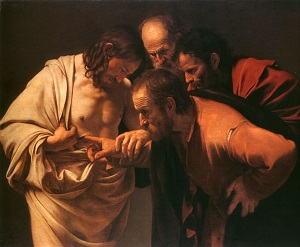 but for One who has given us all grace. I live for One who holds both life and death in His hands, and in Whom everlasting life can be found. I find that my “Lazarus” in this new life, in the hope of eternal life is completely and utterly found in Christ. This isn’t some sermon I’m writing, or a persuasive speech, this is just how I feel and what I see in my life. I know hope exists. I know peace exists. Everlasting love and life also exist – in Christ.
 Where ever you live.










 Pastor's Ponderings