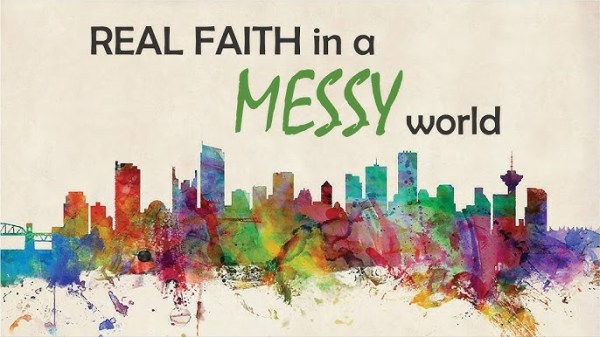

Dear Pastors, The Miracle IS the Mess.

Hey Pastor,

You’re sitting there, sipping that coffee that’s gone cold, staring at the sermon notes that refuse to come together, aren’t you? The weight of the world—or at least the weight of your congregation’s expectations—sits heavy on your shoulders. You’re supposed to have answers. You’re supposed to be the steady one, the one who points to the divine when everyone else is lost in the chaos. But what if the chaos is the point? What if the mess is where the miracle lives?

Let’s pause for a second and breathe. Because I know you’re tired. I know you’re carrying the stories of the single mom who can’t make rent, the teenager who’s cutting again, the elder who’s questioning everything they’ve ever believed. And you’re carrying your own stuff too—the doubts that creep in at 2 a.m., the fear that you’re not enough, the nagging sense that maybe you’re just faking it.

But what if that’s exactly where God shows up? Not in the polished sermon, not in the perfectly executed service, but in the raw, unfiltered mess of it all?

Think about it. The Bible isn’t a tidy book. It’s a wild, untamed collection of stories about people who screw up, fall apart, and somehow, in the middle of their mess, find themselves stumbling into grace. Abraham lies about his wife. Moses kills a guy. David—oh, David—makes a royal mess of things. And yet, these are the people God uses. These are the ones who carry the story forward.

What if your church’s budget crisis, your personal doubts, or that one parishioner who keeps emailing you at midnight are not distractions from the holy but invitations into it? What if the divine is woven into the frayed edges of your life, not waiting for you to clean it up first?

I’m not saying it’s easy. It’s not. It’s brutal sometimes. You’re out there, week after week, trying to speak hope into a world that feels like it’s unraveling. You’re preaching resurrection while you’re still grieving your own losses. But here’s the thing: the resurrection didn’t happen in a sterile, airbrushed tomb. It happened in the dark, in the dirt, in the place where nobody thought life could break through.

So, Pastor, what if you stopped trying to fix the mess? What if, instead of chasing the perfect sermon or the flawless leadership moment, you leaned into the cracks? What if you let yourself feel the weight of the doubts, the fears, the failures—not to wallow, but to find the sacred there?

Because I believe this: God is in the mess. God is in the tears you cry when nobody’s watching. God is in the awkward silence when you don’t have the answer. God is in the church board meeting that goes off the rails, in the youth group kid who keeps asking why, in the moment you look in the mirror and wonder if you’re cut out for this.

The miracle isn’t that you get it all together. The miracle is that God meets you in the middle of it.

So here’s my invitation to you today: take a risk. Preach that sermon that’s a little too raw. Have that conversation with the person you’ve been avoiding. Admit to your congregation that you don’t have all the answers. Let the mess be holy. Because when you do, you might just find that the Spirit is moving in ways you never expected—through the cracks, through the chaos, through you.

What if the mess is the canvas where God paints the most beautiful stories? What if your imperfections are the very place where grace breaks through?

Keep going, Pastor. You’re not alone. The miracle is already happening—right there in the mess.

With you in the wild, untamed journey,
Grace & Peace,
Pastor Scott
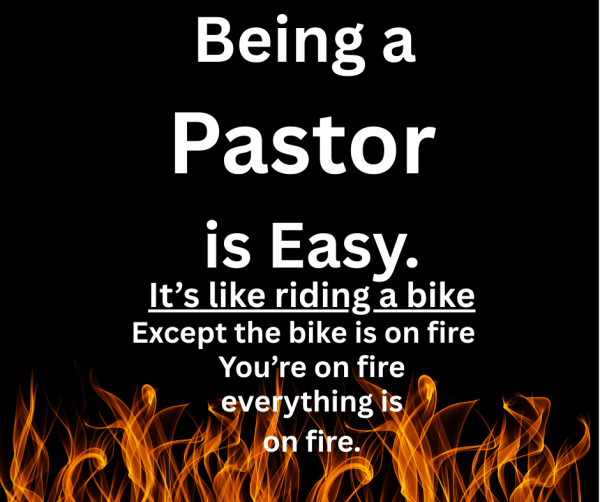
Holy Crap, This is Hard: A Pastor’s Take on the Mess

Okay, friends, let’s be real. Ministry. It’s beautiful. It’s inspiring. It’s… sometimes brutally, gut-wrenchingly hard. Like, harder than trying to explain the Book of Revelation to your five-year-old nephew while he’s hopped up on Mountain Dew and birthday cake. We’re talking sleepless nights, tough conversations, the weight of the world on your shoulders kind of hard. And if you’re a pastor, you know what I’m talking about.

So, what do we do with all that? How do we navigate the messy, complicated, sometimes heartbreaking realities of leading a community? Because let’s be honest, pretending everything’s sunshine and rainbows isn’t going to cut it. We’ve all seen that. It doesn’t work. It actually makes things worse.

Here’s the thing I’ve learned (and I’m still learning, by the way, this is a lifelong gig): It’s okay to not be okay. Seriously. You’re not a robot. You’re a human. You have doubts. You have fears. You have moments where you just want to throw in the towel and move to a secluded cabin in Montana and raise goats and maybe a miniature donkey. (Anyone else have that fantasy?)

And that’s perfectly normal. In fact, I’d argue it’s essential. Because when we’re honest about our struggles, when we acknowledge the pain, that’s when we open ourselves up to something bigger than ourselves. That’s when we create space for grace.

Think about it. The stories that resonate with us, the stories that stick with us, they’re not the ones where everything is perfect. They’re the stories where people wrestle with the hard stuff. They’re the stories where people face their fears, their doubts, their brokenness, and somehow, through it all, find a way to keep going.

That’s the kind of community I want to be a part of. A community where it’s okay to say, “I’m struggling.” A community where we can be real with each other, where we can share our burdens, where we can support each other through the tough times.

Now, I’m not saying it’s easy. Dealing with hard things is, well, hard. But here are a few things I’ve found helpful:

  • Find your tribe: Connect with other pastors, mentors, friends, people who get it. You need people you can be honest with, people who will listen without judgment, people who will remind you that you’re not alone.
  • Take care of yourself: This sounds basic, but it’s crucial. Get enough sleep. Eat healthy food. Move your body. Do things that bring you joy. Seriously, schedule it in. It’s not selfish; it’s essential.
  • Embrace the questions: Doubt is not the enemy of faith. In fact, I think it can be a catalyst for growth. Don’t be afraid to ask the hard questions. Don’t be afraid to wrestle with the mysteries. That’s where the real transformation happens.
  • Remember the bigger story: Sometimes, when we’re in the thick of it, it’s hard to see the bigger picture. But remember, there’s a story unfolding, a story of hope, a story of redemption, a story that’s bigger than our individual struggles. And we’re all a part of it.

So, yeah, ministry is hard. Life is hard.
But we’re not in this alone.
We’re in this together.
And maybe, just maybe, in the midst of the mess, we’ll discover something beautiful, something profound, something truly holy. And that, my friends, I believe is so worth it!

Grace & Peace,
-Pastor Scott.

When Sunday School Answers Fall Short…

by Pastor Scott

You ever get tired of the neat, tidy answers? You know the ones I’m talking about—those churchy, Sunday School responses that get tossed out like a life preserver when life’s questions feel more like a tsunami. “God’s got a plan.” “Just trust and obey.” “It’ll all work out in the end.” They’re not wrong, necessarily. But sometimes, they feel like Band-Aids on a broken bone. Life’s complicated, messy, and raw. And sometimes, the harder we try to wrap it up in a neat little bow, the more it unravels.

I’m sitting here, sipping my coffee, staring out the window at a world that doesn’t always make sense. Maybe you’re there too. Maybe you’ve asked, Why did this happen? Why him/her? Why now? Maybe you’ve prayed until your knees ached, and the heavens stayed silent. Or maybe you’ve watched someone you love wrestle with pain so deep it makes your chest hurt just to think about it. And when you bring those questions to church, you get… a platitude. A verse quoted like it’s a magic wand. A smile that says, “Don’t dig too deep.

But what if the digging is the point? What if the wrestling is where we meet God? What if, within that tension, real faith, even in the unknown, gets galvanized?

Let’s talk about Jacob for a second. You know the story—Genesis 32. He’s alone by the Jabbok River, and he ends up in this all-night wrestling match with a mysterious figure. Some say it’s God, some say an angel, but whoever it is, Jacob’s not letting go. He’s got questions. He’s got baggage. He’s got a past he’s running from and a future he’s terrified of. And in the struggle, he gets a limp—and a new name. Israel. “One who strives with God.”

Isn’t that something? God doesn’t smite Jacob for wrestling. He doesn’t hand him a scroll with all the answers. He meets him in the fight. And Jacob walks away changed, but not fixed. He’s still got the limp.

What if that’s us? What if the limp is part of the deal? What if the questions—the ones that keep you up at night, the ones that make you wonder if you’re even doing this faith thing right—are the very place where God shows up?

I’m so tired of pretending we’ve got it all figured out. I’m tired of hearing, “Just read Romans 8:28, and you’ll be fine.” Don’t get me wrong—that verse is gold. “And we know that in all things God works for the good of those who love him, who have been called according to his purpose.” It’s true. But it’s not a vending machine promise. It doesn’t mean every tragedy comes with a PowerPoint explaining why. Sometimes, we’re left with the tension. The mystery. The ache.

And that’s okay.

Think about Job. The guy loses everything—his kids, his wealth, his health. His friends show up with their Sunday School answers, basically saying, “You must’ve sinned, brah. Repent, and it’ll all be fine.” Job’s like, No, I didn’t do anything to deserve this. And he demands an audience with God. He’s bold. He’s raw. He’s not afraid to say, This doesn’t make sense, and I’m not okay with it.

When God finally speaks, does He give Job a flow chart of why bad things happen? Nope. He shows up in a whirlwind and says, Were you there when I laid the earth’s foundation? It’s not an answer—it’s a perspective shift. God’s like, I’m bigger than your questions, but I’m still here with you. And somehow, that’s enough for Job. Not because he gets it, but because he trusts.

So, here’s the challenging, hard question for us today: Can we trust God when the answers don’t come? Can we sit in the tension of I don’t know and still believe He’s good? Can we let go of the need to have it all figured out and just… wrestle?

I also think about Jesus in Gethsemane. He’s sweating blood, begging for another way. “Father, if you are willing, take this cup from me.” (Luke 22:42). Even Jesus, the Son of God, had a moment where the plan didn’t feel okay. But then He says, “Yet not my will, but yours be done.” That’s not a Sunday School answer. That’s surrender in the face of the unknown. That’s trust when the road ahead looks like a cross.

So, what about you? What’s the question you’re wrestling with? The one you’re afraid to say out loud because it feels too big, too messy, too unspiritual? What if you brought it to God—not for an answer, but for a fight? What if you said, I’m not letting go until you bless me—not with clarity, but with presence?

Here’s what I’m learning: Faith isn’t about having all the answers. (I used to think it was, but it certainly isn’t) It’s about trusting God in the questions. It’s about showing up to the mat, night after night, even when you’re tired, even when you’re limping. Because God’s not afraid of your struggle. He’s not offended by your doubt. He’s there, in the dark, ready to wrestle.

So, let’s stop pretending we’ve got it all together – because we don’t. Let’s stop handing out churchy clichés like they’re the cure for everything. Let’s be honest about the hard stuff—the grief, the fear, the why that echoes in our souls. And let’s trust that God is big enough to handle it. That He’s good enough to hold us, even when we don’t understand.

As it says in Psalm 23:4, “Even though I walk through the darkest valley, I will fear no evil, for you are with me.” Not because I get it. Not because it all makes sense. But because He’s with me.

So, keep wrestling, my friend. Keep asking. Keep limping. And trust that the God who meets you in the struggle is the same God who carries you through.

What’s the question you’re afraid to ask? And what would it look like to bring it to God—not for an answer, but for Him?
-Grace & Peace,
Pastor Scott

Blog at WordPress.com.

Up ↑