
Forgiveness is a Fistfight

Hey, friends. Welcome back to Pastor’s Ponderings. This is where we crack open the ancient words, let them breathe, and see what they kick up inside us. Today, I want us to sit with Ephesians 4:32—a single verse that’s quiet on the surface, but man does it hit like a freight train. Are you ready to step into it? Here goes:

Paul’s writing to the Ephesians—a scrappy bunch of Jesus-followers who are fumbling their way through faith—and he lays this down: “Be kind and compassionate to one another, forgiving each other, just as in Christ God forgave you.” That’s it. Be kind. Be compassionate. Forgive. Sounds simple, doesn’t it? Like something you’d stitch on a throw pillow or a t-shirt and call it a day. It sounds so simple and inspirational –

Except… it’s not. Not even a little.

Let’s start with the opening jab: “Be kind and compassionate to one another.” Sure, it’s got that warm, fuzzy vibe—like smiling at strangers or holding the door. But dig deeper. Kindness isn’t just polite; it’s gritty. It’s choosing softness when everything around you is yelling for you to toughen up. And compassion? That’s not standing on the edge with a pep talk—it’s climbing down into the muck with someone, feeling the weight they carry. Paul’s saying, do that. With each other. Not just the easy ones, the ones who get you—but the prickly ones, the loud ones, the ones who cut you off in traffic or mid-sentence – THOSE ONES.

Then comes the knockout punch: “Forgiving each other, just as in Christ God forgave you.” Oh, man. Forgiveness. That word’s a live wire, isn’t it? We all nod along in church, but when it’s time to actually live it—when it’s that person, that wound—it feels like trying to bench-press a truck off your soul.

Here’s the hard part, the challenge: What if Paul’s not just handing us a checklist here? What if he’s holding up a mirror for us to look at how we are currently conducting “forgiveness”? Because kindness—it’s brutal when you’re exhausted. Compassion slips away when you’re burned out or burned by someone. And forgiveness? That’s a monster. You’ve got every right to clutch that grudge—it’s yours, you built it, it shields you. But Paul’s saying, drop it. Not because they’ve earned it, but because God forgave you.

Pause there for a second.
God forgave you—not with a half-hearted “eh, fine,” but in Christ. In this messy, bloody, breathtaking act of love that says, “I see it all—the screw-ups, the shame, the stuff you bury—and I’m still here, I’m not going anywhere!”
That’s the standard. That’s the “just as.”

So let’s get real: Who are you NOT forgiving? Who’s that face flashing in your mind right now? We’ve all got one—or a few. The coworker who twisted the knife. The friend who vanished. The family member who keeps swinging the same tired hatchet. Maybe you’re thinking, “Scott, you don’t understand—they don’t deserve it.” You’re right. They don’t. But neither did you. Neither did I. That’s the gut-punch truth of it.

Now flip it—here’s the spark, the inspiration: What if forgiveness isn’t weakness? What if it’s the toughest, fiercest thing you’ll ever do? It’s not caving in; it’s rising up and saying, “This pain doesn’t get to own me anymore.” Kindness, compassion, forgiveness—they’re not soft. They’re radical. They’re how you snap the chain—the one where hurt just keeps birthing more hurt. You plant something else. You scatter grace. Yeah, it’s hard—it’s so hard—but it’s how the ground shifts.

Paul’s not asking us to play pretend. He’s calling us to live it—because we’ve been lived into it. God’s forgiveness isn’t some abstract idea; it’s a force, tugging us toward something bigger. So maybe today, we start small. Just like those baby steps in that old movie: What about Bob? One kind word to someone who doesn’t see it coming. One flicker of compassion when we’d rather look away. One chip in the fortress of that grudge we’ve fortified. Not the whole wall—just a crack. And we see where it leads.

Ephesians 4:32 is a whisper AND a roar. It’s a dare to be human in a way that rewrites everything. So, are you in? Let’s try it. Baby step it. Let’s see what takes root when we live like we’re forgiven.

Thanks for sitting with me here at Pastor’s Ponderings today. Keep wrestling, keep wondering, keep reaching for the light, and if you have a certain topic you would like us to tackle together, please leave it in the comments below.
I’ll catch you in the next one.
Grace & Peace,
-Pastor Scott.

The Peace That Doesn’t Make Sense

Hey, friends. Welcome back to Pastor’s Ponderings. This is where we sit together with the big questions, the quiet moments, and those ancient words that still rattle and hum with something alive. Today, I want to pull us into a little corner of Philippians—chapter 4, verses 6 and 7. Ready? Let’s step in.

Imagine this: Paul’s in a jail cell. Not some cozy retreat with Wi-Fi and a view—Roman jail. Chains on his wrists, damp stone walls, the kind of place where hope feels like it’s flickering out. And yet, there he is, scratching out these words: “Do not be anxious about anything, but in every situation, by prayer and petition, with thanksgiving, present your requests to God. And the peace of God, which transcends all understanding, will guard your hearts and your minds in Christ Jesus.”

Wild, right? How does a guy in chains write something that feels so… free?

Let’s linger on that first line: “Do not be anxious about anything.” Okay, Paul. Sure. You’re not doom-scrolling X at 2 a.m., watching the world tear itself apart. You’re not staring down a pile of bills or replaying that awkward thing you said three weeks ago that still stings. Anxiety’s this low hum we all carry, isn’t it? It’s the static of being human. And here’s Paul, tossing out this line like it’s no big deal. Don’t be anxious. About anything.

But what if he’s not pointing a finger here? What if this isn’t some guilt trip—“Oh, you’re anxious? Bad Christian!”—but an invitation? What if he’s whispering, “Hey, there’s another way to live”? Because anxiety—it’s heavy. It’s this invisible backpack stuffed with rocks, and we don’t even realize how much it’s crushing us until someone says, “You don’t have to carry that.”

And then he shifts: “But in every situation, by prayer and petition, with thanksgiving, present your requests to God.” Every situation. Not just the shiny wins or the polished Sunday moments—the messy ones too. The 3 a.m. panic spirals. The “I don’t know if I can keep going” whispers. Every single one. Bring it to God, he says—with thanksgiving.

Thanksgiving? In that? That’s the twist, isn’t it? “Thanks, God, for the chaos? For the uncertainty?” But maybe it’s not about faking it. Maybe it’s about hunting for something—anything—that reminds you you’re not alone. The breath still moving in your chest. That friend who texted right when you needed it. The way sunlight spills through the trees outside your window. Tiny threads of gratitude that tether you when the waves hit.

And here’s where it lands: “And the peace of God, which transcends all understanding, will guard your hearts and your minds in Christ Jesus.” Peace. Not the “everything’s fine” kind—Paul’s still in jail, after all—but something deeper. Something that doesn’t add up. It’s not logical; it transcends understanding, which is just a poetic way of saying it’s too big for our heads to hold.

I love that word, “guard.” Picture it—a sentinel standing watch. Your heart, your mind—they’re these tender, untamed places, and life comes at them with fists. But this peace? It’s there, pacing the walls, keeping vigil, so you can breathe.

So here’s what I’m chewing on: What if this isn’t just a verse to frame on the wall? What if it’s a rhythm we could step into? You’re anxious—fair enough, that’s real. But instead of letting it steer, you pause. You breathe. You pray—no filter, just whatever’s on your heart. You find one thing to say “thank you” for, even if it’s small. And then… you wait. You see if this peace slips in. Not because you’ve earned it, but because it’s a gift. A gift from a God who doesn’t flinch at your mess.

Philippians 4:6-7 isn’t a magic wand. It’s not a formula. It’s an experiment. Paul’s scribbling it from his cell, saying, “Try it. See what happens.” So maybe today, we do. We name the anxiety, we bring it to God, we whisper thanks for something—anything. And we watch. We see if that peace shows up, quiet and steady, standing guard.

What do you think? Worth a try?

Thanks for sitting with me here at Pastor’s Ponderings. Keep asking the questions, keep chasing the mystery, and if you have questions you would like us to ponder together, please leave a comment and let me know!

I’ll see you in the next one.
Grace & Peace,
-Pastor Scott.

Grave-Shaking Glory: Jesus, Lazarus, and Your Easter Wake-Up Call

Here’s the Spotify Episode (Click Here)

Alright, friends, let’s get into it—Easter’s not just a holiday, it’s a holy disruption. And if you wanna see what it’s really about, crack open John 11, where Jesus does the unthinkable: He calls Lazarus out of the grave. This isn’t just a story to make you feel good—it’s a straight-up invitation to see what Easter’s got to do with you. So, let’s go there, because this one’s gonna hit deep.

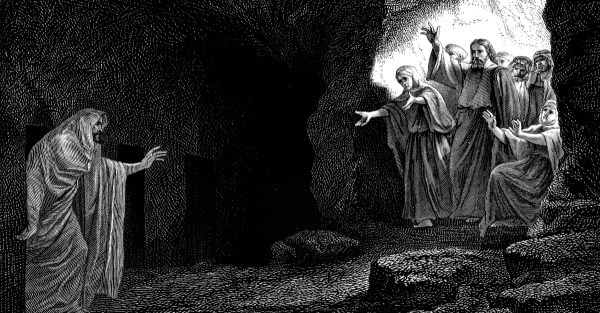
Picture it: Lazarus is dead. Four days in the ground. His sisters, Mary and Martha, are shattered. They’d sent a 911 to Jesus when Lazarus was still hanging on, like, “Jesus, get here—now!” But Jesus? He doesn’t move. He waits two whole days. Why? Because He’s not just about fixing things—He’s about flipping the script for God’s glory. He tells His people, “This isn’t gonna end in death. It’s gonna show who God is.” And that’s the first thing that grabs me: God’s glory doesn’t always show up on our schedule, but it shows up right on time.

So, Jesus finally arrives, and it’s raw. The tomb’s sealed, the air’s heavy with grief, and Martha’s like, “Jesus, if You’d been here, my brother wouldn’t be dead.” Ever been there? “God, where were You when everything fell apart?” I have. We all have. We’ve stood at the edge of something broken—our hearts, our plans, our hope—and wondered why He didn’t come through. But Jesus doesn’t dodge her pain. He looks her in the eyes and drops this: “I am the resurrection and the life. Whoever believes in me? They’ll live, even if they die.” That’s not just a nice line—it’s a lifeline.

Then it gets real. Jesus cries. He doesn’t roll in like some untouchable superhero. He weeps with them. He feels the weight of their loss. And that’s Easter, friends—it’s not just about the win; it’s about a God who steps into our hurt, who stands with us in the mess. But He doesn’t stop at tears. He walks up to that tomb and shouts, “Lazarus, come out!” And this guy—dead, done, four days gone—walks out. Alive. Still wrapped in those grave clothes, but alive.

Here’s where it gets personal: That’s you and me. We’re Lazarus. Dead in our stuff—our sin, our shame, our fears. We’ve got tombs we don’t talk about, places we’ve buried hope. But Jesus? He’s not scared of our darkness. He’s standing there, calling us by name, saying, “Get out here! You weren’t made for this grave!” Easter isn’t just Jesus rising—it’s Him raising us. It’s Him pulling off those grave clothes—our guilt, our pain, our chains—and saying, “You’re free. Live.”

So, this Easter, let’s not play small. What’s your tomb? What’s keeping you stuck? Because Jesus didn’t raise Lazarus just to show off—He did it to prove He’s still bringing dead things to life. He’s still crashing into our chaos, calling us into something new. And when we step out, we’re not just survivors—we’re walking proof that God gets the last word, not death.

Let’s do this, friends. Let’s answer His call, shake off those grave clothes, and step into the life He’s got for us. Easter’s here, and it’s got your name on it. You in?
Grace & Peace,
-Pastor Scott.

What If Everything You Thought About Church Was Wrong?

Listen to this episode on Spotify

Dispelling the misconceptions of “Church” (revisited)

So, let’s revisit this topic of “Church” once more. Perhaps as we explore, we might begin to recognize what it is and what it isn’t, and perhaps what it was never meant to be. Yeah, church—the one with the pews or the folding chairs, the stained glass or the projector screen, the one we’ve all got some picture of in our heads. The one we love, hate, avoid, become bored to tears when the topic is mentioned, or cling to. What if we’ve been missing the point? Not just a little off, but WAY out in left field, swinging at something that’s not even the game we’re meant to be playing?

I mean, think about it. We walk into these spaces—or we don’t—and we carry all this baggage with us. Expectations. Rules. Stories we’ve been told about what church should be. And maybe that’s the first thing we need to rethink: the should. Because when you strip it all down, church isn’t a building, a sermon, or a set of bylaws. It’s not even a Sunday thing. What if it’s something messier, wilder, more alive than that?

Let’s start here: people have some ideas about church that stick like gum to the bottom of a shoe or pew bench. They’re hard to shake, and they shape everything—how we show up, why we stay away, what we hope for or dread. I’ve even heard of people staying or leaving a church because either the music wasn’t to their liking or the sermons weren’t challenging enough and they said, “Well, I’m just not being spiritually fed.” Sometimes, dare I say, that’s just a cop out to a greater commitment, and they aren’t being truthful to others and themselves. (I digress)

So, let’s name a few of these misconceptions, these sacred cows we’ve been herding around, and see if we can’t nudge them out of the way.

Misconception #1: Church Is About Showing Up and Shutting Up

You’ve seen it, right? The idea that church is this place where you file in, sit down, nod along, and keep your questions to yourself. It’s a performance—you’re the audience, someone else is the star, and the goal is to get through the hour without rocking the boat. But what if church isn’t a spectator sport? What if it’s more like a dinner table where everyone’s got a voice, where the questions matter as much as the answers? Jesus didn’t sit around handing out scripts—he broke bread, he listened, he flipped tables when the moment called for it. What if church is less about consuming and more about colliding—ideas, stories, lives? Honestly, wasn’t that the whole reason for church in the ancient world? Families getting together, sharing all they had, encouraging one another, meeting at houses, sharing a meal together? Perhaps we’re showing up at the wrong building when we should consider meeting in each other’s homes from time to time.

Misconception #2: It’s a Morality Club

Then there’s this one: church as the VIP list for good people. You join to prove you’ve got your act together, or at least to fake it ‘til you do. It’s a place to polish your halo, to signal you’re better than the mess outside. But flip through the Gospels—Jesus didn’t hang out with the shiny people. He was with the tax collectors, the outcasts, the ones who’d screwed up big time. What if church isn’t a club for the righteous but a hospital for the broken? A place where the masks come off, not go on?

Misconception #3: Church Is the Point

Here’s a sneaky one: we start thinking church is the endgame. Like, if we can just get the service right, the attendance up, the budget balanced, we’ve won. But what if church isn’t the destination? What if it’s a launchpad? A space where we’re fueled up, celebrate—through bread, wine, song, silence, whatever it takes—to go out and live it? The early followers didn’t build cathedrals; they met in homes, on hillsides, in secret. Church was a verb, not a noun. What if we’ve been obsessing over the container and missing the fire inside it?

Misconception #4: It’s Gotta Look a Certain Way

Picture this: organ music, or maybe a fog machine and skinny jeans. Hymns or Hillsong. We’ve got these templates, these blueprints, and we fight over them like they’re sacred. But what if church doesn’t have to wear a tie or a t-shirt? What if it’s happening in a coffee shop, a park, a group text at 2 a.m.? What if it’s less about the packaging and more about the pulse—the connection, the wrestling, the showing-up-for-each-other-ness? The first Christians didn’t have a handbook; they had a story and a Spirit. Maybe we’ve been overcomplicating it.

So, What’s It Really About?

Here’s where it gets good. What if church is about life—not the tame, boxed-up version, but the raw, untamed, holy chaos of it? What if it’s about people finding each other in the dark, holding space for the questions, the doubts, the dreams? What if it’s less about saving souls for later and more about waking them up right now—to love, to justice, to the wild beauty of being human together?

Think about the stories Jesus told. The lost sheep, the prodigal son, the banquet where everyone’s invited. It’s not about walls or membership cards—it’s about movement, about gathering, about a table that keeps getting bigger. Church could be that. Not a fortress, but a fire. Not a checklist, but a collision of hearts.

So, what if we let go of the shoulds? What if we stopped trying to fix church or flee it, and started asking what it could become? Because here’s the thing: it’s not dead. It’s not irrelevant. It’s just waiting for us to rethink it—to crack it open and see what spills out. What if we’re the ones who get to write the next chapter? What if it’s already started, and we just haven’t noticed?

Something more to ponder today – and this weekend.
Grace, Peace, and More Pews.
-Pastor Scott.

Check out these similar articles on the topic church previously explored.

Whispers to the Infinite: Unlocking the Dance of Prayer

(Check out the Spotify Audio Version of this Pondering Here)

Hey friends, you ever think about how wild it is that we get to talk to God? Like, the Creator of everything — spinning galaxies and the whispering winds, the One who dreamed up the taste of rain and the sound of laughter—that God leans in close and says, “Yeah, tell me what’s on your mind.” It’s not a monologue, you know? It’s not us shouting into the void, hoping the echo comes back with a nod. It’s a conversation. A back-and-forth. A dance of words and silence.

I mean, think about it—communication is this holy thread woven into everything. The way a sunrise speaks without saying a thing, the way a friend’s eyes can tell you they’re hurting before their mouth catches up. And prayer? Prayer’s like that. It’s not just words strung together, all polished and proper. It’s the raw stuff—your fears, your dreams, the ache you can’t name. It’s you showing up, messy and real, and God meeting you there, not with a clipboard and a checklist, but with a heartbeat that says, “I’m listening.”

Jesus, he got this. He’d slip away to the hills, not to perform some religious script, but to breathe, to talk, to listen. He’d say things like, “Ask, and it’ll be given. Seek, and you’ll find.” Not because it’s a vending machine deal—insert prayer, get prize—but because it’s about relationship. It’s about trust. It’s about daring to open your mouth and let the honest stuff spill out, knowing the One on the other end isn’t rolling His eyes or tapping His foot.

So what if we tried that today? What if we stopped treating prayer like a memo to the boss and started seeing it as a late-night chat with the best friend who never sleeps? What if we said, “God, here’s what’s heavy, here’s what’s beautiful, here’s where I’m stuck,” and then—here’s the kicker—we paused? We let the silence sit. We listened for that still, small voice that doesn’t always sound like we expect.

Because communication with God isn’t about getting it right. It’s about showing up. It’s about letting the words—or the lack of them—carry you closer to the One who’s been speaking your name since before you took your first breath. What would happen if we leaned into that? If we let prayer be less about saying the perfect thing and more about being fully, wildly, wonderfully heard?

The Roof Crashers In Mark 2.

Hey, let’s step into this wild little story from Mark 2. Picture it: Jesus is in Capernaum, and the buzz around Him is electric. People are jammed into this house—shoulder to shoulder, spilling out the door, all trying to get close to this guy who’s saying things that make their hearts beat faster. And then, out of nowhere, there’s this commotion. Four friends show up, carrying a paralyzed man on a stretcher. They can’t get in—too many bodies, too much noise. So they do something insane. They climb up on the roof, start digging through it—tearing it apart, tile by tile—and lower their friend down, right into the middle of everything. Right in front of Jesus.

Can you feel that? The audacity. The desperation. The sheer, beautiful chaos of it all.

The Ones Who Won’t Stop

These four friends—they’re not polite. They don’t wait for an invitation or a clear path. They’ve got this guy, their friend, who’s been stuck—paralyzed, sidelined, forgotten—and they’re done with the excuses. They’re not just hoping for a miracle; they’re making a way for one. This is love with dirt under its fingernails. It’s faith that doesn’t sit still.

And isn’t that us, sometimes? Or at least, isn’t that who we want to be? The ones who refuse to let the crowd—whether it’s people, or fear, or doubt—keep us from getting to Jesus? Because maybe the roof isn’t just clay and straw. Maybe it’s shame. Maybe it’s guilt. Maybe it’s the voices saying, “You’re not enough.” And these friends—they’re like, “No. We’re crashing through.”

Isaiah 53 whispers something here: “Who has believed our message?” These guys did. They believed Jesus was more than a teacher, more than a healer. They believed He was worth the mess. And that belief? It moved them.

The Unexpected Word

So, the man’s down there, dangling in front of Jesus, and the room’s holding its breath. What’s He going to do? Heal him, right? That’s the obvious play. But Jesus looks at this guy—really looks at him—and says, “Son, your sins are forgiven.”

Wait. What?

Not “Stand up.” Not “Be healed.” But “Your sins are forgiven.” It’s like Jesus is rewriting the script. Everyone’s expecting a physical fix, but He goes deeper, straight to the soul. Because maybe the real paralysis isn’t in this man’s legs—it’s in his heart. Maybe he’s been carrying something heavier than a broken body. And Jesus sees it. He always sees it.

Isaiah 53:5 echoes through this moment: “He was pierced for our transgressions… by His wounds we are healed.” This isn’t just about a mat and some dusty feet. This is about a Messiah who takes our junk—our sin, our pain—and says, “I’ve got this.” Forgiveness isn’t a side dish here; it’s the main course. Jesus is saying, “You’re not just a body to me. You’re a soul. You’re mine.”

The Power That Proves It

The religious folks in the corner—they’re not happy. “Who can forgive sins but God alone?” they mutter. And Jesus—hears them, feels their skepticism—and He doesn’t flinch. He turns it into a question: “Which is easier—to say ‘Your sins are forgiven’ or ‘Get up and walk’?” Then, without missing a beat, He tells the man, “Take your mat and go home.” And the guy does. He stands up, grabs that mat, and walks out—right through the stunned crowd.

This is it. This is the mic-drop moment. Because forgiving sins? That’s invisible. Anyone can say it. But making a paralyzed man walk? That’s proof. That’s power. And Jesus ties them together—forgiveness and healing, spirit and body—like they’re two sides of the same coin. He’s not just a healer. He’s God in flesh, the Messiah Isaiah saw coming: “Surely He took up our pain and bore our suffering” (Isaiah 53:4). This is divinity crashing into humanity, right there in the dust.

The Invitation

So here’s the thing: This story isn’t just about a guy on a mat. It’s about us. Who are we in this scene? Are we the friends, tearing roofs off to get someone to Jesus? Are we the paralyzed one, needing to hear “Son, daughter, you’re forgiven”? Or are we the crowd, watching, wondering what it all means?

Maybe it’s all three. Maybe we’re invited to crash through whatever’s holding us back, to trust that Jesus sees the stuff we can’t even name, and to stand up in the power He’s already given us. Because this Jesus—He’s not just fixing legs. He’s remaking lives. He’s the suffering servant of Isaiah 53, the one who carries our wounds so we don’t have to.

So take a breath today. Lean into this story. Maybe close your eyes for a second or two and picture yourself on that mat—or maybe holding the ropes. What’s the roof in your life right now? What’s keeping you from Jesus? Name it. Whisper it. And then hear Him say, “Your sins are forgiven.” Let that sink in. It’s not about earning it—it’s about receiving it. Now, what’s He saying next? “Get up and walk”? Maybe it’s time to move. Maybe it’s time to carry someone else. Spend a minute with that. Let it stir you. Because this story? It’s still alive. It’s still yours.

Grace, Peace & Empty Mats.
-Pastor Scott.

God Stepping Into Our Mess – Why This Flesh Matters.

Check out the podcast version of this pondering here.

So, I preached on this passage yesterday, and I think there’s more to say on this topic. You see there’s this line in John’s Gospel, and it’s a profound line. I wanted to expound on it yesterday, but I just ran out of time. But this one verse is like a bright neon sign on a dark highway – it can be seen for miles. Are you ready for the verse? Brace yourself. It’s THE most important verse in all of John’s gospel, because this is how it went down. Here’s where we get our genesis. : “The Word became flesh and made his dwelling among us.” John 1:14.

It’s one of those verses we’ve heard so many times that it can feel like background noise—white noise for the soul. But let’s lean into it for a second. Let it hit you fresh. The Word—the cosmic, eternal, untouchable Logos, the blueprint behind everything that breathes and spins and sings (sometimes off key) —didn’t just stay out there, somewhere in the cosmos, the Word doesn’t hang out somewhere just watching us or hovering above us like some distant deity pulling levers. No. He became flesh. Skin and bones. Sweat and tears. He moved into our world.

Imagine that. The infinite zipped itself into the finite. The One who spoke galaxies into being traded the vastness of eternity for a heartbeat, for dusty sandals, for a stomach that growled when it was empty. And he didn’t just enter anywhere in the world, or a remote section of it —He entered into the thick of it, right here, among us. The Greek says He “tabernacled” with us, like God setting up camp in the middle of our mess. And it’s wild, right? The divine didn’t wait for us to climb some cosmic ladder to get to Him. He came down. He showed up. He knocked on the door of humanity and said, “Hey, I’m here. Let’s do this life thing together.”

But here’s the thing—here’s where it gets personal for each of us today – We have to ask the important question: what does that mean for you and me? Because it’s not just as a nice idea to nod at on Sunday and say our “amens” at just the right orchestrated time – but instead it’s a gut-punch truth that rewires how you live on a Monday? Because if the Word became flesh, then flesh matters. Your flesh. My flesh. The flesh of the person you scrolled past on your phone this morning, the one begging for a scrap of attention or a sandwich. If God wrapped Himself in skin, then skin isn’t just a disposable shell—it’s holy. It’s the stuff of eternity.

And that’s where it gets tricky, doesn’t it? Because we’re so good at splitting things apart—spirit over here, body over there. We’ve got this habit of acting like the “real” stuff is the invisible stuff, the prayers and the beliefs and the quiet times, while the physical world is just a waiting room we’re passing through. But John 1:14 says no. It’s not a waiting room. It’s the main event. God didn’t just send a memo—He became THE message. He didn’t just whisper from the clouds—He walked the dirt.

So what if you took that seriously? What if you stopped treating your body like a rental car you’re just driving till the lease is up? What if you stopped treating your neighbor like a side character in your story? Because if the Word became flesh, then every bit of flesh you bump into is a place where God might just show up. That’s the encouragement: you’re not alone. The divine is tangled up in the human. God’s not waiting for you to escape this messy, beautiful life—He’s in it with you.

But here’s the challenge: live like it. Stop pretending the sacred is only in the pews or the stained glass. It’s in the grocery store line. It’s in the argument you had with your spouse last night. It’s in the ache of your tired hands after a long day. The Word became flesh, so now you get to be the flesh the Word keeps speaking through. Are you listening? Are you showing up? Are you daring to let your ordinary, flawed, fragile life become a tent for something eternal?

Because that’s the invitation. Not to float above it all, but to dive in. To let your flesh—your actual, everyday, unglamorous flesh—become a place where grace leaks out. Where love gets loud. Where the invisible crashes into the visible and says, “This is home.”

So go ahead. Step into it. The Word is still flesh. And He’s still here.

The Life That’s Hiding Up There…

You ever catch yourself wondering what it’s all for? Like, you’re stuck in traffic, or scrolling through the endless noise of the world, and this quiet question sneaks in: Is this it? The grind, the hustle, the little victories that fade by lunchtime—what’s the point? And then you stumble across something like Colossians 3:1-4, and it’s like someone flips on a light in a room you didn’t even know you were in.

Here’s what Paul writes—Paul, the guy who went from chasing down Christians to chasing this wild, untamable Jesus, all because of a Damascus road experience, he says this:

“Since, then, you have been raised with Christ, set your hearts on things above, where Christ is, seated at the right hand of God. Set your minds on things above, not on earthly things. For you died, and your life is now hidden with Christ in God. When Christ, who is your life, appears, then you also will appear with him in glory.”

Hold up. Let’s slow that down, because it’s dense—like a good stew you’ve got to savor.

Paul’s saying you’ve been raised. Not “you will be,” not “someday when you get your act together,” but you have been. Past tense. Done deal. When Jesus got up from that grave, something happened to you, too. You’re in on it. And because of that, he’s telling you to lift your eyes—set your heart, your mind, on “things above.” Not as some pious escape plan, but as a way of seeing what’s really real.

But what’s up there? Christ, Paul says, sitting at the right hand of God. Power. Presence. The one who beat death like it was nothing. And here’s the kicker: your life—your life—is hidden with him. Hidden. Like a treasure tucked away in a safe place, waiting for the right moment to be unveiled.

You feel that tension? You died, he says. The old you—the one obsessed with keeping score, chasing approval, clinging to stuff that slips through your fingers—it’s gone. But you’re not just a ghost drifting through. Your real life, the truest thing about you, is stashed away with Christ in God. Safe. Untouchable. Alive.

And then there’s this promise: when Christ shows up—when the curtain finally pulls back—you’re going to show up, too. In glory. Not just tagging along, but with him, shining like you were always meant to. Heaven isn’t just a destination; it’s the reveal of who you already are.

So what does that do to today? To the dishes in the sink, the argument you can’t shake, the fear that keeps you up at night? Paul’s whispering, Look up. Not to ignore what’s here, but to see it through a different lens. The hope of heaven isn’t about bailing out—it’s about knowing there’s a bigger story, and you’re already part of it. Your life’s not defined by the mess down here; it’s defined by the glory up there.

Think about that word: hidden. What if the best parts of you—the parts God sees, the parts he’s been crafting all along—are still under wraps? What if heaven’s the moment when the mask comes off, when the noise fades, and you step into the light as the you you’ve always been meant to be? That’s not just hope for later; that’s fuel for now.

So maybe today, you pause. You breathe. You let your heart drift upward—not to check out, but to check in. Because Christ is your life, Paul says. Not your job. Not your failures. Not the likes or the follows. Him. And he’s holding you—your real, radiant self—until the day it all breaks open.

What if that’s the invitation? To live like your life’s already tucked away in something eternal? To set your mind on what’s above—not as a distraction, but as a defiant, beautiful yes to the glory that’s coming? Because it’s not just about getting to heaven. It’s about heaven getting to you—right here, right now, whispering, You’re mine, and I’ve got you.

Grace, Peace & Heaven,
-Pastor Scott.

btw, subscribe to my podcast “Faith Ponderings” exclusively on Spotify.

Why Church? 3 Reasons it’s Still a Big Deal.

Hey friends, and happy Thursday – or whenever you read this. Today, let’s talk about church for a few minutes. Not the building, not the steeple, not the stained glass or the slightly out-of-tune piano—but the messy, beautiful, awkward, sacred thing that happens when people show up together to lean into this wild story of God. I get it—sometimes the idea of “going to church” feels like a relic, like something your grandma insists on, or maybe it’s just another box to check in a week already stuffed with boxes. But what if there’s something deeper going on here? What if showing up and participating in church isn’t just a habit—it’s a holy rebellion against isolation, cynicism, and the lie that we’re in this alone? Here are three reasons I keep coming back to why church matters.

1. You’re Part of Something Bigger Than You

Have you ever noticed how easy it is to shrink your world down to just you? Your phone, your playlist, your coffee order—it’s all so tailored, so custom, so me. And that’s not bad—God made you unique, after all—but there’s this moment when you walk into a room full of people singing, praying, stumbling through the same ancient words, and you realize: Oh, I’m not the whole story. Church pulls you out of the tiny orbit of self and plugs you into something cosmic. It’s like the Spirit whispering, “You’re part of a body—a weird, sprawling, glorious body that’s been breathing for centuries.”

Think about it: the same God who spoke galaxies into being is somehow present when a bunch of us—flawed, distracted, hopeful—gather to say, “Hey, we’re here, and we’re listening.” That’s not just a Sunday routine; that’s a collision of the eternal and the everyday. You need that. I need that. We need to be reminded that our little thread of life is woven into a tapestry way bigger than we can see.

2. It’s Where You Learn to Love the Unlovable (Including Yourself)

Let’s be real—church isn’t always easy. You’ve got the guy who talks too loud during the prayer, the kid who spills juice on your new shoes, the sermon that goes 15 minutes too long. And don’t get me started on the politics in the parking lot or the unspoken tension over who gets to hold the mic. But here’s the thing: that’s the point. Church isn’t a country club—it’s a crucible. It’s where you bump up against people you’d never choose to hang out with and figure out how to love them anyway.

And then there’s you. You bring your own mess, your own doubts, your own “I’m not sure I belong here” vibes. Church is this strange, grace-soaked space where you’re forced to wrestle with that—and where others show up to remind you that God’s not done with you yet. It’s like Jesus saying, “You’re all a little unlovable sometimes, and I love you anyway—so try doing that for each other.” Participating in church teaches you how to forgive, how to listen, how to sit with the tension—and that’s not just good for your soul; it’s good for the world.

3. It’s a Rehearsal for the Kingdom

Ever wonder what God’s up to? Like, the big picture—what’s the endgame? The Bible keeps pointing to this vision of a renewed world, a kingdom where everything broken gets fixed, where tears dry up, where the table’s big enough for everyone. Church—when we show up, when we sing, when we pass the bread and the cup—it’s like a dress rehearsal for that. It’s not perfect, sure, but it’s a glimpse. A taste. A little echo of what’s coming.

When you participate, you’re not just killing an hour on Sunday—you’re practicing resurrection. You’re saying, “I believe this story isn’t over.” You’re joining hands (literally or figuratively) with people who are just as hungry for hope as you are, and together you’re leaning into the promise that God’s making all things new. That’s not passive—it’s active. It’s a declaration. It’s you and me and the lady in the pew behind us stepping into the rhythm of eternity, one off-key hymn at a time.

So, Why Bother?

Church isn’t about guilt or obligation—it’s about waking up. It’s about showing up to a mystery that’s been unfolding since the beginning, a mystery that says you’re invited, you’re needed, you’re part of it. Yeah, it’s messy. Yeah, it’s imperfect. But it’s also where the Spirit moves, where love gets legs, where the future breaks into the now. So maybe this week, give it a shot. Walk through the doors, sit in the back if you want, and see what happens. You might just find yourself caught up in something bigger than you ever imagined. Give it a shot. What have you got to lose?

-Grace & Pews,
Pastor Scott.

If you like audio/podcast content, please subscribe to my new offering – “Faith Ponderings” exclusively on Spotify (and it’s free!!)

Stepping Away From Fear and Into Bravery & Faith.

So, there’s this verse, right? Isaiah 41:10. You’ve probably heard it before—maybe on a coffee mug, or a bookmark, or whispered by someone when the world felt like it was caving in. It goes like this: “So do not fear, for I am with you; do not be dismayed, for I am your God. I will strengthen you and help you; I will uphold you with my righteous right hand.”

It’s beautiful, isn’t it? Like a melody you didn’t know you needed until it started playing. But let’s sit with it for a minute. Let’s not just slap it on a t-shirt and call it a day. What’s going on here? What’s God actually saying—and what does it mean for us, right now, in the mess and the beauty of being human?

First off, “Do not fear.” That’s how it starts. NOT “Try not to fear” or “Fear less if you can.” No, it’s a straight-up, no-nonsense “Do not fear.” Which is crazy to me, because fear is like the air we breathe sometimes, isn’t it? Fear of failing, fear of not being enough, fear of the news cycle, fear of what’s around the corner. Just turn on the tv these days or scroll through some social media platform, and you will inevitably find fear right there on your mobile device, in some horrific news story from around the world. Fear. Fear. Fear.
epic, monumental invitation: Don’t fear.

Why? Because “I am with you.” That’s the hinge it all swings on. Not “Because I’ll show up later” or “Because I’m watching from a distance.” No, it’s present tense, right here, right now. God’s not some cosmic spectator up in the cheap seats. This is Emmanuel—God with us—whispering, shouting, singing: You’re not alone in this.

But then it gets even better. “Do not be dismayed, for I am your God.” That word “dismayed”—it’s like when you’re so overwhelmed you can’t even see straight. When the questions outnumber the answers, and you’re just… stuck. And God says, “I’ve got you. I’m yours, and you’re mine.” There’s this relational thing happening here, this covenant vibe, like God’s saying, “We’re in this together, you and me.

And if that wasn’t enough, it keeps going, like, can this get any better than that? And God’s like um, Yes! Here it is: “I will strengthen you and help you; I will uphold you with my righteous right hand.” Strength. Help. Upholding. Picture it for a second—God’s hand, steady and strong, holding you up when your knees are shaking. Not because you’ve earned it, not because you’ve got it all figured out, but because that’s who God is. Grace isn’t a transaction; it’s a gift.

So here’s where it gets challenging, though. If this is true—if God’s really with us, strengthening us, holding us—what are we doing with it? Because this isn’t just a warm fuzzy to tuck away for a rainy day. This is a call to live differently. If fear doesn’t get the final word, then what does? If God’s got our back, what risks are we willing to take? What love are we willing to give? What justice are we willing to fight for?

Think about it. If you really believed this—deep in your bones, not just in your head—how would tomorrow look different? Would you speak up when you’re usually quiet? Would you reach out where you’ve held back? Would you let go of that thing you’ve been clutching so tight your knuckles are white?

Isaiah 41:10 isn’t just a promise; it’s a dare. It’s God saying, “I’m here, so what are you going to do about it?” Not out of guilt or pressure, but out of this wild, reckless trust that the One who made the stars is walking with you through the dark.

So, yeah, don’t be afraid. Not because life’s easy—it’s not—but because you’re not doing it alone. You’ve got strength you didn’t earn, help you didn’t ask for, and a God who’s holding you up with a hand that never lets go. That’s the gospel right there, isn’t it? Not a rulebook, but a relationship. Not a distant deity, but a presence.

What if you lived like that was true? What if we all did? What would life look like and how freeing would that be for all of us? And that my friends, is something to ponder on today.

Grace & Peace,
-Pastor Scott.

Blog at WordPress.com.

Up ↑