
Naked & Afraid – What Are You Waiting For?

Okay Friends, Let’s tackle a pondering that I still struggle with, and perhaps you do too.
This is karate kick to the gut, a mind-blowing challenge…the crane kick from Karate Kid.
(Wax on, wax off..)

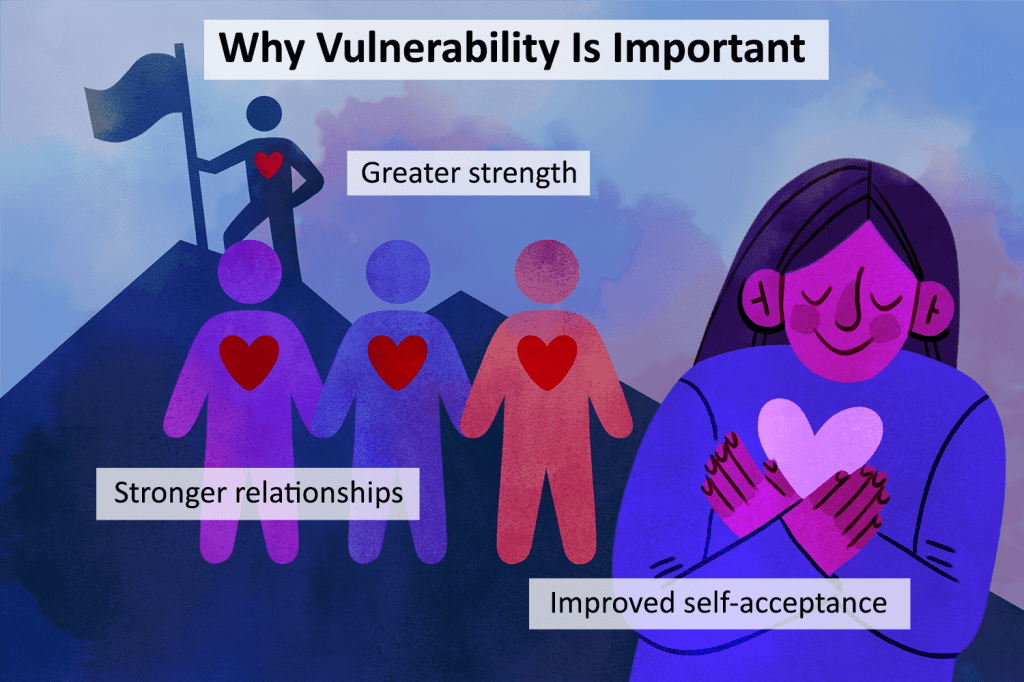
This all about exchanging our control for vulnerability. In a world that tells you to never be vulnerable – it’s a sign of weakness, so don’t do it – God comes to us and implores us to be an open book, to lay it all down and allow Him to actually see us – warts and all.

In the journey of faith, there exists this profound invitation—it’s a beckoning to embrace vulnerability before the Divine. This call is not merely a suggestion, rather, it’s a sacred pathway to encountering the depth of God’s grace and presence in our lives.

Vulnerability, in its essence, is the raw courage to lay bare our hearts before God, to strip away the façade of perfection (all the phoniness, all of the masks we put on, all of the personas we pretend to be) -all stripped down, taken off and we allow our true selves to finally be seen. It’s in this very act that we open ourselves to the transformative power of divine love, unfiltered and unconditional. When we finally do (and I’ve been there a time or two, but admittedly, I’ve tried to put the masks back on) – but in those moments, freedom happens, transformation begins, and true strength is realized.

When we approach God with vulnerability, we acknowledge our humanity—the highs and lows, the joys and sorrows, the triumphs and struggles. We cease pretending to have it all together (because we don’t) and instead we surrender to the mystery of God’s embrace, knowing that our weaknesses are met with divine strength.

Boom. Mic Drop.
It’s not simple.
It takes real courage to admit we don’t have it all worked out, or we are lacking.

In Scripture, we find numerous examples of this sacred vulnerability. The psalmists, in their poetic honesty, cry out in anguish, pour out their doubts, and express their deepest longings before God. Job, amidst his suffering, boldly questions and wrestles with God, refusing to hide his pain or confusion. And Jesus himself, in the garden of Gethsemane, bares his soul before the Father, pleading with vulnerability, “Father, if you are willing, take this cup from me; yet not my will, but yours be done.”

These are visceral.
These are real emotions.
These are authentic people, including a very human Jesus – crying out to God.

This vulnerability before God is not a sign of weakness but of profound trust—a recognition that God meets us in our authenticity and brokenness. It is through our vulnerability that we open channels for divine healing, restoration, and transformation to flow into our lives.

God doesn’t want our rote practices of religion.
He doesn’t desire our leftovers.
He can’t stand our fake pretenses and emotional pleas when our hearts aren’t truly in it.
God seeks to know us – and for you and me to get real about our relationship to Him.

Moreover, embracing vulnerability before God fosters deeper intimacy and communion with the Divine. As we actually begin to share our true fears, real doubts, and hopes openly, we invite God into the innermost chambers of our hearts, where true communion is born. It’s in these sacred moments of vulnerability that we discover God’s unconditional love, which knows no bounds and accepts us just as we are.

We don’t come before God as strangers, instead He invites us in as family, as loving children.

In a world that often values strength and self-sufficiency, the act of vulnerability before God stands as a counter-cultural testament—a radical declaration of trust and surrender. It invites us to release our grip on control and instead entrust our lives into the hands of the One who created us, knowing that in our vulnerability, God’s grace is more than sufficient.


I preached this past Sunday on Matthew 5:3, “Blessed are the poor in spirit, for theirs is the Kingdom of Heaven” When we come before God in our poverty… When we approach the Creator of the Universe in our limited temporal shells… When we stop playing church and start being the Church – we essentially are opening our hands and declaring, like the prophet Isaiah did, “Woe to me!” I cried. “I am ruined! For I am a man of unclean lips, and I live among a people of unclean lips, and my eyes have seen the King, the Lord Almighty.” (Isaiah 6:5).

Vulnerability is hard.
It takes courage.
It’s laying bare all of your ugly blemishes and embarrassing faults.
But consider what happens after.
God transforms.
God’s love and permeate.
He can truly shine in you.
Vulnerability elevates us while our continued self-sufficiency and false pretenses only serve to limit, hold back and diminish us.

So friends, what will it be?
What will it take for us to finally embrace the sacred power of vulnerability before God?
Not as a mere gesture but as a transformative practice that opens the door to divine encounters, deepens our faith, and nurtures our souls.

My prayer for each of us is that we find courage in our weaknesses, strength in our surrender, and the abiding presence of God in our every moment of this journey.

In this sacred dance of vulnerability and grace, may we discover anew the profound truth that in our weakness, God’s power is made perfect – and where true growth can be attained.

Grace and peace,
-Pastor Scott.

On The Edge of Something Beautiful – A Discussion on Death, Loss and Resurrection.

Hey friends.

Let’s talk about something we don’t often talk about directly: death. It seems macabre or taboo. It’s one of those things that hangs around the edges of our lives, a constant hum we try to tune out. We get so good at avoiding it, at pushing it away, that when it crashes into our world – the phone call, the diagnosis, the sudden absence – it can feel like a cosmic gut punch.

And in those moments, the questions come flooding in. What now? Where did they go? Is this… is this really it?

It’s okay to ask those questions. It’s okay to wrestle with them. In fact, I think it’s essential. Because honestly, a faith that doesn’t grapple with death, a faith that tries to bypass the very real pain and mystery of it all, isn’t really a faith at all. It’s just a nice idea, a comforting story we tell ourselves.

But Christianity, at its core, is about something much more disruptive, much more real than that. It’s about resurrection.

Now, I know what you’re thinking. “Resurrection? Scott, come on.” And I get it. It sounds… well, it sounds like a Sunday school answer (where the answer is always “Jesus”). But what if, just what if, it’s not just a tidy theological point? What if it’s the key to understanding everything?

Think about a seed. You plant it in the ground. It dies. It decomposes. It looks like it’s gone. Finished. But then, something incredible happens. A sprout emerges. New life. From what looked like death.

That’s the rhythm of the universe. Death and rebirth. Winter and spring. The ebb and flow of the tide. It’s woven into the fabric of everything. And it’s woven into us.

We’re so afraid of endings. We cling to what we know, to what’s familiar. But what if endings aren’t really endings at all? What if they’re transitions? Gateways? The edge of something beautiful we can’t even imagine? It’s beyond our current vision, beyond our current field of reality.

Jesus talked about this. He talked about losing your life to find it. He talked about a grain of wheat falling to the ground and dying so that it could bring forth much fruit. He wasn’t just talking about himself. He was talking about the fundamental nature of reality.

So, when we face death – our own or the death of someone we love – it’s okay to grieve. It’s okay to feel the pain. It’s okay to rage against the unfairness of it all. Grief is not the absence of faith. It’s the honest expression of love. It’s visceral, it’s raw, it’s the authentic expression of loss.

But even in the midst of that grief, we can hold onto this hope, this wild, audacious hope, that death is not the final word. (Thank God!) That what looks like the end is actually the beginning. That what seems lost is actually found, transformed, made new. We just can’t see it yet. It’s just beyond our reach. Beyond the “veil” – “So we fix our eyes not on what is seen, but on what is unseen, since what is seen is temporary, but what is unseen is eternal.” (2 Corinthians 4:18)

This isn’t about escaping the reality of death. It’s about facing it head-on, with courage and with hope. It’s about trusting that even in the darkest valley, even in the face of the ultimate unknown, there is still light. There is still life. There is still love. This should be encouraging to us all. We don’t have to fear this unknown variable, or be paralyzed by this interruption of life. It’s okay to talk about it. It’s okay to tackle this topic with the assurance that God is still present and His sovereignty has authority over both life and what we call death. New life is resurrection…we are just on the edge of it peering into something we have yet to understand.

And that, my friends, is a story worth believing in.
Grace and Peace,
-Pastor Scott.
What is Faith? -Embracing the Mystery

Okay, friends, let’s talk about faith. Not the Sunday School, paint-by-numbers kind, or the cool flannel-graphs (I loved those) but the real, gritty, gut-level stuff.

We’re diving into Hebrews 11, verses 1 through 3, and I gotta tell you, these verses? They’re fire (more cringe eye-rolling from my kids).

“Now faith is confidence in what we hope for and assurance about what we do not see.”
Boom. Right out of the gate. Confidence. Assurance.

These aren’t just warm fuzzies, they’re verbs. They’re active. Faith isn’t passive, it’s a muscle. It’s something you do. It’s leaning into the unknown, believing in the unseen.  

Think about it. How much of your life is based on things you haven’t seen? Love? Hope? Justice? You can’t hold them in your hand, weigh them on a scale, but they’re real, aren’t they? More real, sometimes, than the chair you’re sitting in.

That’s faith.

It’s the deep-down knowing that there’s more to this story than what we can see with our eyeballs.

The writer of Hebrews goes on: “This is what the ancients were commended for.” Whoa. Think about that for a second. Abraham, Sarah, Moses, all those folks we read about in the Old Testament – their faith wasn’t some abstract concept. It was how they lived. It was the engine of their lives. It propelled them forward, even when things looked absolutely insane. They were commended, not for having all the answers, but for daring to trust in the questions.

And then, the kicker: “By faith we understand that the universe was formed at God’s command, so that what was seen was not made out of what was visible.” Mind. Blown. This is huge.

The writer is saying that the very fabric of reality, the cosmos itself, came into being not from something we can see, but from something…else. Something beyond our comprehension. Something…divine.  

Think about that. Everything you see, everything you touch, everything you experience – it all originates from something invisible. Something beyond our grasp. That’s faith, right there. It’s acknowledging the mystery, the vastness, the sheer wonder of it all. It’s admitting that we don’t have all the answers, and maybe, just maybe, that’s okay. Maybe won’t don’t just stop at acknowledging this mystery, but we move closer and closer to embracing it as well.

So, what does this mean for us, today? Well, maybe it means we can stop trying to control everything. Maybe it means we can relax a little bit into the mystery – lean into it. Maybe it means we can start to trust that even when we can’t see the path ahead, there’s something there. Something good. Something beautiful. Something…more.

Maybe, just maybe, it’s time to embrace the unseen. To lean into the questions. To have faith. Not because we have all the answers (because we don’t), but because we trust that there’s a story being written, a story much bigger than ourselves.
And maybe, just maybe, we’re a part of it.

Grace and Peace,
-Pastor Scott.

“The Hypocrisy Hangover – In Search of Authentic Faith.”

Hey Friends,
let’s get real for a minute. This isn’t your feel-good Christianese blog article wrapped up in a pretty pink bow. We’re going deeper today. Let’s think critically together for a moment. We’re talking about that uncomfortable space between what we say we believe and how we’re actually living. Does that make sense? It’s that gray area in between, where no one else is looking. The real you. The one that doesn’t put on a mask and isn’t dressing or looking the part that’s phony or inauthentic.

We throw around words like “grace” and “forgiveness” like they’re hashtags. #Blessed #SoGrateful. But are we really living in the overflow of that grace? Or are we just hoarding it, keeping it locked up in our spiritual bank accounts, afraid to spend it on the messy, imperfect people around us? Silently we judge, and we mentally cast the first stone while ignoring the large boulder in our own hearts. (Okay, it’s getting personal today…sorry/not sorry).

Think about it. We’re quick to judge, quick to point fingers. We build these little kingdoms of “right” and “wrong,” drawing lines in the sand, deciding who’s in and who’s out. And then we wonder why the world looks at us and sees hypocrisy, not hope.

Ouch. That stings, right? But truth hurts sometimes. See, I’m not pointing fingers at you. I’m pointing a finger with you. Because I’m in this boat too. We’re all in this boat. We’re all wrestling with the gap between who we want to be and who we actually are. It’s a continual struggle. And, I want to be honest with you – I’m so tired of fake faith and phony Christianity.

But here’s the good news: God’s not surprised by our mess. He’s not shocked by our struggles. He knows we’re imperfect. That’s the whole point of grace! It’s not about pretending we have it all together. (so take off the mask and stop playing church just to look good) It’s about admitting we don’t have it all worked out, and then leaning into the One who does. It’s about authenticity. It’s about being real. It’s about accepting grace in our messy lives.

So, what’s the answer? It’s not another program, another self-help book, another “7 Steps to Spiritual Superstardom.” It’s simpler than that. It’s about love. Radical, messy, inconvenient love. The kind of love that crosses those lines we’ve drawn in the sand. The kind of love that sees the image of God in everyone, even the people who drive us crazy – even those who didn’t vote like us…(more toe smashing – sorry/not sorry).

It’s about getting off our spiritual high horses and getting down in the dirt with people. It’s about listening more than we talk. It’s about serving more than we’re served. It’s about extending grace even when it feels undeserved (because, let’s be honest, it always is).

This isn’t easy, friends. This is hard stuff. This is the kind of stuff that stretches us, that challenges us, that makes us squirm in our seats. It’s gonna get messy. But it’s also the kind of stuff that changes the world.

So, let’s stop playing church and start being the church. Let’s trade our judgment for grace, our apathy for action, our comfortable Christianity for a faith that’s wild, messy, and real. Let’s bridge the gap between what we believe and how we live. Because the world isn’t waiting for perfect Christians. It’s waiting for people who are willing to love like Jesus.

Let’s go be those people. Alright? Let’s go.
Grace and Peace,
-Scott.

Do You Really See the Fields?

Hey everyone,

Today I want to talk about a verse that always gets me thinking, John 4:35:

Don’t you have a saying, ‘It’s still four months till harvest’? I tell you, open your eyes and look at the fields! They are ripe for harvest.

Now, on the surface, this is a pretty straightforward instruction from Jesus. He’s basically saying, “Don’t get caught up in the ‘how’ and the ‘when.’ Just look around you and see the opportunity for connection, for love, for the transformation that comes from experiencing God.”

But here’s the thing: what if “the fields” aren’t just about people? What if they’re also about our own lives? What if Jesus is saying, “Look at your own life – your dreams, your passions, your relationships. Are you seeing the potential for harvest? Are you seeing the seeds of joy, of creativity, of love that are ready to bloom?”

We often get so caught up in the “four months” – the timeline, the expectations, the fear of failure – that we miss the abundance right in front of us. We miss the ripe fruit waiting to be gathered. We miss all of the opportunities when we overanalyze or allow fear to hold us captive.

Jesus wasn’t afraid of the harvest. He saw the potential, the beauty, the abundance. He saw the divine in the ordinary.

So, I invite you today to open your eyes and really look at “the fields.” Look at your life. Look at the people around you. Where do you see the potential for harvest? Where do you see the seeds of joy, of love, of transformation ready to burst forth? The fields and the harvest aren’t always “out there” somewhere in some sort of ambiguous place, it’s right here in front of you. So today, look at the harvest. Really see it.

And then, let’s not just see it. Let’s cultivate it. Let’s nurture it. Let’s bring in the harvest.

Grace & Peace,

-Scott.

(Please continue to support Pastorsponderings by clicking here: Buy Me A Coffee! Thanks!)

Disappointment: The Soil of Hope.

Hello friends,

It seems contradictory to group the concept of disappointment with hope, but give this pondering space to breathe and perhaps you’ll agree with me.

Disappointment. It’s a familiar ache, a sinking feeling that settles in our bones when things don’t go as planned. Dreams deferred, expectations shattered, the weight of unmet potential – it can feel suffocating.

But what if disappointment isn’t the enemy? What if it’s actually the fertile ground where something new and unexpected can grow?

Think about it. Have you ever experienced a crushing disappointment that ultimately led to a path you never could have imagined? A lost job that forced you to pursue your true passion. A heartbreak that opened your eyes to a deeper capacity for love.

Disappointment, in its raw, unfiltered form, can feel brutal. It can shake us to our core, strip us bare, and leave us questioning everything. But within that emptiness, there’s a space for something new to emerge. A space for creativity, for resilience, for a deeper understanding of ourselves and our place in the world. It’s like shucking off an outer shell only to reveal something so much better.

This isn’t about denying or minimizing the pain of disappointment. It’s about recognizing that within that pain lies a seed of possibility. It’s about trusting that even in the darkest of nights, there’s a sunrise waiting…if we’re patient.

So, the next time you find yourself grappling with disappointment, try to see it differently. See it not as an ending, but as a turning point. See it as an invitation to explore new paths, to cultivate new dreams, to discover a deeper, more authentic version of yourself.

Hope isn’t about ignoring the pain. It’s about finding the courage to believe that something beautiful can emerge from the ashes. It’s about trusting that even in the midst of the storm, there’s a quiet strength within you, a resilience that will see you through.

So trust the process as God prepares the path, even in our current disappointments – He is there.
Grace and Peace,
-Scott.

The Weight of Religion Vs. The Lightness of Love…

Okay, let’s talk about religion.

Not the big “R” Religion, with its capital letters and booming pronouncements. I’m talking about the “r”eligion that creeps into our hearts and makes us feel superior, judgmental, and utterly disconnected from the very love we’re supposed to be spreading.

You know the type. The folks who wear their faith like a badge of honor, a shield against the messy, unpredictable reality of human life. They quote scripture like a weapon, wielding it to condemn others while conveniently ignoring the parts about grace, mercy, and radical forgiveness. Their messages divide people rather than unite them. I’m sure we’ve heard them a time or three…

This kind of “religion” is a heavy burden, a suffocating weight that crushes the spirit. It turns faith into a rigid set of rules, a checklist of dos and don’ts, rather than a vibrant, life-giving relationship with the Divine. It’s a performance, a desperate attempt to earn God’s approval, to prove our worthiness.

But here’s the thing: God isn’t impressed by our piety. God isn’t concerned with how many times we kneel or how loudly we sing, or how high our rank is in the church we serve. He’s not impressed.

Instead, God is drawn to the broken, the hurting, the ones who stumble and fall. God is drawn to those who recognize their own need for grace, who extend compassion to others, who see the divine spark in every human being.

Jesus, in his radical love, challenged the religious elite of his day. He called them out from their bully pulpits and political platforms. He dined with sinners, healed the outcast, and overturned tables in the temple, disrupting the comfortable order of things. He called us to a life of radical service, to love our enemies, to feed the hungry, to clothe the naked. He called us to embody love, not just talk about it. (far too many people just talk about it but are devoid of any kind of action, because it’s easier and far less labor-intensive.)

True faith isn’t about adhering to a set of rules or checking off boxes on a spiritual to-do list. It’s about living a life of love, a life of compassion, a life of radical selflessness. It’s about letting go of our need to be right, to be seen, to be better than others, to control the narrative.

It’s about recognizing our own brokenness, our own need for grace, and extending that same grace to everyone we encounter. In a world full of turmoil, peace is something that’s precious and yet so difficult to find. It’s also about finding joy in serving others, in lifting them up, in walking alongside them on their journey.

So let’s shed the weight of religion, the suffocating weight of rules and judgments. Let’s burn our bully pulpits and our divisive platforms. Instead, let’s embrace the lightness of love, the freedom that comes from living in harmony with the Divine. Let’s choose to be a light in the darkness, a beacon of hope in a world that desperately needs it.

Let’s live out our faith, not as a performance, but as a dance – a joyful, messy, and unpredictable dance of love.
Grace and Peace.
-Pastorsponderings.

5 Truths for the Abandoned Leader: Finding Refuge in God’s Presence.

Hey Friends,

I’m going to go off-script today. I apologize in advance. This blog post is for all of my Pastor and Lay leader friends. I write these words to encourage you. So, as Jesus said, “he who has ears to hear…”

I know what it feels like to stand in the pulpit, to shepherd God’s people, and yet, at times, to feel utterly alone. The weight of ministry can press down on us like a heavy burden, leaving us feeling abandoned and isolated. You may feel like no one truly knows what you do. Some assume you just show up on Sundays and you kick back Monday through Saturday, but we both know that is far from the truth. No one knows about the phone calls and the texts and how sometimes you feel like you have to hold all of those tenuous relationship lines and if you don’t it will all come crashing down. People will get hurt and some will leave the church.

You may feel like no one else gets you.

But hear this: you are NOT alone.

In those moments of solitude, when it seems like no one understands the struggles you face, remember that Jesus himself experienced the depths of isolation. In his darkest hour, his closest friends slept while he prayed alone in Gethsemane. He understands the ache in your heart and the weariness of your soul.

I want to encourage you with these 5 truths today:

1. God Is Always Present Even when it feels like everyone else has left, God remains steadfast. He promises never to leave us nor forsake us (Deuteronomy 31:6). In your loneliness, draw near to him. Pour out your heart in prayer, knowing that he hears every word.

2. Find Strength in Community Reach out to fellow pastors and leaders who can empathize with your journey. Share your burdens with trusted friends who can pray for you and encourage you. Ecclesiastes 4:9-10 reminds us that “two are better than one, because they have a good return for their labor: If either of them falls down, one can help the other up.” We need each other. Take the time to connect with peers in your community. Establish healthy relationships. I don’t care if you’re an introvert or an extrovert, we all need the strength of the right kind of community behind us. When we have like-minded friends, we have people who will say, “I’ve got your back, I’m here for you!” Additionally, when we take the time to seek out these like-minded folks, we begin to build a new community of support and soon we discover that others are also searching for the same space of commonality and comradery.

3. Embrace Vulnerability It’s okay to admit when you’re struggling. Vulnerability is not a sign of weakness but of authenticity. James 5:16 encourages us to “confess your sins to each other and pray for each other so that you may be healed.” As I write this section, I also acknowledge that there are some leaders out there who will misinterpret “struggling” as “not capable” and I want to strongly discourage any leader from rushing to that conclusion. Vulnerability is hard, but there is great strength in letting go of the notion that pastors and leaders have to have it all worked out and you have to have some sort of spiritual perfection to lead. Get over it. Pastors and leaders are just as susceptible to sin and temptation as anyone else. Guard your hearts (Prov. 4:23), and also embrace the need for accountability and vulnerability in your ministry. You should not live in a bubble or an island. When we pop the bubble and join reality, we begin to discard some of the feelings of abandonment and loneliness. In some ways, it’s arrogant to think that no one else gets us, or knows what we are going through. So get serious about popping the bubble and establishing a spirit of vulnerability and surround yourself with trustworthy people (refer back to step 2).

4. Rest in God’s Sovereignty Remember that God is in control, even when circumstances seem overwhelming. Romans 8:28 assures us that “in all things God works for the good of those who love him, who have been called according to his purpose.” It sounds trite. It’s almost a catchphrase or something you see printed on a cup or an inspirational poster. But, I hope that the words Paul writes in Romans 8:28 strike your heart and are not just utterings for a momentary fix of encouragement. God isn’t sovereign some of the time. He’s not a God of inconsistency. He is constant, and his authority illuminates the darkest corners of our world.

5. Focus on Eternal Impact Ultimately, our labor in the Lord is not in vain (1 Corinthians 15:58). Keep your eyes fixed on the eternal impact of your ministry. Every soul touched, every life transformed, is a testament to God’s faithfulness through you. The problem is we want to see the impact of our ministry. We desire to see transformed lives and for them to line our pews on Sundays. But I think we get it backward sometimes. Jesus didn’t fill pews in a church, He went to people. He gave them value. It wasn’t about some statistical report. He loved people, showed compassion, and impressed upon them to live a better way.

Perhaps some of our feelings of abandonment stem from living in a world where we worship numbers and not God. Our world is so focused on numerical success and achieving bigger and better things, but Jesus gave us an example that is countercultural to all of that human need for notoriety, and chasing statistical perfection. The true impact of your consistent heart of servant leadership may never be seen by the world but it will be celebrated in God’s Kingdom. So, stop chasing numbers and perfection. Kill the super pastor that you envisioned in your mind. Live humbly. It will drastically reduce the stress that you feel when you seek performance instead of worship.

So friends, in the midst of your feelings of abandonment, please know that God sees you, He loves you, and He is with you. He’s not aloof. He’s not kicking back somewhere “wishing you the best”.

So take comfort in his presence. He is very near to you, right now in whatever situation you find yourself in today. He knows. Find strength in community, and trust in his perfect plan. You are not alone in this journey of ministry. Keep fighting. Keep serving. Don’t let up or quit. You got this, and, most importantly – He believes in you.

Grace and Peace,
-Pastorsponderings.

The Un-Muscling of the Soul.

Hey there, friends.

We all know the drill: “Forgive and forget.” Easier said than done, right? Forgiveness. It’s one of those words that gets thrown around a lot, but honestly, what does it even mean?

To me, forgiveness isn’t about pretending something hurtful never happened. It’s not about condoning bad behavior or letting people off the hook for their actions. Forgiveness, at its core, is about un-muscling your soul.

Think about it. When someone hurts us, it’s like they’ve thrown a punch. We clench our fists, tense our shoulders, and hold onto that anger. We build a fortress around our hearts, convinced that holding onto that pain somehow gives us power. But here’s the thing: holding onto anger is exhausting. It’s like constantly carrying a heavy weight around with you. It drains your energy, steals your joy, and keeps you stuck in the past.

Forgiveness isn’t about letting the other person off the hook. It’s about setting yourself free. It’s about choosing to release the grip of that anger, that resentment, that bitterness. It’s about choosing to stop letting the past dictate your present.

Now, I know what you’re thinking: “But Scott, what about justice? What about accountability?”

Justice is important. Accountability is important. But forgiveness doesn’t negate those things. They can exist side-by-side. Forgiveness is about your inner healing. It’s about choosing to break the chains of the past and step into a life of freedom and peace.

Forgiveness isn’t always easy. Sometimes it feels impossible. But I believe that true freedom comes when we choose to un-muscle our souls, to release the grip of the past, and to step into a life of love and grace.

What do you think? What does forgiveness mean to you? I’d love to hear your thoughts.

Grace and Peace,
Pastorsponderings.

Peace, Trouble, and Courage in the Chaos…

There’s this moment in John 16:33 that I keep coming back to. Jesus’ words echo like they’re meant to vibrate through the centuries, landing in our ears right when we need them most: “I have told you these things so that in me you may have peace. In this world, you will have trouble. But take heart! I have overcome the world.”

What a line. It’s like Jesus drops this truth bomb right into the middle of everything. And it’s not fluffy, feel-good talk—he’s telling it like it is. This world, it’s full of trouble. Chaos, pain, uncertainty. You don’t need me to list it out because you already know it, right? It’s the breaking news that scrolls across your screen. It’s the hard conversations you’ve had this week. It’s the weight you’ve felt pressing on your chest when you wonder if you’re going to make it through.

But Jesus doesn’t stop with the trouble. He says, take heart. Which isn’t just a gentle pat on the back. It’s a rallying cry. A declaration. It’s like he’s saying, “Yes, it’s hard. Yes, it’s heavy. But don’t let that be the end of the story.”

Because here’s the kicker: I have overcome the world.

And you start to feel the weight of those words, don’t you? This isn’t just some vague optimism. It’s Jesus saying, “I’ve faced it all. Every ounce of pain, betrayal, and darkness. And I’ve come out the other side.”

Now, this isn’t a promise that all your troubles will vanish, like some magic trick. It’s not Jesus saying, “Follow me and life will be smooth sailing.” No, it’s deeper than that. It’s a promise that trouble doesn’t get the final word. That the darkness doesn’t win. That whatever you’re facing right now doesn’t have the power to undo the hope and peace that’s found in him.

So, what does it mean for us to take heart? Maybe it’s leaning into the truth that we’re not alone in this. That we’re held by a love that’s stronger than any storm we’re weathering. Maybe it’s a reminder that peace isn’t found in everything going perfectly, but in the presence of the one who’s already conquered the chaos.

Taking heart looks like courage, doesn’t it? But not the kind of courage that pretends everything’s fine. It’s the courage to admit that things are hard and still trust that hope is real. It’s finding peace, not because the world is trouble-free, but because Jesus has overcome the trouble.

And let’s not miss this—“I have overcome the world” is a now-and-not-yet kind of promise. There’s a victory that’s already happened, and there’s a renewal we’re still waiting for. We live in that tension, don’t we? But even in the tension, there’s peace to be found.

So wherever you are today, whatever trouble you’re carrying, hear these words: Take heart. Take heart because you’re not alone. Take heart because the story isn’t over. Take heart because Jesus has overcome, and that changes everything.

May you find courage in the chaos, hope in the heartbreak, and peace in the presence of the one who’s with you every step of the way.

Grace and Peace.
-Pastorsponderings.

Blog at WordPress.com.

Up ↑