A Thanksgiving Devotional: Forgiveness, Reconciliation, and the Courage to Try Again

Every Thanksgiving, we talk about gratitude—giving thanks for blessings, family, food, and the goodness of God. But sometimes the things we’re most thankful for are the things God heals inside us: old wounds, buried regrets, lingering anger, unresolved relationships.

And strangely enough, a lesson in forgiveness shows up in Home Alone through the quiet, misunderstood character known as Old Man Marley. (Do you remember him?)
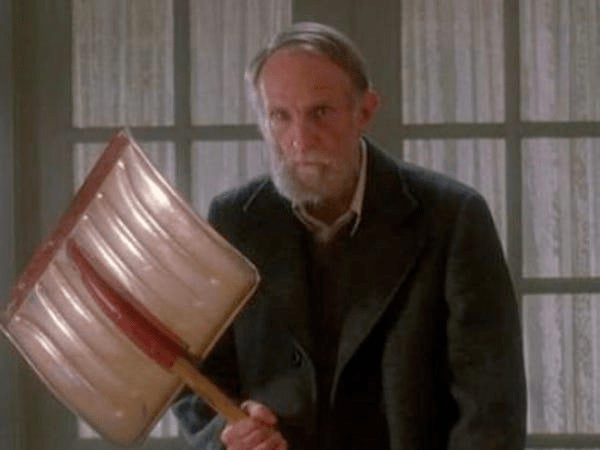
We first see him through Kevin’s fearful eyes—pale, silent, distant, dragging a shovel across the snowy sidewalk. But later, sitting together on a church pew, Marley finally opens up. He confesses that he hasn’t spoken to his son in years because of a painful argument. Pride sat heavy between them. Fear kept him from trying again. Regret made him feel paralyzed. And the saddest part? He watches his granddaughter sing in the choir but doesn’t go near her… because reconciliation feels impossible. It’s a like lesson for all of us and the baggage of anger, resentment and unforgiveness that many of use lug around with us. Some call it just a ‘chip on the shoulder’ but it’s more of an abscess on the heart which prevents any forward momentum because we’re anchored to this burden that could potentially be lifted if we were to just expose it and release it.

Maybe you’ve been there.
Maybe Thanksgiving brings you around people you love but don’t know how to talk to anymore, and so you’ve quit trying.
Maybe the table is set, but something unsaid still sits between you and someone else, and the weight of that baggage keeps nagging at your heart.
Maybe gratitude is hard this year because bitterness is louder than the quiet thanks, or maybe it’s overlooked altogether because of this mountain of hurt piled up at the door of your heart.

Scripture doesn’t ignore this ache. It speaks into it with both truth and tenderness. I want to explore this for just a moment. And I hope you’re still reading this:

1. Forgiveness Is God’s Invitation to Freedom

Bear with each other and forgive one another… Forgive as the Lord forgave you.
Colossians 3:13

Forgiveness isn’t excusing what happened. It’s not pretending the pain didn’t matter.
Forgiveness is choosing not to let the wound have the last word. If we do, it will just continue to fester in our souls and make us even more bitter in life.

When Marley admitted, “I’m afraid to call my son,” it wasn’t the conflict that trapped him—it was the fear of taking the first step. Forgiveness begins when we decide, “I won’t let fear freeze me anymore.” It takes real guts to be the one to initiate the forgiving. Most are reluctant to even entertain the notion because all-to-often pride gets the better of us.

2. Reconciliation Requires Courage, Not Certainty

If it is possible, as far as it depends on you, live at peace with everyone.
Romans 12:18

God doesn’t say reconciliation will always be easy. Or fast. Or neat. Or even possible – there’s a big “if” hanging out in this verse. Sometimes the other person isn’t ready. Sometimes the relationship may never look the same.

But as far as it depends on youyou can initiate peace.
You can send a text. Make a call. Offer a prayer. Turn toward the possibility instead of away from it.

Back to Home Alone and this scene for just another moment:
Kevin tells Marley, “You should call him.” It’s a simple, childlike nudge toward hope. Isn’t it interesting that children have the tendency to hitting the heart of the matter? If we grown-ups would just become wise like kids again. (Somewhere I hear Jesus scolding His disciples for trying to shoo off a bunch of kids from talking to Him.) Simplistic faith usually has the direct approach to life, while we ‘adults’ tend to overcomplicate every avoidance and insult. Why can’t we become child-like in our faith again? What’s stopping us?

3. Thanksgiving Isn’t Complete Without Grace

Blessed are the peacemakers, for they will be called children of God.
Matthew 5:9

At the end of Home Alone, there’s a brief moment easily missed unless you’re watching for it:

Marley stands outside with his son—talking, laughing, embracing. His granddaughter runs into his arms.
The family he thought he lost… restored. The snow falls. The world is quiet.
Forgiveness has opened a door he thought was locked forever.

That’s what grace does.
It rebuilds.
It reopens.
It releases both the wounded and the one who caused the wound.


A Thanksgiving Reflection

Here’s a quick reflection for each of us to consider.
This Thanksgiving, before the turkey hits the table, maybe take a moment to ask:

  • Is there someone I need to forgive, even if only in my heart for now?
  • Is there someone I need to reach out to, as far as it depends on me?
  • Is fear keeping me from trying, when grace is inviting me forward?

God specializes in resurrection—not just of souls, but of relationships.
Even the frozen, silent ones. Even the ones we think are beyond repair.

And who knows?
Like Old Man Marley, this might be the year something long-broken finally comes home.
Give this some serious though friends. Don’t live a life of bitterness when grace and even peace are possible for you right here and now. Find the courage and reach out.

Prayer:
Lord, as we give thanks this season, soften our hearts where they’ve grown hardened. Give us courage where fear has settled in. Help us forgive as You have forgiven us, and guide us toward peace where reconciliation is possible. Amen.


Forgiveness and Reconciliation: Why Is It So Hard?

-Pastor Scott

Hey there, you beautiful, messy, wandering souls. Welcome to Faith Ponderings, where we don’t just ask the big questions—we lean into them, poke at them, let them breathe. I’m Pastor Scott, your fellow traveler, your co-wonderer, your let’s-get-curious-about-the-hard-stuff companion. No quick fixes here, no bumper-sticker theology. Just us, the Spirit, and a whole lot of holy mystery.

Today, we’re diving into something that’s both a knife to the heart and a balm to the soul: forgiveness. And not just forgiveness, but reconciliation—that next step, that harder step, where you try to rebuild something after it’s been shattered. Why is it so hard? Like, so damn hard? Why does it feel like you’re climbing a mountain with no summit, lugging a backpack stuffed with rocks labeled “hurt,” “betrayal,” and “they don’t even get it”?

Grab a coffee, a journal, or just a quiet corner of your soul. Let’s sit with this. Let’s wrestle. Let’s see where the Spirit takes us.


The Gritty Beauty of Forgiveness

You ever notice how we love the idea of forgiveness? It sounds so good on paper. “Forgive and forget.” “Let it go.” Cue the Disney soundtrack, right? But then you try it, and it’s like… whoa. This isn’t a Hallmark card. This is gritty. This is raw. This is you staring at the person who hurt you—or maybe just their ghost in your memory—and your heart screams, “I can’t. I won’t. They don’t deserve it.”

And here’s the thing: that feeling? It’s real. It’s human. It’s not wrong to feel it. Forgiveness isn’t a transaction, like paying a bill or checking a box. It’s a journey. A process. A tearing-open of your soul to say, “I’m not gonna let this wound define me anymore.” It’s a gift you give yourself, with God’s help, to set your heart free.

But reconciliation? Oh, that’s another beast. That’s saying, “Not only am I letting go of this pain, but I’m gonna try to rebuild something with you. Something new. Something fragile.” And that’s where it gets messy. Because while forgiveness is yours to give, reconciliation takes two.


What Does Scripture Say?

Let’s go to the Bible, because it doesn’t shy away from this mess. In Matthew 18:21-22, Peter—good ol’ Peter, always asking what we’re thinking—comes to Jesus and says, “Lord, how many times should I forgive my brother or sister who sins against me? Up to seven times?” Seven! Peter’s feeling generous. That’s a lot of forgiveness. But Jesus? He blows it up. “Not seven times, but seventy-seven times.” Or in some translations, seventy times seven. Jesus is saying, “Peter, stop counting. Forgiveness isn’t a math problem. It’s a way of being.”

But here’s what gets me: Jesus doesn’t say, “And then reconcile every time.” Forgiveness is one thing—you release the debt, you let go of the grudge. Reconciliation, though? That’s a bridge you build together. It takes trust, rebuilt brick by brick. It takes the other person showing up, owning their stuff, saying, “I see the hurt I caused.” And sometimes… they don’t. Sometimes they can’t. Sometimes they won’t.

So what do you do then? Do you keep forgiving, seventy-seven times, while they keep swinging? Or is there a point where you say, “I forgive you, but I can’t walk with you anymore”? That’s the tension. That’s where we sit, in the ache, asking, “God, what now?”


Joseph’s Story: A Slow, Cautious Dance

Let’s look at Joseph in Genesis 45. This guy’s brothers sold him into slavery. Slavery. Years of betrayal, pain, abandonment. And yet, when he’s standing there, powerful in Egypt, and his brothers show up, he doesn’t just forgive them—he weeps, he embraces them, he reconciles. But it wasn’t instant. It took years. It took his brothers showing some remorse, some change. And even then, Joseph tested them. He didn’t fling open the door and say, “All good!” He watched. He waited. He protected his heart.

I wonder… is that what reconciliation looks like? A slow, cautious dance? A willingness to hope, but not a blindness to reality? Because we love the story of the prodigal son in Luke 15:11-32—the father running out, arms wide, party planned. It’s beautiful. But what if the son came back and said, “I’m not sorry, I just need more cash”? Would the father still throw the party? Or would he say, “I love you, I forgive you, but we’re not there yet”?


The Tension of Reconciliation

This is why it’s so hard. Forgiveness is yours to give—it’s a gift you offer, even if the other person never receives it. But reconciliation? That’s a bridge you build together. And sometimes, the other side isn’t ready to meet you halfway. Sometimes, they’re not safe to build with. Maybe they’re still wielding the same weapons that hurt you. Maybe they’ll never say sorry. And that’s where we need wisdom. That’s where we need prayer, community, maybe even a good therapist to help us sort through the wreckage.

Some of us are carrying wounds from people who will never apologize. A parent who failed you. A friend who betrayed you. A spouse who broke your trust. And the church—oh, the church—sometimes tells us, “Just forgive! Move on! Be the bigger person!” But what if being the bigger person means saying, “I forgive you, but I need boundaries”? What if it means loving from a distance? Is that less holy? Or is that just… human?

Psalm 147:3 says, “He heals the brokenhearted and binds up their wounds.” I love that. God’s not standing there saying, “Hurry up and forgive so I can love you.” He’s binding up your wounds. He’s healing your broken heart. And maybe forgiveness is part of that healing—not for them, but for you. To set you free. To say, “This hurt doesn’t get to own me anymore.”


Forgiveness vs. Reconciliation: A Holy Distinction

Here’s where I’m landing, friends. Forgiveness is a gift you give yourself, with God’s help, to let go of the poison. It’s saying, “I’m not gonna let this grudge eat me alive.” It’s a solo act, a sacred release. Reconciliation, though? That’s a mutual project. It’s a bridge you build, but only when it’s safe, only when there’s shared work. Sometimes, reconciliation means restoring a relationship to what it was. Other times, it means building something new—something different, something that honors the truth of what happened.

And God? He’s in both. He’s in the letting go and the rebuilding. He’s in the tears and the boundaries. He’s in the “I forgive you” and the “I can’t trust you right now.” He’s writing a story of healing, even when it’s messy.


Where Are You in This?

So, where are you in this? What’s stirring in your heart? Are you stuck on forgiving someone, wrestling with that seventy-seven times thing? Or are you wondering if reconciliation is even possible—or safe? Maybe you’re carrying guilt because you can’t reconcile, and you’re wondering if that makes you a bad Christian. Can I just say… you’re not alone. This is hard. It’s supposed to be hard. It’s holy work, but it’s not instant. It’s a journey.

Here’s a challenge: Take a moment to reflect. Journal it out, pray it through, or just sit in the quiet. Ask yourself:

  • What hurt am I carrying that I need to release?
  • Is there a relationship where reconciliation is possible, or do I need boundaries instead?
  • How is God inviting me to heal, right here, right now?

And if you’re feeling stuck, share your ponderings. Drop a comment, send me a message, or talk it out with someone you trust. We’re in this together.


A Closing Prayer

Let’s close with a breath. Inhale… exhale… God, you see the hurts we carry. You see the walls we’ve built, the bridges we’re scared to cross. Heal us. Guide us. Show us how to forgive, how to love, how to be whole. Amen.

Thanks for being here, you beautiful souls. This is Faith Ponderings, and I’m Pastor Scott. Keep asking, keep wrestling, keep trusting. Peace to you.


What’s stirring in you? Share your thoughts in the comments below. Let’s keep pondering together.

Forgiveness is a Fistfight

Hey, friends. Welcome back to Pastor’s Ponderings. This is where we crack open the ancient words, let them breathe, and see what they kick up inside us. Today, I want us to sit with Ephesians 4:32—a single verse that’s quiet on the surface, but man does it hit like a freight train. Are you ready to step into it? Here goes:

Paul’s writing to the Ephesians—a scrappy bunch of Jesus-followers who are fumbling their way through faith—and he lays this down: “Be kind and compassionate to one another, forgiving each other, just as in Christ God forgave you.” That’s it. Be kind. Be compassionate. Forgive. Sounds simple, doesn’t it? Like something you’d stitch on a throw pillow or a t-shirt and call it a day. It sounds so simple and inspirational –

Except… it’s not. Not even a little.

Let’s start with the opening jab: “Be kind and compassionate to one another.” Sure, it’s got that warm, fuzzy vibe—like smiling at strangers or holding the door. But dig deeper. Kindness isn’t just polite; it’s gritty. It’s choosing softness when everything around you is yelling for you to toughen up. And compassion? That’s not standing on the edge with a pep talk—it’s climbing down into the muck with someone, feeling the weight they carry. Paul’s saying, do that. With each other. Not just the easy ones, the ones who get you—but the prickly ones, the loud ones, the ones who cut you off in traffic or mid-sentence – THOSE ONES.

Then comes the knockout punch: “Forgiving each other, just as in Christ God forgave you.” Oh, man. Forgiveness. That word’s a live wire, isn’t it? We all nod along in church, but when it’s time to actually live it—when it’s that person, that wound—it feels like trying to bench-press a truck off your soul.

Here’s the hard part, the challenge: What if Paul’s not just handing us a checklist here? What if he’s holding up a mirror for us to look at how we are currently conducting “forgiveness”? Because kindness—it’s brutal when you’re exhausted. Compassion slips away when you’re burned out or burned by someone. And forgiveness? That’s a monster. You’ve got every right to clutch that grudge—it’s yours, you built it, it shields you. But Paul’s saying, drop it. Not because they’ve earned it, but because God forgave you.

Pause there for a second.
God forgave you—not with a half-hearted “eh, fine,” but in Christ. In this messy, bloody, breathtaking act of love that says, “I see it all—the screw-ups, the shame, the stuff you bury—and I’m still here, I’m not going anywhere!”
That’s the standard. That’s the “just as.”

So let’s get real: Who are you NOT forgiving? Who’s that face flashing in your mind right now? We’ve all got one—or a few. The coworker who twisted the knife. The friend who vanished. The family member who keeps swinging the same tired hatchet. Maybe you’re thinking, “Scott, you don’t understand—they don’t deserve it.” You’re right. They don’t. But neither did you. Neither did I. That’s the gut-punch truth of it.

Now flip it—here’s the spark, the inspiration: What if forgiveness isn’t weakness? What if it’s the toughest, fiercest thing you’ll ever do? It’s not caving in; it’s rising up and saying, “This pain doesn’t get to own me anymore.” Kindness, compassion, forgiveness—they’re not soft. They’re radical. They’re how you snap the chain—the one where hurt just keeps birthing more hurt. You plant something else. You scatter grace. Yeah, it’s hard—it’s so hard—but it’s how the ground shifts.

Paul’s not asking us to play pretend. He’s calling us to live it—because we’ve been lived into it. God’s forgiveness isn’t some abstract idea; it’s a force, tugging us toward something bigger. So maybe today, we start small. Just like those baby steps in that old movie: What about Bob? One kind word to someone who doesn’t see it coming. One flicker of compassion when we’d rather look away. One chip in the fortress of that grudge we’ve fortified. Not the whole wall—just a crack. And we see where it leads.

Ephesians 4:32 is a whisper AND a roar. It’s a dare to be human in a way that rewrites everything. So, are you in? Let’s try it. Baby step it. Let’s see what takes root when we live like we’re forgiven.

Thanks for sitting with me here at Pastor’s Ponderings today. Keep wrestling, keep wondering, keep reaching for the light, and if you have a certain topic you would like us to tackle together, please leave it in the comments below.
I’ll catch you in the next one.
Grace & Peace,
-Pastor Scott.

The Roof Crashers In Mark 2.

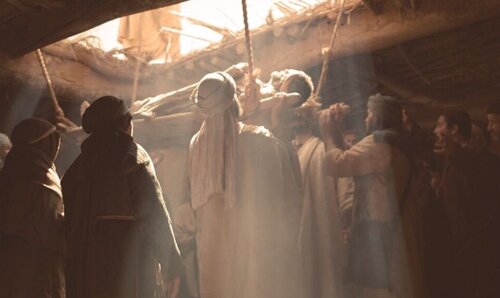
Hey, let’s step into this wild little story from Mark 2. Picture it: Jesus is in Capernaum, and the buzz around Him is electric. People are jammed into this house—shoulder to shoulder, spilling out the door, all trying to get close to this guy who’s saying things that make their hearts beat faster. And then, out of nowhere, there’s this commotion. Four friends show up, carrying a paralyzed man on a stretcher. They can’t get in—too many bodies, too much noise. So they do something insane. They climb up on the roof, start digging through it—tearing it apart, tile by tile—and lower their friend down, right into the middle of everything. Right in front of Jesus.

Can you feel that? The audacity. The desperation. The sheer, beautiful chaos of it all.

The Ones Who Won’t Stop

These four friends—they’re not polite. They don’t wait for an invitation or a clear path. They’ve got this guy, their friend, who’s been stuck—paralyzed, sidelined, forgotten—and they’re done with the excuses. They’re not just hoping for a miracle; they’re making a way for one. This is love with dirt under its fingernails. It’s faith that doesn’t sit still.

And isn’t that us, sometimes? Or at least, isn’t that who we want to be? The ones who refuse to let the crowd—whether it’s people, or fear, or doubt—keep us from getting to Jesus? Because maybe the roof isn’t just clay and straw. Maybe it’s shame. Maybe it’s guilt. Maybe it’s the voices saying, “You’re not enough.” And these friends—they’re like, “No. We’re crashing through.”

Isaiah 53 whispers something here: “Who has believed our message?” These guys did. They believed Jesus was more than a teacher, more than a healer. They believed He was worth the mess. And that belief? It moved them.

The Unexpected Word

So, the man’s down there, dangling in front of Jesus, and the room’s holding its breath. What’s He going to do? Heal him, right? That’s the obvious play. But Jesus looks at this guy—really looks at him—and says, “Son, your sins are forgiven.”

Wait. What?

Not “Stand up.” Not “Be healed.” But “Your sins are forgiven.” It’s like Jesus is rewriting the script. Everyone’s expecting a physical fix, but He goes deeper, straight to the soul. Because maybe the real paralysis isn’t in this man’s legs—it’s in his heart. Maybe he’s been carrying something heavier than a broken body. And Jesus sees it. He always sees it.

Isaiah 53:5 echoes through this moment: “He was pierced for our transgressions… by His wounds we are healed.” This isn’t just about a mat and some dusty feet. This is about a Messiah who takes our junk—our sin, our pain—and says, “I’ve got this.” Forgiveness isn’t a side dish here; it’s the main course. Jesus is saying, “You’re not just a body to me. You’re a soul. You’re mine.”

The Power That Proves It

The religious folks in the corner—they’re not happy. “Who can forgive sins but God alone?” they mutter. And Jesus—hears them, feels their skepticism—and He doesn’t flinch. He turns it into a question: “Which is easier—to say ‘Your sins are forgiven’ or ‘Get up and walk’?” Then, without missing a beat, He tells the man, “Take your mat and go home.” And the guy does. He stands up, grabs that mat, and walks out—right through the stunned crowd.

This is it. This is the mic-drop moment. Because forgiving sins? That’s invisible. Anyone can say it. But making a paralyzed man walk? That’s proof. That’s power. And Jesus ties them together—forgiveness and healing, spirit and body—like they’re two sides of the same coin. He’s not just a healer. He’s God in flesh, the Messiah Isaiah saw coming: “Surely He took up our pain and bore our suffering” (Isaiah 53:4). This is divinity crashing into humanity, right there in the dust.

The Invitation

So here’s the thing: This story isn’t just about a guy on a mat. It’s about us. Who are we in this scene? Are we the friends, tearing roofs off to get someone to Jesus? Are we the paralyzed one, needing to hear “Son, daughter, you’re forgiven”? Or are we the crowd, watching, wondering what it all means?

Maybe it’s all three. Maybe we’re invited to crash through whatever’s holding us back, to trust that Jesus sees the stuff we can’t even name, and to stand up in the power He’s already given us. Because this Jesus—He’s not just fixing legs. He’s remaking lives. He’s the suffering servant of Isaiah 53, the one who carries our wounds so we don’t have to.

So take a breath today. Lean into this story. Maybe close your eyes for a second or two and picture yourself on that mat—or maybe holding the ropes. What’s the roof in your life right now? What’s keeping you from Jesus? Name it. Whisper it. And then hear Him say, “Your sins are forgiven.” Let that sink in. It’s not about earning it—it’s about receiving it. Now, what’s He saying next? “Get up and walk”? Maybe it’s time to move. Maybe it’s time to carry someone else. Spend a minute with that. Let it stir you. Because this story? It’s still alive. It’s still yours.

Grace, Peace & Empty Mats.
-Pastor Scott.

The Un-Muscling of the Soul.

Hey there, friends.

We all know the drill: “Forgive and forget.” Easier said than done, right? Forgiveness. It’s one of those words that gets thrown around a lot, but honestly, what does it even mean?

To me, forgiveness isn’t about pretending something hurtful never happened. It’s not about condoning bad behavior or letting people off the hook for their actions. Forgiveness, at its core, is about un-muscling your soul.

Think about it. When someone hurts us, it’s like they’ve thrown a punch. We clench our fists, tense our shoulders, and hold onto that anger. We build a fortress around our hearts, convinced that holding onto that pain somehow gives us power. But here’s the thing: holding onto anger is exhausting. It’s like constantly carrying a heavy weight around with you. It drains your energy, steals your joy, and keeps you stuck in the past.

Forgiveness isn’t about letting the other person off the hook. It’s about setting yourself free. It’s about choosing to release the grip of that anger, that resentment, that bitterness. It’s about choosing to stop letting the past dictate your present.

Now, I know what you’re thinking: “But Scott, what about justice? What about accountability?”

Justice is important. Accountability is important. But forgiveness doesn’t negate those things. They can exist side-by-side. Forgiveness is about your inner healing. It’s about choosing to break the chains of the past and step into a life of freedom and peace.

Forgiveness isn’t always easy. Sometimes it feels impossible. But I believe that true freedom comes when we choose to un-muscle our souls, to release the grip of the past, and to step into a life of love and grace.

What do you think? What does forgiveness mean to you? I’d love to hear your thoughts.

Grace and Peace,
Pastorsponderings.

At the Well…


Image


He seated himself beside the well 
sun beating down, heat of the day
swelling and shimmering in the heat
a mirage swiveled and swirled in the distance
she came, reputation and all
she walked the dusty path alone
she bore the scorn and shame
every day like this.

He saw her pensively waiting there,
waiting for Him to move on  
waiting for Him to step aside
so that cool water, crisp and clean
could be drawn and taken home…
Yet He doesn’t falter
He looks at her, as if He knows her shame.
Yet, undeterred He remains
no look of disgust
of retribution
of Anger
He looks at her, 
asks for a drink
then offers her something more
something lasting
Identities are shared, 
His sends her running back into town
with news beyond her reputation
beyond her guilt and fear of the town’s gossip…
Messiah – with Eternal Water
drink deeply, receive and share
it is for the whosoever…
after all.  


Forgiveness and Peace

Image

Anger

            Bleeds

Image

  Red


Sometimes 

                                          the things

                      we 

                                                                   said

make 


                            jagged 

Image


broken 

                                              beds…


we  lie in them

                       the cumbersome

oozing regret.


Image

                                                                BUT

Reconciliation 

                                   is Not

NOT

Image

                             too far away. 


Make a break

Image

get away

                         turn your 

pride  


                                      into 


                                                                                           Forgiveness…

Image

                         clean

                                                                       the mess

Image

                                            confession

               regress into 

                                         peace again.  

Image

January 1st = Forgiveness (The 70X7 Principle)

Image

New beginnings.  That’s what some people are hoping for at the start of 2014.  Cue the song “High Hopes” (I’m really not being cynical here either…really).  I believe in the God of second chances, do you?  I believe that when His disciples asked Him how many times they had to forgive Jesus told them seventy times seven (Matt 18:21-22).  I know that He wasn’t just giving them a random number out of His head and it wasn’t legalistic in the sense that they only had to forgive 490 times (that’s 70 X 7 by the way for us who had to use a calculator cause we suck at math).  I believe the disciples eventually got Jesus’ point.  Forgiveness isn’t really about how many times we have to forgive but rather about the conditions of our hearts and the willingness to find grace for others.   Isn’t that what God has done for us?  We mess up royally and we don’t deserve God’s forgiveness and yet His prevenient grace is offered to us through Christ.  He forgives us COMPLETELY!   

Image

I don’t wish to imply that there are conditions on forgiveness here but think of it this way: Forgiveness of others and those who have wronged you alleviates the burdens and scorn you may still have in your heart for that person(s).  They may not even seek sincere forgiveness from you but when you wipe the slate clean of transgressions done to you, you are clearing the weight of that burdens of wrongs done to you.  It may sound selfish, but why live life burdened by the wrongs of others?  It holds you back.  It holds you captive.  You will always be a prisoner to their wrong doings done to you even if they have moved on.  So why let it fester?  Why let that kind of emotional/spiritual sliver remain?  Pluck it out and move on for your own health and well being. 

Secondly, forgiveness doesn’t mean that you become naive and trust people who haven’t earned that trust yet, but it does mean that you move on.  We must be wise in how we let others effect us coupled with the decisions we make which also impacts others.  Forgiveness and trust aren’t always mutually the same.  What forgiveness allows you to do (and the offending party) is to move on.  I don’t believe that we have to automatically forget but we forgive.  Afterall we can’t expect someone who has been sexually or physically abused to forget what was done to them right out of the “forgiveness gate”…it will take time to heal and to cope.  In the same way that it may take years of counseling and healing for the abused, those who have been wronged in other ways will find that time needs to pass before trust and “forgetting” can ever take place.

Lastly, I mentioned earlier about what the year of Jubilee meant in the Hebrew culture.  It was a year in which all debts were erased and people could start over.  Perhaps 2014 is that year of Jubilee for you.  Perhaps you’ve been holding onto pains, hurts, and grudges that need to be wiped completely away.  Forgiveness heals and lifts burdens of all parties.  

Are you willing to forgive?  For those also who are seeking to find forgiveness, be strong.  It takes a lot of courage to own up to wrong doings so that you can grow and move on.  Don’t miss this opportunity on the first of the year to begin on the right foot!  

Image

-Just a thought for new beginnings.  

Seeing the Miracles (Poem)

Perhaps it is in the simple things…

the catch in the throat,

the sliver of light cresting the horizon, 

in the fresh morning dew lending itself

to the growing blooms.

Perhaps the eye catches but a glimpse

of God’s amazing miracle

appearing and disappearing all around

touching our souls, 

igniting and renewing our faith…

perhaps that is what He meant 

when He said, it is the blind leading the blind

for we donned on our pharisee clothings

we play our parts and move along

but the it is all brain work

closing off the heart valves 

staving all emotion 

as we simply go through the motions…

Yet perhaps we’ve miss the mark.

Perhaps we lost sight of His miracles, 

closed our eyes and failed to truly see.

Oh that we may open them once again…

to catch miracles on our fingers

touching the blood coursing through

our veins

and then again ignite our souls…

perhaps this happens in an instant…

or in eighty years…

but dear Lord let these scales fall from 

these blinded eyes again.

Image

Blog at WordPress.com.

Up ↑