
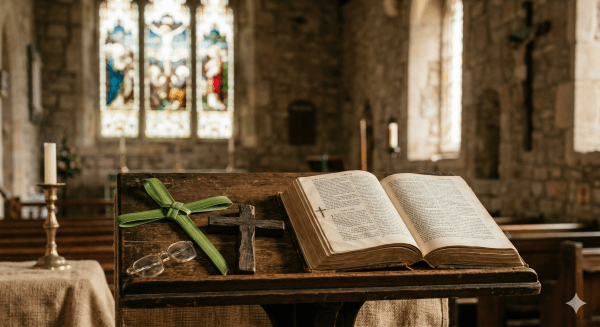
A Pondering on Palms and a Path to the Cross.

Hello friends,

As I sit here looking at the calendar, I realize we are standing right on the threshold of Palm Sunday. It’s hard to believe we are already nearing the end of our Lenten journey, isn’t it?

Whenever this time of year rolls around, I find myself thinking deeply about the stark contrast of the days ahead. Palm Sunday is a day of high energy. We love the waving of the palm branches, the upbeat hymns, and the shouts of “Hosanna!” It feels like a long-awaited victory parade. But as we prepare our hearts for this coming Sunday, I want to invite you to look a little closer at the man riding in on the donkey.

The crowds that day were thrilled. They were throwing their cloaks on the road and cheering for a conquering king. Luke 19:37-38 paints the picture perfectly: “The whole crowd of disciples began joyfully to praise God in loud voices for all the miracles they had seen: ‘Blessed is the king who comes in the name of the Lord! Peace in heaven and glory in the highest!’”

They wanted a political savior. They wanted someone to kick out the Romans and make their lives easier. But Jesus wasn’t riding into Jerusalem to make them comfortable; He was riding in to save their souls. Just a few verses later, as He approaches the city and hears the cheers, Jesus actually begins to weep over Jerusalem. He knew that the very same voices shouting “Hosanna” on Sunday would be shouting “Crucify Him” by Friday.

This brings a profound thought to mind from C.S. Lewis. In his classic The Chronicles of Narnia, Mr. Beaver famously describes Aslan—the Christ figure of the story—by saying:

“Safe? … Who said anything about safe? ‘Course he isn’t safe. But he’s good. He’s the King, I tell you.”

The crowds on Palm Sunday wanted a “safe” king—a tame lion who would do their bidding and fit neatly into their worldly agendas. But Jesus is not a tame lion. The path He was walking didn’t lead to an earthly throne; it led straight to the agonizing wood of the cross. Lewis reminds us that following Christ isn’t about God improving our current circumstances; it’s about a total, reverent surrender of our very lives.

Here is my challenge to you this week:

Do not rush the journey. It is so tempting for us, in our modern, fast-paced world, to show up for the parade on Palm Sunday, check out for the week, and then show up again for the empty tomb on Easter morning. We love the triumph, but we shrink back from the tragedy.

This Holy Week, I challenge you to sit in the uncomfortable, quiet reverence of the season:

  • Pause and reflect: Spend time reading through the events of Maundy Thursday.
  • Sit in the shadows: Allow yourself to feel the heavy, somber reality of Good Friday.
  • Embrace the silence: Recognize the profound stillness of Holy Saturday.

You cannot fully appreciate the blinding, glorious light of Resurrection Sunday until you have spent time contemplating the deep darkness of Friday. Let’s not reduce Jesus to a tame lion this week. Let’s approach the cross with awe, repentance, and a quiet, contemplative reverence for the sheer magnitude of what it cost to save us.

Grace and peace to you all on the journey ahead.

The Unfolding Meal – A Reflection on Feet, Bread, and the Great Yes

As I sit with the scene of the Last Supper, I find myself drawn into a moment so rich, so layered with meaning, that it feels like a tapestry woven with threads of humility, sacrifice, and love. This was no ordinary meal. It was Passover, a time when the Jewish people gathered to remember—to taste and see the story of their liberation from slavery, to let the bitter herbs and unleavened bread stir their souls. The air was thick with history, with hope, with the promise of God’s faithfulness. And there, in an upper room, Jesus and his disciples sat together, sharing this sacred meal.

Can you picture it? The flickering lamplight, the low hum of conversation, the weight of expectation. The disciples had walked with Jesus, seen his miracles, heard his teachings. They must have wondered what was next. A bold move against the Roman oppressors? The unveiling of a new kingdom? Their hearts were likely racing with possibility.

But then, Jesus does something utterly unexpected. He rises from the table, removes his outer robe, ties a towel around his waist, and kneels with a basin of water. One by one, he begins to wash their feet.

Pause for a moment and let that image settle in your heart. Foot washing was the work of servants, a gritty, humbling task reserved for the lowest in society. Yet here is Jesus—their teacher, their Lord, the one they dared to call Messiah—kneeling before them, tending to their dusty, calloused feet. The room must have grown quiet, the air heavy with astonishment. Peter’s protest echoes what many of us might feel: “No, Lord, not my feet. This isn’t right.” We cling to our hierarchies, our sense of who should serve and who should be served. But Jesus, in this tender, radical act, dismantles those assumptions. He shows us a different kind of power—one that kneels, that serves, that loves without counting the cost.

“Do you understand what I have done for you?” he asks. “If I, your Lord and Teacher, have washed your feet, you also should wash one another’s feet. I have set you an example.” This isn’t just about feet, is it? It’s about a posture of the heart. It’s about seeing the dignity in every person, no matter how worn or weary their journey. It’s about meeting others in their vulnerability, their mess, their humanity—and serving them there.

As the meal continues, the ordinary becomes extraordinary. Jesus takes bread, breaks it, and says, “This is my body, given for you. Do this in remembrance of me.” He lifts a cup of wine: “This is the new covenant in my blood.” Simple elements—bread and wine—become symbols of a love so profound it would soon be poured out on a cross. This act of remembrance isn’t just a backward glance at history. It’s an invitation to participate, to let this love shape us, to let it break us open and make us whole.

What strikes me most is the intimacy of this moment. Jesus knows what lies ahead—the betrayal, the suffering, the weight of the cross. Yet he chooses this meal, this shared table, to reveal the heart of his mission. He’s saying, “This is who I am. This is what love looks like. Even when the world feels like it’s crumbling, this is the way.” It’s a love that gets down low, that breaks itself open, that says a resounding “yes” to humanity, even in its brokenness.

As I reflect on this unfolding meal, I find myself asking: Where is the sacred hiding in the ordinary moments of my life? Where am I being called to kneel, to serve, to wash the dusty feet of those around me? It might be in the small acts—a listening ear, a shared meal, a moment of grace extended to someone who feels unworthy. It might be in the courage to love without expecting anything in return.

The bread, the wine, the water on weary feet—they point us to a love that transforms. They invite us to remember, not just a meal long ago, but a way of being that can change how we move through the world. So, as you ponder this scene, consider: Where are the dusty feet in your life? How might you embody this humble, sacrificial love? And how can you say your own “yes” to the call to serve, to remember, to love?

Thank you for joining me in these reflections. May we carry this sacred meal with us, letting it shape our hearts and our hands as we walk this journey together.
Grace & Shalom,
-Pastor Scott

Blog at WordPress.com.

Up ↑