
From Dumpster Fire to Safety and Hope…

Alright, friends, happy Friday! (have you been working for the weekend? -sorry I couldn’t help myself).
Let’s talk about Psalm 91 today.

You know, that one that’s like, “Yo, you wanna live under the shadow of the Almighty?
And we are all like, “Um, yeah, I do!

So, let me ask you this, do you ever feel like life is just throwing curveballs at you? And, like, they are curveballs that are on fire? You’re over here just trying to make it to Tuesday, and suddenly, boom! Plague! Famine! Angry lions!
(Okay, maybe not lions, but you get the picture.) It’s just a dumpster fire of a week, month, year…

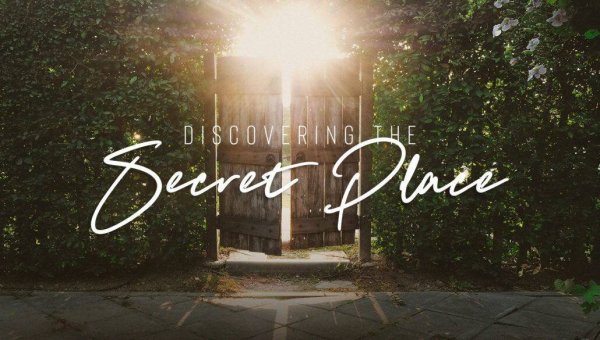
Psalm 91 is all about that secret place. No, not the book The Secret Garden, although that one always makes me cry…
But in Psalm 91 – You know, that spot where you’re just chillin’ with God, under the Almighty’s wing. It’s like finding that perfect hammock spot in the shade on a super hot day. You just sink in, and you’re like, “Ahhh, yeah. This is it.”

Now, some folks read this and think, “Okay, so if I say these words, I’m automatically immune to everything bad.” Like it’s some kind of magical incantation. (insert the Harry Potter-verse here) But, hold up! That’s not how this works.

Think of it like this: it’s not about being protected from everything, it’s about being held through everything.
It’s about knowing that even when the arrows are flying and the ground is shaking, you’re not alone.
You’re in that secret place, tucked in, held close.

Verse 4 says, “He will cover you with his feathers, and under his wings, you will find refuge.” Feathers! (I’m sorry, but why do I irreverently think of Big Bird from Sesame Street?!) But, Feathers?! Like a big, warm, divine bird hug.


How cool is that? It’s not about escaping the storm, it’s about knowing you’re safe in the middle of it.

I’m sure some of you reading this right now are in the middle of some storm of life.

And check this out: “You will not fear the terror of night, nor the arrow that flies by day.” It’s not about having no fear, because, let’s be real, fear happens. It’s about knowing that fear doesn’t get the final say.
It’s about trusting that even when things are dark and scary, God’s got your back.

Think of it like this: you’re walking through a haunted house. It’s dark and spooky, and there are jump scares everywhere. But you’re holding hands with someone you trust. You might jump, you might scream, but you know you’re not going through it alone.

THAT’S THE SECRET PLACE.
It’s not a physical location, it’s a state of being.
It’s knowing that even when life’s a hot mess, a freaking dumpster fire…
you’re connected to something bigger, something stronger, something that loves you more than you can imagine.

So, perhaps next time, when you’re feeling overwhelmed, take a deep breath.
Find that secret place. Remember those feathers. Remember that you’re held.
And remember, you’re not alone. We’re all in this crazy, beautiful, messy thing together.
And God’s got us.

Grace and Peace friends!
Go live that feathered life!

-Pastor Scott.
(Have a great weekend, we’ll see you on Monday!)

When Faith Comes To Dance…

Hey friends, have you ever gotten to a place in your spiritual life where doubt started to creep in and create a kind of identity crisis? Has that ever happened to you? It’s like one minute you’re faith is going strong, you’re connecting with God and things are fine, the next minute you’re questioning aspects of salvation that you never questioned before?

I think it’s important for us to recognize the need to really battle with our faith from time to time. It’s okay to ask the hard questions and, at times, discover you have some doubts. Scripture tells us to work out our salvation with fear and trembling…(Philippians 2:12). Paul doesn’t say “casually consider” or “flippantly cast aside”, no, he uses the word “work”.

Philippians 2:12 is a verse that can stop you in your tracks, isn’t it?
Work out your salvation? Like it’s some kind of cosmic CrossFit routine?
Suddenly, salvation feels less like grace and more like…a to-do list with a lot more sweat involved.

And then there’s the “fear and trembling” part. Yikes. That sounds intense.
Like we’re walking a spiritual tightrope, and one wrong move and whoosh – we’re plummeting into the abyss.

No pressure, right?

But what if… what if there’s something more going on here?
What if Paul’s not giving us a spiritual to-do list, but inviting us into something beautiful, something profound?

Think about it. “Work out” – the original Greek word is katergazomai. It’s not just about gritting your teeth and pushing through. It’s about bringing something to completion. It’s about cultivating something. Like a gardener tending a plant. You don’t just have a garden, you work it. You nurture it. You care for it. You bring it to its fullness.

This is from Shanais’ garden. All the flowers were vibrant and attracting lots of pollinators


My wife loves to garden.
I mean, sometimes even to the point of obsession.
But when she tends the plants, when she works at it, cultivating, hydrating, ensuring the soil has enough nutrients and is at a sufficient PH level, the gardens she is able to produce are magnificent. It’s beautiful, it’s profound. Where once was this kind of barren patch of grass, not a dark-rich, healthy soil contains vibrancy, life and beauty that causes some of our neighbors to be envious.

So, these words “Work out” means we bring something to completion. We cultivate our spiritual journeys, we nurture our faith even when the weeds of doubt tend to sprout up sometimes. And when we care for it, the right kind of faithful fruit is produced…

So maybe, just maybe, Paul’s saying that salvation isn’t a static thing you just get and then you’re done.
Maybe it’s something you participate in.
Something you grow into. Something you live.

And what about the fear and trembling? Is that about being terrified of God’s wrath? I don’t think so. I think it’s more about awe. It’s about recognizing the sheer magnitude of what God has done for us. It’s about being overwhelmed by the incredible, scandalous, mind-blowing love that’s been poured out on us. It’s a reverent, humble awareness of the divine mystery that surrounds us. Like standing on the edge of the Grand Canyon – you’re not necessarily scared, but you’re definitely moved. You’re humbled.

See, this whole verse, it’s NOT about earning God’s love. It’s about responding to it. It’s about letting that love transform us from the inside out. It’s about allowing that grace to shape us, to mold us, to make us more like the people we were created to be. That, my friends is what the faith journey is all about. Not some secret formula, or mantra we utter every day. It’s not some kind of ritual we follow to make us more holy. It’s a journey that requires real work to cultivate the right soil for deeper roots.

It’s not about striving in our own strength. It’s about surrendering to the power of God’s love and letting that work in us, through us, and all around us.

So, yeah, work out your salvation. Not like it’s a burden, but like it’s a dance. A beautiful, messy, sometimes scary and occasionally out of rhythm, but it’s always an amazing dance with the Divine. And do it with awe. Do it with wonder. Do it with a heart overflowing with gratitude. Because that, my friends, is where the real transformation happens. That’s where the real life begins. Don’t be afraid of doubt. Let it wash over you sometimes like an off-beat in the rhythm of faith…then get back to the dance.

Grace and peace,
Pastor Scott.

Kindness: Lifting Heavy Hearts.

Anxiety weighs down the heart, but a kind word cheers it up” -Proverbs 12:25

Okay, friends, here we are again with another daily pondering.
And today, let’s talk about heaviness. We all know it, right? We know what heaviness is and how it impacts our lives from time to time. It can sometimes manifest itself like a feeling in your chest, that cloud hanging over your head, that sense that you’re wading through mud even when you’re just walking to the kitchen for a glass of water.

Heavy.


Life throws things at us – grief, disappointment, fear, the sheer overwhelm of existence sometimes –(it’s like the whole kitchen sink is lobbed at us) and it can weigh us down. It can make us feel like we’re the mythological character Atlas who is carrying the weight of the world on his shoulders. And it feels like we might just crumble under the pressure.
I totally get it. You get it. We’re all in this together.

And that’s where this little nugget from Proverbs comes in. Chapter 12, verse 25: “Anxiety weighs down the heart, but a kind word cheers it up.” Simple, right?
But like so many of these ancient truths, there’s a depth here that can really…well, lift us up. (Pun intended, I couldn’t resist.)

Think about that word “anxiety.” The Hebrew word there, de’agah, it’s not just your everyday worry.
It’s more like a deep, gnawing, almost paralyzing kind of care. That feeling that something is fundamentally wrong, that things are spiraling out of control. We’ve all been there. And when that kind of anxiety hits, it can feel like you’re trapped. We’re alone. Like there’s no way out, and so we cry out for help, but no one can hear us.
It’s like the weight is just…too much.

But then, the second part of the verse. “A kind word cheers it up.” Now, notice something. It doesn’t say “a powerful word.” It doesn’t say “a life-changing word.” It says kind. A simple, genuine, kind word.

Think about the last time someone said something truly kind to you. Maybe it was a friend, a family member, a stranger on the street. Maybe it was just a simple, “I see you,” or “You’ve got this,” or “I’m here for you.” Didn’t it make a difference? Didn’t it, even for a moment, lighten the load?

That’s the power of kindness.
It’s not some magic bullet that makes all your problems disappear.
It’s not a quick fix for deep-seated anxieties. But it’s a start.
It’s a crack of light in the darkness.
It’s a reminder that you’re not alone.
That someone sees your struggle, acknowledges your pain, and offers a bit of…hope.

And here’s the thing: we can be that kind word for someone else.
We can be the ones offering that little bit of light.
Think about the people in your life who are struggling. Maybe it’s someone you know well, maybe it’s someone you barely know.


Reach out.
Offer a kind word.
A genuine compliment.
A listening ear.

You have no idea the impact it could have. You have no idea how heavy someone else’s heart might be. And your simple act of kindness could be the thing that helps them keep going.

So, my friends, let’s remember this.
Let’s remember the power of kindness. Let’s remember that even in the midst of the heaviest of times, a kind word can make a difference. It can lift a heart. It can offer hope. And it can remind us all that we’re in this together.
And that, is always beautiful thing.


Something more to ponder on today.
Grace & Peace…
-Pastor Scott.

Beyond Fear and the ‘What-ifs’

I sought the Lord, and he answered me.
He delivered me from all my fears.

Simple words.
Profound truth. Ancient wisdom for modern anxiety.

What if…

What if your fears aren’t the end of the story? What if there’s something beyond the paralysis, beyond the what-ifs, beyond the worst-case scenarios that play on endless loop in your mind?

Here’s what David discovered:

There’s a seeking. An answer. A deliverance.

But let’s back up. (beep, beep, beep)
Let’s talk about fear for a moment.
Fear grips us. Constricts us. Whispers lies about who we are and what’s possible.
Fear tells us we’re alone, tells us we’re not enough, tells us the darkness is winning. So many lies…

But what if…

What if fear isn’t the truest thing about you?
*mic drop*

What if there’s a voice louder than fear?
A presence stronger than fear?
A love deeper than fear?
And that voice and send fear packing, evicting its presence.

This is what David tapped into. This is the reality he discovered.

The Seeking

“I sought the Lord,” David writes.

Not “I figured it out on my own.”
Not “I powered through.”
Not “I pretended everything was fine.”
Not “I put out a poll with my friends to see what to do next.”

No, David sought. He reached out. He admitted his need.
Could there be something in admitting we need God?
Could there be something to discovering His strength is what’s been missing all along?

What if your seeking is the first step toward freedom? What if your questions, your longings, your restlessness – what if they’re all part of the journey toward deliverance?

The Answer

“…and he answered me.”

Simple. Direct. Profound.

David sought. God answered.

What if God is more eager to respond than we are to ask?
What if the universe is designed for us to find this divine connection, in favor of love, in favor of being heard?

The Deliverance

“He delivered me from all my fears.”
Not some fears. Not most fears. All fears.

What if complete deliverance is possible?
What if freedom isn’t just a nice idea, but a lived reality?
Did Jesus say, “The Kingdom of Heaven is here”? It’s right here, not out there somewhere in the universe – but accessible. Here. Now.

Here’s what I want you to consider:

Your fears don’t define you.
Your anxiety doesn’t have the final word.
Your past doesn’t determine your future.

There’s a seeking available to you right now. There’s an answer waiting to be heard. There’s a deliverance that can rewrite your story.

So maybe, just maybe, it’s time to seek. To reach out. To admit your need.

Because on the other side of that seeking?

That’s where the answer lives.
That’s where deliverance waits.
That’s where you discover who you really are.

And who you really are?
That’s the beginning of wisdom when we align who we are with who God is…perhaps it starts the other way around and we begin with seeking the Lord. He will answer you.

It’s beyond the confines of fear – it’s transformative and can shed light in all of the spaces fear has occupied.
And that my friends is worth seeking after.

Grace & Peace
-Pastor Scott.

Lessons from The Waiting Rooms of Life…

Ever sat in a hospital waiting room? Time seems to bend, doesn’t it? A minute stretches into an eternity. The air hums with a low-level anxiety, a shared, unspoken question hanging heavy: What’s happening? You’re surrounded by strangers, yet bound by this shared experience of… waiting. Waiting for news. Waiting for a loved one. Waiting for something to happen.

I’ve been there this week. It’s exhausting, and as I was sitting there with nothing to do except wait, I felt compelled to relate this to our lives…so here goes:

Why can’t waiting room chairs be more comfortable?!?

Life, sometimes, feels a lot like that waiting room. We’re waiting for the test results, waiting for the job offer, waiting for the relationship to heal, waiting for… well, you name it. We’re in this in-between space, this liminal zone (I sometimes call limbo) where we’re not quite sure what the next moment holds. And it can be agonizing. We pace. We worry. We check our phones. We wonder if anyone even sees us in this space. And even with all of this technology and social media at our fingertips we can often feel very, very alone.

But what if I told you that this waiting room isn’t just dead time? What if it’s actually training ground? What if it’s preparing us for something bigger, something longer, something… more beautiful?

Think about it. The Christian life isn’t a sprint. It’s not a hundred-meter dash where you burst out of the gates and it’s over in a flash. No, no, no. This life, this journey of faith, it’s a marathon. A long, winding, sometimes grueling marathon. Could it be that these moments of waiting. These exhausting times of limbo-holding patterns actually develop in us this much-needed discipline if we cultivate it and hone in our very short attention spans.

And in that waiting room, in those moments of uncertainty and anxiety, we’re building endurance. We’re learning patience. We’re cultivating resilience. We’re discovering, often painfully, that we’re not in control. Which, honestly, is a good thing. Because if we were in control, well, let’s just say things would probably be a whole lot messier.

That waiting room, it’s where we learn to lean into something bigger than ourselves. It’s where we discover the quiet whisper of God in the midst of the chaos. The quiet whisper of God in the midst of our pain and our suffering. It’s where we realize that even when we don’t know what’s happening, even when we feel lost and confused, we are not alone.

We are held. We are loved.

Think about the marathon runner. They don’t just show up on race day and expect to finish.
They train.
They prepare.
They build their strength and stamina mile after mile, day after day.
And sometimes, that training is hard. It’s lonely. It’s exhausting.

The waiting room moments in our lives, they’re part of the training.
They’re the miles we log when no one’s watching.
They’re the quiet strengthening of our souls.

So, the next time you find yourself in that waiting room, remember this: you are NOT stuck. You are NOT forgotten.
You are being prepared. You are being equipped for the long, beautiful run that lies ahead.

Embrace the waiting.
Embrace the uncertainty.

Because in the waiting, you might just discover the strength you never knew you had.
And that strength, my friends, will carry you through.

Grace & Peace:
-A Fellow Waiting Room Sojourner.

The Upside-Down Kingdom: Finding God in the Pressure Cooker

Friends, have you ever felt like you’re in a pressure cooker? Like life is just too much? The kind of pressure where you feel like you might crack under the weight of it all? The Thessalonians knew a thing or two about that. They were facing some serious heat, real challenges, and Paul, in his second letter to them, doesn’t shy away from it. But he doesn’t just offer a pat on the back and a “hang in there” either. He dives deep, offering a perspective shift that’s as relevant today as it was back then.

He starts, as he often does, with gratitude. “We ought always to thank God for you, brothers and sisters,” he says, “and rightly so, because your faith is growing more and more, and the love all of you have for one another is increasing.” (2 Thess 1:3, NIV). Think about that for a second. Even in the midst of their struggles, something was growing. Their faith. Their love for each other. It’s easy to focus on what’s wrong, what’s broken, what’s not working. But Paul, he flips the script. He highlights the good, the beautiful, the growing.

It’s a reminder for us too.
What’s growing in your life, even now? Even in the midst of the mess?
Maybe it’s a tiny seed of hope. Maybe it’s a flicker of compassion.
Nurture it.
Pay attention to it.
Because growth, even the smallest bit, is a sign of life.  

Then he says something really interesting. He talks about their “persecutions and trials.”
He doesn’t sugarcoat it. Life was hard.
But he connects those very trials to something bigger. He says these trials are “evidence of God’s righteous judgment, so that you may be considered worthy of his kingdom, for which you are suffering.” (2 Thess 1:5, NIV).


Now, this isn’t some cosmic math equation where suffering equals worthiness. That’s not how grace works. Instead, it’s about character. It’s about how we respond to the pressure.
Do we become bitter and resentful? Or do we, somehow, through the struggle, become more like the person Jesus was?
The pressure, the trials, they can actually refine us, shape us, mold us into people of greater resilience, greater compassion, greater love. It’s not that God causes the suffering, but God uses it.
He redeems it. He transforms it.
Like a potter working with clay, the challenges we face can become the very things that make us stronger, more beautiful, more…us.  

This idea of “God’s righteous judgment” isn’t about some distant, angry judge waiting to whack us with a gavel. It’s about the universe having a certain order to it. A rightness. A justice. And in this upside-down kingdom, it’s often through suffering that we learn what that justice truly looks like.
It’s through the cracks that the light gets in, as Leonard Cohen so beautifully put it.

So, where does that leave us? It leaves us with hope. It leaves us with a God who sees us, who knows our struggles, and who is working even in the messiest parts of our lives. It leaves us with the understanding that even the hard things, the painful things, can be a part of our journey towards becoming the people we were created to be. It leaves us with the courage to keep going, to keep loving, to keep believing, even when it feels like the world is falling apart. Because in this upside-down kingdom, the last shall be first, the weak shall be strong, and even suffering can be a pathway to glory.

And that, my friends, is good news.
Grace and Peace,
-Pastor Scott.

The Dangers of Deconstructing Faith

Hey Friends,
Let’s grab the proverbial cup of coffee – strong, mind you, like the kind that’ll keep you up all night wrestling with angels – and let’s talk about this thing called deconstruction. It’s the word that seems to be on everybody’s lips these days, doesn’t it? Like some catch-phrase or a brand new invention – which it’s most certainly not. It’s like getting fixated on a new pretzel shop but instead of enjoying the twist, we’re twistin’ scripture, turnin’ it inside out salt and all, lookin’ at it under a microscope, tryin’ to figure out if it’s really… real.

Now, I understand the impulse. I do. We’ve all got questions. We’ve all got those nights when the darkness seems thicker than molasses and we’re cryin’ out, “Where are you, God?” Life throws us curveballs, and sometimes, the Sunday school answers just don’t cut it anymore. They feel… flimsy. Like a screen door in a hurricane.

So, we start picking at things. This doctrine, that verse, this preacher’s sermon. We start pulling at the threads, trying to see if the whole tapestry of faith will unravel. And sometimes, dear friends, it does. Or at least, it feels like it does.

See, the danger of deconstruction, as I see it, isn’t the questions themselves. Questions are vital. They’re the engine that drives us closer to truth. Even doubt, in a way, can be a form of faith, a wrestling with the divine. Like Jacob at the Jabbok, we grapple with God, trying to pin Him down, to understand Him, to make Him fit into our neat little boxes. It’s funny that even that part of the Jordan river “Jabbok” means to wrestle with…but I digress.

But the big danger lies in what we replace the old with. If we tear down the house of our faith brick by brick, what do we build in its place? Do we leave an empty foundation, swept clean by the winds of cynicism? Or do we try to cobble together something new, something that suits our modern sensibilities, something that feels… comfortable?

Comfort, now, that’s a tricky thing. Jesus didn’t exactly preach comfort, did He? He talked about taking up our cross, about losing our lives to find them. He turned the tables, challenged the status quo, and consorted with the outcasts. Comfort can lull us to sleep, make us complacent. It can blind us to the very things that make our faith vibrant and alive.

Perhaps because there is comfort in our Western concept of Christianity we have created this space for complacency, while the fastest growing Church can be found in places of discomfort like African, South America and Asia…

Deconstruction, without a sincere desire to rebuild, can lead to a kind of spiritual homelessness. We wander in the wilderness, lost and confused, clinging to fragments of belief like driftwood in a storm. 40 more years, wishing we could just start over. We become so focused on what we don’t believe anymore that we forget what we do believe.  Does that make sense?

Now, I’m not saying we shouldn’t question. Far from it. But let’s be honest with ourselves. Are we genuinely seeking truth, or are we just looking for an excuse to walk away? Are we willing to actually wrestle with scripture, to engage with the great thinkers of the church, to do the hard work, to pray with all our might for understanding? Or are we simply cherry-picking the parts that suit us, discarding the rest like unwanted leftovers…or some kind of fast food ala cart menu?

The Christian faith, at its heart, is a story of redemption. It’s a story of grace, of love, of forgiveness. It’s a story that’s been told and retold for centuries, a story that’s sustained countless souls through trials and tribulations. And while it’s okay to question the way we’ve interpreted that story, or the ways it’s been twisted and misused, let’s be careful not to throw the baby out with the bathwater.  

What do you think about this topic? Please join the conversation and add your comments below, we encourage a healthy dialogue.

Grace and Peace
-Pastor Scott.

Naked & Afraid – What Are You Waiting For?

Okay Friends, Let’s tackle a pondering that I still struggle with, and perhaps you do too.
This is karate kick to the gut, a mind-blowing challenge…the crane kick from Karate Kid.
(Wax on, wax off..)

This all about exchanging our control for vulnerability. In a world that tells you to never be vulnerable – it’s a sign of weakness, so don’t do it – God comes to us and implores us to be an open book, to lay it all down and allow Him to actually see us – warts and all.

In the journey of faith, there exists this profound invitation—it’s a beckoning to embrace vulnerability before the Divine. This call is not merely a suggestion, rather, it’s a sacred pathway to encountering the depth of God’s grace and presence in our lives.

Vulnerability, in its essence, is the raw courage to lay bare our hearts before God, to strip away the façade of perfection (all the phoniness, all of the masks we put on, all of the personas we pretend to be) -all stripped down, taken off and we allow our true selves to finally be seen. It’s in this very act that we open ourselves to the transformative power of divine love, unfiltered and unconditional. When we finally do (and I’ve been there a time or two, but admittedly, I’ve tried to put the masks back on) – but in those moments, freedom happens, transformation begins, and true strength is realized.

When we approach God with vulnerability, we acknowledge our humanity—the highs and lows, the joys and sorrows, the triumphs and struggles. We cease pretending to have it all together (because we don’t) and instead we surrender to the mystery of God’s embrace, knowing that our weaknesses are met with divine strength.

Boom. Mic Drop.
It’s not simple.
It takes real courage to admit we don’t have it all worked out, or we are lacking.

In Scripture, we find numerous examples of this sacred vulnerability. The psalmists, in their poetic honesty, cry out in anguish, pour out their doubts, and express their deepest longings before God. Job, amidst his suffering, boldly questions and wrestles with God, refusing to hide his pain or confusion. And Jesus himself, in the garden of Gethsemane, bares his soul before the Father, pleading with vulnerability, “Father, if you are willing, take this cup from me; yet not my will, but yours be done.”

These are visceral.
These are real emotions.
These are authentic people, including a very human Jesus – crying out to God.

This vulnerability before God is not a sign of weakness but of profound trust—a recognition that God meets us in our authenticity and brokenness. It is through our vulnerability that we open channels for divine healing, restoration, and transformation to flow into our lives.

God doesn’t want our rote practices of religion.
He doesn’t desire our leftovers.
He can’t stand our fake pretenses and emotional pleas when our hearts aren’t truly in it.
God seeks to know us – and for you and me to get real about our relationship to Him.

Moreover, embracing vulnerability before God fosters deeper intimacy and communion with the Divine. As we actually begin to share our true fears, real doubts, and hopes openly, we invite God into the innermost chambers of our hearts, where true communion is born. It’s in these sacred moments of vulnerability that we discover God’s unconditional love, which knows no bounds and accepts us just as we are.

We don’t come before God as strangers, instead He invites us in as family, as loving children.

In a world that often values strength and self-sufficiency, the act of vulnerability before God stands as a counter-cultural testament—a radical declaration of trust and surrender. It invites us to release our grip on control and instead entrust our lives into the hands of the One who created us, knowing that in our vulnerability, God’s grace is more than sufficient.


I preached this past Sunday on Matthew 5:3, “Blessed are the poor in spirit, for theirs is the Kingdom of Heaven” When we come before God in our poverty… When we approach the Creator of the Universe in our limited temporal shells… When we stop playing church and start being the Church – we essentially are opening our hands and declaring, like the prophet Isaiah did, “Woe to me!” I cried. “I am ruined! For I am a man of unclean lips, and I live among a people of unclean lips, and my eyes have seen the King, the Lord Almighty.” (Isaiah 6:5).

Vulnerability is hard.
It takes courage.
It’s laying bare all of your ugly blemishes and embarrassing faults.
But consider what happens after.
God transforms.
God’s love and permeate.
He can truly shine in you.
Vulnerability elevates us while our continued self-sufficiency and false pretenses only serve to limit, hold back and diminish us.

So friends, what will it be?
What will it take for us to finally embrace the sacred power of vulnerability before God?
Not as a mere gesture but as a transformative practice that opens the door to divine encounters, deepens our faith, and nurtures our souls.

My prayer for each of us is that we find courage in our weaknesses, strength in our surrender, and the abiding presence of God in our every moment of this journey.

In this sacred dance of vulnerability and grace, may we discover anew the profound truth that in our weakness, God’s power is made perfect – and where true growth can be attained.

Grace and peace,
-Pastor Scott.

8 Things I’d Tell Myself as a Young Pastor (Reflections of a “Seasoned Pastor” and I mean old)

If I could pull up a chair and have a heart-to-heart with my younger self, the fresh-faced pastor just starting out, I’d have a few things to share. The years in ministry have taught me a lot, some lessons learned the easy way, others etched in through experience. Here’s a glimpse of what I’d whisper across time:

1. It’s Not About You (But It Kind Of Is): Younger me, you’re passionate, driven, and eager to make a difference. That’s fantastic! But remember, this isn’t about building your kingdom, but God’s. Humility is your greatest asset. At the same time, don’t shy away from your gifts and talents. God called you for a reason. Embrace your unique perspective and use it to serve. It’s a delicate balance, but essential.

2. Listen More Than You Speak: Oh, man. This is still hard for me to do. Some times it’s because I have so much I want to say, and I used to almost always fail to stop and actually listen.
Dear younger me – You’ll be tempted to fill every silence with words, to have an answer for everything. Resist that urge. Truly listen to your congregation. Hear their joys, their fears, their unspoken needs. Pastoral care is less about dispensing wisdom and more about being present, offering a listening ear and a compassionate heart. You’ll be amazed at what you learn when you simply listen.

3. Don’t Be Afraid to Ask for Help: Ministry can feel isolating. You might think you have to carry every burden, solve every problem. You don’t. Lean on your fellow pastors, mentors, and spiritual advisors. Don’t be ashamed to admit you’re struggling. Vulnerability isn’t weakness; it’s strength. It allows others to support you, and it models authenticity for your congregation.

4. Grace, Grace, and More Grace: You’ll make mistakes. You’ll say the wrong thing, make the wrong decision, and disappoint people (and yourself). Extend grace to others, and most importantly, extend it to yourself. God’s grace is sufficient, and it covers a multitude of sins – including your own. Learn from your mistakes, apologize when necessary, and move forward, clothed in grace.

5. Invest in Your Own Soul Care: This one is crucial, and it’s easy to neglect. You can’t pour from an empty cup. Prioritize your relationship with God. Spend time in prayer, in scripture, and in activities that refresh your spirit. Nurture your own soul so you can effectively nurture others. Don’t let ministry become an idol that consumes you.

6. Embrace the Messiness: Life is messy, and so is ministry. You’ll encounter brokenness, pain, and doubt. Don’t try to sanitize it or pretend it doesn’t exist. Walk alongside people in their struggles. Be present in the messiness. It’s in those difficult moments that God’s love and grace can truly shine.

7. Celebrate the Small Victories: Ministry can be challenging, and it’s easy to get discouraged. Don’t overlook the small wins. A kind word, a changed heart, a strengthened faith – these are the moments that make ministry worthwhile. Celebrate them. They are glimpses of God’s kingdom at work.

8. Love the People: This might seem obvious, but it’s worth repeating. Love the people God has entrusted to your care. Love them unconditionally, even when they’re difficult, even when they disagree with you. Love them as Christ loves them. Everything else is secondary.

Looking back, I wouldn’t trade my journey for anything. The joys and the challenges have shaped me into the pastor I am today. And if I could whisper one final thing to my younger self, it would be this: Trust God, be faithful, and love the people. The rest will fall into place.

Grace and Peace.
-Pastor Scott.

On The Edge of Something Beautiful – A Discussion on Death, Loss and Resurrection.

Hey friends.

Let’s talk about something we don’t often talk about directly: death. It seems macabre or taboo. It’s one of those things that hangs around the edges of our lives, a constant hum we try to tune out. We get so good at avoiding it, at pushing it away, that when it crashes into our world – the phone call, the diagnosis, the sudden absence – it can feel like a cosmic gut punch.

And in those moments, the questions come flooding in. What now? Where did they go? Is this… is this really it?

It’s okay to ask those questions. It’s okay to wrestle with them. In fact, I think it’s essential. Because honestly, a faith that doesn’t grapple with death, a faith that tries to bypass the very real pain and mystery of it all, isn’t really a faith at all. It’s just a nice idea, a comforting story we tell ourselves.

But Christianity, at its core, is about something much more disruptive, much more real than that. It’s about resurrection.

Now, I know what you’re thinking. “Resurrection? Scott, come on.” And I get it. It sounds… well, it sounds like a Sunday school answer (where the answer is always “Jesus”). But what if, just what if, it’s not just a tidy theological point? What if it’s the key to understanding everything?

Think about a seed. You plant it in the ground. It dies. It decomposes. It looks like it’s gone. Finished. But then, something incredible happens. A sprout emerges. New life. From what looked like death.

That’s the rhythm of the universe. Death and rebirth. Winter and spring. The ebb and flow of the tide. It’s woven into the fabric of everything. And it’s woven into us.

We’re so afraid of endings. We cling to what we know, to what’s familiar. But what if endings aren’t really endings at all? What if they’re transitions? Gateways? The edge of something beautiful we can’t even imagine? It’s beyond our current vision, beyond our current field of reality.

Jesus talked about this. He talked about losing your life to find it. He talked about a grain of wheat falling to the ground and dying so that it could bring forth much fruit. He wasn’t just talking about himself. He was talking about the fundamental nature of reality.

So, when we face death – our own or the death of someone we love – it’s okay to grieve. It’s okay to feel the pain. It’s okay to rage against the unfairness of it all. Grief is not the absence of faith. It’s the honest expression of love. It’s visceral, it’s raw, it’s the authentic expression of loss.

But even in the midst of that grief, we can hold onto this hope, this wild, audacious hope, that death is not the final word. (Thank God!) That what looks like the end is actually the beginning. That what seems lost is actually found, transformed, made new. We just can’t see it yet. It’s just beyond our reach. Beyond the “veil” – “So we fix our eyes not on what is seen, but on what is unseen, since what is seen is temporary, but what is unseen is eternal.” (2 Corinthians 4:18)

This isn’t about escaping the reality of death. It’s about facing it head-on, with courage and with hope. It’s about trusting that even in the darkest valley, even in the face of the ultimate unknown, there is still light. There is still life. There is still love. This should be encouraging to us all. We don’t have to fear this unknown variable, or be paralyzed by this interruption of life. It’s okay to talk about it. It’s okay to tackle this topic with the assurance that God is still present and His sovereignty has authority over both life and what we call death. New life is resurrection…we are just on the edge of it peering into something we have yet to understand.

And that, my friends, is a story worth believing in.
Grace and Peace,
-Pastor Scott.

Blog at WordPress.com.

Up ↑