
The Art of Showing Up Approved

Hey Friends!
So, there’s this amazing line tucked away in a letter Paul wrote to his young friend Timothy—2 Timothy 2:15—and it’s one of those verses that sneaks up on you. It’s quiet, unassuming, but it’s so powerful, check this out: “Do your best to present yourself to God as one approved, a worker who does not need to be ashamed and who correctly handles the word of truth.” That’s it. Straight to the point, right? But lean in for a second. There’s something pulsing here, something alive, something that’s asking us to wake up. To shake the cobwebs out of our hearts and minds. It’s especially apropos on a Monday morning.

What does it even mean to “present yourself to God as one approved”? Approved by who? For what? And this bit about being a worker who isn’t ashamed—ashamed of what? It’s almost like Paul’s handing us a mirror and saying, “Take a look. What do you see? Are you showing up? Really showing up?”

So, let’s unpack this for a minute because I think it’s less about getting a gold star from God, a pat on the back, and an “atta boy or girl”…it’s less that and more about stepping into the fullness of who you were made to be. The Greek word for “do your best” here is spoudazō. It’s this beautiful, urgent word—it means to be diligent, to hustle, to give it everything you’ve got. Paul’s not saying, “Hey, try a little harder so God doesn’t ground you.” No, he’s inviting Timothy—and us—into a life of intention. A life where we don’t just coast, but we dig in. We lean into the mess and the mystery of it all.

And then there’s this phrase: “a worker who does not need to be ashamed.” I wonder if you’ve ever felt that itch of shame—like you’re not enough, like you’re faking it, like if people really knew you, they’d walk away. For just a moment sit with that, and reflect on those times when you felt like you weren’t enough. Okay, now stop it. Because shame is sneaky like that. It whispers that you’ve got to hide, that you’re not cut out for this. But Paul’s saying, “No, you’re a worker. You’re in the game. You don’t have to shrink back.” What if the approval isn’t about perfection? What if it’s about presence—showing up, open-handed, saying, “Here I am, God. I’m Yours”? Because it’s never been about perfection at all. It’s never been about being good enough. Here’s the kicker – God does the equipping, you just need to show up.

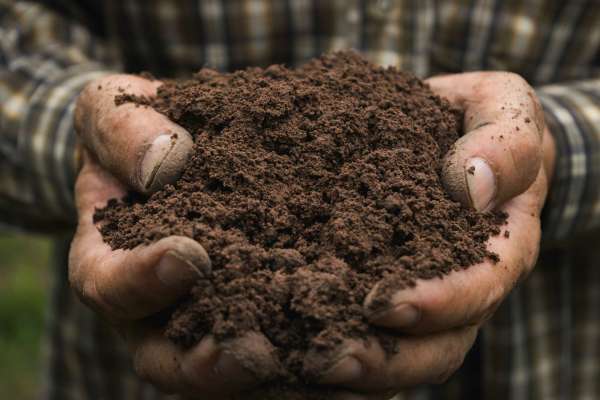
Now, let’s talk about “correctly handling the word of truth.” That sounds lofty, doesn’t it? Like you need a theology degree or a big leather Bible with your name embossed on it. But what if it’s simpler than that? What if it’s about holding truth—God’s truth, the world’s truth, your truth—with care? Not swinging it like a hammer to prove a point, but carrying it like a lantern to light the way. The word for “correctly handling” here literally means “cutting a straight path.” Picture a farmer plowing a field, steady and sure, making room for something to grow. That’s you. That’s me. We’re invited to carve out space for truth to breathe, to take root, to flourish.

Here’s where it gets challenging, though. This isn’t passive. You don’t stumble into a life like this. It takes guts. It takes saying no to the noise—the endless scroll, the comparison, the quick fixes—and saying yes to the slow, sacred work of knowing God and knowing yourself. It’s not sexy. It’s not loud. But it’s real. And it’s worth it.

So, what if today you asked yourself: What am I hustling for? Not in a guilt-trip way, but in a curious, wide-eyed way. Are you chasing approval from the crowd, or are you standing before God, unashamed, letting Him whisper, “You’re already mine”? What if you picked up the word of truth—not to weaponize it, but to let it shape you, to let it cut through the clutter?

You’re a worker. You’re approved—not because you’ve got it all figured out, not because you’re perfect, but because you’re loved beyond measure. So show up. Dig in. Handle the truth with trembling hands and a brave heart. The world’s waiting for what you’ll grow.
Grace & Peace,
-Pastor Scott.

The Ache and the Anchor: How Does Faith Shape Our Response to Suffering?

Hey friends, happy Thursday (or whenever you read this particular article).
Today, I want to ponder the concept of faith in the midst of suffering in our world.
So, let’s dig in.

Have you ever noticed how suffering feels like it’s baked into the fabric of everything?
Like, you can’t scroll through your feed, walk down the street, or sit with a friend over coffee without bumping into it.
A headline about a war. A text from someone you love saying they’re not okay. That dull ache in your own chest you can’t quite name. It’s there, isn’t it? This brokenness. This thing we didn’t sign up for but can’t seem to escape.

And then there’s faith. This wild, messy, beautiful thing we carry—or maybe it carries us (sometimes both).
How does it fit with all this? How does faith shape the way we stumble through a world that’s cracked wide open?
How do we put one foot in front of the other and even consider the word “persevere?”

Let’s sit with that for a second.

Imagine you’re walking through a forest (I did this just last weekend), and the trees are bare, the ground’s all muddy, and there’s this wind that cuts right through you. It’s not pretty. It’s not Instagram-worthy. It’s raw. And you’re wondering—where’s the life here? Where’s the green? But then you look closer, and there’s this tiny shoot pushing up through the dirt. Barely there, but there. That’s what suffering can feel like—like you’re stuck in the mud, but something’s still growing. Something’s still alive.

Faith, I think, is what lets us see that shoot. It’s not a magic wand that makes the mud disappear. It’s not a loud voice shouting, “Don’t worry, I’ll fix it!” No, it’s quieter than that. It’s more like a whisper saying, “Look. Keep looking.” Because maybe the point isn’t to get out of the suffering but to find what’s growing in it.

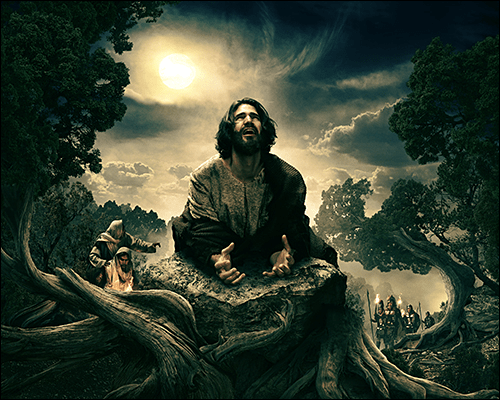
You know the story about Jesus in the garden, right? Gethsemane. He’s sweating blood, pleading with God to take the cup away, to rewrite the script. He’s fully human there, feeling the weight of what’s coming. And yet he says, “Not my will, but yours.” What’s that about? Is that faith? Trusting there’s something bigger even when the pain is screaming louder than anything else? I wonder if Jesus was showing us that suffering doesn’t get the last word—not because it goes away, but because it’s held in something deeper.

And what about us? When the diagnosis comes, or the relationship fractures, or the world feels like it’s unraveling—where does faith take us then? Does it make us stoic, like we’re supposed to just grit our teeth and pretend it’s fine? Or does it crack us open, let the tears fall, let the questions fly?

I think it’s the second one.
Faith isn’t a shield to keep the pain out; it’s a lens to see through it.

There’s this guy I met once, years ago. His name was Tom (not really his name, but we’ll call him Tom). He lost his kid in a car accident. Brutal. The kind of thing that could bury you (I think it totally would bury me). And he told me, over this beat-up diner table with coffee stains on the menu, that he’d sit in his backyard every morning, yelling at God. Just letting it out—anger, grief, all of it. But then he’d stay there. He’d sit in the silence after the yelling. And he said that’s where he started to feel it—this thread of peace, thin as a spiderweb, but real. He didn’t have answers. He still doesn’t. But he had that thread. Was that faith? I think it might be.

So what if faith isn’t about fixing the brokenness but about finding the holy in it? What if it’s less about escaping the forest and more about noticing the shoot, the whisper, the thread? Because the world’s not going to stop breaking. You know that. I know that. But maybe faith is what keeps us from breaking with it—or at least keeps us open to being put back together.

Think about Paul, that wild apostle guy. He writes about “rejoicing in our sufferings.” Rejoicing? Like, really? But then he says it produces endurance, and endurance produces character, and character produces hope. Hope doesn’t erase the suffering—it grows out of it. Like that shoot in the mud. And Paul’s not saying it’s easy. He’s saying it’s possible.

So here’s the question: What’s your suffering right now?
What’s the thing that keeps you up at night, the thing you can’t shake? (We’ve talked about this before, but I think many of us are still struggling through something)

And where’s faith in that?
Is it in the yelling? The silence?
The tiny green thing you almost missed? Because I think it’s there.
Not loud. Not obvious. But there.

The world’s broken, yeah. But it’s not the whole story.
Faith says there’s more. It says the ache isn’t the end—it’s the place where something new begins.
And maybe that’s enough for today.
Maybe that’s enough to keep going.
Perhaps we can all find some comfort in that…and keep pressing onward.

What do you think? Where do you see it growing?
Please, I welcome the comments and responses because we’re all on this journey together.
Grace & Peace,
-Pastor Scott.

Sand Castles and Solid Ground…

Greetings, my friends, and happy Tuesday (or whenever you read this).
I want to talk about something that’s been bouncing around in my head, something that, honestly, just keeps coming back like a good melody, an earworm that won’t quit… the same tune on repeat somewhere in the recesses of this brain of mine.
You know that kind of tune, right? The one that gets under your skin and makes you think, “Yeah, that’s it.”

Here’s the scriptural earworm that’s been rattling lately:
Hebrews 13:8 says, “Jesus Christ is the same yesterday and today and forever.

Now, I know what some of you might be thinking. “Scott, come on. That’s Sunday school stuff. We’ve heard that a million times.” And yeah, you probably have. But have you really heard it? Have you let it sink in? Have you let it reshape how you see everything? Is it really connecting your knowledge with what you believe? Many of us still have a lot of Sunday School knowledge but even after all this time, it hasn’t quite settled into what we believe.

Because, here’s the thing, we live in a world that’s constantly shifting, right? It’s like trying to build a sandcastle during high tide. News cycles spin, opinions change, trends come and go, and you’re left wondering, “What’s solid? What can I actually hold onto?”

We’re all searching for something that doesn’t crumble, something that doesn’t disappoint. We’re looking for that steady heartbeat in the midst of the chaos. And that’s where this verse hits me.

Jesus Christ is the same.

Think about that. Yesterday, today, forever. In a world of constant change, there’s a constant. In a world of uncertainty, there’s certainty. In a world of fleeting moments, there’s something eternal. In a world of things built to last a year or two at the most, here’s something that’s existed since the beginning and will be here forever.

Now, I’m not talking about some abstract theological concept. I’m talking about the Jesus who walked among us. The Jesus who ate with sinners, who healed the sick, who challenged the powerful, who shook the traditional, who loved the unlovable.

That Jesus? He’s the same. Yesterday, when they were questioning his authority. Today, when we’re wrestling with our doubts. Forever, when we’re trying to figure out what it all means.

And here’s the beautiful, liberating part: This isn’t about us trying to keep up with some ever-changing version of God. It’s about God being consistently, relentlessly, beautifully himself.

You know, sometimes we get so caught up in trying to figure out all the answers, trying to nail down all the doctrines, that we miss the simple, profound truth: Jesus is here. He’s always been here. And he’s not going anywhere.

He’s the same when you’re celebrating your biggest victories, and he’s the same when you’re staring into the abyss of your deepest fears. He’s the same when you’re surrounded by friends, and he’s the same when you feel utterly alone.

So, take a deep breath. Let go of the need to control everything.
Let go of the fear that everything is falling apart.

Because in the midst of all the noise, there’s a still, small voice saying,
“I’m here. I’m the same. And I’m not going anywhere.”

And you know what? I think that’s good news. Like, really, really good news.

So, let it sink in.
Let it change you.
Let it set you free.

Because, friends, the same Jesus who turned water into wine, who calmed the storm, who raised the dead?
He’s still here. And he’s still doing amazing things.

Perhaps we just need to open our eyes and see it today.

Grace & Peace,
-Pastor Scott.

The Road Less Traveled (And Why It Matters)

Alright, friends. Let’s talk about roads. Yeah, that’s right, we’re talking about roads today. You know, the ones you drive on, walk on, the ones you choose. Jesus, he’s got this thing, right? He’s laying it out, stark and clear: “Enter through the narrow gate. For wide is the gate and broad is the road that leads to destruction, and many enter through it. But small is the gate and narrow the road that leads to life, and only a few find it.” (Matthew 7:13-14, NIV)  

Now, we could get all fire and brimstone about this, right? We could start pointing fingers, yelling about who’s on the wrong road. But, honestly, I don’t think that’s what Jesus was going for. He wasn’t about the cosmic “gotcha.” He was about invitation.

Think about it: two roads. One, wide, easy, feels like everyone’s on it. It’s the “sure, why not?” road. The “whatever floats your boat” road. It’s the road where, let’s be honest, you can get lost in the noise, in the endless distractions, in the constant pursuit of more. It feels good for a while, maybe. But, Jesus says, it leads to destruction. And destruction, in the original Greek, isn’t necessarily about hellfire and brimstone. It’s about being unraveled, coming undone, losing your shalom(peace). Losing, well you and your wholeness.

Then there’s the other road. The narrow one. The one where you gotta squeeze through a tight gate. It’s not flashy. It’s not the popular choice. It’s the road where you have to pay attention. You have to be intentional. You have to choose. It’s the road where YOU might have to let go of some things, some old habits, some comfortable illusions. This road requires a bit of sacrifice.

And here’s the thing: that narrow road? It leads to life. Not just some distant, future life, but right now life. The kind of life where you’re truly connected, truly present, truly alive to the beauty and the mystery of it all.

Now, here’s the question I keep wrestling with: what does that narrow road look like for me? For you? It’s not a checklist. (Man, I’m tired of checklists and ‘to-do’ lists, are you?!)
It’s not a set of rules. It’s not about being perfect. It’s about paying attention. It’s about asking:

  • Where am I finding my life?
  • What am I clinging to that’s keeping me from squeezing through that gate?
  • Am I willing to let go of the noise and listen to the still, small voice within?

See, Jesus wasn’t giving us a map with turn-by-turn directions. He was inviting us to a journey. A journey of discovery, of surrender, of becoming more fully ourselves.

And yeah, it’s gonna be narrow. It’s gonna be challenging. But it’s also gonna be beautiful. Because that’s where the life is. That’s where the love is. That’s where you’ll find yourself, truly and deeply.

So, take a deep breath today.
Look around.
Which road are you on right now?
And which road are you choosing?
And here’s my prayer for us:

Let’s keep walking, friends. Together.
Grace & Peace!
-Pastor Scott.

Finding Our Way with a Little Bit of Light…(a pondering on Psalm 119).

Hey friends, let’s ponder on Psalm 119 today.
I know, I know, it’s a beast of a Psalm. It’s like, the longest psalm. Ever.
It’s got more lines than a line your neighborhood Chick-Fil-A at lunch time…well, you get the picture.
But stick with me, because there’s something wild in there. Something that’s gonna make you go, “Whoa.”

So, let’s zero in on verses 105-112, shall we?

Here it is (buckle up):

Your word is a lamp for my feet, a light on my path. I have taken an oath and confirmed it, that I will follow your righteous laws. I have suffered much; preserve my life, Lord, according to your word. Accept, Lord, the willing praise of my mouth, and teach me your laws. Though I constantly risk my life, I will not forget your law. The wicked have set a snare for me, but I have not strayed from your precepts. Your statutes are my heritage forever; they are the joy of my heart. My heart is set on keeping your decrees to the very end.

Okay, first off, “Your word is a lamp for my feet, a light on my path.” Done. Simple, right? But think about it.
We’re not talking about a spotlight, blinding you with certainty. We’re talking about a lamp. A little light in the dark.
You know, when you’re stumbling around in the middle of the night, trying to find the bathroom? And there’s that little plug-in night light to light your way and prevent you from stubbing your toe on that nightstand that’s trying to trip you.


That’s what this is. It’s enough light for the next step.
Not the whole staircase, just the next step.

See, we get so caught up in needing to know everything. We want the grand plan, the detailed map, the GPS (with the ETA of how long it’s going to take us to get there) coordinates for our entire lives.

But that’s not how it works, is it?
We get the next step.
And then the next.
And then the next.

And then, verse 107: “I have suffered much.”
Yeah, me too. You too. We all have. Life throws curveballs. It punches you in the gut. It sucker punches you in the nose when you’re not looking. And life tends to leave you wondering, “What just happened?”
But even in the midst of that, the psalmist says, “preserve my life, Lord, according to your word.”

It’s not about escaping the pain. It’s about finding a way through it. It’s about trusting that even when things are messy and confusing, there’s a light guiding you. Not a guarantee of a pain-free life, but a promise of presence. I know in previous postings we’ve talked a lot about this. But isn’t it encouraging to know that 1) you’re not the only one who wonders about stuff like this? And 2) God gets us. He knows us. He desires to journey along right beside us as we find our way through that next dumpster fire of a day.

The next step is lit…not the whole course of the journey just yet.

And then, verse 111: “Your statutes are my heritage forever; they are the joy of my heart.” Joy!
Right there in the middle of suffering, in the face of danger, there’s what?! JOY?
Not the kind of joy that comes from having everything figured out, but the kind of joy that comes from knowing you’re not alone. You’ve never been alone.
It’s the kind of joy that comes from knowing you’re connected to something so much bigger than yourself.

Because here’s the thing: you’re not just some random speck of dust floating through the universe.
You’re part of something incredible. Something beautiful. Something that’s been unfolding for a long, long time.

So, take a deep breath. Let that little lamp light your way. Take the next step. And remember, even in the darkness, there’s joy. There’s light. There’s hope. And you? You’re gonna be okay. Things are going to be alright. God has not left your side.

Grace & Peace.
-Pastor Scott.

Get Hangry…Made for More

Hey Friends, happy Monday (or, again whenever you happen to read this).
I would like to ponder on Matthew 5:6 today. Yesterday I preached on this passage, so it’s relatively fresh in my brain, so as they say, strike when the iron is hot!


So, let’s talk about hunger. Yeah, hunger. The moment you become hangry, we all know about that ache? But this hunger isn’t just just for a sandwich, though, let’s be real, a good dagwood can be a deeply spiritual experience….mmm, okay, I digress.

But I’m talking about that deeper hunger. That thing inside that just…won’t…quit.

Matthew 5:6. “Blessed are those who hunger and thirst for righteousness, for they will be filled.”

What a sentence. Just like that, Jesus drops this profound grain of truth:
“Blessed.” Not “bummed out,” not “stuck,” but blessed. For being hungry? For wanting something? See, most of us, we spend our lives trying to avoid that hunger. We fill it with…stuff. Distractions. Entertainment. Maybe even the “right” kind of stuff—good deeds, church attendance, you know, the whole checklist.
But what if that hunger, that thirst, is actually a gift?

Think about it. You ever been really thirsty? Like, desert-island, tongue-stuck-to-the-roof-of-your-mouth thirsty? When you finally find that water? It’s not just wet. It’s life. It’s revelation. It’s like the universe itself is saying, “Here you go, friend. You were made for this.”

Imagine with me the middle of the summer…it’s blazing hot. That was the temperature of Washington DC the day me and my family decided to sight-seeing. It was July and the dog days of summer were in full effect. It was scorching hot and we walked from the Smithsonian to the Washington Monument and then said, “why don’t we walk over to the Lincoln Memorial too – it’s not that far” And in actuality it’s not. It’s only about a mile from each other. But it just so happened that the summer we decided to go for this tour, the Mall’s reflecting pool which stretching out for a majority of the walk was closed. And so there were numerous construction barricades and detours on our trip.


To make matters worse all of our children were little. I mean we had a double stroller and children who apparently realized that their little legs no longer worked in the summer heat.
When we finally arrived at the Lincoln memorial we took lots of photos like every tourist and then, we had to walk the entire length of the mall and construction site which is the reflecting pool back to our parked car.

Along the way, we saw many war memorials and there came a point that a couple of our children almost joined them because both Shanais and I were completely soaked with sweat and exhausted from our “impromptu” sight-seeing trip. When we finally sat down that evening in an air-conditioned restaurant we asked for the biggest glasses of iced water they had. We were so parched, mouths dry, and feet that had just a few more blisters than they had when we had started out. 

We were both extremely thirsty and hungry after that extremely dry and hot day of walking.

But, Jesus isn’t talking about being hungry for the next shiny thing, or that next meal.
He’s talking about a hunger for righteousness. Now, hold up, don’t go grabbing your moral measuring stick. “Righteousness” isn’t about being perfect. It’s not about getting your spiritual GPA up.
It’s about rightness. It’s about things being as they should be.
It’s about wholeness. It’s about justice. It’s about love.

It’s that bone-deep feeling that something’s off. That the world isn’t working right.
That there’s more to life than what we’re seeing. That things can be better.

And that hunger, that divine discontent, that’s where the magic happens.
Because it’s in that space, in that longing, that we become open. Open to something more. Open to God.

See, God’s not some cosmic vending machine, waiting for us to put in the right coins.
God’s in the hunger. God’s in the thirst. God’s in the desire.
It’s the very thing that pulls us towards the divine.

And here’s the “Aha” moment: Jesus says we’ll be filled.
Not just a little sip, not a half-hearted squirt.
We’ll be filled. Overflowing. Abundant.

So, instead of trying to silence that hunger, maybe we lean into it a little today. Maybe walk around it, explore it, inquire about it. This spiritual hunger, this spiritual thirst – there’s more for us to experience as we dig deeper on this faith journey. Maybe we embrace it. Maybe we say, “Yeah, I’m hungry. I’m thirsty. I want things to be right. I want to see justice. I want to be authentic, I want to live generously. I want to experience love.”

And perhaps in that very moment, we’ll find that the feast has already begun and all we have to do is find a seat at the table.

Grace & Peace.
-Pastor Scott.
The Dangers of Deconstructing Faith

Hey Friends,
Let’s grab the proverbial cup of coffee – strong, mind you, like the kind that’ll keep you up all night wrestling with angels – and let’s talk about this thing called deconstruction. It’s the word that seems to be on everybody’s lips these days, doesn’t it? Like some catch-phrase or a brand new invention – which it’s most certainly not. It’s like getting fixated on a new pretzel shop but instead of enjoying the twist, we’re twistin’ scripture, turnin’ it inside out salt and all, lookin’ at it under a microscope, tryin’ to figure out if it’s really… real.

Now, I understand the impulse. I do. We’ve all got questions. We’ve all got those nights when the darkness seems thicker than molasses and we’re cryin’ out, “Where are you, God?” Life throws us curveballs, and sometimes, the Sunday school answers just don’t cut it anymore. They feel… flimsy. Like a screen door in a hurricane.

So, we start picking at things. This doctrine, that verse, this preacher’s sermon. We start pulling at the threads, trying to see if the whole tapestry of faith will unravel. And sometimes, dear friends, it does. Or at least, it feels like it does.

See, the danger of deconstruction, as I see it, isn’t the questions themselves. Questions are vital. They’re the engine that drives us closer to truth. Even doubt, in a way, can be a form of faith, a wrestling with the divine. Like Jacob at the Jabbok, we grapple with God, trying to pin Him down, to understand Him, to make Him fit into our neat little boxes. It’s funny that even that part of the Jordan river “Jabbok” means to wrestle with…but I digress.

But the big danger lies in what we replace the old with. If we tear down the house of our faith brick by brick, what do we build in its place? Do we leave an empty foundation, swept clean by the winds of cynicism? Or do we try to cobble together something new, something that suits our modern sensibilities, something that feels… comfortable?

Comfort, now, that’s a tricky thing. Jesus didn’t exactly preach comfort, did He? He talked about taking up our cross, about losing our lives to find them. He turned the tables, challenged the status quo, and consorted with the outcasts. Comfort can lull us to sleep, make us complacent. It can blind us to the very things that make our faith vibrant and alive.

Perhaps because there is comfort in our Western concept of Christianity we have created this space for complacency, while the fastest growing Church can be found in places of discomfort like African, South America and Asia…

Deconstruction, without a sincere desire to rebuild, can lead to a kind of spiritual homelessness. We wander in the wilderness, lost and confused, clinging to fragments of belief like driftwood in a storm. 40 more years, wishing we could just start over. We become so focused on what we don’t believe anymore that we forget what we do believe.  Does that make sense?

Now, I’m not saying we shouldn’t question. Far from it. But let’s be honest with ourselves. Are we genuinely seeking truth, or are we just looking for an excuse to walk away? Are we willing to actually wrestle with scripture, to engage with the great thinkers of the church, to do the hard work, to pray with all our might for understanding? Or are we simply cherry-picking the parts that suit us, discarding the rest like unwanted leftovers…or some kind of fast food ala cart menu?

The Christian faith, at its heart, is a story of redemption. It’s a story of grace, of love, of forgiveness. It’s a story that’s been told and retold for centuries, a story that’s sustained countless souls through trials and tribulations. And while it’s okay to question the way we’ve interpreted that story, or the ways it’s been twisted and misused, let’s be careful not to throw the baby out with the bathwater.  

What do you think about this topic? Please join the conversation and add your comments below, we encourage a healthy dialogue.

Grace and Peace
-Pastor Scott.

Disappointment: The Soil of Hope.

Hello friends,

It seems contradictory to group the concept of disappointment with hope, but give this pondering space to breathe and perhaps you’ll agree with me.

Disappointment. It’s a familiar ache, a sinking feeling that settles in our bones when things don’t go as planned. Dreams deferred, expectations shattered, the weight of unmet potential – it can feel suffocating.

But what if disappointment isn’t the enemy? What if it’s actually the fertile ground where something new and unexpected can grow?

Think about it. Have you ever experienced a crushing disappointment that ultimately led to a path you never could have imagined? A lost job that forced you to pursue your true passion. A heartbreak that opened your eyes to a deeper capacity for love.

Disappointment, in its raw, unfiltered form, can feel brutal. It can shake us to our core, strip us bare, and leave us questioning everything. But within that emptiness, there’s a space for something new to emerge. A space for creativity, for resilience, for a deeper understanding of ourselves and our place in the world. It’s like shucking off an outer shell only to reveal something so much better.

This isn’t about denying or minimizing the pain of disappointment. It’s about recognizing that within that pain lies a seed of possibility. It’s about trusting that even in the darkest of nights, there’s a sunrise waiting…if we’re patient.

So, the next time you find yourself grappling with disappointment, try to see it differently. See it not as an ending, but as a turning point. See it as an invitation to explore new paths, to cultivate new dreams, to discover a deeper, more authentic version of yourself.

Hope isn’t about ignoring the pain. It’s about finding the courage to believe that something beautiful can emerge from the ashes. It’s about trusting that even in the midst of the storm, there’s a quiet strength within you, a resilience that will see you through.

So trust the process as God prepares the path, even in our current disappointments – He is there.
Grace and Peace,
-Scott.

“Risk, Trust, Multiply: The Kingdom Math of the Talents”

I used the word Math…please don’t leave. Check this out:

The Parable of the Talents is one of those stories Jesus tells that cuts right to the heart of how we live, doesn’t it? You can find it in Matthew 25:14-30. It’s a tale about a man, his servants, and an outrageous amount of money—talents, as they called them back then. But this story isn’t just about economics; it’s about something far more profound.

Let’s dive in.

A wealthy man is going on a journey. Before he leaves, he entrusts his property to his servants. To one, he gives five talents. To another, two talents. And to the last, one talent. Now, a talent was no small thing. It was a unit of currency worth about 20 years of wages for a laborer. Imagine being handed 20, 40, or 100 years’ worth of earnings all at once. Can you feel the weight of that responsibility?

The man’s instructions? Not explicitly stated, but implied: Do something with it.

The first two servants get to work. They invest, trade, create, risk. And they double what they were given. But the third servant? He digs a hole. He buries the talent. He hides it.

When the master returns, there’s a reckoning. The first two servants present their doubled investments, and the master’s response is ecstatic: “Well done, good and faithful servant! You have been faithful with a few things; I will put you in charge of many things. Come and share your master’s happiness!”

But the third servant? He’s afraid. He tells the master, “I knew you were a hard man, harvesting where you have not sown and gathering where you have not scattered seed. So I was afraid and went out and hid your talent in the ground. See, here is what belongs to you.”

And the master’s response? Not what we might expect from a story that starts with such generosity. The master calls the servant wicked and lazy. He takes the one talent and gives it to the one who has ten. And the servant is cast out, into the darkness.

Whew. Heavy, right? So, what’s going on here?

First, let’s talk about the fear. That third servant? He was so paralyzed by fear—fear of failure, fear of judgment, fear of the master—that he did nothing. And isn’t that what fear does? It locks us up. It convinces us to play small, to play safe, to not risk, to not create, to not step out, not to speak up. Fear whispers, “What if you fail? What if you’re not good enough? What if it all goes wrong?” And so we bury our talents. We hide what we’ve been given. We stop ourselves from speaking up with the grains of wisdom God has given us.

But the other two servants? They get it. They understand that the talents aren’t just resources; they’re opportunities. Opportunities to participate in the work of the master. Opportunities to create something, to build something, to grow something. And sure, there’s risk involved. But there’s also trust. Trust that what they’ve been given is enough. Trust that the master’s joy is found in their faithfulness, not their perfection. It’s never been about being perfect.

This parable invites us to ask some big, uncomfortable questions: What have I been given? What opportunities, resources, gifts, passions, abilities, relationships are in my hands right now? And what am I doing with them? Am I investing them, risking them, using them for something bigger than myself? Or am I burying them, hiding them, letting fear call the shots? This isn’t about inflating our egos, or making us look important, it’s about using what God has entrusted to us. All of it is Gods.

And here’s the twist that we can’t miss: The master’s joy isn’t about the amount returned. It’s about the fact that the servants were faithful with what they had. The first servant had five talents, and the second had two. Different amounts, but the exact same affirmation: “Well done, good and faithful servant.”

You see, the parable isn’t about how much you have. It’s about what you do with what you’ve been given. It’s about the courage to show up, to risk, to trust, to invest, to create. It’s about participating in the work of the Kingdom, right here and right now.

So, what if we lived like the first two servants? What if we stepped out of our fear and into faith? What if we trusted that the gifts we’ve been given—no matter how big or small—are enough? What if we stopped burying our talents and started using them to bring light, love, and hope into the world?

Maybe that’s what Jesus is inviting us to in this parable. Not just to see what we’ve been given, but to step into the joy of using it. To risk. To create. To trust. To live fully into the Kingdom work we’ve been called to. And that Kingdom is right here and right now. With us.

Because when we do, we’re not just holding onto what we’ve been given. We’re multiplying it. And that’s where the joy is.

Grace and Peace.
-PastorsPonderings.

Fear the Walking Faith…It’s a journey!

He replied, “Because you have so little faith. Truly I tell you, if you have faith as small as a mustard seed, you can say to this mountain, ‘Move from here to there,’ and it will move. Nothing will be impossible for you.” Matthew 17:20

Oh how our faith can waver sometimes.
It seems that the gusting of a slight breeze of discord or worry can shake our quivering feet of faith.

Have you ever come to a moment of realization that your faith is not as deep as you once thought it was? We all encounter times, while on this journey, where the feel as though we have entered into the desert and we are found lacking in our resolve and fortitude. This journey will take us into places that require us to dig a little deeper and to endure the dry and thirsty places – where we find ourselves questioning everything and reaching further for God…who seems to have gone silent.

Have you been to this place?

I remember when I first learned to swim.
My parents would take me into the deeper part of the waters where my feet couldn’t touch and then let go of me, and as they let go of me they step back out of my reach. I remember there was a momentary panic. The saving hands were no longer on me and I found myself struggling to keep my head above the waters. I remember having to reach out my arms while kicking my feet so that I could reach the safety again. As I did this, without realizing, I began to swim by myself for the first time.

My intentions were not to swim. My intention was to reach the safe arms of my parents who were just out of reach.

There is growth within the tension and fear.
Growth that can only take place when we are left to our own devices.
Growth that can only transpire within the turmoil and desert places of our faith journey.

It is as if God steps back from us, and we are faced with the seemingly terrifying notion that we must step into the deep alone. The truth is that we are most certainly not alone, but rather there is growth that is only found in desert. And so we step out, unsure of ourselves…unsure if we can reach those safe arms of Christ again.

Remember Peter on the waters before Jesus?
He is asked to step out into a turbulent, uncertain space.
Peter takes a couple of steps, loses sight of the arms of Christ and begins to sink.
He takes his eyes off of Jesus.
He considers the impossibilities of such a journey.
He must have recalled his inability to do this feat, and as the doubt sinks in so does Peter.

We often chastise Peter for his lack of faith.
We often sermonize this passage to implicate the lack of resolve that ‘the Rock’ had…
But where were the other disciples?
Do we read about their steps of faith on the waters? No.
They were still in the boat watching it all go down.

We have to get out of our boats.
We will encounter dry and thirsty times in our faith journey.
It will feel as if we are all alone out in the wilderness, but we are not alone.
God steps back and watches us within the tension of deeper waters.
And it is within those deeper spaces that we grow.
It is through perseverance that our character and the very image of Christ becomes clearer in us.

Some have turned back and returned to the safe places.
Some have given up because they have felt abandoned.
Others have persevered and they have grown.
The Lord desires all of us to deepen our faith, and so these times of dryness should be seen as opportunities to grow up into this amazing faith.

Being like Jesus isn’t easy.
It takes determination and desire on our part.
Are you prepared to allow God to deepen your faith?
Is it your desire to get off of spiritual baby formula and begin to feast on more sustainable spiritual nourishment?

Take that next step…don’t be afraid, He’s got you, and He isn’t far from you right now!

Something more to ponder today.

Blog at WordPress.com.

Up ↑