Hey friends, you ever think about how wild it is that we get to talk to God? Like, the Creator of everything — spinning galaxies and the whispering winds, the One who dreamed up the taste of rain and the sound of laughter—that God leans in close and says, “Yeah, tell me what’s on your mind.” It’s not a monologue, you know? It’s not us shouting into the void, hoping the echo comes back with a nod. It’s a conversation. A back-and-forth. A dance of words and silence.
I mean, think about it—communication is this holy thread woven into everything. The way a sunrise speaks without saying a thing, the way a friend’s eyes can tell you they’re hurting before their mouth catches up. And prayer? Prayer’s like that. It’s not just words strung together, all polished and proper. It’s the raw stuff—your fears, your dreams, the ache you can’t name. It’s you showing up, messy and real, and God meeting you there, not with a clipboard and a checklist, but with a heartbeat that says, “I’m listening.”
Jesus, he got this. He’d slip away to the hills, not to perform some religious script, but to breathe, to talk, to listen. He’d say things like, “Ask, and it’ll be given. Seek, and you’ll find.” Not because it’s a vending machine deal—insert prayer, get prize—but because it’s about relationship. It’s about trust. It’s about daring to open your mouth and let the honest stuff spill out, knowing the One on the other end isn’t rolling His eyes or tapping His foot.
So what if we tried that today? What if we stopped treating prayer like a memo to the boss and started seeing it as a late-night chat with the best friend who never sleeps? What if we said, “God, here’s what’s heavy, here’s what’s beautiful, here’s where I’m stuck,” and then—here’s the kicker—we paused? We let the silence sit. We listened for that still, small voice that doesn’t always sound like we expect.
Because communication with God isn’t about getting it right. It’s about showing up. It’s about letting the words—or the lack of them—carry you closer to the One who’s been speaking your name since before you took your first breath. What would happen if we leaned into that? If we let prayer be less about saying the perfect thing and more about being fully, wildly, wonderfully heard?
Hey friends, have you ever stopped and thought about how everything started?
I mean, everything—the stars, the dirt under your feet, that coffee you’re sipping right now? John, this wild, poetic guy who hung out with Jesus, he’s got something to say about it. He kicks off his story with this mind-bending line: “In the beginning was the Word, and the Word was with God, and the Word was God.” Boom. Right out of the gate, he’s dropping something heavy, something that makes you lean in and go, “Wait, what?” “What’s this all about?!”
You see, John’s not just talking about a word like “hello” or “taco”, (mmm, now I’m hungry). He’s talking about THE Word. In Greek, it’s Logos—this cosmic, creative force, the divine reason, the heartbeat behind it all. And he’s saying this Word wasn’t just floating around somewhere; it was with God, and it was God. From the very beginning, before the first sunrise, before the first wave crashed on the shore, there was this Word, humming with life, holding everything together.
And then John keeps going. He says, “Through him all things were made; without him nothing was made that has been made.” Did you catch that? Everything—every tree, every laugh, every tear—came through this Word. It’s like the universe is a song, and this Word is the melody that ties all the notes together. You’re part of that song. I’m part of that song. The person you passed on the street today? Part of it too. Nothing’s outside this creative pulse.
But here’s where it gets really good. John doesn’t stop at the cosmic stuff. He zooms in close and says, “The Word became flesh and made his dwelling among us.” Hold on. The Word—the one that spun galaxies into motion—didn’t just stay out there, distant and untouchable. It became flesh. Skin and bones. Sweat and smiles. Jesus. The God who was there at the beginning stepped into the mess of our world, pitched a tent right here with us, and said, “I’m not leaving you alone in this.”
Isn’t that wild? The infinite became finite. The untouchable became touchable. The light that darkness can’t overcome—and trust me, there’s plenty of darkness out there—showed up in a way we could see, hear, feel. John says, “We have seen his glory, the glory of the one and only Son, who came from the Father, full of grace and truth.” Grace and truth. Not judgment and shame. Not rules and checklists. Grace—like a warm hug when you’re falling apart. Truth—like a compass when you’re lost.
So what does this mean for you, right now, today? Maybe you’re feeling like the darkness is winning. Maybe life’s throwing punches, and you’re not sure you can get back up. John’s whispering to you: the light shines in the darkness, and the darkness doesn’t get the last word. The Word does. Jesus does. And he’s not some far-off idea—he’s here, in the thick of it with you.
Or maybe you’re wondering if you’re enough. If you belong. If there’s a place for you in this big, sprawling story. John’s got you covered there too. “To all who did receive him, to those who believed in his name, he gave the right to become children of God.” Not employees. Not fans. Children. You’re family. The Word that spoke the world into being says you’re in. You’re loved. You’re wanted.
So take a deep breath. Look around. That light’s still shining. That Word’s still speaking. It’s in the way the sun rises, the way a friend listens, the way hope sneaks back in when you least expect it. The Word became flesh and moved into the neighborhood—and he’s not moving out. You’re not alone in this. You never were. And that, my friend, is the kind of news that can carry you through anything.
What if you lived like that’s true today? What might change?
Grace & Peace, -Pastor Scott.
Check out our new Spotify Podcast site we just launched today. I hope and pray there will be more content on it very soon, so please subscribe and follow!
Hey Friends! So, there’s this amazing line tucked away in a letter Paul wrote to his young friend Timothy—2 Timothy 2:15—and it’s one of those verses that sneaks up on you. It’s quiet, unassuming, but it’s so powerful, check this out: “Do your best to present yourself to God as one approved, a worker who does not need to be ashamed and who correctly handles the word of truth.” That’s it. Straight to the point, right? But lean in for a second. There’s something pulsing here, something alive, something that’s asking us to wake up. To shake the cobwebs out of our hearts and minds. It’s especially apropos on a Monday morning.
What does it even mean to “present yourself to God as one approved”? Approved by who? For what? And this bit about being a worker who isn’t ashamed—ashamed of what? It’s almost like Paul’s handing us a mirror and saying, “Take a look. What do you see? Are you showing up? Really showing up?”
So, let’s unpack this for a minute because I think it’s less about getting a gold star from God, a pat on the back, and an “atta boy or girl”…it’s less that and more about stepping into the fullness of who you were made to be. The Greek word for “do your best” here is spoudazō. It’s this beautiful, urgent word—it means to be diligent, to hustle, to give it everything you’ve got. Paul’s not saying, “Hey, try a little harder so God doesn’t ground you.” No, he’s inviting Timothy—and us—into a life of intention. A life where we don’t just coast, but we dig in. We lean into the mess and the mystery of it all.
And then there’s this phrase: “a worker who does not need to be ashamed.” I wonder if you’ve ever felt that itch of shame—like you’re not enough, like you’re faking it, like if people really knew you, they’d walk away. For just a moment sit with that, and reflect on those times when you felt like you weren’t enough. Okay, now stop it. Because shame is sneaky like that. It whispers that you’ve got to hide, that you’re not cut out for this. But Paul’s saying, “No, you’re a worker. You’re in the game. You don’t have to shrink back.” What if the approval isn’t about perfection? What if it’s about presence—showing up, open-handed, saying, “Here I am, God. I’m Yours”? Because it’s never been about perfection at all. It’s never been about being good enough. Here’s the kicker – God does the equipping, you just need to show up.
Now, let’s talk about “correctly handling the word of truth.” That sounds lofty, doesn’t it? Like you need a theology degree or a big leather Bible with your name embossed on it. But what if it’s simpler than that? What if it’s about holding truth—God’s truth, the world’s truth, your truth—with care? Not swinging it like a hammer to prove a point, but carrying it like a lantern to light the way. The word for “correctly handling” here literally means “cutting a straight path.” Picture a farmer plowing a field, steady and sure, making room for something to grow. That’s you. That’s me. We’re invited to carve out space for truth to breathe, to take root, to flourish.
Here’s where it gets challenging, though. This isn’t passive. You don’t stumble into a life like this. It takes guts. It takes saying no to the noise—the endless scroll, the comparison, the quick fixes—and saying yes to the slow, sacred work of knowing God and knowing yourself. It’s not sexy. It’s not loud. But it’s real. And it’s worth it.
So, what if today you asked yourself: What am I hustling for? Not in a guilt-trip way, but in a curious, wide-eyed way. Are you chasing approval from the crowd, or are you standing before God, unashamed, letting Him whisper, “You’re already mine”? What if you picked up the word of truth—not to weaponize it, but to let it shape you, to let it cut through the clutter?
You’re a worker. You’re approved—not because you’ve got it all figured out, not because you’re perfect, but because you’re loved beyond measure. So show up. Dig in. Handle the truth with trembling hands and a brave heart. The world’s waiting for what you’ll grow. Grace & Peace, -Pastor Scott.
Life has a way of throwing challenges at us that can leave us feeling drained, discouraged, or even a little lost. In those moments, we need something solid to hold onto—a reminder of where our strength comes from and how to keep going. That’s exactly what we find in Jude 1:20-21, a short but powerful passage that offers a blueprint for staying encouraged and rooted in faith.
The verses say: “But you, dear friends, by building yourselves up in your most holy faith and praying in the Holy Spirit, keep yourselves in God’s love as you wait for the mercy of our Lord Jesus Christ to bring you to eternal life.” (NIV) Let’s unpack this a little and see how it can lift us up today.
Build Yourself Up
Jude starts with an action: “building yourselves up in your most holy faith.” Think about that for a second. Faith isn’t a one-and-done thing—it’s a living, growing structure that we get to keep working on. It’s like adding bricks to a house, layer by layer. Every time we choose to trust God, every time we lean into His promises, we’re strengthening that foundation.
So how do we do that practically? It could be as simple as reading Scripture and letting it sink in, or reflecting on the ways God’s been faithful in the past. It’s not about having all the answers or feeling unshakable every day—it’s about showing up, even in small ways, and trusting that God’s at work in the process. You’re not alone in this construction project; you’re building with the best materials Heaven has to offer.
Pray in the Spirit
Next, Jude tells us to “pray in the Holy Spirit.” Prayer isn’t just a wishlist we hand over to God—it’s a conversation, a connection, a lifeline. When we pray in the Spirit, we’re inviting God’s presence to guide us, to speak to us, to fill us with peace that doesn’t make sense in the middle of chaos. It’s like tuning into a frequency where we can hear His voice more clearly.
If you’re feeling overwhelmed, try this: take a deep breath, ask the Holy Spirit to help you pray, and just start talking—or even sit quietly. You don’t need fancy words. God hears the groans of your heart just as loudly as your spoken requests. That kind of prayer keeps us anchored, no matter what’s swirling around us.
Stay in God’s Love
Then comes the heart of it: “keep yourselves in God’s love.” This isn’t about earning God’s love—He’s already given it freely. It’s about staying in that sweet spot where you’re aware of it, resting in it, letting it shape how you see yourself and the world. It’s easy to drift away when life gets tough, to let doubt or fear take the wheel. But Jude’s saying, “No, stay here. This is where you belong.”
Picture it like sitting by a warm fire on a cold night. You don’t have to make the fire burn; you just have to stay close enough to feel its warmth. God’s love is that fire—constant, steady, and always there for you to draw near to.
Wait with Hope
Finally, Jude points us forward: “as you wait for the mercy of our Lord Jesus Christ to bring you to eternal life.” Waiting can feel like the hardest part, especially when we’re longing for answers or relief. But this isn’t a passive, hopeless waiting—it’s active, expectant, full of anticipation. We’re waiting for mercy, for Jesus, for the promise of eternal life that puts every temporary struggle in perspective.
That’s the ultimate encouragement: what’s ahead is so much bigger than what’s behind or even what’s right now. You’re not just surviving; you’re headed somewhere glorious, and Jesus is the one leading you there.
You’ve Got This
So, dear friend, wherever you are today, take heart. Build yourself up in faith, one small step at a time. Pray—messy, honest prayers—and let the Holy Spirit carry you. Stay wrapped in God’s love, because it’s yours to keep. And wait with hope, knowing that mercy is coming, and it’s bringing eternal life with it.
You’re not alone in this. God’s right there, cheering you on, ready to help you add another brick to that beautiful faith you’re building. Keep going—you’ve got this, because He’s got you.
Hey friends, happy Thursday (or whenever you read this particular article). Today, I want to ponder the concept of faith in the midst of suffering in our world. So, let’s dig in.
Have you ever noticed how suffering feels like it’s baked into the fabric of everything? Like, you can’t scroll through your feed, walk down the street, or sit with a friend over coffee without bumping into it. A headline about a war. A text from someone you love saying they’re not okay. That dull ache in your own chest you can’t quite name. It’s there, isn’t it? This brokenness. This thing we didn’t sign up for but can’t seem to escape.
And then there’s faith. This wild, messy, beautiful thing we carry—or maybe it carries us (sometimes both). How does it fit with all this? How does faith shape the way we stumble through a world that’s cracked wide open? How do we put one foot in front of the other and even consider the word “persevere?”
Let’s sit with that for a second.
Imagine you’re walking through a forest (I did this just last weekend), and the trees are bare, the ground’s all muddy, and there’s this wind that cuts right through you. It’s not pretty. It’s not Instagram-worthy. It’s raw. And you’re wondering—where’s the life here? Where’s the green? But then you look closer, and there’s this tiny shoot pushing up through the dirt. Barely there, but there. That’s what suffering can feel like—like you’re stuck in the mud, but something’s still growing. Something’s still alive.
Faith, I think, is what lets us see that shoot. It’s not a magic wand that makes the mud disappear. It’s not a loud voice shouting, “Don’t worry, I’ll fix it!” No, it’s quieter than that. It’s more like a whisper saying, “Look. Keep looking.” Because maybe the point isn’t to get out of the suffering but to find what’s growing in it.
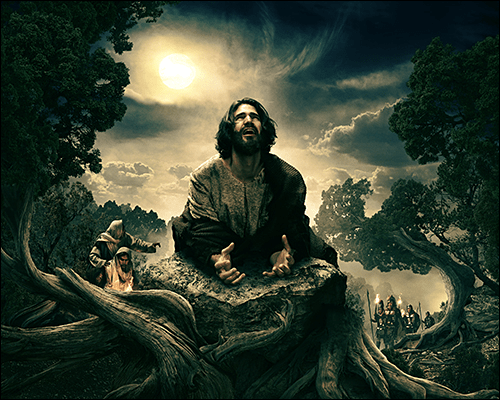
You know the story about Jesus in the garden, right? Gethsemane. He’s sweating blood, pleading with God to take the cup away, to rewrite the script. He’s fully human there, feeling the weight of what’s coming. And yet he says, “Not my will, but yours.” What’s that about? Is that faith? Trusting there’s something bigger even when the pain is screaming louder than anything else? I wonder if Jesus was showing us that suffering doesn’t get the last word—not because it goes away, but because it’s held in something deeper.
And what about us? When the diagnosis comes, or the relationship fractures, or the world feels like it’s unraveling—where does faith take us then? Does it make us stoic, like we’re supposed to just grit our teeth and pretend it’s fine? Or does it crack us open, let the tears fall, let the questions fly?
I think it’s the second one. Faith isn’t a shield to keep the pain out; it’s a lens to see through it.
There’s this guy I met once, years ago. His name was Tom (not really his name, but we’ll call him Tom). He lost his kid in a car accident. Brutal. The kind of thing that could bury you (I think it totally would bury me). And he told me, over this beat-up diner table with coffee stains on the menu, that he’d sit in his backyard every morning, yelling at God. Just letting it out—anger, grief, all of it. But then he’d stay there. He’d sit in the silence after the yelling. And he said that’s where he started to feel it—this thread of peace, thin as a spiderweb, but real. He didn’t have answers. He still doesn’t. But he had that thread. Was that faith? I think it might be.
So what if faith isn’t about fixing the brokenness but about finding the holy in it? What if it’s less about escaping the forest and more about noticing the shoot, the whisper, the thread? Because the world’s not going to stop breaking. You know that. I know that. But maybe faith is what keeps us from breaking with it—or at least keeps us open to being put back together.
Think about Paul, that wild apostle guy. He writes about “rejoicing in our sufferings.” Rejoicing? Like, really? But then he says it produces endurance, and endurance produces character, and character produces hope. Hope doesn’t erase the suffering—it grows out of it. Like that shoot in the mud. And Paul’s not saying it’s easy. He’s saying it’s possible.
So here’s the question: What’s your suffering right now? What’s the thing that keeps you up at night, the thing you can’t shake? (We’ve talked about this before, but I think many of us are still struggling through something)
And where’s faith in that? Is it in the yelling? The silence? The tiny green thing you almost missed? Because I think it’s there. Not loud. Not obvious. But there.
The world’s broken, yeah. But it’s not the whole story. Faith says there’s more. It says the ache isn’t the end—it’s the place where something new begins. And maybe that’s enough for today. Maybe that’s enough to keep going. Perhaps we can all find some comfort in that…and keep pressing onward.
What do you think? Where do you see it growing? Please, I welcome the comments and responses because we’re all on this journey together. Grace & Peace, -Pastor Scott.
Alright, friends. Let’s talk about roads. Yeah, that’s right, we’re talking about roads today. You know, the ones you drive on, walk on, the ones you choose. Jesus, he’s got this thing, right? He’s laying it out, stark and clear: “Enter through the narrow gate. For wide is the gate and broad is the road that leads to destruction, and many enter through it. But small is the gate and narrow the road that leads to life, and only a few find it.” (Matthew 7:13-14, NIV)
Now, we could get all fire and brimstone about this, right? We could start pointing fingers, yelling about who’s on the wrong road. But, honestly, I don’t think that’s what Jesus was going for. He wasn’t about the cosmic “gotcha.” He was about invitation.
Think about it: two roads. One, wide, easy, feels like everyone’s on it. It’s the “sure, why not?” road. The “whatever floats your boat” road. It’s the road where, let’s be honest, you can get lost in the noise, in the endless distractions, in the constant pursuit of more. It feels good for a while, maybe. But, Jesus says, it leads to destruction. And destruction, in the original Greek, isn’t necessarily about hellfire and brimstone. It’s about being unraveled, coming undone, losing your shalom(peace). Losing, well you and your wholeness.
Then there’s the other road. The narrow one. The one where you gotta squeeze through a tight gate. It’s not flashy. It’s not the popular choice. It’s the road where you have to pay attention. You have to be intentional. You have to choose. It’s the road where YOU might have to let go of some things, some old habits, some comfortable illusions. This road requires a bit of sacrifice.
And here’s the thing: that narrow road? It leads to life. Not just some distant, future life, but right now life. The kind of life where you’re truly connected, truly present, truly alive to the beauty and the mystery of it all.
Now, here’s the question I keep wrestling with: what does that narrow road look like for me? For you? It’s not a checklist. (Man, I’m tired of checklists and ‘to-do’ lists, are you?!) It’s not a set of rules. It’s not about being perfect. It’s about paying attention. It’s about asking:
Where am I finding my life?
What am I clinging to that’s keeping me from squeezing through that gate?
Am I willing to let go of the noise and listen to the still, small voice within?
See, Jesus wasn’t giving us a map with turn-by-turn directions. He was inviting us to a journey. A journey of discovery, of surrender, of becoming more fully ourselves.
And yeah, it’s gonna be narrow. It’s gonna be challenging. But it’s also gonna be beautiful. Because that’s where the life is. That’s where the love is. That’s where you’ll find yourself, truly and deeply.
So, take a deep breath today. Look around. Which road are you on right now? And which road are you choosing? And here’s my prayer for us:
Hey Friends, happy Monday (or, again whenever you happen to read this). I would like to ponder on Matthew 5:6 today. Yesterday I preached on this passage, so it’s relatively fresh in my brain, so as they say, strike when the iron is hot!
So, let’s talk about hunger. Yeah, hunger. The moment you become hangry, we all know about that ache? But this hunger isn’t just just for a sandwich, though, let’s be real, a good dagwood can be a deeply spiritual experience….mmm, okay, I digress.
But I’m talking about that deeper hunger. That thing inside that just…won’t…quit.
Matthew 5:6. “Blessed are those who hunger and thirst for righteousness, for they will be filled.”
What a sentence. Just like that, Jesus drops this profound grain of truth: “Blessed.” Not “bummed out,” not “stuck,” but blessed. For being hungry? For wanting something? See, most of us, we spend our lives trying to avoid that hunger. We fill it with…stuff. Distractions. Entertainment. Maybe even the “right” kind of stuff—good deeds, church attendance, you know, the whole checklist. But what if that hunger, that thirst, is actually a gift?
Think about it. You ever been really thirsty? Like, desert-island, tongue-stuck-to-the-roof-of-your-mouth thirsty? When you finally find that water? It’s not just wet. It’s life. It’s revelation. It’s like the universe itself is saying, “Here you go, friend. You were made for this.”
Imagine with me the middle of the summer…it’s blazing hot. That was the temperature of Washington DC the day me and my family decided to sight-seeing. It was July and the dog days of summer were in full effect. It was scorching hot and we walked from the Smithsonian to the Washington Monument and then said, “why don’t we walk over to the Lincoln Memorial too – it’s not that far” And in actuality it’s not. It’s only about a mile from each other. But it just so happened that the summer we decided to go for this tour, the Mall’s reflecting pool which stretching out for a majority of the walk was closed. And so there were numerous construction barricades and detours on our trip.
To make matters worse all of our children were little. I mean we had a double stroller and children who apparently realized that their little legs no longer worked in the summer heat. When we finally arrived at the Lincoln memorial we took lots of photos like every tourist and then, we had to walk the entire length of the mall and construction site which is the reflecting pool back to our parked car.
Along the way, we saw many war memorials and there came a point that a couple of our children almost joined them because both Shanais and I were completely soaked with sweat and exhausted from our “impromptu” sight-seeing trip. When we finally sat down that evening in an air-conditioned restaurant we asked for the biggest glasses of iced water they had. We were so parched, mouths dry, and feet that had just a few more blisters than they had when we had started out.
We were both extremely thirsty and hungry after that extremely dry and hot day of walking.
But, Jesus isn’t talking about being hungry for the next shiny thing, or that next meal. He’s talking about a hunger for righteousness. Now, hold up, don’t go grabbing your moral measuring stick. “Righteousness” isn’t about being perfect. It’s not about getting your spiritual GPA up. It’s about rightness. It’s about things being as they should be. It’s about wholeness. It’s about justice. It’s about love.
It’s that bone-deep feeling that something’s off. That the world isn’t working right. That there’s more to life than what we’re seeing. That things can be better.
And that hunger, that divine discontent, that’s where the magic happens. Because it’s in that space, in that longing, that we become open. Open to something more. Open to God.
See, God’s not some cosmic vending machine, waiting for us to put in the right coins. God’s in the hunger. God’s in the thirst. God’s in the desire. It’s the very thing that pulls us towards the divine.
And here’s the “Aha” moment: Jesus says we’ll be filled. Not just a little sip, not a half-hearted squirt. We’ll be filled. Overflowing. Abundant.
So, instead of trying to silence that hunger, maybe we lean into it a little today. Maybe walk around it, explore it, inquire about it. This spiritual hunger, this spiritual thirst – there’s more for us to experience as we dig deeper on this faith journey. Maybe we embrace it. Maybe we say, “Yeah, I’m hungry. I’m thirsty. I want things to be right. I want to see justice. I want to be authentic, I want to live generously. I want to experience love.”
And perhaps in that very moment, we’ll find that the feast has already begun and all we have to do is find a seat at the table.
Ever sat in a hospital waiting room? Time seems to bend, doesn’t it? A minute stretches into an eternity. The air hums with a low-level anxiety, a shared, unspoken question hanging heavy: What’s happening? You’re surrounded by strangers, yet bound by this shared experience of… waiting. Waiting for news. Waiting for a loved one. Waiting for something to happen.
I’ve been there this week. It’s exhausting, and as I was sitting there with nothing to do except wait, I felt compelled to relate this to our lives…so here goes:
Why can’t waiting room chairs be more comfortable?!?
Life, sometimes, feels a lot like that waiting room. We’re waiting for the test results, waiting for the job offer, waiting for the relationship to heal, waiting for… well, you name it. We’re in this in-between space, this liminal zone (I sometimes call limbo) where we’re not quite sure what the next moment holds. And it can be agonizing. We pace. We worry. We check our phones. We wonder if anyone even sees us in this space. And even with all of this technology and social media at our fingertips we can often feel very, very alone.
But what if I told you that this waiting room isn’t just dead time? What if it’s actually training ground? What if it’s preparing us for something bigger, something longer, something… more beautiful?
Think about it. The Christian life isn’t a sprint. It’s not a hundred-meter dash where you burst out of the gates and it’s over in a flash. No, no, no. This life, this journey of faith, it’s a marathon. A long, winding, sometimes grueling marathon. Could it be that these moments of waiting. These exhausting times of limbo-holding patterns actually develop in us this much-needed discipline if we cultivate it and hone in our very short attention spans.
And in that waiting room, in those moments of uncertainty and anxiety, we’re building endurance. We’re learning patience. We’re cultivating resilience. We’re discovering, often painfully, that we’re not in control. Which, honestly, is a good thing. Because if we were in control, well, let’s just say things would probably be a whole lot messier.
That waiting room, it’s where we learn to lean into something bigger than ourselves. It’s where we discover the quiet whisper of God in the midst of the chaos. The quiet whisper of God in the midst of our pain and our suffering. It’s where we realize that even when we don’t know what’s happening, even when we feel lost and confused, we are not alone.
We are held. We are loved.
Think about the marathon runner. They don’t just show up on race day and expect to finish. They train. They prepare. They build their strength and stamina mile after mile, day after day. And sometimes, that training is hard. It’s lonely. It’s exhausting.
The waiting room moments in our lives, they’re part of the training. They’re the miles we log when no one’s watching. They’re the quiet strengthening of our souls.
So, the next time you find yourself in that waiting room, remember this: you are NOT stuck. You are NOT forgotten. You are being prepared. You are being equipped for the long, beautiful run that lies ahead.
Embrace the waiting. Embrace the uncertainty.
Because in the waiting, you might just discover the strength you never knew you had. And that strength, my friends, will carry you through.
Hey Friends, Let’s grab the proverbial cup of coffee – strong, mind you, like the kind that’ll keep you up all night wrestling with angels – and let’s talk about this thing called deconstruction. It’s the word that seems to be on everybody’s lips these days, doesn’t it? Like some catch-phrase or a brand new invention – which it’s most certainly not. It’s like getting fixated on a new pretzel shop but instead of enjoying the twist, we’re twistin’ scripture, turnin’ it inside out salt and all, lookin’ at it under a microscope, tryin’ to figure out if it’s really… real.
Now, I understand the impulse. I do. We’ve all got questions. We’ve all got those nights when the darkness seems thicker than molasses and we’re cryin’ out, “Where are you, God?” Life throws us curveballs, and sometimes, the Sunday school answers just don’t cut it anymore. They feel… flimsy. Like a screen door in a hurricane.
So, we start picking at things. This doctrine, that verse, this preacher’s sermon. We start pulling at the threads, trying to see if the whole tapestry of faith will unravel. And sometimes, dear friends, it does. Or at least, it feels like it does.
See, the danger of deconstruction, as I see it, isn’t the questions themselves. Questions are vital. They’re the engine that drives us closer to truth. Even doubt, in a way, can be a form of faith, a wrestling with the divine. Like Jacob at the Jabbok, we grapple with God, trying to pin Him down, to understand Him, to make Him fit into our neat little boxes. It’s funny that even that part of the Jordan river “Jabbok” means to wrestle with…but I digress.
But the big danger lies in what we replace the old with. If we tear down the house of our faith brick by brick, what do we build in its place? Do we leave an empty foundation, swept clean by the winds of cynicism? Or do we try to cobble together something new, something that suits our modern sensibilities, something that feels… comfortable?
Comfort, now, that’s a tricky thing. Jesus didn’t exactly preach comfort, did He? He talked about taking up our cross, about losing our lives to find them. He turned the tables, challenged the status quo, and consorted with the outcasts. Comfort can lull us to sleep, make us complacent. It can blind us to the very things that make our faith vibrant and alive.
Perhaps because there is comfort in our Western concept of Christianity we have created this space for complacency, while the fastest growing Church can be found in places of discomfort like African, South America and Asia…
Deconstruction, without a sincere desire to rebuild, can lead to a kind of spiritual homelessness. We wander in the wilderness, lost and confused, clinging to fragments of belief like driftwood in a storm. 40 more years, wishing we could just start over. We become so focused on what we don’t believe anymore that we forget what we do believe. Does that make sense?
Now, I’m not saying we shouldn’t question. Far from it. But let’s be honest with ourselves. Are we genuinely seeking truth, or are we just looking for an excuse to walk away? Are we willing to actually wrestle with scripture, to engage with the great thinkers of the church, to do the hard work, to pray with all our might for understanding? Or are we simply cherry-picking the parts that suit us, discarding the rest like unwanted leftovers…or some kind of fast food ala cart menu?
The Christian faith, at its heart, is a story of redemption. It’s a story of grace, of love, of forgiveness. It’s a story that’s been told and retold for centuries, a story that’s sustained countless souls through trials and tribulations. And while it’s okay to question the way we’ve interpreted that story, or the ways it’s been twisted and misused, let’s be careful not to throw the baby out with the bathwater.
What do you think about this topic? Please join the conversation and add your comments below, we encourage a healthy dialogue.
Let’s talk about something we don’t often talk about directly: death. It seems macabre or taboo. It’s one of those things that hangs around the edges of our lives, a constant hum we try to tune out. We get so good at avoiding it, at pushing it away, that when it crashes into our world – the phone call, the diagnosis, the sudden absence – it can feel like a cosmic gut punch.
And in those moments, the questions come flooding in. What now? Where did they go? Is this… is this really it?
It’s okay to ask those questions. It’s okay to wrestle with them. In fact, I think it’s essential. Because honestly, a faith that doesn’t grapple with death, a faith that tries to bypass the very real pain and mystery of it all, isn’t really a faith at all. It’s just a nice idea, a comforting story we tell ourselves.
But Christianity, at its core, is about something much more disruptive, much more real than that. It’s about resurrection.
Now, I know what you’re thinking. “Resurrection? Scott, come on.” And I get it. It sounds… well, it sounds like a Sunday school answer (where the answer is always “Jesus”). But what if, just what if, it’s not just a tidy theological point? What if it’s the key to understanding everything?
Think about a seed. You plant it in the ground. It dies. It decomposes. It looks like it’s gone. Finished. But then, something incredible happens. A sprout emerges. New life. From what looked like death.
That’s the rhythm of the universe. Death and rebirth. Winter and spring. The ebb and flow of the tide. It’s woven into the fabric of everything. And it’s woven into us.
We’re so afraid of endings. We cling to what we know, to what’s familiar. But what if endings aren’t really endings at all? What if they’re transitions? Gateways? The edge of something beautiful we can’t even imagine? It’s beyond our current vision, beyond our current field of reality.
Jesus talked about this. He talked about losing your life to find it. He talked about a grain of wheat falling to the ground and dying so that it could bring forth much fruit. He wasn’t just talking about himself. He was talking about the fundamental nature of reality.
So, when we face death – our own or the death of someone we love – it’s okay to grieve. It’s okay to feel the pain. It’s okay to rage against the unfairness of it all. Grief is not the absence of faith. It’s the honest expression of love. It’s visceral, it’s raw, it’s the authentic expression of loss.
But even in the midst of that grief, we can hold onto this hope, this wild, audacious hope, that death is not the final word. (Thank God!) That what looks like the end is actually the beginning. That what seems lost is actually found, transformed, made new. We just can’t see it yet. It’s just beyond our reach. Beyond the “veil” – “So we fix our eyes not on what is seen, but on what is unseen, since what is seen is temporary, but what is unseen is eternal.” (2 Corinthians 4:18)
This isn’t about escaping the reality of death. It’s about facing it head-on, with courage and with hope. It’s about trusting that even in the darkest valley, even in the face of the ultimate unknown, there is still light. There is still life. There is still love. This should be encouraging to us all. We don’t have to fear this unknown variable, or be paralyzed by this interruption of life. It’s okay to talk about it. It’s okay to tackle this topic with the assurance that God is still present and His sovereignty has authority over both life and what we call death. New life is resurrection…we are just on the edge of it peering into something we have yet to understand.
And that, my friends, is a story worth believing in. Grace and Peace, -Pastor Scott.
























 Pastor's Ponderings