Okay, friends, let’s be real. Ministry. It’s beautiful. It’s inspiring. It’s… sometimes brutally, gut-wrenchingly hard. Like, harder than trying to explain the Book of Revelation to your five-year-old nephew while he’s hopped up on Mountain Dew and birthday cake. We’re talking sleepless nights, tough conversations, the weight of the world on your shoulders kind of hard. And if you’re a pastor, you know what I’m talking about.
So, what do we do with all that? How do we navigate the messy, complicated, sometimes heartbreaking realities of leading a community? Because let’s be honest, pretending everything’s sunshine and rainbows isn’t going to cut it. We’ve all seen that. It doesn’t work. It actually makes things worse.
Here’s the thing I’ve learned (and I’m still learning, by the way, this is a lifelong gig): It’s okay to not be okay. Seriously. You’re not a robot. You’re a human. You have doubts. You have fears. You have moments where you just want to throw in the towel and move to a secluded cabin in Montana and raise goats and maybe a miniature donkey. (Anyone else have that fantasy?)
And that’s perfectly normal. In fact, I’d argue it’s essential. Because when we’re honest about our struggles, when we acknowledge the pain, that’s when we open ourselves up to something bigger than ourselves. That’s when we create space for grace.
Think about it. The stories that resonate with us, the stories that stick with us, they’re not the ones where everything is perfect. They’re the stories where people wrestle with the hard stuff. They’re the stories where people face their fears, their doubts, their brokenness, and somehow, through it all, find a way to keep going.
That’s the kind of community I want to be a part of. A community where it’s okay to say, “I’m struggling.” A community where we can be real with each other, where we can share our burdens, where we can support each other through the tough times.
Now, I’m not saying it’s easy. Dealing with hard things is, well, hard. But here are a few things I’ve found helpful:
Find your tribe: Connect with other pastors, mentors, friends, people who get it. You need people you can be honest with, people who will listen without judgment, people who will remind you that you’re not alone.
Take care of yourself: This sounds basic, but it’s crucial. Get enough sleep. Eat healthy food. Move your body. Do things that bring you joy. Seriously, schedule it in. It’s not selfish; it’s essential.
Embrace the questions: Doubt is not the enemy of faith. In fact, I think it can be a catalyst for growth. Don’t be afraid to ask the hard questions. Don’t be afraid to wrestle with the mysteries. That’s where the real transformation happens.
Remember the bigger story: Sometimes, when we’re in the thick of it, it’s hard to see the bigger picture. But remember, there’s a story unfolding, a story of hope, a story of redemption, a story that’s bigger than our individual struggles. And we’re all a part of it.
So, yeah, ministry is hard. Life is hard. But we’re not in this alone. We’re in this together. And maybe, just maybe, in the midst of the mess, we’ll discover something beautiful, something profound, something truly holy. And that, my friends, I believe is so worth it!
Check out my latest “Faith Ponderings” Podcast Episode as I host a special guest and friend, Pastor Alex Norton on this topic:
Hey there, friend. Yeah, you—reading this, maybe sipping coffee, maybe scrolling while the kids are napping or the dog’s chewing on something he shouldn’t. Can we just pause for a second and breathe? Inhale. Exhale. Good. Let’s talk about something real, something that sits heavy in the heart of every pastor, every leader, every human trying to hold it together while pointing others toward hope: connection. Or, more specifically, why pastors—yep, those folks up front with the sermons and the smiles—need friends too.
You ever think about that? I mean, really think about it? Pastors are supposed to have it all figured out, right? We’re the ones with the answers, the ones who pray the prayers, visit the hospitals, counsel the broken, and somehow keep the church potlucks from descending into chaos. (Spoiler: It’s harder than it looks.) But here’s the thing—and lean in close, because this is where it gets honest—pastors are just people. Flesh and blood, doubts and dreams, Netflix binges and existential crises, just like you. And people? People need friends. Not admirers. Not followers. Not even congregants. Friends.
The Loneliness of the Calling
Let’s start here, because it’s real. Ministry can be lonely. Like, soul-achingly, stare-at-the-ceiling-at-2-a.m. lonely. You’re surrounded by people—Sunday mornings, Bible studies, committee meetings—but there’s this invisible wall. You’re the pastor. You’re supposed to be strong, wise, unflappable. You’re the one who’s got God on speed dial, right? So, you smile, you nod, you preach, you pray. But inside? Sometimes you’re screaming, Does anyone actually know me?
I remember this one time, early in my ministry, when I was at a church dinner. Everyone’s laughing, passing the mashed potatoes, telling stories about their kids or their jobs. And I’m there, at the head of the table, smiling, making sure everyone’s included. But nobody asked me how I was doing. Not really. They asked about the sermon series or the budget meeting, but not about Scott—the guy who’s still figuring out how to be a husband, a dad, a human. And I went home that night and just sat in my car for a while, wondering, Who’s my friend? Who’s my person?
It’s not that people don’t care. They do. Congregations are full of good, kind folks. But there’s this dynamic, this unspoken rule: pastors are givers, not receivers. We’re the shepherds, not the sheep. And that’s where the lie creeps in—the lie that says we don’t need what everyone else needs: connection, vulnerability, someone to laugh with over a bad movie or cry with when life feels like it’s cracking at the seams.
The God of Relationship
Let’s flip this for a second and talk about God. Because if we’re gonna get contemplative (and you know I love to get contemplative), we’ve gotta start with the One who wired us for connection in the first place. Think about it: God is relationship. Father, Son, Spirit—dancing together in this eternal, beautiful, mysterious community. And we’re made in that image. You, me, the guy cutting you off in traffic, the barista who spelled your name wrong—we’re all built for with-ness. For being known. For being loved.
So, why would pastors be any different? If anything, we need it more. Ministry is a crucible. It’s beautiful, don’t get me wrong—there’s nothing like watching someone’s eyes light up when they finally get grace, or holding a hand as someone takes their last breath, or baptizing a kid who’s been asking questions about Jesus since they could talk. But it’s also heavy. You carry stories that aren’t yours to tell, burdens you can’t share, criticisms that cut deeper than they should. And you can’t do that alone. Nobody can.
Jesus didn’t. Think about that. The Son of God, the one who literally was the Word, had friends. He had the twelve, sure, but he also had Mary, Martha, Lazarus—people he’d crash with, eat with, laugh with. He wept with them. He let them see him tired, frustrated, human. If Jesus needed that, why do we think we can go it alone?
The Gift of Friendship
So, here’s the invitation, the nudge, the holy whisper: pastors, you need friends. Not just colleagues you swap sermon ideas with (though those are great). Not just mentors or accountability partners (also important). Friends. People who don’t care that you’re Pastor Scott or Pastor Sarah or Pastor Whoever. People who know your quirks, your bad habits, your secret love for cheesy rom-coms. People who’ll call you out when you’re being a jerk and hug you when you’re falling apart.
And yeah, I know it’s hard. I hear you. Finding friends as a pastor is like trying to date while wearing a clerical collar—it’s awkward. People put you on a pedestal, or they’re intimidated, or they just assume you’re too busy. Plus, there’s the trust thing. You’ve been burned before—maybe by a congregant who shared something you thought was private, or a friend who couldn’t handle the weight of your calling. I get it. I’ve been there.
But here’s the truth: friendship is worth the risk. It’s worth the awkward coffee dates, the vulnerability, the fear of being seen. Because when you find those people—the ones who show up with pizza when your sermon flops, or text you a meme that makes you snort-laugh in the middle of a budget meeting—they’re like oxygen. They remind you that you’re not just a role. You’re a soul. And souls need connection.
A Few Thoughts for the Road
So, how do we do this? How do pastors find friends in the wild, messy, beautiful chaos of ministry? A few thoughts, not because I’ve got it all figured out, but because I’m walking this road too:
Be intentional. Friendship doesn’t just happen. You’ve gotta make space for it. Invite someone over for dinner. Join a book club. Show up at the gym class where everyone’s sweating and swearing and nobody cares who you are. Put it on your calendar like it’s a meeting with Jesus himself.
Be vulnerable. I know, I know—it’s scary. But friendship thrives on honesty. Share your doubts, your fears, your bad days. Let someone see the real you, not just the polished pastor version.
Look outside the church. This one’s huge. Your congregation loves you, but they’re not your friends—not in the way you need. Find people who aren’t tied to your ministry, who don’t care about your sermon or your budget report. They’re out there, I promise.
Receive, don’t just give. Pastors are great at giving—time, energy, wisdom. But friendship is a two-way street. Let someone care for you. Let them listen, pray, show up. It’s not selfish; it’s human.
Trust God with it. If you’re lonely, if you’re craving connection, bring that to God. He’s not surprised. He’s not disappointed. He’s the one who said, “It’s not good for man to be alone.” Ask him to bring the right people into your life, and then keep your eyes open.
A Final Pondering
I’m sitting here, typing this, thinking about my own friends—the ones who’ve carried me through the highs and lows of ministry. There’s Alex, who always knows when I need a laugh. There’s Mike, who asks the hard questions and doesn’t let me dodge them. There’s Josh, who just gets me, no explanation needed. They’re not perfect, and neither am I, but they’re my people. And they make this calling—not just bearable, but beautiful. (Sorry if I didn’t name all of my friends, I do have a longer list and you’re all important to me!)
So, pastor, leader, human reading this: you’re not meant to do this alone. You’re not meant to carry the weight of the world without someone to share the load. You need friends. Not because you’re weak, but because you’re wired for it—by a God who’s all about relationship, all about love, all about showing up.
Who’s your person? Who’s your tribe? If you don’t have one yet, that’s okay. Start small. Reach out. Take a risk. And know that you’re not alone in this. We’re all just people, trying to love and be loved, one awkward, holy connection at a time.
Grace and peace, Pastor Scott
What about you? Who’s someone in your life who reminds you you’re human? Drop a comment or shoot me a message—I’d love to hear your story.
If I could pull up a chair and have a heart-to-heart with my younger self, the fresh-faced pastor just starting out, I’d have a few things to share. The years in ministry have taught me a lot, some lessons learned the easy way, others etched in through experience. Here’s a glimpse of what I’d whisper across time:
1. It’s Not About You (But It Kind Of Is): Younger me, you’re passionate, driven, and eager to make a difference. That’s fantastic! But remember, this isn’t about building your kingdom, but God’s. Humility is your greatest asset. At the same time, don’t shy away from your gifts and talents. God called you for a reason. Embrace your unique perspective and use it to serve. It’s a delicate balance, but essential.
2. Listen More Than You Speak: Oh, man. This is still hard for me to do. Some times it’s because I have so much I want to say, and I used to almost always fail to stop and actually listen. Dear younger me – You’ll be tempted to fill every silence with words, to have an answer for everything. Resist that urge. Truly listen to your congregation. Hear their joys, their fears, their unspoken needs. Pastoral care is less about dispensing wisdom and more about being present, offering a listening ear and a compassionate heart. You’ll be amazed at what you learn when you simply listen.
3. Don’t Be Afraid to Ask for Help: Ministry can feel isolating. You might think you have to carry every burden, solve every problem. You don’t. Lean on your fellow pastors, mentors, and spiritual advisors. Don’t be ashamed to admit you’re struggling. Vulnerability isn’t weakness; it’s strength. It allows others to support you, and it models authenticity for your congregation.
4. Grace, Grace, and More Grace: You’ll make mistakes. You’ll say the wrong thing, make the wrong decision, and disappoint people (and yourself). Extend grace to others, and most importantly, extend it to yourself. God’s grace is sufficient, and it covers a multitude of sins – including your own. Learn from your mistakes, apologize when necessary, and move forward, clothed in grace.
5. Invest in Your Own Soul Care: This one is crucial, and it’s easy to neglect. You can’t pour from an empty cup. Prioritize your relationship with God. Spend time in prayer, in scripture, and in activities that refresh your spirit. Nurture your own soul so you can effectively nurture others. Don’t let ministry become an idol that consumes you.
6. Embrace the Messiness: Life is messy, and so is ministry. You’ll encounter brokenness, pain, and doubt. Don’t try to sanitize it or pretend it doesn’t exist. Walk alongside people in their struggles. Be present in the messiness. It’s in those difficult moments that God’s love and grace can truly shine.
7. Celebrate the Small Victories: Ministry can be challenging, and it’s easy to get discouraged. Don’t overlook the small wins. A kind word, a changed heart, a strengthened faith – these are the moments that make ministry worthwhile. Celebrate them. They are glimpses of God’s kingdom at work.
8. Love the People: This might seem obvious, but it’s worth repeating. Love the people God has entrusted to your care. Love them unconditionally, even when they’re difficult, even when they disagree with you. Love them as Christ loves them. Everything else is secondary.
Looking back, I wouldn’t trade my journey for anything. The joys and the challenges have shaped me into the pastor I am today. And if I could whisper one final thing to my younger self, it would be this: Trust God, be faithful, and love the people. The rest will fall into place.
It is a question I have often asked myself.
Something I’ve pondered.
Waged war with.
Chewed on until my jaws ache.
Have I (personally speaking) focused too much on the ‘busy’ work instead of the priorities of salvation? Am I spending so much time doing the mundane, the time consuming, soul-sucking tasks that offer no vital substance to life?
Don’t get me wrong, I am not viewing certain tasks as beneath me. I am, instead, uncovering something that I feel has been convicting to me…and perhaps it has been revealed to you as well by the Holy Spirit.
We, as an Army, have grown far beyond a movement birthed out of the ashes and smoke the industrial era. This movement has grown arms and legs in order to meet human needs in Jesus’ name. But with that growth, it becomes inevitable that we develop not so good traits as well. Over working ourselves. Demanding more and more income to support bloating projects. Straining for every ounce of local and federal funding sources. Funds are, of course vital to our cause, but there is a danger here: We might become tempted, in our busyness to trust less in the provision of God and trust more in our own efforts, our own donors, our own coffers.
Have we allowed busy work to shape our faith?
Have we entered into simply trusting in the next financial campaign instead of diligently seeking out what God would have us do? I pray this is never the case!
I am certainly not negating hard work, I am simply pondering whether in the midst of our hard work we have stopped looking to the Author of all things in exchange for the things He has created? Instead of commanding time, time is commanding us. In a very real sense have we lost our first love and replaced it with busy work?
I understand that we mustn’t grow tired of doing Good (Galatians 6:9)
But there should be moments of reflect that we do in order to be brought back to our first love and first priority – Loving God. THEN we are able to reach out and offer our soup, soap and salvation.
So how do we avoid making what we do just ‘Busy Work’?
3 Ways to Avoid The Trap of Busy Work:
1) Practicing the Presence of God Daily (Even moment by moment)
Brother Lawrence was right – we need to get into the practice of communing with the presence of God moment by moment. We need to fellowship with our Creator during the most trying of tasks to the most mundane of them. When we open up our lives and everything in them to God, we begin to share our experiences with Him. We are inviting Him to participate in them with us. Just because we have to do required mundane tasks doesn’t mean that it is busy work. ‘Busy work’ is done when we have no purpose, no mission or no aim. Busy work leads no one to Christ, consumes all our time and offers nothing in spiritual nourishment. When we enter into God’s presence throughout our day, we begin to eliminate the busy work. When we ask Him to commune with us, we begin to see what truly matters and life (and tasks) are given purpose once again. Why? We because we are not living for ourselves, our own hard work, our own ambitions, our own understanding…we are now dying to self, dying to corporate ladder climbing, dying to the search for approval and acceptance of others. Instead, we are living a new created life born out of holiness and the desire to be selfless.
2) Asking the question “Why”?
When we find ourselves caught in the busyness trap, we need to begin to asked questions. Like, “why am I doing what I am currently doing”. “Is this task or habit really what I should be doing?” “What is this contributing to the Kingdom building process?” Why do I catch myself falling into this ‘busyness’ trap again and again?
Habits are hard to break, and I believe busy work can be one of these bad habits that needs to be broken. We all are given time to do the necessary reports, chores, tasks…yet how often do we catch ourselves staring blankly at a computer screen? How often do we labor away at things that don’t really matter? I’m not saying we don’t do them, I am saying that perhaps we place too much emphasis on them. We give them too much importance and so our time gets eaten up in the non-Kingdom building habits.
There comes a point where we must look up.
Where we see where God desires us to go. Perhaps it is to talk to that person in the Social Services waiting room. Maybe it is to go and visit corps members, sit with a person that needs a friend, or spend a few solitary moments in the chapel praying. Are we looking up? Or do we go about our day with our heads down and buried in our computers, meanwhile making all of our tasks and duties “busy work”?
Why?
3) Connect with others.
I have mentioned this already in the second point…but it begs saying again: we MUST connect with other people (and not just on social media). Look people in the eyes. Really listen to their needs. Hear the hurt. See the longing for fellowship. Be a light to someone in need. Winning the world of Jesus begins with one or two people. If we aren’t reaching people for Christ what is the point of calling our selves an army of salvation?
When we realign ourselves with our first love and, in turn, pour that love out on others, we will have eliminated all ‘busy work’? How?
By turning each moment and each task into an opportunity to serve God. When we change our perspective and our priorities, we reorient our mission and purpose to the place it should have been all along.
Dear Salvation Army…is there ‘busy work’ taking place in your ministry right now?
Do you find yourself missing the mark and feeling unfulfilled in your calling?
Perhaps you must look up.
Perhaps a reprioritizing of life needs to take place.
Perhaps a rededication, a recommitment, a reigniting of the heart is in order.
Busy work happens to all of us…but we mustn’t remain there, we need to get up and move.
YouNot all of us pastors have the luxury of having a full worship band, pianist and an ear for music. Let’s face it, some of us reading this article right now can’t carry a tune in a bucket…and that’s okay. We don’t all have to have the gift of music. Scripture even points out the various gifts that we are all given and appointed with (Eph 4:11, 1 Peter 4:10-11), and just as the focus on speaking in tongues can become an issue, so too then use of music. Don’t get me wrong, music in worship can be most beneficial to the body of Christ, but it should be viewed as a conduit to deeper worship, not the desired end result.
Today, let us focus on this element of worship with the non-musical pastors in mind. If you fit this mold, then take note. My wife is very, very talented in other areas of ministry, but she will openly admit that music is not one of those talents.
There are many, many pastors in small churches or corps that do not have a musical bone in their bodies, and that’s okay. I want to help you find some tools to use within worship that will assist you and your congregation within and even around the conduit of music on Sunday.
1) YouTube Videos/YouTube Video Downloaders.
If you are not musical at all, you might utilize a plethora of Christian worship music on YouTube. There are even Youtube downloaders that you can use to have the videos accessible in places of worship where WiFi and the internet are sketchy or nonexistent. Using a video on YouTube could include modern top 40 Christian songs, a movie clip, or numerous other topics other than just music.
Don’t neglect the power of videos and or worship songs in your Sunday services. Feel free to be creative and intentional in the planning of your service theme too. Caution: This will take time, so don’t just throw everything together on Saturday night and expect amazing results…intentional planning takes time and hours. We are all busy people, but not taking the time to find the appropriate videos and/or music, is noticeable in our services (I’ve been guilty of this too).
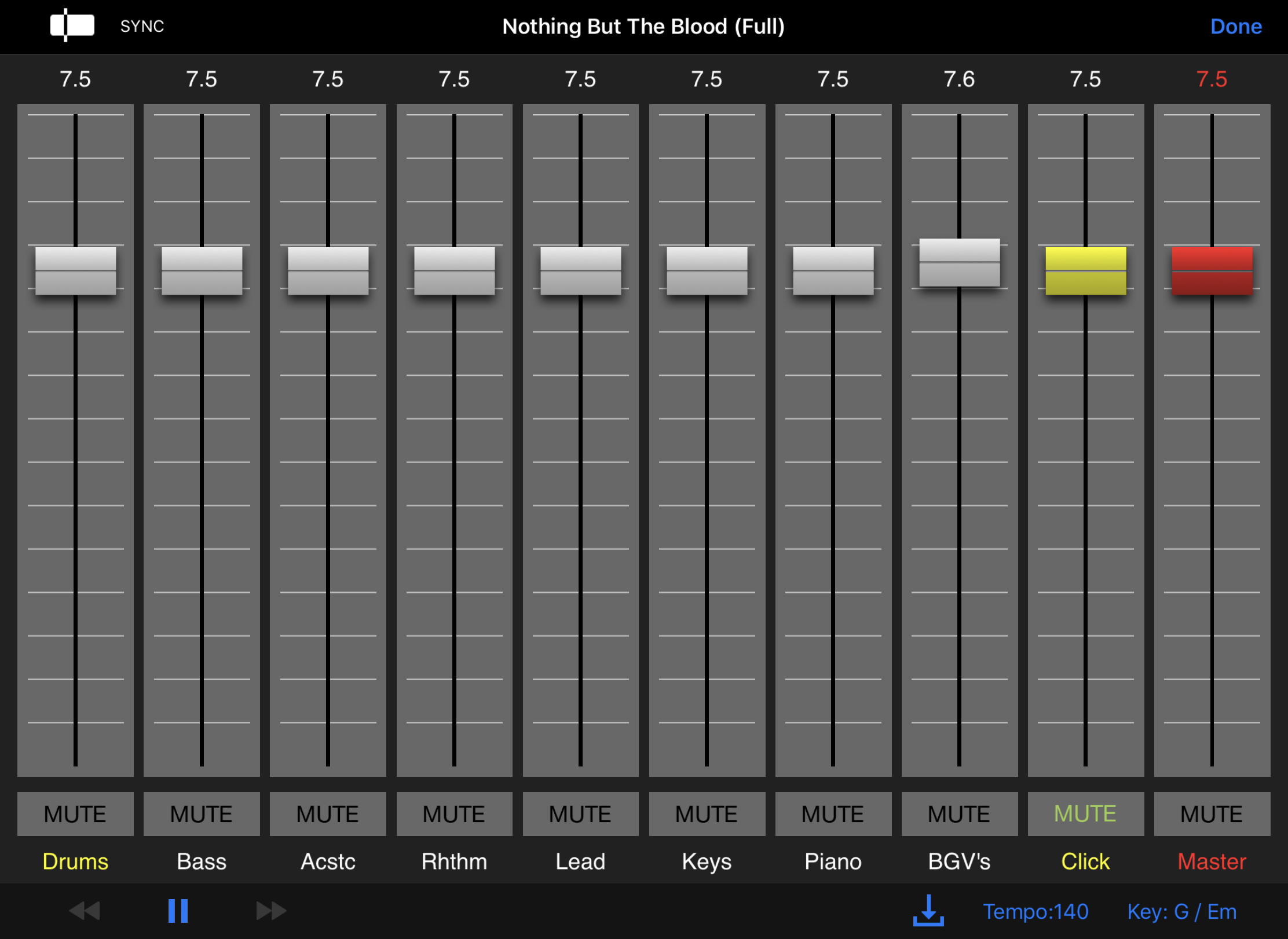
2) iSing Worship (app) This is a great app that does cost a little bit, but is a tremendous tool if you have a portable device like an iPad or iPhone. The app is free, but the songs will you about $3 a piece, which is only a dollar more than what you would pay for songs you currently buy on Google Music store or the apple iTunes Store. When you buy these songs, you then have the ability to include all of the elements of the song (i.e lead vocals, guitar, drums etc.). So, for instance, if you wanted to lead the song you could turn the vocals down and sing with the music like it was Christian Karaoke hour. Or iSing worship could become your worship band in a box by simply hitting play. Be sure, however that you plan the songs you are going to sing ahead of time and have the words either printed or displayed on the screen for the congregation to sing along.
Just some of the songs I have purchased and used in my services.The nice thing about iSing Worship is that once you select the songs you want to present on Sunday, it comes up on the display in front of you with the Lyrics as you lead the song.I highly recommend this app if you are willing to invest a little bit of money for the songs. It adds an element of intentionality into your worship, even if you’re not musically inclined.3) Recruit & Delegate
One of the challenges for many pastors, regardless if they are musically inclined or not is the use of other people in worship services. Do not be afraid to ask other people to help out, or lead elements of the service. In fact, a shared worship experience with other people leads to a better all around worship service. If you’re at all like me, perhaps you are a control freak and you want to ensure everything goes according to plan, perhaps we have to come to the conclusion that we must trust the Holy Spirit as well as other people.When we share the worship experience with other people, we share ownership. Be picky when you select, recruit and delegate people to these tasks, make sure you are selective and intentional. Find people who have potential as future leaders or already established leaders. It’s okay to fail or have rough worship experiences with these individuals, that’s a part of the learning & discipling challenge!4) Utilize your Youth
The apostle Paul told Timothy not to allow others to look down on him because he was young (1 Timothy 4:12)…the same can be said about young people in our churches and in the worship setting. Use your young people, don’t discount their willingness and abilities to lead. Teach them, disciple them as the future leaders by investing in them now within your worship services. Have them help by reading a prayer, or scripture verse, a skit, or even by leading a song. Some of your young people might be more musically gifted than you are – so cultivate that gift and use it in your worship service!Also, don’t let older people in your congregation overly criticize your young people. We do not want to discourage their growth as future leaders, we want to encourage them. Unfortunately most churches have the old grouches who grumble at anything new – even young people. Don’t tolerate that behavior from any member of your congregation. We need to disciple our youth, and this is a great way to begin to do that!5) Set the Stage (don’t neglect this!)
Regardless if you are musically inclined or not, we can become more creative in our church decor. Don’t neglect the aesthetics of your worship space! Take into account the seasons, the topics you are preaching on and use your worship space to reach all of the senses of the worshipper. Use smells (plug ins, or spices, candles – but don’t let it become over-powering. Use sites – place artwork up, or banners, build sets out of styrofoam and paint it…there are many links of Pinterest and other websites to explore and tap into our creative sides.
Use worship songs at the beginning of the service through cd/mp3/computer…set the stage with song (even if you aren’t musical).
When we actually plan the scenes of worship within our worship spaces we introduce our congregations to a living and moving God. The stages and worship places are concerts or performances, but there is something to be said about being intentional with the sights and sounds (and smells) or our spaces for the purpose of ushering our congregants into the very throne room of God.6) Worship Band in Hand (app)
This app also costs some money in terms of purchasing the songs that you want yo use, but it comes with a lot of features and abilities. You get one free song included upon installation of the app, it gives you the opportunity to try in it out and see if you like it.7) Auto Pad(app)
This app will cost you $2.99, but there are many features that this ambient sound pad contains that could set your worship onto a new plain. Perhaps you use this during your sermon and the use of tone and ambient sounds can deepen the worship experience. Using such a tool might require you to include/recruit others to help you operate the app while you preach or read scripture. Give this app a try and experiment with its use in your worship service!8) Lead a Messy Church instead!
Do you want to break up the monitany of the worship experience? Do something different. Some have begun to do dinner church, while others have started to incorporate Messy church into the worship experience. Messy church can be a great way to reduce your music phobia by utilizing stations through this very practical, teachable methods.here is a link to a few that we have done over the years – https://pastorsponderings.org/category/messy-church/9) Conduct A Quaker Service
A Quaker service generally is not focused on music, but instead the recitation of poetry, prayers, and the element of silence. This type of service might be a stretch to many of your congregants, even more so than Messy Church because of the use of silence. Despite the drawbacks, using this type of worship setting, but be just the thing your church or corps needs in order to have everyone dig a little more deeply into their hearts and minds.
Here is a link for more information on the Quaker service
10) Prayer Stations/Artistic Approach Conduct a prayer service with stations.
If you want to get creative, you can go onto Pinterest and explore the many ideas expressed there when it comes to Prayer Stations. This approach takes the focus off of the use of music and onto a hands-on prayer service. You could quietly play worship music in the background through your sound system and encourage everyone to spend the next 45 minutes at the many prayer stations that you have intentionally set up in your sanctuary. Here are some links to help guide you in this: Prayer Loom Thy Kingdom Come Scrabble Pieces More Pinterest Ideas
These are just 10 suggestions to help the non-musical and musical pastor a like, for the purpose of creating a deeper, more meaningful worship service. These are not exclusively ‘it’ for worship ideas, but just a primer for more exploration and worship developement in your corps & churches.
Please tell us what you use in your churches that help to make your worship experiences more meaningful and helpful to you and your congregation? Post your commends below, we want to hear from you.
Something more for all of us to Ponder today.
To God be the glory!
Dear Salvation Army, are we fooling ourselves?
Are we seeing one thing within our ivory towers while the reality looks quite different?
Please don’t take offense.
I mean no disrespect.
I just wonder if there are times that we are disconnected from how things truly are as opposed to how we perceive them to be.
It’s like the notion of missing the mark of evangelism & missions…It is like aiming for the lost with a harpoon when what you needed was a loving hug and a warm cup of coffee. Or perhaps, there is this grandiose idea of what success will look like (we envision a mega church with people all neatly lined up trying to get in) when in reality it is meeting with that single mother and ensuring she has enough to feed her family and she takes the leap of coming to church on a Sunday morning.
Do we miss the mark because our notion of successful mission has been aligned with a faulty or unrealistic sense of who we are serving and what they need? It can become that illustration of insanity, ever endeavoring to do the same thing over and over again, only to realize that it hasn’t worked in thirty years.
Perhaps we need to wake up.
I fear we have become too insulated in our own fishbowls, be it the corps, divisional headquarters, territorial headquarters or beyond. We cannot sit in our offices and expect the people to come to us. Yes, our branding is recognizable, but that doesn’t mean that we become lazy in our planning and in the reaching for the lost, hurting and oppressed. We cannot afford to sit in our fishbowls. We cannot become complacent, overly busy with interior paperwork, when outside in our communities families and individuals need to see the hope that the Holy Spirit is prodding us to give because we serve more than just an Army, we serve the Lord first and foremost.
Dear Salvation Army,
I am fearful that we have lost our way, because of mission drift.
I am fearful that leaders from every rank have forgotten what it means to have a heart to God and a hand to man. This is a broad brushstroke, not aimed at offending, but perhaps prodding those who need it. There are many, many saints in our Army. I wish to recognize that as fact, may we ever endeavor to emulate their great faith!
Lastly, we cannot program our army to death.
We cannot course correct without first dispelling the faulty realities that have gotten us to this point.
Questions to Ponder:
What fishbowls do we need to get out of today?
Do we truly know the communities and people that we have been commissioned to minister to?
Have we prayed about our mission and vision for the lost in our areas of influence? (Not all of these places will look the same, or require the same kinds of ministry tools to reach the lost and disciple the faithful).
How can we (I) encourage 1 person today (maybe more, but start with just one)?
Can we pray that God would reveal to us the hindrances and hang ups in our lives right now that prevent us from having a greater impact on the Kingdom in His name?
As I sit here and write this, I admittedly have first considered the fishbowls that I have placed myself in. No, this has nothing to do with appointments or rank, but as a follower of Christ there are walls that I have constructed that have not been ordained by Him. Constructs that insulate my selfish heart and profit nothing for the Kingdom of Heaven. Perhaps you can relate, dear Soldier. I believe that if we do not first dispel these walls and climb out of our fishbowls, so too will our impact for the Kingdom be limited.
Can we identify these fishbowls?
Are we prepared to climb out of them?
Something more for our Army to ponder today.
To God be the glory!
“The greatest danger for most of us is not that our aim is too high and we miss it, but that it is too low and we reach it.” -Michelangelo
This is more of a collective pondering today. We need your comments, thoughts and opinions in order to carefully and thoughtful answer the above question: Where Are We Going?
What is our vision?
What should our vision be?
How do we make that vision a reality?
What are some of the obstacles in our way of fully realizing that reality?
Who will it take (e.g. soldiers, officers, volunteers, donors)?
How important is accountability in such a large movement/organization?
How can we become more accountable to Christ within this Army? Where does Holiness belong in such a conversation?
I have disclosed numerous questions to ponder today…are you willing to take a chance at answering any or all of these questions? The larger scope question: Where Are We Going? In other words, if you were to envision where the Army SHOULD BE in 20 years, what would it look like? What would you want to see different, the same, the growth?
-If we have no plan or vision, then we will flounder and waver.
We look forward to your responses!
Something more for the Army to ponder today!
Vision without execution is hallucination.” – Thomas Edison
*Disclaimer: the thoughts and opinions represented here do not necessarily reflect the thoughts and opinions of The Salvation Army and are that of the writer of this blog, reader discretion is advised.*
Today I want to explore with you only ten things that will kill our corps. As with other lists we have compiled here on Pastorsponderings, this is merely a primer and I know there are other issues that will certainly lead to a terminal corps. Be mindful as we explore this list to consider your own corps, ask yourself the hard questions. Our goal is not to tear down or make anyone feel bad about their corps, but instead through critical thinking, help us to inject vibrancy into corps settings. One other word of caution – Corps Officers, don’t try to be the dictator of every aspect of your corps, micromanaging will stunt the potential growth of your soldiers and local officers. Soldiers & Local Officers, don’t expect or accept the notion that your corps officer is to do everything either. This is a partnership. It is true that the position of corps officer is a very temporal position and with it comes differing views and leadership styles, but be firm and strong as the glue that hold your corps together! More often than not, corps that die usually have little to no local officers leading the way. Without that infrastructure the corps can collapse.
So, without further adieu, let us delve into Ten Things That Will Kill Your Corps
Legalism
Contrary to some views, the Pharisee of the Bible did not die…they still exist sometimes even in our corps. Be mindful of the use of rules and regulations. Yes, we need order and operate within a quasi-military structure, but watch out that extreme legalism doesn’t soffocate your members! Remember that we are not under law but under grace! (Rom. 6:14) Yes, keep to the doctrines of our Army, but do not lord it over soldiers and adherents. Excessive power will divide people and make them dispise leadership, where as grace and love will solidify the soldiers and friends of our army. Sometimes, bite your tongue and say nothing is a better formula than lashing out, judging and becoming the rule enforcer!
Tolerance of Sin Issues At the other end of the spectrum is the ignoring and tolerance of sin issues in your corps. Be mindful that we are not the judge of our world, but we do hold a high standard for our fellow brothers and sister in Christ who wear this uniform. This almost seems to be in complete conflict with the first point, but it is not. Galatians 6:1 clearly reminds us as it did in Paul’s day – “Brothers and sisters, if someone is caught in a sin, you who live by the Spirit should restore that person gently. But watch yourselves, or you also may be tempted.”
Do not blindly ignore sin issues in your corps.
Confront in love with the support of other believers. We must be very cautious here, make sure this is not done in anger, unless righteous anger is needed (let the Holy Spirit lead you). Pray about these issues. Wait for the right time. DO NOT confront from the Pulpit or lash out at people just to “get even”. Use your corps council, your local officers, contact an mediatary from your divisional headquarters, but do not let anyone in your fellowship slip further into sin and/or by ignoring it condone it by-proxy.
Lack of Core Leadership
Without core leaders in the corps, the vision and decisions fall solely on the Corps Officer(s). Yes, they have had training, yes they are leaders, but they cannot lead properly without the core leaders to help them. A shared vision and delegated group will be better equipped to handle opportunities and threats that come to your corps and community. If you don’t currently have core leaders, begin by praying and asking God to reveal potential leaders to you. Prayer is never a last resort, but a constant conversation. Don’t limit your search to just the older members, the younger generations will eventually replace us at some point, so begin to invest in them. Begin to disciple them, and display for them what leadership is all about! Gather one or two influential people with common sense to help you in your corps. Remember, that we are an egalitarian movement – both men and women are equal, so do not limit your leadership search to just men or just women. Without a core group of leaders, the vision and movement will be limited.
Polarizing Visions Polarizing Vision Can Kill!On the other end of the spectrum you might have too many cooks in the kitchen, so to speak. What happens when the core leaders in your core do not agree on which direction to take? This is a danger, and if not addressed properly can leader to dysfunction, an exodus of membership and death in the corps. A shared vision is of the utmost importance. Without a shared vision, everyone will be doing their own thing and everyone will be going every which way, and nothing will ever get done successfully. “Where there is no guidance the people fall, But in abundance of counselors there is victory.” (Proverbs 11:14)
Inwardly focused – All-in
There is a danger in our corps to become so insulated, so accustomed to who is there, and what we do as a corps, that we begin to have no need for the “outside world”. We stop looking out into our community and we become self-reliant and self-focused. In this danger, what happens when our congregation gets old and dies? Will there be youth to raise up and take our place? Will be just be a group of inbred soldiers? I don’t mean to sound crass, but the reality is, we need to stop being afraid of our communities. We need to stop treating the people outside our buildings as “those people” with a sense of superiority. We must squelch the desire to just remain in our buildings and selfishly focus on “us”. What about the great commission? What are we fighting for if we only fight for ourselves and our traditions and self-interests? If we are all-in and inwardly focused, we will slowly die away…and no one will care when we’re gone.
Outwardly focused – All-in This is probably a rare thing, but perhaps not. Perhaps there are some corps that have so many services to the community that worship and all things “Spiritual” are an after thought, and then you come to Sunday and it just becomes a “thing we do”. We focus all of our energies on the outside, on meeting human needs but we seldom meet those needs “in HIS name” anymore. We might as well be just another social service agency or a humanitarian group, because we will have forgotten our first love and the “body” will be just bits and pieces pulled and stretched so thin that it doesn’t resemble Christ any longer.
Rigid Goals and Vision
We can plan to fail by over planning everything. This can kill our corps, if we do not listen to feedback from those we serve, and we merely continue to plod on in our vision and goal because “they have been set, and we don’t alter these goals”. Goals should never be so rigid that there is no looking back and re-evaluating what works and what does not work, whether it be in evangelism, discipleship, or corps fellowship growth strategies. Remember what worked 100 years ago, might not necessarily be the best method to use in an ever evolving culture. Not to say we adopt our culture, but we ought to consider what works and what does not work any longer and not be so rigid that we refuse to ever change how we plan and how we enact a strategy in our corps. Rigidity can kill your corps, and stifle any potential growth you might see.
Holiness is not taught If you corps does not understand Holiness, and or it is never preached on spoken of, perhaps this might be an indicator of a terminal issue. I am not saying that holiness is the end-all be-all of the corps, but what do you do with Salvation after receiving it? Where does one go after initial sanctification? Does the Holy Spirit still desire to transform us through and through? Does He not want us to be the very reflection of Christ? Yes. There needs to be continual conversation about our surrendered life and how that looks in the real world.
Discipleship is not cultivated
With the teachings of Holiness, comes the deeper fellowship of discipleship. This isn’t some text book class we all are forced to attend, this is mentoring, this is emulating elders we respect, this is becoming more than who we are now. Walking in the footsteps of saints and in so doing, we too become saints within this great army. If your corps does not have this vital element, closely connected to holiness, you could be facing extinction. Recognize this need, and do something!!
Comfort Over Risk
Lastly, our army could will die if we merely remain content in where we have come. We can sit back and relish the past. We can lament that things aren’t how they used to be in the bygone days. We can rest comfortably on financial resources and riches we have been given from various places, and never take another risk again…and if we do this, we. will. die. I cannot stress it enough, in order for God to change our Army, we have to become uncomfortable again. We have to take risks and forget what the rules and regulations say. We have to close dead corps, move to places of need without bureaucratic red tape hamstringing us along the way. We have to get out of our pews and put feet to our professed faith. It’s either put up or shut-up. Seriously, we can talk a good game, but if we can’t back it up, then hung it up and quit already. We don’t need fans in the stands not doing the work. We don’t need complainers and criticizers telling it us it can’t be done – because the risk is too great. If we don’t do something, we might as well put our corps on life-support right now. There is a sad trend that is taking place in our corps around the USA, and our corps are not statistically growing anymore. We are not busting out of our corps buildings anymore. Yes, perhaps it’s across the board in all denominations, but could it be that we are so comfortable now that we have stopped ACTUALLY trying to reach our communities? Could this be an entire systemic issue of spiritual laziness? Forgive me if I offend you today, I can’t help but feel alarmed at how swiftly our corps are dying. And I can’t help but wonder what the next 50 years will hold for this movement? If we do nothing, we will not be here in 50 years…not like we have been, not like we should be…and then perhaps, Lord forbid, God raises up someone else to do what we should have been doing.
These are ten things that are killing our corps…there are more, but for now that is more than enough to ponder and chew on in our army. What do you think? Tell us, please, I relish your input, opinion and testimonies.
Blessings on you and your corps today!
To God be the glory!
In his excellent biography of Dietrich Bonhoeffer, Eric Metaxas includes this important event as foundational to Bonhoeffer’s faith.
“In November 1921, at the age of fifteen, Bonhoeffer went to the first evangelistic meeting of his life. General Bramwell Booth of the Salvation Army had conducted ministry in Germany before the war, and in 1919, greatly moved by reports of suffering there, especially the hunger among children, he found a way around the official channels and was able to have milk distributed. He also gave five thousand pounds to relief efforts.
Two years later Booth came to Berlin to lead a series of evangelistic meetings. Thousands showed up, including many soldiers broken by the war. Sabine recalled that ‘Dietrich was eager to take part in it. He was the youngest person there, but he was very interested. He was impressed by the joy he had seen on Booth’s face, and he told us of the people carried away by Booth, and of the conversions.’ A part of him was powerfully attracted to this sort of thing, but he wouldn’t see anything like it again for ten years, when he attended the Abyssinian Baptist Church in New York City.”
Forgive me for having some measure of pride in the fact that the joy observed and experienced through the moving of the Holy Spirit by Salvationists past, impressed and blessed an adolescent Bonhoeffer. Perhaps the memory of such joy accompanied him through his darkest hours. One of Bonhoeffer’s final writing describes life’s finality in this way, “Death is the supreme festival on the road to freedom.” That is only possible through divine joy.
Since this article is meant to be reflective, considering what I would have done better during my years of active service, it goes without saying that living a joyful life would be paramount. Life in Christ is always about joyfulness. It is distinct from simply being happy. We can all attest to days that are not happy ones but in spite of the seriousness that life brings, joy can always be found in every event or experience. Wouldn’t it be nice to hear someone express the beginning of the faith walk as a result of seeing your joy, even during some of the most stressful times of life? Perhaps you will join me in praying part of David’s prayer of contrition today…
Cleanse me with hyssop, and I will be clean; wash me, and I will be whiter than snow.
Let me hear joy and gladness; let the bones you have crushed rejoice.
Hide your face from my sins and blot out all my iniquity. Create in me a pure heart, O God, and renew a steadfast spirit within me. Do not cast me from your presence or take your Holy Spirit from me. Restore to me the joy of your salvation and grant me a willing spirit, to sustain me. Then I will teach transgressors your ways, and sinners will turn back to you.
“Hardship, unbelief, suffering and poverty have not stopped our soldiery from rendering their service to God and man. The Salvation Army is a great empire, an empire without a frontier made up of a tangle of races, tongues and colors such as never before in all history gathered together under one flag.” -General Evangeline Booth
I do not wish to pat ourselves on the back today, this is not my purpose.
The purpose for this pondering is to explore the structure and foundation of our Army today.
This week we have talked about our identity and that we are more than simply a “church”…this calling that we are answering is to the front lines, to places where the church often shies away from. It is my intention to judge the church, but rather to paint the necessity of our Army to remain in the front lines.
We cannot boast that this uniform or this mission is glamorous, because it is more often than not, a tiring, thankless duty. We must get our hands dirty in order to grasp the hand of the one needing rescue from the pit. We must be available to listen to the lonely soul who feels as if they are all alone. Yes, it is often a most unglamourous (If I may make up a word) duty we are called to perform.
A Stalwart Soldier:
Storms will come.
Doubt will occur.
Leaders will come that you might not see eye to eye with.
Clouds of disillusionment might appear on your horizon.
But we MUST remain firm. We cannot retreat, despite these imperfections within our ranks.
We are all imperfect people being cleansed by a Holy God. We must allot for grace and forgiveness so that we can continue to serve Christ in the many capacities that He has placed us in.
I too struggle with “the system” from time to time.
I too question certain policies and decision from time to time, BUT this will not deter me from serving Christ first and attempting to continue this mission to the world around me.
Your community needs you.
Your town, city, neighbor – they need you!
They need a functioning, loving, graceful Salvation Army to go where no one else dares to go.
We don’t have time to become divided upon anything.
The moment we become a divided Army, is the moment that we lose ground and lose our place within our communities and most importantly God’s mission for us. When we relinquish our prejudices and societal divisions and allow the grace of God and the love of Christ to permeate us entirely, we tear down all divisions and become united again. This road that we are on is not easy, it was never supposed to be easy. Christ’s path to the cross was not easy, and we are called to pick up our crosses and follow Him – no matter where that leads us.
Are you prepared to carry that cross?
There will be person sacrifices to be made.
It is not always glamorous.
There will be bumps and bruises along the way…but we need you!
This Army of Salvation needs viable, faithful, loving, holy, Salvationists to lead the way.
Now more than ever, we must remain united as one Army throughout our World.
One mission…One purpose. Yes, we will lose comrades along the way. Attrition is real.
BUT:
-If we are more concerned with being like Christ instead of looking the part of a soldier…
-If we are focused on Kingdom building instead of personal, selfish agendas…
-If we have a deep compassion for people and are grieved by the sickness of sin instead of settling for a compromised faith…
-If we careless about attaining certain positions and ranks and care more for others…
-If we spend more time on our knees before the throne of heaven intently listening instead of jabbering away and complaining about our gripes and wants…
-If we studied more about what Jesus said and did and why He did those things instead of studying what our founders did (I’m sorry, I deeply respect our founders, but they surrendered to Christ too)…
If we do these things, and strive for holiness in everything that we are and do…these borders and divisions that we face will decrease and Christ will increase in our vision and heart. We can’t allow our minds to become consumed with these impossible, insurmountable boarders any longer – because we serve a God who does the impossible and STILL performs miracles in our communities.
Dear Army, we are an Army of Salvation that is spurred on by the resurrection power of Christ Jesus! Each of us are a standing testimony to this power. He still longs to transform lives in your corps, in your communities. Despite the darkness, Christ can and will shine His light and expose sin and deliver souls from these chains. We, dear soldiers, have the deep privilege of bearing that light into those places…if we will only commit to it and stop wavering between our old lives and our new.
“I seemed to hear a voice sounding in my ears, ‘Where can you go and find such heathen as these, and where is there so great a need for your labors?…God shall have all there is of William Booth” -William Booth
Does He have all of you yet?
Something more for our Army world to ponder today, To God be the glory! Disclaimer:The views and opinions expressed in these ponderings on pastorspondrings.org are those of the author’s and do not necessarily reflect the official policy or position of The Salvation Army.









 This is a great app that does cost a little bit, but is a tremendous tool if you have a portable device like an iPad or iPhone. The app is free, but the songs will you about $3 a piece, which is only a dollar more than what you would pay for songs you currently buy on Google Music store or the apple iTunes Store. When you buy these songs, you then have the ability to include all of the elements of the song (i.e lead vocals, guitar, drums etc.). So, for instance, if you wanted to lead the song you could turn the vocals down and sing with the music like it was Christian Karaoke hour. Or iSing worship could become your worship band in a box by simply hitting play. Be sure, however that you plan the songs you are going to sing ahead of time and have the words either printed or displayed on the screen for the congregation to sing along.





 Conduct a prayer service with stations.




 At the other end of the spectrum is the ignoring and tolerance of sin issues in your corps. Be mindful that we are not the judge of our world, but we do hold a high standard for our fellow brothers and sister in Christ who wear this uniform. This almost seems to be in complete conflict with the first point, but it is not. Galatians 6:1 clearly reminds us as it did in Paul’s day – “Brothers and sisters, if someone is caught in a sin, you who live by the Spirit should restore that person gently. But watch yourselves, or you also may be tempted.”
 Officer(s). Yes, they have had training, yes they are leaders, but they cannot lead properly without the core leaders to help them. A shared vision and delegated group will be better equipped to handle opportunities and threats that come to your corps and community. If you don’t currently have core leaders, begin by praying and asking God to reveal potential leaders to you. Prayer is never a last resort, but a constant conversation. Don’t limit your search to just the older members, the younger generations will eventually replace us at some point, so begin to invest in them. Begin to disciple them, and display for them what leadership is all about! Gather one or two influential people with common sense to help you in your corps. Remember, that we are an egalitarian movement – both men and women are equal, so do not limit your leadership search to just men or just women. Without a core group of leaders, the vision and movement will be limited.
 and what we do as a corps, that we begin to have no need for the “outside world”. We stop looking out into our community and we become self-reliant and self-focused. In this danger, what happens when our congregation gets old and dies? Will there be youth to raise up and take our place? Will be just be a group of inbred soldiers? I don’t mean to sound crass, but the reality is, we need to stop being afraid of our communities. We need to stop treating the people outside our buildings as “those people” with a sense of superiority. We must squelch the desire to just remain in our buildings and selfishly focus on “us”. What about the great commission? What are we fighting for if we only fight for ourselves and our traditions and self-interests? If we are all-in and inwardly focused, we will slowly die away…and no one will care when we’re gone.
 This is probably a rare thing, but perhaps not. Perhaps there are some corps that have so many services to the community that worship and all things “Spiritual” are an after thought, and then you come to Sunday and it just becomes a “thing we do”. We focus all of our energies on the outside, on meeting human needs but we seldom meet those needs “in HIS name” anymore. We might as well be just another social service agency or a humanitarian group, because we will have forgotten our first love and the “body” will be just bits and pieces pulled and stretched so thin that it doesn’t resemble Christ any longer.
 vision and goal because “they have been set, and we don’t alter these goals”. Goals should never be so rigid that there is no looking back and re-evaluating what works and what does not work, whether it be in evangelism, discipleship, or corps fellowship growth strategies. Remember what worked 100 years ago, might not necessarily be the best method to use in an ever evolving culture. Not to say we adopt our culture, but we ought to consider what works and what does not work any longer and not be so rigid that we refuse to ever change how we plan and how we enact a strategy in our corps. Rigidity can kill your corps, and stifle any potential growth you might see.
 If you corps does not understand Holiness, and or it is never preached on spoken of, perhaps this might be an indicator of a terminal issue. I am not saying that holiness is the end-all be-all of the corps, but what do you do with Salvation after receiving it? Where does one go after initial sanctification? Does the Holy Spirit still desire to transform us through and through? Does He not want us to be the very reflection of Christ? Yes. There needs to be continual conversation about our surrendered life and how that looks in the real world.
 emulating elders we respect, this is becoming more than who we are now. Walking in the footsteps of saints and in so doing, we too become saints within this great army. If your corps does not have this vital element, closely connected to holiness, you could be facing extinction. Recognize this need, and do something!!
 to be in the bygone days. We can rest comfortably on financial resources and riches we have been given from various places, and never take another risk again…and if we do this, we. will. die. I cannot stress it enough, in order for God to change our Army, we have to become uncomfortable again. We have to take risks and forget what the rules and regulations say. We have to close dead corps, move to places of need without bureaucratic red tape hamstringing us along the way. We have to get out of our pews and put feet to our professed faith. It’s either put up or shut-up. Seriously, we can talk a good game, but if we can’t back it up, then hung it up and quit already. We don’t need fans in the stands not doing the work. We don’t need complainers and criticizers telling it us it can’t be done – because the risk is too great. If we don’t do something, we might as well put our corps on life-support right now. There is a sad trend that is taking place in our corps around the USA, and our corps are not statistically growing anymore. We are not busting out of our corps buildings anymore. Yes, perhaps it’s across the board in all denominations, but could it be that we are so comfortable now that we have stopped ACTUALLY trying to reach our communities? Could this be an entire systemic issue of spiritual laziness? Forgive me if I offend you today, I can’t help but feel alarmed at how swiftly our corps are dying. And I can’t help but wonder what the next 50 years will hold for this movement? If we do nothing, we will not be here in 50 years…not like we have been, not like we should be…and then perhaps, Lord forbid, God raises up someone else to do what we should have been doing.









 Pastor's Ponderings