I AM

I Am…
Two simple
Words.
So much…
With so little…
Calling to existance
Resistance of
The invisible
The indefensible
I AM
Alive,
Breathing,
More than,
not static
emphatically
dramatically
Realistically
Here…
Now…
I AM.

Sometimes (it all comes down)

Sometimes like an avalanche
Sometimes gentle like a
warm summer breeze
Sometimes heavy like
A mourning cry
It all comes down
Like pouring rain…
It all comes down again

Sometimes harder than
It should be
Sometimes easy as
Pie
I don’t know why
But lately I’ve been asking it
Lately I’ve been praying it
I’m not faking it
But it all comes down
Like pouring rain…
It all comes down again.

Sometimes hearts are heavy
Sometimes broken into pieces
Sometimes hearts are full of caring
Sometimes empty as a season
Of regret
I’ve been asking it
I’ve been praying it
I sure ain’t faking it
But it all comes down
It all comes down
Comes pouring down
Again.

Equipped And Engaged (Spiritual Discipline and Moral Failure)

“He lives the poetry that he cannot write.  The others write the poetry that they cannot realize.” –Oscar Wilde

Image


What of this thing called integrity?  Is it a lost art and lost application of principle in our world today?  Do personal and corporate ambitions get in the way of true honesty and moral character?   All too often we hear about leaders and figure heads from all walks of life falling from grace because of moral or ethical failure.  It’s always uncomfortable to hear or watch their lives fall apart right before our very eyes.  Sometimes, dare I say, we look down upon them and think “that could never happen to me”.  You’ve heard the phrase “pride comes before the fall”, and yet we fill ourselves, defensively, with that insulated pride and think either we’re impervious to ethical or moral failure or that we will never be caught.  Either way, we walk on very thin ice if we believe either of those pretenses or excuses will protect us should temptation come our way.

How do we avoid failures of integrity and character?

Here are a few suggestions to better equip and protect ourselves from such trappings:

1.  Equip and transform our minds with honorable things:

Philippians 4:8 says; “whatever is true, whatever is noble, whatever is right, whatever is pure, whatever is lovely, whatever is admirable—if anything is excellent or praiseworthy—think about such things.”

Another power passage of scripture tells us – “be transformed by the renewing of your mind.” (Romans 12:2)

The battle of this war that we wage against sin and temptation begins within our thought processes.  Whatever we put into our minds we will eventually live out in our lifestyles and actions.  So to avoid failures of integrity and character begins with thinking and meditating on things of a godly nature instead of a worldly perspective.  What this means is that perhaps we become better stewards of our time and what we see, hear and read.  These forms of media are everywhere in our lives.  They aren’t inherently evil, in fact there are some very effective and healthy forms of these, but all too often we do not balance our intake of what we hear see and read.

When we realize that what we feed our minds and thought processes becomes who and whose we are, then we begin to see how vital it is to cut off or limit that which is harmful to the very fabric of our moral and ethical character as a human being.  The mind is the battle ground to our senses…leave it undefended and ill trained and it will be a source of daily defeat in your character and responses to others.

2. Avoid the ‘Bad Apple’ Principle:

You know the old farm tale of the apples that were to be sorted in the apple bin?  The boy was to discard the bad apples from those that were ripe and vibrant, but he got lazy and decided not to finish the job and left the apples for the day.  When he returned to the task the next day, many of the healthy ripe apples had become rotten because they were not separated from the bad apples.

Ephesians 5:7,8 says, “Therefore, do not be partakers with them; for you were formerly darkness, but now you are light in the Lord; walk as children of light.”  This passage of scripture doesn’t mean that we aren’t to be Christ’s ambassadors to the lost, but it does mean that our association with those still living in the darkness should be limited.  If we are children of light we need other children of light to help keep our candles lit.  Proverbs 27:17 says that “iron sharpens iron”, meaning that we as Christians ought to be in fellowship with one another to help each other along the way.  When we are not a part of a fellowship of other believers we can often lose our way or find ourselves at a moral or ethical precipice because no one was there to prevent us or hold us back.  Ignorance as Christ followers is not bliss, we need each other and we need to hold one another accountable.  We have to avoid the bad apple principle by partaking in the fellowship of other believers who will help us become better equipped to engage and shine our lights into the world.


“Through simplicity we live with others in integrity.  Solitude allows us to be genuinely present to people when we are with them.  Through submission we live with others without manipulation, and through service we are a blessing to them.” –Richard Foster (Celebration of Discipline, pg 201)

3.  Engage in an Active and Protective Prayer Life:

Eleven leaders of conservative renewal movements, representing eight groups from within six Protestant denominations, pooled common concerns at a third annual meeting.

Conference convener Matthew J. Welde, of Presbyterians United for Biblical Concerns, noted an increase in renewalist groups, and Gordon-Conwell Seminary professor Richard Lovelace told the group that greater unity among evangelicals, across denominational lines, is possible. One concern of the group: prayerlessness. They cited recent studies showing that “the average pastor surveyed prays only three minutes each day.” (Christianity Today, April 6, 1979.)

This illustration may have been written a while ago and only about pastors, but the truth is everyone needs to engage in an active and protective prayer life!  If we are to avoid the pitfalls of ethical and moral failures in our spiritual character as Christ followers, then we have include the discipline of prayer!  Not only are we to engage in prayer, but we have to protect that time as well!

It is fair to say that most, if not all of us, engages in a lot of activities throughout our daily routines.  Many times we can forget or neglect our daily devotion and prayer life with our Heavenly Father.  God doesn’t want what’s left of our day, or to be included in just a portion of it.  His fellowship with us can be most effective in our defeat and repelling of temptation and sin by daily communing with Him through an active prayer schedule.  This doesn’t mean that we have to get on our knees every fifteen minutes or write up some sort of elegant schedule, but it does mean that we ought not to treat prayers with God as something reserved for times of great need or just before bed time.  He can and will help us overcome obstacles and temptations that are before us.  But before we even encounter these obstacles or temptations it is wise to have His counsel, his fellowship and these conversations with Him can empowers and equip us to stand firm and avoid the trappings of sin all together.

Let’s wrap it up:

It would be foolish to think that any of these three areas of equipping our spirit and body is easy.  Spiritual disciple is very difficult!  This should be seen as a daily, even minute by minute effort of engaged spiritual discipline in our lives.  If we are to be protected and armed for this battle that is waged all around us, then we need to be armed with the right equipment.  There might be other areas of our lives that we might need further weapons of spiritual warfare…but daily, the exercise in these three are paramount to standing firm when temptation comes our way.

“Guard your heart above all else, for it determines the course of your life.” -Proverbs 4:23

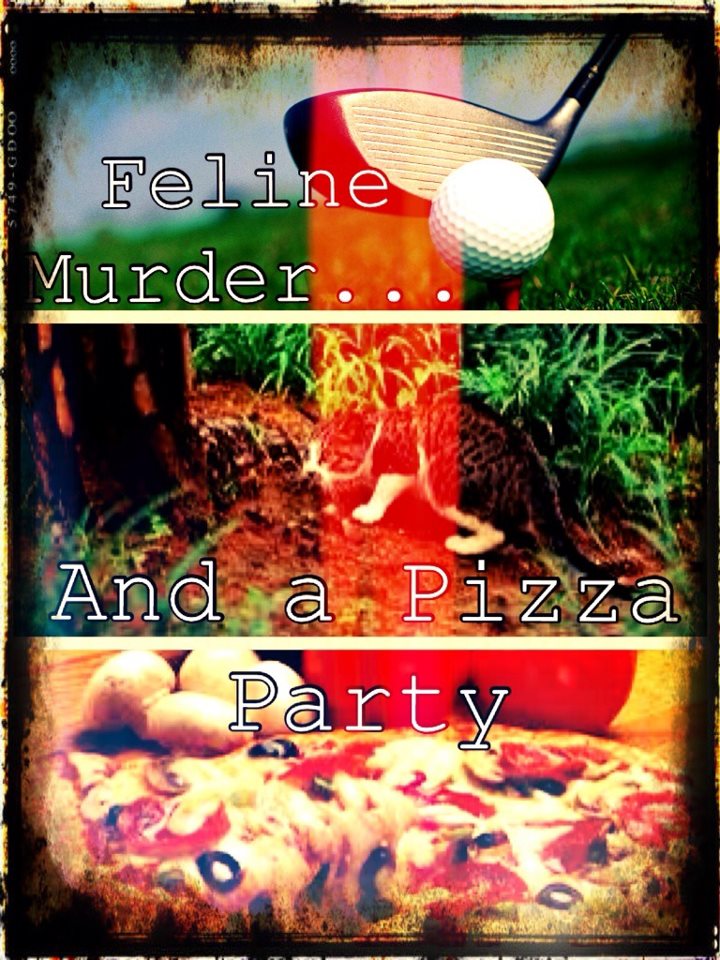
Feline Murder…and a Pizza Party

(A macabre tale of life and death… and a slice of pie.)

Image


It was a day unlike any other day…isn’t that how you’re supposed to begin a tale wrought with tragedy and misfortune?  The boy was eleven years old.  It didn’t matter to him if the weather outside was delightful or if it was tepid for a mid-spring day.  Regardless of the actual temperature, it was sunny outside and the boy had decided to venture out into the front yard to bask in the resplendent rays.  So there he was in the lush green grass, the dandelions were sprouting everywhere and bending slightly to the warming spring breeze.  The smells of new life, new chances and the warmth of hope was in the air. 


What does any eleven year old do on such a day?  He pretends to be a cowboy in the wild, Wild West.  He climbs the tree in the front that has the perfect bow to perch in.  He lies in the strands of grass that are too long and makes grass angels, scuffing up pants and cleanly laundered shirts with tattoos of green.  While later, not now, he will hear the indictments from his mother as she discovers his spring mirth, grass aerobics and branch torn pocket.   Then when these motion pictures of the imagination are over, he pursues other things, more sinister things, like burning ants with a bit of glass in place of a magnifying glass.  Don’t judge, he was only eleven. 


When the fried ants had lost the boy’s attention, he considers what else there is to do.  The lazed Saturday afternoon hummed along in a duet of sound with the whirls and horns of the passing traffic up the street.  Glancing over, past the charred remains of the small insects, the boy sees his next event for the afternoon.  It’s less sinister than the last, but little does he know that the events of the next half hour will lead to murder.   He walks over to the swinging gate that leads to the backyard and scoops up a small wooden golf club that is lying precariously in the tall grass.  “There is a bright yellow tennis ball in the front yard which will make a perfect companion on this golf course for one;”   He thinks to himself.  Retrieving the tennis ball and then dropping it onto the imaginary tee the boy is now transformed into a famous golfer with awful plaid pants and socks pulled up too high that he has seen on the small television his father was watching.   With golf club clutched in his pudgy, still very much a boy, hands he looks off into the distance judging just how far the ball will carry in the spring breeze.  He imagines his strength will have to be tempered in order to keep from striking the ball too hard causing it to soar out into space.  “I better go easy”, he thinks to himself.  Taking a few practice swings, the boy steps up to the tee, no one will notice that the last “practice swing” was actually a very bad miss.  This time, with a serious look of concentration on his face, the boy pulls the club back around behind his head, and with all of the force he can muster retraces the backward swing with an intense forward strike…the ball flies across the yard and into the bush beside the wooden fence. 


“So far so good”, the boy thinks to himself.  The yard is now gone and in its place is a finely smoothed out plain of green that is the golf course from the broadcast on the television that Dad was watching inside.   Walking over to the bush, he notices the hint of yellow behind some particular jagged branches and leaves.  Reaching down he plucks the ball from its hiding place and tosses it slightly away from the hazards of shrubbery and the neighbor’s fence.  He then strikes the pose he has seen on the TV, all the while lining up the club to the back end of the ball and then he waits.  He doesn’t know what he is waiting for. Perhaps he waits for the breeze to change directions or the silence of the crowd that has gathered invisibly around him.  He looks up and out into the distance and then returns his gaze and study of the tennis ball at his feet.  “It’s now or never” he pretends he hears the sports announcer say to his colleague in the press booth.  The boy winds himself up, golf club in hand and ready for the most powerful shot by a golfer the world has ever seen.  Without looking this time back at the ball, he winds himself up with all of the power that his eleven year old frame, (still a boy not quite a man) can muster…and then he strikes. 


The macabre problem herein begins.  Why is it possible that such a vivid moment in a young child’s life resounds more clearly than the most effective teacher in a class room ever could?  This was the case for that boy on that infamous spring day when he was just eleven years old.  He didn’t strike the ball very well.  In fact, he didn’t strike the ball at all.  There would be no cheer exploding from the invisible stands by make believe crowds in awe of this boy’s great and mighty athleticism.  His exploits would not make the cover of sports illustrated or even in folk tales of victory around the neighborhood.  No, because what happened next, was not some heroic event of a would be golfer, but rather the tragic epoch of horror and great sadness.  It would be an involuntary life lesson in the fragility of the mortal world. 


The club, destined for this great imaginary golf victory, did not strike its intended victim of the bright fuzzy yellow tennis ball variety.  But rather fatally struck the unintended victim of the feline and furry variety…the house cat.  Who, had been cautiously, stealthily stalking the rolling yellow ball in the tall green grass.  There was nothing to be done.  The boy, in full swing and visions of golfing victory, could not pull back, rewind, or halt what was to transpire and eventually expire.  It all happened too quickly.  Faster than the blink of his human eyes he would bear witness to this brutal lesson of life.  All things end.  Some abruptly.  Some viscerally.  And still others, yet to be learned, will end with but a faint whisper or an exhaled breath in unwanted beds.    


The cat, mortally wounded, would later be mercifully put to sleep at the local veterinarian’s office.  The boy whose cheeks, flushed with regret and soaked with salty bitter tears would not be spanked that day.  Although, truth be told, He felt like he deserved such a punishment…or worse.  But his punishment would be that sight, forever etched into his brain of a flailing house pet whose life had quickly been spent at the hands of a simple wood-shaft golfing putter.   His reconciliatory prize that day was not a golfing trophy or a tongue lashing from his parents, but rather a family excursion to Pizza hut to eat the guilt riddled soul of an eleven year old child away in triangled slices of piping hot cheesy goodness.


Isn’t it ironically funny how life is like that?  We learn at the behest of the instructed and disciplinary knee of life experiences.  Too often our choices carry farther reaching consequences than we would rather admit or want.  That boy on that spring day has never forgotten his lesson.  He, still to this day, has never so mourned an animal more than when fate or circumstances stepped in, shattered childish preconceptions of life, and replaced it with reality – harsh and visceral.  Yet I will never forget how good that pizza tasted.  It was a small slice of heaven in the midst of my own personal hell.  Lesson learned; never play golf with a crouching cat. 

Holiness: Walk of Obedience or the Unattainable Summit?

Image


What do you think of when you hear the word holiness?  It might evoke in you images of people walking around in brilliant white gowns.  Perhaps Mother Teresa diligently working in the slums of Calcutta comes to mind.  But when we as people of God think about the word holiness seldom do we have these images of ourselves being Holy.  Holiness seems to be this aloof concept to most Christendom.  Perhaps there is this notion that it is some sort of attained level of spirituality brought on by years and years of serving the poor or living in a monastery somewhere very, very remote.  But the exact opposite is true.  When we are converted, when we have received Christ as our personal Savior, Redeemer of our sins, something amazing takes place.  We are indwelled with the very presence of God in the form of His Holy Spirit, living and active within us.  When He takes up residence within us, His mighty power flows through us, and He prompts us, prods us and convicts us to surrender continually in areas of our lives to Him so that we might become like Christ in every aspect.  The end result, or final product is that our human reflection becomes the very reflection of Christ…every fiber of our being is surrendered to Him so that we can be used to not only to declare God’s kingdom but to be the very representation of that kingdom of heaven right here on earth.   You see we often get hung up on this idea that Holiness is not attainable.  That holiness is impossible in this life and so we must wait until we lived out our feeble lives and die until we can be fully holy.  The simple truth is that we often misunderstand what holiness is in our human existence.  We often mistake human perfection for holiness, when this is simply not the case.  General Shaw Clifton puts it very well for us in his understanding of holiness;  


The holy life is not one of moral or sinless perfection.  We still make mistakes and get things wrong.  We are still capable of hurting others inadvertently.  The word ‘sorry’ is a crucial part of the holy life.  It is the hankering after sin that has gone now.  Sin has lost its attractiveness for us.  Holiness of life is not an optional extra for a believer.  At its heart is obedience to God and the will of God.  Without obedience there can be no spiritual maturity.  The walk of holiness centres upon seeking out God’s will for us.  He is there to guide and to control once we surrender.  He guides through his word in Scripture, through prayer, and through the wise counsel of mature Christian friends and leaders.  Obedience is the key to progress in the faith.”  –General Shaw Clifton (p.51, Hallmarks of The Salvation Army)


Mountain or path?

How are we to begin to understand holiness?  How can we ever contain so much Christlikeness in these fallible human vessels?  The fact of the matter is that alone we can’t.  Alone we can do nothing.  The problem often times that Christians struggle with on this topic of holiness is that we view holiness like a mountain.  This mountain is very, very far away and as we look up at this rocky precipice we quickly realize that not only is it very, very far away but it is also extremely high, reaching far above us to an elevation capped with snow and difficult, near impossible to ever traverse. 


This image of the mountain is how I have heard Christians attending church; bible study and Sunday school describe holiness.  They may use different terms, analogies and metaphors, but the simple truth is that most believer view this mountain and quickly come to terms with its enormity.  They look up and see holiness to be too big and too far away to even begin to attempt the climb.  But if the mountain that is holiness is too high to reach, then how does God expect us to climb, to “be holy as I your God am holy” ?  (1 Peter 1:6) 


After all didn’t Jesus say, “Take my yoke upon you. Let me teach you, because I am humble and gentle at heart, and you will find rest for your souls.” (Matthew 11:29) So how can we grasp such a concept of holiness which does not seem so easy and yet learn from Christ and find rest at the same time?   That doesn’t sound like rest that sound like a lot of work!   But we misunderstand.   We believe holiness to be an insurmountable mountain, when Jesus says to each of us “follow me”.  Part of Rabbinical teaching is the student or disciple not learning from the Rabbi but learning to become the Rabbi.  When Jesus says to us “Let me teach you”, what He is saying to us is “let me show you how to become like me!” 


Holiness is not the destination to the top of the mountain…holiness is the pathway of obedience, humility and love in our living right now!  Holiness is allowing the very essence of who Christ is to become the very essence of who we are as new creations of God.  It’s not about having enough strength or wisdom or knowledge.   As General Clifton has defined it, it is first about our obedience to our Lord.  When obedience takes the place of rebellion within us, when it seals up the cracks of doubt and uncertainty within us, then we begin to allow the Holy Spirit to walk with us on the pathway, and as He walks with us He guides us and corrects us. 


Obedience leads each of us to a deeper surrender to God.  We cannot surrender that which we do not understand to be images of our old self until the light of the Holy Spirit shines upon those marred imperfections within us and prompts us to surrender these mutinous remnants. 


What do you see?

Do you see a mountain before you?  Does it appear to be impossible, impregnable and daunting to behold?  Are you filled with fear as you hear the words holiness?  Don’t be!  We, as God’s sons and daughters are called saints!  We have within us this indwelling of His Spirit to guide, and direct.  What we are called to be is Holy and this begins with our obedience and our surrender. 


There’s a chorus that goes like this:


All my heart I give to thee;

Every moment to live for thee;

Daily strength to receive from thee

As I obey thy call.

While I bow to pray to thee,

I commit my way to thee;

Here, just now as I say to thee:

I dedicate my all.


May that also be our prayer today. 

Gray hair

Wisps of white
Snow or cotton
Are appearing even
Now on my chin
I refuse to acknowledge
This passing of time
Ignorance, as they say, is bliss
But perhaps in my case
Could be blinds to
This old work horse…
“I’m still as young
As I used to be”
I keep saying to myself
Perhaps some genie
Will overhear these ramblings
Of this crazy man
Denying his own ignorance
Perhaps not.

Happening for a reason (poem)

They say it all happens
For a reason…
Excuse me for finding
The cynical humor
In this thought…
Thoughts cascade,
Persuade, invade
And encompass us
Into decisions…
I find it difficult to believe
Our parts have nothing to do
With consequences
Broken fences where
The horses were set free
To rummage and pillage
The farmer’s crops
Things happen for a reason
And with the turning of
The seasons, we make choices
Rippling out like small waves
In a pond affecting
It all, infecting
Rejecting the rational
Replacing it with the fickle
Layered on to explain
Poor choice away
Like some great divorce
From the truth…
It happens, accepting
But not understanding
Coming to terms
With a price too high
Its okay to find the anger
Within…its okay to question
Last time I checked
He has big shoulders
For that.

Construction Instructions…

I was holding the instructions in my hands, but I had no intention of using them.  Who needed instructions, after all this was a do it yourself project and what part of “do it yourself” included instructions?  Casting the instructions aside, I began to build the bookshelf on my own.  It felt great!  I had the screw driver in one hand and in the other hand I was clutching one of the corners of the would be shelf, yet I couldn’t make heads or tails of it.   So I did what I thought any great carpenter or construction worker would do…I guessed.  Finally when I had put everything together, when all of the dove tailed ends were roughly fastened together with my best guess of the appropriate screws and fasteners,  I stepped back from my project and looked at it.  As I appraised my handiwork and my supposed craftsman skills I quickly realized in many of the steps of construct, I had made several mistakes.   One of the main corner pieces was backwards and the unfinished side was exposed.  Another corner had been added to a slightly shorter wood panel piece and the entire bookshelf was skewed awkwardly leaning to one side.  What started out as a simple do it yourself project became a humbling lesson and the realization that I was not as skilled as I had first imagined.  I was completely in over my head without the instruction manual.  I thought I knew what I was doing, but when faced with my finished mess of a product, I had to come to terms with the realization that I wasn’t as talented as I thought I was.  And to add insult to injury I had so many leftover bits and pieces unused still in the packaging.  I knew that my “go it alone” plan had failed…it had failed miserably!

That’s what pride and self-confidence does to us in this life…leaves us with shabby, poorly constructed and down right  embarrassing projects.  And when we look over at what is left, bits and pieces, vital to the actual construction, remain untouched.  They say pride comes before the fall and I would like to add that pride also comes before reading the instruction manual!

Am I the only one who has done this?  Come on…be honest.  Sometimes picking up the instruction manual feels tedious, unnecessary and time consuming, not to mention that it can be difficult to find the side that is in our language.  But the truth of the matter is that without the instructions, most, if not all of us will undoubtedly create a piece of furniture that possibly will be unusable, unsuitable for anything and we will be forced to take it apart and start all over.

There is a very real spiritual application to this story.  Dare I say that sometimes each of us has looked at God’s Word, our instruction booklet or guide to godly living, and thought, “I don’t need it, I already know what the instructions will say and I can do this project called life by myself.”  This is a dangerous assertion.  We proclaim that we don’t need any kind of help or guidance, and then we try it on our own and find that we have constructed a mess of things.  I do not think it an accident that the first recorded message of Jesus, the Sermon on the Mount, begins with “Blessed are the poor in spirit for theirs is the kingdom of heaven.” (Matthew 5:3)  In other words – be humble and you will not only be able to receive God’s instructions, but you will be able to apply it in life and be a part of God’s kingdom. Pride can blind us to this fact.  Self-assurance and self-reliance are okay up to a certain point, but they can only take us to the foot of the cross and cause us to realize that our knowledge, understanding and wisdom are not enough.  This realization isn’t about humiliating us or causing us to feel inferior, but rather puts our lives into perspective of the greater most excellent ways of God.  When we begin to understand God desires full access to our lives and to our hopes and dreams, only then will we begin to see the big picture.  Only then will we begin to live for Him and for others instead of only for ourselves.

When you step back from the project that is your lives what do you see?  Are there still exposed, unfinished pieces that need correcting?  Are there still bits and pieces left over in the packaging, untouched and unused?  He wants to help us, He wants to create a master piece in us, but this transformation cannot begin unless we take a look at His guiding words and apply His love and wisdom to our life’s construction.  Don’t let pride and self-reliance rule you!  Don’t limit life’s construction by limiting the instructions to your own understanding and knowledge.  “Blessed are the poor in spirit, for theirs is the kingdom of heaven!” –Jesus. Image

The Arrow Beyond Us!

In the early hours of the evening, just as the shadows begins to touch the edges of the palace and the waning light of the sun slips quietly beyond the horizon, Jonathan arrives to the  feast.  This is the second day of the feast of new moons, Jonathan is apprehensive; his sworn oath to his best friend David still fresh in his mind replays itself over and over again.  This task, this allegiance is not going to be easy.  Jonathan is stuck in the middle, and yet he is motivated by an intense devotion to his friend, and there is a fire in his heart of certainty that David’s safety is in grave danger.  King Saul, Jonathan’s father is extremely jealous of David and his popularity; for David is a true battle hero to the people.  Songs are sung about him and children are being tucked in at night with tales of David’s war victories told with great exaggeration and embellishments.  King Saul does not hide his distain and jealousy well, for his years in power has tainted his moral compass and his reasoning has become self-indulged and consumed by paranoia and hatred.   Still, Jonathan hopes that his presence there with his father is enough to stave off any notion of murdering his best friend David.  In a very real sense Jonathan’s seat at the feast tonight is a veiled attempted to gauge just how far his father will go to rid himself of David and his perceived threat to the throne.   Jonathan is an optimist at heart and he hopes to hear and see any evidence of King Saul’s humanity and compassion.  So he enters the feast as he did the night before and reclines himself down into his ornate arm chair of honor before dignitaries, war leaders, and his father who is nursing a large chalice of deep burgundy wine.  King Saul appears troubled; then again he always appears troubled these days.  But as he glances up from his cup and realizes David has once again not accompanied Jonathan to the festivities, his troubled brow that he has worn regularly like a uniform on a soldier becomes a deep ravine of creases like a tide rolling with anger and hatred.

“Why isn’t Jessie’s son here at the feast?” the king asks spitting out the words as if he’s just bitten into something foul tasting or poisonous.  Jonathan notices that his father can’t even bring himself to say David’s name.  King Saul’s question is more of an accusation directed at Jonathan than anything else; there isn’t even a hint of concern or compassion in the accusation either.  Jonathan looks over to his father and this sudden exchange quiets the regular chatter and festive atmosphere as all of the party guests sense danger in the air and they turn their attention cautiously to their king like an animal in the cross hairs of a predator.  Saul looks directly at Jonathan for some sort of explanation.  Jonathan, thinking quickly, recounts the phony explanation that he has rehearsed in his mind over and over again to the king.  “David asked me permission to attend a sacrifice with his family in Bethlehem, his oldest brother, first born of Jessie ordered him to be there.”  The excuse held some customary merit, a son honoring his family’s wishes, spending time together over this cultural holiday and harvest festival of sorts.

But Jonathan waits; he knows his father’s temper all too well.  He waits for the explosion of anger, recalling other fits of rage that he has endured.  The king’s other advisors, seated at the table, also hold their collective breaths while shifting their eyes in this moment of great agitation and dread as this intense silence blankets the room like a shroud on a death bed.   Then it comes like a storm, the fit of rage arrives exploding like a kettle under pressure in a fire too hot, king Saul stands, red faced and convulsing in fury, beard dripping with wine as he bellows, “Jonathan you son of a bitch, I know you have helped that son of Jessie escape and you have brought dishonor on yourself and the mother who brought you into this world!”

The venom that the king has just unleashed to his very own flesh and blood reverberates off of the stone walls of the feast hall like a sentence of death to an innocent man.  An uncomfortable silence replaces the outburst as the festival guests and dignitaries consider making an exit from this hall but knowing the king’s reputation are mortified to even move a muscle.  The conversation isn’t over yet, as Jonathan, loyal as ever, stands up to his indignant father, “Why should David be here, you plan to kill him, what has he ever done to you?”   Saul reaches for a nearby weapon in response to what can only be considered an accusation and insult to his station and stature as king of Israel.  With spear in hand and murder in his heart, Saul takes aim at his very own son heaving this deadly weapon of war at Jonathan.  If there was ever an indication that David’s life was forfeit before this king it is now evident to all.

Jonathan is stunned and stricken as the spear narrowly misses him, and with sadness he storms out of the festival hall certain that he will never trust his father again.  There is a deep wrenching within the pit of his stomach and he knows now that he must warn David to flee.

Early the next morning, after a sleepless night of tears mixed with pensive resentment towards his now estranged father, Jonathan gathers his bow and an assortment of arrows and makes his way to the hiding place of his best friend.  He has a servant boy with him and the plan is simple yet covert, no one else will know.   With emotions brimming over and exhaustion nipping at his heels, Jonathan draws back the string on his bow, exhales and lets fly his arrow of warning.  It sails overhead catching a small updraft on the breeze and hits the dark earth far off into the distance.  As he does so he instructs his servant boy to run and retrieve it.  While the boy runs to fetch the fallen arrow, Jonathan, with a lump in his throat calls out in a shaky and mournful voice; “Isn’t the arrow beyond you?  Hurry quickly, don’t stop!”  To any passerby or would be spy of the king this passing comment would solely be instructions to servant boy, yet he has just told the future king Israel to run for his life.   Can you imagine such love and devotion?  In a single command, Jonathan has warned David, knowing one day his family may be replaced in power and glory within this kingdom.  This was not an easy feat but a gallant hope; Jonathan chooses the most honorable path.  And minutes after the boy servant departs, Jonathan meets his best friend.  They embrace one last time; they weep and with hearts heavy with these burdens thrust upon them forever vow loyalty and honor.

This would be the last time Jonathan and David would meet each other, but their bond of love, companionship, and loyalty displays for us integrity,  strength of character and the kinds of priceless qualities that are rare in our world today.  How far would you go to stand up for what is right?  For what is just?  For what is best?  This tale of honor and loyalty should cause us to examine our own relationships and what truly matters in this world no matter the threat or pressure and peril we might find ourselves squaring off against.  Mahatma Gandhi once said; “be the change that you want to see in the world!”  I believe that to be true for all of us.  Jonathan selflessly sacrificed everything for his friend, his crown, his safety and his fortune, because of this he changed the world around him.  What are we doing to change the world around us? The arrow is beyond us, so stand up, be bold and change the world!  Image

Trouble with the Follow-through

Image

You, dear children, are from God and have overcome them, because the One who is in you is greater than the one who is in the world. -1 John 4:4


I thought I was a good golfer…not great but good…okay, maybe average to moderately decent.

Perhaps my old roommate from college could attest to my outstanding golfing skills.  He has, after all, witnessed my spectacular athleticism by teeing off with what was to be a 300 yard tee shot only to hit a birch tree next to the tee off area and bounce back at us…yes did I say spectacular?  Maybe I meant spectacle.   Nonetheless, my perceptions of my golf skill level was and still is greatly exaggerated…Tiger Woods I am not.   Flash forward to a couple of years though, and I thought that I had this game figured out.   I could tee off fairly regularly, I would slice a lot but I was compensating for my learned form, my thrift store golf clubs had been replaced with a wonderful Christmas present golf set that was all mine.   I was entered into a golf tournament, a four person scramble and had been practicing quite a bit…I felt pretty confident.  I felt great about my skill level that is until I had my picture taken on tournament day.

Glancing at it now I can recall how confident I felt, how proud I was of my seemingly incredible skill level.  Then I looked at the picture.   I didn’t look like Phil Mickleson, or Ernie Ells or any other professional golfer for that matter; in fact what I saw troubled me.  The picture was of me in full swing, my 1 Wood club in hand and I had just taken a swing at the tee.  The thing that troubled me was my form.  I had just assumed I had mastered the golf swing, but the photograph before me didn’t lie.  My form was terrible and evident to all who saw that picture.  In this infamous photograph the golf club that I was holding was stuck in a half swinging arc that represented how I traditionally struck the ball…and it was not pretty.  Long story short, my follow-through looked dreadful.   In golf the definition of follow-through is:  to complete (a stroke or shot) by continuing the movement to the end of its arc, to pursue or aim to it’s conclusion.  What I saw that day in the photograph was a half-follow-through…the end of the arc within my swing was supposed to be behind my head, but my swing ended at my shoulders with the golf club pointed skyward.  To a non-golfer perhaps this image doesn’t mean much, but to anyone who plays golf, or attempts it like I do, you will know that without a good follow-through swing the golf ball will inevitably slice left or right, the power behind a shot will be limited and finally repetitive motion and form like this could cause physical harm within the back of the would be golfer.

There is a very real spiritual application to this important golfing principle.  The Spiritual Follow-through of a Christian is his or her spiritual formation…their learned form within the context of salvation, scriptural understanding and basic theology.  Without correct follow-through in the spiritual realm of things, one can learn dangerous and often times harming half-truths.  The golf club, so to speak, will only arc skyward and within this ill-form, the follow-through could lead to slicing holiness, biblical understand, moral living way out into some very dangerous hazards on the course of life.   God’s Word should be treated with respect and reverence.  Biblical understanding of life principles is a shared task between the spiritually mature and those still young in their faith.  Application of holy living should be practiced and displayed within the context of the Christian community.  After all, if we are Christ-followers, we are to be set apart for His holy purpose and his example to the world of God’s redemptive and restorative love.  When we venture out into the world untrained and ill prepared to declare this good news to the masses we potentially short change and misrepresent God’s message to those who need it most.  In essence our follow-through could be lacking depth and godly form.  Don’t misunderstand me, His Holy Spirit can and will equip us for His holy purpose, but we also have work to do!    2 Timothy 3:16 says, “All Scripture is breathed out by God and profitable for teaching, for reproof, for correction, and for training in righteousness…

How do we correct bad form within our spiritual follow-through?  We study scripture; we ask difficult questions, we surround ourselves with brothers and sisters in Christ who are spiritually grounded in the Word of God and will challenge us to deepen our faith and hold us accountable when we are lacking.  How is your spiritual follow-through at this moment in your life?  Are you lacking?  Does your follow-through need work?  If it does, and I’m sure we all need a little work in this area of our spiritual walk…let’s get serious about improving our swing!  Let’s get serious about deepening our faith in Christ.  When we improve our follow-through, His Word can and will become a greater, more equipped source of hope and light to those we minister to in this world.  So take your follow-through to the next level…and keep swinging!

Blog at WordPress.com.

Up ↑