
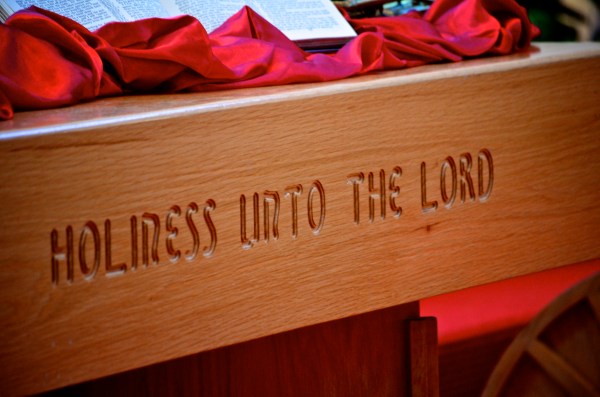
We are an army that is non-sacramental – I believe this, but we must actually embrace and preach/teach the necessity for real, authentic sacrificial living its soldiership. Without this crucial component of sacrificial living, we will have not only rejected ritual observations of the Church by way of communion and other such practices, we will have neglected the true essence of Christ himself (who was without sin, yet suffered and died for us). If we are to be Holy as He is Holy, we must become like Him in every way – which includes sacrificial living. The season of Lent is upon us, and although we do not practice much of the traditional Church practices within Lent, we would be remiss if we did not explore this extremely important topic of Sacrificial Living.
But First let us clarify what Sacrificial Living is not:
It is NOT:
-A great display and sanctimonious actions for others to see you and know your piousness and holiness.
-A ploy for promotion or power play for position or status.
-A means to compete with other soldiers and prove who is “holiest”
-A means to fool the world – but you can’t fool God.
If any of the above mentioned motives for Sacrificial living exist within us, we must eliminate them from our hearts and reconsecrate ourselves before God!
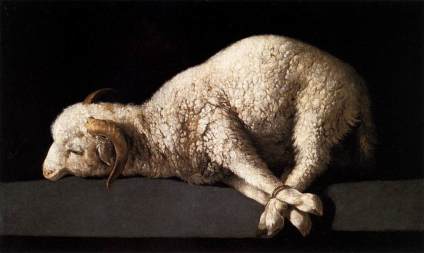
5 Truths About Sacrificial Living:
“I have been crucified with Christ; it is no longer I who live, but Christ lives in me; and the life which I now live in the flesh I live by faith in the Son of God, who loved me and gave Himself for me” Galatians 2:20 (NKJV)
- Sacrificial Living Requires Consistency
“But Samuel replied: ‘Does the Lord delight in burnt offerings and sacrifices as much as in obeying the Lord? To obey is better than sacrifice, and to heed is better than the fat of rams” 1 Samuel 15:22 We cannot simply declare that everything we do in the corps will be the place of my sacrificial living – NO! It is all or nothing. God doesn’t want our sacrifices in one area while other areas of our lives are still not surrendered. That’s like saying to your spouse, “I will be faithful to you in this city, but I can’t promise anything when I leave this city.” How can we love the Lord with all of our hearts when we compartmentalize our relationship to Him? If we are to be soldiers of the faith who are daily living sacrificial lives, we have to subject ALL of our lives under the sovereign, perfect rule of Christ. Consistency is not easy, and there will be constant struggles to bring these areas of our lives under control. But rest assured we have One who is with us – The Holy Spirit!
 - Sacrificial Living Takes Work
“Therefore, I urge you, brothers and sisters, in view of God’s mercy, to offer your bodies as a living sacrifice, holy and pleasing to God—this is your true and proper worship” –Romans 12:1.If we are to be consistent in our declaration of sacrificial living – we have to mean
 what we declare – and this takes work! We have to roll up our sleeves, so to speak, and intentionally, moment by moment surrender our wants and desires to God. We have to declare Thy Will be done, instead of my will. The work done on our knees in prayer before the Almighty will set the momentum going forward. If we neglect this spiritual discipline of prayer, we will jeopardize our entire sacrificial existence. This is a merging of our identities with that of Christ’s. When we do this, we are essentially saying “I want to be Imago Dei” I am not just imitating Him, I want to be Him in every way. There will be moments of stumbling. We will experience great stress in temptation, because surely the Father of Lies will begin to see how dangerous His people will become to his devious plans on earth. We will experience adversity, days of defeat, weakness – but these are only symptoms of us dying to our old-self.
 - Sacrificial Living Is An Outpouring of Holiness
“And all those who had believed were together and had all things in common; and they began selling their property and possessions and were sharing them with all, as anyone might have need.” -Acts 2:44-45When we declare our desire to be
likeChrist in every way, our crosses will be carried, and our path will be set. It sounds paradoxical, but while we experience great sacrifice and discomfort, we will at the same time experience great peace too. Sacrificial living is not the end result, no this is the outpouring of our longing for holiness in all that we are as Children of God. This is more than just words uttered. This is something on a molecular level – changing us from the inside out. I believe something metaphysical happens when we make it our goal to be Christ in our hearts, minds and soul. You know that when you have been married for a long time – you and your partner take on the mannerisms of each other…sometimes you even begin to resemble one another. Holiness lived-out with the greatest of intentions and devotion will produce men and women of God who deeply resemble Christ in every way. -This is what Sacrificial Living looks like and is the evidence of a commitment to Holiness on the deepest of levels. Dare I say, but we as an Army have yet to even scratch the surface of real, tangible Holiness amongst its ranks. We talk a good game, but I fear we are no where near it yet.
 - Sacrificial Living Has No Room For Ego

“And the congregation of those who believed were of one heart and soul; and not one of them claimed that anything belonging to him was his own, but all things were common property to them.” -Acts 4:32There’s an old phrase that perhaps you know, it goes like this: “Absolute power corrupts absolutely”…even in the Army there is a hunger for power, whether it be in our corps and local officer positions or the Corps Officer, Divisional Officer, Territorial Officer…and so on. Power is a dangerous vice. Authority is necessary in any Church, Movement or Mission, but the hunger for power and man’s authority can corrupt all of the above. In fact, this is what Satan hopes will happen to any adversary of his: that they become bogged down by their own egos and blinded by their own ambitions and thirst for imagined power. You might say, “but we are The Salvation Army – we have no power.” – every organization, movement or Church has many places of authority and assumed places of power. What we do with those roles, how we conduct ourselves if we become stewards of such positions determines not only the course of our Army, but the depth of our sacrificial living. There is no room for ego in sacrificial living! “My sacrifice, O God, is a broken spirit; a broken and contrite heart you, God, will not despise” -Psalm 51:17.
- Sacrificial Living Must Be Evidenced In Our Soldiers & Officers!
“More than that, I count all things to be loss in view of the surpassing value of knowing Christ Jesus my Lord, for whom I have suffered the loss of all things, and count them but rubbish so that I may gain Christ…” -Philippians 3:8

If we are truly a Holiness movement – then we must act like it! We must eliminate every element of back-biting, gossip, slander, ego, power-plays, Church politics that elevates one over another, personal vendettas and all other kinds of selfishness! Somewhere along the way we left the call for holiness in a pulpit sermon and lost our way. We will not move or correct any kind of mission drift that is egocentric if we are not really actively engaged in sacrificial living. Let’s stop talking a big game, and putting on a big show as we tout our Holiness Movement member’s cards (I’m being facetious)…let’s drop the pretenses. If we want to see an Army on the move and if we long to save souls, then we first have to start with our own. I am not questioning our salvation, I am questioning our depth of Holiness and Sacrificial Living. Let’s practice what we preach…and perhaps for some of us, we need to fall in love with God all over again in reconsecration. I love this army, but without soldiers, officers and adherents who are living sacrificially, and committed to the great commission of saving souls and making disciples, we could face extinction a generation from now.Something more for our Army world to Ponder today.

*Disclaimer: the thoughts and opinions expressed here are the writer’s thoughts and do not necessarily reflect the thoughts and opinions of The Salvation Army. Reader discretion is advised.*


 There are many other places in scripture where people have left their landmarks so that others who came after them would know of this great God. Some landmarks commemorated great grief and loss, while others commemorated great victory and joy. All of these served to provide a means of safer passage to the next generation. This makes me wonder what sort of landmarks we are constructing in our own lives. How are we paving the way for our children and our grandchildren? What sort of legacy are we leaving behind for others to follow? Will they commemorate an honorable holy disciple of Christ through the testimony of our lives, or will they use our story us as a warning? I pray that we desire to pave the way through a life of godly living and in so doing, leave legacy that others wish to follow as they ascend this path of holiness.

 troubling is that holiness is not being lived out or made into something real and tangible for the world to see. The notion of being set-apart is both vital and necessary for the purpose of entire sanctification. Being set-apart means that we wash the feet of those who have only experienced religion with strings attached. For we are not a religion, we are a movement that preaches about this holy relationship we can have with the Almighty! We are a movement (or at least we used to be) that lived out holiness and preached it from our pulpits. If this is missing in our corps and in our witness then perhaps we have lost a step and are no longer a moving, passionate movement…but instead could it be that we are static and floundering about trying to define our identity apart from Holiness?
 General Frederick Coutts once said: “To pray together is to be shielded from evil, not only from the perils which beset the body, but also the dangers that assail the soul”
 I believe that if that we are to experience a revival again as a movement, it will only come when we begin to take our prayer lives more seriously. This spiritual discipline is vital to both the corporate worship setting as well as the personal one done in those private moments. Let me ask you this, how often to you pray for your fellow soldiers and officers? How often do we lift up our concerns before the Almighty and continue to wait on Him? In our fast paced lifestyles we have grown impatient and we lack attention to prayer. We need more prayer warriors in our Army and less prayer worriers. We need authentic, vulnerable moments in our pews as much as we need real, genuine times of solitude in our homes devoted to prayer.
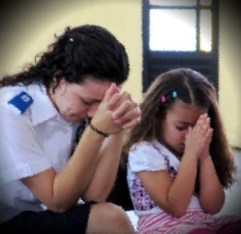 Somewhere along the line did we get ahead of Christ?
 The Salvation Army needs more leaders to be men and women of integrity. I say this for all areas of leadership. From the local officer position all the way up to the General. We need people who will do what they say they will do while being men and women of Holiness. Without the characteristic of holiness, a leader’s integrity cannot be completely fulfilled. Thus, leadership must begin on our knees before our heavenly Father. Because we will be held to account for what we do on earth. Leaders who operate with ulterior motivations and do not have holy integrity, will falter and perhaps inflict casualties within our body of soldiers. We are very good at pointing out the bad in others, but this godly principle of living must begin with us! Without holiness and integrity our sphere of responsibility and leadership will crumble and find a limited impact for the Kingdom.
 or place of leadership and conduct themselves contrary to that place of authority? What we say and what we do should line up, and with it our REAL responses to the world around us. There is no time to be a phony leader or a phony Christian. We cannot have leaders of any level merely giving lip service to God, but their motives and conduct are completely contrary to their bravado. This Army needs more authentic leaders! We need people who are real, people who know what it means to struggle with life, people who get it. This army is in need of leadership that has empathy not apathy. We need more candid conversations and less brow beatings and starchy high pulpit speak. We have to have a spirit of trust and an understanding that our Army is made up of people who are fallible and require compassion and grace. We need more leaders who will go to the gates of hell for people and soldiers in need instead of delegating or sending others to do their jobs. The leader that can be trusted will come to your level and spend time talking with you about the things that matter. Can you be a trusted leader? Do you have a heart to serve? Are you moved with compassion for those you lead? Then be authentic, and leader with authenticity, this Kingdom of God doesn’t have a place for two-faced leadership.
 Leaders who pass the buck are not leaders of accountability.
 the power that is entrusted to you. Know that final authority is not you – but rather God. Even if you do not have someone who is currently over you in authority, your actions and motivations will be judged in accordance to Godly principles when we stand before Him. I do not say this to sound threatening or vindictive, I say this because I believe there are those in numerous places of authority who are power hungry and motivated not by a spirit of service but to be served. This is a very real danger in all levels of leadership. If we are to be leader who can be trusted, we must possess a level of accountability towards those we serve in leadership both above and below us (for lack of a better term). Is it still Thy Kingdom come, or has it come “My Kingdom come”?
 Here’s a caution for all of us though, just because we are not perfect does not mean that we cannot be made Holy by God’s divine presence. The Holy Spirit longs for us to become what we were always created to be – Christ’s very image here on earth. And so He prods us, reminds us, convicts us of the things we have yet to surrender to Him. Sometimes we might have deep dark places in our hearts that we think aren’t forgiveable or redeemable, and so we hide them away and never talk about them. We think God will just forget about them, but the truth is if we never confront them, we will never full realize the image of Christ in us – it will always remain blurred and seemingly far away.


 bearing plants along with the weeds?
 community…today it would take over a year (at least) to close a dying or dead corps and plant a new one elsewhere. I understand that there are many variables to consider, I know we have so many more hoops to jump through, and the right forms must be submitted, and the right studies have to be done…and the list goes on…and it is far too complicated, perhaps more complicated than it ever should’ve been. I wonder if this is why we aren’t growing anymore? Because our hands are bound by massive amounts of red tape and far too many hands have to touch the paperwork as it passes over many desks at various levels of responsibility. Is it no wonder that some just given up? Is it no wonder that some grow frustrated at the snail’s pace? Granted we ought never make rash, uninformed decisions, but are there times when the amount of red tape becomes utterly ridiculous?
 Could this be why younger evangelistic churches seem to be having more success in growing their church plants – because they have far fewer restraints and hoops to jump through? The building process doesn’t take 3-5 years, instead they work a church plant that tithes and contributes to the building campaign? I understand we are not just a church (we are so much more – we are a movement)…but are we a stalled movement in this regard? Or is this the proverbial story of the tortoise and the hare, where wisdom and time win out?
 Sometimes I feel that we as an Army have become so policy heavy that we strangle creativity and the potential for real, sustainable growth. The problem is like this scale, too heavy a balance of policy keepers will lead to a diminished level of creative challengers. On the other side of the scale, too many creative challengers will lead to a diminished level of policy keepers and lack of order and policy.
 Perhaps we have taken our focus off of the mission and exchanged it for regulations and rules.

 When this abuse is allowed to continue, and it does from time to time, there is inevitably a loss of talent. By that I mean some within the ranks of soldiers and officers alike might leave. Why would they stick around when abusive leadership would seem to go unpunished or addressed and instead is rewarded and only those who are completely complicit to that leadership style are given appointments of authority themselves? In essence an abusive autocratic style will promote the “yes” people, while those with talent (and who had the passion and zeal) but did not always agree might never be rewarded or acknowledged. What could remain would be a hollowed out version of an organization. It wouldn’t be the vision that failed but rather the internal issues of the organization that cannibalized itself.
 autocratic or authoritative leadership model be affecting our movement today? This is a very big question, I know that, but isn’t there a part of you that wonders if we shouldn’t even ask the question in the first place? Why is that? Do we fear that if we ask it we might face punishment or be considered “rebels”? I believe a healthy movement is one who has innovative, creative and outspoken members. A movement is just that, something that continues moves forward, not backward. A healthy movement should be one that accepts constructive criticism and takes corrective steps when needed. A healthy movement is propelled not by unhealthy models of leadership and fear, but by the Holy Spirit prompting and leading His followers onward into the fray.


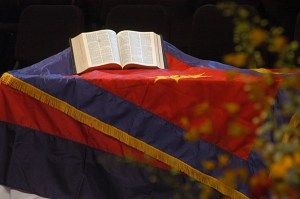
 “We should teach about holiness but emphasize Coutts (General Frederick Coutts) more…The table itself has had little resonance because it has become a display table, and because no one–neither soldiers nor officers–have a very deep experiential knowledge of holiness living, and have been put off by second-blessing / second work of grace confusions…” Could it be that our lack of teaching is to blame for its near extinction?


 With professional preachers, also comes a lack of hunger. Mind you, these are not always connected. I believe this is a stand-alone problem for many within our western world. If one were to journey to some of the poorest countries in the world, you would find a see hunger for scriptural truths and churches memorizes whole chapters of scripture…where is this hunger in the more prominent and prosperous countries? I believe there is a direct correlation between comfort and security and the shallowness of scriptural knowledge! Why rely on the scripture if every want, and all of life’s comforts are met (roughly speaking)?



 In Focus
 through it, but there must be a way for us to live this overwhelming victory in the here and now…and we do that by understanding it. In our understanding of what this life is all about – Whose we are and embracing the eternal here and now, we flip the script on what “living”is all about! When we change our perspective, we change the narrative of our souls. What I mean by that is – we no longer simply live for ourselves, we begin to live for Christ. Many times this is a gradual denial of self as we surrender to the will of God. It begins with the little things of life. Soon, as we allow these little spiritual victories to occur, we will be more inclined to seek out the larger “denial of self” moments.
 Some of may be.
 Pastor's Ponderings