

“So he ordered that they be baptized in the name of Jesus Christ…” -Acts 10:48a
Recently I was asked a question by one of our volunteers who had been busily answering phones but found a lull in the rush of the day. The question? “Why doesn’t The Salvation Army baptize?” It’s a good question, one that has been asked many times before. I answered him, in a semi-rehearsed conversation. I told him about our perspective on holiness and on holy living. That these outward ceremonies only represent that which the Holy Spirit has already on on the inward parts of our heart and lives. I went on to explain that baptism isn’t necessary to salvation, but rather a public witness to that life changing event. He countered that it says one must be baptized even in the Great Commission: “18 Then Jesus came to them and said, “All authority in heaven and on earth has been given to me. 19 Therefore go and make disciples of all nations, baptizing them in the name of the Father and of the Son and of the Holy Spirit, 20 and teaching them to obey everything I have commanded you. And surely I am with you always, to the very end of the age.” (Matthew 28:16-20)
I challenged him with a notion of my own: but Peter said, “ and this water symbolizes baptism that now saves you also—not the removal of dirt from the body but the pledge of a clear conscience toward God.[a] It saves you by the resurrection of Jesus Christ…” (1 Peter 3:21)
If water baptism is only a symbol of the salvation that now saves you, doesn’t that mean that it’s all about the Holy Spirit and not the water? Doesn’t that mean that, as I have already mentioned it’s not the water that makes the difference, but rather the work of Him who now resides within us at the moment of initial sanctification when we said “yes” to Christ’s dominion and Lordship of our lives? -When the baptism of the Holy Spirit first encompassed our lives?

We continued to converse about this topic of baptism and its necessity, until this very astute volunteer asked a question I had not thought about. He said; “In order to be a member of some churches, you have to become baptized (at least in his church it was emphasized I later found out). So how does one become a member in The Salvation Army?” I told him about our Soldiership classes and then how new soldiers are given uniforms as another sign of their membership into The Salvation Army, which is also an evidence of a life changing event as a soldier pledges to: “HAVING accepted Jesus Christ as my Saviour and Lord, and desiring to fulfil my membership of His Church on earth as a soldier of The Salvation Army, I now by God’s grace enter into a sacred covenant…THEREFORE
I will be responsive to the Holy Spirit’s work and obedient to His leading in my life, growing in grace through worship, prayer, service and the reading of the Bible.
I will make the values of the Kingdom of God and not the values of the world the standard for my life.
I will uphold Christian integrity in every area of my life, allowing nothing in thought. word or deed that is unworthy, unclean, untrue, profane, dishonest or immoral.
I will maintain Christian ideals in all my relationships with others: my family and neighbours, my colleagues and fellow Salvationists, those to whom and for whom I am responsible, and the wider community.
I will uphold the sanctity of marriage and of family life.
I will be a faithful steward of my time and gifts, my money and possessions, my body, my mind and my spirit, knowing that I am accountable to God.
I will abstain from alcoholic drink. tobacco, the non-medical use of addictive drugs. gambling, pornography, the occult, and all else that could enslave the body or spirit.
I will be faithful to the purposes for which God raised up The Salvation Army, sharing the good news of Jesus Christ, endeavouring to win others to Him, and in His name caring for the needy and the disadvantaged.
I will be actively involved, as l am able, in the life, work, worship and witness of the corps, giving as large a proportion of my income as possible to support its ministries and the worldwide work of the Army.
I will be true to the principles and practices of The Salvation Army, loyal to its leaders, and I will show the spirit of Salvationism whether in times of popularity or persecution.
I now call upon all present to witness that I enter into this covenant and sign these articles of war of my own free will, convinced that the love of Christ, who died and now lives to save me, requires from me this devotion of my life to His service for the salvation of the whole world; and therefore do here declare my full determination, by God’s help, to be a true soldier of The Salvation Army.”
I showed him the general idea of a Soldiership enrollment and pledge/covenant.
He looked at me with a little bit of surprise.
Then his next words really made me think, “But this is similar to what I experienced in my baptism.”
He went online and showed me some of the wording that was used on his day of baptism. The website blink and whisked us to his church’s website and there on the screen was the basic ceremony of baptism: 
“Since you have responded by God’s grace
to the call of the gospel to believe and be baptized,
we ask you, before God and his people,
to profess your faith in Jesus Christ.
Do you turn to Jesus Christ?
Yes!
Do you intend to be Christ’s faithful disciple,
trusting his promises,
obeying his word,
honoring his church,
and showing his love,
as long as you live?
Yes!”
(*Note: Both of these public statements of faith are good and helpful for the body, I am not criticizing their usefulness)
After showing me this he asked me the all important question, “If The Salvation Army believes that baptism is unnecessary, then isn’t the Uniform that you wear unnecessary too?”
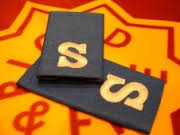
You know in some ways he is right.
The Uniform isn’t of course necessary for Salvation just as water baptism doesn’t save people…but could it become that to us in the Army?
Of course we know that the entirety of this transforming grace is done through the Holy Spirit alone. Each are symbols. Each are ways in which we commemorate and identify ourselves as members of that particular Ecclesia. But, perhaps it begs the question of us today, even to quantify and formulate our own response of the necessity of uniform in The Salvation Army. Do you have an answer or do you merely follow, perhaps even blindly without fully recognizing the symbolism and meaning?
Please do not get me wrong, I am not advocating that we chuck our uniforms away and lose that part of our identity, but what is the reason that we still wear the uniform? Do we wear it for public recognition? Do we wear it to look good? Do we wear it because it’s what we’ve always done? Do we wear it to fit in? -Any of these answers is NOT good enough. We must formulate a personal response and reason. Yes, we are a part of this international movement. Yes, we are identifying ourselves as members of The Salvation Army, but is that a sufficient of an answer?
Let me ask this question and perhaps some will think me a little crazy in asking, has the use if Uniforms and enrollment of soldiers simply taken the place of baptism and even communion as the commonality and qualifications of membership? Have we just exchanged one ceremony for another? Could this eventually lose it’s symbolism and meaning to future generations…or has this already happened and we aren’t prepared to admit it?
Two key observations before I close this open ended pondering today (and please comment and share your answers and questions with us):
1) William and Catherine Booth decided to exclude the use of baptism and communion because these had been abused and lost its meaning and had even become means for salvation and even power of the church. Could this be happening to the Uniforms and the use of such a wardrobe?
2) The Uniform was originally adopted so that poor and rich alike could fit into “church” or the movement of the Army. But as the price of uniforms become more and more expense even with allowances and percentages offered to members, is it necessary? It used to solidify and unify the early Army…but was it meant to last forever? Also has it now become what it should never have become – something that divides new comers and adherents from the “true” soldiers? Instead, of unifying is it undoing what the Booths originally set out to do with the lower East End of London?

Things To Ponder (Tell us what you think?):
Have we not taught the proper use of uniform?
Have we lost the symbolism?
Has the Uniform become a divider instead of something that unifies? Are we overthinking this?
Are we in need of changing the uniforms?
What of Baptism? Is it really similar to the ceremony of soldiership & renewal ceremonies? And have we just exchanged one ceremony for another?
Note: My purpose for such a pondering today is not to discourage you dear Salvation Army, but rather to better identify and have an answer for such questions as I have had this week…now it’s your turn. What do you think?
Something more for the army to ponder today.
*Disclaimer, the thoughts and opinions expressed in this blog are solely the thoughts and opinions of the writer and do not necessarily reflect that of The Salvation Army. Reader discretion is advised.*




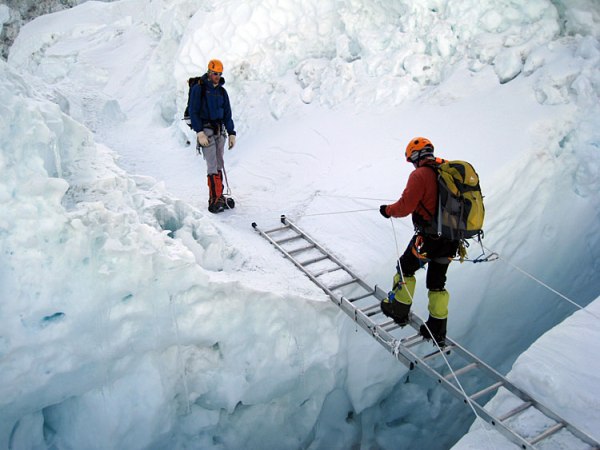
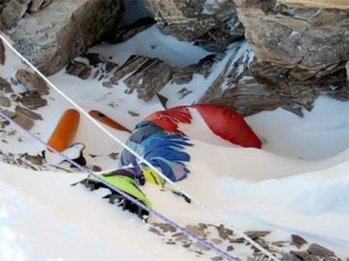
 There are many other places in scripture where people have left their landmarks so that others who came after them would know of this great God. Some landmarks commemorated great grief and loss, while others commemorated great victory and joy. All of these served to provide a means of safer passage to the next generation. This makes me wonder what sort of landmarks we are constructing in our own lives. How are we paving the way for our children and our grandchildren? What sort of legacy are we leaving behind for others to follow? Will they commemorate an honorable holy disciple of Christ through the testimony of our lives, or will they use our story us as a warning? I pray that we desire to pave the way through a life of godly living and in so doing, leave legacy that others wish to follow as they ascend this path of holiness.

 bearing plants along with the weeds?
 community…today it would take over a year (at least) to close a dying or dead corps and plant a new one elsewhere. I understand that there are many variables to consider, I know we have so many more hoops to jump through, and the right forms must be submitted, and the right studies have to be done…and the list goes on…and it is far too complicated, perhaps more complicated than it ever should’ve been. I wonder if this is why we aren’t growing anymore? Because our hands are bound by massive amounts of red tape and far too many hands have to touch the paperwork as it passes over many desks at various levels of responsibility. Is it no wonder that some just given up? Is it no wonder that some grow frustrated at the snail’s pace? Granted we ought never make rash, uninformed decisions, but are there times when the amount of red tape becomes utterly ridiculous?
 Could this be why younger evangelistic churches seem to be having more success in growing their church plants – because they have far fewer restraints and hoops to jump through? The building process doesn’t take 3-5 years, instead they work a church plant that tithes and contributes to the building campaign? I understand we are not just a church (we are so much more – we are a movement)…but are we a stalled movement in this regard? Or is this the proverbial story of the tortoise and the hare, where wisdom and time win out?
 Sometimes I feel that we as an Army have become so policy heavy that we strangle creativity and the potential for real, sustainable growth. The problem is like this scale, too heavy a balance of policy keepers will lead to a diminished level of creative challengers. On the other side of the scale, too many creative challengers will lead to a diminished level of policy keepers and lack of order and policy.
 Perhaps we have taken our focus off of the mission and exchanged it for regulations and rules.

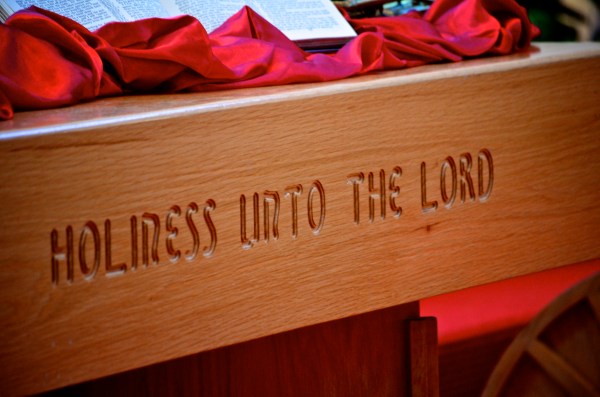


 “We should teach about holiness but emphasize Coutts (General Frederick Coutts) more…The table itself has had little resonance because it has become a display table, and because no one–neither soldiers nor officers–have a very deep experiential knowledge of holiness living, and have been put off by second-blessing / second work of grace confusions…” Could it be that our lack of teaching is to blame for its near extinction?


 or maybe maybe this:
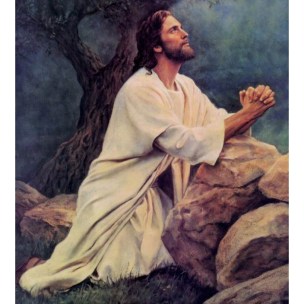 These iconic images of prayer are okay, but are they really what prayer looks like and should be for us today? Don’t get me wrong, I am not discounting some of us might fold our hands like this when we pray, but by and large our prayer life probably looks more like this:


 up from the comfortable sofa and putting on their shoes and attempting to run a marathon without any training. Sure, some might actually finish, but by and large most would fall flat on their faces in utter exhaustion.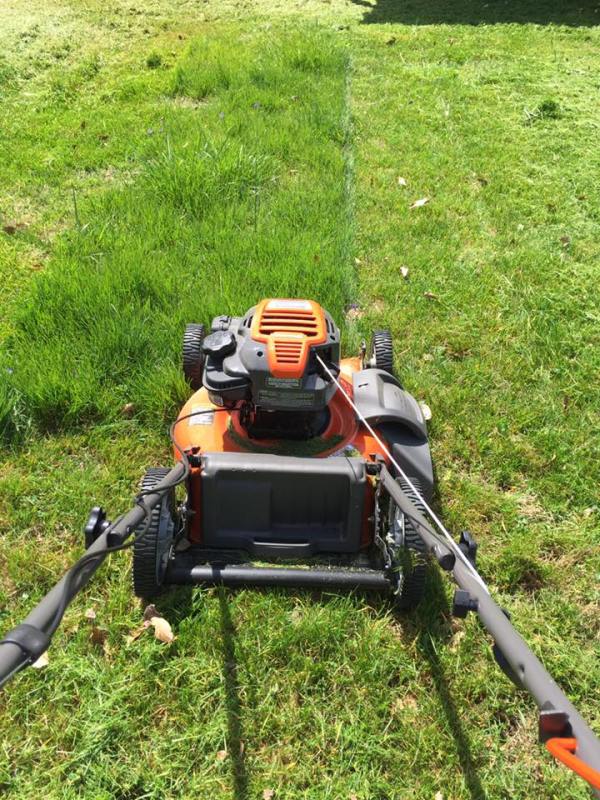
 in the tall grass and in places I had already mowed, I couldn’t find it anywhere – it was gone, *poof* vanished. I searched for another five minutes only to recognize that in my haste to get the job finished, I had lost a crucial component that held everything together. I had to make a run to the hardware store and purchase a new bolt and nut – only this time I used the appropriate tool (not my fingers) to tighten the bolt into place. Now, it’s not going anywhere!
 in assembling my spanking new lawnmower – I thought I had tightened everything down good enough only to discover I had misjudged my strength and the terrain around me. Perhaps in our lives this rings true too. We get ahead of ourselves. We cut corners and take shortcuts because we think we already know it all. We don’t take the time as we should in our Spiritual lives and explore the spiritual disciplines necessary for long-term spiritual growth and success. Instead we settle for the quick fix. We go to a service here or there and we think it’s enough – yet the things that hold our “Christian” lives together isn’t enough, and it’s certainly not strong enough either.





 Pastor's Ponderings