
The Fish That Swallowed a Man (And Maybe Us Too)…

Hey Friends! Happy Wednesday, March 12th, 2025! Here’s what we’re pondering today. Check this out:

So, there’s this moment in the story—Jonah 1:17—where it says, “Now the Lord provided a huge fish to swallow Jonah, and Jonah was in the belly of the fish three days and three nights.” That’s it. One sentence. And yet, it’s one of those lines that just sits there, staring at you, daring you to ask: What’s really going on here?

Let’s back up for a second. Jonah’s running. God says, “Go to Nineveh,” and Jonah’s like, “Nope, I’m out.” He books a ticket on a ship going the opposite direction—like, literally the opposite direction, Tarshish, which is basically the edge of the known world back then. He’s not just avoiding a task; he’s avoiding the whole story God’s trying to write with his life. And then the storm hits, the sailors freak out, Jonah gets tossed overboard, and just when you think it’s over—bam—a fish. A huge fish. Swallows him whole. (Do you think it a fairy tale? It’s totally possible, check this video out)

Now, I want you to pause and picture this. A man, dripping wet, seaweed probably tangled in his hair, sinking into the dark, and then this massive creature opens its jaws and pulls him in. Three days. Three nights. In the belly of a fish. What do you do with that? Because it’s weird, right? It’s absurd. It’s the kind of thing that makes you wonder if this is just a wild ancient tale—or if there’s something deeper, something that hooks into your life, right here, right now.

Here’s what I think: That fish isn’t just a fish. I mean, it is—it’s scales and fins and probably smells terrible—but it’s also more. It’s a picture of what happens when you run from the thing you’re made for. Jonah’s trying to escape God’s call, his purpose, this wild invitation to go love people he doesn’t even like, and what happens? He ends up in the dark. Alone. In a place that feels like the end. But here’s the twist: it’s not the end. The fish isn’t a punishment; it’s a provision. The text says, “The Lord provided a huge fish.” Provided. That word stops me every time. God doesn’t abandon Jonah; God sends a rescue disguised as a monster.

Have you ever been there? In the belly of something? Maybe not a literal fish, but a situation, a season, a mess you made or one that just swallowed you up anyway? You ran—from a relationship, a dream, a truth about yourself—and now you’re sitting in the dark, wondering how it got this bad. Three days and three nights can feel like forever when you’re stuck, can’t they? But what if that dark place isn’t the end of your story? What if it’s the place where something new begins?

Because here’s the thing about Jonah: He doesn’t stay in the fish. Three days, three nights, and then—spoiler alert—he’s spit out onto dry land. Alive. Changed. Ready (well, sort of) to step back into the story. That time in the belly wasn’t wasted; it was preparation. It was God saying, “I’m not done with you yet.” And I wonder if that’s what God’s saying to you, too.

So, wherever you are today—running, sinking, or maybe already in the belly of something big and overwhelming—can you imagine that it might not be a tomb? That it might be a womb? A place where something new is being formed in you? The dark doesn’t get the last word. The fish doesn’t get to keep you. You’re not abandoned; you’re provided for. And those three days, those three nights—they’re not forever. They’re just long enough for you to hear the whisper: You’re still mine. We’re still going somewhere together.

What would it look like for you to stop running? To lean into the dark instead of fighting it? To trust that even the strangest, scariest provisions might be carrying you toward dry land? Because that’s the God we’re dealing with here—one who sends fish to save us, who turns runaways into prophets, who meets us in the belly of the thing we fear most and says, “This isn’t the end. This is where we start again.”

Take a breath. You’re not alone in there. And you’re not staying there. Something beautiful is coming. Can you feel it?
Grace & Peace,
-Pastor Scott.

The God of Hope in the Mess of Now

Hey friends, so let’s talk about this thing called hope. Because if you’re anything like me, you’ve looked around lately—March 11, 2025, to be exact—and thought, What is even happening? The news is a dumpster fire of chaos, your inbox is a landfill of urgent emails, and maybe your own life feels like it’s teetering on the edge of something you can’t quite name. Uncertainty—it’s the air we’re breathing these days, isn’t it? Like the weather can’t decide if it’s winter or spring, and neither can we.

And yet, there’s this line. This ancient, electric line from a guy named Paul, who wrote it in a letter to some friends in Rome. He says, “May the God of hope fill you with all joy and peace as you trust in him, so that you may overflow with hope by the power of the Holy Spirit” (Romans 15:13). I mean, come on. Read that again. The God of hope. Not the God of certainty, not the God of perfect five-year plans, not the God of “everything’s fine if you just try harder.” The God of hope. That’s who we’re dealing with here.

What if that’s the point? What if hope isn’t about knowing how it all turns out, but about trusting that there’s something—Someone—holding it all together, even when it feels like it’s falling apart? Because let’s be honest: we’re not great at uncertainty. We like maps. We like GPS. We like “arrival time: 6:42 p.m.” But life doesn’t work that way, does it? Life is more like those old sailing ships, where you’re out on the water, the wind’s howling, and you’re just hoping the stars show up at night to tell you where you’re going.

I was thinking about this the other day while drinking coffee—black, no sugar, or cream – because, like every day for me, you just need the bitter to wake you up. I was sitting there, watching some people from next door rush by outside the window, and it hit me: we’re all carrying something. A worry. A question. A what if. Maybe it’s the job that’s hanging by a thread, or the kid who’s not talking to you anymore, or the planet that feels like it’s groaning louder every day. And in the middle of that, Paul’s got the nerve to say, “May the God of hope fill you with all joy and peace.” Joy? Peace? Now? Really, Paul?

But here’s the thing: he’s not talking about a feeling. He’s talking about a filling. A pouring-in. Like the way rain soaks the ground after a drought. It’s not instant. It’s not a switch you flip. It’s a process, a trusting, a leaning into this God who doesn’t run from the mess but steps right into it. The same God who, a couple thousand years ago, showed up in a body—Jesus—and said, “I’m here. With you. In this.” That’s what hope looks like. It’s not the absence of uncertainty; it’s the presence of something bigger.

So what does that mean for us, today, in the thick of 2025? Maybe it means we stop waiting for the uncertainty to clear up before we start living. Maybe it means we take a deep breath—right now, try it—and let that joy and peace sneak in, even if it’s just a crack of light through the blinds (my bedroom blinds are currently broken at the bottom and a lot of light seems to peak in). Maybe it means we trust that the Holy Spirit that Paul is talking about and is already at work, stirring something up in us, something that overflows. Not just trickles. Overflows. Like a cup that can’t hold it all, spilling out onto the people around us.

I don’t know what your uncertain thing is today. Maybe it’s huge, global-sized, or maybe it’s small, quiet, the kind you don’t tell anyone about, but the anxiety is still building inside you. But what if you didn’t have to carry it alone? What if the God of hope is already there, in the middle of it, whispering, “I’ve got this. And I’ve got you. And I’m not going anywhere, I’m here with you!”? What if hope isn’t about escaping the storm, but about dancing in the rain —not because you’re naive but because you know the One who made the clouds? And you know the One who can calm that storm with just His words – He’s in the boat with you, right now.

So here’s your invitation: trust. Just for a moment. Lean into that God of hope. Let the joy and peace fill you, even if it feels ridiculous at first. And see if that hope doesn’t start to spill over. Because the world? It’s thirsty for it. And you might just be the one carrying the cup.

Grace and Peace,
-Pastor Scott.

“Decoding Toxic Church Culture: What You Need to Know”

Happy Monday, friends!
I want to kick off this week like a lion rather than a lamb.
This is a hard topic to discuss, especially in the church setting, but it’s necessary.

In recent years, there has been an uptick in news stories from large churches where the lead pastors (some who are nationally and internationally recognized) have been accused of spiritual abuse.

So, this pondering today is going to be a bit heavy.
It’s the kind of thing that makes you want to just, like, go for a long walk on the beach and stare at the waves. It makes me angry when I read stories like these, but more importantly, I have experienced leaders who used organized religion to expand their own kingdom, to establish monuments in their own names and called it “the will of God”.

I think it’s a crucial topic and we NEED to talk about it.
We can’t ignore this issue. It has happened in our past, and it is still happening in our present church culture.

Let’s call an Ace an Ace, shall we? Let’s not beat around the bush.
Here goes:
Spiritual abuse. And, yeah, sometimes, toxic leaders in the church.

Look, the church, in its best moments, is supposed to be this incredible space, right? A place of love, grace, community, transformation. A place where you can ask the big questions, wrestle with doubt, find some kind of… peace. But sometimes, it gets twisted. Sometimes, it gets… messed up.

You see, power, it’s a tricky thing. And when power gets mixed with, you know, a sense of divine authority?
That’s where things can go sideways. Fast.
Some power-hungry leaders have abused others through an erroneous understanding of biblical submission and wield their leadership like a scepter while expecting their subordinates to kiss their ring.

Think about it. We’re all looking for something.
We’re all searching for meaning, for connection.
And when someone steps up, claims they’ve got the inside track to God, that they know the secret sauce, well, it’s tempting, isn’t it? To just… hand over the keys. To let them drive.

And that’s where the trouble starts.

What does it look like?

  • Control: It’s not about guidance, it’s about domination. They dictate your thoughts, your actions, your relationships. They tell you what to wear, who to talk to, how to spend your time.
  • Manipulation: They use guilt, shame, and fear to keep you in line. They twist scripture, they play on your insecurities, and they make you feel like you’re never good enough. Much of it becomes performance-based measures that no one can always live up to.
  • Isolation: They cut you off from your support system. They tell you that anyone who disagrees with them is “of the world,” that they’re trying to lead you astray. (Insight Digital Magazine, 2024)  
  • Spiritual Blackmail: They imply that if you leave, you’ll lose God’s favor. Or worse. That you’ll be damned.
  • Narcissism: It’s all about them. Their needs, their ego, their vision. They demand constant praise and adoration. They can’t admit they’re wrong.

It’s subtle, you know? It doesn’t always look like fire and brimstone.
Sometimes, it’s just a whisper, a sideways glance, a subtle put-down.
It’s the constant feeling that you’re walking on eggshells.

So, what do we do? How do we break free?
Here are 7 suggestions to help you find freedom if you find yourself stuck in Spiritual Abuse of one kind or another:

1) trust your gut. If something feels off, it probably is. If you’re constantly feeling anxious, manipulated, or controlled, that’s a red flag.

2) find your voice. Start asking questions. Challenge the status quo. Don’t be afraid to disagree. Remember, doubt isn’t the opposite of faith; it’s often a part of it.

3) build a support network. Find people you can trust, people who will listen without judgment. Talk to a therapist, a counselor, or a trusted friend. You are not alone.

4) reclaim your autonomy. Remember, you are a person with your own thoughts, feelings, and beliefs. You are not defined by someone else’s interpretation of God.

5) redefine your understanding of God. Let go of the toxic image of a wrathful, judgmental God. Embrace a God of love, grace, and compassion. A God who wants you to thrive, not to be controlled.

6) forgive, but don’t forget. Forgiveness is for you, not for them. It’s about releasing the pain and moving forward. But that doesn’t mean you have to forget what happened. Learn from it, and use that knowledge to protect yourself and others.

7) find a healthy community. There are churches and communities out there where you can be yourself, where you can ask questions, where you can find genuine connection. It might take some searching, but they’re out there.

Look, this stuff, it’s not easy. It takes courage, it takes vulnerability. But you are strong. You are resilient. And you are worthy of love, acceptance, and freedom.

Perhaps this whole experience can be a catalyst for something new.
A deeper understanding of yourself, of your faith, of the world around you.
Perhaps you can find a more authentic, more beautiful way to connect with the divine.

We can decode this toxic church culture together and live a life worthy of this calling as Christ-followers!
Something more to ponder.
Grace & Peace.
-Pastor Scott.

Caught On Camera? Being Seen By God…

Alright, friends, let’s talk about something that can be, well, a little… intense.
Yeah, intense. It’s this whole thing about God knowing everything. Like, everything.


I just went to the dentist today and she asked me if I flossed and how often I flossed…
So, it’s important to realize that when a doctor had her gloved hands in my mouth and the X-rays were completed, she knew my flossing habits. I couldn’t lie. Right? She would have known. The evidence was right there.

Similarly, I have come across numerous videos on YouTube of individuals in a courtroom. They’ve all been arrested for various crimes. The interesting thing is that when confronted with video evidence, like air-tight stuff on film, of these illegal activities, they inevitably deny all wrongdoing even though the evidence is extremely incriminating and credible. It just blows my mind that one could deny that kind of evidence after being sworn to tell the truth in a court of law.

Back to this God who literally knows everything about us…

Think about it. You’re walking down the street, right? You’re thinking about that awkward thing you said yesterday, or maybe that weird dream you had, or, you know, that little… thing you did that you’re not exactly broadcasting.
And boom. God sees it. Sees it all.

Now, some folks hear that, and they’re like, “Oh man, that’s absolutely terrifying!”
Like, some cosmic surveillance camera, constantly recording our every blunder, every stumble, every, shall we say, less-than-stellar moment.
And I get that. I really do.
Because, let’s be honest, we’ve all got those moments.
Those… uh… curated outtakes we’d rather keep in the vault.

But here’s the thing, and this is where it gets interesting.
This whole “God knows everything” thing? It’s NOT about some divine gotcha game.
It’s not a criminal caught red-handed with video evidence to prove the crime kinda game.
It’s not about some celestial scorekeeper tallying up our failures.
It’s not that visit to the dentist.
It’s not about God shaking his head, all disappointed and stuff.

No, no, no.

But here is what it IS about.
Are you ready for this?
Here goes:

It’s about intimacy. It’s about knowing. It’s about being known.

Think about the people you love the most. They know you, right?
They know your quirks, your weird habits, your, yeah, your flaws. “Warts and all.”
And they love you anyway.
In fact, sometimes, it’s because of those things.

God sees you. Flaws and all.
The messy bits, the broken parts, the parts you try to hide in the dark corners of your heart.
He sees it all. And… he loves you.

Yeah, I said it. Loves you.

Not because you’re perfect. Not because you’ve got it all together.
Not because you’ve got your spiritual act nailed down.
But because you’re you. You’re his.

And that knowing, that seeing, that deep, profound intimacy?
It’s not about judgment. (Thank God!)
It’s about grace. It’s about acceptance. It’s about a love that says, “I see you. I know you. And I’m not going anywhere.”

It’s like, you know, when you’re talking to a friend, and they look you right in the eyes,
and you know they get you.
They see past the surface, past the masks, past the carefully constructed facade.
That’s what God does. All the time.

So, instead of running from that knowing, maybe we lean into it.
Maybe we let that love wash over us, flaws and all.
Maybe we realize that being seen isn’t about being condemned but about being… held.

Because, friends, that’s the amazing news.
That’s the wild, crazy, beautiful truth of it all.
God knows everything, and he loves you anyway.
And that, hopefully, changes everything for us.

Grace & Peace,
-Pastor Scott.

The Ache and the Anchor: How Does Faith Shape Our Response to Suffering?

Hey friends, happy Thursday (or whenever you read this particular article).
Today, I want to ponder the concept of faith in the midst of suffering in our world.
So, let’s dig in.

Have you ever noticed how suffering feels like it’s baked into the fabric of everything?
Like, you can’t scroll through your feed, walk down the street, or sit with a friend over coffee without bumping into it.
A headline about a war. A text from someone you love saying they’re not okay. That dull ache in your own chest you can’t quite name. It’s there, isn’t it? This brokenness. This thing we didn’t sign up for but can’t seem to escape.

And then there’s faith. This wild, messy, beautiful thing we carry—or maybe it carries us (sometimes both).
How does it fit with all this? How does faith shape the way we stumble through a world that’s cracked wide open?
How do we put one foot in front of the other and even consider the word “persevere?”

Let’s sit with that for a second.

Imagine you’re walking through a forest (I did this just last weekend), and the trees are bare, the ground’s all muddy, and there’s this wind that cuts right through you. It’s not pretty. It’s not Instagram-worthy. It’s raw. And you’re wondering—where’s the life here? Where’s the green? But then you look closer, and there’s this tiny shoot pushing up through the dirt. Barely there, but there. That’s what suffering can feel like—like you’re stuck in the mud, but something’s still growing. Something’s still alive.

Faith, I think, is what lets us see that shoot. It’s not a magic wand that makes the mud disappear. It’s not a loud voice shouting, “Don’t worry, I’ll fix it!” No, it’s quieter than that. It’s more like a whisper saying, “Look. Keep looking.” Because maybe the point isn’t to get out of the suffering but to find what’s growing in it.

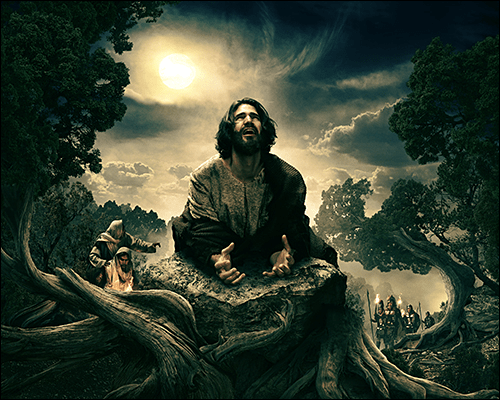
You know the story about Jesus in the garden, right? Gethsemane. He’s sweating blood, pleading with God to take the cup away, to rewrite the script. He’s fully human there, feeling the weight of what’s coming. And yet he says, “Not my will, but yours.” What’s that about? Is that faith? Trusting there’s something bigger even when the pain is screaming louder than anything else? I wonder if Jesus was showing us that suffering doesn’t get the last word—not because it goes away, but because it’s held in something deeper.

And what about us? When the diagnosis comes, or the relationship fractures, or the world feels like it’s unraveling—where does faith take us then? Does it make us stoic, like we’re supposed to just grit our teeth and pretend it’s fine? Or does it crack us open, let the tears fall, let the questions fly?

I think it’s the second one.
Faith isn’t a shield to keep the pain out; it’s a lens to see through it.

There’s this guy I met once, years ago. His name was Tom (not really his name, but we’ll call him Tom). He lost his kid in a car accident. Brutal. The kind of thing that could bury you (I think it totally would bury me). And he told me, over this beat-up diner table with coffee stains on the menu, that he’d sit in his backyard every morning, yelling at God. Just letting it out—anger, grief, all of it. But then he’d stay there. He’d sit in the silence after the yelling. And he said that’s where he started to feel it—this thread of peace, thin as a spiderweb, but real. He didn’t have answers. He still doesn’t. But he had that thread. Was that faith? I think it might be.

So what if faith isn’t about fixing the brokenness but about finding the holy in it? What if it’s less about escaping the forest and more about noticing the shoot, the whisper, the thread? Because the world’s not going to stop breaking. You know that. I know that. But maybe faith is what keeps us from breaking with it—or at least keeps us open to being put back together.

Think about Paul, that wild apostle guy. He writes about “rejoicing in our sufferings.” Rejoicing? Like, really? But then he says it produces endurance, and endurance produces character, and character produces hope. Hope doesn’t erase the suffering—it grows out of it. Like that shoot in the mud. And Paul’s not saying it’s easy. He’s saying it’s possible.

So here’s the question: What’s your suffering right now?
What’s the thing that keeps you up at night, the thing you can’t shake? (We’ve talked about this before, but I think many of us are still struggling through something)

And where’s faith in that?
Is it in the yelling? The silence?
The tiny green thing you almost missed? Because I think it’s there.
Not loud. Not obvious. But there.

The world’s broken, yeah. But it’s not the whole story.
Faith says there’s more. It says the ache isn’t the end—it’s the place where something new begins.
And maybe that’s enough for today.
Maybe that’s enough to keep going.
Perhaps we can all find some comfort in that…and keep pressing onward.

What do you think? Where do you see it growing?
Please, I welcome the comments and responses because we’re all on this journey together.
Grace & Peace,
-Pastor Scott.

“What If ‘All Have Sinned’ Was Actually Good News?”

Alright, friends, let’s dive into today’s Pondering. We’re checking out Romans 3:23-24.
And, hopefully by now you know the drill, right?
We’ve all heard it, maybe even memorized it.
But have we felt it? Like, really felt it?
Like, does it resonate in your very bones?

For all have sinned and fall short of the glory of God, and all are justified freely by his grace through the redemption that came by Christ Jesus.”  

So, let’s break this down, shall we?
All have sinned.”
Okay, that’s not exactly a headline you’d put on a motivational poster, is it?
We’re all in the same boat. Nobody’s got it all figured out.
Nobody’s got their act together perfectly.
We’ve all missed the mark.
We’ve all stumbled.
We’ve all made messes that we can’t clean up.

And you know what? (and perhaps here’s the hard part to accept…)
That’s okay.
Because here’s the amazing headline, the part that flips the whole script:
and all are justified freely by his grace.

Freely.”
Let that word sink in.
It’s not about how many good deeds you’ve racked up.
It’s not about how clean your record is.
It’s not about climbing some cosmic ladder of worthiness.
It’s a gift. A straight-up, no-strings-attached, radical gift.

See, we live in a world obsessed with earning,
with proving ourselves, with measuring up.
We’re constantly bombarded with messages telling us we’re not enough.
Not smart enough, not successful enough, not spiritual enough.
But Paul, he’s right here saying something totally different.
He’s saying, “You? Yes, you. You’re already accepted. You’re already loved. You’re already forgiven.”

It’s like, imagine you’re a kid, and you’ve just made a colossal mess. (I think we all know what that feels like)
We’ve spilled the blue paint all down the carpeted stairs,
We’ve broken the family keepsake off the shelf…the whole nine yards.
You’re bracing for the storm, right?
But instead, your parent looks at you, smiles, and says, “It’s alright. We’ll clean it up together.”

That’s grace, folks. It’s messy, it’s unexpected, and it’s utterly transformative.

And through Jesus, “the redemption that came by Christ Jesus,” this grace is made real.
It’s not some abstract concept. It’s a person.
A person who stepped into our mess (picked up the broom and dustpan)
who took on our brokenness, who showed us what true love looks like.

So, here’s the invitation: stop trying so hard.
Stop trying to earn your worth.
Stop trying to fix yourself all the time.
Just breathe. Let go. Receive the gift.
Yes, the Holy Spirit will still work in us and convict us,
Yes, there’s still work that will take place later…but just for now:
Breathe.
Be Still.

Why?

Because you are loved.
You are accepted.
You are forgiven. And you?
You are enough. Just as you are.

So, live in that freedom. Live in that grace.
And let that grace spill out onto the world around you.
Because the world needs it. We all need it.

And remember, you’re not alone in this.
We’re all in this together. And together, we’re going to figure it out…with the help of the Holy Spirit.
Grace and Peace!
-Pastor Scott.

Sand Castles and Solid Ground…

Greetings, my friends, and happy Tuesday (or whenever you read this).
I want to talk about something that’s been bouncing around in my head, something that, honestly, just keeps coming back like a good melody, an earworm that won’t quit… the same tune on repeat somewhere in the recesses of this brain of mine.
You know that kind of tune, right? The one that gets under your skin and makes you think, “Yeah, that’s it.”

Here’s the scriptural earworm that’s been rattling lately:
Hebrews 13:8 says, “Jesus Christ is the same yesterday and today and forever.

Now, I know what some of you might be thinking. “Scott, come on. That’s Sunday school stuff. We’ve heard that a million times.” And yeah, you probably have. But have you really heard it? Have you let it sink in? Have you let it reshape how you see everything? Is it really connecting your knowledge with what you believe? Many of us still have a lot of Sunday School knowledge but even after all this time, it hasn’t quite settled into what we believe.

Because, here’s the thing, we live in a world that’s constantly shifting, right? It’s like trying to build a sandcastle during high tide. News cycles spin, opinions change, trends come and go, and you’re left wondering, “What’s solid? What can I actually hold onto?”

We’re all searching for something that doesn’t crumble, something that doesn’t disappoint. We’re looking for that steady heartbeat in the midst of the chaos. And that’s where this verse hits me.

Jesus Christ is the same.

Think about that. Yesterday, today, forever. In a world of constant change, there’s a constant. In a world of uncertainty, there’s certainty. In a world of fleeting moments, there’s something eternal. In a world of things built to last a year or two at the most, here’s something that’s existed since the beginning and will be here forever.

Now, I’m not talking about some abstract theological concept. I’m talking about the Jesus who walked among us. The Jesus who ate with sinners, who healed the sick, who challenged the powerful, who shook the traditional, who loved the unlovable.

That Jesus? He’s the same. Yesterday, when they were questioning his authority. Today, when we’re wrestling with our doubts. Forever, when we’re trying to figure out what it all means.

And here’s the beautiful, liberating part: This isn’t about us trying to keep up with some ever-changing version of God. It’s about God being consistently, relentlessly, beautifully himself.

You know, sometimes we get so caught up in trying to figure out all the answers, trying to nail down all the doctrines, that we miss the simple, profound truth: Jesus is here. He’s always been here. And he’s not going anywhere.

He’s the same when you’re celebrating your biggest victories, and he’s the same when you’re staring into the abyss of your deepest fears. He’s the same when you’re surrounded by friends, and he’s the same when you feel utterly alone.

So, take a deep breath. Let go of the need to control everything.
Let go of the fear that everything is falling apart.

Because in the midst of all the noise, there’s a still, small voice saying,
“I’m here. I’m the same. And I’m not going anywhere.”

And you know what? I think that’s good news. Like, really, really good news.

So, let it sink in.
Let it change you.
Let it set you free.

Because, friends, the same Jesus who turned water into wine, who calmed the storm, who raised the dead?
He’s still here. And he’s still doing amazing things.

Perhaps we just need to open our eyes and see it today.

Grace & Peace,
-Pastor Scott.

The Road Less Traveled (And Why It Matters)

Alright, friends. Let’s talk about roads. Yeah, that’s right, we’re talking about roads today. You know, the ones you drive on, walk on, the ones you choose. Jesus, he’s got this thing, right? He’s laying it out, stark and clear: “Enter through the narrow gate. For wide is the gate and broad is the road that leads to destruction, and many enter through it. But small is the gate and narrow the road that leads to life, and only a few find it.” (Matthew 7:13-14, NIV)  

Now, we could get all fire and brimstone about this, right? We could start pointing fingers, yelling about who’s on the wrong road. But, honestly, I don’t think that’s what Jesus was going for. He wasn’t about the cosmic “gotcha.” He was about invitation.

Think about it: two roads. One, wide, easy, feels like everyone’s on it. It’s the “sure, why not?” road. The “whatever floats your boat” road. It’s the road where, let’s be honest, you can get lost in the noise, in the endless distractions, in the constant pursuit of more. It feels good for a while, maybe. But, Jesus says, it leads to destruction. And destruction, in the original Greek, isn’t necessarily about hellfire and brimstone. It’s about being unraveled, coming undone, losing your shalom(peace). Losing, well you and your wholeness.

Then there’s the other road. The narrow one. The one where you gotta squeeze through a tight gate. It’s not flashy. It’s not the popular choice. It’s the road where you have to pay attention. You have to be intentional. You have to choose. It’s the road where YOU might have to let go of some things, some old habits, some comfortable illusions. This road requires a bit of sacrifice.

And here’s the thing: that narrow road? It leads to life. Not just some distant, future life, but right now life. The kind of life where you’re truly connected, truly present, truly alive to the beauty and the mystery of it all.

Now, here’s the question I keep wrestling with: what does that narrow road look like for me? For you? It’s not a checklist. (Man, I’m tired of checklists and ‘to-do’ lists, are you?!)
It’s not a set of rules. It’s not about being perfect. It’s about paying attention. It’s about asking:

  • Where am I finding my life?
  • What am I clinging to that’s keeping me from squeezing through that gate?
  • Am I willing to let go of the noise and listen to the still, small voice within?

See, Jesus wasn’t giving us a map with turn-by-turn directions. He was inviting us to a journey. A journey of discovery, of surrender, of becoming more fully ourselves.

And yeah, it’s gonna be narrow. It’s gonna be challenging. But it’s also gonna be beautiful. Because that’s where the life is. That’s where the love is. That’s where you’ll find yourself, truly and deeply.

So, take a deep breath today.
Look around.
Which road are you on right now?
And which road are you choosing?
And here’s my prayer for us:

Let’s keep walking, friends. Together.
Grace & Peace!
-Pastor Scott.

The Silent Language: Speaking Through Acts of Mercy.

Greetings my friends,
If you can, let’s pull up a chair, grab a cup of something warm (please tell me it’s coffee!), and we are going to lean into Matthew 5:7 for just a few moments.
This passage reads like this: “Blessed are the merciful, for they will be shown mercy.

Now, you know how we sometimes get caught up in these verses, like they’re some kind of moral checklist, right? We might ask ourselves questions like, “Am I merciful enough? Did I hit my quota of compassion today?” And since it’s a moral checklist, we turn it into a performance, a spiritual to-do list, and we completely miss the point.

So you see, Jesus isn’t handing out merit badges for good behavior. There’s no gold star for doing all of your moral homework this week. He’s revealing something fundamental about the universe, about how it all works. And it’s less about “do this, get that,” and more about “this is how reality is structured, and this is who you should be.”

Think about it. We live in a world where everyone’s got a story, a messy, complicated, sometimes painful story.
We’ve all been hurt, we’ve all made mistakes, and we’ve all had those moments we wish we could rewind and erase.
And in those moments, what do we crave? What do we desperately need?

Mercy.
In big, bold letters.

Not judgment, not condemnation, not a lecture on how we messed up.
We need someone to look at us, to look into our eyes and see the brokenness, and say, “Yeah, me too. I get it. You’re not alone.” It’s a relief to know we have commonality. It’s an assurance there are others who are just like us.

And here’s the kicker: when we extend that kind of mercy to others, something shifts inside us. It’s like we tap into a deeper current, a flow of grace that runs through everything. We become channels for that mercy, and in doing so, we experience it ourselves.

It’s not a transaction, it’s a transformation.
It’s not about earning God’s favor; it’s about aligning ourselves with God’s very nature.
We are essentially tuning into the essence of who God is and what He desires for all of us.
Show mercy – Live mercy – Be merciful.

We’re so good at drawing lines, aren’t we?
“Us vs. them,” “good vs. bad,” “deserving vs. undeserving.” “Real Coffee vs Decaf”…okay I digress.
But Jesus is saying, “Forget the lines. Tear down the walls.
See the humanity in everyone, even the people you think are your enemies.”
It’s a crazy mindset in our world today. It goes counter-cultural to everything we’ve been taught, doesn’t it?

Because here’s the thing: everyone’s fighting a battle you know nothing about.
Everyone’s carrying a weight you can’t see. And in those moments of struggle, what they need isn’t your opinion, or your judgement, it’s your mercy.

So, what does that look like in your life and in my life?
Maybe it’s forgiving someone who’s wronged you.
Maybe it’s listening to someone who’s hurting without trying to fix them.
Maybe it’s simply offering a kind word, a gentle touch, or a moment of understanding.
In a small way, we are extending just an ounce of the mercy Jesus has already shown us.

And get this:
It’s about recognizing that we are all, every single one of us, in need of mercy.
And when we give it, we find it.

It’s not about being perfect; it’s about being present.
It’s about recognizing the divine spark in everyone, Imago Dei (the image of God) in all of us, including ourselves.
It’s about living in the flow of grace, where mercy leads the way.
And a space where judgment and condemnation have no place.

And when we do that, friends, when we choose mercy instead of vengeance, we discover something truly beautiful, something beyond profound:
We discover that we are, indeed, blessed.

Because mercy isn’t just something we give; it’s something we receive.
It’s a gift that keeps on giving, a circle of grace that connects us all.

So go out there and be merciful. And watch what happens. You might just surprise yourself and others.
Grace and Peace,
-Pastor Scott.

Untangling the 3 AM Knot: God, Fear, and Your Bank Account.

Alright, friends, happy Wednesday!
Let’s talk about that knot in your stomach. Yeah, that one. The one that starts small, maybe a little flutter, and then BAM! It’s full-blown, industrial-strength worry leading into the spiral that is anxiety.
It’s the kind that keeps you up at 3 AM, staring at the ceiling, wondering if you’re ever going to catch a break.

We’ve all been there, right?
The bills pile up, the job situation gets shaky, and the future looks like a blurry, anxiety-inducing mess.
And fear? Oh, fear loves to whisper those “what ifs” into your ear, painting worst-case scenarios like a twisted Picasso.
It’s like your brain is running full-speed into its own horror movie, and you’re the star, and not in a good way.

Now, here’s the thing. We live in a world that sells us solutions.
“Just work harder!” “Invest smarter!”
“Manifest your dreams!” And sure, there’s some truth in taking action, in being responsible.
But what about when you’ve done all you can, and the weight still feels crushing?
When you’re running on empty, you have blisters on the palms of your hands from holding on so tightly and doing all that you can, but it’s just not enough? What about these times?
We’ve all been here in this place, right? It’s a very unsettling place to live, let alone linger because you have no other choice.

That’s where we get to the heart of it.
That’s where we get to the wild, beautiful, utterly disruptive message of Jesus.

See, the ancient Hebrew word for “worry” is related to the word for “divided.”
Think about that.
When we’re caught in the spin cycle of worry, our attention is split.
We’re pulled in a million directions, our focus fractured, our peace shattered. We experience that unsettling place some of us call ‘limbo’ and we’re living in a state of internal civil war.


I hope that as you read this, you’re not experiencing anxiety symptoms because let me share with you the cure.
It’s not a one-shot-one-cure, it’s a gradual thing. It’s a prescription that will help to pull us back from whatever ledge we find ourselves standing on in those limbo moments. So here it is:

Jesus invites us to something different. He says, “Don’t worry about tomorrow, for tomorrow will worry about itself. Each day has enough trouble of its own.” (Matthew 6:34). Now, he’s not saying we should be irresponsible. He’s not saying we should ignore our problems. He’s pointing to something deeper, something more fundamental.

He’s saying, “Pay attention. Look around. See the birds of the air? See the lilies of the field? They don’t toil or spin, yet your heavenly Father feeds and clothes them. And aren’t you worth much more than they?” (Matthew 6:26, 28-30).

I’ve written about this topic before, and I have to admit this is still hard for me…how about you?

This isn’t about some simplistic, “just have faith” platitude. It’s not some sort of stupid mantra about “if you just pray harder…” It’s about recognizing the reality of God’s presence, the reality of God’s care.
It’s about shifting our gaze from the swirling chaos in that limbo space where we’re just treading water…shifting our gaze to the steady, unwavering love that surrounds us.

Think of it like this: you’re in a boat in the middle of a storm. The waves are crashing, the wind is howling, and you’re terrified you’re going to sink. But then, you remember that the ocean itself is held in God’s hands. (please don’t sing “He’s got the whole world in His hands”)


But seriously, the storm doesn’t change that. The fear doesn’t change that.
But KNOWING that God’s got you changes that.

And yeah, the financial burdens? They’re real.
The stress is real. The “insufficient balance notices” – they’re real.
But here’s the thing: God isn’t surprised by your bank statement.
God isn’t shocked by the state of the economy. (or the cost of eggs)
God’s bigger than all of that.

He’s invited us to a life of trust, a life of surrender. Not a blind, passive surrender, but an active, engaged surrender.
A surrender that says, “God, I’m in way over my head. I’m scared. But I trust that you’re here. I trust that you’re working, even when I can’t see it. I trust that you’re making a way, even when it looks impossible.”

And sometimes, that way might look like a new job opportunity.
Sometimes, it might look like a helping hand from a friend.
Sometimes, it might look like an appointment made with a therapist (I’m serious, your mental health is important!)
Sometimes, it might look like a deep, inexplicable peace that settles over your soul, even in the midst of the storm.

It’s not about getting everything figured out – it’s never been about that.
It’s about knowing that you’re not alone.
It’s about remembering that you’re held, you’re loved, you’re seen.
And that, dear friends, that’s enough. That’s more than enough.

So, take a deep breath today in whatever limbo you find yourself in.
Let go of the knot in your stomach.
And remember, you’re not divided.
You’re held. You’re whole. You’re loved.
And that changes everything.

Grace & Peace,
-Pastor Scott.

Blog at WordPress.com.

Up ↑