
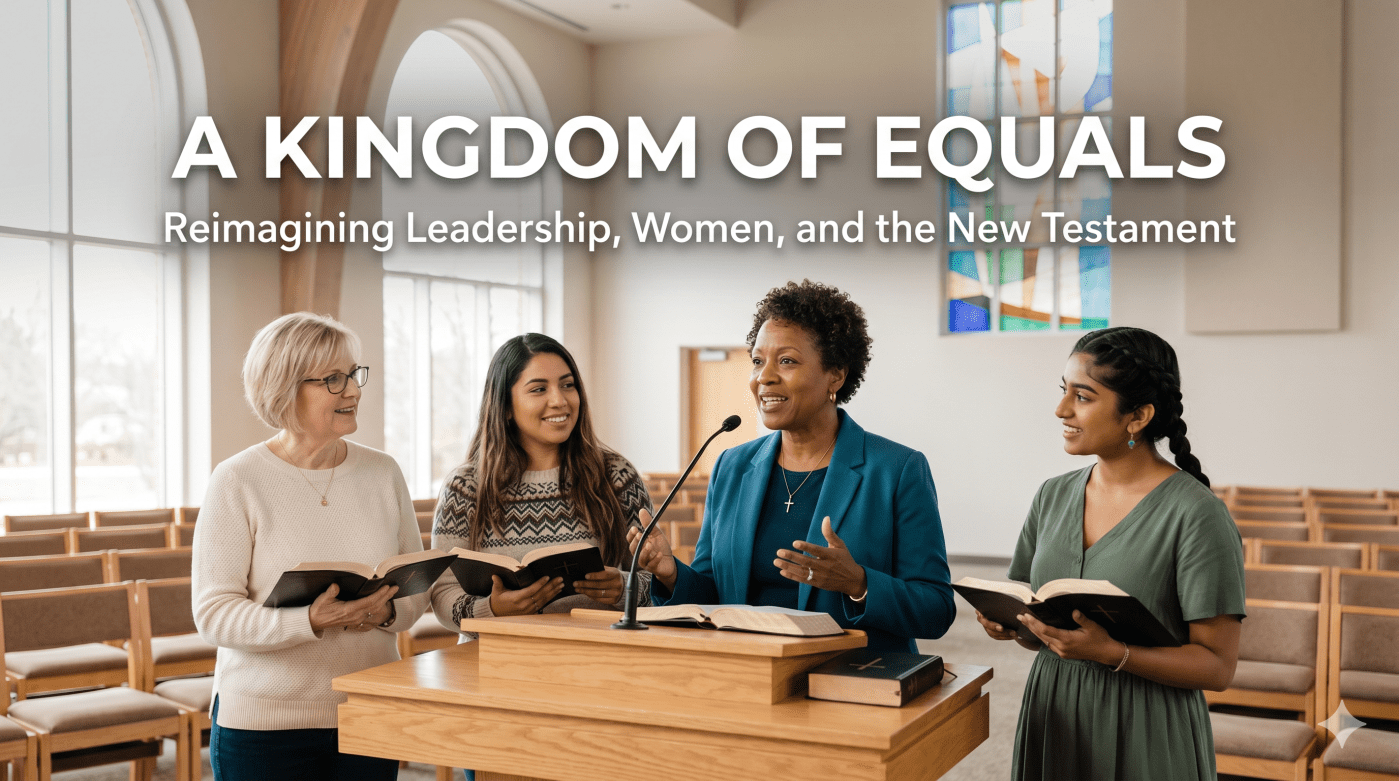
The landscape of American evangelicalism shifted noticeably when the Southern Baptist Convention (SBC) voted overwhelmingly to advance a constitutional amendment—the “Truth and Unity” amendment—banning member churches from affirming, appointing, or endorsing women in any pastoral or preaching role. To many outside and inside the denomination, it felt like a door slamming shut. Frankly, I shouldn’t care about the SBC nor their decision to continue to contextualize scripture and follow erroneous convictions, but I just can’t stay out of commenting on this topic – so here goes:
It’s easy to react with anger or to write off the SBC as hopelessly out of touch (because I have). But if we want to change hearts, we have to approach this conversation with kindness, understanding why our brothers and sisters in the SBC made this choice, while firmly pointing to a more beautiful, expansive, and historically accurate biblical reality.
The SBC’s decision stems from a desire to remain faithful to what they believe the Bible teaches about “complementarianism”—the view that men and women have equal value but distinct, gender-defined roles, reserving church authority for men. While we can respect their desire for biblical fidelity, as egalitarian believers (which I am), we have to gently but clearly say: we believe they have fundamentally misread both the text and the heart of the New Testament.
The Freedom of Grace: A Wesleyan-Arminian Perspective
As those shaped by a Wesleyan-Arminian theological heritage, we view scripture through a lens of radical grace and spiritual transformation. John Wesley himself realized that when the Holy Spirit pours out gifts upon a person, human structures must get out of the way. Wesley famously gave space for women like Sarah Crosby and Mary Bosquet to preach because he recognized the “extraordinary call” of God on their lives.
In the Wesleyan tradition, salvation and ministry are governed by the Holy Spirit’s empowerment, not by rigid, structural determinism(aka legalism). If God, in His sovereign grace, chooses to equip and call a woman to preach, who are we to stand in the way of the harvest?
The New Testament is Teeming with Women Leaders
The argument that women shouldn’t lead or preach often relies on pulling a few complex verses from Paul’s letters—written to specific churches dealing with localized chaos—and turning them into universal, timeless laws. But when you look at the macro-narrative of the New Testament, a completely different picture emerges.
The early church wasn’t a boys’ club; it was an absolute explosion of co-ed leadership:
- Phoebe was a deacon of the church in Cenchreae and trusted by Paul to deliver (and likely read and explain) the monumental Epistle to the Romans.
- Junia is explicitly commended by Paul as “outstanding among the apostles.”
- Priscilla worked alongside her husband Aquila as an equal partner, and together they corrected and taught the brilliant male evangelist Apollos.
To say the Bible forbids women from teaching men requires overlooking the very women Paul trusted to build the global church.
Ben Witherington III and the Greco-Roman Reality
As I write this, I have to quote one of my favorite modern biblical scholars Ben Witherington III when he said, ““A text without a context is just a pretext for whatever you want it to mean.”
To understand why a male-dominated church view is an incorrect reading of scripture, we can lean into the brilliant work of New Testament scholar Dr. Ben Witherington III. Dr. Witherington often reminds us that we must look at what the text meant to its original audience before deciding what it means for us today.
In the ancient Greco-Roman and Jewish worlds, women were largely treated as property, barred from education, and deemed legally untrustworthy. Into this intensely patriarchal culture stepped Jesus, who shattered every social norm. He allowed women to sit at His feet as official disciples (a radical act at the time), and He chose women to be the very first witnesses and heralds of the Resurrection.
As Dr. Witherington brilliantly points out, gender roles might shape our biological families, but in the church—the family of faith—our roles are determined by the spiritual gifts given by the Holy Spirit. The New Testament was never meant to baptize ancient patriarchal structures; it was meant to subvert them. When modern denominations enshrine male-only leadership, they aren’t protecting ancient biblical truth—they are accidentally protecting ancient cultural biases.
Moving Forward in Love
A male-dominated view of the church diminishes the body of Christ. It effectively benches half of the workforce, half of its servant leaders at a time when the world desperately needs to hear the Gospel. We can disagree with the SBC deeply and passionately, but let’s do so by embodying the very grace and mutuality we read about in the text.
The Holy Spirit cannot be institutionalized, and the call of God on a woman’s life cannot be voted away by a committee. The things that man organize and establish without the guidance and leadership of the Holy Spirit will never last, nor thrive. So again, let me say this clearly again for the ones in the back: “The Holy Spirit cannot be institutionalized, and the call of God on a woman’s life CANNOT be voted away by a committee.
The future of the global church belongs to every single believer who answers the call to say, “Here am I, Lord. Send me.”
Questions for Reflection:
- If the first person commissioned by Jesus to preach the news of the Resurrection was a woman (Mary Magdalene), how does that shape our understanding of who is allowed to proclaim the Gospel today?
- In our own local church communities, are we structuring leadership based on institutional tradition, or are we actively identifying and unleashing the spiritual gifts of all believers, regardless of gender?
To dive deeper into the historical and cultural realities of the first-century church, you can watch Ben Witherington III’s lecture on Women and Their Roles in the New Testament, which provides an incredible, faith-affirming look at how radically inclusive Jesus and the early church truly were.
Something more to ponder,
Grace & Peace
-Pastor Scott.


Leave a Reply