

The Salvation Army is modeled after the British Armed Forces…its model from uniform to leadership is very similar. Officers, when under orders, must move to new appointments based on need and abilities. When orders are passed down, by and large they are expected to be followed. This is understood entering a college for officer’s training to become an officer. Cadets and Officers are expected to submit to authority…but what happens when that authority is abused or misused? Does that happen in The Salvation Army? Like any organization or movement, we openly acknowledge that people, even leaders are fallible and are still vulnerable to making mistakes. But what happens when mistakes go unchecked or unaddressed? Who holds leadership accountable?
This style of leadership can be useful, especially when decisions must be made and the movement is at risk. It is most effective when it is used to empower, encourage, validate and serve those that leadership leads… Autocratic or Authoritative leadership can provide a clear, concise direction and vision. This style is evident not only in a Divisional or Territorial, National or International setting, but it is also evident to some degree in individual corps, harbor lights, ARC’s and other appointments. Each of these locations autocratic leadership is usually found – and with it at times, abuse of that model can take place. Please note that I don’t say “will” but I merely leave it open to the possibility.
“Power does not corrupt. Fear corrupts… perhaps the fear of a loss of power.”
― John Steinbeck
Ponder This:
But what happens when autocratic leadership does fail and/or is abused?
4 Dangers Of Autocratic Leadership In The Salvation Army:
1. Disagreement Leads To Punishment 
“The surest way to corrupt a youth is to instruct him to hold in higher esteem those who think alike than those who think differently.” -Friedrich Nietzsche
In an absolute authoritative leadership model, if followers or those subservient to the leader disagree and are outspoken about it they are punished. Even in The Salvation Army, this can happen. New appointments are given or created to mute or limit those voices of dissent. It must be noted here that our army has many instances in our brief history of dissension among the ranks from the very beginning. Historically, even in the founder’s day Ballington and Maud Booth were practically excommunicated from the army when they refused to take another appointment away from the U.S. Thus they left The Salvation Army and began their work as the Volunteers of America. Understandably there is more to this story, but even then family couldn’t disagree with the authority of the Army without fear of reprisal or punishment. Does this still happen today if one were to disagree with the current vision or a decision made by leadership?
In the autocratic model of leadership, a chief danger of such a model is the fear of ever having a dissenting opinion because it could be construed to mean one is insubordinate or perhaps lacking submission altogether. But perhaps there are times when disagreement proves commitment to mission over authority. By that I mean there are times when boots on the ground understand situations of community needs and the furtherance of the movement far better than those in leadership because they have a front row seat and they have their hands directly in those community pots and engage daily with direct services.
The abuse of the autocratic leadership model begins with a zero tolerance for disagreement and the repaying of such engagement with punishments or reassignment or appointment.
2. Talent Flees and Mediocrity Remains
 When this abuse is allowed to continue, and it does from time to time, there is inevitably a loss of talent. By that I mean some within the ranks of soldiers and officers alike might leave. Why would they stick around when abusive leadership would seem to go unpunished or addressed and instead is rewarded and only those who are completely complicit to that leadership style are given appointments of authority themselves? In essence an abusive autocratic style will promote the “yes” people, while those with talent (and who had the passion and zeal) but did not always agree might never be rewarded or acknowledged. What could remain would be a hollowed out version of an organization. It wouldn’t be the vision that failed but rather the internal issues of the organization that cannibalized itself.
3. Buy-In Is Limited 
“Growth inside fuels growth outside.” – John Maxwell
When abused, autocratic leadership limits the buy-in for the follower or subordinate. In our Army the buy-in for a soldier at a corps who is not invested in but instead ignored would be grossly limited. Why would they want to participate or engage in the vision if they were not included in the initial vision casting in the first place, but instead the authoritative officer controlled everything? The buy-in on such a model is a malnourished form of commitment to those in the corps council and anyone else wishing to make a difference in this movement.
This example is true from the soldier in the corps all the way up to IHQ.
If corps members, office staffs, corps officers, divisional officers, territorial officers aren’t allowed some investment and ownership within the movement and have some say in how it can continue to be relevant and innovative then disillusionment and abandonment could soon follow. Why waste their time when the decision will be made for them? Why invest of themselves when they will inevitably be told what to do anyway?
An abusive autocratic system will leave constituent left behind and or abandoned altogether.
4. Generational Losses
“Lead me, follow me, or get out of my way.” — General George Patton
Dictators of militant nations who rule by fear, will eventually have a younger generation growing up in anger and frustration and eventually revolt will ensue. This is an extreme example, but the iron-fisted autocratic leadership model might bring along a generation or two, but eventually a younger generation will rise up and consider this model to be antiquated and disconnected with reality. They might become disenfranchised and disillusioned and seek out other ways to serve and be useful in society. In The Salvation Army, perhaps the style of leadership that was once useful to us as a movement in its infancy is not longer what is needed today. Some might say if it ain’t broke don’t fix it, but what if it is in some ways broken and in need of fixing (or modifying) but we’re just ignoring the systemic issue because it seems a titanic, daunting challenge? Could it be that the younger generation is leaving the Church (big C) in general because of disillusionment and inconsistency in leadership and vision? Is society just the scapegoat?
Could abuses of the autocratic or authoritative leadership model be affecting our movement today? This is a very big question, I know that, but isn’t there a part of you that wonders if we shouldn’t even ask the question in the first place? Why is that? Do we fear that if we ask it we might face punishment or be considered “rebels”? I believe a healthy movement is one who has innovative, creative and outspoken members. A movement is just that, something that continues moves forward, not backward. A healthy movement should be one that accepts constructive criticism and takes corrective steps when needed. A healthy movement is propelled not by unhealthy models of leadership and fear, but by the Holy Spirit prompting and leading His followers onward into the fray.
Can abuses happen in our Army? Yes, and I believe they still do! From the lowly corps ministry all the way up, but I do not believe it is the norm and I am hopeful that such trappings can be avoided with prayerful consideration, holy living and servant leadership always at the forefront.
“If we are growing we are always going to be outside our comfort zone.” – John Maxwell
Something more for our Army to ponder today.
To God be the Glory!

Disclaimer:
The thoughts and opinions expressed here are the writer’s own thoughts and opinions and do not necessarily reflect that of The Salvation Army as an organization and movement…reader discretion is advised.


 I am just one father, one parent – but I stand with this International Day of Girls because I know that we can make a difference for ALL. It may take years, but we mustn’t give up. We mustn’t quit on those who are currently voiceless and without choices in life.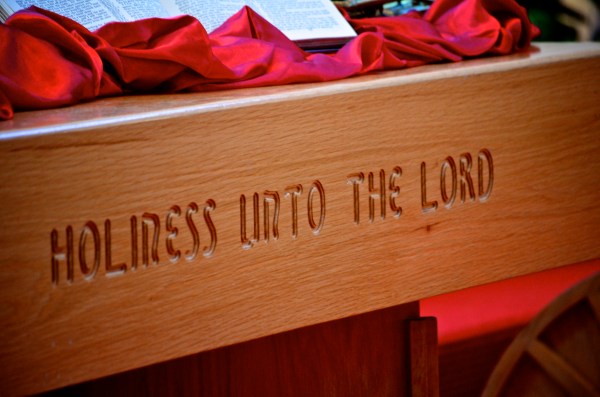


 “We should teach about holiness but emphasize Coutts (General Frederick Coutts) more…The table itself has had little resonance because it has become a display table, and because no one–neither soldiers nor officers–have a very deep experiential knowledge of holiness living, and have been put off by second-blessing / second work of grace confusions…” Could it be that our lack of teaching is to blame for its near extinction?




 Christ’s prescription to us? A daily/moment by moment conversation with Him. The more we visit with Him, the more we begin to reflect who He is in our lives. Our goal (and the simple definition of Holiness) is to become like Him in every way day by day – by taking His prescription for life! Without it, we will be like the patient (me…) leaving the doctor’s office the very first time and not following his treatment plan!

 Yes, Dear Salvationist, it seems like an impossible and never ending task because poverty, addictions and homelessness seem to be constantly knocking on our doors. The situations are the same, but the faces change over time! The question is – are we available to help and are we receptive to the Holy Spirit’s leading? Are we here to be a light when the rest of the world has turned the light off, given up and walked away? Can we still provide hope and love even if that person is stuck in the cycle of crisis? Can we offer it without judgement? Yes, we ought never put a band-aid on deep wounds, but can we serve first then minister? Or can ministry truly be found IN the service and care of others?

 With professional preachers, also comes a lack of hunger. Mind you, these are not always connected. I believe this is a stand-alone problem for many within our western world. If one were to journey to some of the poorest countries in the world, you would find a see hunger for scriptural truths and churches memorizes whole chapters of scripture…where is this hunger in the more prominent and prosperous countries? I believe there is a direct correlation between comfort and security and the shallowness of scriptural knowledge! Why rely on the scripture if every want, and all of life’s comforts are met (roughly speaking)?











 In Focus
 through it, but there must be a way for us to live this overwhelming victory in the here and now…and we do that by understanding it. In our understanding of what this life is all about – Whose we are and embracing the eternal here and now, we flip the script on what “living”is all about! When we change our perspective, we change the narrative of our souls. What I mean by that is – we no longer simply live for ourselves, we begin to live for Christ. Many times this is a gradual denial of self as we surrender to the will of God. It begins with the little things of life. Soon, as we allow these little spiritual victories to occur, we will be more inclined to seek out the larger “denial of self” moments.
 Some of may be.

 1. Have an Identity apart from the Army