
Perspectives Day 2 – Featuring Stephen Court (Major) “Semantics Antics”

Image

“SEMANTICS ANTICS”
(Stephen Court)

Words have power. Yes, this truth is usually used in the context of either speaking life instead of death (see James on the tongue) or of the prophetic (see the creation account of God speaking things into being).


But it also goes for semantics – the meanings of words.


When we use certain words we imply and apply certain meanings. When these words enter the general vocabulary they shape the meaning of the things they describe. Words have power.


We (The Salvation Army) have been using some words and terms far too carelessly. Here are some examples:


lay (as in ‘lay people’ and ‘laity’): this refers to people who are not ordained and otherwise qualified to participate in Christian service. It is carelessly applied to everyone who is not an officer. This is poor theology and terrible history. Despite the spiritual inferiority complex-induced mistake of the late 1970s and the ‘ordination’ of officers, there is not some mystical abracadabra ‘ordination’ that accompanies commissioning. All of our generals and the vast majority of our commissioners (in all of history) have not been ‘ordained’ in the mistaken sense that the relatively recent commissioning exercise has appended. By the loose use of the term ‘lay’ that means Booth, Railton, Booth-Tucker, Higgins, Carpenter, Orsborn, Kitching, Coutts, Wickberg, Wiseman, Brown, Wahlstrom, Burrows, Tillsley, Rader, Gowans, Larsson, Clifton, Bond, and Knaggs were/are ALL ‘LAY PEOPLE’. The term is ridiculous in a Salvationist context. There are no ‘lay people’ in The Salvation Army. There are converts, recruits, soldiers, and officers. That’s it.


Words have power.


clergy: Official SA websites (AUE, USE, C+B, among others) as well as influential sites (e.g. wikipedia) define or equate officers as and with clergy. This is evil. Officers are not clergy. Officers are soldiers who have given up secular employment and covenanted to make themselves exclusively available temporally and geographically for the salvation war in vocational leadership. ‘Clergy’ by definition requires ordination.   Watch the end of the faulty reasoning:

If ‘officer’ equals ‘clergy’; and,


‘Clergy’ requires ‘ordination’ (which it does by definition); then,


All the generals (but our current one) and most of the commissioners were not/are not officers.


By using words like ‘clergy’ and ‘laity’ we are reinforcing the unbiblical clergy/laity split, one of the key strategies of the devil against the people of God.


Words have power.


pastor: These are the four New Testament ‘offices’ Paul outlines in Ephesians 4: apostle, prophet, evangelist, and teacher/shepherd. The last – teacher/shepherd – includes a word that is translated only once in the whole New Testament as ‘pastor’ but clearly means ‘shepherd’.[i]


Those covenantally involved in vocational Christian leadership – our leaders – are called corps or commanding officers, divisional commanders, territorial commanders, and general. They are not formally called evangelist, apostle, prophet, shepherd/teacher even though many fill one or more of these roles. To pick one out of the hat (with the increasingly rare exception of ‘evangelist’ as in ‘territorial evangelist’, the chosen term is always ‘pastor’) is to call hockey hall of famer Wayne Gretzky a penalty killer. Now, Penalty Killer Wayne Gretzky certainly was efficient in killing penalties but to limit his impact on the ice to penalty killing is ridiculous.


Why then do officers (and lots who attend meetings) call officers ‘pastors’? Excellent question, no good answer to which is available, but some explanation is possible:

A. we have an inferiority complex when compared to churches;

B. we have an identity crisis in which we don’t know that we are not a church (see below);

C. we are catering to a church subculture instead of fighting to rescue lost people from hell;

D. we are overwhelmingly influenced by non-Salvationist Christian content (books, conferences, TV, radio, podcasts, blogs, etc.).


Remember, words have power. What are the effects of officers being called ‘pastor’?


i. we sabotage our mission because, among the people we are trying to rescue from heading to hell, ‘pastor’ generally has negative connotations. So we inaccurately identify with something that is unpopular in trying to reach the people with whom it is unpopular. Ridiculous.


ii. we change what it means to be an officer from some heroic combination of apostle/prophet/evangelist/teacher\shepherd leading troops in a salvation war to some bad-breathed, shellac-haired, touchy-feely stereotype aiming to keep the pews warm.


iii. we limit Holy Spirit, who actually works through all FOUR offices, not just a distorted half of the teacher/shepherd one.


Only church people seem attached to terms like ‘pastor’.


Could it be that we use a term like ‘pastor’ because we want church people to attend our meetings and don’t really care about people who are lost?


Words have power.


church: For centuries we have understood the ‘Church’ to be a place where the gospel is preached and the sacraments are administered. However, The Salvation Army is a revolutionary movement of covenanted warriors exercising holy passion to win the world for Jesus.


Based on these definitions, is your corps a church?


No. (unless you are surreptitiously passing around bread and grape juice and splashing your people with water)


So, by definition, your corps is not a church. Why call it one?[ii] Why identify with something that is manifestly unpopular with the people who are headed to hell that we are trying so hard to reach with the Gospel? Why sabotage your local mission and the mission of our global movement? Your corps is not a church despite what someone stuck on a sign or put in a magazine or said from the microphone.


Words have power.


service: This one is hilarious. Just this Sunday afternoon a salvationist took a phone call at the hall. The person had been calling, apparently, for the last hour but our explain, “we’ve been in service for the last hour and a half… we were in service… we were in service…”


Well, this person was evidently LOOKING for some service and it made absolutely NO SENSE to him that The Salvation Army had been ‘in service’ and yet had neglected to pick up the phone to SERVE him! Now, our friend had been taught that what had just happened was a religious ceremony (that is the definition of her use of the term ‘service’). But to the people going to hell, ‘service’ means service – the act of being served – and we’d not been serving them.


So, for the record, The Salvation Army does not hold ‘services’. We have what are called ‘meetings’. Check out your history. We have holiness MEETINGs and salvation MEETINGS and soldiers MEETINGS and all kinds of meetings. But we don’t ‘have services’. As the sign on the way OUT of one garrison said, ‘The service begins when the meeting ends’. Let’s keep our serving in VERB form, please.


Words have power.


Do you get it? The words you use affect what we are. When you use terms like ‘church’ and ‘pastor’ and ‘service’ and ‘clergy’ and ‘lay’ you are watering down The Salvation Army and compromising the testimony of salvationists and insulting soldiers and limiting Holy Spirit and sabotaging our mission and hindering our effectiveness. Stop it, please.


Don’t even get me started on ‘members’, ‘ministry boards’, ‘sanctuaries’…

  Endnotes

[i] 1. ‘Pastor’. For some reason, people like this term. In KJV it comes up once – Jeremiah 17:16 (NIV renders it ‘shepherd’); in NIV ‘pastor’ turns up once – Ephesians 4:11.


But the word in Ephesians 4:11 is ‘poimen’ and it actually appears 18 times in the New Testament, 17 times being translated ‘shepherd’. So it seems like ‘pastor’ is a biblically rare synonym for the much more popularly used term ‘shepherd’.


Since ‘shepherd’ actually means something, apart from being a synonym, and since ‘shepherd’ lacks the negative connotative accretions of ‘pastor’ in today’s society, it makes much more strategic and biblical sense to use that term instead of ‘pastor’.


This says nothing of the replacement of CO with ‘pastor’ (‘pastor’ is not nearly synonymous with CO and so is an even worse replacement for CO than it is for shepherd).


So, let’s agree that ‘pastor’, being unbiblical and unpopular, is a term we should avoid.


[ii] ‘church’. The Bride of Christ? Metaphor. Flock? Metaphor. Building, temple, body? All metaphor. But the Army of God? The Salvation Army? We’re not a metaphor. We’re not a comparison to something that we aren’t. We’re an army. ‘Church’ carries negative connotations throughout the West. The large majority of populations in developed countries vote with their feet that ‘church’ is irrelevant and unimportant and marginalised. Why on earth would we rush to pretend to be a ‘church’ when it is, a. not accurate, and b. not effective? Why on earth would we forfeit our God-given, biblical identity as an Army? (possibly because we got the ‘prophetic trumps relevant’ principle backwards and we have a spiritual inferiority complex).

Catch Major Stephen Court’s Blog Writings at – http://www.armybarmyblog.blogspot.com/


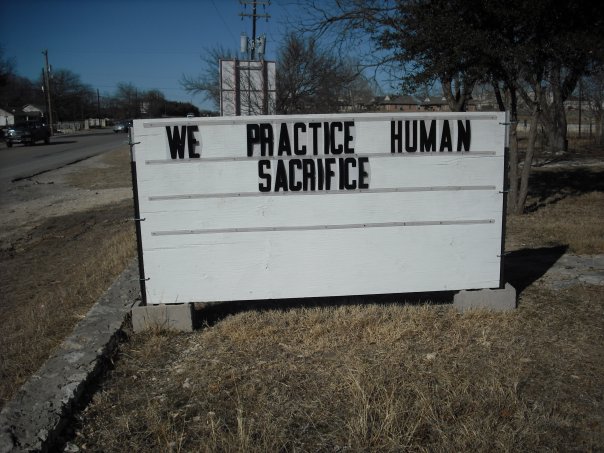
Human Sacrifices…they still happen (A Lesson in leadership)

Image

We would most likely all agree that mission and purpose in ministries as well as organizations are vital to its effectiveness and success.  But is there a trade off to achieving certain goals along the pathway to fulfilling our missions?    Are there casualties along the way?  Do we become so mission focused that we lose, in some way, our compassion and care for individuals which includes team members?  

The old adage “too much of a good thing is probably bad for you” could become true when all that we do, eat, sleep and breathe is our mission.  I am not insinuating that we discard our mission and lose our focus, but sometimes we must check our motivations and ask ourselves some difficult questions in order to realign and correct possible missteps.  

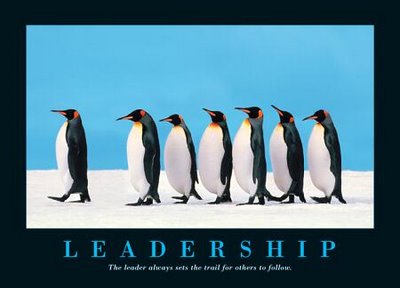
Mission is vital, but so are the people who embody the driving force behind the mission.  Leaders aren’t leaders unless there are people who are willing to follow them.  Whatever system is put in place, without the “fight force” (people) mission cannot be accomplished.  

Are we sacrificing humans?  

Image

Truths: 1.  There will be people who might not catch the vision.  2.  There might be those who dissent and disagree.  
But we, as leaders, must be mindful that we cannot simply continue to plow through our goal steps, chug along on the path that we have plotted without the “team” around us.  If we choose to go this way and disregard those who disagree with us, we may not heed (at times) those who cry out with the voice of reason.  Sometimes we as leaders have to acknowledge that we do not always have all of the right answers.  Pride can enter in, and we may feel as if these decisions (which we have made) cannot be allowed to be discarded for to do so will reveal our inadequacies and/or human short-comings.  

Good leaders should admit when they are wrong.  Good leaders need to listen to the voice(s) of counsel, and in spite of the interpretations of others as the course is corrected; change that course.  

Misguided (I wouldn’t use the term ‘bad’) leaders refuse to admit wrong doing.  Misguided leaders only listen to the counsel of the ‘yes’ people and punish those who voice and/or question their authority.  

Human sacrifices are still being made in organizations when mission and purpose moves at a pace which is faster than the followers can run.  Mission is important, but without those who can carry out the mission, any attempt for success will be futile.  

3 Preventive Steps:


Image

1. Genuine Compassion: 
In order to have followers, leaders must go to them.  Leaders need to understand how their followers live, think and also what they are (and aren’t) capable of.  Compassion goes a long way to ensuring the success of any mission plans.  When we stop and care for the needs of those we lead we inevitably open the doors to not only obedience but healthy loyalty and love.  Compassion oils the cogs of motivation and loyalty.  

2. Listen

Image

I have found myself guilty of this one.  I have plotted certain paths of mission and neglected to actually listen to those with whom I was given the charge to lead.  Good leaders understand the great importance of active listening.  When they gather their followers they not only engage in productive planning but also engage in active listening.  These moments of active listening (it is ongoing) include concerns, desires, skills, and dreams.  Once leaders listen, certain plans along the way of mission may need to be altered in order to further strengthen the foundation of the “team”.  These aren’t necessarily always concessions but perhaps better solutions and alternatives which will help the group to arrive at the completion of goals within the mission.  

3. Motivate

Image


It is essential to understand that battles are primarily won in the hearts of men. Men respond to leadership in a most remarkable way and once you have won his heart, he will follow you anywhere.”  -Vince Lombardi
</strong/>
Good leaders understand how to lovingly challenge people, how to push them but not sacrifice them to the mission.  What is in the hearts of those you lead?  How can you motivate them to accept the mission and embrace the pathway towards achieving that mission?  Motivation can be challenging because all people are different, but when we are actively engaged in listening to those we lead we will find the means to appropriately motivate them.  These motivations shouldn't be seen as punishments or a negative thing either.  Positive reinforcement, encouragement and guidance is crucial when challenging those you lead.  Find the appropriate source(s) of motivation for your team and embark on helping them see how capable and valued they truly are.  Don't neglect this step because the members of your team need your motivation to achieve the goals you are setting out to accomplish.  

Caution & Completion:
If you find yourself leading only to turn around and find no one is following then perhaps you’ve sacrificed the humans on the altars of mission.  Beware of the dangers of leadership.  Leadership carries both a burden and a blessing if used correctly.  The burden being people are seen as people, not just another number or group to lead.  Compassion is vital; active listening is crucial and motivation is paramount to walking across the finish line with those you began it with.  Don’t sacrifice the humans for the mission…we need each other and we cannot accomplish anything without every component and every person.


***Disclaimer, leaders carry a tremendous burden and those who follow must also try to recognize where leadership is coming from and as the old phrase says “the door swings both ways”.  Much of what has been written here should also be applied in reverse.  Those who follow should carefully consider their motivations and consider what may be best for all concerned.  Mission cannot be accomplished unless both leader and follower can work together. ***

-Just something else to ponder today.   

3 Things Christians should stop saying…

Image


…if they aren’t sincere.

Everyone of us have heard these phrases.  We’ve probably even used them a time or two…and dare I say half of the time we haven’t truly meant them.  So why do we keep using these phrases?  To be nice?  To sound sincere?  Because it’s “church” lingo?  Why on earth would anyone come back to us seeking genuine help and support if what we’re saying isn’t actually backed up with truth and sincerity?  

The Apostle Paul once said, “Therefore encourage one another and build each other up, just as in fact you are doing.” (1 Thessalonians 5:11) It sounds as if this church was doing what was necessary to support one another with love and with the correct words with action behind them.  

Here’s a thought for us before we explore these four phrases…brothers and sisters in Christ: DON’T SAY THINGS THAT YOU DON’T TRULY MEAN!!!  Okay…moving on.

3 THINGS CHRISTIANS SHOULD STOP SAYING…if they aren’t sincere:

1) “I will pray for you”

Image
I hope THIS is never our motivation to say this phrase!


This is seemingly the most innocuous phrase we as Christians say to each other and to those who aren’t yet saved.  It might be within a sentence such as “I am so sorry you’re going through that right now, I will pray for you.” And then five minutes later when we have gone on our merry little ways we completely to forget to follow through with that promise.  Let me ask you this; how truthful, honest and sincere is that?  Don’t say things like “I will pray for you” if you don’t truly mean it!  No one knows if you will actually follow through with your promise…but God will.  I don’t say that to scare any of us, but if God knows our hearts why do we say things that we have no intention of committing to?  If you or I say “I will pray for you”…then DO IT!!

2) “It’s not the Lord’s timing”

Image

How could we possibly know that? Do you or I have a direct line to God?  Have we checked with Him regarding this person?  There are many different circumstances that we’ve either said this or heard someone say this to us.  At times it’s used to lord power over another or rationalize human/leadership decisions by making it sound as if God planned these human decisions.  I’m not saying that God doesn’t intervene, because He does, but don’t try to explain away your/our/others decisions by saying “it’s not the Lord’s timing”…unless you have received true discernment from the Lord Himself.  (That last sentence in and of itself is another conversation for another time)

3) “Perhaps God is closing this door in order to open another door”

Image


This one ruffles my feathers.  Admittedly this specific phrase is a pet peeve of mine.  Does God truly “open doors”?  I know He can provide inspiration and direction for our lives and in certain specific people in this world I imagine He calls very clearly…but opening doors?   Perhaps you will disagree with me on this and that’s fine, but there are times when we use this phrase flippantly instead of asking the right questions.  It can become an escape mechanism for some to bail on the hard path in pursuit of an easier path.  If we’re not asking additional questions to fellow Christians about their specific circumstances and instead we use this phrase, we could be giving them a green light to bail.  

Secondly, we could use this phrase in order to be rid of a certain person in our lives too.  Ask yourself before using this phrase (if you plan to use this phrase) is this what I discern God to be saying to me about this situation?  Am I sincere in what I’m saying here, or am I just trying to give permission to a fellow believer to walk away?  I do believe, however, that God blesses whatever pathway we choose in life as long as He is at the forefront of that relationship.  His plans for us sometimes may be specific and at other times can be left to us to decide upon.  

Be a sincere encourager!  

Image

If we use these phrases and lack the sincerity coupled with genuine compassion for our fellow believer we could do more harm than good.  Be careful how you use words!  Be careful how your counsel and offer advice.  Consider not only your motivation but also how we can lift each other up and genuinely care for each other as fellow sojourners of the cross!  

-Just something else to ponder.

“Getting stuck in the needle”

Image

Again I tell you, it is easier for a camel to go through the eye of a needle than for someone who is rich to enter the kingdom of God.” Matthew 19:24

The needle is real… 
It can be possessions.  
It can be people.
I can be our professions.
It can be the pursuit of fortune and fame.

This guy came to Jesus and asked Him point blank what he had to do to gain eternal life.  The question alone should possibly give us a clue into the motivation.  Essentially he was asking “how can I live forever?”  Don’t we all want to know the answer to that question? Isn’t that the reason people have searched for fountains of youth, gone under the knife for plastic surgeries, slept in hyperbaric chambers?    People want to know the secret to living longer…especially how one can live forever.

So this rich guy (or so we understand him to be) wants to know from Jesus how to receive eternal life.  It’s an existential question.  It’s a realistic question, and sometimes it’s a selfish question.  Sometimes when we read this passage we want to demonize this guy.  He’s rich, he’s done all the right things but he just can’t seem to come to terms with Jesus’ final request…”If you want to be perfect, go, sell your possessions and give to the poor, and you will have treasure in heaven. Then come, follow me.”  (vv.21)  

Was the hang up on following or giving?  Jesus seems to indicate to his followers that it was in the “giving”.  Yet perhaps it’s both.  In order to do one, this guy would have had to do the other as well.  He had to let go of what he owned in order to follow Messiah and receive eternity.  

He got stuck.

Image

 A few years ago I had the opportunity of going into a deep cave system with a group of young people.  Down we went into this cave system until we came to a section in which we had to crawl on our bellies.  The cavern we were in connected to a much larger more beautiful cavern but to get to the next “room” we had to get down on our bellies and crawl through a tight crevice in the rock.  It was only about ten feet of crawling beneath this massive rock formation, but for some panic set in.  Halfway through my “crawl” I came upon a segment in which I nearly got stuck.  I had, in my pockets, placed keys and a wallet.  As I crawled I hit a snag because of these bulky items in my pocket and I had to make a decision.  I couldn’t go any further until I emptied my pockets.  I breathed deeply for a few seconds and then worked my hand back down to my pockets in order to free myself from the snag.  If I hadn’t emptied my pockets (which I re-positioned in my hand for the rest of the journey) I would not have been able to complete the journey through the small crevice and see the magnificence of the next cavern.  I would have been stuck!

What are we stuck on? 


Image
Are you stuck?

This guy couldn’t make that next step in the journey because he was stuck on his possessions.  Jesus was calling him to make this change and yet he was stuck.  It’s easy to point the finger at this guy and say “well it was because he was so rich”…but how often do we find ourselves clutching onto things that are preventing us from moving on in this spiritual journey?  

We’re on the crawl and we’ve hit a snag.  Unless we make some changes we cannot move on…we cannot progress.  We might not get into the “next room”.  You see the “next room” isn’t even about seeing heaven, it’s more about being with Jesus, the One who has brought us this salvation and the power to even move forward.  

So the question that we must ask ourselves is this:  “What are we stuck on?”  
What is holding us back from saying “Yes I will follow You anywhere and everywhere!”  

Are you stuck with your finances?  
How about your place of employment?  
                   or…
Your pursuit of fame, fortune, notoriety, relationships, family…

All of these things can become a sticking point for us if they become our complete obsession in life.  
Are you stuck right now?  
Have you hit the panic mode yet?  
Do you even recognize that these things are holding you back?   Do you understand Christ has called you to greater things if you’ll just follow Him?  If you are stuck right now and you wish to finally surrender yourself fully to Christ here’s a verse of hope for you today:  Come to me, all you who are weary and burdened, and I will give you rest. Take my yoke upon you and learn from me, for I am gentle and humble in heart, and you will find rest for your souls. For my yoke is easy and my burden is light.” -Matthew 11:28-30 (NIV) Christ promises to provide for us.  Christ longs to free us of the other burdens of these things we’ve clung onto and placed great emphasis on.  His way will lighten our load and guide us towards the eternal pathway.  He is our guide.  Trust Him!

-Just something more to ponder for today.

Truth & Dare: A Confession and a surrender.

Image

I’ve little strength to call my own,
And what I’ve done, before thy throne
I here confess, is small;
But on thy strength. O God, I lean,
And through the blood that makes me clean,
Thou art my all in all.”

SBS 484 – “I bring to thee my heart to fill” 
-Herbert Howard Booth 

This verse to THIS song always gets me. 
Do want to know why?  It’s because these words strike a chord of truth in my heart.  Everything I do or have done…is small.  It’s vapor in the presence of God…it’s minuscule and in the presence of God, it counts as a teeny tiny drop in a vast ocean.  

Don’t get me wrong.  It’s really not about feeling powerless or unfulfilled…this song is all about surrender.
Sometimes though, I must admit that I go about all of my “works” the wrong way and with the wrong motives.  My attempts are all feeble.  Sometimes, if I were truly honest  it comes back to the notion of waiting on and trusting God.  

I cannot count how many times I speed ahead of God when it comes to my life and my desires.  Did you catch that?  I speed ahead because it’s MY life and MY desires.  When the rug gets pulled up from under my feet I am left on the floor in a rumpled heap and left asking God “why?”  Yet all along I am asking the wrong person “why”…I should be asking myself that question.  Scott why do you always speed ahead?  Scott why do you always attempt to retake control?  Scott why do you always think that your efforts by themselves are good enough? Why do you think that your efforts by themselves will be acceptable when your motives are all wrong.  -Ouch-  That hurt a little bit.  Truth be told that’s a little too revealing.

Image


Truth be told that’s me…is it ever you?  

Can you identify with this verse too?  Can you see where you left the relationship with God and attempted to “go it alone”?  When you went rogue?  Can you identify with me in how these words strike a heart wrenching chord in your gut; …and as you are doubled over because all of the air has been punched out of you are realize these words are for you…can you relate?  

1 Peter 5:6-7 says; “Humble yourselves, therefore, under God’s mighty hand, that he may lift you up in due time. Cast all your anxiety on him because he cares for you.”  

We need a fresh perspective.
We need to stop feeling sorry for ourselves when OUR plans don’t pan out and OUR desires aren’t fulfilled.  
We need to humble ourselves and cast everything back onto Him because He’s the only one who can handle it.  God is the only One who matters and His attempts are never feeble and He will never fall short.  

It is comforting.  It is encouraging, and it should provoke us to get our perspectives and our motives realigned with that of God’s.  
Do you feel feeble today?  Have you been gutting it out?  Arguing with God?  Asking Him “why?”  Perhaps it’s time to take a closer look at your surrender and consider if there’s more to give to Him.  Your surrender might include more than you think.  Your surrender might also be lacking.  

Give it some thought and prayer, and perhaps God might reveal something to you.  

-Just a thought.  

“Perspectives” Day 2 – Featuring Dennis Strissel (Colonel) “Clipping Toe Nails”

Image

Opinion–8-ed
(A series of eight installments)
Number four – Clipping Toe-Nails

Image

“Lieutenant, can you clip my toe-nails?” I couldn’t remember the toe-nail clipping class at the CFOT, so I thought the request a tad unusual. Elmer was in his mid-eighties and, for the most part, bed-ridden. He had been a long-time Salvationist and his wife still attended the church meetings without him. In fact, our very first Christmas dinner together as a married couple was with Elmer and Mabel, huddled around a very small kitchen table sharing fried rabbit together. Some things you just never forget…
“Lieutenant, can you clip my toe-nails?” I heard the words again and they kind-a woke me out of my contemplation of the request. It wasn’t a matter if I could or not…it was a matter if I wanted to or not. Do you understand my dilemma? I smiled at Elmer, grabbed his big old German foot and commenced to clipping. As I dodged the clippings flying off his toes, the thought crossed my mind that I never expected that the list of my service to the Lord would include clipping toe-nails.
For those readers still with me and not running to the bathroom sick to their tummies, my journey, and it might as well be yours too, is full of things we never thought we’d be asked to do as a service to others, as unto the Lord.
“Hey Lord, can you call me through a burning bush like you did for Moses? Can you cause a great revival of mean, God-hating people like you did for Jonah? Can I be of service to you and kill a giant like David did?”
Now those acts of service sound like great projects and worthy of a servant of the Most High God. However, I have discovered that service looks more like dishing up a plate of spaghetti for the homeless, reading a book to the first grade class, putting away tables and folding chairs for the officer or pastor, and, you guessed it, clipping the toe-nails of an elderly person. It’s not so much about the MIGHTY things as it is about the MUNDANE.
Do you remember the story Jesus told about the ruler, leaving ten servants in charge of the kingdom while he went away? He entrusted them with varying amounts of money and even though the money was small, he complemented and rewarded them upon his return.

Luke 19:15-19

15 “When he came back bringing the authorization of his rule, he called those ten servants to whom he had given the money to find out how they had done.
16 “The first said, ‘Master, I doubled your money.’
17 “He said, ‘Good servant! Great work! Because you’ve been trustworthy in this small job, I’m making you governor of ten towns.’
18 “The second said, ‘Master, I made a fifty percent profit on your money.’
19 “He said, ‘I’m putting you in charge of five towns.’
THE MESSAGE.
They were faithful in the mundane (small job) and were found faithful and rewarded for that faithfulness. Why? Because service is not so much about making the supreme sacrifice as it is about making a personal investment in someone or something else.
Gordon B. Hinkley said “Though my work may be menial, though my contribution may be small, I can perform it with dignity and offer it with unselfishness. My talents may not be great, but I can use them to bless the lives of others…. The goodness of the world in which we live is the accumulated goodness of many small and seemingly inconsequential acts.” (http://www.goodreads.com/quotes/tag/service?page=1).

Stop looking and longing for the service show-stoppers and the roof-raisers and concentrate on the everyday, little areas where you can lift the lives of the few by your personal investment in their lives, while honoring the Lord with yours…even if it means clipping toe-nails.
Dennis L.R. Strissel

Image


Church 101 – “And the Survey Says…”

Image

Below are 8 questions within a survey that, if you have the time, would you please click and fill it out.  
This survey is through “SurveyMonkey” it’s safe and you won’t be asked to give any information other than answering these quick and painless multiple choice questions.  

Next Monday I will share with you the results of this Church 101 survey.  Please help me in gathering as much data as I can by your participation in this survey, from you my fellow readers and bloggers.  Thank you in advance for your cooperation.  

This should be interesting!

Image

Here’s the link – 

https://www.surveymonkey.com/s/5B33GZQ

Stay tuned Monday as I explore results and please comment and help explore this topic with me!  

“Ambassadors of Reconciliation”

Image

“We are therefore Christ’s ambassadors, as though God were making his appeal through us. We implore you on Christ’s behalf: Be reconciled to God.” -2 Corinthians 5:20

One of my favorite words in the English language is “Reconciliation”.  The etymology of the word reconcile comes from the Latin “reconcilare” which means “to bring together again”.  

When Jesus came into this world and identified with humanity as the God-man He sought to bring together again the original creation of man with God the Father.  Did you catch that?  At one time, in our original state, we were together with God.  He would walk with Adam and Eve.  He would fellowship with them in the garden of Eden.  He actually, physically, walked WITH them.  

But.

Because of original sin, which entered the picture, we became separated from God.  Think of it like a great big, messy divorce…except we were the offending party and God the Father did nothing to deserve our infidelity.  How it must have wrecked His heart to find us unfaithful to Him.  To find out we (Adam and Eve) deliberately and consciously disobeyed Him.  But we all know this story don’t we?  We understand the consequences of the fall of man…don’t we? 

Yes Jesus came. 

He came to set things right with us.  

He came to Reconcile us (back again) into the Father’s arms.  

Think about that for a moment.  Isn’t that beautiful?  Doesn’t that evoke in you some sort of longing to physically be embraced by God the Father as you enter into the wedding feast?  Jesus came to restore us.  He came for the whosoever…those who would actually come seeking Him.  

But, wait…there’s more. 

When we face the God-man, Jesus Christ, for who He is and what He came to do, we make a vital decision.  We, who have then become Christ-followers, we choose to become like Him in our daily living.  A part of this “becoming” is to pick up where Jesus left off.  We follow in the footsteps of the Rabbi, but in so doing we shuck off our old identities and adopt (not just imitate, but become) Christ in  our everything!  

Taking it a step further, we are to be Christ’s ambassadors to the world relaying the vital message of reconciliation to the whosoever. There is a misnomer though that I think we buy into once in a while – “Reconciliation is only for the sinner”.  This is simply not true.  Though we have become like Christ in every way, shape or form (or so we think thus far) we are still in need of THAT reconciliation daily!  

The Hebrew words associated to the word “Ambassador” are: “tsir” or “melits” and “malak”.  Essentially they mean “an interpreter” or “a messenger”.  

When we think of Ambassadors today we think of politicians from certain countries whose job it is to broker peace and trade agreements with other countries.  But we as Christ-followers are also called to be ambassadors of reconciliation to the sinner and the saint.  Taking it a step further being an Ambassador also implies that we are to literally breathe Christ’s message into other people by our words and more importantly by our actions.  

How can we provide clear interpretation of God and that of His love to those around us if we have not fully adopted and reconciled ourselves to His love as well?  If this reconciled life is not within us then we cannot breathe this into other people’s lives.  So as an Ambassador it has to begin with You…and it has to begin with me.  

It first must become personal…daily, even moment by moment breathing Christ’s holiness and likeness into our own hearts and minds through the power of the Holy Spirit. (Philippians 4:8).    

Prayer: 

Dear Lord, let it begin with me.  Breathe on me breath of God, allow me to be reconciled to You daily.  Help me to see that I am called to be your messenger to others, even other saints.  Help me to be the best Ambassador for you that I can be.  May it be my lifelong passion which begins moment by moment with you.  In Your Holy name I pray these things, -Amen.  

Truth AND Advertising

Image

Something on the radio this morning set me off a little bit today.  I was listening to the Christian music station when an advertisement came on for one of the radio’s sponsors, which happened to be a church.  I don’t have a problem with church’s helping to sponsor Christian broadcasting by any means but it was how this particular advertisement ended.  The church (who shall remain anonymous) stated it’s name at the end and then made the bold statement “also known as THE love church”.  

Image

I had to let it sink in for a moment (I had only had one cup of coffee thus far).  “Wait, what?”,  I thought to myself.  “If they’re the ‘Love’ church then what are the other churches around them labeled as?  The “Hate” church?  The “NICE” church?  The “I kind of like you” church?  And after I asked myself that question another question popped into my head; “If that church has all the love” then what do the rest of the churches get?  Why are they only known as the love church?  Is it because they paid for this advertisement segment?  Did they give themselves that name?  

But…

I wish it only happened once in a while in segments on the radio station but it doesn’t.  I’ve driven by other churches that have seemingly snarky phrases at the bottom of their signs which make the statement – “BIBLE BELIEVING CHURCH“…Um okay.  So the other church down the street is NOT a bible believing church?  Or this church is just BETTER at believing in the Bible?  And who decides that this particular church and its congregation is strictly a bible believing church?  Do they pay bills?  Do they drive a car?  Do they pay taxes?   Then they’re not solely a bible believing church then are they?  By this one statement one could make the assertion that their claim to be strictly a bible believing church is false.  

Image

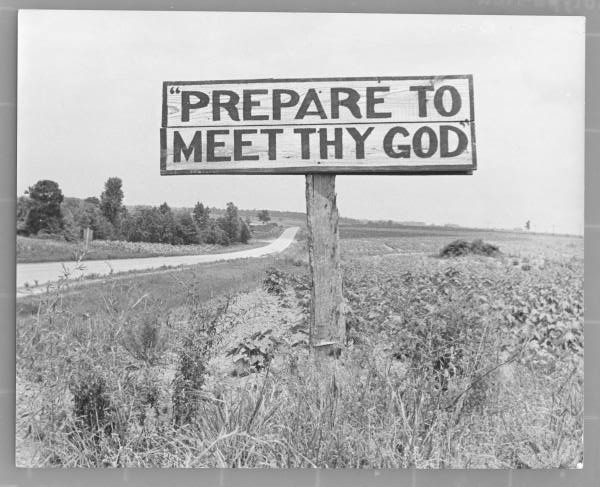
Still I’ve come across another sign over a church that made this dire statement:  “PREPARE TO MEET THY GOD”.  When I first saw THAT sign I thought to myself, “Wow their God sounds wrathful and fierce, would I even consider stepping into that church?”   

Here’s a truth that the Apostle Paul made that I believe ALL churches should hear again: 

I appeal to you, brothers, by the name of our Lord Jesus Christ, that all of you agree, and that there be no divisions among you, but that you be united in the same mind and the same judgment. For it has been reported to me by Chloe’s people that there is quarreling among you, my brothers. What I mean is that each one of you says, “I follow Paul,” or “I follow Apollos,” or “I follow Cephas,” or “I follow Christ.” Is Christ divided? Was Paul crucified for you? Or were you baptized in the name of Paul?” -1 Corinthians 1:10-13  

I’m not picking a verse that fits my purpose, I really want churches to stop comparing themselves with each other.  This isn’t some sort of Church growth competition.  There isn’t some trophy a church will receive when they get to Heaven because they had the best advertising campaign or slogan on the front of their church.  Though Paul spoke these words to a specific church at a specific time, the point is still clear and relevant today: “There should be no divisions among you”.   Yet we can look all around us and see just that divisions and comparisons and envy and even hate.  I’m telling you this ought not be!

Regardless if a church advertises that they are “THE love church” the fact of the matter is that if any connecting part of the body of Christ is sound in doctrine and serving those less fortunate they are Christ to the lost AND they are the “Love” church too!  

I would say this to any and every Church out there:  Stop the competition!  Stop the comparisons!  Stop the divisions and underhanded actions.  We have real Kingdom work to do and it will never be accomplished by these ploys and vices.  Get on with loving your neighbor and enemies and stop plastering it all over the place…because we need each other and we all work for the same Master.

Image
Say “NO” to Divisions in the Church!

-Just a thought! 

“Perspectives” Day 6 Featuring Deb Thompson “Don’t We Have Something Better To Give?”

Image


Don’t We Have Something Better To Give?

By: Deb Thompson

December 1, 1955, Montgomery, Alabama. 

Rosa Parks refuses to give up her seat on a segregated bus. 

Reverend Martin Luther King, Jr. is called in to lead a bus boycott. 

See that word, “reverend” before his name?  That means he was an ordained minister.  And he worked alongside other ordained pastors as well, such as Reverend Ralph Abernathy and Reverend Fred Shuttlesworth.  These pastors founded a well-known organization entitled, Southern Christian Leadership Conference (emphasis is mine). 

Why do I point this out?

Because when we think of the Modern Civil Rights Movement, we think of politics.  We think of people changing laws and going to jail.  We think of former President John F. Kennedy and his brother, Robert F. Kennedy, both politicians being involved.  We think of community leaders using fire hoses and guard dogs.  We think of “I Have A Dream” speech being held at Lincoln Memorial to commemorate the signing of the Emancipation Proclamation.  We think of Thomas Jefferson’s quote in the Declaration of Independence, “We hold these truths to be self-evident, that all men are created equal.”

                We rarely stop to realize that first and foremost, the Modern Civil Rights Movement started in The Church, with a group of pastors of different denominations with different views on things such as salvation and resurrection, coming together to free people of injustice.

The Modern Civil Rights Movement was The Church changing American History.

Remember that.

                Recently, I read, “Birmingham Revolution: Martin Luther King, Jr.’s Epic Challenge to the Church” by Edward Gilbreath, and it has brought me to a place of deep challenge.  This book was excellent because Gilbreath interviewed people who knew the leaders personally and were involved in marches.  He gives this sense of experiencing the feelings that is more realistic to the movement than the glorified and worshipped scenes we see on television today, during February, Black History Month.  People despised the Civil Rights leaders, they were not popular among conservatives or liberals, nor were they popular among the black churches or white churches.  Nor were they perfect leaders.

                In August of 1963, MLK Jr. was arrested on his way to the Birmingham March and spent time in solitary confinement.  There, in a jail cell, void of human contact, he spent time thinking and praying.  Then someone snuck in a newspaper for him.  In that particular paper, 8 white religious leaders criticized MLK Jr’s strategies, timing and activity in the movement.  MLK Jr. writes a lengthy letter in the margins of the newspaper, on scraps of paper and on toilet paper.  His letter wasn’t full of politics, his letter was chocked full of theology and Scripture that challenged The Church.

                When the article asked why he was intruding on Birmingham instead of focusing on Atlanta, his response was, I cannot sit idly by in Atlanta and not be concerned about what happens in Birmingham.  Injustice anywhere is a threat to justice everywhere.  We are caught in an inescapable network of mutuality, tied in a single garment of destiny.  Whatever affects one directly affects all indirectly.

                When they criticized MLK Jr. for disrupting the peace by doing the march, his response is, You deplore the demonstrations that are presently taking place in Birmingham.  But I am sorry that your statement did not express a similar concern for the conditions that brought the demonstrations into being.

                When these religious leaders ask why the Negroes can’t just wait for justice to come in its own time through the political system, King points out a hard truth, I guess it is easy for those who have never felt the stinging darts of segregation to say “wait”.  But when you have seen vicious mobs lynch your mothers and fathers at will and drown your sisters and brothers at whim; when you have seen hate-filled policemen curse, kick and brutalize, and even kill your black brothers and sisters with impunity; when you see the vast majority of twenty million Negro brothers smothering in an airtight cage of poverty in the midst of an affluent society; when you suddenly find your tongue twisted and your speech stammering as you seek to explain to your six-year-old daughter why she cannot go to a public amusement park that has just been advertised on television, and see tears welling up in her little eyes when she is told that Funtown is closed to colored children, and see the depressing clouds of inferiority begin to form in her little mental sky, and see her begin to distort her little personality by unconsciously developing a bitterness toward white people; when you have to concoct an answer for a five-year-old son asking in agonizing pathos, “Daddy, why do white people treat colored people so mean?”; when you take a cross-country drive and find it necessary to sleep night after night in the uncomfortable corners of your automobile because no motel will accept you; when you are humiliated day in and day out by nagging signs reading “white” and “colored”; when your first name becomes “nigger” and your middle name becomes “boy”(however old you are) and your last name becomes “John,” and when your wife and mother are never given the respected title “Mrs.” ; when you are harried by day and haunted by night by the fact that you are a Negro, living constantly at tiptoe stance, never knowing what to expect next and plagued with inner fears and outer resentments; when you are forever fighting and degenerating sense of “nobodyness”—then you will understand why we find it difficult to wait.

                When these men in the article ask how MLK Jr. could have the audacity to break the law of Birmingham, stating that it was unlawful to march, he responds, …there is nothing new about this kind of civil disobedience.  It was seen sublimely in the refusal of Shadrach, Meshach, and Abednego to obey the laws of Nebuchadnezzar because of a higher moral law was involved.

                When called an extremist, MLK Jr. replied, …I gradually gained a bit of satisfaction from being considered an extremist.  Was not Jesus an extremist in love?—“Love your enemies, bless them that curse you, pray for them that despitefully use you.”  Was not Amos an extremist for justice?—“Let justice roll down like waters and righteousness like a mighty stream.”  Was not Paul an extremist for the Gospel of Jesus Christ?—“I bear in my body the marks of the Lord Jesus.”  Was not Martin Luther an extremist?—“Here I stand; I can do no other so help me God.”  Was not John Bunyan an extremist?—“I will stay in jail to the end of my days before I make a mockery of my conscience.”  Was not Abraham Lincoln an extremist?—“This nation cannot survive half slave and half free.”  Was not Thomas Jefferson an extremist?—“We hold these truths to be self-evident, that all men are created equal.”  So the question is not whether we will be extremists, but what kind of extremists we will be.  Will we be extremists for hate, or will we be extremists for love?  Will we be extremists for the preservation of injustice, or will we be extremists for the cause of injustice?

                As you can see, MLK Jr. had a lot of great things to say in his “Letter From A Birmingham Jail” but nothing is as strong as this quote, But the judgment of God is upon the church as never before.  If the church of today does not recapture the sacrificial spirit of the early church, it will lose its authentic ring, forfeit the loyalty of millions, and be dismissed as an irrelevant social club with no meaning for the twentieth century.  I meet young people every day whose disappointment with the church has risen to outright disgust.

                The Church of King’s time isn’t too far of a distant cry from the struggles of our Church today.  In fact King struggled with the Church with its emotionalism used in sermons and a lack of education on the preacher’s part.  King was hungry for social change and for bettering humanity and he felt the church was the most logical place for him to do so, which was what made him feel called to be a minister.  He had a deep sense of need to work for social change which led him to move back to the South after falling in love with the views of the North.   

We can almost hear the voice of those in The Church today wanting and seeing the same things as King did back in the 1950s.  They are tired of filling out stat reports and finding a new program, but rather they are hungry for social change.  They want more theology and less emotionalism and sensationalism.  As followers of Jesus, who was radical in his social justice, they long to make a difference in society, but are left to go to retreats and kiss pigs when the attendance is/isn’t where the projected goal was made.

                We often ask, “What makes The Church relevant to today’s generation?” and we try to answer this question by pretending to be people we’re not, by gimmicks or by media.  Yet, as I finished this book, I realized something:  in order to be relevant, we have got to get our hands dirty in the social injustices of our time.  By demanding oppressed people a sense of what King called, “somebodyness” by the oppressor, we aren’t talking about being set apart, it is what makes us set apart.  When sitting by the outcasts, who smell of sin, and raise them up to a place where they can say, “I matter because someone has fought for me to matter” then we become relevant.  By loving our neighbor and being humble people, we can do the unthinkable, which makes us relevant.

                After reading and contemplating on this book (as well as another one) I decided it was time for me to be active in something, so I joined our area organization that helps to educate and stop human trafficking in our community.  Christianity in pews isn’t enough.  Christianity in our social clubs that meet on week nights isn’t enough.  Feeding the hungry once a quarter isn’t enough.  We are called to see people as Jesus sees them and then do something about it because we have something far greater to give than what the world is capable of giving.

                So here’s a challenge for you, what change do you want to be in the world?  What social justice needs your time?  Your energy?  Your resources?  Your Spiritual gifts?  It could be something as simple as researching Fair Trade products and making sure to purchase only those items, and then help others to value its importance.  It could be something as great as leading a nation to a better understanding that all men are created equal with nonviolent protests.   How will you be relevant in ministry?

The Modern Civil Rights Movement was The Church changing American History.

Remember That.

“A Letter from a Birmingham Jail” Source: 

Click to access king.pdf