A Slow Death In The Church…

Some churches die suddenly because of disagreements, immoral behavior, and financial ruin. It is a tragedy when God’s bride falls victim to sin, arrogance and pride. What should have been a beacon of light to those still wandering in the darkness without hope has become a victim of the father of lies and to sin. It truly is a tragedy!

There is another kind of death in the church. It is a slow agonizing death, the kind that begins with seemingly harmless words, behind the back comments, and half truths that go unchecked or verified. The idle, never edifying chatter of assumptions and sometimes made up notions. It is a coward’s conversation because very rarely do those suggestions fall directly on the ears of its intended target.

On the topic of gossip and the tongue:
“…Look at the ships also, though they are so great and are driven by strong winds, are still directed by a very small rudder wherever the inclination of the pilot desires. 5So also the tongue is a small part of the body, and yet it boasts of great things. See how great a forest is set aflame by such a small fire! 6 And the tongue is a fire, the very world of iniquity; the tongue is set among our members as that which defiles the entire body, and sets on fire the course of our life, and is set on fire by hell.…” -James 3:4-6

Confession:
I have been both a victim and at times a proprietor of this deadly vice. When this harmful drug of choice enters the church it (sometimes it has already been in your church for years and years) can lay waste to integrity, honesty and even our moral compasses. How damaging and hurtful gossip, slander and biting words can be to fellow believers in Christ. Brothers and sisters, we ought to know better yet why do we allow this sort of thing to continue? Why allow it to remain? I have been deeply wounded at times because of the words of other Christians…and dare I confess, a time or two I wished I could have withdrawn the words that flew swiftly from my tongue and past my lips before I could catch them.

How devastating such a small thing can truly be.
Is there a cure? Some sort of remedy? Can we stave off this infection before it consumes and kills us? Gossip slander, and malice WILL kill the Church slowly, agonizingly yet just as deadly as the instant immoral failings. This cancer of the verbal kind can be treated…it can be stalled, maybe even cured.

fire2

The Remedy:
Here are a few verses to remind us of this remedy –
Let no unwholesome word proceed from your mouth, but only such a word as is good for edification according to the need of the moment, so that it will give grace to those who hear.” Ephesians 4:29

And now, dear brothers and sisters, one final thing. Fix your thoughts on what is true, and honorable, and right, and pure, and lovely, and admirable. Think about things that are excellent and worthy of praise.” Philippians 4:8 (NLT)

For lack of wood the fire goes out, and where there is no whisperer, quarreling ceases. As charcoal to hot embers and wood to fire, so is a quarrelsome man for kindling strife. The words of a whisperer are like delicious morsels; they go down into the inner parts of the body.” Proverbs 26:20-22

Don’t allow these embers to burn. Don’t linger in the company of those who wag their tongues and scorch the earth with their words. Such thinking and speaking are never edifying to the body of Christ and with it the church will die a slow death. Think on the edifying things. Remain true to our calling. Do not become bogged down by the negative thoughts and words in regards to others. Be a source of hope, light, goodness and grace to fellow believers as well as those who have yet to believe. We ARE the body of Christ…so start acting like it.

I have been equally guilty of this slow death…have you?

Prayer: Dear Lord, forgive us when we have failed you and fallen victim to the trappings of a loose and slanderous tongue. Forgive us when we have hurt You and those You have created in Your image through gossip and thoughtless words. Guide us on the pathway of right living and right thinking so that we can be a more effective source of Godly love to the world around us. Help us to serve You through our thoughts, words and deeds. Restore us, renew us and make us Holy. -Amen.

Something else for us to ponder today…

Image
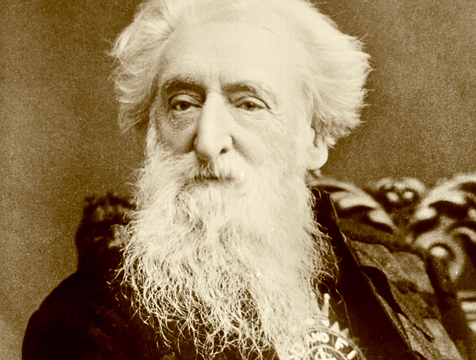
There’s no question that General and Founder of The Salvation Army William Booth was a man on a mission.  He and His wife Catherine Booth were pivotal in starting something powerful within the World, yet I have to wonder if there was ever a trade-off with his passion.  We know some of the famous speeches like the “I’ll fight to the very end” speech and the phrase “do something” in speaking to Bramwell about a homeless situation.  There is no doubt both William and Catherine Booth were visionaries and innovators within a mission that ignited the foundation of this Army.  They are both revered and loved…

But…

There is a danger of being a visionary.
There can be a trade-off and sacrifices can be made along the way of blazing a trail. 
Without a doubt we know Booth to be a great General, albeit our first general, but was he a good father as well?   From most historical accounts one might draw a startling contrast from founder to father.   

 Image

Truth: 
If Ballington Booth had not resigned within the Army the Volunteers of America would not have been founded, but why did Ballington leave the army?  He and his father did not see eye to eye.  Sure disagreements happen in families, but basically William Booth labeled his own family member a deserter to the cause.  In essence Booth excommunicated his own kin.  I certainly don’t think this is “father of the year” material.  However, in the heat of the moment, I can see regrettable comments being said and the damage being done.  

Still…
Family is our first ministry, our first priority.  I am not blaming our founder, but I do see warning signs of overworking oneself and sacrificing family for the sake of a cause.  Two things can take place when we overwork ourselves – 

1) Loss of perspective.

Image

Have you ever worked on a project so hard that you just had to step back from it to gain better perspective?  It seems to me that everyone of us can be guilty of tunnel vision from time to time because we are so success/vision focused.  If Jesus had to get away and be alone with the Father, so too must we.  We need to have a clear perspective, but if we overwork ourselves we will sacrifice something in the process.  It is like staring at the bark of a massive tree, but we wouldn’t know how great a tree it is until we took a few steps back so that our vision could refocus and we gain a broader outlook.  

2) Misalignment of Priorities

Image

Secondly, we can lose the true order of priorities when we overwork ourselves.  Suddenly the mission becomes the only thing that is important, and we begin to lose the support cast (and family) around us.  God first, family and then our mission…if we discombobulate these we run the risk of losing everything.  

These are just two lessons that I see when I consider The Salvation Army’s founder William Booth.  Yes he was a great man.  Yes his wife Catherine was the true driving force.  Yes an Army grew and lives were changed…but could family matters have been handled better in the process?   Is there something for us to learn from this as well?  Perhaps for starters stop placing Booth on some sort of deified platform.  He was, after all, still a man with imperfections like the rest of us.  I’m not saying don’t admire what he and Catherine accomplished, but be careful how much you revere the man.  Secondly, yes hard work does pay off, but be careful not to sacrifice your children and families in the process.  

Live a disciplined life but find rest and grace in the process.  

-Just some random ponderings of The Salvation Army today.  


“You’re Reading It Wrong” – 2 Mistakes of Interpreting Scripture

Image

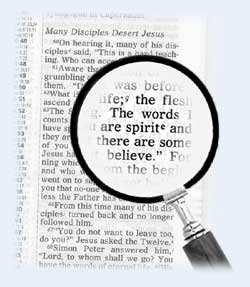
Admit it, at one point or another you have misinterpreted what the Bible has said.  Sometimes we do it by accident while other times our intentions are quite clear.  

The Bible was written by many different people, but we do believe that the Bible was “God breathed”.  That being said, Jesus was the only perfect human to have walked the face of the earth, therefore all other people, including those who wrote the bible, were imperfect.  Each writer experienced life through their own filter and each writer faced their own imperfections.  This doesn’t mean that all the writers of the Bible were bad people, but rather that each struggled with the realities of life and with their own humanity.  Understanding this is important when we read the Bible.  Though we know that God is the same today as He was in the past as well as the future – He is being written about through the life experiences of very human (sometimes very earthy) people.   

This brings me to my point – be careful how you interpret scripture!  Many cults have begun just by taking one single passage in the Bible out of context and applying it to something it was never intended for.  If we are true seekers of The Way then we will want to pay extra attention to the ways we apply scripture and its meanings both then and today!  There are two mistakes that I would like to highlight today for us here (I know there are more) and I hope it will help you as it has helped me. 

2 Mistakes of Interpreting Scripture: 

Image

1.  Context – 
New Christians and even “seasoned” veterans of the Word often do not do the “homework” when reading passages in the bible.  The context of what is written is vital to our interpretation of what is being said.  I have known people (myself included) who at times have simply opened the Bible and pointed to a passage and thought “this verse was meant for me” without studying the initial context.  Of course God can work that way but we should spurred on to really study the deeper meanings and implications of what is being said.  

Questions to ask when studying a passages might include: 
      a.  When was this written?
      b.  Who was this written to?
      c.  Why was this being written? 
      d.  What did it mean for the people then? 

Once we have asked these questions (and possibly more) we can then ask the question – “What does this mean for me today?” 
Context is extremely important!

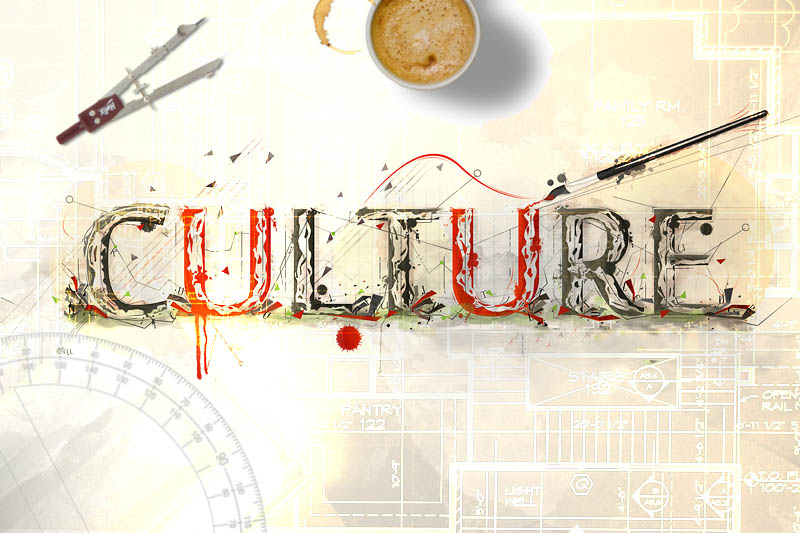
2.  Culture

Image

Culture in the Bible was vastly different from our culture today!  This doesn’t mean that the Bible is obsolete or out of date it simply means in order to interpret the Bible correctly we have to understand the culture of biblical times.  For instance in Jesus’ day Women were not equal to men nor did they possess many of the rights that men possessed.  Jesus was counter-cultural (even revolutionary) in His day to include disciples who were Women.  

Secondly this becomes apparently clear through the writings of Paul when He says things like – “Women should remain silent in the churches. They are not allowed to speak, but must be in submission, as the law says.” 1 Corinthians 14:34  To understand this we need to understand the Apostle Paul a little bit more and also the context of what is being written.  Paul addressed numerous issues in the early church including a few women who were causing trouble and creating dissension.  The problem becomes worse when many traditional churches take these specific passages of scripture out of context to mean in our day and age Women should act the same when in fact Paul was writing to very specific situations.  There is a danger in painting with large brush strokes here because then we begin to lose the detail and meaning of the words written in Scripture.  

Culture played a big part in biblical times and it still does today.  That doesn’t mean that culture shapes the Word but rather humanity continues to change and alter yet Biblical truths and the words of God are always consistent despite the seemingly inconsistencies of some of the biblical writers.  Make sure when we interpret scripture that we attempt to understand not only context but the culture of the time that passages were written.  


Wrapping it up

Image

Be careful not to take liberties with scripture!  Don’t pick and choose passages that best suit your needs, but rather read it for what it was intended for.  Some are historical narratives, others are prophetical for a specific people and time, while others are meant for instruction of an early church.  One truth should always stand out above the rest:  God desires a right relationship with us.  Throughout the Bible God is always seeking this with those who encounter Him.  There is punishment for those who disobey yet a remnant always remains because God never gives up on us.  In the finality of things Christ comes into full view and we can see just how far God’s Divine love will go to reach us.  The rest of scripture leads us to this place through some very imperfect writers and people – and so are we.  

I could write so much more on this topic…but for now I am thankful to the many instructors and teachers that I have had along this journey…and I am still learning.  

Just something else to Ponder today 

Personalizing Homelessness

Image

Can we identify with those who live on the streets?  I don’t mean hopeless conversations and pre-judgement calls such as “Well, they’re drunks and if I give them money they will just spent it on more booze…” That isn’t identifying with homelessness, that’s passing judgement on them.  Yes, something needs to be done, but casting blame, brow beating and ugly talk will not restore lives.  

Image

Just this past week, London’s Mayor Boris Johnson called for the removal of the “ugly, stupid anti-homeless spikes” in a modern upscale neighborhood after many took to social media sites to decry this horrific practice and homeless deterrent.  (source: http://rt.com/news/164952-anti-homeless-spikes-remove/) 

Although we can see this as a success in “spreading the word”, we shouldn’t just stop here to rest on our laurels, much work still remains to be done.  

Personalizing Homelessness – breaking the prejudgements:

Image

Some have argued that these protests against anti-homeless constructions infringe on the rights of the landowners or landlords.  Understandably, this is a concern.  Certainly those who are good stewards of their property wish to maintain a safe and aesthetically pleasing environment for their tenants, but at what cost?  

How are we to care for others while taking care of the properties around us?  This is a troubling issue, and both sides of this argument require consideration.  Yet many times the campaign of driving homelessness from the streets of our cities is something done quietly. Why would it be done quietly? Some may wonder.  The reason is because of fear of public repercussions.  There are times when law enforcement officials are encouraged to drive homeless individuals to locations outside of town and drop them off.  When this type of practice happens we begin to dehumanize people. What is the value of a life today?  Even if that life is smelly, dirty and unhealthy, that person is still human.  

Making it personal: 

Image

What if that person on the street is your brother or sister?  What if that homeless person is a son or daughter?  Wouldn’t you want others to treat them fairly?  Would you want someone to help them?  There are many root causes of homelessness, drugs and alcohol are usually the first things we assume brought them to homelessness, but mental abuse and disabilities are also contributors.  These are the least of these in our communities.  These are people without voices.  What if we made homelessness personal.  What if we humanized these poor wretches for a moment.  I don’t use that term to make them seem “under” me by any means, but how much of a difference does it make to see them as equals to us?  Sure they may be without homes, incomes and families, but are they not still loved by an Almighty God who knows their names and loves them the same as He loves us?  

The difference between apathy and mercy:

Image

There’s a vast difference between these two words.  One speaks of indifference to others while the other speaks of compassion and love.  One is uncaring while the other cares.  Which are we?  Do we see people living on the streets…actually see them?  Is there something that WE can do?  I certainly don’t propose that we go and put ourselves in danger…but there is something we can do to avoid apathy in these situations.  Care.  Find places like The Salvation Army who can go in uniform with many hands to help clothe, feed and show love.  Become involved, volunteer in church groups who minister through soup kitchens and other feeding programs.  One such program is The Salvation Army’s Bed & Bread club – http://www.usc.salvationarmy.org/usc/www_usc_detroithl.nsf/vw-text-index/9b2226ecdc63d0518025717f007045c7?opendocument

http://salvationarmynorth.org/community-pages/bed-and-bread-club/

Image

Contribute to authentic ministries and missions who actually go and help those living on the streets. Make homelessness personal. Each person who sleeps out there under bridges and in the nooks of buildings are still people.  Some of these homeless individuals have family members still looking for them.  We can either construct crude spikes on a street or park bench and drive them from our sight, or we can lend a helping hand without prejudging their motives or intentions.  

Homelessness should be personal to us.  We should care about others, and if we can help…we should. 


-Just another thought to ponder. 

Prayer: Lord help me to see others the way that You seen them.  Help me to be an instrument of Your peace.  Remove my prejudgments and prejudices.  Grant me wisdom and love, fill me with Your mercy, and may my hands become Yours.  -Amen.  

Fighting Homelessness The Right Way

I suppose it’s not illegal yet but it should be:
The purposeful construction by various cities to deter homeless individuals from sleeping within or beneath its streets. 
This is the first photograph that caught my attention, it’s a bridge underpass: 


Image


(http://www.businessinsider.com.au/chinese-using-cement-spikes-to-ward-off-the-homeless-2012-7
Although some might say that this is China, a country known for its less than stellar human rights track record.  That being said, these concrete spikes under a bridge were created to prevent homeless individuals from sleeping there.  To some it might seem okay today, but others simply find this intentional prevention to be appalling.

But China isn’t alone.
Other countries have begun similar anti-homeless campaigns:

Image


This is London – this location created metal spikes that jut up from the concrete in order to stop homeless individuals from sleeping in this nook in the wall.  It’s a “posh” neighborhood, in other words not a neighborhood that wants to see any homeless individuals on its immaculate prim and proper streets. 


(Source: http://soviet.ie/index.php?/topic/4711-anti-homeless-spikes-installed-in-posh-london-neighborhood-spark-outrage/)

Still there are others:
Image Image 

One wonders if this is the right way to go about the problem of homelessness. 
Individuals who are homeless should not be devalued or treated less than human.  Some of these concoctions seem to resemble primitive medieval torture devices.  Is this really the way we should fight homelessness?  

One might argue on the otherside of this conversation that creating less areas for homeless individuals to sleep will drive them to safety in the form of Organizations like The Salvation Army, Christian Missions and other such relief groups.  But still the question remains, is this right?  

It is one thing to deter homelessness for their safety and security on frigid streets in the winter, it is another thing to pour concrete in the shape of spikes or embed metal where the homeless are known to sleep.  Some might say the motives of many are financially driven and the “riff-raff” of homelessness will only bring down their property values…but where will these homeless souls go then?  What is being done to actually address personal issues which lead some to sleep on the streets?  Mental illness is one of these components.  Many who are homeless are struggling with various mental disabilities, and addictions.  Not all, but many.  The real issues beneath homelessness are the real catalyst problems.  Getting to these troubling struggles and attempting to address them could help save lives certainly if cities around the world are beginning to fight homelessness in this way.  
homeless


No one should have to sleep on the streets.  No one should have to fight mental illness alone.  Homelessness is an ongoing battle, with many different sides and opposing views.  For the Christian living within this world as Christ’s ambassadors we are called to help, we are called to lend aid, and provide love to all which includes the homeless in our streets.  What are we doing to fight for those without a voice?  How can we improve these conditions?  Are we really willing to get out of the pews and the comforts of the church in order to fight for the least of these in our communities?  

-Just something to ponder today. 


If You Can’t Stand The Heat…No, Seriously Stand it For Just a Bit Longer…

“…so that the proof of your faith, being more precious than gold which is perishable, even though tested by fire, may be found to result in praise and glory and honor at the revelation of Jesus Christ…” 1 Peter 1:7

Image

God corrects us.  It may be painful.  It may sting a little…but it is always worthwhile.  I recall being corrected and disciplined as a child.  It wasn’t something I ever looked forward to, nor was it something I would want to do again, yet it provided me direction and it refined me as a human being.  


Image

When we accept Salvation for what it is – God’s grace imparted to us by Jesus Christ, we begin this transformational refinement.  Initial sanctification (what we know of to be accepting Jesus at the moment of Salvation) isn’t the end of our spiritual journey, it is only the beginning. 2 Corinthians 5:17 says, “Therefore, if anyone is in Christ, the new creation has come: The old has gone, the new is here!” At the first infant steps of our salvation we are shucking off our old sinful selves.  For some that transformation occurs quickly while others this gradual refinement of the old to the new takes a little longer.  The Holy Spirit does the prodding in us…the pleading, the yearning for us to recognize the unsurrendered bits and the road to complete submission.  The “new life” is not easy, nor is the transformational process.  Yet, through correction, conviction and purification by fire we can become cleansed and washed clean from our old lives.  


Image

There is pain at the altar of submission.  There is heartache and grief as we allow the prodding of the Holy Spirit to take root within us and allow Him to burn our old decay away.   The refinement of gold and other precious metals is hot work.  The solid must be melted down to its basic elements within the fire.  As the solid becomes liquid metal, piping hot and volcanic, the impurities begin to become visible.  Before these metals were melted down, the impurities were hidden and buried somewhere deep within…but now as the flame alters its state, these impurities can no longer be hidden.  These impurities are plain as day, floating on top of the hot metal ore. The one who has melted down the ore will then gently skim the surface of the precious metal and remove the impurities.  

So too the Holy Spirit longs to this work within us.  It is hot work.  It may burn a little.  We may groan under the heat of the flame, but what a difference it will make!  


Image

Questions:

Where are you right now on your spiritual journey?
Is the Holy Spirit trying to refine you?
Are you allowing Him access to you completely?  Or are you holding back? 
The old cannot be skimmed from your life if you aren’t willing to stand the heat of His Holy Fire. 
You are meant for so much more.  You are meant to be refined and cleansed.  You are God’s precious possession! 
He wants you all to Himself, but that cannot happen unless you are willing to be refined, and to do so requires your complete surrender.  

Stand the heat for just a little bit longer.  Let His flames consume you.  
Our purification within His holy fire will be ongoing, and we may have to surrender time and time again but what a peace it is to discover that we aren’t on this path alone.  

There is real peace in our surrender.  
There is real joy in His Holy fire.  
May His loving arms be on us ever
and complete submission – never tire.  

-Just a something more to ponder. 

Perspectives Day 2 – Featuring Stephen Court (Major) “Semantics Antics”

Image

“SEMANTICS ANTICS”
(Stephen Court)

Words have power. Yes, this truth is usually used in the context of either speaking life instead of death (see James on the tongue) or of the prophetic (see the creation account of God speaking things into being).


But it also goes for semantics – the meanings of words.


When we use certain words we imply and apply certain meanings. When these words enter the general vocabulary they shape the meaning of the things they describe. Words have power.


We (The Salvation Army) have been using some words and terms far too carelessly. Here are some examples:


lay (as in ‘lay people’ and ‘laity’): this refers to people who are not ordained and otherwise qualified to participate in Christian service. It is carelessly applied to everyone who is not an officer. This is poor theology and terrible history. Despite the spiritual inferiority complex-induced mistake of the late 1970s and the ‘ordination’ of officers, there is not some mystical abracadabra ‘ordination’ that accompanies commissioning. All of our generals and the vast majority of our commissioners (in all of history) have not been ‘ordained’ in the mistaken sense that the relatively recent commissioning exercise has appended. By the loose use of the term ‘lay’ that means Booth, Railton, Booth-Tucker, Higgins, Carpenter, Orsborn, Kitching, Coutts, Wickberg, Wiseman, Brown, Wahlstrom, Burrows, Tillsley, Rader, Gowans, Larsson, Clifton, Bond, and Knaggs were/are ALL ‘LAY PEOPLE’. The term is ridiculous in a Salvationist context. There are no ‘lay people’ in The Salvation Army. There are converts, recruits, soldiers, and officers. That’s it.


Words have power.


clergy: Official SA websites (AUE, USE, C+B, among others) as well as influential sites (e.g. wikipedia) define or equate officers as and with clergy. This is evil. Officers are not clergy. Officers are soldiers who have given up secular employment and covenanted to make themselves exclusively available temporally and geographically for the salvation war in vocational leadership. ‘Clergy’ by definition requires ordination.   Watch the end of the faulty reasoning:

If ‘officer’ equals ‘clergy’; and,


‘Clergy’ requires ‘ordination’ (which it does by definition); then,


All the generals (but our current one) and most of the commissioners were not/are not officers.


By using words like ‘clergy’ and ‘laity’ we are reinforcing the unbiblical clergy/laity split, one of the key strategies of the devil against the people of God.


Words have power.


pastor: These are the four New Testament ‘offices’ Paul outlines in Ephesians 4: apostle, prophet, evangelist, and teacher/shepherd. The last – teacher/shepherd – includes a word that is translated only once in the whole New Testament as ‘pastor’ but clearly means ‘shepherd’.[i]


Those covenantally involved in vocational Christian leadership – our leaders – are called corps or commanding officers, divisional commanders, territorial commanders, and general. They are not formally called evangelist, apostle, prophet, shepherd/teacher even though many fill one or more of these roles. To pick one out of the hat (with the increasingly rare exception of ‘evangelist’ as in ‘territorial evangelist’, the chosen term is always ‘pastor’) is to call hockey hall of famer Wayne Gretzky a penalty killer. Now, Penalty Killer Wayne Gretzky certainly was efficient in killing penalties but to limit his impact on the ice to penalty killing is ridiculous.


Why then do officers (and lots who attend meetings) call officers ‘pastors’? Excellent question, no good answer to which is available, but some explanation is possible:

A. we have an inferiority complex when compared to churches;

B. we have an identity crisis in which we don’t know that we are not a church (see below);

C. we are catering to a church subculture instead of fighting to rescue lost people from hell;

D. we are overwhelmingly influenced by non-Salvationist Christian content (books, conferences, TV, radio, podcasts, blogs, etc.).


Remember, words have power. What are the effects of officers being called ‘pastor’?


i. we sabotage our mission because, among the people we are trying to rescue from heading to hell, ‘pastor’ generally has negative connotations. So we inaccurately identify with something that is unpopular in trying to reach the people with whom it is unpopular. Ridiculous.


ii. we change what it means to be an officer from some heroic combination of apostle/prophet/evangelist/teacher\shepherd leading troops in a salvation war to some bad-breathed, shellac-haired, touchy-feely stereotype aiming to keep the pews warm.


iii. we limit Holy Spirit, who actually works through all FOUR offices, not just a distorted half of the teacher/shepherd one.


Only church people seem attached to terms like ‘pastor’.


Could it be that we use a term like ‘pastor’ because we want church people to attend our meetings and don’t really care about people who are lost?


Words have power.


church: For centuries we have understood the ‘Church’ to be a place where the gospel is preached and the sacraments are administered. However, The Salvation Army is a revolutionary movement of covenanted warriors exercising holy passion to win the world for Jesus.


Based on these definitions, is your corps a church?


No. (unless you are surreptitiously passing around bread and grape juice and splashing your people with water)


So, by definition, your corps is not a church. Why call it one?[ii] Why identify with something that is manifestly unpopular with the people who are headed to hell that we are trying so hard to reach with the Gospel? Why sabotage your local mission and the mission of our global movement? Your corps is not a church despite what someone stuck on a sign or put in a magazine or said from the microphone.


Words have power.


service: This one is hilarious. Just this Sunday afternoon a salvationist took a phone call at the hall. The person had been calling, apparently, for the last hour but our explain, “we’ve been in service for the last hour and a half… we were in service… we were in service…”


Well, this person was evidently LOOKING for some service and it made absolutely NO SENSE to him that The Salvation Army had been ‘in service’ and yet had neglected to pick up the phone to SERVE him! Now, our friend had been taught that what had just happened was a religious ceremony (that is the definition of her use of the term ‘service’). But to the people going to hell, ‘service’ means service – the act of being served – and we’d not been serving them.


So, for the record, The Salvation Army does not hold ‘services’. We have what are called ‘meetings’. Check out your history. We have holiness MEETINGs and salvation MEETINGS and soldiers MEETINGS and all kinds of meetings. But we don’t ‘have services’. As the sign on the way OUT of one garrison said, ‘The service begins when the meeting ends’. Let’s keep our serving in VERB form, please.


Words have power.


Do you get it? The words you use affect what we are. When you use terms like ‘church’ and ‘pastor’ and ‘service’ and ‘clergy’ and ‘lay’ you are watering down The Salvation Army and compromising the testimony of salvationists and insulting soldiers and limiting Holy Spirit and sabotaging our mission and hindering our effectiveness. Stop it, please.


Don’t even get me started on ‘members’, ‘ministry boards’, ‘sanctuaries’…

  Endnotes

[i] 1. ‘Pastor’. For some reason, people like this term. In KJV it comes up once – Jeremiah 17:16 (NIV renders it ‘shepherd’); in NIV ‘pastor’ turns up once – Ephesians 4:11.


But the word in Ephesians 4:11 is ‘poimen’ and it actually appears 18 times in the New Testament, 17 times being translated ‘shepherd’. So it seems like ‘pastor’ is a biblically rare synonym for the much more popularly used term ‘shepherd’.


Since ‘shepherd’ actually means something, apart from being a synonym, and since ‘shepherd’ lacks the negative connotative accretions of ‘pastor’ in today’s society, it makes much more strategic and biblical sense to use that term instead of ‘pastor’.


This says nothing of the replacement of CO with ‘pastor’ (‘pastor’ is not nearly synonymous with CO and so is an even worse replacement for CO than it is for shepherd).


So, let’s agree that ‘pastor’, being unbiblical and unpopular, is a term we should avoid.


[ii] ‘church’. The Bride of Christ? Metaphor. Flock? Metaphor. Building, temple, body? All metaphor. But the Army of God? The Salvation Army? We’re not a metaphor. We’re not a comparison to something that we aren’t. We’re an army. ‘Church’ carries negative connotations throughout the West. The large majority of populations in developed countries vote with their feet that ‘church’ is irrelevant and unimportant and marginalised. Why on earth would we rush to pretend to be a ‘church’ when it is, a. not accurate, and b. not effective? Why on earth would we forfeit our God-given, biblical identity as an Army? (possibly because we got the ‘prophetic trumps relevant’ principle backwards and we have a spiritual inferiority complex).

Catch Major Stephen Court’s Blog Writings at – http://www.armybarmyblog.blogspot.com/

 

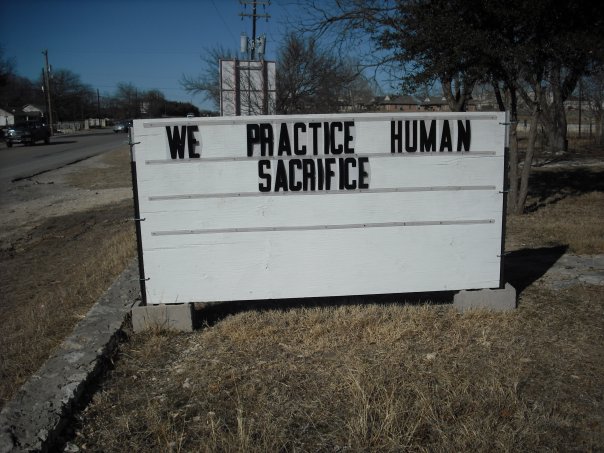
Human Sacrifices…they still happen (A Lesson in leadership)

Image

We would most likely all agree that mission and purpose in ministries as well as organizations are vital to its effectiveness and success.  But is there a trade off to achieving certain goals along the pathway to fulfilling our missions?    Are there casualties along the way?  Do we become so mission focused that we lose, in some way, our compassion and care for individuals which includes team members?  

The old adage “too much of a good thing is probably bad for you” could become true when all that we do, eat, sleep and breathe is our mission.  I am not insinuating that we discard our mission and lose our focus, but sometimes we must check our motivations and ask ourselves some difficult questions in order to realign and correct possible missteps.  

Mission is vital, but so are the people who embody the driving force behind the mission.  Leaders aren’t leaders unless there are people who are willing to follow them.  Whatever system is put in place, without the “fight force” (people) mission cannot be accomplished.  

Are we sacrificing humans?  

Image

Truths: 1.  There will be people who might not catch the vision.  2.  There might be those who dissent and disagree.  
But we, as leaders, must be mindful that we cannot simply continue to plow through our goal steps, chug along on the path that we have plotted without the “team” around us.  If we choose to go this way and disregard those who disagree with us, we may not heed (at times) those who cry out with the voice of reason.  Sometimes we as leaders have to acknowledge that we do not always have all of the right answers.  Pride can enter in, and we may feel as if these decisions (which we have made) cannot be allowed to be discarded for to do so will reveal our inadequacies and/or human short-comings.  

Good leaders should admit when they are wrong.  Good leaders need to listen to the voice(s) of counsel, and in spite of the interpretations of others as the course is corrected; change that course.  

Misguided (I wouldn’t use the term ‘bad’) leaders refuse to admit wrong doing.  Misguided leaders only listen to the counsel of the ‘yes’ people and punish those who voice and/or question their authority.  

Human sacrifices are still being made in organizations when mission and purpose moves at a pace which is faster than the followers can run.  Mission is important, but without those who can carry out the mission, any attempt for success will be futile.  

3 Preventive Steps:


Image

1. Genuine Compassion: 
In order to have followers, leaders must go to them.  Leaders need to understand how their followers live, think and also what they are (and aren’t) capable of.  Compassion goes a long way to ensuring the success of any mission plans.  When we stop and care for the needs of those we lead we inevitably open the doors to not only obedience but healthy loyalty and love.  Compassion oils the cogs of motivation and loyalty.  

2. Listen

Image

I have found myself guilty of this one.  I have plotted certain paths of mission and neglected to actually listen to those with whom I was given the charge to lead.  Good leaders understand the great importance of active listening.  When they gather their followers they not only engage in productive planning but also engage in active listening.  These moments of active listening (it is ongoing) include concerns, desires, skills, and dreams.  Once leaders listen, certain plans along the way of mission may need to be altered in order to further strengthen the foundation of the “team”.  These aren’t necessarily always concessions but perhaps better solutions and alternatives which will help the group to arrive at the completion of goals within the mission.  

3. Motivate

Image


It is essential to understand that battles are primarily won in the hearts of men. Men respond to leadership in a most remarkable way and once you have won his heart, he will follow you anywhere.”  -Vince Lombardi
</strong/>
Good leaders understand how to lovingly challenge people, how to push them but not sacrifice them to the mission.  What is in the hearts of those you lead?  How can you motivate them to accept the mission and embrace the pathway towards achieving that mission?  Motivation can be challenging because all people are different, but when we are actively engaged in listening to those we lead we will find the means to appropriately motivate them.  These motivations shouldn't be seen as punishments or a negative thing either.  Positive reinforcement, encouragement and guidance is crucial when challenging those you lead.  Find the appropriate source(s) of motivation for your team and embark on helping them see how capable and valued they truly are.  Don't neglect this step because the members of your team need your motivation to achieve the goals you are setting out to accomplish.  

Caution & Completion:
If you find yourself leading only to turn around and find no one is following then perhaps you’ve sacrificed the humans on the altars of mission.  Beware of the dangers of leadership.  Leadership carries both a burden and a blessing if used correctly.  The burden being people are seen as people, not just another number or group to lead.  Compassion is vital; active listening is crucial and motivation is paramount to walking across the finish line with those you began it with.  Don’t sacrifice the humans for the mission…we need each other and we cannot accomplish anything without every component and every person.


***Disclaimer, leaders carry a tremendous burden and those who follow must also try to recognize where leadership is coming from and as the old phrase says “the door swings both ways”.  Much of what has been written here should also be applied in reverse.  Those who follow should carefully consider their motivations and consider what may be best for all concerned.  Mission cannot be accomplished unless both leader and follower can work together. ***

-Just something else to ponder today.   

“Lord, I love you THIS much!”

Image

“Love the Lord your God with all your heart and with all your soul and with all your mind and with all your strength” (Mark 12:30) 

Image

Hey Dad guess what“, my son Ethan said as he looked at me with his ocean blue eyes and mischievous smirk.   Okay, I’ll bite, I thought to myself as I smiled back at him.  “What Ethan?”  I asked.  Seeing I had taken the bait, Ethan’s eyes lit up and his smirk broke out into a full smile as he quickly replied rather loudly “I LOVE YOU!” 

It is a game that we like to play.  We attempt to catch each other off guard with a simple question like “Guess what?”  As far as I can remember my Grandfather started this game and it is still going on today.  Truth be told, Ethan is rather good at it and at times he blindsides me with his spontaneous expressions of love.  

-Expressions of love-

What do our expressions of love look like when it comes to our Heavenly Father?  Does He receive our “first fruits” of love or just the left-overs?  When asked about the commandments and which was the most important, Jesus said “The most important one is this:…Love the Lord your God with all your heart and with all your soul and with all your mind and with all your strength.  The second is this: ‘Love your neighbor as yourself.’  There is no commandment greater than these.”  (Mark 12:29-31) 

Image

Do we understand realistically how important our love for God truly is?  Without this “first love” as our reference point all other ‘loves’ (including people) cannot be fully realized!  Jesus doesn’t just say “love God” but He goes on to say “With all your heart, soul, mind, and strength” (it is known as the Shema or “hear”).  In other words our expressions of love to God and the way we express THAT love is to be all or nothing.  This love is to be complete or completely useless.  Jesus’ usage of the word “ALL” means we must employ EVERYTHING in order to express our love to God.  From that love relationship with and to God, we can then begin to love those around us even those who we have deemed ‘unlovable’.  

How much? 

How much do we love the Lord our God?  How much have we expressed that love to Him?
Are we holding anything back?  Are we giving Him our first fruits of love?  
Can we say to the Lord: “Guess what? Lord, I love you THIS much!” as our arms are outstretched as far as they can possibly go?  
The depth of our expressions of love to God will determine the depth of love that we are able to show to those around us.  How is your love today?  

-Just something more to ponder.  

3 Things Christians should stop saying…

Image


…if they aren’t sincere.

Everyone of us have heard these phrases.  We’ve probably even used them a time or two…and dare I say half of the time we haven’t truly meant them.  So why do we keep using these phrases?  To be nice?  To sound sincere?  Because it’s “church” lingo?  Why on earth would anyone come back to us seeking genuine help and support if what we’re saying isn’t actually backed up with truth and sincerity?  

The Apostle Paul once said, “Therefore encourage one another and build each other up, just as in fact you are doing.” (1 Thessalonians 5:11) It sounds as if this church was doing what was necessary to support one another with love and with the correct words with action behind them.  

Here’s a thought for us before we explore these four phrases…brothers and sisters in Christ: DON’T SAY THINGS THAT YOU DON’T TRULY MEAN!!!  Okay…moving on.

3 THINGS CHRISTIANS SHOULD STOP SAYING…if they aren’t sincere:

1) “I will pray for you”

Image
I hope THIS is never our motivation to say this phrase!


This is seemingly the most innocuous phrase we as Christians say to each other and to those who aren’t yet saved.  It might be within a sentence such as “I am so sorry you’re going through that right now, I will pray for you.” And then five minutes later when we have gone on our merry little ways we completely to forget to follow through with that promise.  Let me ask you this; how truthful, honest and sincere is that?  Don’t say things like “I will pray for you” if you don’t truly mean it!  No one knows if you will actually follow through with your promise…but God will.  I don’t say that to scare any of us, but if God knows our hearts why do we say things that we have no intention of committing to?  If you or I say “I will pray for you”…then DO IT!!

2) “It’s not the Lord’s timing”

Image

How could we possibly know that? Do you or I have a direct line to God?  Have we checked with Him regarding this person?  There are many different circumstances that we’ve either said this or heard someone say this to us.  At times it’s used to lord power over another or rationalize human/leadership decisions by making it sound as if God planned these human decisions.  I’m not saying that God doesn’t intervene, because He does, but don’t try to explain away your/our/others decisions by saying “it’s not the Lord’s timing”…unless you have received true discernment from the Lord Himself.  (That last sentence in and of itself is another conversation for another time)

3) “Perhaps God is closing this door in order to open another door”

Image


This one ruffles my feathers.  Admittedly this specific phrase is a pet peeve of mine.  Does God truly “open doors”?  I know He can provide inspiration and direction for our lives and in certain specific people in this world I imagine He calls very clearly…but opening doors?   Perhaps you will disagree with me on this and that’s fine, but there are times when we use this phrase flippantly instead of asking the right questions.  It can become an escape mechanism for some to bail on the hard path in pursuit of an easier path.  If we’re not asking additional questions to fellow Christians about their specific circumstances and instead we use this phrase, we could be giving them a green light to bail.  

Secondly, we could use this phrase in order to be rid of a certain person in our lives too.  Ask yourself before using this phrase (if you plan to use this phrase) is this what I discern God to be saying to me about this situation?  Am I sincere in what I’m saying here, or am I just trying to give permission to a fellow believer to walk away?  I do believe, however, that God blesses whatever pathway we choose in life as long as He is at the forefront of that relationship.  His plans for us sometimes may be specific and at other times can be left to us to decide upon.  

Be a sincere encourager!  

Image

If we use these phrases and lack the sincerity coupled with genuine compassion for our fellow believer we could do more harm than good.  Be careful how you use words!  Be careful how your counsel and offer advice.  Consider not only your motivation but also how we can lift each other up and genuinely care for each other as fellow sojourners of the cross!  

-Just something else to ponder.