Dear Salvation Army Officer: I Need Rest!

With six more days (if it’s still Monday when you read this) until the craziness of the Christmas season screeches to a halt, the life of an officer never seems to end.  There are still kettle goals to be met, Christmas distributions to clean up after, and countless logistical issues to oversee.

Officers don’t of course do this alone, teams of wonderful employees and volunteers help (we really couldn’t do this without you!!) I don’t wish to ever minimize anyone’s efforts during this time of Christmas – everyone works so hard.

batteryAs an officer I know how often I have climbed into bed bone tired and sore with many things yet to accomplish and left for the following day.  It is exhausting work and I pray we never miss the point of it all. I pray that we never forget the real reason that we celebrate Christmas – because all of this busyness can certainly consume the Christ-mas if we allow it to.  Have we begun to dread this holiday, this advent season?  Have we become workaholics and have we placed this about our worship of the Almighty?  Most likely not, but there is certainly the danger here.  We want to succeed in our goals, we want to work hard and accomplish much…but is God present in all of these goals and in our striving for success?

tiredA song recently pulled me up short, and caught my attention.
The refrain that struck a chord in my heart was this:


I need rest, I need rest
Lost inside a forest of a million trees
Trying to find my way back to me
I need rest”
https://www.youtube.com/watch?v=w60V7lLY2bs

These lyrics are from a song by Jason Gray entitled “Rest (the song of the innkeeper)”
It describes the busyness of life, getting caught up and seeking the rest amidst all of the chaos .

Dear Officer – You need rest…do you find it?  Are you seeking it?
Has the work become your god?
Do you dread Christmas and everything it brings?
How can we avoid the dread and the misaligned religion of work instead of relationship with God?

I pray you find it even as you finish this Kettle season, or hectic social service season!
I pray that as December 25th arrives you can embrace the birth of Christ once more with fresh abandon and awe.  Merry Christmas to you all!

God bless you!

Giving At The Red Kettles: Gary’s Story…

I recently listened to a Ted Talk about time management, and in that Ted Talk the speaker inferred that it is not about having enough time to do things, it is all about our priorities in life.  If something is important to us, that becomes a priority, while other less liked tasks will become a non-priority.

Many of us will claim that we don’t have enough time in the day, but perhaps the real question is: what do we make a priority in our lives?  Here at The Salvation Army, our priority during this insanely busy season is to provide food, toys, clothing, and a warm safe place for people in need, and so we set out to accomplish this by raising much needed funds at our Red Kettle locations.  This vital campaign helps us ensure that no one goes hungry or without a Christmas in our community.  This is daunting task, because it requires hundreds and hundreds of hours of manning a red kettle location during cold winter days by generous volunteers and additional hired bell ringers.

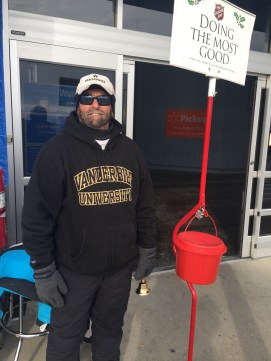
I would like to share with you an amazing story of generosity by one such volunteer.  His name is Gary, and he has made bell ringing one of his priorities in life in order to help people in need.  Despite fighting an epic battle of cancer in his life, last year alone Gary came out and rang the bell for The Salvation Army for over 60 hours during the month and a half long Red Kettle Campaign…and he’s back again this year to do the same!!
20161214_194359800_ios
Gary has made it his mission to not only overcome his own personal health crisis, but to help others by ringing the bell at the red kettle.   “I really love doing this, and I know that  I am making a difference!” Gary said, as he stands all bundled up at the entrance of his local Walmart store.   He never stops ringing the bell while we talk, each clang of the bell is another accomplishment in his life.  You can hear him from the back of the parking lot, and every time Gary is out ringing that bell, you can rest assured he is smiling and welcoming shoppers warmly in the hopes that they will give…and give they do.  His smile is infectious as is his personality.  His priority?  To help people in need despite his own daily health challenges.   Gary could’ve stayed at home after being diagnosed, no one would have blamed him.  He could have simply fought for his own life, that would certainly be understandable, but Gary has risen above his own mountainous challenge in order to tackle the challenges of others…by ringing that bell.

Gary’s story personifies for us the true meaning of Christmas.
It reminds us that giving is far better than receiving…that generosity and selflessness can touch the hearts of many by simply being willing and available to serve.   The world needs more Garys in it.
It is so much more than just ringing a bell, it is the very heart of God living and becoming hands and feet in a very tangible way towards others.   It is the countless acts of kindness shown to people when no one else is watching.  It is giving God our very best instead of what is left over.

So let me ask you what are your priorities this Christmas?

Christmas Chaos Calmed By 4 Words…

In the early six am hour, I stumble from my bed.  And my very first priority is to, with eyes half open – and long drawn out yawn, stand before the coffeepot with cup impatiently in hand.

Yesterday still reverberates and echos loudly in my ears, but I must be prepared for the onslaught that is this new day.  What can I expect from this new one?  Perhaps more hectic phone calls of fires I must put out?  Most likely more kettle money to count, as well as a host of other public appearances…the day will eventually join all other days, which slowly blends and bleeds together becoming a cacophony of noise, fast driving, and not enough hours to complete every. single. task.  It (my day) can become quite frustrating.
20161208_191225000_ios
At the end of the day…

It is in the late night hour, when the lights have been extinguished, and the sounds of exhausted snores begin again, that I wonder if THIS is what I have signed up for?  The restlessness, the anxiety, the stress, the responsibilities, the burden that they (whoever “they” are) has called the “mantle of leadership”.  Is it worth it?
20161208_191711000_ios
For I am drawn to the unfinished homework down the hall that my child needed my help on.  That growing stack of dirty dishes, now elbow-high in the sink.  The Mount Everest sized heap of laundry, a mix of colors and whites all blending together in some stained and stinky gym-socked odors that still remain downstairs- largely ignored.  “T’is” the season” we say (laughing it off), as we run out the door having not eaten as much as we should and hoping we can spend more time with our children today than we did yesterday…or the day before that.

These are the things that guilt my slumber…but still I sleep (and snore), only to repeat the same maddening schedule all over again the next day, “Dear Lord, please either return today or make Christmas Eve speed up in my direction” I breathlessly, and continuously pray.  This has become my mantra, my hope to cling to, my “light at the end of the tunnel” (which happens to sound a lot like the ringing of bells and the clanging of loose change from a crimson bucket).

I keep telling myself that this makes a difference, that what we do in these restless weeks matters, but it offers little comfort when fielding that phone call from an irate store manager, or a raging parent unsatisfied with the toys that we have to offer them (while we always put our best foot forward)…The mantra “We make a difference” is even a cold comfort when having to terminate another ringer for having sticky fingers and blatantly lying about it even when managers and customers have witnessed it a time or two.

Are we making a difference?
Am I making a difference?
Did I sign up for this?
Is this what God has asked us to do?
Better yet, am I really giving my all to God in the places and spaces that matter most?

And that’s when it hits me…
I have been going about this all wrong…
What is “this” you ask?

My attitude…
My motivation…
My determination…
My gifts and abilities…
ALL “MY”s….

But there are days when I must get away and recharge…
there are days when I must reconnect with the family…
there are days when priorities and responsibilities of ‘self’ wins out.

But here…
In this moment-
I feel the Holy Spirit breathe into me four simple words that strike the cord of truth deep within me.  It lays to waste all of my hesitations, temptations, guilt and fears.  It puts everything back together again.  It restores my faith in humanity even after getting burned SO. MANY. TIMES…

He whispers those words into my busy day.
He whispers them into my chaotic heart and mind.
He whispers them and though the bell ringing continues, and the change from crimson buckets still falls, I find some clarity and solitude.  (How ironic is that?!)

What are the four words you ask?
Perhaps it is something for all of us and all of our furious paced lives right now…

The words?

Thy Will Be Done…

Are you feeling the Christmas chaos yet?
Have you asked similar questions?
Do you feel the guilt of a crazy paced life right now?
You’re not alone!!

A Prayer We Can All Pray: 
Lord, I want to be your servant today.
You know that I feel betrayed at times by those around me.
You know that I feel cheated out of a calmer life sometimes.
You understand the chaotic mess that is my life right now.
I pray your silent strength and shielded hope would surround me.
I pray you would increase as I decrease in all of these efforts today.
Grant me your strength and discernment for the tasks at hand.
Lead me Lord into Thy will.
-Amen.

Something more to ponder today!
By the way….you got this!
God Bless you!

Dear Salvation Army, Why Not Alcohol?

It might seem like an open and shut question to you, but it is certainly more complicated than that.

Scripture does not condemn the consumption of alcohol, many times it calls for the drinking of wine in celebration and as medicine (for Timothy – 1 Timothy 5:23).  Of course, there is the warning of drinking too much wine –  ‘Do not get drunk on wine, which leads to debauchery. Instead, be filled with the Spirit…”(Ephesians 5:18).  Even the disciples and Jesus drank wine.   Some will contest that the wine of Jesus’ day was not very potent when it came to its alcohol content…but it still contained alcohol.

Some might contest that the position statement of The Salvation Army on alcohol is not necessarily based on Scripture, but rather societal experience:

The Salvation Army encourages an alcohol free lifestyle as a way of enhancing the well being and health of all people. As a witness to this, Salvation Army soldiers choose to live an alcohol free life. The Salvation Army recognises the harm alcohol causes in individuals, families and communities. It advocates for reducing the consumption of alcohol, and it offers its services to support and restore people negatively impacted by alcohol use.” (The Salvation Army International Position Statement:  “Alcohol in Society”)

It should also be noted that many other denominations have a similar view on alcohol and their church members.  bottle

Some might then ask the question “Why not alcohol?”
What harm could it do?
Perhaps it opens the door…
Perhaps it makes one vulnerable…

Sometimes I wonder why we don’t talk much about the use of Alcohol?

History: 
The Booths, upon founding the Christian Mission, and subsequently The Salvation Army, witnessed the effects of alcohol on society, especially the poor.  Children were literally stumbling out of bars drunk.  It was a blight on the east end of London.
How could one stand by and witness a whole generation of people ruining their lives by drink?  Thus, one of the pillars of soup, soap, salvation was teetotaling discipline.

The Present:
I serve in a corps that is surrounded by drunks.  liquor2
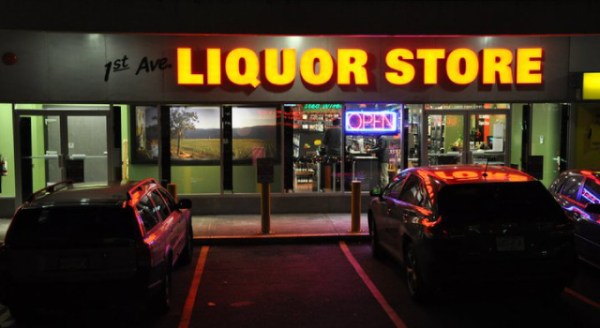
Just across the street is a closed liquor store, and in front of it an even bigger now OPEN liquor store.  There is nothing innately wrong with that liquor store.  That store owner works hard to support his family.  BUT what is wrong is that this store is located in one of the poorest neighborhoods in our community – right across from The Salvation Army.  On the other side of our corps, kitty-corner to us, is a Bar…

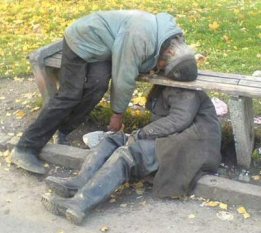
drunkWe witness the habitual effects of alcoholism in our very parking lot, when we have to pick up a drunkard (almost daily) and escort him/her to a detox location.  It is disheartening to see the utter waste of human life devoured by the bottle.  It is very sad to see families ripped apart because of abuse brought on by intoxication and poverty due to the supporting of a habit.

There is nothing wrong with alcohol, but there IS something broken with people, and there is a genetic disposition to addictions…

Drinking is not a sin, although we as The Salvation Army certainly treat it that way…mainly because we receive many who have lost it all because of the affects of alcoholism.  That liquor establishment across the street near my corps, is not illegal or wrong, but the affects it has had upon the poor in our neighborhood certainly does not make it right either.  Our city will benefit from those tax revenues, but we unfortunately must meet human need in the streets that are bent and broken by it.

My family, a few generations ago, struggled with alcoholism…
My wife’s family has history of alcoholism in it…

Statistics:

  • 100,000 people die each year from alcohol-related causes: drinking and driving crashes, other accidents, falls, fires, alcohol-related homicides and suicides. (NCAAD)
  • Of the 3.9 million Americans who received treatment for a substance abuse problem in 2005, 2.5 million of them were treated for alcohol use. (Drug Free World)

So…
why not alcohol?
You tell me.
Tell us what YOU think as we explore this topic today.

Something more to ponder today.

Additional Links to check out:
Tom Canfield Story

Dear Salvation Army, Is Policy Killing Our Mission?

“There’s no limit to how complicated things can get, on account of one thing always leading to another.”
― E.B. White.

“Life is really simple, but we insist on making it complicated.”
Confucius

Today I would like us to ponder policy and if we have become so policy heavy that as a movement, are we at risk of killing our forward momentum and even our mission?

Like any organization, church, or movement, as they grow they develop more investments to protect and preserve…is that where we as The Salvation Army are today?  Could it be possible that we are more concerned with the progress that we have already made as an Army?  Are we afraid to push ever forward because of past investments, government monies and grants that have tied our hands and now prevent us from serving God to the fullest?   Are we to the point that we must protect dying programs because they have always existed instead of risking it all and doing what the Lord is calling us to do?

And what of policies, regulations?  Have we internally bound our hands so tightly within rules and regulations that we can no longer effectively be “Saved to Serve”?  Now, before you write me a nasty note (again) and chastise me for this question, please know that I am in no way seeking anarchy within our ranks.  I know we have rules  and orders that we must abide by, but sometimes I wonder if we have made our organization SO complicated with regulations and rules that we have become like the ancient Greek Senate that could never make a rapid decision as their kingdom fell around them by outside forces.

I don’t believe we are there yet, but could this path that we are on currently be killing our movement?  Has policy become the passion killer in our Army…and just like a stringent weed-killer, has it killed the fruit-boothbearing plants along with the weeds?

There was a time that William Booth would pull up its corps/outposts because it wasn’t working in that closedcommunity…today it would take over a year (at least) to close a dying or dead corps and plant a new one elsewhere.  I understand that there are many variables to consider, I know we have so many more hoops to jump through, and the right forms must be submitted, and the right studies have to be done…and the list goes on…and it is far too complicated, perhaps more complicated than it ever should’ve been.  I wonder if this is why we aren’t growing anymore?  Because our hands are bound by massive amounts of red tape and far too many hands have to touch the paperwork as it passes over many desks at various levels of responsibility.   Is it no wonder that some just given up?  Is it no wonder that some grow frustrated at the snail’s pace?  Granted we ought never make rash, uninformed decisions, but are there times when the amount of red tape becomes utterly ridiculous?

newCould this be why younger evangelistic churches seem to be having more success in growing their church plants – because they have far fewer restraints and hoops to jump through?  The building process doesn’t take 3-5 years, instead they work a church plant that tithes and contributes to the building campaign?  I understand we are not just a church (we are so much more – we are a movement)…but are we a stalled movement in this regard?  Or is this the proverbial story of the tortoise and the hare, where wisdom and time win out?

Policy Keepers & Creative Challengers
balanceSometimes I feel that we as an Army have become so policy heavy that we strangle creativity and the potential for real, sustainable growth.  The problem is like this scale, too heavy a balance of policy keepers will lead to a diminished level of creative challengers.   On the other side of the scale, too many creative challengers will lead to a diminished level of policy keepers and lack of order and policy.
We need both!!  Without a healthy level (and balance) of both types of people in our Army, we face a lopsided army and a potentially failed mission.

I hope I am not painting a dismal picture within this pondering today, because that is never my intent.  I am simply curious if we will reach a turning point where we think smarter instead of working harder within our structure of this movement.  This Army of Salvation should be a powerful tool for Christ in this world, but I fear there is a tipping point of balance happening.  The kind of imbalance that places restraints we that prevent us from reaching our full potential.  Have we presently become an army too afraid of upsetting our investments and our previous accomplishments?   There must come a point in which we admire the past and our rich heritage, but also press forward as a movement and focus on generations still in need of help, hope and salvation!  A healthy balance of both the policy keepers and the creative challengers must be present.

refocusPerhaps we have taken our focus off of the mission and exchanged it for regulations and rules.
Perhaps, in some places, we have exchanged mission for overly creative risks that have created a polarizing mission and have completely missed the mark.
Could it be that we are not fully relaying on the Holy Spirit for our guidance?
Perhaps we must reevaluate why we do what we do within our mission and purpose.
I hope this makes sense to you.   I hope this finds its mark.

If we are not serving suffering humanity in the name of Christ through the things we do then we must shift our priorities and refocus it.  Perhaps it’s time to uncomplicate things.complicate

Tell us what YOU think?  Do you identify as  a Policy Keeper or a Creative Challenger…or Both?
How can we uncomplicate things?  In your opinion, does policy sometimes overrule and supersede  mission, or do you find that the opposite true?    Let us know what you think, we value your comments!

Something more for our Army to ponder today.

Disclaimer:  The opinions expressed here are not necessarily the opinions and views of The Salvation Army’s but the writer’s own opinions…reader discretion is advised.  

4 Dangers Of Autocratic Leadership In The Salvation Army

The Salvation Army is modeled after the British Armed Forces…its model from uniform to leadership is very similar.  Officers, when under orders, must move to new appointments based on need and abilities.  When orders are passed down, by and large they are expected to be followed.  This is understood entering a college for officer’s training to become an officer.  Cadets and Officers are expected to submit to authority…but what happens when that authority is abused or misused?  Does that happen in The Salvation Army?  Like any organization or movement, we openly acknowledge that people, even leaders are fallible and are still vulnerable to making mistakes.  But what happens when mistakes go unchecked or unaddressed?  Who holds leadership accountable?

This style of leadership can be useful, especially when decisions must be made and the movement is at risk.  It is most effective when it is used to empower, encourage, validate and serve those that leadership leads… Autocratic or Authoritative leadership can provide a clear, concise direction and vision.  This style is evident not only in a Divisional or Territorial, National or International setting, but it is also evident to some degree in individual corps, harbor lights, ARC’s and other appointments.  Each of these locations autocratic leadership is usually found – and with it at times, abuse of that model can take place.  Please note that I don’t say “will” but I merely leave it open to the possibility.

Power does not corrupt. Fear corrupts… perhaps the fear of a loss of power.
John Steinbeck

Ponder This: 
But what happens when autocratic leadership does fail and/or is abused?

4 Dangers Of Autocratic Leadership In The Salvation Army: 

1.  Disagreement Leads To Punishment disagree
The surest way to corrupt a youth is to instruct him to hold in higher esteem those who think alike than those who think differently.” -Friedrich Nietzsche

In an absolute authoritative leadership model, if followers or those subservient to the leader disagree and are outspoken about it they are punished.  Even in The Salvation Army, this can happen.  New appointments are given or created to mute or limit those voices of dissent.  It must be noted here that our army has many instances in our brief history of dissension among the ranks from the very beginning.  Historically, even in the founder’s day Ballington and Maud Booth were practically excommunicated from the army when they refused to take another appointment away from the U.S.   Thus they left The Salvation Army and began their work as the Volunteers of America.  Understandably there is more to this story, but even then family couldn’t disagree with the authority of the Army without fear of reprisal or punishment.  Does this still happen today if one were to disagree with the current vision or a decision made by leadership?

In the autocratic model of leadership, a chief danger of such a model is the fear of ever having a dissenting opinion because it could be construed to mean one is insubordinate or perhaps lacking submission altogether.  But perhaps there are times when disagreement proves commitment to mission over authority.  By that I mean there are times when boots on the ground understand situations of community needs and the furtherance of the movement far better than those in leadership because they have a front row seat and they have their hands directly in those community pots and engage daily with direct services.

The abuse of the autocratic leadership model begins with a zero tolerance for disagreement and the repaying of such engagement with punishments or reassignment or appointment.

2.  Talent Flees and Mediocrity Remains
exitWhen this abuse is allowed to continue, and it does from time to time, there is inevitably a loss of talent.  By that I mean some within the ranks of soldiers and officers alike might leave.  Why would they stick around when abusive leadership would seem to go unpunished or addressed and instead is rewarded and only those who are completely complicit to that leadership style are given appointments of authority themselves?  In essence an abusive autocratic style will promote the “yes” people, while those with talent (and who had the passion and zeal) but did not always agree might never be rewarded or acknowledged.   What could remain would be a hollowed out version of an organization.  It wouldn’t be the vision that failed but rather the internal issues of the organization that cannibalized itself.

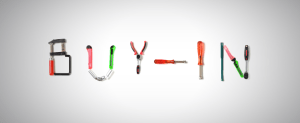
3.  Buy-In Is Limited buy-in
Growth inside fuels growth outside.” – John Maxwell

When abused, autocratic leadership limits the buy-in for the follower or subordinate.  In our Army the buy-in for a soldier at a corps who is not invested in but instead ignored would be grossly limited.  Why would they want to participate or engage in the vision if they were not included in the initial vision casting in the first place, but instead the authoritative officer controlled everything?  The buy-in on such a model is a malnourished form of commitment to those in the corps council and anyone else wishing to make a difference in this movement.

This example is true from the soldier in the corps all the way up to IHQ.
If corps members, office staffs, corps officers, divisional officers, territorial officers aren’t allowed some investment and ownership within the movement and have some say in how it can continue to be relevant and innovative then disillusionment and abandonment could soon follow.    Why waste their time when the decision will be made for them?  Why invest of themselves when they will inevitably be told what to do anyway?

An abusive autocratic system will leave constituent left behind and or abandoned altogether.

4.  Generational Losses
Lead me, follow me, or get out of my way.” — General George Patton

Dictators of militant nations who rule by fear, will eventually have a younger generation growing up in anger and frustration and eventually revolt will ensue.  This is an extreme example, but the iron-fisted autocratic leadership model might bring along a generation or two, but eventually a younger generation will rise up and consider this model to be antiquated and disconnected with reality.  They might become disenfranchised and disillusioned and seek out other ways to serve and be useful in society.  In The Salvation Army, perhaps the style of leadership that was once useful to us as a movement in its infancy is not longer what is needed today.  Some might say if it ain’t broke don’t fix it, but what if it is in some ways broken and in need of fixing (or modifying) but we’re just ignoring the systemic issue because it seems a titanic, daunting challenge?  Could it be that the younger generation is leaving the Church (big C) in general because of disillusionment and inconsistency in leadership and vision?  Is society just the scapegoat?

Could abuses of thesoldiers autocratic or authoritative leadership model be affecting our movement today?     This is a very big question, I know that, but isn’t there a part of you that wonders if we shouldn’t even ask the question in the first place?  Why is that?  Do we fear that if we ask it we might face punishment or be considered “rebels”?  I believe a healthy movement is one who has innovative, creative and outspoken members.  A movement is just that, something that continues moves forward, not backward.  A healthy movement should be one that accepts constructive criticism and takes corrective steps when needed.  A healthy movement is propelled not by unhealthy models of leadership and fear, but by the Holy Spirit prompting and leading His followers onward into the fray.

Can abuses happen in our Army?  Yes, and I believe they still do!  From the lowly corps ministry all the way up, but I do not believe it is the norm and I am hopeful that such trappings can be avoided with prayerful consideration, holy living and servant leadership always at the forefront.

“If we are growing we are always going to be outside our comfort zone.” – John Maxwell

Something more for our Army to ponder today.
To God be the Glory!


blood
Disclaimer: 
The thoughts and opinions expressed here are the writer’s own thoughts and opinions and do not necessarily reflect that of The Salvation Army as an organization and movement…reader discretion is advised.  

Dear Salvation Army, What’s The Reason For The Holiness Table?

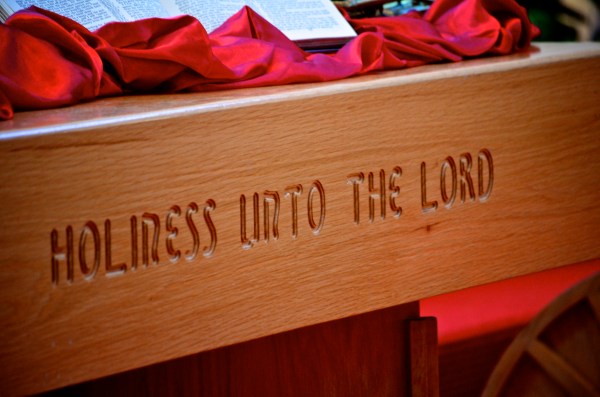
Why do we have this large table in the front of our sanctuaries? What is it for?  Is it for decoration?  Is it to accompany the old modesty rails?  What purpose does it serve?

Have you ever wondered these questions?  -So have I!
So I pondered on this, I did a little digging…and here’s what I know:

Phoebe Palmer’s “Altar Theology”

Image processed by CodeCarvings Piczard ### FREE Community Edition ### on 2016-02-10 23:04:59Z | http://piczard.com | http://codecarvings.com’’ÿ³.‘-s,
Sometimes we see the term “theology” and automatically stop paying attention because some theologies are either so convoluted and dry or they are way too complicated.  Palmer’s Altar Theology is neither.  In fact, it is the very life-blood which gave birth to The Salvation Army’s Holiness theology.  Much of who we are, theologically, can be traced to the turn of the century Holiness/Higher Life Movements.  These evangelists, Palmer being a major contributor, incorporated a major focal point in their service: a call to take a stand, come forward to the Holiness Altar and receive the second blessing, i.e. Entire Sanctification.  This was less a place of kneeling (like our modern day Altar) and more a place to literally take a stand and receive this second blessing.

A lot has changed since the days of Palmer, yet this Holiness table still remains, but predominantly in the United States and England.

Is The Holiness Table Just A Relic Now? table
Few understand its significance anymore.
Very little is taught on it.   Is it still important to the Army, or is it just a relic of a bygone era?
This table has now become a place to put flowers, where the offering plates most likely reside, and perhaps a very large Bible with illustrated pictures.   Have we lost some of our understanding of Holiness because we no longer understand what a Holiness Table is for?

Major Phil Davisson, author of Revelation: A non-scary approach Volume 1 put it this way when I asked him about the Holiness Table;
couttsWe should teach about holiness but emphasize Coutts (General Frederick Coutts) more…The table itself has had little resonance because it has become a display table, and because no one–neither soldiers nor officers–have a very deep experiential knowledge of holiness living, and have been put off by second-blessing / second work of grace confusions…”  Could it be that our lack of teaching is to blame for its near extinction?


Major Jim Garrington recently told me that he himself has given little to no thought of the Holiness Table itself and stresses the education of our soldiers as a must have in worship.  If we are to use it, our soldiers ought to know what is going on.  He went on to say that he is more interested in the outcomes and less the methodology of getting there.   I would tend to agree with Major Garrington,  as well as the thoughts of Major Davisson.holy

Am I making too much of this modern day center piece?
I requested more information from other scholars and historians of The Salvation Army and very few responded to my requests, which makes me wonder even more as to its perceived relevance in our modern worship and/or even historian’s understanding of such an item.  Perhaps it is understood that the Altar (mercy seat) has, in some way, taken the place of the Holiness table as the site of repentance and commitment (or re-commitment to Christ)…but what of the Holiness table then?  Has it become a sacred cow of sorts?  A glorified decoration table?

Steve Simms, author of Beyond Church: The Lost Word Of The Bible – Ekklesia, is also a faithful Soldier with the rank of Sargent (Envoy) in the Nashville Tennessee area; I asked Steve his take on the Holiness Table, its significance in our Army today.  Here’s what he said; “Personally I believe the holiness table was “sacramental” for the early Salvationists (in the best sense of the word). It was a physical object (location) that they could approach to help them release their faith beyond their physical environment and circumstances and touch the supernatural presence of the living, resurrected Jesus…Thus, the table itself is not the goal. The goal is to go beyond the table, encounter, and surrender to the living Jesus…Although the early Salvationists set aside the official sacraments of church, they (unintentionally, I believe) raised other things to the level of sacraments. Truth is, sacramental objects and/or actions are not supposed to be the center of attention. Their purpose is merely to lift our attention beyond our natural surroundings and focus it on the real presence of the living Christ. Once we are enthralled in the presence of Jesus, those things fade into the background.  (examples of things treated like sacraments in TSA are the holiness table, the uniform, the soldier’s covenant, and various ceremonies we conduct.”  table2

Steve raises an excellent point here as well!
Perhaps in exploring and even maintaining the Holiness Table we have inadvertently made it a sacramental item – and something it was never intended to be.   Also, Garrington’s point is further solidified by Simms, in that it was never about the object, or in this case, the furniture in our worship halls – it is, and always should be, about the very presence of God living amongst His people. The outcome of worship, and every element within, should point to a glorified Christ preparing us to be like Him in every way!

Steve Bussey, who wrote an extensive article on the History of the Holiness Table entitled Discovering The Origin of the Holiness Table , and with whom I hope to interview next time, writes this at the end of his article that I believe summarizes where I believe we stand currently, “General Paul Radar is quoted Nigel Bovey in The Mercy Seat Revisited (2010) as saying, “The presence of the Holiness Table is a constant reminder of the central importance of the holiness of heart in the life of our Movement – a reminder that we are and must be a holiness movement.  Ours is a gospel of Blood and Fire!” (p.90) table3

Army Ponderings Continued…
I do not believe we have finished this discussion, I believe we have only just begun.
Next time, I will have some additional contributors as we delve further into this topic.
But for now here are somethings to ponder:
*  Is the Holiness Table still significant in modern worship?
*  Do we inadvertently make certain objects and practices into our own sacraments – even though we perceive ourselves to be non-sacramentalists?
*  Should we educate our soldiers and officers more about the Holiness Table and perhaps even reconsider our Holiness Approach and make more of an effort to circulate more of General Coutt’s ‘take’ on holiness?
*  Where do we go from here?  Do we remove the Holiness Tables from our halls if they have become decorating tables?  Or do we overlook this so that our outcomes and focal point is always Christ?

Something more for our Army world to ponder today!
For more reading on this subject, please check out these sources:
Discovering the Origin of The Holiness Table  – By Steve Bussey
Called to be God’s People – by Robert Street
Articles & Blog – by Steve Simms
Phoebe Palmer’s Altar Theology – by Lampstand Restoration
Phoebe Palmer History – by Barbara A. Howie

.

Dear Salvation Army – A Parable Of US…These are OUR People!!

For I was hungry and you gave me something to eat, I was thirsty and you gave me something to drink, I was a stranger and you invited me in…”  -Matthew 25:35

The Story:

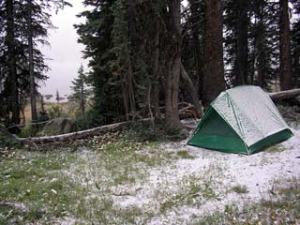
In the frosted air of mid December, where ice is forming, melting in the midday sun, only to refreeze in winter’s kiss at dusk; a man zips up his camping tent for the night.  It will be another bitterly cold attempt at sleep, which has proven elusive and wrought with lingering aches in limbs and ligaments.  The man wraps himself up in multiple blankets of mismatched colors, extinguishes the insignificant blue flame from the juniper green propane camp stove, and settles in for another volatile night of shivering slumber as the constant freeway noise clambers on.  tent

As dawn slips past the horizon of the army green tent flap, which has been frosted and now baptized in a hopeful light; the man untangles himself from the layers of blankets and additional coats laid down in the middle of the night, a stop gap that offered little to no help.  Having survived yet another night languishing in hypothermic rest, the men unzips the tent and stretches out the pain of cramping muscles and battered tendons.  Shivering noticeably through the noise of his chattering teeth, he moves as quickly as his lumbering joints can move as he seeks out somewhere to warm his tired bones.

A few blocks away, the crimson glowing lights of a red shield inscribed with the words “Salvation Army” calls out to him.  The backdoor to the gymnasium has been opened, and there will be warmth within.   As he steps inside, the man encounters the soup kitchen cook, draped in a white billowing apron and a broad smile.  “Good morning friend!”  The cook says in a deep gravelly voice by way of greeting, “would you care for some coffee?”  The shivering man nods and shuffles towards an open chair as others also begin to arrive.  They too have anticipated this moment, and their search for warmth, food, coffee and conversation is at an end.
20100303_203222000_ios
The homeless man, still shaking off the bone-seeping coldness in his body, has finally found a safe haven, and with it – his dignity and hope once more…

…The Rest of the Story (As Paul Harvey used to say) 
This is just a glimpse into the lives of those we serve.   Some have had it better than others…
I have sat in our gym and listened to the stories some of our patrons can tell.
Some of them have truly been through hell on earth.
Some battle with constant addictions.
Some with physical or emotional trauma.
All are God’s…they are His…and He speaks to us through their stories of brokenness, pain and sorrow.
He also prods us to do something about their suffering.

homelessYes, Dear Salvationist, it seems like an impossible and never ending task because poverty, addictions and homelessness seem to be constantly knocking on our doors.  The situations are the same, but the faces change over time!   The question is – are we available to help and are we receptive to the Holy Spirit’s leading?  Are we here to be a light when the rest of the world has turned the light off, given up and walked away?  Can we still provide hope and love even if that person is stuck in the cycle of crisis?  Can we offer it without judgement?  Yes, we ought never put a band-aid on deep wounds, but can we serve first then minister?  Or can ministry truly be found IN the service and care of others?

Here is a reality check:  Some may never darken the doors to our sanctuaries on a Sunday morning, but are they not still a member of our congregation if they are at our facility EVERY DAY for a warm meal and a safe place to sit and rest?  I think we miss a far greater opportunity that can be found on Sunday morning if we don’t engage during these moments feeding and conversing.  Dear Salvationist, these are our people too!  They come to us because we are the harbor and they have been shipwrecked by life.   What we say, how we show love, and what we do – MATTERS!

The story I shared with you today, is real.
This man came to our corps and community center years ago, homeless, suicidal and at the end of his rope.  And because the doors to our gymnasium were open, and he found warmth in the company of people in our corps, he is alive today.  His life (literally his life) was saved!  I know that there are many more stories just like this one wherever a Salvation Army facility is located.   Doing the most good isn’t some prideful declaration to the public, instead is ought to be a phrase we ask ourselves every day both personally and organizationally – “Am I/Are We – Doing the most good”?   good

Make a difference in the lives you reach for Christ, and know that our “congregation” is so much larger than just our soldiery on Sunday mornings!


5 Ways To Combat Salvation Army Burnout…

With all of the news of mega church pastors leaving, taking sabbaticals and burning out, I thought it fitting to discuss helpful ways that The Salvationist can combat burnout as well.  Burnout is real, it is not something imagined or evidence of a weaker person simply giving up.  We all face exhaustion from time to time, and we also face critical, stressful situations that leave us looking for the exit sign…trust me, I’ve been there on numerous occasions.

But as an Officer and Salvationist, we have a mission to serve, but what if along the way we face difficulties, discouragements, and suffer depression and loss of passion?  What then?  I can assure you this is nothing new, and many have been to this point…many have also walked away because of it.  fire

I will also boldly say that The Salvation Army must recognize some of the lasting structural inconsistencies.  The quasi military approach that once thrived is not as appealing as it once was to a very individualistic thriving culture.  Sometimes old models of leadership need to be challenged in order for real change to take place and so that we can once again get back to mission instead of policy.  So, right off the bat, understand the Titanic turning of a large, global organization (movement) is daunting and sometimes frustrating to face.

Harvard Business Review had an article that identified six virtues of a dream company, which was compiled by hundreds of business executives.  For our purposes, imagine this “dream company” to be The Salvation Army…see if these virtues match:

1.  You can be yourself
2.  You’re told what’s really going on.
3.  Your strengths are magnified.
4.  The company stands for something meaningful.
5.  Your daily work is rewarding.
6. Stupid rules don’t exist.
(Source: HBR Article Link)

Apart from the organizational issues, what can individual salvationists do to combat burnout while serving within its ranks (soldier, officer, employee ect.)?  Here are just five ways to combat burnout in our Army.  Take them for what they are, a primer that allows us to face real life issues happening all around us.  This is just a “starter list”…there is much more that can be said within this topic.

5 Ways To Prevent Salvation Army Burnout: 

flame1. Have an Identity apart from the Army

Sometimes this goes against conformity doesn’t it?  We are told to dress alike, be of one army, one mind, yet we are also people who need to know who we are as God’s children who are called by Him.  We must find out who we are apart from the uniform, apart from the mission.  Sometimes this requires us to take a step back and reevaluate who we are and why we do the things we do.  Self identity is vital to combating burnout because without knowing who we are we can become washed away by the powerful tides of stress that are rampant in any organization.  When you go home, when you spend recreational time away – be yourself!

2. Find Hobbies To Enjoy smoke
Not everything is about mission sometimes (gasp!), in order to combat burnout is a fast paced thriving movement such as the Army, we must be able to relax from time to time.  Some are excellent wood workers and carpenters and they relax by doing what they love.  If you paint – then paint.  If you enjoy geocaching, then get out and do that!  Find things to enjoy, to look forward to on your next unscheduled day.  Plan for these hobbies.  Be intentional in taking the time to enjoy them.  This will enable you to disconnect from the everyday stress of “work”.

3. Leave Your Work At The Office!! work
Seriously, we have a lot of work-a-holics in our Army.  That’s not all bad.  Hard work is wonderful!  But when it jeopardizes your families, when they don’t know who you are anymore because you constantly work, there is something wrong with that!  I would even go out on a limb and tell you overworking yourself is a sin.  STOP IT!  When you can, leave the work at the office.  This will not always happen, I know that, but when you can leave it! Combating burnout requires us to take drastic steps, and for some of us, leaving unfinished work at the office is very, very drastic!

4. Switch Things Up!  change
We all get stuck in ruts sometimes.  So change up your schedule.  Go for a walk, spend more time talking to people instead of staring at your computer screen.  Flip your schedule so that some of your work gets done at the end of the day.  Do something different so that the ruts are broken, and in so doing, you might experience a little bit of perspective within your day.  When you do this, take time to breathe.  I own an apple watch and I laughed at first at the new update on it.  It’s a new app called “Breathe”…what it does is remind me to take a full minute and focus on my breathing.  It was dumb at first, but then I started doing it, I switched up my schedule in the process…but now I look forward to that moment where I just breathe and relax.  Combating burnout in your life takes an effort to switch some things up.  So don’t just talk about it…do it!!

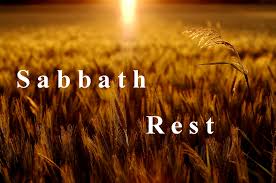
5.  Take Your Sabbath Seriously!
restThis, I consider to be one of the biggest sins in our Army.
Far too few of us really take a Sabbath.  Yes, it’s our day off, but we’re still “catching up” on work.  If God rested on the seventh day, don’t you think we should too?  Or are we essentially saying, “I’m better than God” in our actions?  When you plan your Sabbath days – TAKE THEM!  Don’t bring work or ministry into your Sabbath!  This is the time that you need personally to recharge your “batteries”.  You need to plug yourself back into the Power source which is God Himself!  Whatever that reconnection looks like to you, don’t take it for granted!  Get alone with God, find the time, stop sinning in overwork and do it!  If we really want to combat burnout, we must begin to realize just how important that Sabbath is for us.  It’s not just another day off, it is a day (or a matter of hours) to recharge and rest.

I know that there are other ways that will help combat burnout, what are some tools that you have used in your ministry?  What has helped you?  Why not share them here and help all of us as we ponder this together!  As always, thanks for reading!  Something more for our Army to ponder today!

God Bless you!

Blog at WordPress.com.

Up ↑