
“Perspectives” Day # 3 Featuring Captain Shanais Strissel

What is tradition and why do some of us cling tightly to it and some of us find it suffocating?  Why is there such a struggle between being something new and holding tightly to something old?  Is tradition or newness best for the Corps?

The answer is yes to both.

I think that in order to find what’s best for the church, within the Salvation Army, both camps must loosen their death grips and come to see that the answer lies within each claim, just in an unexpected way.
Jesus was the master at taking something old and renewing it.  Not remaking it, but renewing it.

And I believe the answer to why our churches are dying lies within the struggle to come to terms with the unexpected, because if we do not come to terms with the unexpected, I am afraid that we may go the way of the Pharisees and leaders of the law.  Are we to become something that a church history class studies in a hundred years from now, a charitable entity who faded away into irrelevancy because we just couldn’t grasp the way of the unexpected?

Jesus was always doing things that upset the religious leaders, healing on the Sabbath (how dare he) not fasting (how un-Jewish of him) telling the Pharisees they are dirty unwashed bowls (gasp), what in the world is this man doing?
He was not remaking the law; he was renewing how the people saw it.  They had taken something simple and made it complicated and unwieldy.  They made it difficult for God’s work to be done because of all the, ahem, addendums that they added to it….

It is not that the old ways where bad in themselves, but the way that people applied them over the years that made it into something that it was not intended to be.
It happens.  People muck things up from time to time and God has to shake things back into the rightful place.  The question to ask ourselves is, are we going to move with God when he shakes this Army or will we get left behind as God moves his mission forward in this world?

So…what’s the answer?…

The answer, I believe, lies in the unexpected.

Jesus’ actions were always consistent with the law, just in different and unexpected ways.  He observed the ritual but took the meaning of the law and expanded and enriched it!  The Pharisees and religious leaders had it backwards; they took the ritual and expanded it while ignoring the richness and meaning of the law in the first place.

And here is what I believe has become a stumbling block for the Salvation Army.  We don’t need more ritual a.k.a more “growth” programs, more paperwork, more ritual, more law, what we need is a deeper richer meaning to the simple foundation of what make the Salvation Army who it already is.

We do not need to get rid of our rich traditions, but we do need to get rid of all of the baggage that hinders the mission.

Somewhere we lost our simplicity of mission among the mounds of responsibility heaped onto Officers backs, and I mean all Officers not just Corps Officers.  We have spread ourselves so thin that we are in danger of becoming shallow and useless, instead of deep and rich.

I am not calling for a revolution of the Salvation Army, what I am asking you to consider is a re-evaluation of who we already are.  Not to remake the whole system but to pull out and expand what is good and to keep it SIMPLE!  Let go of the complicated extended busy work and enrich and deepen what is good!  Don’t extend the shallow and complicate the simple!

Jesus’ way is simple and his burden is light, it’s his followers who tend to weigh things down.

So, how do we figure it out?  How do we come together as an organization and deepen, enrich, simplify and give deep meaning to the traditions we already have, how do we embrace the unexpected?

That is something that we have to figure out together.

Let’s let God Shake us up shall we?

“Perspectives” Day # 2 Featuring Colonel Dennis Strissel “Opinion8ed #6”

Photo Jan 05, 4 13 24 PMOpinion–8-ed

(A series of eight installments)

Number Six – Mulligans for Ministry

Having been preoccupied with our new appointment (retired), with plenty of time for thought amid the unpacking and putting up pictures, I thought that I might dedicate my final three installments to what I would focus on in my ministry if I had a “do-over”. Maybe a more appropriate term might be a Mulligan for Ministry. Yes, that’s what I would like. What would I do differently if I had the chance? I’m not talking about the mistakes I made, and I have made more than my fair share. Nope. This is more about what I would invest more time and energy in if I had an opportunity for a ministry mulligan.

First would be to pay closer attention to those important influencers in my life. Father, grandfather, teachers, local officers with greater life experience than me with a willingness to share life-wisdom. I can count more than a dozen important influencers/mentors that have taken me under their wing; those who have helped me make many life decisions over the last forty-one years. My regret is a lack of awareness of my need of good mentors early on in the ministry.

Like most, there were some confusing issues and experiences that brought doubt and fear early on in ministry. How much easier it might have been with a mentor guiding me through those events and experiences, reminding me that things will become clearer and brighter as we grow through tough times. There were times when a “Dutch Uncle” approach would have been good with a mentor saying “get on with it” or “get over it”! Mostly, though, I needed someone to challenge me to holy living and growing in grace… No, they needed to demonstrate by example how to do that and insist that I follow their example.

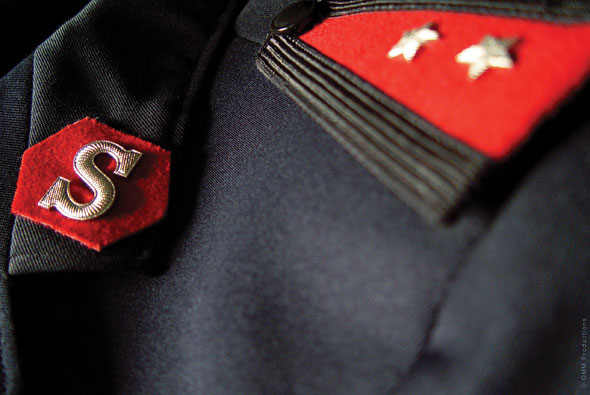
Some of my greatest influencers were local, non-commissioned, officers. To begin to name any of them would be a dis-service, since I’m bound to leave a couple out. I recall returning to a corps I soldiered at before entering the Training College, returning with my “red” epaulettes to hear and see the reaction of the Corps Sergeant Major, (senior lay position of the church). His expression and embrace didn’t disappoint me…in fact, it gave me great encouragement. When feeling alone and almost defeated, I would replay that moment in my head. It helped me keep my focus knowing that I had cheerleaders somewhere.

It wasn’t always the divisional officers that kept my spirit afloat … and we had many good divisional officers. Nope. I loved being near and learning from senior corps officers within the division. Some had never served in a divisional headquarters appointment yet they had great life experience that they were willing to share with “younger” officers. THANK GOD for the likes of older captains, majors and brigadiers and their willingness and faithfulness to share. They are the un-sung Army heroes.

Sharon and I had the privilege to serve for many years outside our territory and home country. We met many wise, talented, and obedient believers, many were soldiers and officers but others were pastors and lay leaders of other churches. You discover quickly once outside your home country that in order to live, not merely survive, you need close and lasting relationships. We are better people and leaders as a result of who we leaned on and learned from. We would have never even survived living on the Island of St. Helena without the mentorship and fellowship of friends from the Catholic, Anglican, Baptist or Seventh Day Adventist Churches.

Who we are today is a composite of all of those who have loved, led and mentored us….still I feel as though I needed a more attentive heart and mind and a learning spirit. If I could have one, I would ask for a mulligan, a do-over, wanting to listen more carefully or ask different questions. I suspect I’m no different than anyone reading this short article. It motivates me now to pay closer attention during the time left in this world and to invest myself in as many young leaders who will allow me their ear. The good news is there is still time for us all. To borrow a phrase from the author of the Revelations… “He who has an ear, let him hear what the Spirit says to the churches” (Rev 2:7NIV).

Dennis Strissel, Colonel

Previous “Opinion8ed” Articles:
Opinion8ed #1
Opinion8ed #2
Opinion8ed #3
Opinion8ed #4
Opinion8ed #5

Perspectives Day 1 Featuring Captain Andy Miller III

On “Changing the Army”

A loyal soldier approached me, it was clear he had something important to say. It was Sunday and the holiness meeting had just finished. His index finger was pointed right at me and with an agitated tone he said, “Your goal must be to kill the Army. You are trying to change everything!” Kill? I think not. Advocate for change to advance the fight? Absolutely.

In contrast, a few years ago I received a phone call from a well-known Salvationist writer asking me to contribute a chapter to a volume on Salvation Army doctrine that would feature  “liberal” and “conservative” opinions on a variety of theological issues. He said, “We are looking for a solid conservative voice like yours.” That volume never came out, and I was too busy changing diapers, so I declined.

So what gives? Am I conservative or progressive? Do I want to change everything, or remain parked with the status quo? It depends on whom you ask.  My experiences have led me to ask, “In what way can, or should, we change the Army?”

In full disclosure, I am a person who loves intra-Army discussions and am invigorated by change. Hence, I am writing this article for Scott Strissel and indulging myself as I do so.  I enjoy expressing my passions about the Army so much that I have found it to be a temptation for me. However, my efforts to “change the Army” shouldn’t keep me from “being the Army” while living out my covenant.

While at training, a staff officer said to a group of Cadets, “If you think you became an officer to change the Army, you are in the wrong place [officership, training college, etc.].” There are several ways to think about what is involved in “changing the Army.”

One way to enter these discussions is to list “non–negotiables,” as did General Clifton and General Rader. They have been helpful for my understanding of Salvation Army theology and practice. So when considering change you can ask yourself, “Are any of these values compromised in the process?” Other methods use mission statements, branding promises, or core values to achieve a similar response to proposed changes. For the Salvationist, and particularly the Officer, I suggest Covenant-centered change. If a simple test had to be administered it should be this, go look at your Soldier’s Covenant (Articles of War) and ask, “Is this change in conflict with what I covenanted with God?”

What is it that has formed the essence of the church’s beliefs throughout its history; we could describe this as the canon or orthodoxy. The Army’s canon is most fully summarized in the covenant we share. It is expounded and clarified through Handbooks of Doctrine, Song Books, Year Books, and other publications.

Do some of these articles (doctrines) need nuancing? Probably, but that does not mean they need to change?  We need to explain what we mean by “…the divine rule…” We need to shade “total depravity” with prevenient grace. We need to carefully discuss and elaborate on what being “wholly sanctified” is and is not. We need to clarify that we are not platonic philosophers as we present a Christian version of “immortality of the soul.” It could be an American stylistic bias, but I wouldn’t mind gender neutrality in the human pronouns. These pieces are all consistent with how the Army does theology and I don’t think they need, or should, change.

There are areas where I desire to see the Army change. I would love to see a renewed understanding of how we approach training and the connection therein to officer recruitment. A more nuanced conversation on sacraments would be helpful and welcomed. We probably need to do better in understanding the complexities of the marriage relationship in officership and how the dynamics of shared and separate appointments can work. The uniform and its use should be updated or changed as we seek to be a visible people. I have at times found myself helpfully and humbly corrected by experienced officers who have helped shape and refine my “ideas.”

The biggest change I would like to see is this – more soldiers, more corps, and more officers, bringing more people to Christ’s saving grace. This is a necessary change.

Changes that call us to redefine marriage, cut certain articles of our faith, reject original sin, deny the substitutionary nature of the cross, get rid of our name, become a formal high church that is a liturgically drenched denomination or embracing universalism all are changes that move us away from a centered identity, these changes are outside of the scope of Covenant-centered change. These changes are instead, Covenant-rejecting changes.
So what of those changes? First, questions lead to answers and we need to ask good questions to get to good answers. When I was learning to swim in the discipline of theological studies, I had to work through each article of faith. When I came up for air I discovered a richness in Army theology that humbled me.

Second, if you come up for air in your search for truth and are resolutely opposed to the Army’s theology and you can no longer affirm the covenant, and if you are trying to make changes that move away from the canon of Salvation Army teaching or Covenant-centered change, I wonder if you should find another institution in which to serve. I say that not in cruelty or anger, but in love. These things will not change in the Army. I am no psychologist, but I think your life would be much more fulfilled in another movement if this is the sort of change you seek.

A wise senior officer, who taught many years at the training college, described his approach in teaching the doctrines in our covenant. “Andy, I am not telling Cadets what they should believe, I am expanding on what they have covenanted their lives to believing and teaching.”

If the changes I desire remain unchanged, then I trust God. Continued growth and relevance is contingent on our ability to adapt to our changing world. However, that change must be centered in the covenant which unites every Salvationist.

Forward to the Fight!,

Andy Miller III

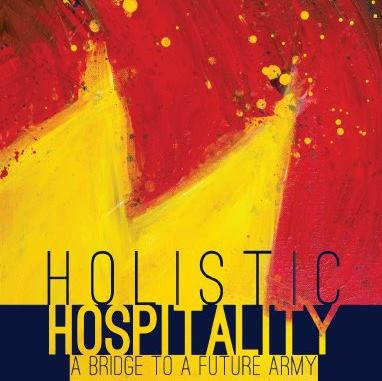
Check out my book, Holistic Hospitality: A Bridge to a Future Army, via this the link here.

Miller

Dear Salvation Army, Has Music Become Our Idol?

brassIt is iconic.
The brass bands playing music on the street corner, reminiscent of the bygone era of open air meetings.
We gather together for territorial and even international events and the brass band is there also.
I am not disparaging the usage of music in ministry, but could such a use become an idol?
It almost sounds absurd doesn’t it?  …but could it?  is it?
Every denomination has its sacred cows of sorts…The Salvation Army is no exception.

Question:
How do we prevent possible sacred cows from overshadowing its real intend and purpose?

Truth be told ANYTHING can become an idol if it becomes the focal point, and in essence becomes the thing which is worshiped.  If your corps were to worship its tithing process on a Sunday morning (as crazy as that sounds) the focal point or the reason for giving would take a back seat while the process of “giving” becomes THE MAIN THING.   It has then become your idol.

Music:  band
No matter if your corps’ Holiness/Salvation Meeting is modern and thrives upon the usage of a praise band or if your corps  has a brass band for worship – these tools of the sacred, used improperly, can become our idols of worship if we are not careful.  Use them wisely!  Don’t use them haphazardly.  Remember that music is not about the performance (it’s not a concert) it is about ushering people into the presence of God!!

All of the elements within a worship setting ought to be mere conduits pointing to the same Lord and Savior Jesus Christ.  If they do not point to Him, but instead take His place (either by accident or on purpose) these elements should be re-evaluated and carefully retooled.

news
Worship is NOT about playing the appropriate amount of songs from the tune book on Sunday morning.
Worship is NOT about having the best brass band in the division.
Worship is NOT about having all of the right musicians on your praise team…and playing all the right modern worship songs.
Worship is NOT about the elements…it is about Christ – and secondly leading soldiers and other members into deeper relationship with Him.  If we lose focus of this, we run the risk of making the elements of worship our idol.

Questions:
Is this a present issue in your corps?
Have you ever witnessed this “Idol worship”?
How might educating worshipers, worship leaders, bandsmen help prevent this from happening?
Are we intentionally using music ministry to lead people into a deeper sense of worship with God?

I must tell you that I absolutely love music and I have nothing against Army music or modern contemporary worship.
These can be wonderful ministry tools if used correctly…but utilized incorrectly could lead to abuse and idols of worship.   God forbid that we make it into something it was never intended to be.

Something more for our Army to ponder today.
To God be the glory!

Dear Salvation Army, 3 Things Corps Officers Should Know About Their Soldiers!

Last week I wrote part 1 of this “two sided coin” so to speak – 3 Things Soldiers Should Know About Their Corps Officer(s)

Today I would like to conclude the second side of the coin on the topic of “things the Corps Officer should know about their Soldiers!”  Understandably without Soldiers in our corps doing the amazing work that they do, we are hopelessly lost!  We need strong soldiers to lead.  We need strong leaders to help the Corps Officers.  I understand that sometimes these two dynamics in the corps does not “gel” the way it should.  Both sides of this coin ought to recognize that we are all on the same team…but sometimes, unfortunately, it doesn’t feel that way.  I believe Satan thrives upon our disunity and polarizing leadership directions.  He wants us to fail.  We, often times, will fail in our corps, not because we lack the appropriate resources to complete the mission, but because we can’t see eye to eye, or we all think that we know what is best for the corps and we take opposing directions.

The Corps is the forefront of The Salvation Army mission – make no mistake about that!
Yes, vital lifesaving missions are also located in the Harbor Light, and ARC’s and Schools and Shelters, and in a way they are a corps unto themselves.  At the Corps level we engage the enemy and we see the hopelessness of those who come to us for help!  This fight isn’t just about who the Corps Officer is (it was never about that in the first place) but about who will lead and who will serve Christ in every aspect of this mission to the lost.
blood
3 Things Corps Officers Should Know About Their Soldiers:

1.  They Are The Long-term Investors
Local Officers and Soldiers have been there long before you came to that appointment, and they will be there a long time after you are gone.  They have invested in that the local Corps’ mission.  They understand that community probably much better than you ever will, no matter what education you might have and what your grade point average was at Training College.  I do not mean to sound snarky here by any means, I simply wish to convey how invested most soldiers are to that current Corps.  They are the backbone of the corps…or at least they should be.  Sometimes (and I know this is true) Corps Officers have run over Soldiers and Local Officers to accomplish what they believe the direction of the corps should be.  Sometimes this has happened the other way around as well.  Every Corps is different, this much is true, but when Corps Officers and Soldiers work together side-by-side, we work for the same purpose, the same cause.  Understand, Corps Officers, that your Soldiers and Local Officers are the Long-term investors of your corps!

2.  They Want To Be Led By Godly, Consistent Officers! uniform
Corps Officers, it is imperative that we lead our corps and its constituents in a godly manner.
Be shepherds of God’s flock that is under your care, watching over them—not because you must, but because you are willing, as God wants you to be; not pursuing dishonest gain, but eager to serve; not lording it over those entrusted to you, but being examples to the flock. And when the Chief Shepherd appears, you will receive the crown of glory that will never fade away.” 1 Peter 5:2-4
Yes, hold your local officers and soldiers accountable, but be accountable to these same standards as well!
Don’t ask something of others that you yourself aren’t willing to do either.  Be the kind of leader that leads by example and does the hard work right along with your soldiers!  God honors holy leaders who are consistent in word and deed!  Be consistent leaders!  Lead by humility and love, not by power and might!  Don’t lord over others with your authority, after all, you can and will be replaced one day.  Invest in your soldiers, but also give fully of yourself where possible.

flags3.  Delegate, Lean And Learn!
There is a HUGE difference between a seasoned Officer and a salty one.  Don’t be a salty one!  There will be difficult days as officers in this Army.  There will be times when you will want to take out your frustrations upon soldiers.  Choose your battles wisely.  Confront when you need to confront, but do so in love and by first praying about every situation that you face!
If you think of yourself as Super-Officer that wears a navy blue and red cape and one who doesn’t need any help from soldiers and local officers, then you need to kill Super-Officer.  There, I’ve said it for all soldiers everywhere.  YOU. CAN’T. DO. EVERYTHING. YOURSELF.  So stop trying to be Super-Officer, because Super-Officer will ultimately burn out, fade away and become discontent.

Corps Officers, you need to understand the vital usage of delegation.  Moses couldn’t do everything and so, thankfully he began to delegate responsibilities.  Don’t hold the reins of everything so tightly that you begin to slowly strangle your corps to death.  Let others lead when you have individuals willing and able to lead.  It may not meet your standards at first, but trust them, teach them…don’t enable your soldiers to always rely on the Officer to do everything!  You shortchange and stunt the growth of your soldiers and leaders when you become Super-Officer who leads and does everything!  So get rid of Super Officer, and delegate, teach and lean on your Soldiers!

Lastly, do not think for a minute that you have learned all there is to know about leadership, and that your soldiers and local officers can’t teach you something new!  Always be pliable and teachable yourself!  Recognize that book-learning sometimes isn’t enough and that life-learning can aid you to become a better, more godly Officer.   Your Corps, your present appointment can and will teach you something wonderful if you are available to be taught.  Do not become so prideful in your abilities that you become arrogant and incapable of the kind of change that you yourself preach about from the pulpit to others.

These are just three things Corps Officers should know about their Soldiers.
There are many more…but it begins by listening.
It begins by listening to the Holy Spirit, to your Soldiers and to the community that you serve!
So listen, lead your flock that are long-term investors, and lead them well!  Allow them to teach you something.  Allow them to learn with you.  Help them develop into the best leaders that they can be as well!  Together we can accomplish this great mission.  Together we are a stronger army!  What say you?

Something more for our Army to ponder today!
To God be the glory!

Dear Salvation Army, 3 Things Soldiers Should Know About Their Corps Officer

The Salvation Army is an unique body of Christ is it not?
With that being said, each corps is unique.  Each corps has its own specific strength(s) and its own specific weakness(es).  We can all recognize that challenges do come to our corps structure & ministry.  Sometimes soldiers can look at the present issues happening in the corps and cast a blanket of blame all upon the corps officers.  Sometimes the corps officer can look at the present issues happening in the corps and cast a blanket of blame all upon the soldiers.  Sometimes the blame is shared…sometimes it is not.

I do not wish to imply that all our corps are going through problems and concerns ALL THE TIME.  This is certainly not the case.  There have been some wonderful mountaintop experiences.  There have also been wonderful moments of fellowship, where we share with each other what is on our hearts.

Today I would like to provide some information to every soldier out there about your corps officer.
It is my hope that the next installment will include “3 things Corps Officers should know about their soldiers”, but today here are three things every soldiers should know about their corps officer.  Some of this might be obvious to some of you, but I will highlight these anyway.

1.  Corps Officers are people too!
I hate to burst your bubble here, but (shocking statement ahead) your corps officer is NOT perfect!  They are just people too!  They do make mistakes sometimes.  This shouldn’t be taken to mean that soldiers should be looking for those imperfections in their corps officers, but it does mean that we should all exercise a good measure of grace!   Some of the corps officers have families, and family events will take priority over other events.  This won’t always happen but recognize that just as you have a life apart from the Corps building your corps officer also has a life apart from the corps building.

Be mindful of how your criticize your corps officer.  It will be very easy to take your complaint to other soldiers in the form of gossip and slander.  Please watch what you say.  Your corps officer(s) have feelings as well.  I am not saying don’t criticize if criticism is necessary, but do it in a way that is God honoring…go to that corps officer.  Provide solutions in constructive criticism, don’t just be a grouchy corps member that offers only complaints but never offers any way to solve your concerns.
Your corps officer is a person too…so please be kind!

flag2.  They need encouragement too!
This leads to this next thing you should know about your corps officer.  They need encouragement from time to time.  The Army serves some of the hardest living people in your community.  There are things that your corps officer is doing for the corps behind the scenes that you may have no idea they are doing.   There are days of great discouragement that your corps officer goes through.  There will be times when your corps officer feels defeated and just wants to throw in the towel and quit.  You can become an awesome source of encouragement to them.  It doesn’t take much.  Perhaps a kind word from time to time.  Perhaps take them out for coffee or dinner.  Invite them over.  Show them love and that you appreciate them.  Perhaps you feel as if you “don’t like them” or you are looking forward to the next “move cycle” in hopes that they are moved.  BUT… let me ask you, have you taken the time to really get to know them?  Have you gone out of your way to encourage them?  Don’t give up on your corps officer, it could be that they are extremely discouraged and they just need to feel that they are loved and that they belong in your fellowship.  You may never see eye to eye, but you can be the reflection of Christ and encouragement to them!  Give it a try!

3.  They need leadership too!leadership
Your corps officer will most likely kiss and hug you if you become proactive in your corps and take the initiative to step up and lead in your corps!  Don’t just suggest things to do and programs to lead but expect the corps officer to do it all…they can’t, and more importantly you might be missing out on the blessing and challenge of leading something new and vital for your corps!  You take the lead.  You offer yourself up to serve.   You be that encouraging leader for your corps!  God has called you to step up and help!  We are an army of soldiers not just unthinking zombie-like followers.  I don’t mean any disrespect in that comment, but the army needs more strong godly leaders to take the initiative in their corps.  Will you be that leader to come along side your corps officer?

These are just three things every soldier should know about their corps officer!  This isn’t the end all and be all kind of list, it is only a primer to a much deeper conversation.

Uni1NEXT TIME: 3 Things Corps Officers Should Know About Their Soldiers!  
Something more for our army to ponder today!
To God be the glory!

“Holistic Hospitality” by Captain Andy Miller III – Book Review

Are you a proponent for The Salvation Army getting back to its roots?  So am I!
There are countless “how to” books out there that offer scholarly advice, some are good, some not so good…some are just pie in the sky theories that have seldom been put into practice.

Captain Miller III and Family

The Book: “Holistic Hospitality” by Andy Miller III isn’t just another book that offers scholarly advice with pie in the sky theories.  This is a practical book that provides all of us a clear blueprint that will not only help us to reignite our hearts but our focus on people and real life ministry.  One of the misnomers that Captain Andy Miller III tackles in this book is the notion that ministry only takes place in the corps sanctuary, or “that we must separate Army’s ministries into “social” and “spiritual””.  (p. 30)

As soldiers and officers we have often seen this dividing line in ministry, and it can be a challenge to bridge the two together.  Sometimes we see Sunday as our primary focus but become less involved in the other “social” aspects of day to day “Salvation Army” work.  In this book, Captain Miller provides us with a practical view and a clear walk through of his own team led project of introducing the notion of hospitality into everything we do.  Hospitality is so much more than something that is done at home where you serve guests. Hospitality ushers people into deeper relationship with each other and with Christ.  We can practice hospitality in EVERYTHING that we do as we point to Christ while serving others!

I won’t spoil the book for you and lay out the entire project on this review.
Instead I recommend you pick up a copy of Captain Miller’s Book “Holistic Hospitality – A Bridge To A Future Army” and read it for yourself.  Be encouraged, be inspired, as we strive to lead our Army onward into the future!

This book can be purchased at your Territorial Trade Department or online at Amazon.com: Linked here:
Holistic Hospitality

Something more to ponder today!

Dear Salvation Army, 3 Ways To Embrace The Uniform

**I envision a couple of movies unfolding in my mind where non-conformists make the “required” uniform more fashionable and, dare I say more aesthetically pleasing.**

Let’s face it (and let’s get this out of the way right off the bat) – The Uniform is not going to win any fashion awards.
It will not be walking a runway in Paris or being featured in one of those high-end boutiques anytime soon.
Chances are older generations will be more prone to argue for consistent uniform wear than most of the younger generational soldiers.   I am not here to argue for or against uniform wear (an auditory sigh can be heard being exhaled all around the Army world).    I am here however to recognize the need for such a uniform in our army.

uni1. Recognizable
The uniform is recognizable, sure it might be a marketable feature from time to time but it should also be a symbol of hope to people who see it.  There are many soldiers and officers who can bear witness to the fact that people will inevitably come up to us and say something to the effect of “Oh, The Salvation Army, you don’t know me but The Salvation Army saved my life….” The uniform is recognized by those it has helped as well as those who want to help.  We may have to sacrifice some comforts in order to wear it.  By putting it on we are taking off our personal identities and some of our individuality and becoming a part of something greater than ourselves…or better yet, perhaps our identities and individuality begins to make this Army greater than before.  We do this together.  We wear the uniform for a purpose.  We share in this mission and fight not as a solitary soldier but as a unified army…so be recognizable!

uniform12.  Christ-likeness
I am not saying that Jesus donned one of our finest polyester threaded navy blue uniforms or anything, but I am saying that we can embrace the uniform by understanding what it stands for.  Remember that the “S’s” stand for Saved to Save (or Saved to serve).  Who have we been saved by?  – Christ.  He has provided us this salvation and displayed for us what holiness looks like.  We have been saved for a holy purpose – to show others how new life can be and to help others navigate the murky sin-sick waters of life as well.  We can glorify God in these uniform through the ways that we conduct daily lives.  Can we practice “Christ-likeness” out of uniform?  Of course, and we ought to, but we can also utilize this semi-comfortable contraption to bear witness of a transformed life.  I am not saying wearing the uniform is always easy, but neither is living a holy life.  Again, we can draw some parallels here but they are not mutually exclusive either.  If you are a soldier and you are committed to the cause of the Army then consistent uniform wear is probably a given.

uniform3.  Uniqueness of Witness To Others
Barring that you don’t get delayed in airports often and get frequently mistaken for airline pilots and staff members, the uniform can be a relatively unique witnessing tool.  People are quite curious as to what the uniform is all about.  If anything it’s a wonderful conversation starter.  Bear in mind that witnessing is so much more than the old “gospel tract” methods.  It is so much more than “cold calling” people, or yelling from a street corner “Jesus Saves”.  People are people and want to be engaged as such.  If we have hidden motives and agendas we are disingenuous in our witness.  Wearing the uniform will either scare people away or cause them to ask certain questions…and who knows perhaps you can develop a relationship with someone because of it.  With wearing the uniform, we do not hide the fact that we are Soldiers and Christians.  We all know of areas in which Christianity has been tarnished by inconsistent witnesses and down right hypocritical people – and we cannot afford to be that kind of witness while in uniform.  Seriously, if you don’t think you can be a consistent witness in and out of a uniform (PLEASE JOT THIS DOWN) – THEN DON’T WEAR THE UNIFORM!  I don’t mean to be harsh but either wear it with conviction or don’t.  Either embrace the symbolism behind the uniform or walk away from it.

uniform3 The Future of The Uniform?

Look, I don’t know what the future holds for the uniform, but if what we have seen in the last 20 – 30 years indicates anything, the Salvation Army uniform can and will change.  This doesn’t mean that it will all but disappear, but it might mean that certain adjustments will be made – **ahem the bonnets and high collars…will skirts and pantyhose be next?  I don’t know.  Can I say that I ALWAYS enjoy wearing full uniform – of course not!  Will I stop wearing my uniform as long as I am a soldier and officer – No.  Would I welcome some adjustments or modifications to the uniform in the future?  You bet I would!

Dear Salvation Army, Submission, Ego & Abuse

I enter into this pondering knowing full-well that some may consider this rebellious conversation – this is not my intention at all.
I would like to discuss the concept of submission within the ranks of the Army.
Is submission biblical?
Submission-WDGSA
Obvious answer – Yes.
Biblical Answers See:
Romans 13:1-7,Titus 3:11 Peter 5:5Ephesians 5:21

Were there instances in the early church where submission to authority was abused?  Of course.
The fallout between the Apostle Paul and Peter was epic.
Peter exercised his authority in an inconsistent way.  He ate with Gentiles on one occasion then on another when friends of James came by, he refused because he was afraid of criticism and pressure among the “circumcised traditionalists”.
(see Galatians 2:11-13)

Some might contend that this wasn’t a submission issue, but how would the Gentiles have felt in this instance being relegated and placed below another group of people because of what they did or didn’t practice?
It was an abuse of power that the Apostle Paul had to confront Peter on.  After this or shortly after this period there is a shift in leadership within the early Church and Paul becomes the most prominent leader.  Peter still had a role to play, naturally, but this was a pivotal moment when two leaders collided on an important issue.

On Ego and Abuse: ego
Whether it is The Salvation Army, the Roman Catholic Church or places of government – egos will exist.
There will always be those who wish to achieve a certain type of status and power in order to be placed above others.
After all, didn’t the disciples argue amongst themselves as to who would be greatest (Luke 9:46)?
It isn’t too far fetched to conceive that there are times when leadership and ego collide.
Good leaders will brush off the temptation to display their power over subjugates and those they lead.
Poor leaders will wish to remind others of who they are and just who is in charge.
Honestly it is a sign of character weakness when ego in leadership leads to abuse of power.
Examples of power struggles in our Army have happened over the years.  Many variables take place and cannot always be chalked up to just ego and abuse, but it is not unheard of to have leaders ship off officers and (even employees for that matter) are sent to “punishment appointments”.  It is sometimes a means to an end.  It is sometimes validated.  Sometimes this environment develops a culture of fear.

Have we cultivated this “culture of fear” in our Army?
I certainly hope not.
I do believe that there are godly men and women who lead in a manner of holiness and conviction.
I am also not naive in my thinking that ego and abuse are exempt in our Army…it does happen, but I am hopeful that this is a rare occurrence instead of the norm.  Some might call me naive in this thought…so be it.

gloryWho do we submit to?
One of the verses that helps me on this topic (because I am really not good at submitting, if I am brutally honest) is Ephesians 5:21 – “Submitting to one another out of reverence for Christ.”
I am not a conformist by nature.
I am a fighter.
I will tell you how I feel – there’s no beating around the bush with me.
I know that I must temper this…I imagine you do as well.
I must admit submission is one of my personal struggles.
It isn’t about pride with me, it is all about trust.
For me trust in leadership has to be earned.
I need to know the leaders I serve under have my back.
I need to know that leaders I serve under will support me.
I need to know that leaders I serve under won’t throw me under the bus.
I need to know that leaders I serve under will treat me (and other officers and staff) with honesty, godliness and humility.

1.  We submit to God. 
In this complete submission we find peace no matter what life or “Army life” throws our way.
When we can fully submit to God (which isn’t easy) we can, as an act of worship to Him submit to the leaders that He has placed in our path.  This is where the rubber meets the road, so to speak.  This is where the true test of our mettle lays.
We can say “we trust God and we are submitting to Him fully,” and yet our actions can tell us something completely different. Holiness isn’t just about living in our corps and in our communities, holiness is also about living a life of submission…some might say these two things go hand in hand.  Will there be bad leaders who abuse power and who are led by ego?  Yes, but everyone will have to account for their own actions one day before the Father.  What we can do within our personal holiness is submit to Him first and allow Him to work in our submission to others.

2. Submit to Authority
This authority includes leaders we work under.   We are all imperfect people and we all make mistakes.  The higher you go within the spectrum of leadership, the greater the pressure and the higher the scrutiny.  Have mercy on those who lead you. Show respect, love and patience.  You may not always agree.  I am not saying roll over and accept decisions that are wrong…but choose your battles wisely.  Choose also how you will respond to criticism and correction.   This happens in every aspect of life, whether it’s a correction by a police officer for speeding, or it is a moment of correction in a conference room with your supervisor – be godly people and react in godly ways through it all.
This. is. a. tough. place. to. respond. with. holiness.

Does abuse and ego happen in our Army? – Yes.
Can we change that dynamic?  I certainly hope so.  I am willing to change it, are you?

1. Pray for your leaders.
You might be surprised what God can do to perhaps soften their heart as well as yours.
Also in our prayers God can reveal to us places where we need to be focusing on our own egos, pride and issues.
2. Some Day, Who Knows, You might be that leader…then what?  
A wise man once said to me – “remember how you were treated by that person/leader, and then strive to become a better person/leader than that in your own life.”

This is our army. flag
Lead by Submission to God.
Follow by Submission to God.
And in between, no matter the conflict Submission to God.

So, amid the conflict whether great or small,
Do not be discouraged, God is over all;
Count your many blessings, angels will attend,
Help and comfort give you to your journey’s end.
(Count Your Blessings/Johnson Oatman, Jr.)

Something more for our Army to ponder today!
To God be the glory!

Dear Salvation Army – 3 Questions To Ask Before Becoming An Officer

Dear Salvationists,
this is not 3 “magical beans” reminiscent of Jack and the bean stalk, this is simply an exploration into officership.

The Truth:
Officership is not for everyone.

The Lie:
In order to live out my calling as a Soldier I MUST become an Officer.

I do not say this to discourage anyone from becoming an officer, please do not misunderstand me.
I wish to dispel the myth that in order to be fulfilled in ministry within the army one must ALWAYS become an officer.
I do not wish to undermine anyone’s calling either.
If God has specifically called you into Officership, then by all means fulfill that calling!
There are, however, some within our army who feel that in order to do more and be more they must become officers only to discover that this was not the right choice for them.  I believe this certainly does contribute to the continued and troubling attrition rate amongst officers.  One way to address this issue (loss of officers) is to ask the hard questions prior to becoming an officer.  Sometimes, not always, individuals enter training with a pie in the sky, unrealistic concept of what Officership looks like, or should look like, and then when they are sent out to appointments reality hits and they begin to say to themselves “this isn’t what I signed up for”.  THQ and DHQ are very good at reminding officers of the covenant that they signed (sometimes too good) but in all honesty some consider this covenant as just another hurdle to become an officer and wear that red trim.

Understandably, the screening process and testing done for prospective candidates has become more elaborate (depending on the territory, it will vary).   With these benchmarks in place it does help to process “qualified” candidates.  In saying this, I recognize some might take offense to this, perhaps because they did not “qualify”, or are currently in the process of becoming an accepted candidate.  To some this is frustrating.  The testing process, like many things in life, is not perfect.  Individuals have potentially made the screening process only to phase out in training or eventually leave the work for a multitude of reasons.

Putting that aside, please allow me to share three important questions one should ask themselves before committing to Officership.
DISCLAIMER: These three questions are merely primer or starter questions and are not meant to be all inclusive.  There are many more variables to consider before taking that important step, but here are three suggested questions to consider:

questions13 Questions To Ask Before Becoming An Officer:

#1 Why do I want to become an Officer?  
When we ask this personal question of ourselves we can hopefully draw some conclusions as to our purpose and intent for wanting to become an officer.  Be honest.  If you can’t be honest with yourself, then who can you be honest with?  Answering this fundamental question of officership can help to further clarify your personal goals in life.  If you feel as if God has specifically called you into this then that should be your answer.  uniIf you don’t know why you want to be an officer – that is your answer (as murky as that is)…and so you explore that possibility.  If you answer this question on the basis of relatives who are also serving in the army and you signed up because it is comfortable and familiar to you – there’s your answer.  I am not saying any, other than God calling you, are completely wrong reasons but they do become the catalyst for what kind of officer you do become.   Perhaps make a list of all the reasons that you want to be an officer, jot them down on a notepad so that you can better see them.  This might help you make a comprehensive decision and not one that you might regret if you enter into this decision half-hearted and unsure.

pray#2 Have I prayed about this?
Another honest question to ask yourself.  Not to scare you or anything but this decision is a big one!  It will impact everything that you do in life.  That doesn’t mean that you can’t change directions later, but it means that you can make the right choices at the onset by simply and prayerfully considering this decision.  Please note that I am not discouraging anyone from becoming an officer, in fact if anything I am pleading to anyone considering taking that step to do so with prayerful consideration which involves the Lord throughout the process in a daily walk with Him.

Start a prayer journal if you’re a writer or can better connect to God in this way.  For some of us articulating these emotions upon the page can help us sort through our spiritual decisions.  Have others pray for you as well.  This is probably obvious, but take the time to ask the Father for guidance.  Be specific.  Pray for support and the proper guidance of other people.  Pray and don’t hide any motives from God, because naturally He already knows our hearts.

#3 Can I Live This Life of Submission? jesus
This is the Officers Covenant that is signed while at College for Officers Training:

MY COVENANT

CALLED BY GOD
to proclaim the Gospel of our Lord and Saviour Jesus Christ
as an officer of The Salvation Army

I BIND MYSELF TO HIM IN THIS SOLEMN COVENANT

to love and serve him supremely all my days,

to live to win souls and make their salvation the first purpose of my life,

to care for the poor, feed the hungry, clothe the naked, love the unlovable, and befriend those who have no friends,

to maintain the doctrines and principles of The Salvation Army, and, by God’s grace to prove myself a worthy officer.

Done in the strength of my Lord and Savior, and in the presence of (the following wording to be adapted to local circumstances) the Territorial Commander, training college officers and fellow cadets.

This calling to become an officer is a sacred decision.
I do not wish to sugarcoat this.  covenant-signing
I also do not wish to paint an officer’s life as always glorious, or always rosy, or always joyful.
These things do happen,  there will be setbacks, heartaches, days of discouragement, stress and disappointment.
When we deal with people, even leaders can and will make mistakes.
We are not perfect people, but we are striving to live a life of humility and submission.
Is this easy?  ABSOLUTELY NOT!
For some of us, this is the hardest thing we could ever do.
Many do not like being told what to do, where to go, and sometimes how to do something.
Politics does happen.
Favoritism does happen too.
Living within a relationship of submission to the Lord in this capacity will not be easy.
We do trust that He knows what He is doing even when we feel others have made leadership mistakes.
We do trust that He will lead and direct even when sometimes the directions seem skewed and wrong.
Submission first to God allows us to live this life under the authority of the Army.
Can you live this way?
Are you prepared to submit to this kind of authority (even when you may not always agree)?

The life of an Officer is rewarding.
It can be fulfilling…but is this the right decision for you?
Only you and the Lord can answer that question.
There are many, many saints in this army.  Some wear red trim on their tunics and some wear blue trim on their tunics…these saints are equally needed and important in this army!!  If God has called you into Officership then get on with it and stop dragging your feet!  If He has not called you into Officership but into a place leadership and service as a soldier and/or employee of this army, then get on with it also – YOU ARE NEEDED regardless if you wear red or not.

Something more for this army world to ponder!
To God be the glory!

Blog at WordPress.com.

Up ↑