
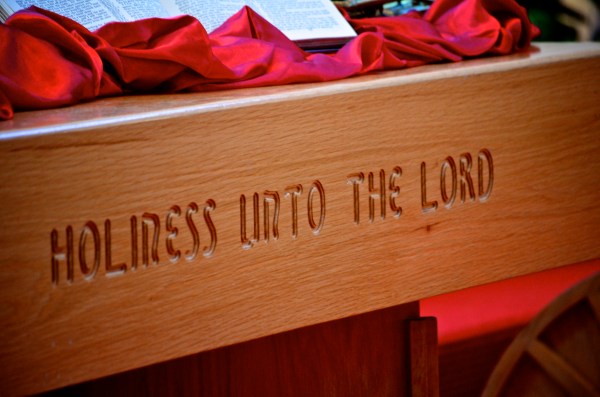
Why do we have this large table in the front of our sanctuaries? What is it for? Is it for decoration? Is it to accompany the old modesty rails? What purpose does it serve?
Have you ever wondered these questions? -So have I!
So I pondered on this, I did a little digging…and here’s what I know:
Phoebe Palmer’s “Altar Theology”
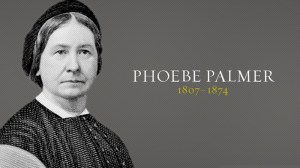
Sometimes we see the term “theology” and automatically stop paying attention because some theologies are either so convoluted and dry or they are way too complicated. Palmer’s Altar Theology is neither. In fact, it is the very life-blood which gave birth to The Salvation Army’s Holiness theology. Much of who we are, theologically, can be traced to the turn of the century Holiness/Higher Life Movements. These evangelists, Palmer being a major contributor, incorporated a major focal point in their service: a call to take a stand, come forward to the Holiness Altar and receive the second blessing, i.e. Entire Sanctification. This was less a place of kneeling (like our modern day Altar) and more a place to literally take a stand and receive this second blessing.
A lot has changed since the days of Palmer, yet this Holiness table still remains, but predominantly in the United States and England.
Is The Holiness Table Just A Relic Now? 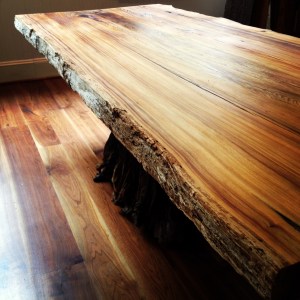
Few understand its significance anymore.
Very little is taught on it. Is it still important to the Army, or is it just a relic of a bygone era?
This table has now become a place to put flowers, where the offering plates most likely reside, and perhaps a very large Bible with illustrated pictures. Have we lost some of our understanding of Holiness because we no longer understand what a Holiness Table is for?
Major Phil Davisson, author of Revelation: A non-scary approach Volume 1 put it this way when I asked him about the Holiness Table;
 “We should teach about holiness but emphasize Coutts (General Frederick Coutts) more…The table itself has had little resonance because it has become a display table, and because no one–neither soldiers nor officers–have a very deep experiential knowledge of holiness living, and have been put off by second-blessing / second work of grace confusions…” Could it be that our lack of teaching is to blame for its near extinction?
Major Jim Garrington recently told me that he himself has given little to no thought of the Holiness Table itself and stresses the education of our soldiers as a must have in worship. If we are to use it, our soldiers ought to know what is going on. He went on to say that he is more interested in the outcomes and less the methodology of getting there. I would tend to agree with Major Garrington, as well as the thoughts of Major Davisson.
Am I making too much of this modern day center piece?
I requested more information from other scholars and historians of The Salvation Army and very few responded to my requests, which makes me wonder even more as to its perceived relevance in our modern worship and/or even historian’s understanding of such an item. Perhaps it is understood that the Altar (mercy seat) has, in some way, taken the place of the Holiness table as the site of repentance and commitment (or re-commitment to Christ)…but what of the Holiness table then? Has it become a sacred cow of sorts? A glorified decoration table?
Steve Simms, author of Beyond Church: The Lost Word Of The Bible – Ekklesia, is also a faithful Soldier with the rank of Sargent (Envoy) in the Nashville Tennessee area; I asked Steve his take on the Holiness Table, its significance in our Army today. Here’s what he said; “Personally I believe the holiness table was “sacramental” for the early Salvationists (in the best sense of the word). It was a physical object (location) that they could approach to help them release their faith beyond their physical environment and circumstances and touch the supernatural presence of the living, resurrected Jesus…Thus, the table itself is not the goal. The goal is to go beyond the table, encounter, and surrender to the living Jesus…Although the early Salvationists set aside the official sacraments of church, they (unintentionally, I believe) raised other things to the level of sacraments. Truth is, sacramental objects and/or actions are not supposed to be the center of attention. Their purpose is merely to lift our attention beyond our natural surroundings and focus it on the real presence of the living Christ. Once we are enthralled in the presence of Jesus, those things fade into the background. (examples of things treated like sacraments in TSA are the holiness table, the uniform, the soldier’s covenant, and various ceremonies we conduct.” 
Steve raises an excellent point here as well!
Perhaps in exploring and even maintaining the Holiness Table we have inadvertently made it a sacramental item – and something it was never intended to be. Also, Garrington’s point is further solidified by Simms, in that it was never about the object, or in this case, the furniture in our worship halls – it is, and always should be, about the very presence of God living amongst His people. The outcome of worship, and every element within, should point to a glorified Christ preparing us to be like Him in every way!
Steve Bussey, who wrote an extensive article on the History of the Holiness Table entitled Discovering The Origin of the Holiness Table , and with whom I hope to interview next time, writes this at the end of his article that I believe summarizes where I believe we stand currently, “General Paul Radar is quoted Nigel Bovey in The Mercy Seat Revisited (2010) as saying, “The presence of the Holiness Table is a constant reminder of the central importance of the holiness of heart in the life of our Movement – a reminder that we are and must be a holiness movement. Ours is a gospel of Blood and Fire!” (p.90) 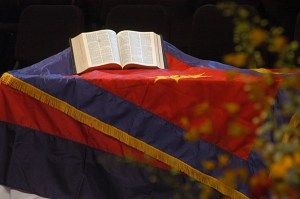
Army Ponderings Continued…
I do not believe we have finished this discussion, I believe we have only just begun.
Next time, I will have some additional contributors as we delve further into this topic.
But for now here are somethings to ponder:
* Is the Holiness Table still significant in modern worship?
* Do we inadvertently make certain objects and practices into our own sacraments – even though we perceive ourselves to be non-sacramentalists?
* Should we educate our soldiers and officers more about the Holiness Table and perhaps even reconsider our Holiness Approach and make more of an effort to circulate more of General Coutt’s ‘take’ on holiness?
* Where do we go from here? Do we remove the Holiness Tables from our halls if they have become decorating tables? Or do we overlook this so that our outcomes and focal point is always Christ?
Something more for our Army world to ponder today!
For more reading on this subject, please check out these sources:
Discovering the Origin of The Holiness Table – By Steve Bussey
Called to be God’s People – by Robert Street
Articles & Blog – by Steve Simms
Phoebe Palmer’s Altar Theology – by Lampstand Restoration
Phoebe Palmer History – by Barbara A. Howie
.


 Christ’s prescription to us? A daily/moment by moment conversation with Him. The more we visit with Him, the more we begin to reflect who He is in our lives. Our goal (and the simple definition of Holiness) is to become like Him in every way day by day – by taking His prescription for life! Without it, we will be like the patient (me…) leaving the doctor’s office the very first time and not following his treatment plan!
 With professional preachers, also comes a lack of hunger. Mind you, these are not always connected. I believe this is a stand-alone problem for many within our western world. If one were to journey to some of the poorest countries in the world, you would find a see hunger for scriptural truths and churches memorizes whole chapters of scripture…where is this hunger in the more prominent and prosperous countries? I believe there is a direct correlation between comfort and security and the shallowness of scriptural knowledge! Why rely on the scripture if every want, and all of life’s comforts are met (roughly speaking)?



 In Focus
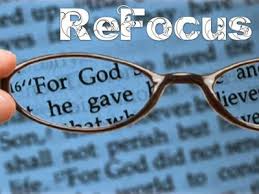 through it, but there must be a way for us to live this overwhelming victory in the here and now…and we do that by understanding it. In our understanding of what this life is all about – Whose we are and embracing the eternal here and now, we flip the script on what “living”is all about! When we change our perspective, we change the narrative of our souls. What I mean by that is – we no longer simply live for ourselves, we begin to live for Christ. Many times this is a gradual denial of self as we surrender to the will of God. It begins with the little things of life. Soon, as we allow these little spiritual victories to occur, we will be more inclined to seek out the larger “denial of self” moments.
 Some of may be.

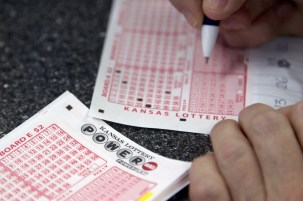 In a world, currently that is consumed with who will win the next Powerball lottery jackpot, we don’t often fathom what we already have to be a true blessing…because we crave more.

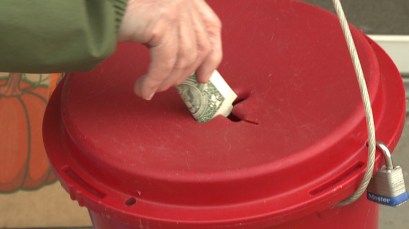
 The gift of giving truly is the meaning of Christmas.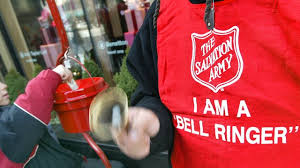




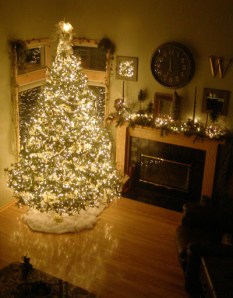 Now, as the day quickly spun into daylight as it always does, the touch of children’s hands began to closely inspect each gift, turning them over, guessing and re-guessed as to its contents, shaking them, listening and then gently shaking them once more. It is the act of innocence. It is the spark of imagination and exuberance only caught in the eye of youth. The quiet sneaking and peaking. The reading of names written there upon the glinting wrapping paper and smooth crimson satin bows. Caught in the act, their mother and I lightly chide them and remind them that the day has not yet arrived. The day that might as well be a thousand years from now to our children seated impatiently there beneath our tree. They begin begging to open just one – their pleas fall upon our deaf ears…it is far too soon. The mystery, or perhaps torture, must continue for another twelve days.
 acknowledgement that this moment too is sacred. It can be as sacred as any moment seated in mighty
  cathedrals. Though we lack stained glass and their purposeful messages told and passed down from generation to generation…and though we also lack within this moment the “choirs of angels” sharing another
  “holy night” in resplendent octaves and melodies that glance upon our souls – we still share a moment of pure joy. It is a gift, a worthy moment only share by these few members of family and blood.


 Pastor's Ponderings