“Officer’s Covenant: ‘Called By God…'”
The Officer’s Covenant begins with one statement that carries through the rest of the Covenant: “Called by God…”. This is the foundation from which the rest of the Covenant is built upon. It is a statement of affirmation that the officer has listened to and discerned that the Lord’s will for his or her life is for full-time service as a minister of the gospel within The Salvation Army.
MY CALLING

The way in which God calls people to service can vary from person to person. I will tell you of my experience, but I do not claim this to be the only way that God may call someone.
I knew from the time of my salvation that God had a purpose for my life – there was a reason why he saved me from certain death at my birth. When I was somewhere around the age of 12, I began thinking that maybe God wanted me to be a Salvation Army officer. I am sure I had thought about it prior to that age, but I cannot nail down a specific date in which I was “called”. I also never had an “aha” experience – I never heard God’s voice audibly speaking or had some magical vision or anything like that. I had grown up in The Salvation Army and was always open to the idea of officership. So around the age of 12, I set my sights on becoming a Salvation Army officer. Again, there was no specific time when this happened, it just happened.
One thing that played a huge role in discerning my calling was watching the examples of various officers, active and retired, within my corps. I loved listening to their stories about the joys and challenges of officer ministry. Through those examples, I was encouraged in my pursuit of officership.
Since I never had any sort of divine revelation regarding my calling, I ultimately stepped out in trust. I knew that if it was truly God’s will that I would be a Salvation Army officer, then he would provide whatever was necessary for that to happen. I knew he would open doors where I needed them in order to guide the way. He certainly did! He provided countless opportunities and opened numerous doors that solidified his calling on my life. Looking back on those times, I can see God’s work through my life in making my calling sure.
Did I ever doubt my calling? Of course! I would even dare say that it can be healthy to have times of doubt because when God provides the answer to that doubt, it strengthens our sense of calling. In the times that I doubted my calling, God provided people and environments in which I was encouraged. Again, when I think back to those times of doubt, I see God orchestrating ways in which my calling would be strengthened.
I would like to share a few insights about calling in general and specifically for officership. Some may agree and some may disagree with these statements, but I hope these can stimulate our thinking and understanding of calling.
CALLING IS BOTH INDIVIDUAL AND CORPORATE
When we talk about calling, we seem to always discuss the individual side of calling. “Tell me about your calling.” “When God called me…” I think we, for the most part, understand that God calls people individually for certain things. He may call one person to do one thing and another person to do another thing. Our responsibility is to be responsive and obedient to our individual calling.
There is also a corporate aspect to calling, specifically for calling to ministry. In the first three verses of Acts 13, we see this corporate element at work. God had called Barnabas and Saul to go and proclaim the gospel. The church at Antioch responded by praying for them, fasting, and sending them off. This is the corporate response to calling to ministry. The church body is responsible for recognizing God’s call on a person’s life, affirming that call as evidenced by the person’s fruit, and sending that person off with their prayers.
It is important that we do not neglect the corporate aspect of calling. I know that God has called me to officership, but I need to know that others see evidence of that calling in my life. This keeps our individual callings in check and accountable to the Church.
CALLING DOES NOT REQUIRE DIRECT REVELATION
I think I have indicated this already through my calling experience. Calling does not mean that a person has to audibly hear God speak to them or have some other sort of divine revelation from God. This is why the term “calling” can be confusing to some. We need to make sure that when we describe calling, we do not restrict it to a specific time or a specific experience.
As I said with my calling, I never had that one moment where I said, “Yes, I’ll be an officer.” I also never had a defining point in which God spoke to me or revealed it to me. It was a process of observation, reflection, and acceptance in my life which was not grounded in one moment. I think it is dangerous for us to insist that God’s calling must take place in a “crisis” manner.
I don’t mean to say that God does not call people at a specific time such as at Youth Councils or during a Candidates’ Sunday. I don’t mean to say that God does not work in a “crisis” manner to call people, but it is not something that happens to all. We do not want to exclude or alienate those who have had aspirations toward officership but may not have had such a “crisis” moment.
CALLING MAY OR MAY NOT BE SPECIFIC
God’s calling comes in a variety of forms. Calling is not restricted to officership – people are called by God to all sorts of professions, careers, and ministries. With that said, God’s calling may not always be specific.
I was speaking with a young lady in one of my classes at Olivet this spring. She was studying children’s ministry and knew she wanted to be actively working in ministry with young people, but she did not know where. She was aware of God’s calling on her to minister to children – that was specific – but she did not know in what manner, degree, or location God wanted her to serve. I also know a number of people from my time at Moody who may have been studying pastoral ministry or theology or biblical studies and have been specifically called to full-time ministry, but the details of how that would happen had not been made clear to them.
I know that God has called me to specifically be an officer within The Salvation Army, but that much detail is not always the case for all. God calls people, but the specifics of that calling may not always be evident.
I want to write for a moment about our recruitment of Salvation Army officers as it relates to this. I appreciate what our divisional and territorial leaders do for recruiting and equipping candidates for Salvation Army ministry. The process, though challenging, is much needed so that we invest in the right candidates and cadets for officership. I do believe, however, that we have an untapped resource for officers. As I said, there are a number of young people who know that they are called to full-time ministry but do not know where to turn. The unfortunate result is that many do not end up in full-time ministry positions. Could these be our future Salvation Army officers?
I think we can focus a lot of our attention on internal recruitment, and that is not wrong in any way, but there may be future officers out there who simply need to be introduced to The Salvation Army and to officership. From my experience at Bible college, there are thousands of students in this nation who are zealous for ministry and the gospel who are searching for their ministry outlet. These could be our next officers.
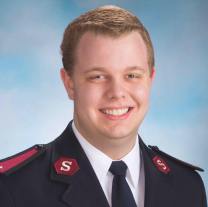 There is so much more that could be said about the topic of calling and I hope to write more on this subject. Turning back to the Officer’s Covenant, it is important for every officer to understand that officership is not of our own self-will or desire, but because of a God-instilled, Holy Spirit-directed calling on our life. The manner in which we are called may vary, but the God who calls remains the same. He is still calling men and women to officership – we must continue to be responsive. With the prophet Isaiah, we resound, “Here I am! Send me.”
**Check out further writings by Lieutenant Fewell via his blog site at: Blake Fewell**


 I have met so many struggling Officers recently.
 low. I can sense the rolling tides and currents of life pulling some of us under, and it threatens our very calling as Officers and Soldiers. In some places even our charge forward into the fray has waned and we have become static…no longer pushing out into our communities, having no longer the strength to care for others because our hearts and our spirits are worn. I am here today to tell you that you are not alone! Although it may feel this way from time to time, although you have frustrations in leaders and in situations beyond your control, you have both an Advocate in the Holy Spirit and a wealth of power at your disposal – all you need to do is cry out to Him and He will sustain you, He will empower you once again. “Draw near to Him and He will draw near to you!” (James 4:8)
 I am also here today to encourage you in the Blood and Fire of this Army…for it is the very soul of who we are. It is our very life-source, and if we stray from the Blood of Christ and the Fire of the Holy Spirit, we will lose strength in every attempt to do things on our own. This Blood and Fire is both our source of Salvation and Holiness. It hangs as a constant reminder upon our Salvation Army flag. It ought to resound in us as we move about in our day, regardless of the tasks, both big and small; insurmountable and the mundane. This Blood and Fire is more than just another motto we spout out while wearing the uniform, it is a strength and doctrine firmly rooted within the Scriptures! We can cling to His unfailing love and His Divine presence with us not only daily, but moment by moment.




 Are we alert to the ever present need to adapt to our changing communities?
 A new passion for souls must be prayed for, not just in our hearts but in every soldier’s heart. This isn’t just an army that preserves a heritage of the yesteryear, this is an army that carves out its destiny in the present and future through faithfulness and reliance on the Holy Spirit! We must recognize this need! We must reorganize, realign, re-imagine and act upon this mission of ours! We are not an army to sit on our backsides and do nothing! No! We MUST be a forward moving army, who has accepted and adapted to this modern spiritual war we are in. We cannot capitulate, grow soft and comfortable – to do so will bring about our fall, and someone else will take our place! I say we still have a war to wage! I say we support our Officers not just in prayer but action. I say we support our Soldiers not just in flowery words on Sunday mornings behind the pulpit but with deep compassion, love, truth and by God’s authority. When we are united as one Army, we are so much more effective than just solitary entities running around in the streets trying to do good.




 1) Sometimes CO’s struggle spiritually too…
 2) Many Times We Are Stressed Out About Finances



 Outward Mission
 Lead With, Not Over
 sustainable path for your corps. Riving that which is on the fringes of death is not easy. This component relies on leadership both from the divisional level as well as the territorial level to see the benefits of longer appointments. Of course there are multiple variables within officers length of appointments. Questions like- are they are good fit? Will this corps be able to afford their family? Do we need their skills elsewhere? The wonderful thing is, many divisions and territories now see the benefit of investing in longer appointment terms. The CO must also see this benefit. It should be a cautionary tale to mentioned that COs need to remain focused on the present appointment and not peering over the fence at potential future appointments.
 soldiers and adherents. Without this shared vision, as mentioned before, when the current CO leaves, the vision either dies or is shifted. A strong core group within the mainframe of the corps can provide stability and structure even if the corps officer leaves or is gone. With a shared vision and mission, which is agreed upon by local officers and constituents, EVERYONE knows that needs to be done. Talk about your vision. Keep it at the forefront of everything you do. Emphasize it, and keep talking about it from the pulpit to the visitation of soldiers and friends.
 This might sound offensive to some of you. Some might say, “that’s not fair, we are dependent on God.” I am too. But there is a temptation to worry more about finances and where the next funding source will come from to pay for the bills of the corps, than how God is going to provide. Yes, we work hard to secure funding, but be careful that the funding doesn’t become your measure of success in the corps. Financially secure corps can become spiritual graveyards too. There are different types of corps death, and a corps worshiping their wealth can be one of them. It sounds ridiculous, but it can happen. Don’t allow your focus to become solely on what you have or need. Remember the One who sustains us and will provide what we need when we need it. Yes, pray about tithing. Yes, pray about grants and funding sources, but don’t let them hamstring what you can and can’t do for the Lord in your community. Even those with limited financial resources can do wonders for the Kingdom!
 Study your neighborhoods. Find out what the issues are. Ask important questions to those you serve. Get out of your buildings and talk to people. It’s really not about being seen, but as we do these things we will be seen. In order to revive our dying corps, we have to continually explore the shifting needs and wounds of our community! Each community is different, as are their needs. What may have worked in a previous appointment might not be what this present appointment needs. So Corps Officers, even though you may have an awesome blueprint for things that were successful in your last corps, it doesn’t necessarily mean it will be automatically successful here. As a team – local officers, soldiers, adherents, friends – study, ask, explore and then meet the needs currently not being met in your community.
 then be passionate about growing our spiritual levels. What do I mean? I fear that sometimes our corps are still in the kiddie pool of spiritual growth and without challenge they will never wade deeper into this faith. We have to continually challenge, speak, live and teach holiness. This is spiritual development and growth. This is vital to sustaining our corps members from the inside out. Without holiness, we run the risk of becoming another social service club that hangs out on Sunday mornings and just does good works for people. It has to go deeper than that. We have to keep each other accountable and emphasize the desire to encounter a continuance of salvation. The Holy Spirit doesn’t want us to remain static, and when we are, I fear corps death will surely follow. He will raise up others if the we remain in the kiddie pool. Wade out there, don’t be afraid to ask difficult questions, seek Christ’s image in all aspect of your living. Then…go!


 At the other end of the spectrum is the ignoring and tolerance of sin issues in your corps. Be mindful that we are not the judge of our world, but we do hold a high standard for our fellow brothers and sister in Christ who wear this uniform. This almost seems to be in complete conflict with the first point, but it is not. Galatians 6:1 clearly reminds us as it did in Paul’s day – “Brothers and sisters, if someone is caught in a sin, you who live by the Spirit should restore that person gently. But watch yourselves, or you also may be tempted.”
 Officer(s). Yes, they have had training, yes they are leaders, but they cannot lead properly without the core leaders to help them. A shared vision and delegated group will be better equipped to handle opportunities and threats that come to your corps and community. If you don’t currently have core leaders, begin by praying and asking God to reveal potential leaders to you. Prayer is never a last resort, but a constant conversation. Don’t limit your search to just the older members, the younger generations will eventually replace us at some point, so begin to invest in them. Begin to disciple them, and display for them what leadership is all about! Gather one or two influential people with common sense to help you in your corps. Remember, that we are an egalitarian movement – both men and women are equal, so do not limit your leadership search to just men or just women. Without a core group of leaders, the vision and movement will be limited.
 and what we do as a corps, that we begin to have no need for the “outside world”. We stop looking out into our community and we become self-reliant and self-focused. In this danger, what happens when our congregation gets old and dies? Will there be youth to raise up and take our place? Will be just be a group of inbred soldiers? I don’t mean to sound crass, but the reality is, we need to stop being afraid of our communities. We need to stop treating the people outside our buildings as “those people” with a sense of superiority. We must squelch the desire to just remain in our buildings and selfishly focus on “us”. What about the great commission? What are we fighting for if we only fight for ourselves and our traditions and self-interests? If we are all-in and inwardly focused, we will slowly die away…and no one will care when we’re gone.
 This is probably a rare thing, but perhaps not. Perhaps there are some corps that have so many services to the community that worship and all things “Spiritual” are an after thought, and then you come to Sunday and it just becomes a “thing we do”. We focus all of our energies on the outside, on meeting human needs but we seldom meet those needs “in HIS name” anymore. We might as well be just another social service agency or a humanitarian group, because we will have forgotten our first love and the “body” will be just bits and pieces pulled and stretched so thin that it doesn’t resemble Christ any longer.
 vision and goal because “they have been set, and we don’t alter these goals”. Goals should never be so rigid that there is no looking back and re-evaluating what works and what does not work, whether it be in evangelism, discipleship, or corps fellowship growth strategies. Remember what worked 100 years ago, might not necessarily be the best method to use in an ever evolving culture. Not to say we adopt our culture, but we ought to consider what works and what does not work any longer and not be so rigid that we refuse to ever change how we plan and how we enact a strategy in our corps. Rigidity can kill your corps, and stifle any potential growth you might see.
 If you corps does not understand Holiness, and or it is never preached on spoken of, perhaps this might be an indicator of a terminal issue. I am not saying that holiness is the end-all be-all of the corps, but what do you do with Salvation after receiving it? Where does one go after initial sanctification? Does the Holy Spirit still desire to transform us through and through? Does He not want us to be the very reflection of Christ? Yes. There needs to be continual conversation about our surrendered life and how that looks in the real world.
 emulating elders we respect, this is becoming more than who we are now. Walking in the footsteps of saints and in so doing, we too become saints within this great army. If your corps does not have this vital element, closely connected to holiness, you could be facing extinction. Recognize this need, and do something!!
 to be in the bygone days. We can rest comfortably on financial resources and riches we have been given from various places, and never take another risk again…and if we do this, we. will. die. I cannot stress it enough, in order for God to change our Army, we have to become uncomfortable again. We have to take risks and forget what the rules and regulations say. We have to close dead corps, move to places of need without bureaucratic red tape hamstringing us along the way. We have to get out of our pews and put feet to our professed faith. It’s either put up or shut-up. Seriously, we can talk a good game, but if we can’t back it up, then hung it up and quit already. We don’t need fans in the stands not doing the work. We don’t need complainers and criticizers telling it us it can’t be done – because the risk is too great. If we don’t do something, we might as well put our corps on life-support right now. There is a sad trend that is taking place in our corps around the USA, and our corps are not statistically growing anymore. We are not busting out of our corps buildings anymore. Yes, perhaps it’s across the board in all denominations, but could it be that we are so comfortable now that we have stopped ACTUALLY trying to reach our communities? Could this be an entire systemic issue of spiritual laziness? Forgive me if I offend you today, I can’t help but feel alarmed at how swiftly our corps are dying. And I can’t help but wonder what the next 50 years will hold for this movement? If we do nothing, we will not be here in 50 years…not like we have been, not like we should be…and then perhaps, Lord forbid, God raises up someone else to do what we should have been doing.

 Pastor's Ponderings